Uncategorized

88183dbe 27b3 4369 8e6d 2520611f8ab8 GrQ6BO

DR Congo: Democratic Republic of Congo Ebola Outbreak Overview: Context, Vulnerabilities, and Response (4 June 2026)

Country: Democratic Republic of the Congo Source: Data Friendly Space Please refer to the attached file. Context The confirmation of a Bundibugyo ebolavirus outbreak in the Democratic Republic of the Congo on 15 May 2026 represents more than an acute public health emergency; it exposes the compounding fragilities of a health system, a region, and a global response architecture that has never fully addressed the structural conditions that enable repeated outbreaks. Within two days, the World Health Organization declared a Public Health Emergency of International Concern. This designation reflects not only the pace of transmission but the depth of the challenges facing the response: active insecurity, a pre-existing humanitarian crisis, high cross-border population mobility, and the absence of any approved vaccine or treatment for this specific strain (WHO 17/05/2026). As of 2 June 2026, the DRC Ministry of Health has reported 321 confirmed cases, including 48 confirmed deaths and 116 suspected cases under investigation, across the provinces of Ituri, North Kivu, and South Kivu, with 15 confirmed cases and 1 confirmed death in Uganda (WHO 29/05/2026; ECDC 02/06/2026). Three interlocking dynamics shape this outbreak’s trajectory and define the stakes for humanitarian actors in the region. First, this outbreak involves a strain of Ebola for which no vaccine or approved treatment exists, placing the full weight of containment on community engagement and public health measures at a moment when community trust in the response is visibly fragile (WHO 16/05/2026). Second, the eastern DRC’s chronic humanitarian crisis, stemming from displacement, insecurity, and a severely underfunded health system, is not the background to this outbreak; it is among its primary drivers, creating the precise conditions in which Ebola spreads and response efforts struggle to gain traction (WHO Regional Office for Africa 20/05/2026). Third, the regional dimension warrants close monitoring: Africa CDC has formally identified ten countries at risk, and the outbreak’s epicenter in a high-mobility mining corridor means the window for purely localized containment may be narrowing (Africa CDC 24/05/2026). This analysis is intended as a practical resource for humanitarian organizations operating in or monitoring the affected region. It does not project worst-case scenarios, but takes seriously the conditions that could lead to escalation if unaddressed.
DR Congo: Democratic Republic of Congo Ebola Outbreak Overview: Context, Vulnerabilities, and Response (4 June 2026) Read More »

2cceb139 55b9 4d7c B4f5 10820a8d4abf Zxbi5n

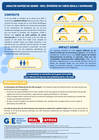
DR Congo: Analyse Rapide de Genre – RDC : Épidémie du Virus Ebola I Sommaire

Country: Democratic Republic of the Congo Source: Gender in Emergencies Group Please refer to the attached file. Le 15 mai 2026, le ministère de la Santé de la RDC a confirmé une épidémie d’Ebola dans la province d’Ituri, au nord-est du pays, causée par le virus Ebola Bundibugyo [1]. Dans une région affectée par l’insécurité permanente et les mouvements de population, les cas se sont rapidement propagés aux provinces du Nord- et Sud-Kivu, puis ont franchi la frontière vers l’Ouganda. L’OMS a déclaré une urgence de santé publique de portée internationale le 17 mai [2]. En date du 29 mai, 906 cas suspects et 223 décès font l’objet d’une enquête [3] L’épidémie actuelle montre une légère tendance à une prévalence des cas confirmés chez les hommes. Un quart des cas concernent des enfants, en particulier de moins de cinq ans [4]. Lors des épidémies précédentes, les femmes représentaient jusqu’à deux tiers des cas [5]. Il est essentiel d’anticiper cette évolution. RÉSULTATS CLÉS La transmission est influencée par les rôles de genre. Il est important que les professionnel.le.s de santé sachent que les femmes sont plus susceptibles : d’assumer des responsabilités de soins des malades et être des agentes de santé de première ligne, tels que des agentes de santé communautaires, sages-femmes, agentes d’entretien et infirmières ; d’être chargées d’aller chercher de l’eau et du bois de chauffage ou de traverser les frontières pour acheter des produits de première nécessité [7] ; de gérer l’accès à l’hygiène, les lessives et l’utilisation des sanitaires des ménages dans les zones rurales et périurbaines de la RDC [8]. Les rôles de genre dans les rites funéraires sont nuancés et varient d’un endroit à l’autre. Selon les communautés, les hommes ou les femmes peuvent participer aux rites funéraires traditionnels qui impliquent d’habiller et toucher les corps des défunts.

DR Congo: Analyse Rapide de Genre – RDC : Épidémie du Virus Ebola I Sommaire Read More »

Central African Republic: Situation Report No. 70, as of 2 June, 2026

Country: Central African Republic Source: UN Office for the Coordination of Humanitarian Affairs HIGHLIGHTS Civilians and humanitarian actors continue to face insecurity in Haut-Mbomou Over 11,900 Central Africans returnees from Am Dafock, Sudan, receive food assistance Ebola: Government and partners strengthen coordination mechanisms and priority preparedness activities GENERAL CONTEXT Haut-Mbomou Prefecture – South-East Five staff members from two humanitarian organizations were victims of an armed robbery on 30 May along the Zémio–Dembia road. The incident occurred as the team was returning to Zémio, following a mission conducted three days earlier in Guinikoumba, Barh and Tabane as part of the implementation of a protection project funded by the CAR Humanitarian Fund (CAR HF). The assailants stole the team’s work equipment, motorcycle batteries and personal belongings. No injuries were reported. Despite a recent lull, security incidents—including abductions of civilians and attacks targeting humanitarian personnel and convoys—continue to raise serious concerns regarding civilian protection in Zémio and could further hinder humanitarian access, depriving populations of life-saving assistance. Haut-Mbomou ranks second among prefectures most affected by incidents involving humanitarian actors. Ouham Prefecture – West Since 27 May, residents of the village of Lady have been moving preventively into the bush and surrounding villages for fear of their safety, following an attack carried out by armed elements in the locality. HUMANITARIAN NEEDS AND RESPONSE Health Countrywide CAR remains at high risk of Ebola virus disease importation following outbreaks declared in the Democratic Republic of the Congo and Uganda on 15 May 2026, classified as a public health emergency of international concern. The Government, with support from the World Health Organization (WHO) and partners, has activated emergency coordination mechanisms and initiated priority preparedness actions. These include the revision of a national preparedness plan valued at approximately US$ 20 million, which remains largely underfunded, training of 50 trainers, strengthening surveillance and laboratory capacities, and risk communication, awareness campaigns and control at points of entry. Despite government and partner efforts, operational capacities remain insufficient, and urgent support is required to reinforce prevention measures and response readiness. Multi-sector Lim-Pendé Prefecture – West A spontaneous return movement was reported on 4 May in Bezéré locality, 20 km from Bocaranga on the Mann axis. The returnees came from Cameroon, driven by difficult living conditions in refugee sites and the resumption of agricultural activities during the current farming season. According to an assessment conducted by CARITAS on 22 May, 252 households (1,262 people) were registered. The main needs identified include protection, access to water, hygiene and sanitation (WASH), food security, essential household items, as well as education and health.

Central African Republic: Situation Report No. 70, as of 2 June, 2026 Read More »

8a019c22 715b 4cd8 A5f1 8a723c224a2e PXWcat

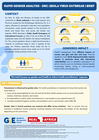
DR Congo: Rapid Gender Analysis – DRC: Ebola Virus Outbreak I Brief

Country: Democratic Republic of the Congo Source: Gender in Emergencies Group Please refer to the attached file. On May 15, 2026, the Ministry of Health of the DRC confirmed an Ebola outbreak in the north-eastern Ituri Province caused by the Bundibugyo ebolavirus [1]. In a region affected by persistent insecurity and population movements, cases quickly spread to the provinces of North and South Kivu, and across the border into Uganda. WHO declared a Public Health Emergency of International Concern on May 17 [2]. As of May 29, 906 suspected cases and 223 deaths are being investigated [3]. The current epidemic shows a slight trend towards a majority of confirmed cases in men. A quarter of the cases are children, especially those under five [4]. In previous outbreaks women have made up to two thirds of cases [5]. Getting ahead of this is key. KEY FINDING Transmission is influenced by gender roles. For health practitioners is important to know that women are more likely to: have caring responsibilities for the sick and be frontline health workers such as community health workers, midwives, cleaners, and nurses; be responsible to collect water and firewood or cross borders to buy essential items [7]; manage household hygiene, laundry, and sanitation use in rural and peri-urban DRC [8]. Gender roles in funeral practices are nuanced and differ across locations. Men or women may be involved in traditional funeral practices involving dressing and touching the bodies of the deceased depending on the community

DR Congo: Rapid Gender Analysis – DRC: Ebola Virus Outbreak I Brief Read More »

9f5956ce E04c 4ba3 8cdb 23e70fff9c9f 82Elv0

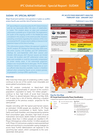
Sudan: IPC Acute Food Insecurity Analysis l February 2026 – January 2027 (Published 3 June 2026)

Country: Sudan Source: Integrated Food Security Phase Classification Please refer to the attached file. Sudan remains one of the world’s most severe humanitarian crises. Around 19.5 million people (41 percent of the population) are facing high levels of acute food insecurity (IPC Phase 3 or above) through May 2026. This includes 135,000 people classified in IPC Phase 5 (Catastrophe), characterised by extreme food gaps, starvation, very high levels of malnutrition, and death due to disease or acute malnutrition. More than 5 million people are classified in IPC Phase 4 (Emergency), while a further 14 million people are in IPC Phase 3 (Crisis). Conditions are expected to deteriorate further in the upcoming June–September lean season. While no area is in Famine, 14 areas in North Darfur, South Darfur, and South Kordofan are at risk of Famine if conflict intensifies further, access to food worsens, health services and water, sanitation, and hygiene conditions deteriorate, or displacement increases. Severe acute malnutrition is widespread, with an estimated 825,000 children affected in 2026 amid declining access to treatment. Conflict continues to have far-reaching impacts on the food security and nutrition situation of the Sudanese people. More than 8.9 million people have been internally displaced, and an estimated 40 per cent of health facilities are non-operational. The ongoing conflict in the Middle East adds another layer of complexity to the crisis in Sudan, contributing to higher prices for fuel, food, and fertilizer. Humanitarian access remains highly constrained, limiting both response and data availability in some of the most affected areas. Urgent action—cessation of hostilities, improved access, and scaled‑up assistance—is critical to prevent further deterioration. Otherwise, any meaningful improvement in Sudan’s food security and nutrition situation in 2026 is very unlikely.

Sudan: IPC Acute Food Insecurity Analysis l February 2026 – January 2027 (Published 3 June 2026) Read More »

23202741 F66c 4227 Ab59 E3b528bdfbf3 EYiEUS

Ukraine: Rehabilitation Technical Working Group (RTWG) – Meeting Minutes, May 22, 2026 [EN/UK]

Country: Ukraine Source: World Health Organization Please refer to the attached files. Chairs: World Health Organization (WHO), Momentum Wheels for Humanity Ukraine (MWH) Participants: Momentum Wheels for Humanity, GIZ, CF ‘ZDOROVI’, MSF OCB, Central Project Management Agency (CPVA), NGO ‘Fight for Right’, National Committee of Red Cross of Ukraine, NGO ‘GAR’, HI, CF “Save Ukraine”, Enabel, Belgian agency for international cooperation, NGO “SHDC”, UNICEF, UNDP Ukraine, International Medical Corps, Direct Relief, German Red Cross, IREX, Sunnaas, WHO and others Agenda: • Introduction of new partners (If any) • Updates on Disability Inclusion and Active Longevity Task Force (WHO) • Partner updates • AOB

Ukraine: Rehabilitation Technical Working Group (RTWG) – Meeting Minutes, May 22, 2026 [EN/UK] Read More »

8c8a152e 7a94 4918 988e 432296565a56 FpLjUj

DR Congo: Population movements from Bunia, Mongbwalu and Rwampara based on privacy-secure analysis of mobile operator data from Vodacom Congo (Update 4 June 2026)

Country: Democratic Republic of the Congo Source: Flowminder Foundation Please refer to the attached file. Since the publication of the first version of this report, a number of health zones which then had no confirmed cases, but were listed in the report as at very high risk, now have confirmed cases. This strengthens the argument for prioritising areas high on the list (Table 1 and Annex A) for surveillance activities. Among the top ten recipient health zones, only two have not yet had confirmed cases as of 1 June (Tchomia, ranked 6th, and Drodro, 9th, both in Ituri), and among the top twenty health zones only six have yet to confirm cases. This report provides data on travel patterns out of Bunia, Mongbwalu and Rwampara health zones. These health zones have seen the vast majority of confirmed and suspected cases and therefore currently confer the largest known exportation risk to other health zones. Additional analyses and data releases are planned. The data is based on anonymised data on the movements of hundreds of thousands of subscribers on the Vodacom Congo (DRC) network in Ituri. Further details on methods and analytical choices are provided in the methods section. We follow the movements of all anonymised subscribers who were registered at least once in any of the three health zones of Bunia, Mongbwalu and Rwampara during the three weeks immediately preceding the death of the presumed index case on 24 April 2026. We then follow their movements out of the three health zones. We compute, at successive days from the end of the reference period at 23 April (+1 day, +7 days, etc.), how many cohort members have been observed in each health zone, capturing the progressive spread of the study cohort day by day (Fig. 1 and Table 1). Each subscriber is counted in a health zone from the first day they are observed there, regardless of how many times they appear subsequently in that health zone. A subscriber observed in multiple health zones is counted in each of those health zones.

DR Congo: Population movements from Bunia, Mongbwalu and Rwampara based on privacy-secure analysis of mobile operator data from Vodacom Congo (Update 4 June 2026) Read More »

Fdffa8e6 2686 4407 B422 Ded3bfe2643a T02I1L

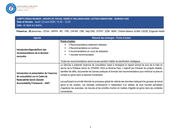
Burkina Faso: Compte rendu reunion – Groupe de travail genre et inclusion dans l’action humanitaire du 23 avril 2026 [Meeting Minutes]

Country: Burkina Faso Source: UN Office for the Coordination of Humanitarian Affairs Please refer to the attached file. Points d’action 2 Recommandations totalement réalisées 2 Recommandations en continue. 4 recommandations en cours de réalisation 1 nouvelle recommandation

Burkina Faso: Compte rendu reunion – Groupe de travail genre et inclusion dans l’action humanitaire du 23 avril 2026 [Meeting Minutes] Read More »

World: New Framework Reframing Modern Conflicts as Global Health System Shocks

Country: World Source: Eastern Mediterranean Public Health Network Researchers from EMPHNET have introduced a new framework that redefines how modern conflicts are understood within global health. Published as a perspective article in the Journal of Epidemiology and Global Health, “Modern Conflicts as Global Health System Shocks: A Multi-Level Framework” proposes the Global Health System Shock Framework, a new approach that examines how armed conflicts generate cascading health impacts that extend far beyond conflict zones. The framework argues that modern conflicts should no longer be viewed solely through humanitarian or security lenses. Instead, conflicts occurring in strategically important regions can trigger interconnected disruptions affecting health systems, energy markets, food security, transportation routes, and medical supply chains globally. The framework conceptualizes conflict impacts across three interconnected levels: Local impacts: mortality, injuries, disruption of healthcare services, and damage to health infrastructure Regional spillover effects: displacement, disease risks, and additional pressure on neighboring health systems Global systemic disruptions: impacts transmitted through energy markets, food systems, and medical supply chains The article highlights how disruptions in critical trade corridors, energy routes, and supply networks can contribute to shortages of medicines and vaccines, food insecurity, increased operational costs for healthcare systems, and broader pressures on population health. The framework also introduces the concept of interacting shockwaves, emphasizing that conflict impacts do not occur sequentially but instead propagate simultaneously across sectors and countries, reinforcing one another. Commenting on the publication, the authors emphasize that strengthening health resilience requires moving beyond health-sector preparedness alone toward integrated approaches involving health, energy, transport, agriculture, logistics, and governance systems. This perspective contributes to ongoing discussions on health security, preparedness, and resilient systems and calls for conflict preparedness to be recognized as a broader global health priority. The article is published in the Journal of Epidemiology and Global Health and is currently available as an article in press, you can access it here.

World: New Framework Reframing Modern Conflicts as Global Health System Shocks Read More »

60f262dc 860e 48c3 901e 4214b9e2d437 QEZeDT

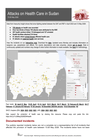
Attacks on Health Care in Sudan, 13 – 26 May 2026

Country: Sudan Source: Insecurity Insight Please refer to the attached file. Data from Insecurity Insight shows that since fighting started between the SAF and RSF in April 2023 and 12 May 2026: 755 attacks on health care recorded Over two-thirds of these 755 attacks were attributed to the RSF. 207 health workers killed, 15 kidnapped and 127 arrested Health facilities attacked 214 times 61 attacks where armed drones affected health care 51 attacks on maternal health care services Documented incidents 13-26 May 2026 The publicly reported incidents below are not a complete nor a representative list of all incidents that affected the provision of health care between 13-26 May 2026. The incidents below have not been verified through ground investigations. There is a delay in reporting incidents due to our open source verification protocol. 20 May 2026: In Dilling city, South Kordofan state, a medical warehouse was destroyed during an attack by RSF and SPLM-N with drones and missiles, destroying medical supplies and equipment. Sources: Sudan Doctors Network and UN OCHA As reported on 21 May 2026: In Dilling city, South Kordofan state, two health workers were killed in shelling by an unidentified armed group. Source: UN OCHA

Attacks on Health Care in Sudan, 13 – 26 May 2026 Read More »