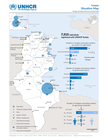
UNHCR Tunisia Situation Map (30 April 2026)
Country: Tunisia Source: UN High Commissioner for Refugees Please refer to the attached Map.
UNHCR Tunisia Situation Map (30 April 2026) Read More »

Country: Tunisia Source: UN High Commissioner for Refugees Please refer to the attached Map.
UNHCR Tunisia Situation Map (30 April 2026) Read More »
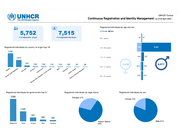
Country: Tunisia Source: UN High Commissioner for Refugees Please refer to the attached Infographic.
Tunisia: Continuous Registration and Identity Management (30 April 2026) Read More »
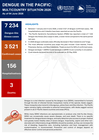
Countries: Fiji, American Samoa, Cook Islands, French Polynesia (France), Guam, Kiribati, Micronesia (Federated States of), Nauru, New Caledonia (France), Niue (New Zealand), Palau, Samoa, Tokelau, Tonga, Tuvalu, Vanuatu, Wallis and Futuna (France) Sources: Pacific Community, World Health Organization Please refer to the attached file. HIGHLIGHTS • Between 1 January and 4 June 2026, a total 3 521 of dengue confirmed cases, 156 hospitalisations and 3 deaths have been reported across the Pacific. • The Pacific Syndromic Surveillance System (PSSS) has reported a total of 7 234 Dengue-like Illness (DLI) cases to date, a lower trend compared to the same period last year. • In 2026 dengue outbreaks were officially declared in New Caledonia and Tonga. • The most affected countries and areas this year include: Cook Islands, French Polynesia, Samoa, and New Caledonia. These account for 94% of confirmed cases. • Dengue serotype-1 (DENV-1) and serotype-2 (DENV-2) are currently in circulation. • Cook Islands declared the end of its outbreak on 25 May 2026.
Fiji: Dengue in the Pacific: Multicountry Situation (As of 04 June 2026) Read More »
Country: Türkiye Source: International Federation of Red Cross and Red Crescent Societies Please refer to the attached file. EXECUTIVE SUMMARY 1. BACKGROUND In February 2023, devastating earthquakes struck southeastern Türkiye, killing over 53,000 people, injuring 107,000, and displacing 3 million. Some 15.7 million people were affected, including 1.8 million Syrian refugees, with massive damage to housing and services compounding pre-existing vulnerabilities and USD 6.4 billion in agricultural losses. The International Federation of Red Cross and Red Crescent Societies (IFRC) launched a CHF 750 million Emergency Appeal on behalf of the Turkish Red Crescent (TRC), raising CHF 500 million for shelter, health, food security, livelihoods, protection, WASH, and psychosocial support. TRC mobilized its nationwide network to deliver assistance to 1.34 million people, while IFRC coordinated the Federation-wide response, led the shelter cluster, and provided technical and surge support. More than 20 assessments informed the shift to recovery, with Community Service Centres central to ongoing resilience and capacity-building efforts. 2. PURPOSE OF THE EVALUATION The Final Evaluation of the Türkiye Earthquake Response covers activities funded through the Emergency Appeal (February 7, 2023 – February 28, 2025), focusing on six provinces with TRC coordination offices. It assesses performance and outcomes in terms of relevance, coverage, and effectiveness; identifies best practices and areas for improvement; and supports accountability to Movement standards. The evaluation highlights cash-based interventions, multi-purpose cash, cash for protection, and cash for livelihoods, emphasizing scalability, replicability, and innovation. It complements the Operational Review and lessons learned workshop to ensure consistency and avoid duplication.
Final evaluation report Türkiye earthquake – Response Emergency Appeal (October 2025) Read More »
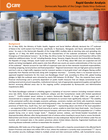
Countries: Democratic Republic of the Congo, Uganda Source: CARE Please refer to the attached file. On 15 May 2026, the Ministry of Public Health, Hygiene and Social Welfare officially declared the 17th outbreak of Ebola in the north-eastern Ituri Province, specifically in Rwampara, Mongwalu and Bunia administrative health zones. 1 As cases in the Democratic Republic of the Congo (DRC) multiply daily at alarming rates and spreading into Uganda, on 17 May, the WHO announced that the characteristics of the outbreak constituted “a Public Health Emergency of International Concern. By 23 May, the Africa Center for Disease Control and Prevention (Africa CDC) added ten additional states “at risk” including Rwanda, Kenya, Tanzania, Angola, Burundi, the Central African Republic, the Republic of Congo, Ethiopia, South Sudan and Zambia.3 As of 29 May, about 906 cases are suspected and 223 deaths are being investigated, while experts note that official case counts are severe underestimates of the true scale of the outbreak. Women account for over 60% of suspected cases due to their domestic household responsibilities, including caregiving, burial practices and food preparation.5 Regional transmission risks are high given porous borders and Ituri’s role as a high-traffic migratory hub for transient workers in local gold mines6 and refugees fleeing conflict (especially from Rwanda and Burundi) along with Congolese returnees. 7 Currently, there is no licensed vaccine or approved targeted treatments for this more rare Bundibugyo Strain8 and, according to Africa CDC, global funding pledges to fight the outbreak were retracted by nearly 50% between 25-28 May. Thus, the response faces severe financial shortcomings and is primarily dependent on public health measures that are deeply constrained by preexisting social and structural inequalities, institutional mistrust, lack of appropriate equipment/supplies and significant barriers accessing affected areas due to the ongoing conflict compounded by Bureaucratic and Administrative Impediments (BAI). The Ebola Bundibugyo outbreak is unfolding against a backdrop of recurrent violence (including renewed violence since late 2025), forced displacement, healthcare collapse and dire humanitarian needs with limited operational access.10 Conflict-related sexual violence in eastern Democratic Republic of Congo (DRC) has surged and is characterized as a weapon of war, while support mechanisms to survivors have significantly reduced.11 The volatility of the protracted conflict also strangles economic pathways, constrains markets and limits safe movement, leaving civilians unable to meet their basic needs and driving poverty rates. For example, over 10 million people in the eastern provinces of North Kivu, South Kivu, Ituri and Tanganyika-representing about one-third of the local population — are expected to face crisis levels of food insecurity or worse, unable to meet their basic food needs. Ituri Province is currently one of DRC’s most severely food-insecure hotspots, with more than a third of the population (or 1.7 million people) facing crisis or worse hunger levels.13 Displaced women, widows, and female-headed households are disproportionately affected, often facing elevated risks of violence when traveling to secure food or access farmlands. Malnutrition and chronic undernutrition among children are also widespread. Nearly half of all children under five are stunted, with increased rates in the eastern provinces where limited dietary diversity, fragmented healthcare and recurring disease outbreaks continue to exacerbate the situation. Additionally, DRC holds one of the largest IDP populations in Africa with a majority concentrated in the affected North Eastern Provinces and about one million IDPs in Ituri, where the outbreak is currently most concentrated. 15,16 Due to the sensitive security challenges linked to multiple armed and inter-communal conflicts, safe humanitarian access, transportation routes and communications infrastructure are very poor creating significant operational limitations for the Ebola response. Safety and protection conditions for women and girls as refugees, IDPs and in host communities are particularly dire in light of rampant human rights’ violations ranging from extrajudicial executions, arbitrary arrest and detention, torture, recruitment of children by armed groups, attacks on basic social services, abductions, forced labor, widespread gender-based violence (GBV) violations, early and forced marriage, forced pregnancy and various other forms of sexual violence, including as a weapon of war as mentioned above. Nationally, 57% of refugees are children and 52% are women and girls and concentrated primarily in the eastern provinces; IDP sex and age disaggregated data is not available but it is estimated that about 60% of IDPs are children, over 50% are women, between 2% and 4% are elderly and about 15% are persons living with disabilities.
Country: Democratic Republic of the Congo Source: Data Friendly Space Please refer to the attached file. Context The confirmation of a Bundibugyo ebolavirus outbreak in the Democratic Republic of the Congo on 15 May 2026 represents more than an acute public health emergency; it exposes the compounding fragilities of a health system, a region, and a global response architecture that has never fully addressed the structural conditions that enable repeated outbreaks. Within two days, the World Health Organization declared a Public Health Emergency of International Concern. This designation reflects not only the pace of transmission but the depth of the challenges facing the response: active insecurity, a pre-existing humanitarian crisis, high cross-border population mobility, and the absence of any approved vaccine or treatment for this specific strain (WHO 17/05/2026). As of 2 June 2026, the DRC Ministry of Health has reported 321 confirmed cases, including 48 confirmed deaths and 116 suspected cases under investigation, across the provinces of Ituri, North Kivu, and South Kivu, with 15 confirmed cases and 1 confirmed death in Uganda (WHO 29/05/2026; ECDC 02/06/2026). Three interlocking dynamics shape this outbreak’s trajectory and define the stakes for humanitarian actors in the region. First, this outbreak involves a strain of Ebola for which no vaccine or approved treatment exists, placing the full weight of containment on community engagement and public health measures at a moment when community trust in the response is visibly fragile (WHO 16/05/2026). Second, the eastern DRC’s chronic humanitarian crisis, stemming from displacement, insecurity, and a severely underfunded health system, is not the background to this outbreak; it is among its primary drivers, creating the precise conditions in which Ebola spreads and response efforts struggle to gain traction (WHO Regional Office for Africa 20/05/2026). Third, the regional dimension warrants close monitoring: Africa CDC has formally identified ten countries at risk, and the outbreak’s epicenter in a high-mobility mining corridor means the window for purely localized containment may be narrowing (Africa CDC 24/05/2026). This analysis is intended as a practical resource for humanitarian organizations operating in or monitoring the affected region. It does not project worst-case scenarios, but takes seriously the conditions that could lead to escalation if unaddressed.
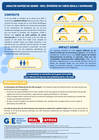
Country: Democratic Republic of the Congo Source: Gender in Emergencies Group Please refer to the attached file. Le 15 mai 2026, le ministère de la Santé de la RDC a confirmé une épidémie d’Ebola dans la province d’Ituri, au nord-est du pays, causée par le virus Ebola Bundibugyo [1]. Dans une région affectée par l’insécurité permanente et les mouvements de population, les cas se sont rapidement propagés aux provinces du Nord- et Sud-Kivu, puis ont franchi la frontière vers l’Ouganda. L’OMS a déclaré une urgence de santé publique de portée internationale le 17 mai [2]. En date du 29 mai, 906 cas suspects et 223 décès font l’objet d’une enquête [3] L’épidémie actuelle montre une légère tendance à une prévalence des cas confirmés chez les hommes. Un quart des cas concernent des enfants, en particulier de moins de cinq ans [4]. Lors des épidémies précédentes, les femmes représentaient jusqu’à deux tiers des cas [5]. Il est essentiel d’anticiper cette évolution. RÉSULTATS CLÉS La transmission est influencée par les rôles de genre. Il est important que les professionnel.le.s de santé sachent que les femmes sont plus susceptibles : d’assumer des responsabilités de soins des malades et être des agentes de santé de première ligne, tels que des agentes de santé communautaires, sages-femmes, agentes d’entretien et infirmières ; d’être chargées d’aller chercher de l’eau et du bois de chauffage ou de traverser les frontières pour acheter des produits de première nécessité [7] ; de gérer l’accès à l’hygiène, les lessives et l’utilisation des sanitaires des ménages dans les zones rurales et périurbaines de la RDC [8]. Les rôles de genre dans les rites funéraires sont nuancés et varient d’un endroit à l’autre. Selon les communautés, les hommes ou les femmes peuvent participer aux rites funéraires traditionnels qui impliquent d’habiller et toucher les corps des défunts.
DR Congo: Analyse Rapide de Genre – RDC : Épidémie du Virus Ebola I Sommaire Read More »
Country: Central African Republic Source: UN Office for the Coordination of Humanitarian Affairs HIGHLIGHTS Civilians and humanitarian actors continue to face insecurity in Haut-Mbomou Over 11,900 Central Africans returnees from Am Dafock, Sudan, receive food assistance Ebola: Government and partners strengthen coordination mechanisms and priority preparedness activities GENERAL CONTEXT Haut-Mbomou Prefecture – South-East Five staff members from two humanitarian organizations were victims of an armed robbery on 30 May along the Zémio–Dembia road. The incident occurred as the team was returning to Zémio, following a mission conducted three days earlier in Guinikoumba, Barh and Tabane as part of the implementation of a protection project funded by the CAR Humanitarian Fund (CAR HF). The assailants stole the team’s work equipment, motorcycle batteries and personal belongings. No injuries were reported. Despite a recent lull, security incidents—including abductions of civilians and attacks targeting humanitarian personnel and convoys—continue to raise serious concerns regarding civilian protection in Zémio and could further hinder humanitarian access, depriving populations of life-saving assistance. Haut-Mbomou ranks second among prefectures most affected by incidents involving humanitarian actors. Ouham Prefecture – West Since 27 May, residents of the village of Lady have been moving preventively into the bush and surrounding villages for fear of their safety, following an attack carried out by armed elements in the locality. HUMANITARIAN NEEDS AND RESPONSE Health Countrywide CAR remains at high risk of Ebola virus disease importation following outbreaks declared in the Democratic Republic of the Congo and Uganda on 15 May 2026, classified as a public health emergency of international concern. The Government, with support from the World Health Organization (WHO) and partners, has activated emergency coordination mechanisms and initiated priority preparedness actions. These include the revision of a national preparedness plan valued at approximately US$ 20 million, which remains largely underfunded, training of 50 trainers, strengthening surveillance and laboratory capacities, and risk communication, awareness campaigns and control at points of entry. Despite government and partner efforts, operational capacities remain insufficient, and urgent support is required to reinforce prevention measures and response readiness. Multi-sector Lim-Pendé Prefecture – West A spontaneous return movement was reported on 4 May in Bezéré locality, 20 km from Bocaranga on the Mann axis. The returnees came from Cameroon, driven by difficult living conditions in refugee sites and the resumption of agricultural activities during the current farming season. According to an assessment conducted by CARITAS on 22 May, 252 households (1,262 people) were registered. The main needs identified include protection, access to water, hygiene and sanitation (WASH), food security, essential household items, as well as education and health.
Central African Republic: Situation Report No. 70, as of 2 June, 2026 Read More »
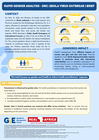
Country: Democratic Republic of the Congo Source: Gender in Emergencies Group Please refer to the attached file. On May 15, 2026, the Ministry of Health of the DRC confirmed an Ebola outbreak in the north-eastern Ituri Province caused by the Bundibugyo ebolavirus [1]. In a region affected by persistent insecurity and population movements, cases quickly spread to the provinces of North and South Kivu, and across the border into Uganda. WHO declared a Public Health Emergency of International Concern on May 17 [2]. As of May 29, 906 suspected cases and 223 deaths are being investigated [3]. The current epidemic shows a slight trend towards a majority of confirmed cases in men. A quarter of the cases are children, especially those under five [4]. In previous outbreaks women have made up to two thirds of cases [5]. Getting ahead of this is key. KEY FINDING Transmission is influenced by gender roles. For health practitioners is important to know that women are more likely to: have caring responsibilities for the sick and be frontline health workers such as community health workers, midwives, cleaners, and nurses; be responsible to collect water and firewood or cross borders to buy essential items [7]; manage household hygiene, laundry, and sanitation use in rural and peri-urban DRC [8]. Gender roles in funeral practices are nuanced and differ across locations. Men or women may be involved in traditional funeral practices involving dressing and touching the bodies of the deceased depending on the community
DR Congo: Rapid Gender Analysis – DRC: Ebola Virus Outbreak I Brief Read More »
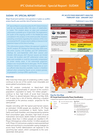
Country: Sudan Source: Integrated Food Security Phase Classification Please refer to the attached file. Sudan remains one of the world’s most severe humanitarian crises. Around 19.5 million people (41 percent of the population) are facing high levels of acute food insecurity (IPC Phase 3 or above) through May 2026. This includes 135,000 people classified in IPC Phase 5 (Catastrophe), characterised by extreme food gaps, starvation, very high levels of malnutrition, and death due to disease or acute malnutrition. More than 5 million people are classified in IPC Phase 4 (Emergency), while a further 14 million people are in IPC Phase 3 (Crisis). Conditions are expected to deteriorate further in the upcoming June–September lean season. While no area is in Famine, 14 areas in North Darfur, South Darfur, and South Kordofan are at risk of Famine if conflict intensifies further, access to food worsens, health services and water, sanitation, and hygiene conditions deteriorate, or displacement increases. Severe acute malnutrition is widespread, with an estimated 825,000 children affected in 2026 amid declining access to treatment. Conflict continues to have far-reaching impacts on the food security and nutrition situation of the Sudanese people. More than 8.9 million people have been internally displaced, and an estimated 40 per cent of health facilities are non-operational. The ongoing conflict in the Middle East adds another layer of complexity to the crisis in Sudan, contributing to higher prices for fuel, food, and fertilizer. Humanitarian access remains highly constrained, limiting both response and data availability in some of the most affected areas. Urgent action—cessation of hostilities, improved access, and scaled‑up assistance—is critical to prevent further deterioration. Otherwise, any meaningful improvement in Sudan’s food security and nutrition situation in 2026 is very unlikely.