Uncategorized

Nearly half of the population in Government-controlled areas of Yemen face acute food insecurity as humanitarian support sharply declines

Country: Yemen Source: World Food Programme ADEN – Nearly half of the population (47 percent) in Government-controlled areas of Yemen are facing high levels of acute food insecurity, according to the latest Integrated Food Security Phase Classification (IPC) analysis. The analysis shows that around 5 million people are currently experiencing Crisis or worse levels of acute food insecurity (IPC Phase 3+), including 1.4 million people in Emergency conditions (IPC Phase 4). The outlook is expected to worsen as the year progresses. During the June-September 2026 lean season, an estimated 5.4 million people (51 percent of the population in government-controlled areas) are projected to face acute food insecurity. The number of people in Emergency conditions (IPC Phase 4) is expected to rise to 1.5 million during this period. Even the post-harvest period from October to December 2026 is unlikely to bring meaningful recovery. The number of people in Emergency conditions (IPC Phase 4) is expected to further increase to 1.8 million, underscoring the severity and persistence of the crisis. Persistently weak purchasing power, continued macro-economic deterioration, high agriculture input costs and a sharp decline in humanitarian assistance, as per current levels of confirmed funding, are expected to drive high levels of food insecurity through the end of the year. “The latest IPC findings send a stark warning. Families are being pushed beyond their coping capacity by the combined effects of economic collapse emanating from conflict and civil unrest, climate shocks, disrupted livelihoods and declining humanitarian support,” FAO, WFP and UNICEF said in a joint statement. Households remain highly dependent on markets at a time when purchasing power continues to erode. Irregular salaries, high food and fuel prices, reduced income opportunities and constraints on agricultural production are limiting families’ ability to meet even basic food needs. At the same time, humanitarian food assistance and humanitarian interventions in the areas of nutrition, health, and water, sanitation, and hygiene (WASH) are expected to decline sharply because of critical funding shortfalls, leaving millions without support as needs rise. Food insecurity remains a major driver of Yemen’s high malnutrition burden. Women and children, internally displaced people, and marginalized communities are among those most at risk. Reduced dietary diversity, poor household food consumption, limited access to essential preventive nutrition services, and worsening living conditions are increasing the risk of acute malnutrition, particularly among pregnant and breastfeeding women and young children. Displaced households continue to face severe food consumption gaps and are increasingly relying on negative coping strategies. Marginalized families with limited access to livelihoods and basic services are experiencing deepening hunger and vulnerability. Agriculture and livestock production—critical lifelines for rural families and local food systems—remain under severe pressure from high input costs, climate shocks, pest outbreaks, flood risks and disrupted trade and supply chains. Around 60 percent of Yemeni households rely at least partially on agriculture for their livelihoods, yet growing numbers need emergency agricultural assistance to sustain production, protect assets and prevent further deterioration. FAO, WFP, and UNICEF are calling on the international community to urgently scale up funding for humanitarian food assistance, nutrition services, health, agriculture and resilience programming. Without immediate, sustained and scaled-up action, millions of vulnerable people risk falling deeper into hunger, malnutrition and irreversible livelihood loss. # # # About FAO: The Food and Agriculture Organization (FAO) is a specialized agency of the United Nations that leads international efforts to defeat hunger. Our goal is to achieve food security for all and make sure that people have regular access to high-quality food to lead active, healthy lives. With over 194 members, FAO works in over 130 countries worldwide. Follow us on X, formerly Twitter, via @FAOYemen About WFP: The United Nations World Food Programme is the world’s largest humanitarian organization saving lives in emergencies and using food assistance to build a pathway to peace, stability and prosperity for people recovering from conflict, disasters and the impact of climate change. Follow us on X, formerly Twitter, via @WFPYemen About UNICEF: UNICEF promotes the rights and wellbeing of every child, in everything we do. Together with our partners, we work in 190 countries and territories to translate that commitment into practical action, focusing special effort on reaching the most vulnerable and excluded children, to the benefit of all children, everywhere. For more information about UNICEF Yemen and its work for children, visit www.unicef.org/yemen
Nearly half of the population in Government-controlled areas of Yemen face acute food insecurity as humanitarian support sharply declines Read More »

4b0da206 B066 41dc 8e44 C03a12cd485b YWs701

Vanuatu: Respiratory Infections: Situation Report #5 as of 25 May 2026

Country: Vanuatu Source: Pacific Community Please refer to the attached file. Key Highlights: From EW19–EW21, 7 RSV cases and 1 influenza case were reported in EW21, bringing totals to 33 RSV and 9 influenza cases in 2026. ILI activity increased (489, 478, 565) but remained below the alert threshold, while SARI decreased (10, 9, 8). Most cases (84%) were in children aged 0–4 years. RSV accounted for the largest burden, and cases were slightly higher among females overall, though males accounted for most meningitis and influenza cases. Efate reported the majority of cases, including all RSV, influenza, and SARS-CoV-2 cases. Pentecost and Tanna each reported one meningitis case. No outbreak has been declared; however, respiratory virus circulation continues to be closely monitored

Vanuatu: Respiratory Infections: Situation Report #5 as of 25 May 2026 Read More »

5393f9d3 C237 4fc9 B55a 06abe3872d42 7TNNUk

Vanuatu Dengue Situation Update 02 (31 May 2026)

Country: Vanuatu Source: Government of Vanuatu Please refer to the attached file. Key highlights: From EW20–EW22, 2 new cases were reported, bringing the total to 10, with no hospitalizations or deaths. Most cases (80%) were from Pango, with 70% female and 60% aged 26+. Some cases reported recent travel to Fiji, suggesting epidemiological links. No outbreak has been declared. Case numbers remain below the alert threshold, and monitoring continues.

Vanuatu Dengue Situation Update 02 (31 May 2026) Read More »

Fbe7c146 Da87 49e5 Ad83 C3e86722ae96 Z57hpO

oPt: UN Human Rights condemns repeated Israeli attacks on police personnel in Gaza

Country: occupied Palestinian territory Source: UN Office of the High Commissioner for Human Rights Please refer to the attached files. The UN Human Rights Office in the Occupied Palestinian Territory condemns Israeli forces’ routine targeting of police personnel in Gaza in repeated attacks. Since January 2026, UN Human Rights has recorded at least twelve attacks against police, killing at least 53 civilians, including 35 police personnel, 5 boys, and 1 woman. Four attacks were recorded in May alone, killing 12 policemen. Israeli attacks against police personnel have been reported during ordinary law enforcement operations, including directing traffic and patrolling streets and markets. The pattern demonstrated disregard for civilian lives, including that of police personnel, with several strikes taking place in crowded areas, killing, in addition to police personnel, internally displaced persons, children, and prison inmates. On 23 May, an Israeli strike struck a police checkpoint in the Al Tawam area, Gaza City, killing at least five police officers and two others, including a boy. On 24 April 2026, an Israeli drone struck a police vehicle carrying out a law enforcement operation in the Beer 19 area of Al Mawasi camp, west of Khan Younis — a crowded encampment of displaced Palestinians. The attack killed four policemen, as well as three other men and a nine-year-old boy from nearby tents. It occurred at the time of sunset prayers, when many Palestinians were moving from their tents to a nearby mosque. On 31 January 2026, an Israeli airstrike hit Ash Sheikh Radwan Police Station, northwest of Gaza City, killing at least 11 Palestinians, including five police officers, one of them a woman. Six more people, including a boy, were also killed in the airstrike, including inmates and people visiting the station for services. The pattern of attacks raises concerns that Israeli forces apply no distinction between police personnel and fighters belonging to armed groups in Gaza. However, under international humanitarian law, police personnel are civilians who are protected against attack, unless and for such time as they directly participate in hostilities. Attacks targeting police personnel simply for performing ordinary law enforcement and policing functions would amount to war crimes. The attacks also fit a broader pattern of Israel’s systematic failure to take constant care to spare civilians and civilian objects in its conduct of hostilities in Gaza. Even in the event that one or several of these attacks targeted fighters, the location and timing of the attacks in crowded areas and the use of weapons with wide-area effects indicate that Israeli forces have failed to take feasible precautions to avoid and minimize incidental loss of civilian life. “As an occupying power, Israel has obligations under international humanitarian law to ensure, as far as possible, that Palestinians have public order and safety. Instead, the systematic targeting and dismantling of public governance institutions has created chaos with devastating impact on civilians,” said Ajith Sunghay, Head of UN Human Rights in the Occupied Palestinian Territory. “Nearly eight months have passed since the announcement of a ceasefire, and there is no end in sight for the killings, the turmoil, and the misery.” ENDS For more information and media requests, please contact: Mayy El Sheikh – mayy.elsheikh@un.org Tag and share Twitter @OHCHR_Palestine Facebook UN Human Rights Palestine

oPt: UN Human Rights condemns repeated Israeli attacks on police personnel in Gaza Read More »

8f21da49 3f67 4543 A36f 92719dd2728d LoOFiE

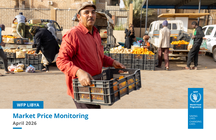
WFP Libya Market Price Monitoring, April 2026

Country: Libya Source: World Food Programme Please refer to the attached file. Key Highlights: National MEB increases sharply following March stabilization: The national Full Minimum Expenditure Basket (MEB) increased by +10.3 percent in April 2026 to LYD 1,250.90, following relative stabilization in March (+0.5 percent). The increase was driven primarily by a sharp rise in the West (+19.9 percent), while the South also recorded a substantial increase (+10.0 percent). In contrast, the East stabilized, decreasing slightly by −1.1 percent. Western region drives the national increase: The West recorded the largest regional increase, rising by +19.9 percent to LYD 1,349.35, becoming the highest-cost region in April. Significant increases were observed in Tripoli (+35.9 percent to LYD 1,446.29), Zwara (+22.1 percent to LYD 1,369.42), Azzawya (+21.1 percent to LYD 1,357.56), and Al Khums (+18.2 percent to LYD 1,360.88). Eastern region stabilizes following earlier increases: The East decreased slightly by −1.1 percent to LYD 1,211.41, following sharp increases in February and March. Declines were recorded in Ejdabia (−13.5 percent), Benghazi (−3.5 percent), and Al Bayda (−0.8 percent), partially offset by increases in Tobruk (+5.5 percent), Al Kufra (+5.1 percent), and Derna (+2.7 percent). Southern region records renewed increases after March decline: The South increased by +10.0 percent to LYD 1,172.24, reversing the decline recorded in March. Increases were widespread, including Wadi Alshati (+16.3 percent), Sebha (+15.2 percent), Ghat (+12.5 percent), Al Jufra (+9.5 percent), and Ubari (+9.2 percent). Macroeconomic pressures continue to shape market dynamics: Exchange-rate pressures and import costs remain the primary drivers of prices, while recent plans by the Central Bank of Libya to inject US dollar liquidity have yet to ease retail prices in the short term. Additional pressures, including fuel shortages, logistics constraints, and localized market disruptions, particularly in the south, continue to contribute to market volatility.

WFP Libya Market Price Monitoring, April 2026 Read More »

A417dda6 1310 44de Bb7b D9a1f37e5f1b XxdMyQ

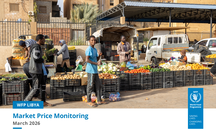
WFP Libya Market Price Monitoring, March 2026

Country: Libya Source: World Food Programme Please refer to the attached file. Key Highlights: National prices increase at a slower pace as regional trends diverge: The national Full Minimum Expenditure Basket (MEB) increased by +0.5 percent in March 2026 to LYD 1,134.00, marking a slowdown compared to February (+5.0 percent). The moderate rise was driven by a sharp increase in the East (+8.2 percent), while the West (−0.4 percent) and South (−5.1 percent) recorded declines. This reflects continued exchangerate pass-through, partly offset by easing in western and southern markets. Western region records easing but remains elevated: The West recorded a slight decrease of −0.4 percent to LYD 1,125.14, with declines observed in key markets including Tripoli (−4.4 percent to LYD 1,064.44) and Zwara (−5.6 percent to LYD 1,060.34). Despite this easing, prices remain elevated, reflecting strong urban demand and sensitivity to import costs. Eastern region drives national increase amid continued price pressures: The East recorded a sharp increase of +8.2 percent to LYD 1,225.04, remaining the highest-cost region. Significant increases were observed in Ejdabia (+16.0 percent to LYD 1,198.56) and Tobruk (+12.2 percent to LYD 1,071.61), reflecting continued exchange-rate passthrough and supply constraints. Southern region records notable decline following earlier increases: The South decreased by −5.1 percent to LYD 1,066.10, with declines across markets including Sebha (−7.4 percent to LYD 875.43) and Ghat (−8.7 percent to LYD 954.00). The decline suggests easing supply pressures following the Ramadan peak, though structural constraints persist including long supply chains and high transport costs. Macroeconomic pressures continue to shape market dynamics: Exchange-rate pressures and import costs remain the primary drivers of prices, while recent plans by the Central Bank of Libya to inject US dollar liquidity have yet to ease retail prices in the short term. Additional pressures, including fuel shortages, logistics constraints, and localized disruptions, continue to contribute to market volatility.

WFP Libya Market Price Monitoring, March 2026 Read More »

D7f3e968 A814 521d Bceb 5f8d694c07bb 3LCU2k

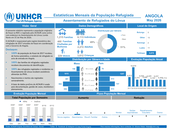
Angola: Estatísticas Mensais da População Refugiada – Assentamento de Refugiados do Lôvua (May 2026) [PT]

Country: Angola Source: UN High Commissioner for Refugees Please refer to the attached Infographic. O presente relatório representa a população originária de Kasai na RDC e registada pelo ACNUR como activa com endereço no Assentamento do Lôvua, Lunda Norte em 31 de May de 2026. O ACNUR é responsável pelo registo biométrico dos refugiados de 2017 oriundos de Kasai em coordenação com o Governo de Angola.

Angola: Estatísticas Mensais da População Refugiada – Assentamento de Refugiados do Lôvua (May 2026) [PT] Read More »

7af387d1 84f1 5e2e Ac80 A7490e174de0 KsulmN

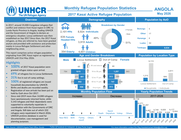
Angola Monthly Refugee Population Statistics – 2017 Kasai Active Refugee Population (May 2026)

Countries: Angola, Democratic Republic of the Congo Source: UN High Commissioner for Refugees Please refer to the attached Infographic. In 2017, around 35,000 Congolese refugees fled conflict and violence from Kasai region in DRC to Lunda Norte Province in Angola, leading UNHCR and the Government of Angola to declare an emergency situation. Lovua settlement was then established on Sep 2017.Since then, the 2017 Kasai refugees, as they are referred to, have been granted asylum and provided with assistance and protection mainly in Lovua Refugee Settlement and other neighbouring areas. This report comprises active refugee population originating from DRC Kasai region as registered by UNHCR until 31st May 2026.

Angola Monthly Refugee Population Statistics – 2017 Kasai Active Refugee Population (May 2026) Read More »

World: Why Climate and Disaster Risk Governance Must Work Together

Country: World Source: Asian Disaster Preparedness Center By Irfan Maqbool In April 1815, Mount Tambora erupted on the island of Sumbawa, in what is now Indonesia. It was the most powerful volcanic eruption in recorded history and perhaps one of the earliest documented global disasters to produce cascading impacts across Asia, Europe, and North America. Volcanic ash and sulfur particles spread through the atmosphere, reducing sunlight and lowering temperatures across large parts of the world. The eruption itself lasted for days. The volcanic winter it triggered lasted nearly three years. 1816 became known as the Year Without a Summer, marking the beginning of famine, epidemic, and displacement that moved continent by continent, with no one grasping their common cause. When families in New England harvested nothing from their frostbitten fields in the summer of 1816, they did not know why. When farmers in Bengal watched their neighbors die by the thousands in a cholera epidemic in 1817, they did not know the connection either. When Lord Byron, moved by the gloom descending around him, wrote his 1816 poem ‘Darkness‘ and described the condition of a world in crisis in a single searing line, ‘Seasonless, herbless, treeless, manless, lifeless,’ he too did not know its cause. Those who suffered had no name for what connected them. What began as a geological event in one location swiftly spread through food systems, public health, economies, and governance on different continents, sometimes as a direct shock and sometimes as an additional stressor on societies already under strain. The world did not learn quickly. In the century and a half after Tambora, disasters continued to take an enormous toll. Earthquakes, cyclones, and floods claimed hundreds of thousands of lives in multiple events, particularly in the first half of the twentieth century. The 1920 Haiyuan earthquake in China killed approximately 200,000 people. The 1923 Great Kanto earthquake in Japan destroyed much of Tokyo and Yokohama and claimed over 100,000 lives. The most devastating tolls, however, came not from the events themselves but from the famines and epidemics that often followed them. The 1931 floods in China are estimated to have killed between two and four million people. The Bengal famine of 1943, following a devastating cyclone the previous year, claimed an estimated 3 million lives. The scale and recurrence of these losses gradually made the cost of inaction impossible to ignore. Governments and the international community responded by building dedicated systems, one organized around disasters, the other around climate, each guided by its own objectives, institutional priorities, and financing architecture. Both produced progress, and both evolved separately. The question is no longer whether these systems can work independently. It is about what level of impact becomes possible when two systems begin to work with genuine coherence. The answer lies partly in understanding why they evolved separately in the first place. The disaster risk stream was formalized in 1987 with the International Decade for Natural Disaster Reduction and subsequently progressed through successive global frameworks, supported by its own agencies, financing structures, and reporting mechanisms. The climate adaptation stream had different origins, emerging from the UNFCCC adopted at Rio in 1992. By 2015, when both the Sendai Framework and the Paris Agreement were adopted in the same year, the overlap was undeniable. What began as a practical division of effort had, over thirty years, quietly solidified into a defining feature of international disaster and climate risk governance. That feature has a cost, and it is not administrative. It is about what does not get done. When two systems address the same risk separately, each optimizes for its own objectives, its own reporting requirements, and its own financing mechanism. The problem is not simple duplication. It is something less visible and more persistent: two systems each doing part of the work, without a mechanism to ensure that the parts add up to something coherent. Pakistan’ s 2022 floods demonstrate what that gap looks like when it matters most. When UN Secretary-General Antonio Guterres described the country as facing “a monsoon on steroids,” he was referring to a crisis that had submerged a third of the country, affected more than 33 million people, and simultaneously disrupted the agriculture, transport, and health sectors. The monsoon brought the flood. The flood revealed deeper vulnerabilities. For the communities living through it, the crisis was one. For the institutions responding to it, there were many separate problems. Pakistan is no exception. Reviewing thirty years of international DRR and CCA development, Wen et al. (2023) find the same pattern across countries as diverse as China, the Philippines, and the United Kingdom, with the two fields consistently addressed independently, separated by institutional and administrative boundaries at every level. In 2021, UNDRR published dedicated guidance on coherence between the two planning processes precisely because parallel rather than complementary outputs had become the norm. The 8th Global Platform for Disaster Risk Reduction, held in 2025, amplified calls for governance that addresses risk across sectors. The bridges are being built, but the underlying architecture remains largely unchanged. Closing that gap requires more than political commitment. It requires deliberate adjustments to how national programs are designed, how financing is structured, and how regional cooperation is organized. The answer does not lie in merging ministries or rewriting international frameworks. It lies in making smarter use of what already exists. The most practical entry point is institutional. When countries respond to a major disaster, they do not operate in isolation. They bring relevant institutions under one roof to coordinate decisions, resources, and actions. The same logic should guide the design of national programs. Establishing joint mechanisms that connect DRR and CCA institutions at the national level, with a clear mandate to coordinate planning, consolidate financing proposals, align data systems, and develop common monitoring frameworks with standardized indicators, would reduce duplication without structural overhaul. In practice, many regulatory and planning instruments, including land use management, building codes, and infrastructure standards, already address the objectives of both agendas simultaneously. Enforcing them coherently, rather

World: Why Climate and Disaster Risk Governance Must Work Together Read More »

Fd2f7109 C2c7 460f 974d 1bb5164c8416 15DNq8

Local Migration Governance Indicators | Profile 2025 | Municipality of Chisinau (Moldova)

Country: Moldova Source: International Organization for Migration Please refer to the attached file. This document is the result of the local Migration Governance Indicators (MGIs) assessment in the Municipality of Chisinau (Republic of Moldova) and summarizes the well-developed areas of the municipality’s migration governance structures, as well as areas with potential for further development, as assessed by the local MGIs. The role of cities and municipalities in migration governance has grown significantly in recent decades, given the rapid pace of urbanization and the importance of cities as destinations for all forms of migration and displacement. With this in mind, in 2016, United Nations Member States adopted the New Urban Agenda at the Habitat III Conference in Quito, Ecuador. Its adoption was a significant recognition of the role of local governments, not only in the management of migration at the local level, but also in realizing the urban dimensions of the 2030 Agenda for Sustainable Development, including, but not limited to, Sustainable Development Goal 11 – to make cities and human settlements inclusive, safe, resilient and sustainable. In an effort to support the discussion between different levels of governments on migration governance, IOM has adapted the MGIs to the local level (local MGIs).

Local Migration Governance Indicators | Profile 2025 | Municipality of Chisinau (Moldova) Read More »