Uncategorized

nepal flash floods: un women gender alert #2

Nepal Flash Floods: UN Women Gender Alert #2

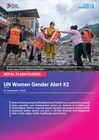
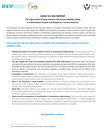
Country: Nepal Source: UN Women Please refer to the attached file. The Alert identifies significant protection and inclusion concerns in holding centres and temporary shelters, including overcrowding, lack of privacy and safe spaces, GBV and exploitation risks, inadequate WASH facilities, caste-based discrimination and barriers for persons with disabilities. It also highlights gaps in maternal and reproductive health services, food and nutrition, livelihoods and the growing burden of unpaid care work on women. A central message is the critical role of women’s rights organizations (WROs) as frontline humanitarian actors. The Alert calls for WROs and organizations representing marginalized groups to be meaningfully involved in assessments, decision-making, targeting, monitoring and recovery, with direct and flexible funding to sustain their response capacity. Key recommendations include ensuring safe and accessible shelters and WASH facilities, strengthening GBV and MHPSS services and referral pathways, maintaining maternal and newborn care, ensuring women’s equitable access to food, cash and livelihoods, systematically collecting sex-, age- and disability-disaggregated data, and establishing accessible feedback and complaints mechanisms. UN Women is supporting the Government-led response through humanitarian coordination, advocacy and partnerships with WROs, organizations of persons with disabilities, youth-led and other community organizations. It is also mobilizing resources for its women-led Community Kitchen initiative, which provides emergency food assistance while supporting women’s leadership, livelihoods and longer-term recovery.

Nepal Flash Floods: UN Women Gender Alert #2 Read More »

cameroon operational presence | 3w (who does what where) january to june 2026

Cameroon Operational Presence | 3W (Who does What Where) January to June 2026

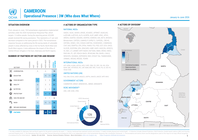
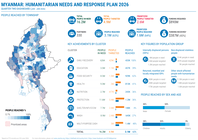
Country: Cameroon Source: UN Office for the Coordination of Humanitarian Affairs Please refer to the attached Infographic. From January to June, 126 humanitarian organizations implemented activities under the 2026 Humanitarian Response Plan, which targets 1.9 million people. During the reporting period, 423,000 people received life-saving assistance. This represents a 21 per cent decrease compared to the same period in 2025. The humanitarian response focuses on addressing the life-saving needs of vulnerable people in areas affected by crises in the Far North, North-West and South-West regions. It also addresses the impact of the influx of Central African refugees in the East, Adamawa and North regions.

Cameroon Operational Presence | 3W (Who does What Where) January to June 2026 Read More »

honduras: leave no one behind: the urgent need to keep violence and human mobility visible in humanitarian analysis and response in central america

Honduras: Leave no one behind: The Urgent Need to Keep Violence and Human Mobility Visible in Humanitarian Analysis and Response in Central America

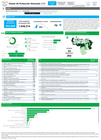
Countries: Honduras, El Salvador, Guatemala Sources: International Organization for Migration, R4V, UN High Commissioner for Refugees, UN Office for the Coordination of Humanitarian Affairs Please refer to the attached file. This document has been prepared by the Protection Sectors of Honduras, Guatemala and El Salvador, jointly with the Regional Protection Sector with support from NORCAP, to provide key information to help inform the need to maintain the perspective of violence and human mobility in humanitarian programming and response in Central America. Key data are presented below, with figures updated by country, to describe the magnitude of this problem and emphasize the immediate need to maintain and increase the humanitarian response to people affected by violence in the region. Factors that describe the urgent need to respond to the consequences of violence and human mobility in NCA: ● Maintaining violence and human mobility as drivers in humanitarian programming: The data provide evidence to establish that violence continues to displace people, destroy livelihoods and generate large-scale protection needs. Ignoring this reality in humanitarian analyses fails to reflect the situation faced by thousands of families in Honduras, Guatemala and El Salvador. ● The data support the need for prioritization beyond the El Niño phenomenon: Quantitative data and evidence collected on the ground show that certain territories and population groups that suffer the consequences of threats, homicides, gender-based violence, extortion, territorial control, recruitment of children and adolescents and other forms of violence must continue to be prioritized; regardless of whether these coincide with the effects of the phenomenon del Niño. ● Convergence of phenomena: The combination of homicides, sexual violence, domestic violence and evictions is pushing increasing numbers of people to leave their homes. Each territory excluded from the humanitarian response today represents a much greater human and operational cost tomorrow. ● What is not measured is made invisible: Excluding indicators of violence, displacement and protection from humanitarian needs analyses implies underestimating the real magnitude of the crisis, making the phenomenon invisible and causing severe unmet needs. ● Rising risks: Protracted violence is not a stable crisis. The data show territorial expansion, new forms of affectation and a growing deterioration in certain groups. Treating this reality as a chronic and immutable situation leads to insufficient responses to increasing risks. ● Violence and its consequences on prioritization in humanitarian programming: The current discussion should not only focus on the structural causes of violence, nor on understanding the phenomenon as a single development problem, but on recognizing its immediate humanitarian consequences. Where risk exposure is combined with high severity and low response, humanitarian action must concentrate resources and capacities.

Honduras: Leave no one behind: The Urgent Need to Keep Violence and Human Mobility Visible in Humanitarian Analysis and Response in Central America Read More »

venezuela: la geografía del agua después de los terremotos en la guaira: análisis de brechas de abastecimiento de agua, saneamiento e higiene en campamentos informales y asentamientos temporales de población desplazada

Venezuela: La geografía del agua después de los terremotos en La Guaira: Análisis de brechas de abastecimiento de agua, saneamiento e higiene en campamentos informales y asentamientos temporales de población desplazada

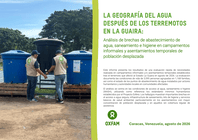
Country: Venezuela (Bolivarian Republic of) Source: Oxfam Please refer to the attached file. Resumen ejecutivo Entre el 18 de agosto de 2026 y la fecha de corte de esta base de datos, equipos de campo relevaron 38 campamentos informales y 20 puntos de agua en el municipio Vargas, Estado La Guaira, alojando a 1,168 familias (3.595 personas) desplazadas por el terremoto de 2026. El presente informe analiza de forma técnica la cobertura de agua, saneamiento e higiene (WASH) de esta población, aplicando el estándar mínimo Esfera de 15 litros por persona por día, e identifica brechas críticas para la priorización operativa y la movilización de recursos. Principales hallazgos • La cobertura de agua es crítica: el 92.1% de la población (3.312 personas) no cuenta con una fuente de agua propia en el campamento que alcance el estándar Esfera; 32 de 38 campamentos no reportan ninguna fuente de agua gestionada directamente en el sitio. • El déficit diario estimado de agua a nivel de sistema es de 29.140 litros/día (equivalente a 3 viajes diarios de camión cisterna de 10,000 litros). Garantizar la calidad de agua a través de la cloración, ozono u otro método de efecto residual. • El saneamiento presenta brechas significativas: 16 campamentos (38.0%) no cuentan con ningún tipo de sanitario, y 6 dependen de instalaciones en albergues cercanos. • Los indicadores de riesgo sanitario ambiental son casi universales: 37 de 38 campamentos reportan presencia de roedores, 37 de moscas y 37 de cucarachas, pese a que 34 campamentos cuentan nominalmente con recolección municipal de residuos. • De los 20 puntos de agua evaluados, 3 se encuentran fuera de servicio y 8 presentan al menos un riesgo operativo (fugas, encharcamiento, mal estado de la infraestructura o calidad de agua deficiente observada). • La capacidad total instalada de almacenamiento de agua en el sistema (campamentos + puntos de agua) es de aproximadamente 24,786 litros, insuficiente frente a una demanda diaria de 53,926 litros bajo el estándar Esfera. Riesgos humanitarios críticos • Riesgo de enfermedades de transmisión hídrica y vectorial: la combinación de cobertura de agua deficiente, ausencia generalizada de sanitarios y presencia casi universal de vectores (roedores, moscas, cucarachas) configura un escenario de alto riesgo de brotes de enfermedades diarreicas, dérmicas y transmitidas por vectores. • Riesgo de prácticas de defecación al aire libre e higiene menstrual insegura en los 16 campamentos sin sanitario, con impacto diferenciado en la dignidad y seguridad de mujeres y niñas. • Riesgo de interrupción del suministro en los puntos de agua no operativos o con fugas activas, que reduce la disponibilidad efectiva por debajo de la capacidad nominal instalada. • Riesgo de protección asociado a la falta de separación de sanitarios y a la dependencia de instalaciones en albergues distantes, particularmente para niñas, mujeres y personas con discapacidad o movilidad reducida. • Riesgo de agotamiento de la respuesta comunitaria: la mayoría de los campamentos con tanque propio dependen de donaciones o de gestión autónoma (“los mismos”), sin una organización humanitaria claramente responsable de la operación y el mantenimiento.

Venezuela: La geografía del agua después de los terremotos en La Guaira: Análisis de brechas de abastecimiento de agua, saneamiento e higiene en campamentos informales y asentamientos temporales de población desplazada Read More »

Türkiye: UNDRR August 2026 newsletter

Countries: Türkiye, Belize, Malawi, Suriname Source: UN Office for Disaster Risk Reduction This is a reproduction of the UNDRR monthly newsletter. Get this update and other newsletters here. This month from UNDRR: statements from SRSG Kamal Kishore on the Nepal-Tibet disaster, the Colombia earthquake, the growing impacts of El Niño and the need for stronger preparedness and anticipatory action, the Early Warnings for All Forum in Ethiopia, the International Disaster Resilience Leaders Forum 2026 in the Republic of Korea, and more inside. Nepal and China disaster shows the complexity of mountain risks Following the devastating flash flood and mudslides that struck parts of Nepal and China on 26 August, Kamal Kishore, Special Representative of the UN Secretary-General for Disaster Risk Reduction (SRSG) and Head of UNDRR, issued a statement expressing his condolences to those affected and called on the international community to support response and recovery efforts. Speaking at the UN Geneva Press Briefing on 28 August, SRSG Kishore said that “in living memory, we have not seen a mountain hazard event like this.” He stressed that the situation remains dynamic and will require continued vigilance, noting that the disaster is a reminder of the transboundary nature of many disaster risks, the fragility of mountain systems, and the challenges of setting up early warning systems for cascading hazards in mountainous regions. Colombia suffers an earthquake soon after Venezuela earthquakes SRSG Kishore issued a statement of solidarity with the people and Government of Colombia in response to the 10 August earthquake. He noted that “while we cannot prevent earthquakes, we can reduce their impacts by investing in seismic resilience.” SRSG Kishore also commended Colombia on the progress it has made in strengthening its disaster preparedness and response capacities. Getting ahead of El Niño 2026-27 El Niño can bring floods, droughts, wildfires, crop failures, and disease outbreaks. But these hazards only become disasters when communities are unprepared. This video explores why early warning, strong governance, and anticipatory action are essential to reducing disaster risk. While the effects of El Niño begin to take shape in many regions, it will take months for its full impacts to unfold. This gives countries a small window of opportunity to proactively manage associated risks and harness any potential gains. This was the key message delivered by SRSG Kishore in a special briefing to journalists ahead of the next El Niño update to be delivered by the World Meteorological Organization on 3 September. Along with several UN agencies, UNDRR recently contributed to the development of guidance for UN Resident Coordinators to ensure countries are well prepared for El Niño. To learn more about El Niño risk management, visit the dedicated UNDRR and PreventionWeb pages. Ethiopia hosts Africa’s push for Early Warnings for All Africa has more than doubled its coverage – from 10 countries with early warning systems in 2015 to 26 in 2026. Yet major gaps remain. That is why governments and partners are gathering in Addis Ababa, Ethiopia, from 2–4 September for the Africa Early Warnings Forum . Convened under the Early Warnings for All initiative and hosted by the Government of Ethiopia, the Forum will take stock of progress, set priorities for action, and mobilise the financing and innovation needed to accelerate implementation across the continent. UNDRR brings DRR solutions to COP17 in Mongolia UNDRR participated in COP17 of the United Nations Convention to Combat Desertification in Mongolia to accelerate the shift from managing drought and desertification crises to reducing their risk. Through its engagement , UNDRR highlighted the need for integrated solutions to address the interconnected challenges of climate change, ecosystem degradation and disaster risk. This includes a better understanding of risks through more robust and interoperable data , pursuing comprehensive risk management approaches , and scaling up investments in resilience , such as early warning systems and nature-based solutions . Incheon convenes urban resilience leaders from across Asia and beyond Local leaders, technical experts and international organisations will gather in Incheon, Republic of Korea, on 7-8 September for the fifth edition of the International Disaster Resilience Leaders Forum 2026 . This year’s event will focus on how locally led resilience can be translated into tangible action in an increasingly complex risk environment shaped by climate change, urbanization and digital transformation. The Forum is organised by Incheon Metropolitan City, the Incheon Institute, and UNDRR, with the support of the Ministry of the Interior and Safety and in partnership with the Trilateral Cooperation Secretariat. A new guide to strengthen anticipatory action in the Americas and the Caribbean UNDRR’s Regional Office for the Americas and the Caribbean has published a new guide titled Probabilistic Risk Assessments to Improve Impact-Based Forecasts and Strengthen Anticipatory Action. The guide sets out how probabilistic risk assessments can sharpen impact-based forecasting and anticipatory action, offering a practical reference on the science and methods needed to turn risk data into early, life-saving decisions. It also addresses long-standing gaps in historical loss data through DELTA Resilience , UNDRR’s system for tracking hazardous events and losses, and highlights loss exceedance curves as a key tool for risk-informed decision-making. Young Arab leaders turn disaster experience into practical solutions More than 260 young people from across the Arab region participated in the Regional Youth Resilience Lab , an initiative designed to transform lived experiences of disasters into practical solutions for preparedness, response and recovery. The Lab was organised by the Arab Youth Advisory Group for Disaster Risk Reduction, in partnership with Madad for Development, Foras Khadra, and the Arab Youth Council for Climate Change in support of International Youth Day and the International Day for Disaster Risk Reduction 2026 campaign. Seven youth speakers from Mauritania, Algeria, Libya, Yemen, Jordan, Syria, and Iraq shared powerful stories of disasters, climate-related risks, and community action. The event also included perspectives from young persons with disabilities, reinforcing the importance of inclusive disaster risk reduction. How journalism can save lives in the Lake Chad Basin As climate change, disasters and protracted crises converge across the Lake Chad Basin, effective

Türkiye: UNDRR August 2026 newsletter Read More »

giews country brief: the kingdom of bhutan: 03 september 2026

GIEWS Country Brief: The Kingdom of Bhutan: 03-September-2026

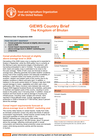
Country: Bhutan Source: Food and Agriculture Organization of the United Nations Please refer to the attached file. FOOD SECURITY SNAPSHOT Cereal production forecast at slightly above‑average level in 2026 Cereal import requirements forecast at above‑average level in 2026/27 marketing year (July/June) Cereal production forecast at slightly above‑average level in 2026 Harvesting of the 2026 maize crop is ongoing and is expected to finalize in September, while the 2026 paddy crop is currently at the tillering to early reproductive stages of development, with harvesting anticipated to start in October. The area planted to both maize and paddy crops is estimated to be close to the five‑year average. Yields of both crops are forecast at above average level, reflecting generally favourable weather conditions during most of the cropping season and adequate availability of fertilizers. Localized maize crop losses occurred in some southern, western and eastern parts of the country due to dry weather conditions in March and early April. In addition, a hailstorm in the south‑central district of Tsirang in late April 2026 caused damage to maize, vegetables and other cash crops, particularly chilli. Heavy monsoon rains between late June and August 2026 triggered localized floods and landslides, particularly in southern and eastern parts of the country, resulting in some losses to the paddy crop in low‑lying areas. In addition, losses of livestock and food stocks as well as damage to housing and infrastructures, including roads, bridges and schools, were reported in flood‑affected areas. Overall, aggregate cereal production in 2026 is forecast at 77 000 tonnes, about 5 percent above the average. Cereal import requirements forecast at above‑average level in 2026/27 marketing year The country relies heavily on cereal imports, mostly from India, as domestic production covers only about two‑thirds of national consumption requirements. Cereal imports consist mostly of rice and small quantities of maize and wheat. In the 2026/27 marketing year (July/June), total cereal import requirements are forecast at 160 000 tonnes, about 15 percent above the average, reflecting continued growth in cereal consumption and declining cereal production areas and domestic output, amid strong economic activity and the recovery in tourism. Disclaimer: The designations employed and the presentation of material in this information product do not imply the expression of any opinion whatsoever on the part of FAO concerning the legal status of any country, territory, city or area or of its authorities, or concerning the delimitation of its frontiers or boundaries. This brief was prepared using the following data/tools: FAO/GIEWS Country Cereal Balance Sheet (CCBS) https://www.fao.org/giews/data-tools/en/ . FAO/GIEWS Food Price Monitoring and Analysis (FPMA) Tool https://fpma.fao.org/ . FAO/GIEWS Earth Observation for Crop Monitoring https://www.fao.org/giews/earthobservation/ . Integrated Food Security Phase Classification (IPC) https://www.ipcinfo.org/ .

GIEWS Country Brief: The Kingdom of Bhutan: 03-September-2026 Read More »