Uncategorized

venezuela: latinoamérica y el caribe resumen de situación semanal al 24 de julio 2026

Venezuela: Latinoamérica y El Caribe Resumen de Situación Semanal al 24 de julio 2026

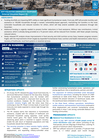
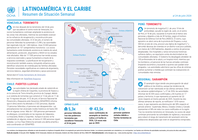
Countries: Venezuela (Bolivarian Republic of), Chile, Guatemala, Mexico, Peru Source: UN Office for the Coordination of Humanitarian Affairs Please refer to the attached Infographic. CIFRAS CLAVE 5,3K personas fallecidas tras dos poderosos terremotos que sacudieron Venezuela el 24 de junio 43,5K casos confirmados de sarampión en América Latina y el Caribe en 2026, 3,8 veces más que en 2025 61K personas quedaron aisladas debido a fuertes tormentas en Chile VENEZUELA: TERREMOTO Un mes después de los terremotos del 24 de junio que sacudieron el centro-norte de Venezuela, los socios humanitarios continúan ampliando la asistencia en las zonas más afectadas, mientras las autoridades avanzan en los esfuerzos de recuperación y reconstrucción para las comunidades afectadas. Al 22 de julio, el número de personas fallecidas ha aumentado a 5.398 y las autoridades han registrado más de 1.460 réplicas. Unas 23.843 personas permanecen en 107 campamentos transitorios. Los socios humanitarios están brindando asistencia en materia de salud, alimentación, protección, alojamiento y WASH en los estados más afectados. Más de 117.000 personas han tenido acceso a servicios esenciales y apoyo humanitario a través de la respuesta coordinada. La planificación de recuperación y reconstrucción también avanza, incluyendo esfuerzos para identificar soluciones de vivienda para las familias afectadas. Persisten necesidades significativas en materia de alojamiento, servicios básicos, seguridad alimentaria y apoyo psicosocial. Apoya aquí al Fondo Humanitario Venezolano Para más información, visita: ReliefWeb Response CHILE: FUERTES LLUVIAS Las autoridades han declarado estado de catástrofe en la región chilena de Coquimbo, la provincia de Huasco y en la comuna de Tierra Amarilla, provincia de Copiapó, debido a un sistema de tormentas que comenzó el 13 de julio en 11 de las 16 regiones del país. Al 22 de julio, el Servicio Nacional de Prevención y Respuesta ante Desastres (SENAPRED) informa que el clima severo ha afectado a 3.532 personas, dejando 13 personas fallecidas y 4 personas aún desaparecidas. Las precipitaciones han alcanzado niveles históricos de hasta 200 mm en algunas zonas. Más de 1.500 personas permanecen en albergues, concentrados en las regiones de Valparaíso, La Araucanía, Biobío y Coquimbo. Aunque el acceso se ha restablecido en algunas zonas, al menos 61.000 personas siguen aisladas. La Cruz Roja Chilena ha activado una alerta amarilla y está coordinando con SENAPRED. PERU: TERREMOTO Un terremoto de magnitud 5,1, de unos 10 km de profundidad, sacudió la región de Junín, en el centro de Perú, el 18 de julio, causando la muerte de al menos seis personas y dejando a más de 30 heridas, según el Instituto Nacional de Defensa Civil de Perú (INDECI). El sismo, cuyo epicentro se ubicó cerca de la provincia de Chupaca, a unos 300 km al este de Lima, provocó una réplica de magnitud 3,7 y derrumbó decenas de viviendas en un distrito rural poco poblado, con menos de 5.000 habitantes, dejando a cientos de personas desplazadas. Dos hospitales y varias estructuras históricas sufrieron daños y se reportaron cortes de electricidad en las comunidades afectadas. El Gobierno ha desplegado alrededor de 100 profesionales de la salud y un hospital móvil, mientras que los bomberos y el personal de las fuerzas armadas continúan limpiando escombros y buscando a quienes aún puedan estar atrapados. Las autoridades advirtieron que las cifras de víctimas podrían aumentar a medida que continúen las evaluaciones en comunidades más remotas. REGIONAL: SARAMPIÓN El sarampión sigue siendo una preocupación de salud pública en las América, aunque las tendencias de transmisión se han ralentizado en las últimas semanas. Entre las semanas epidemiológicas 1 y 27 de 2026, las autoridades informan de 43.559 casos confirmados y 44 muertes en 17 países y territorios, lo que representa un aumento de 3,8 veces respecto al mismo periodo de 2025. Durante las dos últimas semanas de reporte, se notificaron 1.818 nuevos casos, lo que representa una disminución del 38% respecto al periodo anterior. Guatemala, México, Estados Unidos y Canadá representan el 98% de todos los casos notificados en la región. Tras los recientes terremotos en Venezuela, los socios de salud continúan priorizando las actividades de vigilancia y vacunación para reducir el riesgo de transmisión del sarampión entre las poblaciones desplazadas que viven en alojamientos temporales.

Venezuela: Latinoamérica y El Caribe Resumen de Situación Semanal al 24 de julio 2026 Read More »
venezuela: latin america & the caribbean weekly situation update as of 24 july 2026

Venezuela: Latin America & The Caribbean Weekly Situation Update as of 24 July 2026

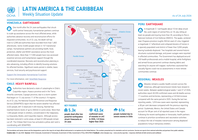
Countries: Venezuela (Bolivarian Republic of), Chile, Guatemala, Mexico, Peru Source: UN Office for the Coordination of Humanitarian Affairs Please refer to the attached Infographic. KEY FIGURES 5.3K people dead after two powerful earthquakes struck Venezuela on 24 June 43.5K confirmed cases of measles in LAC in 2026, 3.8 times higher than 2025 61K people isolated due to severe storms in Chile VENEZUELA: EARTHQUAKE One month after the 24 June earthquakes that struck north-central Venezuela, humanitarian partners continue to scale up assistance across the most affected areas, while authorities advance recovery and reconstruction efforts for impacted communities. As of 22 July, the death toll has risen to 5,398 and authorities have recorded more than 1,460 aftershocks. Some 23,843 people remain in 107 transitional camps. Humanitarian partners are providing health, food, protection, shelter and WASH assistance across the most affected states. More than 117,000 people have now accessed essential services and humanitarian support through the coordinated response. Recovery and reconstruction planning is also advancing, including efforts to identify housing solutions for affected families. Significant needs persist in shelter, basic services, food security and psychosocial support. Support the Venezuelan Humanitarian Fund here For more information, visit: ReliefWeb Response CHILE: HEAVY RAINFALL Authorities have declared a state of catastrophe in Chile’s Coquimbo region, Huasco province and in the Tierra Amarilla commune, Copiapó province, due to a storm system that began on 13 July across 11 of the country’s 16 regions. As of 22 July, the National Disaster Prevention and Response Service (SENAPRED) report that the severe weather has affected 3,532 people, left 13 dead and 4 still missing. Rainfall has reached historic levels of up to 200mm in some areas. More than 1,500 people remain in shelters, concentrated in the Valparaíso, La Araucanía, Biobío, and Coquimbo regions. Although access has been restored in some areas, at least 61,000 people remain cut off. The Chilean Red Cross has activated a yellow alert and is coordinating with SENAPRED. PERU: EARTHQUAKE A magnitude 5.1 earthquake about 10 km deep struck the Junín region of central Peru on 18 July, killing at least six people and injuring more than 30, according to Peru’s National Institute of Civil Defense (INDECI). The quake, centered near Chupaca province roughly 300 km east of Lima, triggered a magnitude 3.7 aftershock and collapsed dozens of homes in a sparsely populated rural district of fewer than 5,000 people, leaving hundreds displaced. Two hospitals and several historic structures sustained damage, and power outages were reported in affected communities. The Government has deployed around 100 health professionals and a mobile hospital, while firefighters and armed forces personnel continue clearing debris and searching for anyone still trapped. Authorities cautioned that casualty figures could rise as assessments in more remote communities continue. REGIONAL: MEASLES Measles remains a public health concern across the Americas, although transmission trends have slowed in recent weeks. Between epidemiological weeks 1 and 27 of 2026, authorities report 43,559 confirmed cases and 44 deaths across 17 countries and territories, representing a 3.8-fold increase compared with the same period in 2025. During the last two reporting weeks, 1,818 new cases were reported, representing a 38 per cent decrease compared with the previous reporting period. Guatemala, Mexico, the United States and Canada account for 98 per cent of all reported cases in the region. Following the recent earthquakes in Venezuela, health partners continue to prioritize surveillance and vaccination activities to reduce the risk of measles transmission among displaced populations living in temporary shelters.

Venezuela: Latin America & The Caribbean Weekly Situation Update as of 24 July 2026 Read More »

opt: wfp palestine emergency response external situation report #93, 24 july 2026 (reporting period: 1 15 july 2026)

oPt: WFP Palestine Emergency Response External Situation Report #93, 24 July 2026 (Reporting period: 1-15 July 2026)

Country: occupied Palestinian territory Source: World Food Programme Please refer to the attached file. HIGHLIGHTS Funding shortfalls are impacting WFP’s ability to meet significant humanitarian needs. From July, WFP will provide monthly cash assistance to 100,000 households through a revised, vulnerability-based approach, maintaining full transfers to the most vulnerable households and reduced transfers for others, which will help extend available cash assistance through late November. Additional funding is urgently needed to prevent further reductions in food assistance. Without new contributions, in-kind assistance, which is already being provided at a 75 percent ration, will be reduced from October, with fewer people receiving reduced rations. Newly released IPC analysis shows improvements in food security and child nutrition across Gaza, however progress remains fragile, with the improvements driven largely by expanded humanitarian food, nutrition and health interventions rather than a recovery of livelihoods, local food systems or essential services.

oPt: WFP Palestine Emergency Response External Situation Report #93, 24 July 2026 (Reporting period: 1-15 July 2026) Read More »

wfp venezuela earthquakes response situation report, 23 july 2026

WFP Venezuela Earthquakes Response Situation Report, 23 July 2026

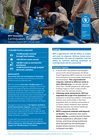
Country: Venezuela (Bolivarian Republic of) Source: World Food Programme Please refer to the attached file. HIGHLIGHTS One month after the earthquakes in Venezuela, access to food remains one of the top concerns for families across the affected areas. WFP has reached more than 120,000 people with food assistance through four modalities, since no two families are living through this period the same way. Assistance include hot meals in shelters, ready-to-eat rations for those still on the move, food baskets for households that can still cook and in communities who lost their sources of income, and prepaid electronic vouchers in areas where markets are functioning, giving families the power to prioritize their own needs. The agency is also serving as the logistics backbone of the humanitarian response, moving relief supplies into hard-to-reach communities. WFP’s logistics services have supported NGOs and UN agencies with the transport and storage of supplies spanning shelter, health, protection, and WASH. To date, WFP has secured one third of the USD 80 million required to sustain and scale the response. Efforts continue to close the gap and safeguard the support for 500,000 people in 3 months.

WFP Venezuela Earthquakes Response Situation Report, 23 July 2026 Read More »

somalia: radio ergo weekly feedback report, issued: 24 july 2026

Somalia: Radio Ergo Weekly Feedback Report, Issued: 24 July 2026

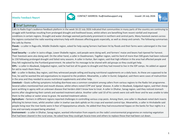
Country: Somalia Source: Radio Ergo Please refer to the attached file. Brief Summary Calls to Radio Ergo’s audience feedback platform in the week 16-22 July 2026 indicated that communities in many parts of the country are continuing to struggle with hardships resulting from prolonged drought and livelihood losses, whilst others are benefiting from recent rainfall and improved conditions in certain regions. Drought and water shortage seemed particularly prominent in northern and central parts. Many livestock owners across the regions contacted the radio wanting veterinary help with diseases affecting goats especially, as well as sheep and camels. The following summarises the calls by theme. Floods – a caller in Raga-elle, Middle Shabelle region, asked for help saying farmers had been hit by floods and their farms were submerged in the river water. Food Security – a caller in Jazira village, Lower Shabelle region, said people were doing well, and farmers’ maize and beans had ripened for harvest. Their livestock were also doing well. On the other hand, a caller in Daadmareen, Togdher region, said his herd of more than 500 goats had been reduced to 150 following prolonged drought and failed rainy seasons. A caller in Karkar, Bari region, said that high inflation in the area had affected people and they felt neglected by the Puntland government. He asked for his message to be shared with aid groups so they could get help. IDPs – a caller in Abudwak, Galgadud region, said he had lost all his goats to drought and they had moved to live in the IDP camps. He added an appeal for aid to reach them there. Aid – a caller in Baidoa, Bay region, said they witnessed people selling and buying nutritional supplements on a daily basis. As these are supposed to be free, he said he wanted the aid organisations to respond to the problem. Meanwhile, a caller in Guriel, Galgadud, said there were cases of malnutrition in the area and they needed to access nutritional supplements and other help. Livestock – Goats suffering symptoms including diarrhoea was a common complaint among callers from various regions to the Radio Vet programme. Several callers mentioned foot and mouth disease, whilst others noted CCPP and ‘qanje’ disease. A caller in Abudwak, Galgadud region, said their sheep were writhing in agony with an unknown disease that herders didn’t know how to treat. A caller in Dhahar, Sanag region, said they noticed stomach worms after slaughtering their camels and wanted treatment advice. Another caller said 10 of his camels were sick with fever and he was unable to take them to the valleys or water areas to graze. He wanted treatment advice. Agriculture – farmers in different regions reported challenges in controlling various crop pests. Among them, one caller in Abudwak noted dark insects affecting his lemon trees, whilst another caller in Jowhar saw dark aphids on his crops and wanted control tips. Meanwhile, a caller in Hirshabelle said people living near the river banks were in fear of hippopotamus attacks. He added that they had encountered hippos on the banks for four nights in a row and narrowly escaped being attacked. Environment – a caller in Dhahar, Sanag region, wanted information from experts on the radio’s environmental programme on restoring vegetation that had been cleared in the rural areas. He asked how they could get Acacia trees and others to replace those that had been cut down. Drought and impact – in the north, a caller in Ainabo said the drought there was severe. He said drought had affected the whole of Somaliland, and his region especially. Callers in Togdher, including Bali-nasiye, said they hadn’t had much rain and the drought was back with windy conditions. A caller in Dhagahya-ade, Sool region, said they hadn’t had rainfall recently and needed aid due to the drought conditions. Another caller in Puntland said they were grappling with drought that had spanned over two years. They needed help. Among many callers from parts of Galgadud, several in Abudwak cited drought, failed rains, livestock diseases and hardships. A caller in Dalsan said their livestock continued to die of drought and disease, and they hadn’t had rainfall recently. In Hiran region, callers in Burweyn and El-gal said their livestock lacked fodder and water and people needed aid. A female caller who did not state her location said they were facing drought, water shortage and insecurity. She added that she personally had $500 in debt to pay off and that life was difficult. She said they needed humanitarian aid. Rainfall – callers reported rain and generally good conditions from scattered parts of Sanag, Hirshabelle, Bay, and a few other areas. A female caller in Bir-hamar, Sanag, expressed thanks for rainfall and peace in the area. Another in Raga-elle., M. Shabelle, said they had rainfall, water in their farms, and peace to continue farming. Several in parts of Bay region said they were doing well with the rain. A caller in Jire, Bakool region, gave thanks for rainfall, healthy crops, and their donkeys giving birth.

Somalia: Radio Ergo Weekly Feedback Report, Issued: 24 July 2026 Read More »

Venezuela Earthquake: One month update – 24 July 2026

Country: Venezuela (Bolivarian Republic of) Source: Médecins Sans Frontières One month following the devastating earthquakes of June 24, Venezuela continues to grapple with the aftermath, facing profound grief as thousands mourn the loss of family, friends, and everything they owned. ​ This sudden natural disaster that affected particularly the coastal state of La Guaira, near Caracas, has transitioned into a complex, protracted crisis characterized by massive population displacement, severe infrastructural damage, and deep psychological trauma. In La Guaira and Caracas, the urgent needs include access to clean water, adequate shelter, mental health care, and protection. ​ The official death toll has reached 5,398, with 16,740 individuals injured, 17,907 displaced, and 6,462 rescued from the rubble. The structural devastation is staggering; 190 buildings have officially collapsed, while over 895 structures, including schools, vital public infrastructure, and hospitals, have suffered severe damage and are at risk of collapse. ​ Thousands are currently residing in makeshift Internally Displaced Persons (IDP) sites or sleeping in tents adjacent to their damaged homes. In Maiquetía (La Guaira), approximately 3,000 individuals are camping on the pavement directly in front of 20 severely damaged and unstable buildings. Similarly, in Avenida Bolívar (Caracas), another 3,000 individuals are living on the streets, stripped of proper shelter and basic services. ​ In response to the crisis, Médecins Sans Frontières (MSF) currently operates four mobile clinics providing Primary Health Care, Mental Health support, Health Promotion, and WASH activities across the most affected areas: three in La Guaira (Maiquetía, Catia La Mar, and Tamaguarena) and one in Caracas (Avenida Bolívar). These clinics offer primary healthcare, clean water, and emergency mental health interventions to families who have lost everything. In the past month, MSF medical teams have conducted 2,217 medical consultations. The injuries sustained extend beyond physical; families still searching for loved ones beneath the rubble, along with the shock of sudden homelessness and displacement, have given rise to a psychological crisis. To address these mental health challenges, MSF has integrated mental health support into its mobile response, providing: 113 individual mental health, 323 group therapy sessions, 1,402 psycho-education sessions. With local infrastructure severely compromised, MSF teams are implementing water, sanitation, and hygiene (WASH) intervention: ​ Installed a 5,000-liter water bladder in Playa Verde to serve as a reliable clean water source. Initiated the ongoing chlorination of four primary water distribution sites alongside continuous water purification monitoring. Distributed 5,000 bottles of emergency drinking water to families living on the streets. Over the past month, MSF has donated approximately 8.5 tons of emergency medical supplies. This extensive logistical effort has supported immediate, life-saving operations and addressed the healthcare needs of an estimated 10,000 patients. MSF teams continue to provide disinfectants and Infection Prevention and Control (IPC) materials not only to active hospitals but also to overwhelmed local morgues, ensuring safety, hygiene, and dignity amid unprecedented loss.

Venezuela Earthquake: One month update – 24 July 2026 Read More »

dr congo: rd congo : plan de réponse du secteur Éducation face à l'épidémie d'ebola dans la province de l'ituri – juillet 2026

DR Congo: RD Congo : Plan de réponse du secteur Éducation face à l’épidémie d’Ebola dans la province de l’Ituri – juillet 2026

Country: Democratic Republic of the Congo Sources: Education Cluster, Save the Children, UN Children’s Fund Please refer to the attached file. Résumé La rentrée scolaire du 1er septembre 2026 intervient dans un contexte où l’Ituri doit gérer simultanément deux urgences. La première est l’urgence sanitaire liée à la maladie à virus Ebola. La seconde est l’urgence éducative et humanitaire déjà ancienne, alimentée par les conflits armés, les déplacements de population, la pression sur les écoles d’accueil, l’insuffisance d’infrastructures scolaires, la faible disponibilité de l’eau dans les écoles et les risques de protection auxquels les enfants sont exposés. Dans une telle situation, l’école ne peut pas être considérée seulement comme un lieu d’apprentissage mais aussi un espace de prévention, de veille communautaire, d’alerte précoce, de protection, de soutien psychosocial et de maintien du lien entre l’enfant, la famille et les services sociaux de base.

DR Congo: RD Congo : Plan de réponse du secteur Éducation face à l’épidémie d’Ebola dans la province de l’Ituri – juillet 2026 Read More »

opt: education access analysis | gaza strip

oPt: Education Access Analysis | GAZA STRIP

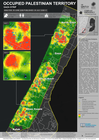
Country: occupied Palestinian territory Source: Education Cluster Please refer to the attached file. Education Access Analysis – Overview Map Overview This map presents a gap analysis of Temporary Learning Spaces (TLSs) across the Gaza Strip, Occupied Palestinian Territory. It identifies priority intervention areas by highlighting localities with high concentrations of kindergarten and school-aged children but limited access to Temporary Learning Spaces. Higher-priority areas are represented by red colours on the map. The analysis is based on dataset including all operational Education Cluster partners’ Temporary Learning Spaces (TLSs) from 30 June 2026, with their GPS coordinates and enrolment figures, a Site Management Cluster’s IDP Sites list from 11 May 2026 with their coordinate points, and a 100-meters gridded population dataset from Real Ground Research based on anonymised telecommunications data from 01 March 2026. A total of approximately 770,422 school-aged children and adolescents (4 to 17 years old), as of 01 March 2026, was estimated from the gridded population dataset, and 613 Temporary Learning Spaces, including a total of 432,701 enrolled students, were identified in Gaza Strip western area, as of 30 June 2026. Based on these data, a Two-Step Floating Catchment Area (2SFCA) approach was used to assess education accessibility to the potential KG and school-aged group. Temporary Learning Space locations and student enrolment were compared against the potential student population within a 300-meters walking distance. And, accessibility scores were calculated for each population location, and areas with high demand and low accessibility were identified as priority zones for future education investments. Summary of Findings A total of 770,422 potential KG and school-aged students were estimated, based on the gridded population dataset, as of 01 March 2026. A total of 432,701 enrolled students were identified among 613 TLSs, as of 30 June 2026. Therefore, approximately 337,721 KG and school-aged potential students remain underserved. A total of 1,603 Sites appear located within a walking distance of 300m from Temporary Learning Space, and 546 Sites appear located outside of a walking distance of 300m from a Temporary Learning Space, as of 11 May 2026. Several population clusters remain underserved. New learning space investments should focus on identified hotspots. This may include expanding existing Temporary Learning Spaces (TLSs) or establishing new learning spaces where needed.

oPt: Education Access Analysis | GAZA STRIP Read More »