Uncategorized

wfp south sudan weekly market monitor (15 –21 june 2026)

WFP South Sudan Weekly Market Monitor (15 –21 June 2026)

Country: South Sudan Source: World Food Programme Please refer to the attached file. KEY MESSAGES • Food basket costs averaged 1percent lower than the previous week. Eastern Equatoria and Upper Nile recorded declines of over 10percent, driven by price decreases in Kapoeta South, Malakal, Renk and Torit. • Fuel prices rose by over 15percent week-on-week in Mabior, Abyei, and Pibor, while falling by 15percent in Rumbek. The national average remained stable. Fuel prices were highest in Pibor, returning to SSP 50,000 per liter. • The South Sudanese Pound traded between SSP6,000 and SSP6,600 per USD on parallel markets, with no change in the national average. In Renk, the parallel exchange rate fell from SSP 6,600 to SSP 6,300, reflecting a 5percent appreciation.

WFP South Sudan Weekly Market Monitor (15 –21 June 2026) Read More »

philippines: asean weekly disaster update week 30 | 20 26 july 2026

Philippines: ASEAN Weekly Disaster Update Week 30 | 20 – 26 July 2026

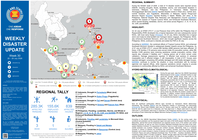
Countries: Philippines, Indonesia, Malaysia Source: ASEAN Coordinating Centre for Humanitarian Assistance Please refer to the attached Infographic. REGIONAL SUMMARY: During the thirtieth week of 2026, a total of 13 disaster events were reported across ASEAN, including droughts, floods, landslides, storms, and wind-related disasters in Indonesia, Malaysia, and the Philippines. In Indonesia, Badan Nasional Penanggulangan Bencana (BNPB) reported disaster events in West Java, Central Java, Central Sulawesi, and Yogyakarta. Meanwhile, in Malaysia, Agensi Pengurusan Bencana Negara (NADMA) reported flooding in Sabah, Melaka, and Johor. In the Philippines, National Disaster Risk Reduction and Management Council (NDRRMC) reported the impacts of Tropical Cyclone NOUL and Enhanced Southwest Monsoon, which caused flooding, landslides, storms, and winds across Regions I, II, III, VI, IX, XI, XII, CAR, and BARMM. HIGHLIGHT: On 22 July at 0700H UTC+7, a Low Pressure Area (LPA) within the Philippine Area of Responsibility (PAR) developed into a tropical depression and was subsequently named NOUL, with local name Kiyapo (PAGASA). On 24 July, NOUL intensified into a tropical storm and made its initial landfall over Camiguin Island, Cagayan, the Philippines. NOUL also enhanced Southwest Monsoon, which also brought significant impacts across the Philippines. NOUL continued to intensify and exited the PAR on 25 July. According to NDRRMC, the combined effects of Tropical Cyclone NOUL and enhanced Southwest Monsoon resulted in widespread disaster impacts across the Philippines. As of 27 July at 0700H UTC+7, around 58K families (269K persons) had been affected. Of these, 2.5K families (11K persons) were served inside 54 evacuation centres, while 29K families (144K persons) were receiving assistance outside evacuation centres. Initial reports also indicated 3 fatalities and 1 missing person (all of which remain under validation). Damage assessments reported 14 affected road sections (5 remained impassable) and 5 affected bridges (1 still impassable). A total of 671 houses were reported damaged, comprising 425 partially damaged and 246 totally damaged houses. NDRRMC continues to monitor the situation in close coordination with its member agencies and regional offices, while response operations remain ongoing to provide assistance to communities affected by NOUL and enhanced Southwest Monsoon. HYDRO-METEO-CLIMATOLOGICAL: During the past week, data from the ASEAN Specialised Meteorological Centre (ASMC) indicated medium to high seven-day average rainfall across areas north of the Equator, with the highest rainfall observed over the Philippines, associated with TC NOUL and the enhanced Southwest Monsoon. As of 27 July, a Low Pressure Area (INVEST 93B) located over the Bay of Bengal, approximately 800 km west of Rakhine, Myanmar, is forecast to move north-northwestwards towards the Indian coast. Based on the current forecast, landfall in Myanmar is not expected. However, heavy rainfall and strong winds may still affect the western coastal areas of Myanmar. In addition, another tropical disturbance over the western Pacific Ocean is currently being monitored for its potential development (DMH, PAGASA, JTWC). GEOPHYSICAL: Nine (9) significant earthquakes (M>5.0) were recorded by Indonesia’s Badan Meteorologi, Klimatologi, dan Geofisika (BMKG) and the Philippines Institute of Volcanology and Seismology (PHIVOLCS). Mount Anak Krakatau (alert level III), Semeru (alert level III), Lewotobi Laki-laki (alert level III), and Ibu (alert level II) in Indonesia, and Taal (alert level 1), Mayon (alert level 3), Bulusan (alert level 1), and Kanlaon (alert level 2) volcanoes in the Philippines reported recent volcanic activity according to Pusat Vulkanologi dan Mitigasi Bencana Geologi (PVMBG) and PHIVOLCS. OUTLOOK: According to the ASEAN Specialised Meteorological Centre (ASMC), for the coming week, drier conditions are predicted over the equatorial region and parts of the south-western Maritime Continent. Meanwhile, warmer-than-normal temperatures are expected across much of the western and central Maritime Continent, as well as over most of southern Mainland Southeast Asia and parts of the north-eastern Maritime Continent. For assessment of extreme, there is a small increase in chance of extreme rainfall predicted over southern Thailand and northern Sumatra. Meanwhile, there is a moderate increase in chance of extreme hot conditions over southern Sumatra, southern Borneo, southern Sulawesi, and a small increase in chance of extreme hot conditions over much of the central Maritime Continent, Papua and parts of Mainland Southeast Asia. The El Niño – Southern Oscillation (ENSO) monitoring system state is “El Niño Conditions”. Models strongly agree that the El Niño conditions will continue through the second half of 2026, with strong conditions very likely from August-September 2026. During El Niño, it is typically drier for much of the Maritime Continent. Sources: ASEAN Disaster Monitoring & Response System (DMRS); ASEAN Disaster Information Network (ADINet); ASEAN Specialised Meteorological Centre (ASMC); ASEAN Earthquake Information Centre (AEIC); Joint Typhoon Warning Centre (JTWC); Indonesia: BNPB, BMKG, PVMBG; Malaysia: NADMA; Myanmar: DMH; Philippines: NDRRMC, PHIVOLCS, PAGASA; Various news agencies.

Philippines: ASEAN Weekly Disaster Update Week 30 | 20 – 26 July 2026 Read More »

lebanon: belgium’s contribution through the special fund for emergency and resilience activities (sfera)

Lebanon: Belgium’s contribution through the Special Fund for Emergency and Resilience Activities (SFERA)

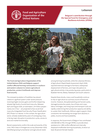
Country: Lebanon Source: Food and Agriculture Organization of the United Nations Please refer to the attached file. The Food and Agriculture Organization of the United Nations (FAO) and Belgium support conflict‑affected farming communities in southern and eastern Lebanon to restore agricultural production, protect livelihoods and improve food security The renewed escalation of hostilities has placed Lebanon’s agrifood system under severe pressure, reversing fragile recovery gains and further deepening already high levels of acute food insecurity. Between April and August 2026, an estimated 1.24 million people – nearly one in four – are projected to face acute food insecurity (Integrated Food Security Phase Classification [IPC] Phase 3 or above).1 In this context, the agriculture sector, already weakened by years of overlapping crises, is facing major disruption to production cycles, access to land and market functionality. Recent assessments confirm the scale and severity of the crisis. FAO’s Data in Emergencies survey (December 2025) identified growing humanitarian and agricultural needs among farming households, while the Lebanese Ministry of Agriculture’s Rapid Needs Assessment (April 2026) reported extensive damage to farmland, widespread displacement of farmers, and major disruptions to agricultural activity in key producing areas, particularly in Baalbek-Hermel, Bekaa, Nabatiyeh and South Lebanon. Despite these shocks, many rural households continue to rely on agriculture as a primary source of food and income. However, disrupted planting and harvest cycles, damaged productive assets, loss of trees and crops, labour shortages, and rising input and transport costs are rapidly undermining their productive capacity and ability to sustain their livelihoods. Without urgent support, these constraints risk translating into longer-term declines in yields, income and food availability. In response, the Government of Belgium has contributed USD 800 000 to FAO, through SFERA, to provide direct assistance to 1 890 conflict-affected and internally displaced smallholder farming households, of whom at least 30 percent female-headed.

Lebanon: Belgium’s contribution through the Special Fund for Emergency and Resilience Activities (SFERA) Read More »

unhcr syria operational update june 2026

UNHCR Syria Operational Update – June 2026

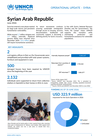
Country: Syrian Arab Republic Source: UN High Commissioner for Refugees Please refer to the attached file. Syria has entered a new phase marked by large-scale returns and persistent humanitarian vulnerability. While around 1.7 million refugees and 1.9 million internally displaced persons (IDPs) have returned since December 2024, 15.6 million people still require humanitarian assistance. As return movements continue, ensuring sustainable reintegration through access to housing, services, documentation, livelihoods and community support is becoming a defining priority for Syria’s recovery. In line with Syria’s National Recovery Priorities and the Government’s “No Tents, No Camps” vision, UNHCR supports this maintaining transition protection while and humanitarian assistance for vulnerable populations. Operational Context Syria is experiencing sustained refugee and IDP returns while humanitarian needs remain widespread. Conditions remain volatile in parts of the country, while damaged housing, limited access to services, documentation barriers and economic hardship continue to affect communities receiving returnees and constrain sustainable reintegration. Recognizing that sustainable return increasingly depends on economic recovery, UNHCR participated in the Private Sector National Conference, organized by the Ministry of Economy and Industry and UNDP, to discuss economic recovery priorities. Through its side event, From Return to Recovery: Private Sector Engagement with Returnees, UNHCR highlighted the role of private-sector investment, employment opportunities and entrepreneurship in supporting reintegration and reducing long-term dependency on humanitarian assistance. The second round of the Enhanced Regional Perceptions and Intentions Survey, covering Syrian refugees in Lebanon, Jordan, Iraq, and Egypt and published by UNHCR and the World Bank in April, found that only 14% of refugee households intend to return within the next 12 months, while 77% express a long-term aspiration to return, indicating that willingness to return remains higher than confidence in current conditions inside Syria. Those who did not intend to return cited lack of adequate housing, limited access to basic services, safety and security concerns, and lack of employment and economic opportunities as the main barriers to return. Through community- and area-based approaches, UNHCR supports refugees, IDPs, returnees, host communities across Syria, focusing on protection, selfreliance, and local recovery in areas of greatest need. In 2026, UNHCR collaborates with 26 partners, including ministries, other UN agencies and international and national non-governmental organizations in all 14 governorates.

UNHCR Syria Operational Update – June 2026 Read More »

European Union Strengthens Support To WFP Assistance For Vulnerable Refugees And Conflict-Affected People In Iran

Countries: Iran (Islamic Republic of), Afghanistan Source: World Food Programme TEHRAN, Iran – The United Nations World Food Programme (WFP) today welcomed a EUR 3.08 million contribution from the European Union (EU) to support vulnerable refugees and conflict-affected people in Iran, helping sustain life-saving assistance over 12 months. This contribution will enable WFP to maintain food security support for populations facing increased economic pressures and humanitarian needs, helping families meet their essential needs and protect their well-being. Iran hosts one of the largest refugee populations in the world, the majority from Afghanistan. With support from the European Union and other partners, WFP provides food assistance to over 35,000 of the most vulnerable refugees across 20 settlements, including cash-based transfers, school feeding programmes and livelihood support. “Many vulnerable families in Iran are facing growing economic pressures that threaten their ability to put food on the table,” said Mayssa Alghribawy, WFP Representative in Iran. “Thanks to the support of the European Union, WFP can continue providing critical assistance that not only meets immediate needs but also helps strengthen resilience over time.” The contribution will also support WFP’s assistance to conflict-affected Iranians, ensuring that humanitarian assistance reaches those most in need in a timely, principled and needs-based manner. Through its partnership with the European Union, WFP provides monthly cash assistance to vulnerable households, enabling families to purchase food from local markets based on their needs and preferences, while supporting local economic activity. The European Union is a longstanding partner of WFP, and its support in Iran plays a vital role in enabling the organization to maintain operations and respond to evolving humanitarian needs. With this contribution, WFP plans to reach 52,000 (17,000 Iranians and 35,000 refugees) ensuring continued access to food assistance for vulnerable communities across the country. # # # About WFP The United Nations World Food Programme is the world’s largest humanitarian organization saving lives in emergencies and using food assistance to build a pathway to peace, stability and prosperity for people recovering from conflict, disasters and the impact of climate change. Follow us on X, formerly Twitter, via @wfp_media and @wfpiran.

European Union Strengthens Support To WFP Assistance For Vulnerable Refugees And Conflict-Affected People In Iran Read More »

Jordan strengthens local resilience through climate action and wildfire prevention

Country: Jordan Source: UN Office for Disaster Risk Reduction In Jordan’s northern governorate of Irbid, a local resilience planning process supported by the United Nations Office for Disaster Risk Reduction (UNDRR) has evolved into a growing movement of community-led action, government ownership and climate resilience. More than a year after the completion of the project, its recommendations are continuing to shape local priorities, demonstrating how risk-informed planning can translate into tangible action on the ground. Through the project “Harnessing Synergies between Climate Change Adaptation and Disaster Risk Reduction in Responses of Inclusive Health Systems for Migrants in Jordan,” implemented by the Jordan Climate Action Network (CAN) with support from UNDRR, Irbid Governorate developed its first Local Resilience Action Plan (LRAP). The initiative strengthened institutional coordination, assessed climate and disaster risks, integrated public health considerations into resilience planning, and identified practical actions to reduce vulnerabilities across communities. Today, those recommendations are no longer confined to a planning document. One of the priorities identified through the Local Resilience Action Plan was the growing risk posed by wildfires and the degradation of vegetation resulting from climate change, prolonged dry seasons and increasing temperatures. Recognizing the importance of acting before disasters occur, the Governor of Irbid has launched a national campaign to remove invasive and highly flammable vegetation in Kufrabil, Al Koura District. The campaign brings together government institutions, local communities and volunteers to reduce wildfire risks while protecting one of Jordan’s important natural landscapes. Building on the resilience priorities identified through the UNDRR-supported project, the Jordan Climate Action Network (CAN) is contributing to the campaign by providing technical expertise, community outreach and logistical support. The initiative represents a practical example of how disaster risk reduction begins long before an emergency occurs through prevention, preparedness and community engagement. As part of its contribution, CAN is mobilizing volunteers and local communities through its “Climate Watcher” (Al-Munther Al-Monakhi) initiative, promoting greater understanding of the links between climate change, wildfire risk, environmental degradation and public safety. The campaign combines awareness sessions with practical field activities, equipping volunteers with the knowledge and tools needed to safely participate in vegetation management while strengthening community preparedness and environmental stewardship. By connecting climate awareness with local action, the initiative is helping communities become active partners in reducing disaster risks rather than passive recipients of emergency response. “The true measure of resilience is not the completion of a plan, but the actions it inspires. The experience in Irbid demonstrates how local resilience planning can become a catalyst for sustained action, empowering local institutions and communities to translate risk knowledge into practical solutions that protect lives, livelihoods and ecosystems. This is exactly the type of locally led resilience that the Sendai Framework seeks to promote.” Said Sandra Amlang, UNDRR ROAS Chief. The continued implementation of resilience activities demonstrates the lasting value of investing in local resilience planning. Since completing the UNDRR-supported project, CAN has continued to expand its resilience work across Jordan through partnerships with national and international organizations. Current initiatives include strengthening early warning systems, promoting nature-based solutions, enhancing water resilience, supporting community preparendess and advancing climate adaptation in municipalities. These efforts build directly upon the institutional capacities, partnerships and local ownership established through the resilience planning process in Irbid. “The Local Resilience Action Plan was never intended to be an end in itself, but rather a starting point for sustained action. We are proud to see how the partnerships, knowledge, and priorities established through this process continue to generate tangible benefits for communities in Irbid and contribute to strengthening climate resilience and disaster preparedness in Jordan.” Eng. Doa’a Al-Derabani, Chief Executive Officer (CEO), Climate Action Association in Jordan (CAN Jordan) The experience in Irbid highlights an important lesson: resilience planning is only the beginning. When local governments, civil society, communities and development partners work together around a shared vision, resilience plans become living frameworks that guide investments, mobilize partnerships and inspire collective action. Rather than ending with the completion of a project, the Local Resilience Action Plan has become a catalyst for continued implementation, demonstrating how disaster risk reduction can be embedded into local development priorities and community initiatives. For UNDRR, this represents the ultimate objective of resilience-building, not producing plans, but enabling local actors to lead their own resilience journey. As climate-related hazards continue to intensify across the region, the experience of Irbid offers a compelling example of how locally owned, risk-informed planning can create lasting impact, strengthen partnerships and translate resilience from policy into practice. Hazards Drought and Desertification Heatwave and Extreme Heat Wildfire Country and region Jordan

Jordan strengthens local resilience through climate action and wildfire prevention Read More »

yemen agrometeorological early warning information bulletin, july september 2026 (en ar)

Yemen Agrometeorological Early Warning Information Bulletin, July-September 2026 (EN-AR)

Country: Yemen Source: Food and Agriculture Organization of the United Nations Please refer to the attached files. Executive Summary Analysis of the July–September (Kharif) 2026 seasonal rainfall forecast, vegetation conditions, and agricultural stress indicators suggest a high probability of widespread drought across Yemen’s rainfed agricultural areas. The forecasted rainfall anomalies are broadly consistent with climatic patterns typically associated with El Niño episodes. While direct attribution cannot be made at this stage, the expected below-average rainfall may be influenced by evolving large-scale climate conditions linked to El Niño, alongside other regional and local climatic drivers. Key Projections: Large parts of Yemen are expected to receive below-normal rainfall during JAS (July-August-September) 2026, with deficits exceeding 40% below the Long-Term Average (LTA) in many agricultural areas. Widespread vegetation stress is anticipated, with the Vegetation Condition Index (VCI) projected to decline to severe and extreme drought levels in several key agricultural governorates. An estimated 53% of the population in Yemen are projected to face IPC Phase 3+ (Crisis or worse) acute food insecurity situation during 2026. This anticipated climatic shock coincides with a deteriorating food security situation driven by contracted humanitarian assistance, regional conflict, and economic instability. Together, these factors are expected to intensify pressure on agricultural livelihoods and household food security, underscoring the urgent need for timely preparedness and anticipatory action.

Yemen Agrometeorological Early Warning Information Bulletin, July-September 2026 (EN-AR) Read More »

venezuela (república bolivariana de): respuesta a terremotos reporte de situación #16 (22 al 23 de julio 2026)

Venezuela (República Bolivariana de): Respuesta a Terremotos – Reporte de Situación #16 (22 al 23 de julio 2026)

Country: Venezuela (Bolivarian Republic of) Source: International Organization for Migration Please refer to the attached file. El decimosexto Reporte de Situación presenta una actualización sobre la respuesta de la OIM a los terremotos del 24 de junio en la República Bolivariana de Venezuela, con información correspondiente al período del 22 al 23 de julio. Aspectos destacados Entre el 22 y el 23 de julio, la OIM continuó su respuesta multisectorial en campamentos transitorios y comunidades afectadas mediante intervenciones en alojamiento y coordinación de sitios, salud, protección, WASH y gestión de información. A la fecha, la OIM ha alcanzado a 8.676 personas únicas mediante 16.265 asistencias y servicios, principalmente en alojamiento y coordinación de campamentos transitorios, salud, WASH y protección. La OIM y su socio Fundación Vivienda Popular han distribuido 3.175 sets de cocina, 3.617 lonas, 2.115 baldes, 1.759 lámparas solares y 819 kits de refugio a hogares afectados. Actividades de la OIM La OIM continuó gestionando y coordinando cinco campamentos transitorios en La Guaira y avanzó la transición operativa de tres de ellos al Consejo Noruego para los Refugiados (NRC). En el Campo de Golf de Tanaguarena continuó la organización de espacios para alojamiento y prestación de servicios, mientras que en Mare Abajo II se actualizó la capacidad de alojamiento y continuó el seguimiento a la posible reubicación de familias desde Playa Grande. En WASH, continuó ampliando el acceso a artículos para almacenamiento seguro de agua e higiene. A la fecha, se han distribuido 1.552 bidones plegables, 1.091 kits de higiene y 93 bidones. La OIM y su socio Ven Da Tu Mano han realizado 6.194 asistencias y servicios de salud, incluyendo atención primaria, salud mental y apoyo psicosocial. Los servicios móviles de salud y SMAPS continuaron operativos en el Polideportivo José María Vargas y el Estadio César Nieves. La OIM finalizó la Encuesta de Hogares en Campamentos Transitorios y el análisis de flujos de movilidad durante los primeros 15 días de julio, al tiempo que avanzó la preparación de una evaluación de los 107 campamentos transitorios. En protección, continuó brindando orientación, asistencia legal, apoyo en documentación y derivaciones a servicios especializados, con 218 asistencias y servicios de protección registrados a la fecha, mientras que 130 personas han recibido atención y acompañamiento especializado. Respuesta planificada de la OIM La OIM continuará la transición operativa de tres campamentos a NRC, las mejoras de infraestructura y prestación de servicios, y reforzará los servicios de WASH, salud, salud mental y protección. Asimismo, fortalecerá el monitoreo de los campamentos y de la movilidad, avanzará las evaluaciones de campamentos transitorios y poblaciones afectadas, y continuará la coordinación con autoridades y socios humanitarios.

Venezuela (República Bolivariana de): Respuesta a Terremotos – Reporte de Situación #16 (22 al 23 de julio 2026) Read More »

venezuela (bolivarian republic of): earthquake response situation report #16 (22 to 23 july 2026)

Venezuela (Bolivarian Republic of): Earthquake Response Situation Report #16 (22 to 23 July 2026)

Country: Venezuela (Bolivarian Republic of) Source: International Organization for Migration Please refer to the attached file. The sixteenth Situation Report provides an update on IOM’s response to the 24 June earthquakes in the Bolivarian Republic of Venezuela, covering the period from 22 to 23 July. Highlights Between 22 and 23 July, IOM continued its multisectoral response in transitory camps and affected communities through interventions in shelter and site coordination, health, protection, WASH and information management. To date, IOM has reached 8,676 unique individuals through 16,265 instances of assistance and services, mainly in shelter and transitory camp coordination, health, WASH and protection. IOM and its partner Fundación Vivienda Popular have distributed 3,175 kitchen sets, 3,617 tarpaulins, 2,115 buckets, 1,759 solar lamps and 819 shelter kits to affected households. IOM activities IOM continued managing and coordinating five transitory camps in La Guaira and advanced the operational transition of three of them to the Norwegian Refugee Council (NRC). At Tanaguarena Golf Course, IOM continued preparations to expand accommodation and service provision capacity, while in Mare Abajo II accommodation capacity was updated with 206 bunk beds and 635 mattresses recorded. In WASH, IOM continued expanding access to safe water storage and hygiene items. To date, 1,552 collapsible water containers, 1,091 hygiene kits and 93 water containers have been distributed. IOM and its partner Ven Da Tu Mano have provided 6,194 health assistance and services, including primary healthcare, mental health and psychosocial support. Mobile health and MHPSS teams remained operational at José María Vargas Sports Complex and César Nieves Stadium. IOM finalized the Household Survey in Transitory Camps and the analysis of mobility flows during the first 15 days of July, while advancing preparations for the assessment of 107 transitory camps. In protection, IOM continued providing guidance, legal assistance, documentation support and referrals to specialized services, with 218 protection assistance and services recorded to date. IOM planned response IOM will continue the operational transition of three camps to NRC, infrastructure improvements and service delivery activities, while strengthening WASH, health, mental health and protection services. It will also strengthen camp and mobility monitoring, advance assessments of transitory camps and affected populations, and continue coordination with authorities and humanitarian partners.

Venezuela (Bolivarian Republic of): Earthquake Response Situation Report #16 (22 to 23 July 2026) Read More »