

Please refer to the attached file.
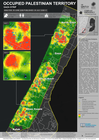
Education Access Analysis – Overview Map
Overview
This map presents a gap analysis of Temporary Learning Spaces (TLSs) across the Gaza Strip, Occupied Palestinian Territory. It identifies priority intervention areas by highlighting localities with high concentrations of kindergarten and school-aged children but limited access to Temporary Learning Spaces. Higher-priority areas are represented by red colours on the map.
The analysis is based on dataset including all operational Education Cluster partners’ Temporary Learning Spaces (TLSs) from 30 June 2026, with their GPS coordinates and enrolment figures, a Site Management Cluster’s IDP Sites list from 11 May 2026 with their coordinate points, and a 100-meters gridded population dataset from Real Ground Research based on anonymised telecommunications data from 01 March 2026.
A total of approximately 770,422 school-aged children and adolescents (4 to 17 years old), as of 01 March 2026, was estimated from the gridded population dataset, and 613 Temporary Learning Spaces, including a total of 432,701 enrolled students, were identified in Gaza Strip western area, as of 30 June 2026.
Based on these data, a Two-Step Floating Catchment Area (2SFCA) approach was used to assess education accessibility to the potential KG and school-aged group. Temporary Learning Space locations and student enrolment were compared against the potential student population within a 300-meters walking distance. And, accessibility scores were calculated for each population location, and areas with high demand and low accessibility were identified as priority zones for future education investments.
Summary of Findings
- A total of 770,422 potential KG and school-aged students were estimated, based on the gridded population dataset, as of 01 March 2026.
- A total of 432,701 enrolled students were identified among 613 TLSs, as of 30 June 2026. Therefore, approximately 337,721 KG and school-aged potential students remain underserved.
- A total of 1,603 Sites appear located within a walking distance of 300m from Temporary Learning Space, and 546 Sites appear located outside of a walking distance of 300m from a Temporary Learning Space, as of 11 May 2026.
- Several population clusters remain underserved.
- New learning space investments should focus on identified hotspots. This may include expanding existing Temporary Learning Spaces (TLSs) or establishing new learning spaces where needed.