Uncategorized

central african republic: situation report no. 77, as of 21 july, 2026

Central African Republic: Situation Report No. 77, as of 21 July, 2026

Country: Central African Republic Source: UN Office for the Coordination of Humanitarian Affairs Please refer to the attached file. HIGHLIGHTS Am-Dafock: More than 1,800 people receive assistance through mobile clinics 300 returnee households receive essential household items and non-food items in Zémio Bambari: 500 people trained on epidemic risk prevention, alert and response GENERAL CONTEXT Mbomou Prefecture – South-East During the night of 20–21 July, armed elements raided Tandjia village, located 12 km from Nzako, and abducted approximately 20 people, including children. 15 adults were released on 21 July, while six boys remained in captivity and were taken towards Ndenguilo village along the Chinko axis. Following the incident, the Central African Armed Forces (FACA) based in Nzako launched search operations. In response to heightened protection risks, particularly the abduction of children, local authorities conducted community awareness-raising activities, urging communities to restrict children’s movements to farms, mining sites and hunting areas during the school holiday period. HUMANITARIAN NEEDS AND RESPONSE Multi-sector Haut-Mbomou Prefecture – South-East From 15 to 16 July, COOPI, in partnership with Action Communautaire pour la Reconstruction et le Développement Durable (ACRED), provided multi-sectoral assistance to 300 vulnerable households in Komboli village, near Zémio. The beneficiaries, who are returnees, received shelter kits comprising bamboo sheets, ropes and locally sourced timber, based on their preferences. Non-food items and essential household items were also distributed, including tarpaulins, blankets, sleeping mats, mosquito nets, buckets and kitchen utensils. In addition, each household received cash assistance to help cover costs related to the construction or rehabilitation of their shelters. The intervention forms part of the emergency response for internally displaced persons (IDPs), returnees and host communities in Zémio sub-prefecture, with support from the Central African Republic Humanitarian Fund (CAR HF). Health Countrywide Between 10 and 20 July, seven new suspected cholera cases were reported, including four in health facilities and three in communities. No deaths were recorded during the reporting period. Since the outbreak was declared on 26 June, a cumulative total of 650 suspected cases and 44 deaths have been reported, while 595 people have recovered. Under the coordination of the Ministry of Health, response activities continued in affected areas. As part of efforts to strengthen epidemiological surveillance, 40 epidemiologists and data managers were trained to ensure the daily updating of surveillance data at the health district level. In addition, 25 traditional practitioners in Bangui were trained in active case finding and rapid referral of suspected cases to treatment facilities. Of the seven newly reported suspected cases, four are currently receiving treatment, including two at the Community Hospital, one at Bimbo Hospital and one at Maman Elisabeth Domitien University Hospital Center (CHUMED). Infection prevention and control activities continued, with 3,093 people sensitized on household water treatment and 69,120 water purifying tablets distributed. 21 households located around identified cases in Bokassa 1 and Bangui were disinfected. In addition, 125 handwashing stations were installed in the Bimbo and Mbaïki districts, and hygiene staff at the Community Hospital received training on infection prevention and control measures in healthcare settings. Key challenges to the response are data management and the mobilization of the resources required to contain the outbreak.

Central African Republic: Situation Report No. 77, as of 21 July, 2026 Read More »
car: république centrafricaine : rapport de situation n°77, au 21 juillet 2026

CAR: République centrafricaine : Rapport de situation N°77, au 21 juillet 2026

Country: Central African Republic Source: UN Office for the Coordination of Humanitarian Affairs Please refer to the attached file. FAITS SAILLANTS Am-Dafock : Plus de 1800 personnes prises en charge à travers les cliniques mobiles 300 ménages retournés reçoivent des biens non alimentaires et articles ménages essentiels à Zémio Bambari : 500 personnes formées sur la prévention, les alertes et la réponse aux risques épidémiques CONTEXTE GENERAL Préfecture de Mbomou – Sud-Est Dans la nuit du 20 au 21 juillet, des hommes armés ont fait incursion dans le village de Tandjia, situé à 12 km de Nzako, et ont enlevé une vingtaine de personnes, dont des enfants. 15 adultes ont été libérés le 21 juillet, tandis que six garçons mineurs ont été emmenés vers le village Ndenguilo, sur l’axe de Chinko. À la suite de l’incident, les Forces armées centrafricaines (FACA) basées à Nzako ont lancé des opérations de recherche. Face aux risques de protection, notamment d’enlèvement d’enfants, les autorités locales ont sensibilisé les communautés à limiter les déplacements des enfants vers les champs, les sites miniers et les zones de chasse pendant la période des vacances scolaires. BESOINS ET REPONSE HUMANITAIRE Multisectoriel Préfecture du Haut-Mbomou – Sud-Est COOPI en partenariat avec l’Action communautaire pour la reconstruction et le développement durable (ACRED), a fourni du 15 au 16 juillet, une assistance multisectorielle à 300 ménages vulnérables au village Komboli près de Zémio. Les bénéficiaires qui sont des personnes retournées ont reçu des kits abris composés de feuilles de bambou, de cordes et de bois locaux selon leurs préférences. Des kits en biens non alimentaires et articles ménagers essentiels, notamment, des bâches, couvertures, nattes, moustiquaires, seaux et des ustensiles de cuisine ont également été distribués. Par ailleurs, chaque ménage a également reçu une assistance en espèces destinée à couvrir les divers coûts liés à la construction ou réhabilitation d’abris. Cette activité s’inscrit dans le cadre de la réponse d’urgence pour les personnes déplacées internes (PDI), retournées et hôtes dans la sous-préfecture de Zemio, avec l’appui du Fonds humanitaire pour la République centrafricaine (FH RCA). A l’échelle nationale Entre le 10 et le 20 juillet, sept nouveaux cas suspects de choléra ont été signalés, dont quatre dans les structures de santé et trois au sein des communautés. Aucun décès n’a été enregistré au cours de cette période. Depuis la déclaration de l’épidémie le 26 juin, un cumul de 650 cas suspects et 44 décès a été rapporté, tandis que 595 personnes ont été guéries. Sous la coordination du ministère de la Santé, les interventions de riposte se poursuivent dans les zones affectées. Dans le cadre du renforcement de la surveillance épidémiologique, 40 épidémiologistes et gestionnaires de données ont été formés afin d’assurer la mise à jour quotidienne des données de surveillance au niveau des districts sanitaires. Par ailleurs, 25 tradipraticiens de Bangui ont été formés à la recherche active des cas et à la référence rapide des cas suspects vers les structures de prise en charge. Parmi les sept nouveaux cas suspects, quatre sont actuellement pris en charge, dont deux à l’hôpital Communautaire, un à l’hôpital de Bimbo et un au Centre hospitalier universitaire Maman Elisabeth Domitien (CHUMED). Les activités de prévention et de contrôle de l’infection se sont poursuivies avec la sensibilisation de 3 093 personnes sur le traitement de l’eau à domicile et la distribution de 69 120 comprimés de purification d’eau. 21 ménages situés autour des cas identifiés à Bokassa 1 et à Bangui ont été désinfectés. En outre, 125 stations de lavage des mains ont été installées dans les districts de Bimbo et de Mbaïki, et les hygiénistes de l’hôpital communautaire ont bénéficié d’une formation sur les mesures de prévention et contrôle des infections en milieu hospitalier. Les principales contraintes de la réponse demeurent la gestion des données et la mobilisation des ressources nécessaires pour contenir l’épidémie.

CAR: République centrafricaine : Rapport de situation N°77, au 21 juillet 2026 Read More »

bangladesh: situation report #2 flash flood and landslides (26 july 2026)

Bangladesh: Situation Report #2 – Flash Flood and Landslides (26 July 2026)

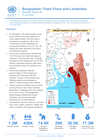
Country: Bangladesh Source: UN Resident Coordinator in Bangladesh Please refer to the attached file. Heavy monsoon rains, flash floods, and landslides continue to impact communities across Bangladesh, with an estimated 1.28 million people affected in seven districts, including more than 15,500 persons with disabilities. Approximately 436,000 people are estimated to require humanitarian assistance, while 59 deaths have been reported in the seven most affected districts as of 22 July 2026. Government assessments indicate widespread damage to housing and essential services. A total of 74,479 houses have been damaged or destroyed, while flooding has fully or partially damaged 29,076 water points and 36,550 latrines, severely affecting access to safe water and sanitation across 42 upazilas in six districts. The disaster has also had a significant impact on livelihoods and food security. Approximately 27,007 hectares of cropland have been affected, and more than 266,000 livestock have been impacted. Combined losses to the livestock and fisheries sectors are estimated at US$17.3 million across the affected districts. Despite gradual improvements in some areas, active monsoon conditions continue to pose risks. The Bangladesh Meteorological Department forecast heavy to very heavy rainfall in Bandarban, Chattogram, and Cox’s Bazar and issued moderate- and low-risk landslide advisories for these districts. Government authorities, humanitarian organizations, and development partners continue to scale up response efforts, providing food assistance, cash support, health services, protection interventions, shelter assistance, and water, sanitation and hygiene (WASH) support to affected populations while assessments and recovery planning remain ongoing.

Bangladesh: Situation Report #2 – Flash Flood and Landslides (26 July 2026) Read More »

United against polio: Zimbabwe strengthens regional immunity through synchronized vaccination

Country: Zimbabwe Source: World Health Organization Harare, Zimbabwe – July 2026 – Zimbabwe has successfully completed three rounds of synchronized vaccination campaigns using the novel oral polio vaccine type 2 (nOPV2) as part of a coordinated Southern African response to prevent the re-establishment of circulating vaccine-derived poliovirus type 2 (cVDPV2). The campaigns build on Zimbabwe’s significant progress in interrupting transmission following the cVDPV2 outbreak declared in October 2023. Through four nationwide vaccination campaigns, strengthened surveillance, and enhanced outbreak response measures, no cVDPV2 has been detected in the country since June 2024. Maintaining this status requires consistently high vaccination coverage and sensitive surveillance, particularly in light of continued regional transmission. However, ongoing cVDPV2 outbreaks in neighbouring countries have highlighted the persistent risk of cross-border virus importation, underscoring the need for a coordinated regional response. To protect these gains, Zimbabwe joined Mozambique, Malawi, Zambia, Namibia, and Botswana in a synchronized subregional vaccination effort targeting districts identified through detailed risk assessments, particularly border areas and densely populated urban centres at highest risk of virus importation. Three rounds of subnational immunization campaigns were planned across 27 high-risk districts in nine provinces, focusing on children under five years of age. Led by the Ministry of Health and Child Care (MOHCC), with support from the World Health Organization (WHO), UNICEF, Rotary International, the United States Centers for Disease Control and Prevention (CDC), and other Global Polio Eradication Initiative (GPEI) partners, the response mobilized more than 6,000 personnel, including healthcare workers, village health workers, community volunteers, national and subnational health managers, and partner representatives. Nine national surge consultants were deployed to strengthen surveillance, campaign implementation, community engagement, social mobilization, logistics, cold chain and vaccine management, data analytics, and coordination. Vaccination services were delivered through a combination of facility-based and community outreach strategies, with door-to-door vaccination serving as the primary approach. By taking vaccines directly to households, vaccination teams were able to reach children who might otherwise have missed immunization, helping sustain high population immunity in targeted districts and reducing the risk of poliovirus re-emergence and transmission across the country. “The success of every vaccination campaign depends on teamwork. From activities carried out at health facilities to door-to-door outreach in communities, every health worker plays an important role in ensuring that children are protected against vaccine-preventable diseases. Seeing our teams work together to reach families and ensure that no child is missed gives me confidence that we can keep our communities safe from polio,” says Sr. Chipangura, Nurse in Charge at Tariro Clinic in Harare South District. The first, second, and third nOPV2 vaccination campaigns were conducted from 20–23 April, 2–5 June, and 7–10 July 2026, respectively. Campaign quality and operational performance improved progressively across the three rounds, reflecting stronger planning, supervision, and community engagement. A total of 936,618, 997,941, and 1,025,806 children were vaccinated during the first, second, and third campaigns, respectively. In total, nearly three million doses of nOPV2 were administered across the three rounds, helping sustain high immunity among children living in the country’s highest-risk districts. Independent monitoring and Lot Quality Assurance Surveys (LQAS) confirmed high vaccination coverage among eligible children during each round. Quality improvement plans were subsequently developed and implemented to strengthen performance, particularly in hard-to-reach communities, enhance social mobilization efforts, and address operational challenges during subsequent rounds. Beyond vaccination, the response has strengthened acute flaccid paralysis and environmental surveillance, enhanced cross-border collaboration, supported routine immunization services, and reinforced monitoring and supervision systems. Regular coordination meetings at national and subregional levels have ensured alignment of activities and enabled the rapid identification and resolution of operational challenges. “The fight against polio is a race to reach every child, everywhere, before the virus does,” said Dr Tiruneh Desta, WHO Representative to Zimbabwe**.** “WHO remains committed to supporting the Government of Zimbabwe and partners through technical expertise, surveillance, operational coordination, and community engagement to ensure that life-saving vaccines reach all eligible children. Zimbabwe’s synchronized vaccination campaign reflects the power of regional solidarity and collective action in stopping poliovirus transmission. By strengthening population immunity and protecting children across communities and borders, Zimbabwe is making a significant contribution to the vision of a polio-free Southern Africa and bringing the world closer to achieving the goal of eradicating polio once and for all.” The successful implementation has further strengthened Zimbabwe’s population immunity, reducing the risk of re-establishment and spread of type 2 polioviruses. As the synchronized regional response continues, Zimbabwe is intensifying preparedness, surveillance, routine immunization, and community engagement while ensuring full accountability for all nOPV2 vaccine vials, proper waste management, and strengthened laboratory surveillance capacity. The synchronized regional response represents another important step towards securing a polio-free future for children in Zimbabwe and across Southern Africa.

United against polio: Zimbabwe strengthens regional immunity through synchronized vaccination Read More »

from presence to decision: making syrian led humanitarian coordination real; strengthening inclusive coordination and civil society cohesion in syria

From Presence to Decision: Making Syrian-led Humanitarian Coordination Real; Strengthening Inclusive Coordination and Civil Society Cohesion in Syria

Country: Syrian Arab Republic Source: Danish Refugee Council Please refer to the attached file. Executive summary As Syria transitions from the previous Whole of Syria coordination model to a structure at the national level, ensuring inclusive and representative coordination arrangements has become a key priority. This requires the meaningful engagement of returning diaspora, national NGOs, and local actors in contributing to shaping coordination practices and humanitarian standards. While the transition aims to improve the coherence and efficiency of coordination, it must also guarantee the effective and inclusive participation of the diverse range of Syrian civil society actors. Ensuring that these actors can contribute to decision-making processes is essential to strengthening the legitimacy, accountability, and effectiveness of humanitarian coordination in Syria. This policy brief draws on findings from the Bridging Voices: Strengthening Inclusive Coordination and Civil Society Cohesion in Syria (B-Voices) initiative, implemented by Diaspora Emergency Action & Coordination (DEMAC), the Syria NGO Alliance (SNA), and the Danish Refugee Council (DRC) in Syria. It examines opportunities and challenges for inclusive coordination within the evolving humanitarian architecture from the perspective of Syrian civil society actors and presents recommendations to strengthen the participation of Syrian civil society actors. By highlighting the perspectives and experiences of diaspora, national, and local organizations, the brief seeks to inform efforts to build a more inclusive, locally driven, and accountable coordination system.

From Presence to Decision: Making Syrian-led Humanitarian Coordination Real; Strengthening Inclusive Coordination and Civil Society Cohesion in Syria Read More »

lebanon: guidance note contingency stocks reporting 2026

Lebanon: Guidance Note – Contingency Stocks Reporting – 2026

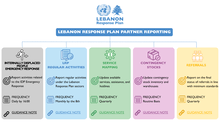
Country: Lebanon Source: UN High Commissioner for Refugees Please refer to the attached file. Purpose As stocks regularly move in and out, partners are expected to update their inventory on a routine basis, whenever changes occur, and at least every two weeks. Maintaining up-to-date and accurate contingency stock information is critical for emergency responses, as it allows for a clear overview of available resources and, accordingly, supports gap identification and evidence-based advocacy. Information entered on ActivityInfo automatically feeds into the online dashboard, which is publicly accessible HERE. Guiding Principles 1. Log in to https://www.activityinfo.org/login. 2. Navigate to the “LEBANON – 03. Contingency & Preparedness” folder. If you do not see the folder, please contact Raffi Kouzoudjian at kouzoudj@unhcr.org or Maroun Sader at sader@unhcr.org to request access. 3. To add or update stocks, go to “WAREHOUSES & EMERGENCY STOCKS > STOCKS.” 4. To add or update warehouse locations, go to “WAREHOUSES & EMERGENCY STOCKS > WAREHOUSE LOCATIONS.” Partners are kindly requested to ensure that all inputs are entered accurately. Need Help? For any questions or support, please contact Raffi Kouzoudjian at kouzoudj@unhcr.org or Maroun Sader at sader@unhcr.org.

Lebanon: Guidance Note – Contingency Stocks Reporting – 2026 Read More »