Uncategorized

dr congo: afrique de l’ouest et centrale : derniers événements en bref (du 21 au 27 juillet 2026)

DR Congo: Afrique de l’Ouest et centrale : Derniers événements en bref (du 21 au 27 juillet 2026)

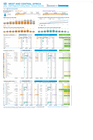
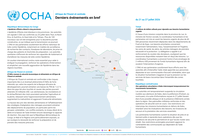
Countries: Democratic Republic of the Congo, Benin, Central African Republic, Côte d’Ivoire, Ghana, Niger, Togo Source: UN Office for the Coordination of Humanitarian Affairs Please refer to the attached Infographic. République démocratique du CongoL’épidémie d’Ebola s’étend à cinq provinces L’épidémie d’Ebola s’est étendue à cinq provinces ; les autorités ont signalé 3 200 cas confirmés au 25 juillet dans l’Ituri, le Nord-Kivu, le Sud-Kivu, le Haut-Uele et le Tshopo. Plus de 100 nouveaux cas ont été enregistrés pour la deuxième journée consécutive, ce qui indique que la transmission se poursuit. L’ONU et ses partenaires soutiennent les efforts nationaux de lutte contre l’épidémie, notamment en matière de surveillance, de recherche des contacts, d’analyses de laboratoire, de prise en charge des patients et d’activités de préparation. Les autorités sanitaires s’efforcent de renforcer les capacités de traitement et d’améliorer les mesures de lutte contre l’épidémie. Un soutien international continu reste essentiel pour aider à endiguer la propagation, renforcer les opérations d’intervention et empêcher une nouvelle aggravation de l’épidémie dans les régions touchées. Afrique de l’Ouest et centraleEl Niño menace la sécurité économique et alimentaire en Afrique de l’Ouest et centrale L’Afrique de l’Ouest et centrale est confrontée à des risques importants liés à un éventuel phénomène El Niño de forte intensité, qui, selon les experts de la Banque africaine de développement, pourrait entraîner une baisse du PIB de 1 à 2 % dans les pays les plus touchés et causer des pertes pouvant atteindre 20 milliards US$. Les sécheresses, les inondations et le réchauffement des mers pourraient perturber l’agriculture et la pêche, réduisant ainsi l’approvisionnement alimentaire, augmentant la malnutrition et aggravant l’insécurité alimentaire. La hausse des prix des denrées alimentaires et l’affaiblissement des stratégies d’adaptation des ménages pourraient entraîner des déplacements de population, en particulier parmi les groupes vulnérables. Les conflits existants, le niveau élevé de la dette et la baisse de l’aide limitent encore davantage la capacité de réaction. Des pays tels que la République démocratique du Congo, le Mali et le Nigeria sont particulièrement exposés, ce qui souligne la nécessité de renforcer la préparation et de prendre des mesures précoces. Tchad2 millions de dollars alloués pour répondre aux besoins humanitaires urgents À l’issue d’une mission conjointe dans la province du Lac, le ministre de l’Action sociale, le coordinateur humanitaire et les partenaires ont mis en avant les besoins urgents de plus de 60 000 personnes récemment déplacées dans les départements de Fouli et de Kaya. Les besoins prioritaires concernent notamment l’alimentation, l’eau, l’assainissement et l’hygiène, les soins de santé, les abris, les articles ménagers de première nécessité et la protection. La délégation a appelé à un renforcement du soutien des donateurs, soulignant que les ressources disponibles restaient bien en deçà des besoins. Le coordinateur humanitaire a annoncé l’octroi d’une enveloppe de 2 millions US$ provenant du Fonds humanitaire régional afin de soutenir l’intervention d’urgence. L’ONU et ses partenaires coordonnent leurs efforts avec les autorités afin d’intensifier l’aide vitale apportée aux personnes déplacées et aux communautés d’accueil vulnérables, alors que la situation humanitaire s’aggrave et que la pression sur les services de base s’accentue dans l’ensemble des zones touchées. République centrafricaineDes opérations sécuritaires à Kabo interrompent temporairement les mouvements humanitaires Les autorités ont temporairement suspendu la circulation routière aux alentours de Kabo, dans la préfecture d’Ouham, au nord-ouest, à la suite d’informations reçues le 27 juillet faisant état d’une possible attaque et de la présence d’éléments armés dans la région. Des patrouilles militaires renforcées et des opérations de sécurité sont en cours. Ces restrictions ont interrompu les missions humanitaires en dehors de Kabo, retardant ainsi les évaluations des besoins, les livraisons de secours et la prestation des services essentiels. Les partenaires humanitaires suivent la situation de près et se tiennent prêts à reprendre leurs opérations dès que les conditions de sécurité le permettront et que l’accès routier sera rétabli. Des restrictions prolongées pourraient aggraver la vulnérabilité des communautés qui dépendent de l’aide humanitaire.
DR Congo: Afrique de l’Ouest et centrale : Derniers événements en bref (du 21 au 27 juillet 2026) Read More »

dr congo: west and central africa: latest events at a glance (21–27 july 2026)

DR Congo: West and Central Africa: Latest Events at a glance (21–27 July 2026)

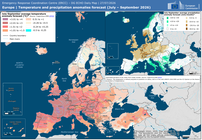
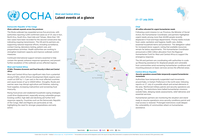
Countries: Democratic Republic of the Congo, Benin, Central African Republic, Côte d’Ivoire, Ghana, Mali, Nigeria, Togo Source: UN Office for the Coordination of Humanitarian Affairs Please refer to the attached Infographic. Democratic Republic of the CongoEbola outbreak expands across five provinces The Ebola outbreak has expanded across five provinces, with authorities reporting 3,200 confirmed cases as of 25 July in Ituri, North Kivu, South Kivu, Haut-Uele and Tshopo. More than 100 new cases have been recorded for the second consecutive day, indicating ongoing transmission. The UN and its partners are supporting national response efforts, including surveillance, contact tracing, laboratory testing, patient care, and preparedness activities. Health authorities are working to strengthen treatment capacity and improve outbreak control measures. Continued international support remains essential to help contain the spread, enhance response operations, and prevent further escalation of the outbreak across affected regions. West and Central AfricaEl Niño Threatens Economic and Food Security in West and Central Africa West and Central Africa face significant risks from a potential strong El Niño, which African Development Bank experts warn could cut GDP by 1–2 per cent in the most affected countries and cause losses of up to US$20 billion. Droughts, floods and warmer seas may disrupt agriculture and fisheries, reducing food supplies, increasing malnutrition and worsening food insecurity. Rising food prices and weakened household coping strategies could drive displacement, especially among vulnerable groups. Existing conflict, high debt and declining aid further limit response capacity. Countries such as the Democratic Republic of the Congo, Mali and Nigeria are particularly at risk, highlighting the need for stronger preparedness and early action. Chad$2 million allocated for urgent humanitarian needs Following a joint mission to Lac Province, the Minister of Social Action, the Humanitarian Coordinator, and partners highlighted urgent needs among more than 60,000 people recently displaced in Fouli and Kaya departments. Priority needs include food, water, sanitation and hygiene, health care, shelter, essential household items and protection. The delegation called for increased donor support, noting that available resources remain far below requirements. The Humanitarian Coordinator announced a US$2 million allocation from the Regional Humanitarian Fund for West and Central Africa to support the emergency response. The UN and partners are coordinating with authorities to scale up lifesaving assistance for displaced people and vulnerable host communities amid worsening humanitarian conditions and mounting pressure on basic services across the affected areas. Central African RepublicSecurity operations around Kabo temporarily suspend humanitarian movements Authorities have temporarily suspended road movements around Kabo, in Ouham Prefecture in the north-west, following reports on 27 July of a possible attack and armed elements in the area. Reinforced military patrols and security operations are ongoing. The restrictions have halted humanitarian missions outside Kabo, delaying needs assessments, relief deliveries and essential services. Humanitarian partners are monitoring the situation and stand ready to resume operations once security conditions permit and road access is restored. Prolonged restrictions could deepen the vulnerability of communities reliant on humanitarian assistance.

DR Congo: West and Central Africa: Latest Events at a glance (21–27 July 2026) Read More »

Water Mission Increases Emergency Safe Water Access in Venezuela Through New Strategic Partnerships

Country: Venezuela (Bolivarian Republic of) Source: Water Mission International Over 18,000 People Served and Nearly 300,000 Liters of Safe Water Produced N. Charleston, S.C. — July 27, 2026 – Water Mission, a Christian engineering nonprofit, is scaling their emergency safe water disaster response operations in Venezuela after earthquakes in late June impacted an estimated 6.8 million people with widespread destruction to infrastructure. A month later, Water Mission has installed and is operating water treatment systems at two production locations serving internally displaced people at clinics, schools, churches, and other community sites. These systems are also providing safe, clean water to a robust and growing mobile water trucking effort with 21 additional water distribution sites in communities throughout Caraballeda, Catia La Mar, Macuto, and Naiguata. New and growing strategic global partnerships are aiding this effort and increasing Water Mission’s ability to simultaneously respond to multiple disasters worldwide. Water Mission was recently welcomed into Integral Alliance, a group of 23 global Christian relief and development organizations with specialized disaster response capabilities. Integral members follow a joint disaster response process when disaster strikes, combining their programming, financial, and communications resources, ensuring a more efficient and rapid response capability that reaches more people in need. “We are delighted to welcome Water Mission to the Integral family. They bring to the Alliance significant sectoral expertise in water, sanitation, and hygiene, a critical need in both humanitarian situations and long-term international development,” said Carol Bremer-Bennett, Executive Director of World Renew and Chair of the Integral Board. “Water Mission has over 25 years of experience in responding to disasters and already works with some of our members. Their technical expertise will greatly add value to our joint disaster responses, and I am delighted to welcome them to the Integral family.” Water Mission is also partnering on a consortium led by Rescue Response International, funded by the U.S. Department of State, to provide disaster response relief in Venezuela in the aftermath of the earthquakes. This partnership, in coordination with generous gifts from Grundfos Foundation, FedEx, Compassion International, Atlas Copco Group, and individual supporters, has enabled Water Mission to provide nearly 300,000 liters of safe water to over 18,000 people to date. Safe, clean drinking water is critical during any disaster, helping to prevent the spread of waterborne illnesses, which are particularly deadly for children. “In the aftermath of a disaster, access to safe water is one of the most urgent needs and every day matters,” said Water Mission CEO and President George C. Greene IV, PE. “What we are seeing in Venezuela demonstrates the power of strong partnerships combined with proven technical expertise. By working alongside organizations committed to serving people in crisis, we have been able to move quickly, establish safe water production, and expand distribution to reach thousands of people. We are grateful for every partner and supporter helping us bring safe water and hope to people during this critical time.” Water Mission has responded to nearly 90 disasters worldwide over the past 25 years, bringing an extensive background in providing immediate and long-term safe water solutions. The organization has served more than 8 million people globally since 2001. To learn more or to support their ongoing disaster response efforts in Venezuela, please visit https://watermission.org/venezuela-earthquake-response. About Water Mission Water Mission is a Christian engineering nonprofit that builds sustainable safe water solutions for people in developing countries, refugee camps, and disaster areas. Since 2001, Water Mission has served more than 8 million people in more than 65 countries, sharing safe water and the message of God’s love. Water Mission’s global headquarters is in North Charleston, SC, and the organization serves people in Africa; Asia; and North, South, and Central America. Charity Navigator has awarded Water Mission its top four-star rating 19 years in a row, a distinction shared by less than 1% of the charities rated by the organization. To learn more, visit watermission.org, Facebook, LinkedIn, Instagram, YouTube, or X.

Water Mission Increases Emergency Safe Water Access in Venezuela Through New Strategic Partnerships Read More »

World: Two thirds of children in Western Europe exposed to extreme heatwaves in record-breaking first half of 2026

Country: World Source: Save the Children Two thirds of children across Western Europe were exposed to extreme heatwaves between 1 January and 14 July this year, according to new data from Save the Children as temperatures soar and record wildfires ravage parts of Europe LONDON, 28 July 2026 – Two thirds of children across Western Europe [1] were exposed to extreme heatwaves between 1 January and 14 July this year, according to new data from Save the Children as temperatures soar and record wildfires ravage parts of Europe. [2] The child rights organisation said that the number of children impacted by extreme heatwaves during that six-and-a-half-month period was already three times the figure from the whole of 2025 – and more than any entire year since 2003. Save the Children analysed satellite imagery of surface temperatures covering every part of the world. The aid agency defined an extreme heatwave as three consecutive days experiencing a temperature in the top 1% of all those recorded in that location in the previous 30 years. The data is particularly stark given the majority of the time period in the analysis covers winter and spring in Western Europe, when temperatures are lower. This suggests that findings for the entire 12 months of 2026 will be even more severe, Save the Children said. In Germany, the number of children exposed to extreme heat in the first six months of this year was larger than the past five years combined. [3] In the UK, 10 million children – three quarters of the child population – have been exposed to extreme heat in the first six months of this year. This is more than the total for any single year in the past 30 years. [4] Children already affected by inequality or discrimination – such as those living in poverty, refugees or children with disabilities or underlying health conditions – are at a unique disadvantage, Save the Children said. Zainab, 16, a child campaigner with Save the Children UK, said: “For many people, particularly those living with chronic illnesses, this heat is not simply uncomfortable, it is dangerous. For some, a heatwave means an ice cream, a day in the park or turning on a fan. For others, it’s dehydration, exhaustion, dizziness and pain. Medication can become harder to manage. Existing illnesses becoming more severe. “I know that because I live it. I have lived with Type 1 diabetes for most of my life. When temperatures rise, managing my health becomes harder. My body does not get to experience extreme heat as a minor inconvenience. The climate crisis does not stay outside my window. It enters through my body. Climate change does not affect everyone equally, but when the temperature rises, inequality rises with it.” Human-induced climate change is making extreme weather events like heatwaves, drought and wildfires more frequent and severe. Save the Children’s findings reveal that across the globe, extreme heatwaves now reach substantially more children than a generation ago. In the 1990s and 2000s, around one in 10 children worldwide [5] were exposed to an extreme heatwave each year. In the 2020s so far, that average has increased to one in seven children [6]. Two of the four worst years since 1990- the start of the period examined – were in the past three years. A report by Save the Children and the Vrije Universiteit Brussel last year found that almost a third of the world’s children born in 2020 – about 38 million – would be spared a lifetime’s “unprecedented” exposure to extreme heat [7] if we can meet the 1.5 degrees C warming target by 2100. The health risks of dangerous heat to young children are acute, due to their ongoing physical development and lower capacity for body temperature regulation. During heatwaves, children are at a high risk of electrolyte imbalance, fever, respiratory disease, and kidney disease. [8] This kind of unprecedented heat is also disrupting children’s education. In June, schools in France and the UK were forced to close or alter timetables to protect children from dangerous heat as temperatures surged. Matilde Angeltveit, Senior Advisor and Global Climate Advocacy Lead at Save the Children, said: “Over the past few months, we have seen the climate crisis unleash unbearable heat on children and families across Europe. Heat like this damages children’s health, disrupts their sleep and schooling, and brings basic services to a standstill. We also fear that crops will fail and food prices surge due to the heat at a time when families are already struggling to cope. “Children are disproportionately vulnerable to extreme heat, yet they have done the least to contribute to the climate crisis. We know by now that we urgently need to adapt to this situation – but children need us to put their lives, rights and needs front and centre. “While we need this today, ultimately, in order to safeguard children’s futures, we need to see a rapid phase out of the use and subsidy of fossil fuels and transition to renewable energy in an equitable and fair way. We know that this is in our power, and if we do it in the shrinking time window available to us, children’s exposure to these dangers will be curbed dramatically.” Save the Children is calling for the recognition of children’s unique vulnerabilities to climate change, the delivery of high-quality, affordable funding to lower-income countries, including financing to cut emissions, and the urgent phase out of the use and subsidy of fossil fuels. As the world’s leading independent child rights organisation, Save the Children works in over 100 countries, tackling climate change across everything we do and putting children at the heart of climate action. ENDS Notes to editors: More information available here on 28 July [1] Countries included in Western Europe in data set: Austria, Belgium, Cyprus, Czech Republic, Denmark, Estonia, Finland, France, Germany, Greece, Hungary, Iceland, Ireland, Italy, Latvia, Lithuania, Luxembourg, Malta, Netherlands, Norway, Poland, Portugal, Slovak Republic, Slovenia, Spain, Sweden, Switzerland, UK [2] Methodology

World: Two thirds of children in Western Europe exposed to extreme heatwaves in record-breaking first half of 2026 Read More »

MSF Somalia: Drought Crisis for Baidoa’s displaced

Country: Somalia Source: Médecins Sans Frontières 27 July 2026 – “My wife would stand in a line for water from early in the morning until eight at night,” says Dahir Nur, 50, a former farmer now living in Elbeti 1 camp in Baidoa after drought forced his family from their village. Baidoa, the interim capital of Somalia’s Southwest State, is now home to an estimated 1.6 million people, nearly half of them are displaced. Many have arrived in recent months, fleeing conflict and climate shocks in Bakool, Bay, Lower Shabelle, and other parts of the country. Most of them have fled devastating drought that has stripped families of water, food, and livelihoods. Water, sanitation, and hygiene (WASH) needs are among the most severe. Infrastructure is failing and water sources have dried up. Nationally, nearly one in five households lack reliable access to water, according to the 2026 Humanitarian Needs and Response Plan. In Baidoa, displaced families pay $1.50–$2.50 for a 200-litre drum of trucked water, a cost many cannot afford. According to the 2026 Humanitarian Needs and Response Plan (HNRP), two-thirds of households nationwide share unimproved latrines, and one in five reports that women and girls avoid using them due to safety concerns. Southwest State authorities declared a drought emergency on 18 November 2025 – and conditions have only deteriorated since. Just as needs continue to rise, funding cuts have forced humanitarian organisations to reduce or suspend services in Baidoa and elsewhere in the country, leaving Baidoa’s displaced population without critical support and increasingly dependent on the limited assistance that remains. “Life is very hard for us. You can understand a new displaced person in the camp, with no one to depend on. My daughter needs special care, including when she goes to the latrine. I couldn’t care for her properly,” says Muna Ibrahim, a mother of two children with autism, who need constant attention. ​ Médecins Sans Frontières/Doctors Without Borders (MSF) has scaled up water trucking and sanitation support to meet the emergency needs. Between December 2025 and June 2026, our teams delivered more than 47 million litres of safe water to 17 distribution sites, reaching 3,775 households from both host and displaced communities. ​ The response has also included building 150 solar-lit, permanent latrines with disability-friendly design across eight IDP camps, and desludging 26 latrines across five sites. Muna Ibrahim arrived in Baidoa on the back of a truck that had been carrying potatoes, after leaving Kobe, a camp for Somali refugees in Ethiopia’s Liban zone. Other organisations used to support her family when they were in the camps, but that support had completely stopped before she left. “We used to fetch water from the river—people with donkey carts can haul it back, but everyone else has to carry it on their shoulders including me.” she says, “Since I arrived, MSF is the only organisation I have seen here providing us with water. Now we receive four jerrycans in the morning and four in the evening.” Needs across the Bay region remain severe, and current capacity is insufficient to prevent the situation from worsening. MSF is calling on donors and humanitarian actors to urgently expand water trucking, latrine construction, and desludging services in Baidoa and across Southwest State. The gap between what is needed and what is funded is not inevitable – it is a choice. With every passing month, more families are pushed deeper into crisis. –ENDS– Cece Leadon cece.leadon@london.msf.org +44 (0) 207 067 4236

MSF Somalia: Drought Crisis for Baidoa’s displaced Read More »

india: saarathi alert assam floods 2026 (27 july 2026)

India: Saarathi Alert – Assam Floods 2026 (27 July 2026)

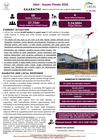
Country: India Source: Humanitarian Aid International Please refer to the attached file. CURRENT SITUATION LOCAL has verified 26,400 families in urgent need (21,000 families in Sivasagar, 2,400 families in Jorhat and 3,000 families across Golaghat and Charaideo districts) The death toll has risen to 68. Over 5.24 lakh people remain affected across Charaideo, Golaghat, Jorhat, Nagaon and Sivasagar. Sivasagar is now the worstaffected district with nearly 1.9 lakh people impacted. 354 relief camps and distribution centres are operational across four districts, sheltering 37,724 people. Floodwaters are gradually receding across Upper Assam. The focus has shifted to relief distribution, power restoration and medical deployment, with air-drops continuing in inaccessible areas. However, breached embankments and shallow waters are hampering both boat and vehicle access in several villages. As waters recede, a public health crisis is emerging in areas like Dergaon, with stagnant water, waste, snake infestations and disease risk. Residents are urgently calling for disinfectants, bleaching powder and health camps.

India: Saarathi Alert – Assam Floods 2026 (27 July 2026) Read More »

myanmar monthly food price report – may thet htar, bart minten, and ian masias (june 2026)

Myanmar Monthly Food Price Report – May Thet Htar, Bart Minten, and Ian Masias (June 2026)

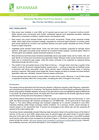
Country: Myanmar Source: International Food Policy Research Institute Please refer to the attached file. KEY HIGHLIGHTS Rice prices rose modestly in June 2026, up 5.2 percent year-on-year and 1.8 percent month-on-month. While national price movements were limited, substantial regional price disparities persisted, reflecting differences in production conditions, market access, and transport costs. Most export crop prices showed limited month-on-month movements. Pulses prices remained broadly stable, while maize prices increased modestly, supported by continued export demand. In contrast, green gram prices declined as concerns over pesticide residues and grain quality reportedly led some Chinese buyers to reject shipments. Vegetable prices showed mixed trends. Onion and chili prices increased, supported by stronger export demand, while garlic and potato prices declined as increased market supplies, including higher inflows of Chinese garlic and potatoes, placed downward pressure on prices. Most animal-sourced food prices remained substantially above year-earlier levels, led by mutton, fish, and beef. Month-on-month price movements were generally modest, although mutton prices remained at record highs due to constrained goat supply, while fish prices continued to be supported by seasonal fishing restrictions through the end of June. The conflict in Iran and partial closure of the Strait of Hormuz — through which more than a quarter of the world’s oil and 20–30 percent of global fertilizer exports transit — continue to keep fuel and fertilizer prices in Myanmar well above year-earlier levels. Some farmers report cultivating smaller areas or reducing plowing in response. With paddy prices largely flat, thinner margins are likely to translate into lower fertilizer application rates and, ultimately, reduced monsoon-season production. Flood warnings have been issued in recent weeks for parts of the country. Moreover, a new El Niño phase is expected to develop within the coming weeks, increasing the risks of drought in the country.

Myanmar Monthly Food Price Report – May Thet Htar, Bart Minten, and Ian Masias (June 2026) Read More »

spillover effects: how the middle east crisis threatens food security focus on myanmar (date released: 5 june 2026 / reporting period: week of 1 june )

Spillover Effects: How the Middle East crisis threatens food security – Focus on Myanmar (Date Released: 5 June 2026 / Reporting period: week of 1 June )

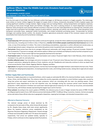
Country: Myanmar Source: World Food Programme Please refer to the attached file. Overview As of the first week of June 2026, the Iran-US/Israel conflict that began on 28 February remains in a fragile ceasefire. The initial largescale strikes on Iranian military triggered the largest oil supply shock in history, temporarily disrupting 10-20% of global supply and causing significant volatility in energy markets. Higher energy costs are fueling inflation, raising transportation and logistics expenses, and driving up food prices through diesel and fertilizer shortages. The crisis is placing pressure on import-dependent economies. Myanmar ranks among the most severely affected countries in Asia due to its near-total dependence on imported fuel. Dramatic price surges have led to persistent fuel shortages, queues at petrol stations, rationing, and vehicle-use restrictions. These disruptions have hampered commodity flows, weakened market functionality, and eroded household purchasing power. Compounded by fertilizer shortages and existing internal conflict, the situation threatens agricultural production ahead of the monsoon season and further exacerbates food insecurity and humanitarian challenges. Summary • Food insecurity: WFP estimates that if the conflict continues through Q2, at least 45 million additional people globally may face acute food insecurity, including over 9 million in Asia. In Myanmar, a further 3.5–5 million people could become food insecure due to this crisis, on top of the existing 12.4 million. The crisis is intensifying vulnerabilities, especially in conflict-affected and remote areas, as reduced agricultural output, rising prices, and market disruptions strain household food consumption and livelihoods. • Fuel prices: Diesel prices have risen by an average of 68 percent nationwide, with Yangon seeing a 70 percent increase. Octane 95 has increased by 77 percent on average, with extreme spikes in Sittwe (up to tenfold) and Myitkyina (nearly fourfold compared to precrisis Yangon levels). Prices remain high but have gradually declined since late April. • Food basket cost: As of early June, the average food basket cost is about 19 percent higher than in late February, driven mainly by increases in rice, palm oil, and salt prices. • Conflict-affected areas: Fuel shortages and price increases of over 70 percent since February have led to queues, rationing, and transport restrictions, delaying the delivery of food, medicine, and aid. Roadblocks and insecurity continue to drive up staple food prices across Kachin, Kayin, Kayah, Sagaing, Rakhine, Magway, and Shan. • Agriculture: During the monsoon planting season, farmers face fuel shortages and higher fertilizer costs linked to the fuel crisis. These challenges are delaying land preparation, increasing production costs, and limiting market access, raising risks to agricultural output and incomes.

Spillover Effects: How the Middle East crisis threatens food security – Focus on Myanmar (Date Released: 5 June 2026 / Reporting period: week of 1 June ) Read More »