Uncategorized

C51d7cb8 87ce 4ecb 86e0 22c47be84a90 Nzx1RB

Análisis de choques en Ecuador – 2026

Country: Ecuador Source: UN Country Team in Ecuador Please refer to the attached file. Resumen ejecutivo Ecuador enfrenta una crisis humanitaria de carácter multiamenaza, marcada por la convergencia de la violencia armada, los desastres recurrentes y la fragilidad socioeconómica. La superposición de estos factores está erosionando las capacidades de afrontamiento de los hogares, interrumpiendo el acceso a servicios esenciales y ampliando las brechas de vulnerabilidad en múltiples territorios, lo que incrementa el riesgo de agravamiento y prolongación de las necesidades humanitarias. El análisis intersectorial estima que 1.908.272 personas requieren asistencia en 10 provincias prioritarias (Bolívar, El Oro, Esmeraldas, Guayas, Los Ríos, Manabí, Morona Santiago, Orellana, Pastaza y Sucumbíos), concentradas principalmente en áreas con niveles de severidad elevados y privaciones simultáneas en múltiples sectores. La violencia armada y el control territorial ejercido por grupos criminales han deteriorado de forma sostenida el entorno de protección, particularmente en la Costa, incluyendo Guayas, Esmeraldas y Los Ríos, así como en corredores urbanos estratégicos y zonas fronterizas. Esto se traduce en desplazamientos internos, amenazas, extorsión, restricciones a la movilidad y afectaciones directas a los servicios de salud, educación y protección. En paralelo, los desastres y la variabilidad climática continúan generando impactos recurrentes y acumulativos, con daños a la infraestructura, a los medios de vida y al acceso a agua segura, especialmente en provincias de la Costa y de la Amazonía con presencia institucional limitada. Estos choques no operan de forma aislada y generan efectos acumulativos en las condiciones de vida de la población. La violencia, los eventos climáticos y la fragilidad socioeconómica interactúan y se refuerzan, produciendo patrones de privaciones simultáneas en seguridad alimentaria, WASH, salud, educación y protección. Esta dinámica afecta de manera desproporcionada a niños, niñas y adolescentes, mujeres, pueblos indígenas, población afrodescendiente, personas con discapacidad y personas LGBTIQ+, quienes enfrentan mayores barreras de acceso a servicios y mecanismos de protección. El acceso humanitario constituye una limitación crítica y condiciona directamente la capacidad de respuesta en los territorios más afectados. Durante 2025 se registraron restricciones significativas a las operaciones, asociadas principalmente a condiciones de seguridad, presencia de actores armados y limitaciones de movilidad, así como a afectaciones en la infraestructura vial y al aislamiento territorial. Estas restricciones limitan la capacidad de evaluación, monitoreo e implementación sostenida, particularmente en los territorios con los niveles más altos de severidad. En este contexto, la capacidad de respuesta, aunque relevante, no es proporcional a la magnitud y complejidad de las necesidades, lo que incrementa el riesgo de que estas no sean atendidas de manera oportuna y sostenida.

Análisis de choques en Ecuador – 2026 Read More »
18fa3816 5f17 4ef6 9348 E97b47dfd659 XKZTEi

Mali: Humanitarian situation following the attacks on 25 April 2026

Country: Mali Source: UN Office for the Coordination of Humanitarian Affairs Please refer to the attached file. Highlights On 25 April, armed groups staged simultaneous attacks across Mali, resulting in casualties and damages to civilian infrastructures Limited population displacements have been reported, with 600 people newly registered as refugees in Niger and over 100 households displaced internally Humanitarian operations are gradually resuming Situation overview On 25 April 2026, armed groups staged coordinated attacks targeting Kati, Sévaré, Gao, Mopti and Kidal. While the final toll of the attacks remains to be confirmed, significant damage to civilian infrastructure has been reported by humanitarian partners. In Mopti region, the facilities of at least five schools were damaged, leading to the suspension of classes across the region until 4 May. In Gao, armed groups targeted a community health centre, while the offices of the regional health directorate in Kidal were also attacked. These attacks severely affected access to essential health services for vulnerable populations. Critical telecommunications infrastructure was also damaged in Rhaous (Tombouctou region), Tessit (Gao region), Ménaka and Kidal, hampering humanitarian operations. Humanitarian partners also expressed concerns over fuel shortages and the presence of armed groups along key road axes, complicating populations’ movements and supply of essential staple food. Following the attacks, UNHAS operated several special flights to Tombouctou and Gao on 2 and 3 May before resuming regular flights on 7 May. Overall, humanitarian assistance across sectors has progressively resumed in most of the country, except for Kidal and Menaka regions.

Mali: Humanitarian situation following the attacks on 25 April 2026 Read More »

07d2af82 58e9 4f46 96ab 206a8392d7c3 Lno1MF

Mali: Situation humanitaire suite aux attaques du 25 avril 2026

Country: Mali Source: UN Office for the Coordination of Humanitarian Affairs Please refer to the attached file. Faits saillants Attaques coordonnées et simultanées par des groupes armés dans plusieurs localités du Mali, causant d’importants dégâts humains et matériels. Déplacements limités de populations avec 600 personnes enregistrées au Niger et plus d’une centaine de ménages déplacés à l’intérieur du pays. Reprise progressive des activités humanitaires. Aperçu de la situation Le 25 avril 2026, des groupes armés ont perpétrés des attaques coordonnées ciblant principalement les localités de Kati, Sevaré, Gao, Mopti et Kidal. Le bilan humain de ces attaques reste à confirmer mais d’importants dégâts matériels ont été rapportés par les différents partenaires humanitaires. Dans la région de Mopti, les locaux et infrastructures hydrauliques de cinq établissements éducatifs ont été endommagés, entrainant une suspension des cours jusqu’au 4 mai 2026. Un centre de santé communautaire à Gao ainsi que la Direction Régionale de la Santé à Kidal ont été pris pour cible par les groupes armés, compromettant l’accès aux soins de santé des populations vulnérables de ces zones. Des infrastructures de communication essentielles ont également été endommagées par les groupes armés à Rhaous (région de Tombouctou), Tessit (région de Gao), ainsi qu’à Ménaka et Kidal, rendant difficile le suivi de la situation humanitaire dans ces zones. Des attaques de groupes armés ont également été rapportées sur certains axes routiers, compliquant la circulation des personnes, l’approvisionnement en carburant et denrées alimentaires. Depuis la survenue des attaques, UNHAS a pu opérer plusieurs vols spéciaux vers Tombouctou et Gao avant la reprise des vols réguliers le 7 mai 2026. Les opérations d’assistance humanitaire multisectorielle ont progressivement repris dans la majeure partie du pays, à l’exception des régions de Kidal et Ménaka.

Mali: Situation humanitaire suite aux attaques du 25 avril 2026 Read More »

169606fc D37d 4038 B42a Ea90d73239db REzDlO

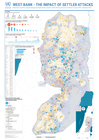
oPt: West Bank – The impact of Settler attacks | Palestinian casualties, property damage and displacement caused by settler attacks and access restrictions (January 2023 – December 2025)

Country: occupied Palestinian territory Source: UN Office for the Coordination of Humanitarian Affairs Please refer to the attached Infographic.

oPt: West Bank – The impact of Settler attacks | Palestinian casualties, property damage and displacement caused by settler attacks and access restrictions (January 2023 – December 2025) Read More »

61a4af21 6802 448c B123 1de0d436fbda V5Qepw

Borderlands of Resilience – Navigating Conflict Impacts on Communities and Aid on the Sudan-South Sudan Frontier

Countries: South Sudan, Sudan Source: Conflict Sensitivity Resource Facility Please refer to the attached file. This report examines how the war in Sudan, and especially the RSF consolidation in Kordofan, is reshaping South Sudan’s borderlands. Recent developments have increased South Sudan’s leverage across the frontier and, for the time being, reduced cross-border conflict. At the same time, they have impoverished communities, deepened militarisation, and strengthened elite control over trade and land. These dynamics are driving greater everyday insecurity, including sexual and gender-based violence, fueling conflict over internal borders, and laying the foundations for future local and strategic confrontation. Women are bearing the heaviest burden, both because they absorb the economic costs of war and because militarisation is reinforcing systems that limit representation, weaken accountability, and restrict access to justice. Drawing on primary research in Northern Bahr al Ghazal, Unity State and Ruweng Administrative Area, the analysis suggests key implications and recommendations for aid actors, requiring a fundamental shift in approach.

Borderlands of Resilience – Navigating Conflict Impacts on Communities and Aid on the Sudan-South Sudan Frontier Read More »

Fd450405 6067 435c 908d Bc307fdf48b8 E2CB8Q

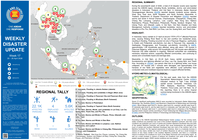
Indonesia: ASEAN Weekly Disaster Update Week 17 | 20 – 26 April 2026

Countries: Indonesia, Malaysia, Thailand, Viet Nam Source: ASEAN Coordinating Centre for Humanitarian Assistance Please refer to the attached Infographic. REGIONAL SUMMARY: During the seventeenth week of 2026, a total of 24 disaster events were reported across the ASEAN region, including floods, landslides, storms, and wind-related disasters in Indonesia, Thailand, and Viet Nam. In Indonesia, Badan Nasional Penanggulangan Bencana (BNPB) reported disaster incidents across Jakarta, West Java, East Java, North Sulawesi, and North Sumatra. Meanwhile, in Thailand, Department of Disaster Prevention and Mitigation (DDPM) reported storms and winds in Amnat Charoen, Chachoengsao, Chaiyaphum, Chiang Mai, Chiang Rai, Lampang, Lamphun, Loei, Lopburi, Mae Hong Son, Nakhon Ratchasima, Phayao, Phetchabun, Phitsanulok, Pharae, Saraburi, Singburi, Tak, Udong Thani, and Uttaradit. Lastly, in Viet Nam, Viet Nam Disaster and Dyke Management Authority (VDDMA) reported landslides, storms, and wind-related disasters in Phu Tho, Dien Binh, Lai Chau, Lao Cai, Quang Ninh, and Thanh Hoa. HIGHLIGHT: In Indonesia, heavy rainfall on 21 April at around 1757H UTC+7 affected Pasuruan area, causing Welang River Basin to rise and overflow into residential areas, resulting in flooding. Flooding occurred not only in Pasuruan Regency—particularly in Kraton and Pohjentrek sub-districts—but also in Pasuruan City, especially in Gadingrejo, Panggungrejo, and Purworejo sub-districts. According to BNPB, approximately 1.4K households were affected, along with about 1.4K houses in Pasuruan Regency, while around 100 households and 100 houses were affected in Pasuruan City (data collection is ongoing). Relevant authorities are undertaking necessary response actions, supporting affected communities, and continuing to assess and consolidate impact and damage data. Meanwhile, in Viet Nam, on 23–24 April, heavy rainfall accompanied by thunderstorms and lightning affected Lai Chau, Lao Cai, Quang Ninh, and Thanh Hoa. According to VDDMA, one person died due to a lightning strike; one house collapsed; 191 houses and 7 schools were damaged; and approximately 0.54 hectares of rice fields and vegetables were affected. Local authorities have conducted visits and mobilised response teams to support affected families. HYDRO-METEO-CLIMATOLOGICAL: For the past week, data from the ASEAN Specialised Meteorological Centre (ASMC) indicated medium to high 7-day average rainfall across Cambodia, Indonesia, Lao PDR, Malaysia, Myanmar, Philippines, Thailand, Timor-Leste, and Viet Nam. As of this reporting, there is no active tropical cyclone being monitored in the ASEAN region (JTWC). GEOPHYSICAL: Seven (7) significant earthquakes (M>5.0) were recorded by Indonesia’s Badan Meteorologi, Klimatologi, dan Geofisika (BMKG) and Myanmar’s Department of Meteorology and Hydrology (DMH). Mount Marapi (alert level II), Semeru (alert level III), Lewotobi Laki-laki (alert level II), Ili Lewotolok (alert level II), and Ibu (alert level II) in Indonesia, and Taal (alert level 1), Mayon (alert level 3), Bulusan (alert level 1), and Kanlaon (alert level 2) volcanoes in the Philippines reported recent volcanic activity according to Pusat Vulkanologi dan Mitigasi Bencana Geologi (PVMBG) and the Philippines Institute of Volcanology and Seismology (PHIVOLCS). OUTLOOK: According to the ASEAN Specialised Meteorological Centre (ASMC), for the coming week, wetter conditions are predicted over much of the southern Maritime Continent; drier than usual conditions are predicted over much of central and southern Mainland Southeast Asia and parts of the western Maritime Continent; and warmer than usual temperatures are predicted over much of central and southern Mainland Southeast Asia and most of the northern half of the Maritime Continent. For the regional assessment of extremes, there is a moderate increase in chance of very heavy rainfall over much of northern Myanmar as well as a small increase in chance of very heavy rainfall in the southern Maritime Continent; and there is a moderate chance of extreme hot conditions for much of the Malay Peninsula and surrounding region as well as a small increase in chance of extreme hot conditions over parts of the central and eastern equatorial region. ENSO neutral conditions are now present.

Indonesia: ASEAN Weekly Disaster Update Week 17 | 20 – 26 April 2026 Read More »

3d294827 Bf67 5698 Ab7d 1ec49cb993e5 LXC7RQ

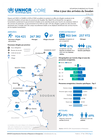
CORE Situation d’urgence au Tchad : Mise à jour des arrivées du Soudan (26 Apr. 2026)

Countries: Chad, Sudan Source: UN High Commissioner for Refugees Please refer to the attached Infographic. Depuis avril 2023, le CNARR, le HCR et l’OIM surveillent et assistent un afflux de réfugiés soudanais et de retournés tchadiens arrivant dans les provinces de Ouaddai, Sila, Wadi-Fira et Ennedi Est. Les agences humanitaires soutiennent le gouvernement tchadien et les autorités locales pour fournir une assistance vitale et des services de protection. Le gouvernement et le HCR ont aidé 67% des réfugiés à quitter les sites d’arrivée spontanée pour s’installer dans des camps nouvellement établis où les déplacés bénéficient des services fournis par les équipes humanitaires.

CORE Situation d’urgence au Tchad : Mise à jour des arrivées du Soudan (26 Apr. 2026) Read More »

494c8fef 92ab 5737 Bf25 0f2182f9d1e3 0H6nEj

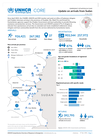
CORE Emergency situation in Chad: Update on arrivals from Sudan (26 Apr 2026)

Countries: Chad, Sudan Source: UN High Commissioner for Refugees Please refer to the attached Infographic. Since April 2023, the CNARR, UNHCR and IOM monitor and assist an influx of Sudanese refugees and Chadian returnees arriving in the provinces of Ouaddai, Sila, Wadi-Fira and Ennedi Est. Humanitarian agencies support the Chadian Government and local authorities to provide lifesaving assistance and protection services. The Government and UNHCR assisted 67% of refugees to relocate from spontaneous arrival sites to extended and newly established settlements where refugees and host communities benefit from the services delivered by humanitarian teams.

CORE Emergency situation in Chad: Update on arrivals from Sudan (26 Apr 2026) Read More »

837b0b27 766c 488f 995f 8120ad3b6836 6DYT2b

Joint Protection / Site Management Clusters Alert – Blue Nile State, Sudan – 25 April 2026

Country: Sudan Sources: CCCM Cluster, Protection Cluster Please refer to the attached file. This joint Protection and SNFI–Site Management Clusters alert is issued to urgently highlight the worsening protection situation in Blue Nile State and to spur immediate, coordinated action to protect civilians and prevent further deterioration. It follows a joint mission to Ed Damazine and Ar Rusayris localities and is published amid renewed fighting reported on 25 April in areas south of Damazine, including Sali and Keili village. The intensification of hostilities is increasing displacement risks and compounding existing protection threats, at a critical time as the onset of the rainy season threatens to further expose IDPs, returnees, and host communities to harm. The protection situation in Blue Nile has deteriorated sharply since late March 2026 following intensified hostilities, large-scale displacement, and severe gaps in site conditions and basic services. Joint assessments and mission findings confirm that overcrowded and unsafe displacement sites, weak shelter conditions, inadequate water and sanitation, and limited site-level coordination are directly exposing women, children, IDPs, returnees, and other vulnerable groups to serious protection risks that are likely to worsen rapidly with the onset of the rainy season. Immediate, protection-centred and life-saving action is required to prevent further harm, particularly in high-risk IDP gathering sites and among returnees both within and outside sites. Without urgent mitigation, current conditions risk escalating into severe protection and public health emergency

Joint Protection / Site Management Clusters Alert – Blue Nile State, Sudan – 25 April 2026 Read More »

94c8cce9 A189 4a77 8656 934e33f2426c H1zpVk

Solomon Islands NEOC National Situation Report 06 – TC Maila (22 April 2026)

Country: Solomon Islands Source: Government of Solomon Islands Please refer to the attached file. HIGHLIGHT State of Disaster declaration remain enforce for Western and Choiseul Provinces. Other affected provinces remain under National Disaster Council (NDC) Non-Declared arrangements. Government has approved SBD$10 million as emergency support to enable National and Provinces quickly mobilise response efforts and supplies to affected communities. The NDC’s N-DOC and P-DOC frameworks, as outlined in the National Disaster Management Plan 2018, serve as the primary mechanisms for coordinating and managing the response to the TC Maila disaster. The National Emergency Operations Centre (NEOC) remains on Full Activation including Western and Choiseul Provincial EOCs (PEOCs). Western Province has established Gizo and Munda as main operational hubs (Axis) for deployment of emergency relief supports to affected communities. Choiseul Province main operational hub (Axis) is only in Taro through the PEOC. Minister responsible for disaster management accompanied by the Australian High Commissioner and the Director of NDMO, pay visit Western Province Premier, P-DOC and PEOC on Wednesday 15 April 2026. Prime Minister of Solomon Islands pay visit to Western and Choiseul from 18th – 20th April 2026. Government has deployed the Royal Solomon Islands Police Force (RSIPF) Guardian Class Patrol Boat (GCPB 05 – Ghizo) to support with Western and Choiseul Provinces disaster responses. Development and Donor Partners have activated their disaster response mechanism supporting and contributing to the Solomon Islands Government with Assessments, Logistics, Relief Supplies and Finance towards TC Maila response efforts. Solomon Islanders, Private Sector and Businesses has also mobilised support in terms of Food Relief and Non-Food Items toward TC Maila disaster response efforts. NDC Rapid Response Tool, the National Emergency Response Team has been activated and deployed to Western and Choiseul Provinces to support with coordination, assessment and emergency relief operations.

Solomon Islands NEOC National Situation Report 06 – TC Maila (22 April 2026) Read More »