Uncategorized

Ecc650a9 4b58 41ff A4aa 65e84379e920 XKU8Qt

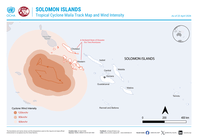
Solomon Islands: Tropical Cyclone Maila – Pacific Humanitarian Team – Situation Repot No.2 (24 April 2026)

Country: Solomon Islands Source: UN Office for the Coordination of Humanitarian Affairs Please refer to the attached file. HIGHLIGHTS Initial indications suggest that over 150,000 people have been affected by Tropical Cyclone Maila, with 161 communities impacted in Western Province alone, reflecting the widespread scale of the disaster. Displacement remains a significant concern. 260 evacuation centers have been established across the affected provinces, and an estimated 31,000 people require urgent shelter assistance. Critical infrastructure has sustained extensive damage, including homes, water systems, schools, and health facilities, further compounding humanitarian needs. Education disruption is widespread, with 79 schools closed nationwide, including 12 severely damaged, affecting at least 1,382 learners and delaying the resumption of classes. Health services remain under strain, with 21 health facilities damaged or non-functional, while approximately 180 pregnant women are expected to require emergency obstetric care in the coming months, highlighting urgent reproductive health needs. SITUATION OVERVIEW Response efforts for Tropical Cyclone Maila continue to scale up between 15 and 24 April under a sustained State of Disaster for Western and Choiseul Provinces. National coordination mechanisms remain fully activated, with the NEOC and Provincial EOCs leading operations, supported by increased government funding and deployment of national response teams. While weather conditions have stabilized, access to remote and island communities remains constrained, slowing the pace of assessments and aid delivery. Impacts across affected provinces remain significant, particularly in the health, education, and shelter sectors. Damage to health infrastructure has disrupted service delivery, with critical facilities such as Sasamunga Hospital severely affected and ongoing public health risks linked to WASH conditions, including a contained diarrhea outbreak in Simbo. Schools have sustained structural damage and continue to be used as evacuation centres, while displacement—though still being verified—includes families sheltering in temporary sites and host communities, often with limited access to basic services. Response operations have expanded, with increased logistics movements, deployment of assessment teams, and distribution of relief supplies by government and partners. National and international actors, including NGOs and UN agencies, are supporting food and non-food item distributions, health outreach, and initial damage assessments. However, uneven distribution of assistance persists, particularly in hard-to-reach areas, and data gaps continue to limit precise targeting of needs. Priority needs remain high across multiple sectors, including emergency shelter, safe water, food assistance, and restoration of health services. Significant operational challenges continue to affect the response, notably fuel shortages, limited transport and storage capacity, and insufficient human resources, particularly in health. Ongoing risks include waterborne disease outbreaks, inadequate shelter for displaced populations, and delays in restoring essential services, especially in remote and underserved communities.

Solomon Islands: Tropical Cyclone Maila – Pacific Humanitarian Team – Situation Repot No.2 (24 April 2026) Read More »

97423b04 8df0 4ecb 8499 65f1a1fb2cab YicGwZ

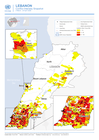
Lebanon: Flash Update #20 – Escalation of hostilities in Lebanon (as of 23 April 2026)

Country: Lebanon Source: UN Office for the Coordination of Humanitarian Affairs Please refer to the attached file. HIGHLIGHTS Ceasefire extended for further three weeks even as population movements remain tentative and uneven. A slight 3 per cent increase in the number of displaced people in collective shelters recorded: 121,225 people as of 23 April. The protection environment remains highly fragile, with elevated risks driven by insecurity, overcrowded shelter conditions, and limited access to services. Funding of the Flash Appeal rises to 33 per cent, or US$ 102.9 million. Nearly 500,000 vulnerable, conflict-affected people have received multipurpose cash assistance. Situation Overview The humanitarian situation in Lebanon remains critical. Despite the extension of the initial 10-day ceasefire by three additional weeks, humanitarian needs remain immense and the situation on the ground highly fragile. Some one million people remain displaced across the country as conditions for safe and durable returns, unimpeded humanitarian access and the protection of civilians are not yet in place. Daily reports of shelling, demolitions and air strikes, as well as continued restrictions on civilian return beyond the so-called Yellow Line, have accompanied the fragile ceasefire. Since the start of the ceasefire, at least 195 people have been killed and 175 injured as a result of hostilities. One 22 April, a journalist was killed and two injured in an airstrike in Bint Jbeil district (Nabatieh Governorate). While the ceasefire has slowed new displacement, people remain on the move in uncertain and unpredictable ways, as many families attempting to return face damaged homes, disrupted services, and ongoing security risks. As of 23 April, 121,225 displaced people were staying in 642 collective shelters, an increase of 3 per cent since the previous report, while also reflecting a decrease of nearly 17 per cent since 16 April, before the initial 10-day ceasefire was announced. The situation is likely to remain fluid, with tentative and uneven movement patterns emerging in the coming days and weeks. The escalation has paralyzed essential services and caused widespread damage to infrastructure and basic services across southern Lebanon, including residential buildings, road networks, and other vital services. Six hospitals and 51 Primary Healthcare Centres (PHCCs) remain closed due to violence, leaving affected communities without adequate access to healthcare. More than 147 attacks on healthcare have been recorded since 2 March, resulting in 100 deaths and 233 injuries among healthcare workers on duty, albeit no new incidents have been recorded since the last report. Food prices have risen by at least 6 per cent, creating a gap in the already depleted purchasing power of people in need. Shelter capacity is strained, particularly in Beirut due to secondary displacement patterns, with IDPs moving back towards their home areas from other sites of displacement. Compounding needs are exposing many to exploitation, including through exorbitant rents, while their full return remains hindered by presence of UXOs and lack of basic services. Since mid-March, several key bridges across the Litani River have been destroyed or rendered inoperable, alongside repeated strikes on secondary bridges, access roads, fuel stations, electricity networks, water infrastructure, telecommunications assets and health facilities. While the Qasmiya bridge has been partially restored, the wider transport network remains severely degraded, limiting predictable access between areas north of the Litani River (NLR) and south of the Litani River (SLR) and constraining sustained humanitarian movements, particularly for trucks, ambulances, large-scale return or relief operations.

Lebanon: Flash Update #20 – Escalation of hostilities in Lebanon (as of 23 April 2026) Read More »

3ea2ce3e 0e55 4c36 B5bf Ff2edcd8afe6 7SuyNn

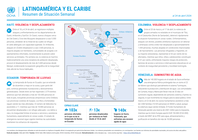
Haiti: Latinoamérica y El Caribe Resumen de Situación Semanal al 24 de abril 2026

Countries: Haiti, Colombia, Ecuador, Venezuela (Bolivarian Republic of) Source: UN Office for the Coordination of Humanitarian Affairs Please refer to the attached file. CIFRAS CLAVE 103K personas afectadas en lo que va de la temporada de lluvias en Ecuador 13K personas desplazadas por violencia en Haití desde el 18 de abril 140K hogares en Sucre, Venezuela, que enfrentan una escasez aguda de agua HAITÍ: VIOLENCIA Y DESPLAZAMIENTO Entre el 18 y el 24 de abril, se registraron múltiples ataques y enfrentamientos en los departamentos de Ouest, Artibonite y Sud-Est. En Ouest, nuevos choques cerca de Cité Soleil y Croix-des-Bouquets desplazaron a casi 5.000 personas, alrededor de la mitad de las cuales se refugió en siete albergues con capacidad superada. En Artibonite, ataques en L’Estère desplazaron a casi 2.600 personas, la mayoría alojada con familiares, comunidades de acogida o en asentamientos informales, incrementando la presión sobre servicios ya limitados. Por primera vez, la violencia en Sud-Est, tradicionalmente una zona receptora de población desplazada, provocó el desplazamiento de más de 5.600 personas desde Marigot, evidenciando la expansión geográfica de la inseguridad más allá de los focos habituales. ECUADOR: TEMPORADA DE LLUVIAS La temporada de lluvias en Ecuador, que se extiende de diciembre a mayo en la costa y gran parte del país, continúa generando inundaciones y deslizamientos generalizados. Desde enero se han registrado 2.579 eventos adversos que han afectado a más de 103.000 personas en todo el país, incluyendo provincias amazónicas como Orellana. Las provincias costeras de Guayas, Los Ríos y Esmeraldas siguen siendo las más afectadas. El número de fallecidos ha ascendido a 17, mientras que más de 18.800 personas se encuentran desplazadas o sin refugio adecuado. Los daños a vías y la inseguridad limitan el acceso a servicios y asistencia humanitaria, especialmente en zonas rurales. El estado de emergencia nacional sigue vigente mientras las autoridades mantienen los esfuerzos de respuesta. COLOMBIA: VIOLENCIA Y DESPLAZAMIENTO Entre el 20 de marzo y el 17 de abril, la violencia de grupos armados no estatales en el municipio de Tibú, en el Catatumbo (Norte de Santander), deterioró rápidamente la situación humanitaria en zonas rurales. Enfrentamientos, ataques con drones, posibles artefactos explosivos sin detonar y amenazas contra civiles han desplazado a aproximadamente 1.044 personas, muchas alojadas en condiciones improvisadas o de hacinamiento. Las personas refugiadas y migrantes, en su mayoría venezolanas, representan el 42 por ciento de los afectados, mientras que niños, niñas y adolescentes constituyen el 41 por ciento, enfrentando mayores riesgos de protección, barreras de acceso a servicios e interrupciones educativas en un contexto de inseguridad persistente y movilidad restringida. VENEZUELA: SUMINISTRO DE AGUA Más de 140.000 hogares en el estado de Sucre enfrentan una emergencia hídrica prolongada tras un sismo el 22 de febrero que obstruyó parcialmente el sistema Turimiquire, reduciendo la producción y distribución de agua. Las comunidades de Cumaná, Araya y Manicuare llevan más de 20 días sin suministro regular, dependiendo de camiones cisterna y fuentes no seguras, lo que incrementa los riesgos para la salud pública. Entre marzo y el 22 de abril, los socios humanitarios asistieron a más de 2.000 familias (10.925 personas) en WASH y salud, aunque la cobertura sigue siendo limitada. El Fondo Humanitario de Venezuela aprobó una reserva de US$1 millón para la respuesta, mientras que la Unión Europea aportó EUR 150.000 ($163.000) a través del DREF de la IFRC para agua, almacenamiento y purificación en beneficio de más de 18.000 personas.

Haiti: Latinoamérica y El Caribe Resumen de Situación Semanal al 24 de abril 2026 Read More »

21f31b34 Ea98 4f2b 9a2d 0622df129a37 NX4CDL

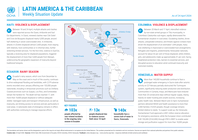
Haiti: Latin America & The Caribbean Weekly Situation Update as of 24 April 2026

Countries: Haiti, Colombia, Ecuador, Venezuela (Bolivarian Republic of) Source: UN Office for the Coordination of Humanitarian Affairs Please refer to the attached file. KEY FIGURES 103K people affected by rain-related incidents in the ongoing rainy season in Ecuador 13K people displaced due to violence across Haiti since 18 April 140K households face a severe lack of water in Sucre, Venezuela HAITI: VIOLENCE & DISPLACEMENT Between 18 and 24 April, multiple attacks and clashes were reported across the Ouest, Artibonite and Sud Est departments. In Ouest, renewed clashes near Cité Soleil and Croix de Bouquets displaced nearly 5,000 people, around half sheltering in seven overcrowded sites. In Artibonite, attacks in L’Estère displaced almost 2,600 people, most staying with relatives, host communities or in informal sites, further stretching limited services. For the first time, violence in Sud-Est, typically a receiving area for displaced populations, triggered the displacement of more than 5,600 people from Marigot, underscoring the geographic expansion of insecurity beyond traditional hotspots. ECUADOR: RAINY SEASON Ecuador’s rainy season, which runs from December to May on the coast and in much of the country, continues to drive widespread flooding and landslides, with 2,579 adverse events recorded since January affecting over 103,000 people nationwide, including in Amazonian provinces such as Orellana. Coastal provinces such as Guayas, Los Ríos, and Esmeraldas remain the hardest hit. The death toll has reached 17, with more than 18,800 people displaced or without adequate shelter. Damaged roads and transport infrastructure, as well as insecurity, are limiting access to services and aid, particularly in rural areas. A nationwide state of emergency remains in effect, with authorities continuing to manage response efforts. COLOMBIA: VIOLENCE & DISPLACEMENT Between 20 March and 17 April, intensified violence by non-state armed groups in Tibú municipality, in Colombia’s Catatumbo sub-region, rapidly deteriorated the humanitarian situation in rural areas. Escalating clashes, drone attacks, unexploded ordnance, and threats against civilians have driven the displacement of an estimated 1,044 people, many now sheltering in improvised or overcrowded host arrangements. Refugees and migrants, predominantly Venezuelan nationals, account for about 42 per cent of those displaced, while children, girls, and adolescents make up approximately 41 per cent, facing heightened protection risks, barriers to essential services, and disrupted access to education amid continued insecurity and restricted mobility. VENEZUELA: WATER SUPPLY More than 140,000 households continue to face a prolonged water emergency in Sucre state after seismic activity on 22 February partially obstructed the Turimiquire system, significantly reducing water production and distribution. Communities in Cumaná, Araya, and Manicuare have endured more than 20 consecutive days without regular supply, relying heavily on water trucking and unsafe sources, increasing public health risks. Between March and 22 April, humanitarian partners delivered WASH and health assistance to more than 2,000 families (10,925 people), though coverage remains limited relative to needs. To support scale-up, the Venezuela Humanitarian Fund approved a US$1 million reserve allocation for emergency assistance, while the European Union contributed EUR 150,000 ($163,000) through IFRC’s DREF to enable water storage and purification support for more than 18,000 people.

Haiti: Latin America & The Caribbean Weekly Situation Update as of 24 April 2026 Read More »

9acae974 1c05 4db5 A1c7 E6b3e8352040 PFgs4A

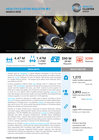
Ukraine: Health Cluster Bulletin #3 (March 2026)

Country: Ukraine Source: Health Cluster Please refer to the attached file. Ukraine saw an escalation in aerial attacks compared to the first two months of the year, with over 3,500 air and drone strikes recorded in March alone by ACLED. Between 23 and 24 March, 948 drones were launched in a single 24-hour period – the largest such attack since February 2022, according to ACLED. Civilian casualties in March 2026 rose sharply, with 211 killed and 1,206 injured. The UN HRMMU reported a 49 percent increase from the previous month and the highest toll since July 2025. Overall, the first quarter of 2026 saw civilian casualties rise 20 percent compared to the same period in 2025. As of 31 March 2026, 9 health partners reported reaching more than 500 people with primary health care and MHPSS and prepositioned medical supplies to cover the treatment of 200 patients. WHO SSA verified 42 attacks on health care in March, including a drone strike on a clearly marked vehicle to a health partner’s mobile medical team operating in a frontline area. In a separate incident, an evacuation minibus was struck by an FPV drone while evacuating civilians in Donetska oblast, killing two people and injuring two others. Attacks on energy infrastructure continued to disrupt electricity, heating and water supply, affecting both health service delivery and humanitarian operations. UN HRMMU also reported an increase in strikes targeting railroads and other transport infrastructure. Despite these challenges, the October 2025 – March 2026 winter response concluded at the end of March with 17 Health Cluster partners providing winter-specific assistance to 66,017 people, reaching 67 percent of the 98,058 target. Based on an ACAPS scenario analysis for Ukraine in 2026, there are three possible trajectories: continued war, partial de-escalation, and escalation, each associated with consistent high health risks. Across all scenarios, infrastructure damage, weakened health system capacity, and reduced international funding are expected to widen the gap between needs and response, particularly in frontline and hard-to-reach areas.

Ukraine: Health Cluster Bulletin #3 (March 2026) Read More »

World: Acute food insecurity and malnutrition remain alarmingly high as crises deepen, UN, EU and partners warn in new report

Countries: World, Afghanistan, Bangladesh, Democratic Republic of the Congo, Myanmar, Nigeria, occupied Palestinian territory, Pakistan, South Sudan, Sudan, Syrian Arab Republic, Yemen Sources: European Commission, Food and Agriculture Organization of the United Nations, Government of Germany, Government of the United Kingdom, International Fund for Agricultural Development, UN Children’s Fund, UN High Commissioner for Refugees, World Bank, World Food Programme Over the past decade acute hunger numbers have doubled, while funding retreats to 2016 levels 24/04/2026 JOINT NEWS RELEASE EU/BMZ/FCDO/g7+/DAFM/FAO/IFAD/WFP/UNHCR/UNICEF/WB Brussels/Berlin/London/Dili/Dublin/Rome/Geneva/New York/Washington D.C. – Acute food insecurity and malnutrition levels remain alarmingly high and deeply entrenched, with crises increasingly concentrated in a core group of countries, according to the Global Report on Food Crises (GRFC) 2026, released today by an international alliance. In its tenth edition, the GRFC shows that acute hunger has doubled over the past decade, with two famines declared last year for the first time in the report’s history. The report from the Global Network Against Food Crises reveals that acute food insecurity remains highly concentrated. Ten countries — Afghanistan, Bangladesh, the Democratic Republic of the Congo, Myanmar, Nigeria, Pakistan, South Sudan, Sudan, Syrian Arab Republic, and Yemen — accounted for two-thirds of all people facing high levels of acute hunger. Afghanistan, South Sudan, Sudan, and Yemen experienced the largest food crises both in terms of the share and absolute number of people facing high levels of acute food insecurity. At the most extreme end, famine was identified in Gaza Governorate and parts of Sudan in 2025 by the Integrated Food Security Phase Classification (IPC) system. This marks the first time since the GRFC began reporting that famine has been confirmed in two separate contexts in the same year. This signals a sharp escalation in the most extreme forms of hunger and malnutrition, driven primarily by conflict and restricted humanitarian access, and exacerbated by forced displacement. In total, 266 million people in 47 countries/territories experienced high levels of acute food insecurity in 2025, representing almost 23 percent of the analysed population – a proportion that is marginally higher than in 2024 and nearly double the share recorded in 2016. In 2025, the severity of acute food insecurity was the second highest on record, with the share of people facing extreme hunger remaining at one of the most critical levels seen in the past two decades. The number of people facing catastrophic hunger (IPC Phase 5) is nine times higher than it was in 2016. At the same time, acute malnutrition remains a critical and growing concern. In 2025 alone, 35.5 million children were acutely malnourished, including nearly 10 million suffering from severe acute malnutrition. Nearly half of food-crisis contexts also faced nutrition crises, reflecting the combined effects of inadequate diets, disease burden, and breakdowns in essential services. In the most severe contexts, including Gaza, Myanmar, South Sudan and Sudan, these compounded shocks have resulted in extreme levels of malnutrition and elevated risks of mortality. In addition, forced displacement continued to exacerbate food insecurity. More than 85 million people were forcibly displaced across food-crisis contexts in 2025, including internally displaced people, asylum-seekers and refugees with people forced to flee consistently facing higher levels of acute hunger than host communities. “Conflict remains the primary driver of acute food insecurity and malnutrition for millions around the world, with outright famine emerging in two conflict-affected areas in the same year — an unprecedented development,” said United Nations Secretary-General António Guterres in the foreword to the report. “This report is a call to action urging global leaders to summon the political will to rapidly scale up investment in lifesaving aid, and work to end the conflicts that inflict so much suffering on so many.” Outlook for 2026 remains bleak Looking ahead, the report warns that severe levels of acute food insecurity remain critical in multiple contexts in 2026. Ongoing conflicts, climate variability and global economic uncertainty — including risks to food markets — are likely to sustain or worsen conditions in many countries. In particular, while a full assessment is premature, the escalation of the conflict in the Middle East – in addition to causing further displacement in a region already hosting millions of forcibly displaced and returnees – exposes countries/territories with food crises to both direct and indirect risks of global agrifood market disruptions. Immediate food security implications are mainly regional, given the Middle East’s dependence on food imports, but are having immediate impacts on the purchasing power of already-vulnerable communities as energy and logistics costs rise. At the same time, Gulf countries are major energy and fertilizer exporters, and continued transport disruptions could create wider spillover risks for global agrifood markets, the report warns. Declining funding threatens response capacity A major concern highlighted in this year’s report is the sharp decline in humanitarian and development financing for food crises. Funding for food crises responses and for food security and nutrition has fallen back to levels last seen nearly a decade ago, limiting the ability of governments and humanitarian actors to respond effectively. Data collection has also been impacted, with fewer countries able to produce reliable and disaggregated food security and nutrition estimates. Critical data gaps The apparent decline in the number of people facing high levels of acute food insecurity is largely a reflection of declining data availability rather than a real improvement. The 2026 GRFC features the lowest number of countries with data meeting technical requirements in a decade. In 2025, 18 countries and territories lacked comparable data, including several major crises such as Burkina Faso, the Republic of Congo and Ethiopia, which alone accounted for more than 27 million acutely food-insecure people in need of urgent assistance in 2024. This is reflected in the total number of people facing acute food insecurity detailed in the report. While this number is lower than the number in last year’s report, it does not necessarily reflect an improvement in food security contexts, but rather an absence and lack of access to reliable data. Call to action The Global Network Against Food

World: Acute food insecurity and malnutrition remain alarmingly high as crises deepen, UN, EU and partners warn in new report Read More »