Uncategorized

E6b2c743 Ecf3 47f2 Bf0d B06e7b051e08 6UxKCS

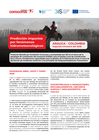
Colombia: Predicción impactos por fenómenos hidrometeorológicos

Country: Colombia Source: 3iS Please refer to the attached file. Más de 40.000 personas podrían verse afectadas por inundaciones, encharcamientos y crecientes súbitas en Arauca durante mayo y junio de 2026. El análisis territorial liderado por la Fundación Corocoras, con el acompañamiento técnico de 3iS y en el marco del consorcio EVIDEM financiado por ECHO, identifica los municipios con mayor nivel de exposición y proyecta impactos sobre sectores como salud, educación, agua, vivienda y seguridad alimentaria. La diferencia entre un desastre y una emergencia gestionada es el tiempo. Este informe busca aportar herramientas para anticipar y actuar, tanto a nivel del ELC como en los escenarios de coordinación pertinentes.

Colombia: Predicción impactos por fenómenos hidrometeorológicos Read More »
21e4812f 29f5 4089 A19a F1d74fab49cf Ze8jQM

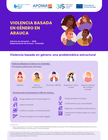
Colombia: Análisis de la Violencia Basada en Género en Arauca – 2025

Country: Colombia Source: 3iS Please refer to the attached file. Cuando el conflicto armado se intensifica, la violencia contra mujeres, niñas y adolescentes también se profundiza. En Arauca, la Violencia Basada en Género no es un hecho aislado: es una problemática estructural, sostenida por desigualdades históricas, discriminación, barreras institucionales y un contexto humanitario cada vez más complejo. La presencia y disputa de actores armados, las restricciones a la movilidad, el desplazamiento forzado, el confinamiento, las amenazas, la pobreza y las brechas de acceso a servicios aumentan los riesgos de protección y limitan las posibilidades de denuncia, atención y justicia. Este informe, realizado por APOYAR, organización líder del Subgrupo de VBG del ELC Arauca, analiza cómo la VBG se agrava en contextos de conflicto, frontera y crisis humanitaria, afectando de manera desproporcionada a mujeres, niñas, adolescentes y personas con orientaciones sexuales e identidades de género diversas. El análisis fue desarrollado con el acompañamiento técnico de 3iS y en el marco del consorcio EVIDEM financiado por ECHO. Nombrar esta realidad es un paso necesario para exigir respuestas integrales, fortalecer la protección y avanzar hacia territorios más seguros y dignos.

Colombia: Análisis de la Violencia Basada en Género en Arauca – 2025 Read More »

F430586b 2040 434e B9e0 4facc023f1ea DOfXeu

Humanitarian Action for Children 2026 – Niger

Country: Niger Source: UN Children’s Fund Please refer to the attached file. Appeal highlights In 2026, 3.9 million 1 people in the Niger, including approximately 2.6 million children, require urgent assistance due to insecurity, environmental crises and migration challenges as well as 892,000 3 displaced people recorded as of 31 December 2025, primarily due to insecurity. In 2026, UNICEF’s humanitarian response will be implemented through a coordinated, partnership-driven approach that brings together government counterparts and humanitarian actors to strengthen national and local response capacities, expand access to vulnerable and hard-to-reach areas and co-develop innovative, resilience-oriented solutions. While prioritizing life-saving interventions in child protection, nutrition, WASH and education in the most affected regions, UNICEF will mobilize resources and advance targeted solutions to bridge critical funding gaps, ensuring a balanced approach that safeguards children’s rights while linking emergency response to long-term resilience. UNICEF is appealing for US$83 million to provide multisectoral assistance to 2.3 million people, including 2 million children, prioritizing urgent needs.

Humanitarian Action for Children 2026 – Niger Read More »

3b84a557 Ea11 4706 B9a7 149e61c76be6 PJ1wvi

Humanitarian Action for Children 2026 – Nigeria

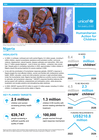
Country: Nigeria Source: UN Children’s Fund Please refer to the attached file. Appeal highlights In 2026, in northeast, northwest and north-central Nigeria, 8.4 million people, including 5 million children, require humanitarian assistance amid persistent conflict, communal violence, displacement, natural hazards, disease outbreaks and malnutrition. With more than 3.7 million people displaced – most of whom are children – protection risks remain high. Despite gains in combating malnutrition in 2025, approximately 3 million children in Nigeria require life-saving treatment for severe wasting in 2026. In line with the prioritization of humanitarian responses globally, UNICEF’s response in Nigeria targets the most affected children, women and families with multisectoral nutrition, health, WASH, education, social and child protection services in eight prioritized states. Under the humanitarian reset, Nigeria has been identified as a priority country to transition to nationally- led humanitarian responses. 1 UNICEF’s response therefore balances life-saving support with resilience, preparedness and anticipatory action, while advancing localization and durable solutions and strengthening state readiness. In 2026, UNICEF requires US$210.8 million to assist 4.5 million people, including 2.3 million children, in emergency-prone priority states in Nigeria.

Humanitarian Action for Children 2026 – Nigeria Read More »

Ebe662d7 7af3 44be A0fa 214e42dd1902 Kwgfnh

Honduras: Food Security Outlook Update – Erratic rainfall and above-average input costs mark outset of agricultural season, April – September 2026

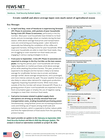
Country: Honduras Source: Famine Early Warning System Network Please refer to the attached file. Key Messages In April and May, most of Honduras is experiencing Stressed (IPC Phase 2) outcomes, with pockets of poor households facing Crisis (IPC Phase 3) outcomes, particularly in the Dry Corridor. Most poor rural households have limited to no food stocks and are increasingly reliant on markets during the lean season, while above‑average food prices and transportation costs are constraining purchasing power. Labor demand is seasonally low following the completion of the coffee and sugarcane harvests, limiting income for poor households. While most poor households are able to meet their food needs, they are struggling to cover essential non-food needs and are engaging in various coping strategies to do so. From June to September, Crisis (IPC Phase 3) outcomes are expected to emerge in the Dry Corridor as the lean season peaks. During this period, poor rural households will remain highly dependent on market purchases amid above-average prices while awaiting the primera harvest. This year, primera is expected to be delayed and the harvest is likely to be below average for smallholder farmers due to erratic and below-average rainfall, above‑average temperatures, and a prolonged, and more intense canícula dry spell. The poor weather forecast is also likely to reduce labor demand for staple grain production, negatively impacting household income. While most areas outside of the Dry Corridor will remain Stressed (IPC Phase 2), a growing portion of poor rural households are expected to face food consumption gaps or employ the use of negative coping strategies to meet their minimum food needs. Fuel price increases related to global supply chain disruptions are driving up already elevated food and transportation costs, eroding household purchasing power. Simultaneously, rising fertilizer prices are increasing production costs and limiting use of inputs among small‑scale and subsistence farmers, which is expected to further reduce yields and limit the replenishment of food stocks from the upcoming primera harvest. This report provides an update to the February to September 2026 Food Security Outlook and March 2026 Key Message Update. The analysis is based on information available as of April 30, 2026.

Honduras: Food Security Outlook Update – Erratic rainfall and above-average input costs mark outset of agricultural season, April – September 2026 Read More »

7ff7e2a7 F4cf 4065 9662 Bea3ec06fb89 Nly82r

El Salvador – Food Security Outlook Update: Lean season begins amid erratic rainfall and primera production risks, April – September 2026

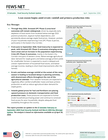
Country: El Salvador Source: Famine Early Warning System Network Please refer to the attached file. Key Messages Through May 2026, Stressed (IPC Phase 2) area-level outcomes will remain widespread, driven by atypically early depletion of food stocks from localized below-average 2025 postrera production, atypical market dependence, and persistently above-average staple food prices. However, pockets of poor households experiencing Crisis (IPC Phase 3) persist, particularly in the Eastern Dry Corridor. From June to September 2026, food insecurity is expected to peak, with Stressed (IPC Phase 2) outcomes emerging across more areas and an increase in the population experiencing Crisis (IPC Phase 3) outcomes, mainly in the Eastern Dry Corridor and parts of western zones. Below-average agricultural labor demand for staple grains and below-average primera yields for smallholder farmers is expected to result in delayed and uneven replenishment of household food stocks, and below-average incomes, leading to short‑lived improvements after the harvest. Erratic and below‑average rainfall at the outset of the rainy season is leading to localized delays in planting activities, with downstream effects throughout the rest of the agricultural calendar. Poor weather forecasts are expected to negatively affect rainfed smallholder maize and bean primera production as well as reduce agricultural labor demand for staple grains. Volatile global prices for fuel and fertilizers are placing upward pressure on domestic transportation and food production costs. These pressures are expected to further erode household purchasing power and continue to constrain food access for poor households, despite adequate food availability throughout the country. This report provides an update to the El Salvador February to September 2026 Food Security Outlook and March 2026 Key Message Update. The analysis is based on information available as of April 30, 2026.

El Salvador – Food Security Outlook Update: Lean season begins amid erratic rainfall and primera production risks, April – September 2026 Read More »