Uncategorized

1bfeafed 3ed5 4a68 94b8 D6dccf96a83e WWnkAd

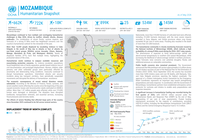
Mozambique: Humanitarian Snapshot, as of May 2026 [EN/PT]

Country: Mozambique Source: UN Office for the Coordination of Humanitarian Affairs Please refer to the attached Infographic. Situation Overview Mozambique continued to face multiple and overlapping humanitarian challenges in May 2026, driven by conflict, climatic shocks, disease outbreaks. The combination of recent floods, cyclone impacts, and forecasts of a strong El Niño event has heightened concerns over the country’s humanitarian outlook for the remainder of the year. More than 16,000 people displaced by escalating violence in Cabo Delgado in the month of May due to attacks or fear of attacks by non-State armed groups (NSAGs) across Ancuabe, Chiure, Namuno, Metuge, Mocímboa da Praia, and Montepuez districts. Nearly all displaced families (97%) have fled multiple times, highlighting the protracted nature of the crisis. Humanitarian needs continue to outpace available resources and exacerbating protection concerns. As violence escalated, populations faced heightened risks of family separation, gender-based violence, loss of civil documentation, and prolonged displacement. Women, children, older persons, and other vulnerable groups were particularly affected by uncertainty and deteriorating living conditions. Insecurity continued to disrupt humanitarian operations. Intermittent attacks and security incidents along key transport corridors, have periodically suspended movements and disrupted the delivery of humanitarian assistance. The economic consequences of recent natural disasters remain substantial. According to the Ministry of Finance, floods, cyclones, and severe weather events affecting the country since the beginning of the year caused economic losses and reconstruction needs estimated at US$48.6 million. More than 1.07 million people were affected, while over 210,000 homes were damaged or destroyed. The disasters have disrupted livelihoods, transportation networks, and essential services, increasing fiscal pressures and recovery needs. The effects of severe flooding that affected large parts of the country since December 2025 continued to be felt across several sectors. Nationwide, more than 518,000 hectares of cultivated land were affected, including 312,000 hectares destroyed, with the most severe impacts recorded in Gaza, Maputo, and Sofala provinces where crop losses exceeded 50 per cent in some areas. Flooding also resulted in the death of more than 531,000 livestock. The humanitarian community is closely monitoring forecasts issued by the National Institute of Meteorology (INAM), which indicate a high probability of a strong El Niño event during the 2026–2027 rainy season. The phenomenon is expected to bring below-average rainfall and above-normal temperatures to southern and central Mozambique, while increasing the likelihood of above-average rainfall in northern provinces. These forecasts raise concerns over potential droughts, floods, and additional pressure on vulnerable communities. Public health concerns also remained prominent. The Government announced that Mozambique will receive approximately 6.8 million doses of oral cholera vaccines as part of the National Plan for the Elimination of Cholera (2025–2030). Since September 2025, the country has recorded more than 9,000 cholera cases and over 80 deaths, with Nampula, Tete, and Cabo Delgado provinces reporting the highest caseloads. The approval of a cholera Anticipatory Action framework by the Emergency Relief Coordinator represents an important step toward strengthening preparedness and early response. In coordination with the Government of Mozambique, humanitarian partners have established anticipatory action protocols for cyclones and cholera to enable early preparedness and response measures. A significant increase in humanitarian funding was recorded during the first quarter of 2026, with US$145 million secured under the Humanitarian Needs and Response Plan (HNRP) by the end of May, representing 27 per cent of total requirements. Pooled funding mechanisms accounted for the majority of contributions, providing US$102.8 million, including the Mozambique Humanitarian Fund ($88.3 million) and the Central Emergency Response Fund $ 14.5 million. Visão geral da situação Moçambique continuou a enfrentar múltiplos desafios humanitários simultâneos ao longo de maio de 2026, impulsionados pelo conflito armado, choques climáticos, surtos de doenças. A combinação das recentes cheias, dos impactos dos ciclones e das previsões de um forte fenómeno El Niño aumentou as preocupações relativamente à evolução da situação humanitária no país durante o restante período do ano. Mais de 16.000 pessoas foram deslocadas em Cabo Delgado durante o mês de maio devido à intensificação da violência associada a ataques ou ao receio de ataques por parte de grupos armados não estatais (GANE) nos distritos de Ancuabe, Chiúre, Namuno, Metuge, Mocímboa da Praia e Montepuez. Quase todos os agregados familiares deslocados (97%) foram forçados a deslocar-se mais de uma vez, evidenciando a natureza prolongada da crise. As necessidades humanitárias continuam a exceder os recursos disponíveis, agravando as preocupações em matéria de proteção. À medida que a violência se intensificou, as populações afetadas enfrentaram riscos acrescidos de separação familiar, violência baseada no género (VBG), perda de documentação civil e deslocamentos prolongados. Mulheres, crianças, pessoas idosas e outros grupos vulneráveis foram particularmente afetados pela incerteza e pela deterioração das condições de vida. A insegurança continuou igualmente a afetar as operações humanitárias. Ataques esporádicos e incidentes de segurança ao longo dos principais corredores rodoviários provocaram, periodicamente, a suspensão de movimentos e interrupções na prestação de assistência humanitária. As consequências económicas dos recentes desastres naturais continuam a ser significativas. De acordo com o Ministério da Economia e Finanças, as cheias, ciclones e outros eventos meteorológicos severos que afetaram o país desde o início do ano causaram perdas económicas e necessidades de reconstrução estimadas em cerca de 48,6 milhões de dólares norte-americanos. Mais de 1,07 milhão de pessoas foram afetadas e mais de 210.000 habitações sofreram danos ou foram destruídas. Os desastres comprometeram meios de subsistência, redes de transporte e serviços essenciais, aumentando a pressão fiscal e as necessidades de recuperação. Os efeitos das cheias severas que afetaram grande parte do país desde dezembro de 2025 continuaram a fazer-se sentir em vários setores. A nível nacional, mais de 518.000 hectares de terras cultivadas foram afetados, dos quais cerca de 312.000 hectares foram destruídos. Os impactos mais severos foram registados nas províncias de Gaza, Maputo e Sofala, onde as perdas de produção agrícola ultrapassaram 50 por cento em algumas áreas. As cheias provocaram igualmente a morte de mais de 531.000 animais de criação. A comunidade humanitária continua a acompanhar de perto as previsões emitidas pelo Instituto Nacional de Meteorologia (INAM), que

Mozambique: Humanitarian Snapshot, as of May 2026 [EN/PT] Read More »
WFP brings food security to the big screen through moving cinema campaign in Egypt

Country: Egypt Source: World Food Programme CAIRO, Egypt – The United Nations World Food Programme (WFP) is bringing issues of hunger and food security to cinema audiences across screens in Egypt through a new awareness campaign, “مش يومي” (“Not My Day”), screened ahead of movie showings nationwide. Developed in partnership with the Union of Video & Filmmakers and creative production hub Tayarah, the campaign uses compelling storytelling to highlight the, often overlooked, role of food security in everyday life. The promotional video is currently running in cinemas, reaching audiences before film screenings. The campaign features prominent Egyptian public figures, including actor Ahmed Magdy, iEvents Founder and Chief Executive Officer Amr Mansi, Bon Appetit Culinary Academy Founder Mona El Banna, award‑winning chef Mostafa Seif, and Gracias Founder chef Peri Saleh. Each appears to narrate their own daily routines, drawing viewers into familiar and relatable moments. In a revealing twist, audiences discover that these are not their own stories. Instead, the narrators lend their voices to the real‑life experiences of individuals supported by WFP in Egypt, underscoring how access to food shapes daily stability, opportunity and dignity. “Through ‘مش يومي’, we are engaging new audiences in a conversation about food security in a way never done before, bringing our message to cinema platforms in a format that is both relatable and deeply human,” said Rawad Halabi, Country Director and Representative of WFP in Egypt. “At a time when support is needed most, this campaign strengthens our ability to advocate for the critical role food security plays in building dignity, stability and opportunity for vulnerable communities.” Through these stories, the campaign illustrates how WFP’s support helps individuals build stable incomes, strengthen resilience and secure reliable access to food. At the same time, it highlights how food security forms an invisible but essential foundation of everyday life. By blending storytelling with an unexpected narrative approach, the campaign also underscores how fragile this foundation can be without sustained assistance, at a time when funding shortages are placing critical food assistance at risk. The “مش يومي” promotional video will run across 46 cinema screens until 17 June 2026, bringing the campaign’s message directly to millions of moviegoers across Egypt. For the campaign teaser and short story cut-downs visit WFP Egypt’s Instagram account: https://www.instagram.com/wfp_egypt/ # # # The United Nations World Food Programme is the world’s largest humanitarian organization saving lives in emergencies and using food assistance to build a pathway to peace, stability and prosperity for people recovering from conflict, disasters and the impact of climate change. Follow us on X @WFP_Egypt and on Instagram @WFP_Egypt

WFP brings food security to the big screen through moving cinema campaign in Egypt Read More »

Ff1e0b0c Ea27 4f89 827f Dd4f64fd4699 I36zrU

Burkina Faso: Compte rendu de la réunion mensuelle du Cluster Education Mai 2026

Country: Burkina Faso Sources: Education Cluster, UN Children’s Fund Please refer to the attached file. Agenda Suivi des points d ’action de la réunion d’avril 2026 Dashboard 5W Update sur la réponse rapide Update sur les activités ESU du MEBAPLN (ST-ESU) Update sur les activités ESU du MESFPT (DGSU) Update sur les activités du Cluster Divers

Burkina Faso: Compte rendu de la réunion mensuelle du Cluster Education Mai 2026 Read More »

Children surviving on leaves and water lilies as conflict drives parts of South Sudan to the brink of famine – Save the Children

Country: South Sudan Source: Save the Children JUBA, 9 June 2026 – Families and children in South Sudan’s eastern Jonglei state are surviving on leaves and water lilies as hunger surges towards famine levels in parts of the country following three months of escalating violence, Save the Children said. Many families in Jonglei state have been left without essential and life-saving services since an escalation in violence in March led to the suspension of aid operations in areas and government orders to aid agencies to evacuate, triggering mass displacement. Save the Children suspended its humanitarian operations in Akobo East – a refuge for people fleeing violence across Jonglei – and relocated staff due to increased violence. The withdrawal of services followed a similar suspension of operations in February in Walgak in Jonglei after armed gangs looted and vandalized a Save the Children office, destroyed a healthcare centre, and took three of the organisation’s vehicles. Save the Children staff working in neighbouring counties have reported hearing horrific stories of families going without humanitarian aid while flooding worsens. In some parts of the state, families and children are surviving on leaves and water lilies collected from swamps and seeds reserved for planting, while mothers walk for hours through floodplains to find anything edible for their children. Save the Children said thousands of children are no longer attending school, while others are being forced into labour or early marriage as families struggle to survive. In areas where schools remain accessible, some children have stopped attending because they are too weak from hunger. The extreme coping mechanisms come as the latest analysis by the Integrated Phase Classification (IPC) – the leading global authority on the severity of hunger crises – showed that four counties, including Nyirol and Akobo in Jonglei state, are at risk of famine. According to the IPC, more than 7.8 million people – or six in 10 people in South Sudan – are facing acute food insecurity. About 2.2 million children under five require treatment for acute malnutrition—an increase of around 90,000 cases since the previous analysis. Nearly 700,000 children are suffering from severe acute malnutrition – the deadliest form of hunger that requires urgent medical attention and specialised treatment. Health workers have reported children arriving at nutrition centres severely malnourished after surviving for weeks on diluted porridge or a mix of salt and flour. This deteriorating situation has become evident at a nutrition site at Bor Hospital in Jonglei state’s Bor County, where Save the Children operates three different programmes helping to screen and treat malnourished children and breastfeeding or pregnant mothers. Tabisa Ajer, 31, a health care worker at the hospital said: “We have over 60 children who are severely malnourished right now. Usually, we have 60 later in the wet season when malnutrition tends to spike but the number is high for this early on. The numbers have spiked due to the season and the worsening hunger crisis, flooding and insecurity. A lot of children coming here have diarrhea and vomiting. “We are just at the start of the rainy season now, and June to August the hunger situation usually worsens. This year is more dangerous than the other years. Insecurity is impacting food cultivation.” Chris Nyamandi, Country Director for Save the Children in South Sudan, said: “Solutions to extreme hunger are political. This situation can be prevented and mitigated, before more children suffer. Next month South Sudan will mark 15 years of independence and greater investment in inclusive peace and social protection is needed to prevent violence amidst an escalating, underfunded humanitarian crisis response. “In an already hyper-prioritised humanitarian system, international aid cuts continue to disproportionately impact those most vulnerable in one of the world’s most fragile states.” Save the Children calls on all parties to the conflict to prioritize the protection of civilians, respect international humanitarian law, and ensure safe, sustained, and unhindered humanitarian access to already affected communities. The aid agency is also calling for greater and more flexible resources needed to respond to the dire needs of the displaced populations in strained communities, with funding flows designed to reach local actors delivering principled aid. Save the Children has worked in South Sudan since 1991, providing children with access to education, healthcare and nutrition services, and supporting families with food security and livelihoods assistance. ENDS ******************************************************************************************************************* For further enquiries please contact: Delfhin Mugo, Media Manager – Africa, based in NAIROBI Delfhin.Mugo@savethechildren.org We have Chris Nyamandi, Country Director for Save the Children in South Sudan, available as a spokesperson. Our media out of hours (GMT) contact is media@savethechildren.org.uk / +44(0)7831 650409 Please also check our X account @Save_GlobalNews for news alerts, quotes, statements and location Vlogs.

Children surviving on leaves and water lilies as conflict drives parts of South Sudan to the brink of famine – Save the Children Read More »

874fe50b 1cc0 43ff Af5d 3d080980b3bd NGF8RE

Bangladesh Crisis Response Plan 2026

Country: Bangladesh Source: International Organization for Migration Please refer to the attached file. In 2026, IOM Bangladesh will ensure that crisis-affected Rohingya refugees and vulnerable host communities become safer, more resilient, and better able to cope with shocks. Through principled humanitarian assistance, IOM will address urgent needs, uphold dignity, and strengthen protection. Integrated disaster risk reduction, climate adaptation, and environmental management will reduce vulnerabilities and reinforce community and institutional capacities. In line with national priorities, IOM will further support safe, orderly mobility and provide crisis assistance to Bangladeshi migrants, diaspora, and IDPs while ensuring accountability and community participation across all interventions. This plan outlines IOM’s efforts to save lives, protect people on the move, and drive solutions to displacement, including through the Organization’s contributions to the inter-agency Joint Response Plan (JRP) for the Rohingya Humanitarian Crisis. In 2026, IOM requires $119,549,857 to support 1,182,800 individuals, including internally displaced persons, refugees, international migrants, stakeholders, and local communities. For more information: https://crisisresponse.iom.int/response/bangladesh-crisis-response-plan-2026

Bangladesh Crisis Response Plan 2026 Read More »

F1307e80 02a3 4dcc B8ca Af97e20216ff CRNs87

World: Epidemic and emerging disease alerts in the Pacific as of 09 June 2026

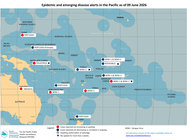
Countries: World, Australia, Guam, New Caledonia (France), New Zealand, Samoa, Vanuatu Source: Pacific Community Please refer to the attached Map. Highlights/updates since the last map was sent on PacNet on 02 June 2026: Dengue • New Caledonia: As of 03 June 2026, dengue transmission remains ongoing in New Caledonia, with 2,003 cases reported since 01 January 2026 and the most recent case dated 3 June 2026. DENV-1 remains the only circulating serotype. Transmission stays comparatively low in Greater Nouméa, where the Wolbachia programme continues to limit spread, while activity continues outside this area, with the highest incidence among children and adolescents, mainly in school settings. The red alert for DENV-1 remains in effect. – Sources: Alerte DASS – Épidémie de dengue (24 May 2026) shared with PPHSN Coordinating Body Focal point on 29 May 2026 and La dengue | Direction des Affaires Sanitaires et Sociales de Nouvelle-Calédonie accessed on 09 June 2026. • Samoa: As of EpiWeek 22 (25–31 May 2026), dengue transmission continues in Samoa, with 157 new cases reported, representing a 6% decrease compared with the previous week, and three new hospital admissions with no new ICU admissions or deaths. DENV-1 (54) and DENV-2 (46%) continue to co-circulate, with most cases reported from Upolu (92%), followed by Savai‘i (7%) and the Manono and Apolima Islands (1%). Children under 15 years account for the majority of cases (73%). Since 01 January 2025, a cumulative total of 19,482 clinically diagnosed cases and 5,475 laboratory-confirmed cases have been reported, with nine dengue-related deaths to date, while public health measures continue to focus on community awareness, vector control and early healthcare seeking. The blue alert for DENV-1 and DENV-2 remains in effect. – Source: Dengue Fever Outbreak Situation Report in Samoa, Issue No. 59 accessed on 09 June 2026. Measles • Australia: Measles activity continues in Australia, with cases linked to imported infections and subsequent local transmission. On 05 June 2026, New South Wales Health issued a public exposure alert after a confirmed case from Queensland visited several locations across the Sydney central business district while infectious, with exposure locations published and updated regularly. A total of 49 measles cases has been confirmed in NSW since 1st January 2026. National surveillance data show that cases continue to occur across several jurisdictions, with New South Wales and Victoria reporting the highest numbers, predominantly among under-vaccinated individuals or those with unknown vaccination status, and authorities are urging the public to ensure they have received two doses of a measles-containing vaccine, particularly before overseas travel. The red alert for measles remains in effect. – Sources: Measles alert for Sydney Airport and Sydney CBD, NSW Health (5 June 2026) and National Communicable Disease Surveillance Dashboard accessed on 09 June 2026. Pertussis/Whooping cough • Guam: As of 08 June 2026, pertussis transmission continues in Guam, with 17 cases reported in 2026 to date, including one newly identified laboratory-confirmed case since 26 May 2026. Four cases have been previously or are currently hospitalised, and three cases have an identified epidemiological link. No pertussis-related deaths have been reported. Cases continue to affect a wide age range, with a notable proportion among unvaccinated or partially vaccinated individuals, and DPHSS continues to promote vaccination across all age groups, including through upcoming immunisation clinics, and to encourage early care-seeking for compatible symptoms. The red alert for pertussis remains in effect. – Sources: DPHSS Pertussis Update (8 June 2026) and Epi Reports | Epidemiology and Laboratory Capacity (ELC) Guam – DPHSS accessed on 09 June 2026. • New Zealand: Pertussis activity in New Zealand continues as part of the ongoing national epidemic, with transmission persisting nationwide. As of the week ending 25 May 2026, 40 cases were reported, a decrease compared with 52 cases in the previous week. Case numbers in the four-week period 2–29 May 2026 were higher than in the previous four weeks, with 183 cases reported compared with 104 cases over the preceding four weeks. Nine cases were hospitalised and no deaths were reported. The cumulative total for 2026 stands at 825 cases as of 25 May 2026, while since the start of the national epidemic in October 2024 a total of 4,583 cases have been notified, including 420 hospitalisations and one death. Notification rates remain highest among children aged 1–4 years and infants under one year The blue alert for pertussis remains in effect. – Sources: Pertussis dashboard and Pertussis Report 2–29 May 2026 accessed on 09 June 2026. Other Information: Dengue • New Zealand: In New Zealand, during EpiWeek 22 (30 May – 5 June 2026), four dengue cases were reported, comprising two confirmed and two under investigation. Both confirmed cases had been to Samoa during the incubation period. Given the known serological cross-reactivity between dengue and other flaviviruses, some reported dengue cases may ultimately be reclassified as other flavivirus infections as epidemiological and laboratory investigations continue. – Source: NZ Arbovirus Notifications by Country (22: 30/05/2026–05/06/2026) shared with PPHSN Coordinating Body Focal point on 08 June 2026. • Vanuatu: As of EpiWeek 22, 2026, a total of 10 dengue cases have been reported in Vanuatu, including two new confirmed cases since EpiWeek 20, with no hospitalisations or deaths recorded. Cases remain concentrated in the Pango Area Council (80%), with the remainder reported in Port Vila. 70% of cases are female and the majority (60%) are aged over 26 years. Epidemiological investigations have identified links between several cases, with some individuals reporting recent travel to Fiji within the incubation period. Case numbers remain below the alert threshold, and no outbreak has been declared, although a slight increase has been noted and the surveillance team continues to monitor the situation closely. – Source: Vanuatu Dengue Situation Update 02 shared with PPHSN Coordinating Body Focal point on 03 June 2026. Measles • Americas: Measles transmission continues across the Region of the Americas. Between EpiWeek 01 and EpiWeek 21 of 2026 (ending 30 May 2026), 21,431 confirmed cases and 31 deaths were reported from 17 countries and territories, a 234% increase

World: Epidemic and emerging disease alerts in the Pacific as of 09 June 2026 Read More »