Uncategorized

Cb32855d E995 49da 8491 7e5551649068 NsZWT1

World: Strengthening Interoperability and Collaboration in Humanitarian Supply Chains: Advancing Inter-Agency Coordination across the United Nations (May 2026)

Country: World Source: HELP Logistics Please refer to the attached file. Executive summary The procurement, transportation, storage, and distribution of relief supplies account for some of the largest expenses for United Nations (UN) agencies. As humanitarian needs increase and funding becomes more constrained, the performance of humanitarian supply chains has become a strategic concern. However, most agencies continue to manage their supply chains independently, resulting in fragmented systems that constrain inter-agency collaboration and limit opportunities for cost savings, economies of scale, and operational efficiencies. Over the last 20 years, several UN agencies have launched supply chain collaboration initiatives, ranging from joint air transportation to shared warehousing and information exchange. These initiatives reflect growing recognition that collaboration can deliver measurable efficiency gains. Institutional donors have actively encouraged such models, and this emphasis has intensified in recent years. In 2025, the UN Secretary-General reinforced this approach through the UN80 reform framework, explicitly calling for deeper inter-agency collaboration, including in supply chain functions. While many existing initiatives have delivered tangible benefits, progress toward systemwide interoperability has remained uneven, and the full efficiency potential of collaboration has yet to be realized. The reasons for this gap remain insufficiently understood. To address this gap, HELP Logistics funded a research project examining why supply chain collaboration advances in some areas and faces barriers in others, and how interoperability across UN agencies could be expanded in practice. The project seeks to identify key drivers and barriers to collaboration, map existing shared services and interoperability mechanisms, and assess which supply chain enablers and functions offer the greatest potential for efficiency gains. Rather than proposing new structures, the analysis focuses on how existing mechanisms could be strengthened, extended, or better aligned. The research was supported by an advisory board of senior supply chain practitioners and academics, who helped define the study’s scope and ensure its relevance for practice. The analysis combined a desk review of ten major UN supply chain collaboration initiatives with semi-structured interviews conducted with 36 senior supply chain leaders. Interviewees represented six UN agencies, three shared service organizations, eight international organizations, and three private-sector actors. The interviews were analyzed using qualitative research tools, producing over 2,200 coded text segments across 28 thematic categories. The findings show that supply chain collaboration is shaped by a combination of enabling and constraining factors rather than by technical limitations alone. Key drivers include trust between organizations, recognition of collaboration benefits, institutional pressure, and sustained senior leadership commitment. Barriers include competition for funding and visibility, limited incentives for collaboration, organizational and operational differences, and resistance to change. Many of these barriers are structural and governance-related, indicating that interoperability challenges cannot be addressed through technology or systems alone. The analysis further indicates that interoperability potential is concentrated in specific areas of the supply chain. Data and information management, together with processes, were identified as the enablers with the greatest potential impact, as they form the basis for nearly all other forms of collaboration. Among supply chain functions, procurement and transportation emerged as the areas with the highest interoperability potential. These functions account for a significant share of humanitarian supply chain costs and continue to be managed in parallel across agencies. Based on these findings, the study identifies a set of evidence-based recommendations to strengthen interoperability and collaboration across UN supply chains. These include formalizing incountry collaboration on localization and customs clearance, strengthening supply chain coordination through centralized or lead-agency mechanisms, and expanding joint procurement, particularly for non-specialized items. Taken together, the recommendations point toward a more coordinated and interoperable supply chain ecosystem that builds on existing initiatives rather than creating new institutional structures.

World: Strengthening Interoperability and Collaboration in Humanitarian Supply Chains: Advancing Inter-Agency Coordination across the United Nations (May 2026) Read More »

Philippines: Magnitude 7.8 Earthquake Rocks Mindanao on First Day of School Opening

Country: Philippines Source: World Vision A magnitude 7.8 earthquake struck Mindanao on Monday, June 8, as millions of children were set to return to school for the opening of the academic year. “We are continually monitoring the safety of children, their families, and all staff in the affected areas to ensure that everyone is accounted for. Many in Davao, Kidapawan, and Sultan Kudarat remain shaken and are experiencing dizziness following the earthquake and aftershocks, given our proximity to General Santos. We continue to prioritize the safety of children and staff while closely monitoring the situation on the ground,” said Elizabeth Delgado, World Vision Operations Manager for Mindanao. The United States Geological Survey (USGS) reported that the earthquake occurred at a depth of 35 kilometers. “I felt afraid at that time. We were in the middle of our flag-raising ceremony when the earthquake happened. Even though we were scared, we tried to cope by laughing. Some of our classmates were crying, and one even fainted. But the teachers helped us stay safe—they instructed us to do ‘duck, cover, and hold,’” said Kurt, 16, a World Vision-assisted child from Kidapawan City. “When the shaking stopped, including the aftershocks, the teachers sent us home. It felt like the ground was swaying, making it difficult for us to even stand,” he added. According to the Philippine Institute of Volcanology and Seismology (PHIVOLCS), the earthquake’s epicenter was located 13 kilometers southwest of General Santos City, Sarangani. Strong tremors were felt across several provinces in Mindanao, including Sultan Kudarat, Davao, Zamboanga del Norte, Zamboanga Sibugay, and Surigao del Norte. The strong tremor also prompted a tsunami warning from PHIVOLCS, advising residents in coastal provinces—including Sarangani, Davao Occidental, Tawi-Tawi, Sulu, Basilan, Zamboanga del Sur, Zamboanga Sibugay, Sultan Kudarat, and South Cotabato—to immediately evacuate to higher ground. Arnann Jay Agosto, World Vision Field and Emergency Communications Officer, shared his firsthand experience during the earthquake. “I suddenly woke up because of how strong the shaking was. I was sleeping in the living room, so I immediately woke my sibling, and we ran downstairs from the fourth floor. I left everything behind—my phone and my bag—and ran down barefoot. While running, I noticed falling debris, so my first instinct was to reach the safest area,” Agosto shared. “There are still aftershocks, and there is currently no electricity. All work and school classes have been suspended,” he added. “In disasters of this magnitude, children are often the most vulnerable. The psychological impact of sudden evacuations, combined with the risk of severe aftershocks, poses an immediate threat to their well-being. World Vision Philippines is closely monitoring the situation and coordinating with local government units to assess the immediate needs of affected families. We stand ready to respond with emergency relief and child protection interventions,” said World Vision National Director Dr. Herbert Carpio. The earthquake occurred as the Philippines prepared to welcome an estimated 26 to 28 million students for the opening of classes in both public and private schools. At the same time, Mindanao is experiencing rainy conditions, as the Philippine Atmospheric, Geophysical and Astronomical Services Administration (PAGASA) recently announced the onset of the wet season due to the southwest monsoon. Mindanao was previously affected by a series of earthquakes in October, during which World Vision provided education and psychosocial support to affected children and families. For media interviews: Lei Kimmayong Communications Manager Lei_kimmayong@wvi.org; +63 9499964619

Philippines: Magnitude 7.8 Earthquake Rocks Mindanao on First Day of School Opening Read More »

47e5829c 62ea 4623 B2ca 4a3186bb28d4 5txrKv

MOZAMBIQUE: Displacement in Cabo Delgado Province Situation Report No. 1, As of 31 May 2026 [EN]

Country: Mozambique Source: UN Office for the Coordination of Humanitarian Affairs Please refer to the attached Infographic. HIGHLIGHTS More than 20,875 people displaced by escalating violence in Cabo Delgado since May due to attacks or fear of attacks by non-State armed groups (NSAGs) across Ancuabe, Chiure, Namuno, Metuge, Mocímboa da Praia, and Montepuez districts. Nearly all displaced families have fled multiple times, highlighting protracted nature of the crisis. Humanitarian needs continue to outpace available resources. Overcrowding is straining shelter capacity, water and sanitation facilities, and health services, while increasing protection concerns. Protection Humanitarian risks remain partners high. report heightened risks of family separation, gender-based violence, loss of civil documentation, regarding displacement, the and uncertainty duration particularly of among women, children, older persons, and other vulnerable groups. Insecurity continues to disrupt humanitarian operations. Intermittent attacks and security incidents along key transport corridors, including the N380, N14, R763, R762, R760 and N1 roads, have periodically suspended movements and disrupted the delivery of humanitarian assistance. Situation overview Since the NSAG attacks in Ancuabe district in April, violence has intensified and expanded to several villages within the district, while also spreading to the neighbouring districts of Chiure, Montepuez, Metuge, and Namuno throughout May. As of 20 May, the IOM DTM had recorded 15,286 displaced individuals (4,886 households) residing in host communities and temporary displacement sites. The largest concentrations of displaced people were reported in Nanjua A and Nanjua B in Ancuabe district, hosting 5,206 individuals, followed by Namanhumbir Sede in Montepuez district with 4,215 individuals, and Maningane Centre in Chiure district with 1,877 individuals. The remaining displaced population is dispersed across multiple host communities in Ancuabe, Chiure, Montepuez, Metuge, and Namuno districts, complicating beneficiary registration and humanitarian response efforts, as partners must simultaneously address needs across numerous locations with differing operational and protection dynamics.

MOZAMBIQUE: Displacement in Cabo Delgado Province Situation Report No. 1, As of 31 May 2026 [EN] Read More »

94c5caea Cfee 5cf9 B84f 5d6e6e94299f We3TBi

Kenya: Scalable and sustainable primary HIV prevention models for people from key populations

Countries: Kenya, Australia, Brazil, Moldova, Nigeria, Philippines, Thailand, Zimbabwe Source: UNAIDS Please refer to the attached file. Executive summary Primary HIV prevention programmes are vital for reducing new HIV infections and saving domestic resources which otherwise would be expended on treatment and support services if HIV transmission is not curbed. About half of all new HIV infections worldwide in 2024 occurred among people from key populations and their sex partners, including gay men and other men who have sex with men, sex workers, transgender people and people who inject drugs. In most countries, these key populations face stigma and discrimination in public health settings, which impair their access to and use of HIV and other health services. UNAIDS and the World Health Organization therefore continue to advocate for differentiated service delivery models for people from key populations, including through community-led services. The 2021 Political Declaration on HIV and AIDS specified that community-led organizations should be delivering 80% of HIV prevention services for populations at high risk of HIV infection by 2025. Despite many challenges, some countries have adopted HIV service delivery models for people from key populations that are entirely or partly financed domestically and that could be sustainable at scale. Civil society organizations are vital for these models, yet much of their work is unrecognized and underfunded. This report provides an analysis and evaluation of the evidence to January 2025 for HIV prevention service delivery models for people from key populations, with a focus on models that are scalable and potentially sustainable. It includes real-world examples from different contexts that can guide efforts to enhance HIV prevention for people from key populations. Three main funding modalities were identified: ■ Funding Model 1 applies to countries where primary HIV prevention programmes for people from key populations are funded primarily by external donors (e.g. Kenya, Nigeria and Zimbabwe). ■ Funding Model 2 entails arrangements where services are funded predominantly from domestic resources through a semi-autonomous agency, such as a health insurance company. It includes two subtypes, each using a different funding mechanism. Model 2(a) uses a tendering process for service providers such as civil society organizations (e.g. in the Republic of Moldova), or grants to provincial and municipal governments. In Model 2(b), services delivered by public primary healthcare entities and civil society organizations s are reimbursed (e.g. in the Philippines and Thailand).

Kenya: Scalable and sustainable primary HIV prevention models for people from key populations Read More »

6a06a904 Eaac 5323 B8b7 4199496fbc2a IxNtTw

New World Disorder: More Shocks, Fewer Shock Absorbers

Countries: World, Afghanistan, Cameroon, Ethiopia, Lebanon, Mali, Nigeria, Somalia, Sudan, Syrian Arab Republic, Yemen Source: International Rescue Committee Please refer to the attached file. IRC Midyear Watchlist Update: More Shocks, Fewer Shock Absorbers Six months after warning of a “New World Disorder,” conflict is spreading, hunger is rising, and the systems designed to contain crises are failing New York, NY, June 8, 2026 — The International Rescue Committee (IRC) today released The New World Disorder: More Shocks, Fewer Shock Absorbers, its 2026 Emergency Watchlist Midyear Update, documenting that far from slowing down, the crises forecasted in December have only intensified – while the systems meant to contain them are breaking down. The IRC’s 2026 Emergency Watchlist Report identified the 20 countries at greatest risk of worsening humanitarian crises this year. At the time, 117 million people were forcibly displaced, nearly 40 million faced catastrophic hunger requiring urgent action to save their lives, and more conflicts underway than at any point since the Second World War. Since then, those crises have accelerated. David Miliband, President and CEO of the International Rescue Committee, said: “Six months ago, the IRC warned that a New World Disorder was emerging. Since then, disorder has not only grown but accelerated. A war with Iran. A million people have been forced to flee their homes in Lebanon. A brewing global food security catastrophe that risks plunging millions more people into acute hunger. An expanding Ebola outbreak. Defanged diplomacy and collapsing aid budgets. These are not separate crises — they are the New World Disorder in practice: more shocks, fewer shock absorbers.” The Iran war is the clearest example of how modern crises now cascade rapidly across economies, supply chains, and aid operations far beyond the immediate conflict zone — and of the widening gap between the cost of conflict and the resources available to respond to it. The first two months of U.S. strikes on Iran are estimated to have cost $25 billion: five times the cost of treating every child suffering from acute malnutrition worldwide. The Ebola outbreak now spreading through eastern DRC is another testament to the New World Disorder — a viral infection aggravated by the toxic mix of conflict, displacement, and the devastating impact of aid cuts that have collapsed global health spending to a 15-year low. In the Midyear Watchlist Update, the IRC identifies five interconnected shocks driving global disorder— a world with more crises and fewer means to contain them. Conflicts are spreading and exposing more people to harm. In Lebanon, more than 1 million people have been displaced by renewed conflict between Israel and Hezbollah. In South Sudan, over 400,000 people were displaced between January and April 2026 alone as the country deteriorated toward a new chapter in an enduring civil war. Drone technology — cheap, accessible, and poorly regulated — is expanding the reach and lethality of modern warfare with devastating consequences for civilians: in Sudan, drone strikes accounted for more than 80% of civilian deaths between January and April 2026. The same shocks are simultaneously fracturing the humanitarian logistics intended to respond. Disruptions in the Strait of Hormuz have driven the IRC’s operational costs up 50%, halved air freight capacity on key routes, and pushed freight and insurance on some shipping routes up 300%. The humanitarian hub in Dubai — one of the world’s most critical — has been severely disrupted, delaying a shipment of essential medical supplies for Sudan by two months. A global food catastrophe is unfolding. The IRC warned earlier this year of a food security timebomb triggered by Strait of Hormuz disruptions — and that warning is materializing. 363 million people are now at risk of acute hunger in 2026, including 45 million additional people because of the Middle East conflict. Fertilizer prices are projected to rise 31% this year; energy prices 24% — the highest since Russia’s invasion of Ukraine. In Sudan, two in five people face crisis or worse levels of hunger, and nearly 200,000 are in catastrophic conditions where people are starving to death every day. Food insecurity will worsen further from mid-2026 as El Niño comes into effect. Economic shocks are hitting Watchlist countries and other conflict-affected states hardest. An additional 18.2 million people could be pushed into extreme poverty as a result of the Iran war’s economic fallout, if the UN’s worst-case projections are realized. Half of all people facing extreme poverty already live in fragile and conflict-affected states — countries that cannot shield their populations from sudden price increases because of entrenched underdevelopment and because they spend so much on repaying debts. Watchlist countries collectively spent $67.6 billion servicing debt in 2024 alone. Any further disruption to maritime chokepoints like the Bab el-Mandeb Strait could amplify crisis conditions across already-fragile settings. Aid cuts are both intensifying these crises and gutting the world’s capacity to respond to them. Following funding cuts, the IRC nearly halved the health facilities it supports in Ituri province, at the heart of the Ebola outbreak. In Sudan, funding cuts will force the closure of 34 IRC-supported health facilities by July, cutting off nearly half a million people from healthcare. The share of Official Development Assistance reaching fragile and conflict-affected states has fallen from 43% in 2013 to just 25% in 2024 — a collapse in the global support system at precisely the moment disorder is accelerating. The IRC is calling on governments and institutions to act immediately on five fronts: Direct at least 60% of Overseas Development Assistance to fragile and conflict-affected states, with at least 30% reaching Watchlist countries — reversing a decade-long decline in aid reaching those most in need. Honor commitments to the Global Health Security Agenda to prevent future pandemics, contain the Ebola outbreak and rebuild dismantled health infrastructure, including investment in community health workers, disease surveillance, and testing systems. Scale cash assistance from its current ~20% share of aid delivery. If that share rose to 50%, 2.7 million additional people in humanitarian settings could be reached- and invest

New World Disorder: More Shocks, Fewer Shock Absorbers Read More »

B5d3c238 8356 44db 9803 7d329c5b10c6 L1jnaB

Afghanistan: Health Cluster HNRP 2026 Severity, People in Need, and Target

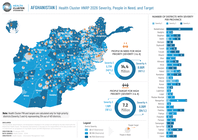
Country: Afghanistan Source: Health Cluster Please refer to the attached file. Afghanistan Health Cluster HNRP 2026 dashboard presents a national overview of humanitarian health needs using severity classification, population estimates, and geographic mapping across all 401 districts. It identifies 354 high-priority districts (Severity 3 & 4) with 14.4 million people in need, of which 8.66 million are in Severity 4. The dashboard also shows a targeted population of 7.2 million, focusing mainly on the most critical areas. It supports evidence-based planning, coordination, and prioritization of health interventions across provinces.

Afghanistan: Health Cluster HNRP 2026 Severity, People in Need, and Target Read More »