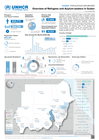
UNHCR Sudan – Overview of Refugees and Asylum-seekers in Sudan Dashboard (as of 31 May 2026)
Country: Sudan Source: UN High Commissioner for Refugees Please refer to the attached Infographic.

Country: Sudan Source: UN High Commissioner for Refugees Please refer to the attached Infographic.
Countries: World, Afghanistan, Iran (Islamic Republic of), Lebanon, South Sudan, Sudan, Syrian Arab Republic, Ukraine Source: UN High Commissioner for Refugees GENÈVE – Barham Salih, Haut-Commissaire des Nations Unies pour les réfugiés, a présenté aujourd’hui le Rapport sur les tendances mondiales, publication phare du HCR, qui révèle que les déplacements forcés à l’échelle mondiale ont diminué pour la première fois en dix ans, tout en restant à un niveau inacceptable. En 2025, 5,4 millions de personnes ont échappé à la violence et aux persécutions en fuyant vers d’autres pays. Mais le rapport indique également que les retours s’accélèrent : 14,7 millions de personnes déplacées sont retournées dans leur région ou pays d’origine en 2025 (4,4 millions de réfugiés et 10,3 millions de personnes déplacées à l’intérieur de leur propre pays), avec une forte augmentation en Afghanistan, au Soudan et en Syrie. Les retours de réfugiés ont atteint leur deuxième plus haut niveau depuis que le HCR a commencé à publier des statistiques sur les retours en 1965, même si beaucoup ont eu lieu sous la contrainte et dans des conditions précaires. Dans l’ensemble, les données font état d’une baisse de 3 % du nombre total de réfugiés en 2025, qui s’établit à 41,6 millions. Fait encourageant, près de 46 000 apatrides ont obtenu la nationalité dans 24 pays l’année dernière. Alors que 70 % des réfugiés restent en exil pendant de longues années et que beaucoup vivent en dessous du seuil de pauvreté, Barham Salih a également exhorté la communauté internationale à soutenir une nouvelle initiative visant à sortir des millions de personnes d’un déplacement de longue durée et de leur dépendance à l’aide humanitaire. « Pour un trop grand nombre de réfugiés, le déplacement constitue au départ une bouée de sauvetage, mais il dure toute une vie. », a rappelé le chef du HCR. « L’aide humanitaire sauve des vies, mais elle n’est pas une fin en soi et ne permet pas aux réfugiés de jouer un rôle actif dans la construction de leur avenir. Nous avons besoin d’un changement de paradigme afin de redonner espoir et de nouvelles perspectives aux personnes qui fuient la guerre et les persécutions. » Barham Salih a présenté un objectif clair et mesurable : réduire de plus de moitié, au cours de la prochaine décennie, le nombre de réfugiés en situation de déplacement de longue durée dépendant de l’aide humanitaire, afin d’offrir de meilleures perspectives à de millions de personnes. Cet objectif, qui se concentre sur les pays à revenu faible et intermédiaire où sont accueillis la plupart des réfugiés, serait atteint en élargissant les possibilités de retour, de réinstallation et d’octroi de visas humanitaires pour les réfugiés, tout en opérant une transition des formes traditionnelles d’aide vers l’autonomie. Cette initiative appelle les gouvernements, les acteurs humanitaires et du développement, le secteur privé et la société civile à redoubler d’efforts pour autonomiser les réfugiés tout en garantissant l’asile et la protection, ce qui est plus crucial que jamais alors que 2026 marquera le 75e anniversaire de la Convention relative au statut des réfugiés. Le Haut-Commissaire des Nations Unies pour les réfugiés a présenté les mesures nécessaires pour atteindre cet objectif ambitieux, qui vise à faire passer les revenus que les réfugiés gagnent par eux-mêmes (hors aide humanitaire) au niveau du seuil de pauvreté national du pays où ils vivent. Les retours volontaires doivent constituer la solution principale. La résolution d’une poignée des principaux conflits mondiaux permettrait à des millions de réfugiés supplémentaires de rentrer chez eux en toute sécurité et dans la dignité. Un autre pilier essentiel pour atteindre cet objectif consiste à intégrer les réfugiés dans les systèmes nationaux : éducation, soins de santé, services financiers et marchés du travail, afin de leur permettre de générer des revenus et de contribuer aux économies locales et nationales. Cela nécessite des investissements bien plus importants de la part d’un large éventail de partenaires pour venir en aide aux pays d’accueil déjà surchargés. Pour conclure, Barham Salih a souligné qu’il était urgent de proposer davantage de solutions pour les réfugiés dans les pays d’accueil, telles que la réinstallation des personnes les plus vulnérables, le regroupement familial et l’accès à des permis de travail et à des bourses d’études. L’écart entre les places disponibles et les besoins est énorme et ne cesse de se creuser. Le rapport indique qu’en 2025, le nombre d’arrivées par le biais de la réinstallation ou du parrainage a chuté de plus de moitié par rapport à l’année précédente, pour s’établir à 81 800. « L’asile et la protection sauvent des vies et ne sont pas négociables, mais nous ne pouvons accepter une situation où des millions de réfugiés resteraient piégés pendant des années, voire des décennies, sans perspective réaliste de reconstruire leur vie », a déclaré Barham Salih. « Nous avons désormais un objectif ambitieux, réalisable et quantifiable pour favoriser l’autonomie et transformer des vies. Le HCR mobilisera les efforts de l’ensemble de la société pour relever ce défi et créer des voies permettant à des millions de personnes de sortir du cycle infernal des déplacements prolongés. » Notes à l’intention des médias Le Rapport sur les tendances mondiales révèle que plus de 70 % des réfugiés et des autres personnes ayant besoin d’une protection internationale proviennent d’Afghanistan, du Soudan du Sud, du Soudan, de Syrie, d’Ukraine et du Venezuela. En 2025, les principaux pays d’accueil des réfugiés et autres personnes ayant besoin d’une protection internationale étaient : la Colombie (2,8 millions), l’Allemagne (2,7 millions), la Turquie (2,4 millions), l’Ouganda (1,9 million), la République islamique d’Iran (1,7 million), le Tchad (1,5 million) et le Pakistan (1,3 million). Au total, les données du Centre de surveillance des déplacements internes indiquent qu’à la fin de l’année 2025, on estimait à 68,6 millions le nombre de personnes déplacées à l’intérieur de leur propre pays en raison de conflits ou de violences, soit une baisse de 7 % par rapport à la fin de l’année 2024 ; le Soudan restait la crise la plus
Country: Philippines Source: Islamic Relief Ronald Cabalquinto, Humanitarian and Programme Manager, is in Mindanao as part of Islamic Relief’s assessment team to the areas worst affected by the Philippines earthquake: “On the way here I’ve seen homes, roads and bridges all badly damaged and unusable, making it even harder to reach people. Dozens of schools and health centres have been damaged, with walls and ceilings collapsing, disrupting learning for thousands of children. In total almost 150,000 people are affected by the earthquake and more than 40,000 have been evacuated from their homes. “The impact goes beyond physical damage. Families are coping with damaged homes, disrupted livelihoods, interrupted schooling, and uncertainty about the future. Recovery is not only about rebuilding structures—it is about helping households regain the resources, opportunities, and support systems they need to recover with dignity and strengthen their resilience against future shocks. Despite the damage many local markets are still functioning, so Islamic Relief is planning to distribute cash to displaced families so they can buy essentials like food, water and shelter and support the local economy at this critical time.” Islamic Relief is responding by handing out cash to hundreds of families in the affected Sarangani Province with the priority being to allow residents to maintain their dignity and keep the local economies and markets sustained while the communities move towards recovery. The post Islamic Relief Comment on Philippines Earthquake appeared first on Islamic Relief Worldwide.
Islamic Relief Comment on Philippines Earthquake Read More »
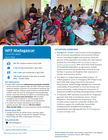
Country: Madagascar Source: World Food Programme Please refer to the attached file. In April, WFP maintained malnutrition prevention activities across communes targeted under the 2025–2026 Lean Season response, despite suspension of unconditional assistance due to pipeline breaks. Nutritious food assistance reached 38,593 children under two and 32,159 pregnant and breastfeeding women, ensuring continuity of support to vulnerable groups. Following Cyclones Fytia and Gezani, WFP provided emergency cash assistance to 142,162 people across the east and west, with two additional rounds planned. To sustain lean season distributions and scale up cyclone recovery, WFP requires USD 24.4 million (May–October 2026), as current resources remain insufficient.
WFP Madagascar Country Brief May 2026 Read More »
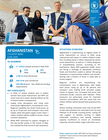
Country: Afghanistan Source: World Food Programme Please refer to the attached file.
WFP Afghanistan Country Brief, June 2026 Read More »
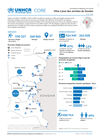
Countries: Chad, Sudan Source: UN High Commissioner for Refugees Please refer to the attached Infographic. Depuis avril 2023, le CNARR, le HCR et l’OIM surveillent et assistent un afflux de réfugiés soudanais et de retournés tchadiens arrivant dans les provinces de Ouaddai, Sila, Wadi-Fira et Ennedi Est. Les agences humanitaires soutiennent le gouvernement tchadien et les autorités locales pour fournir une assistance vitale et des services de protection. Le gouvernement et le HCR ont aidé 67% des réfugiés à quitter les sites d’arrivée spontanée pour s’installer dans des camps nouvellement établis où les déplacés bénéficient des services fournis par les équipes humanitaires.
Situation d’urgence au Tchad I Mise à jour des arrivées du Soudan (09 jun 2026) Read More »

Country: Democratic Republic of the Congo Sources: Shelter Cluster, UN Children’s Fund, UN High Commissioner for Refugees Please refer to the attached file. Entre janvier et avril 2026, la réponse Abris & AME est restée principalement concentrée dans l’Est de la RDC, avec des niveaux de couverture variables selon les provinces. Alors que certaines provinces ont bénéficié d’une présence opérationnelle plus importante, plusieurs zones demeurent faiblement couvertes ou sans intervention malgré des besoins humanitaires persistants. Cette situation s’explique notamment par les contraintes d’accès, l’insécurité et les limitations de financement. Ces disparités mettent en évidence des gaps importants entre les besoins identifiés et la capacité actuelle de réponse, soulignant la nécessité de renforcer la mobilisation des ressources et l’expansion des interventions vers les zones insuffisamment couvertes.
DR Congo: Bulletin des activités Abris et AME Janvier – Avril 2026 Read More »
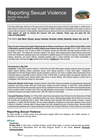
Countries: World, Brazil, Burundi, Cameroon, Chile, Democratic Republic of the Congo, Ethiopia, Honduras, Madagascar, Mexico, Nigeria, occupied Palestinian territory, Thailand, United Republic of Tanzania Source: Insecurity Insight Please refer to the attached file. Since the start of Insecurity Insight’s Reporting Sexual Violence monitoring in January 2020 and April 2026, at least 2,398 publicly reported incidents of conflict-related sexual violence have been recorded. So far in 2026, incidents have increased in Cameroon, from 14 cases in 2025 to 16 between January and April 2026, with high numbers recorded in the South West region. This reflects the continued volatility in the region, where ongoing armed conflict between government forces and Ambazonian separatist groups has contributed to repeated exposure of civilians to insecurity, including reported attacks, abductions, and sexual violence, alongside persistent gaps in civilian protection and limited accountability in contested areas. Download the data (updated every Monday). Contact us for data enquiries. Developments in May 2026Cameroon: In May 2026, reported incidents in South West and North West regions indicate continued sexual and gender-based violence affecting civilians, particularly women, amid ongoing insecurity. In South West region, Ambazonian Separatists from the Red Dragons faction sexually assaulted a woman in her home in Lebialem while Cameroonian forces reportedly raped an unspecified number of women in Fako. In North West, a university student was abducted, detained, and subjected to prolonged sexual violence before being found in severe distress, with evidence leading to arrests and an investigation. See Cameroon section for more details. Democratic Republic of the Congo: Incidents reported in May 2026 underscore persistent and geographically widespread protection risks facing women amid both armed group violence and urban insecurity. In North Kivu, armed Wazalendo elements tortured and sexually assaulted a woman during a nighttime home invasion, with her children also reportedly abused, while in another incident a member of the UPLC sexually assaulted a young woman. In Kinshasa, armed bandits attacked a residential compound and raped multiple women. See DRC section for more details. Occupied Palestinian Territory: On 18 May 2026, Israeli forces intercepted at least 50 boats from the Global Sumud Flotilla carrying humanitarian aid to Gaza in international waters near Cyprus, detaining approximately 430 activists from more than 40 countries and transferring them to Israel. While detainees were reportedly held without access to lawyers, consular assistance, or contact with their families, the most serious allegations emerging from those later released concern sexual violence in detention, including claims of sexual assault and rape, alongside accounts of physical abuse. Several activists reported being hospitalised due to injuries following their release. See Occupied Palestinian Territory section for more details. Reporting Sexual Violence By state bodies or conflict actors that particularly targets IDPs and refugees, aid, health workers or educators or students among others. AfricaCameroon04 May 2026: In Alou town, Lebialem division, South West region, a woman was sexually assaulted by Ambazonian Separatists from the Red Dragons faction in her home. Source: Personal Communication 21 May 2026: In Lykoko Munyenge village, Muyuka area, Fako division, South West region, an unspecified number of women were raped by Cameroonian forces. Source: AgovC HHS Department 23 May 2026: In Bamenda city, North-West Region, a 20-year-old first-year student at the College of Technology (COTEC) of the University of Bamenda was abducted after being lured off campus by two female acquaintances. She was taken to a home in the Avenir neighbourhood, where she was allegedly drugged, held captive for several days, chained, tortured, and subjected to sexual violence by multiple men. She was later found in a state of severe distress near Custom Junction after one of the alleged perpetrators contacted her family. Evidence reportedly recovered from a mobile phone, including a video and deleted messages, helped identify suspects and the location where the abuses allegedly occurred. Two suspects were arrested and an investigation was launched. Source: Camer.Be Central African RepublicAs reported on 04 May 2026: In Mbaiki town, Lobaye prefecture, an unspecified number of people were sexually assaulted by unidentified armed men. Source: Radio Ndeke Luka 06 May 2026: Near Ngaoundaye sub-prefecture, Ouham Pende prefecture, a 35-year-old woman was raped by seven armed Fulani herders in her field. The woman is being treated at a local health center. Source: RJDH 10 May 2026: In Yabouni village, Zotoua commune, an unspecified number of young girls and women were subjected to attempted abductions and sexual assaults by former members of the 3R group. Source: Corbeau News 13-19 May 2026: In Haut-Mbomou prefecture, three people, including a teenage girl, were raped by members of an unidentified armed group. Source: OCHA 19 May 2026: In Tallah village, Birao Sub-prefecture, Vakaga prefecture, a young girl was sexually assaulted in a field by farmers. Villagers reportedly attributed the assault to members of a group of nomadic Fulani pastoralists, triggering violent clashes between local farmers and herders. Source: Corbeau News Chad23-24 May 2026: In Baya neighbourhood, Moissala city, Barh Sara department, Mandoul region, a 57-year-old woman was sexually assaulted in her home by three men wearing military uniforms. One of the perpetrators threatened her with a firearm. Source: Tchad Infos Democratic Republic of the Congo04 May 2026: In Masuli cells, Bwinongo neighbourhood, Mususa commune, Butembo city, North Kivu province, a woman was tortured and sexually assaulted by armed Wazalendo men after breaking into her home at around 0100hrs. Her two children were also abused. Source: La Prunelle 12 May 2026: In Ngazi village, Beni territory, North Kivu province, a 20-year-old woman was reportedly sexually assaulted by a Union of Patriots for the Liberation of Congo (UPLC) member. The perpetrator was arrested by other Wazalendo members. Source: ACLED1 26 May 2026: In Ngaliema commune, Lukanga commune, Kinshasa city, an unspecified number of women were raped during an attack carried out by armed bandits between 0300-0400hrs on a residential compound near REKA College. The perpetrators were armed with firearms, machetes, and other tools used to force entry into homes. Radio Okapi EthiopiaAs reported on 01 May 2026: In Adama (Nazret) city, East Shewa zone, Oromia region, an unspecified number of
World: Reporting Sexual Violence and Abuse in Conflict – May 2026 Read More »
Country: World Source: Save the Children BRUSSELS, 10 June 2026 – Children seeking safety in Europe could face an increased risk of coercive biometric checks and detention under the European Union’s Pact on Migration and Asylum, said Save the Children, calling for children’s best interest to be put first. Save the Children said the implementation of the Pact, which takes effect Friday, and EU external action must keep child protection at its core, not border management objectives. Federica Toscano, Save the Children’s senior advocacy advisor on children on the move, said: “The Pact is now a reality but whether it actually protects children or exposes them to greater harm, will largely depend on how it is implemented. The real test is now. “For children seeking safety in Europe, the difference between protection and harm will be decided at borders, in procedures, and the conditions in reception centres. These are children fleeing violence, disease outbreaks, poverty, and abuse in search of safety. Without robust safeguards and a genuine commitment to the best interests of the child, they risk facing even greater harm. “There is a real danger that this Pact could make child detention the new norm at Europe’s borders. While European law is clear that detention must be a last resort, the reality is that it has become increasingly routine across Europe. We’ve already seen the consequences: children held in overcrowded and inadequate facilities, without the care and support they need, leaving them facing uncertainty, distress and further harm. No child should ever be detained simply because they are seeking protection. “It is also deeply alarming that the Pact outlines that border officials can use an ‘appropriate degree of coercion’ to collect biometric data from children as young as six. Children seeking safety should be met with care and protection, not force. Without clear safeguards, these provisions risk exposing children to fear, distress and harm. “The Pact also prioritises faster processing at EU borders, but speed cannot come at the expense of children’s rights. Child protection specialists must be present at every stage of the process. Without them, children risk becoming invisible in systems designed primarily for migration control, not protection. “Children need stability, continuity of care, trusted relationships and access to essential services. A system that leaves children confined in inadequate conditions, subjected to force, and deprived of stability is not one that reflects Europe’s values or its legal obligations. “The Pact is only as effective as its implementation. The EU now faces a choice: implement a system that actually protects children, or one that places them at greater risk. We will be tracking what happens in reality, not just what is written in the law. Transparency and accountability will be essential to ensure that children’s rights are actually upheld across the EU. “Children cannot afford to wait, and they cannot afford for us to get this wrong.” ENDS
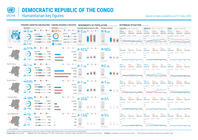
Country: Democratic Republic of the Congo Source: UN Office for the Coordination of Humanitarian Affairs Please refer to the attached Infographic.
DR Congo: Humanitarian Key Figures (as of 31 May 2026) Read More »