Uncategorized

4972a6e8 89e0 4dc3 A0a2 C61f45ca7068 Ty85nA

Vanuatu Dengue Situation Update 03 (08 June 2026)

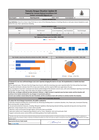
Country: Vanuatu Source: Government of Vanuatu Please refer to the attached file. EPIDEMIOLOGICAL SUMMARY In Epiweek 23, two new confirmed dengue cases were reported, bringing the total to 12 cases. No hospitalizations or deaths have been recorded. Of the reported cases, 75% were from the Pango Area Council, while the remaining cases were reported within Port Vila and few from Erakor. The gender distribution indicates that 67% of cases were female, and the majority (66%) were aged above 26 years. Case investigations have been conducted and indicate epidemiological links between several cases, with some individuals reporting travel history to Fiji within the past 15 days, which falls within the dengue incubation period. At this time, no dengue outbreak has been declared. However, a slight increase in reported cases has been noted, and the situation will continue to be closely monitored for any changes in transmission patterns. Current case numbers remain below the alert threshold, and the surveillance team will continue to actively monitor the situation

Vanuatu Dengue Situation Update 03 (08 June 2026) Read More »

187aba99 B92e 420e 8409 0a0c13fe2252 Mlxxdd

Mexico: Latinoamérica y El Caribe Resumen de Situación Semanal al 12 de junio 2026

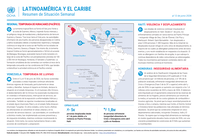
Countries: Mexico, Haiti, Honduras, Nicaragua, Venezuela (Bolivarian Republic of) Source: UN Office for the Coordination of Humanitarian Affairs Please refer to the attached Infographic. CIFRAS CLAVE 5K personas desplazadas desde el 1 de junio debido a la violencia en Puerto Príncipe, Haití 1,8M de personas enfrentarán inseguridad alimentaria de Crisis o Emergencia entre abril y julio en Honduras REGIONAL: TEMPORADA DE HURACANES DEL PACÍFICO La tormenta tropical Boris se formó el 8 de junio frente a la costa de Guerrero, México, trayendo lluvias intensas y un peligroso riesgo de inundaciones y deslizamientos de tierra en Guerrero y Oaxaca. Tras tocar tierra el 9 de junio, las autoridades informaron de una muerte, dos personas desaparecidas en Colima y daños localizados debido a inundaciones repentinas y marejada ciclónica a lo largo de la costa sur del Pacífico en los estados de Colima, Guerrero, Oaxaca y Chiapas. Ese mismo día, la tormenta tropical Cristina se formó aproximadamente a 160 km al suroeste de Managua, Nicaragua, avanzando hacia el norte-noroeste a lo largo de la costa del Pacífico con precipitaciones previstas de 100 a 300 mm en Nicaragua, Honduras, El Salvador y Guatemala. La formación simultánea de dos tormentas con nombre al inicio de la temporada concuerda con las condiciones de El Niño, que tienden a intensificar la actividad ciclónica en el Pacífico oriental. VENEZUELA: TEMPORADA DE LLUVIAS Entre el 5 y el 10 de junio de 2026, las lluvias sostenidas asociadas a ondas tropicales continúan afectando diversas regiones de Venezuela, particularmente en áreas rurales y ribereñas. Aunque el impacto es limitado, destaca la situación en el estado Amazonas. En el municipio Alto Orinoco, el desbordamiento del río Orinoco ha ocasionado inundaciones en viviendas e infraestructuras, interrupción de servicios, así como un aumento de la exposición a enfermedades hídricas y vectoriales. También se reportan inundaciones localizadas en el estado Apure (municipio Páez) y en el estado Delta Amacuro (municipio Tucupita). En otros estados, como Sucre y Bolívar, las afectaciones se concentran en áreas urbanas y en la provisión de servicios básicos. Las autoridades, en coordinación a distintos niveles, han implementado acciones preventivas y de respuesta inmediata, mientras continúan monitoreando la situación. Entre tanto, los socios humanitarios llevan a cabo acciones de coordinación y preparación. HAITÍ: VIOLENCIA Y DESPLAZAMIENTO Las oleadas de violencia continúan impulsando el desplazamiento en Haití. Desde el 1 de junio, los enfrentamientos armados en varios barrios de Puerto Príncipe —incluyendo Village de Dieu, Cité de l’Éternel, Cité Plus y Martissant–Bréard–Saint-Bernadette— han desplazado a unas 5.054 personas (1.585 hogares). Más de la mitad de los desplazados buscan refugio en ocho sitios de desplazamiento, la mayoría de los cuales ya albergaban poblaciones antes de estos eventos, y uno recién establecido en respuesta a la situación. El resto se albergaron con familias de acogida, lo que subraya la continua dependencia de redes comunitarias ya sobrecargadas. Todos los movimientos permanecen contenidos dentro del municipio mientras continúa el monitoreo. HONDURAS: INSEGURIDAD ALIMENTARIA Un análisis de la Clasificación Integrada de las Fases de la Seguridad Alimentaria (CIF) publicado el 10 de junio proyecta que 1,8 millones de personas, o el 18% de la población analizada, enfrentarán inseguridad alimentaria de Crisis o Emergencia (Fase 3 de la CIF o superior) entre abril y julio de 2026, lo que supone un aumento con respecto a los 1,4 millones entre noviembre de 2025 y marzo de 2026. El deterioro está impulsado por el agotamiento estacional de las reservas de alimentos de los hogares, precios alimentarios por encima de la media y el aumento de los costos globales de combustible e insumos agrícolas. Se prevé que la mayor severidad presente en Gracias a Dios y Lempira, mientras que Cortés, el Distrito Central y Choluteca tienen las poblaciones más afectadas en términos absolutos. Se prevé que las condiciones empeoren en cinco departamentos adicionales, incluyendo Choluteca, Valle y El Paraíso. Se espera que la inseguridad alimentaria se mantenga en niveles igualmente elevados hasta octubre de 2026, con una creciente probabilidad de condiciones de El Niño que aumentan la incertidumbre.

Mexico: Latinoamérica y El Caribe Resumen de Situación Semanal al 12 de junio 2026 Read More »

9cb713eb 94f8 44dc 9899 A74c349fa123 RarYBY

Mexico: Latin America & The Caribbean Weekly Situation Update as of 12 June 2026

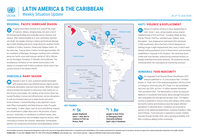
Countries: Mexico, Haiti, Honduras, Nicaragua, Venezuela (Bolivarian Republic of) Source: UN Office for the Coordination of Humanitarian Affairs Please refer to the attached Infographic. KEY FIGURES 5K people displaced since 1 June due to violence in Port-au-Prince, Haiti 1.8M people to face Crisis or Emergency food insecurity between April-July in Honduras REGIONAL: PACIFIC HURRICANE SEASON Tropical Storm Boris formed on 8 June off the coast of Guerrero, Mexico, bringing heavy rain and a risk of life-threatening flooding and mudslides across Guerrero and Oaxaca. After making landfall on 9 June, authorities reported one death, two people missing in Colima and localized damage due to flash flooding and storm surge along the southern Pacific coastline of Colima, Guerrero, Oaxaca and Chiapas states. On the same day, Tropical Storm Cristina formed approximately 160 km southwest of Managua, Nicaragua, tracking north-northwest along the Pacific coast with forecast rainfall of 100 to 300mm across Nicaragua, Honduras, El Salvador and Guatemala. The simultaneous formation of two named storms early in the season is consistent with El Niño conditions, which tend to fuel cyclone activity in the eastern Pacific. VENEZUELA: RAINY SEASON Between 5 and 10 June, sustained rainfall associated with tropical waves has affected various regions across Venezuela, particularly rural and riverine areas. While the impact remains limited, the situation in Amazonas state stands out. In Alto Orinoco municipality, the overflow of the Orinoco River has caused flooding in homes and infrastructure, service disruptions, as well as increased exposure to water-borne and vector-borne diseases. Localized flooding is also reported in Apure state (Páez municipality) and Delta Amacuro state (Tucupita municipality). In other states, such as Sucre and Bolívar, impacts are concentrated in urban areas and in the provision of basic services. Authorities, in coordination at different levels, have implemented preventive and immediate response actions, while continuing to monitor the situation. Meanwhile, humanitarian partners are conducting coordination and preparedness actions. HAITI: VIOLENCE & DISPLACEMENT Waves of violence continue to drive displacement in Haiti. Since 1 June, armed clashes across several neighborhoods in Port-au-Prince – including Village de Dieu, Cité de l’Éternel, Cité Plus, and Martissant–Bréard–Saint-Bernadette – have displaced an estimated 5,054 individuals (1,585 households). More than half of those displaced are seeking refuge in eight displacement sites, most of which were already hosting populations prior to these events, and one newly established in response to the situation. The remaining found shelter with host families, underscoring continued reliance on already stretched community networks. All movements remain contained within the municipality as monitoring continues. HONDURAS: FOOD INSECURITY An Integrated Food Security Phase Classification (IPC) analysis published on 10 June projects that 1.8 million people, or 18 per cent of the analyzed population, will face Crisis or Emergency food insecurity (IPC Phase 3 or above) between April and July 2026, up from 1.4 million between November 2025 and March 2026. The deterioration is driven by seasonal depletion of household food stocks, above average food prices and rising global fuel and agricultural input costs. The highest severity is expected in Gracias a Dios and Lempira, while Cortés, the Distrito Central and Choluteca have the largest affected populations in absolute terms. Conditions are projected to worsen in five additional departments, including Choluteca, Valle and El Paraíso. Food insecurity is expected to remain similarly elevated through October 2026, with a growing probability of El Niño conditions adding further uncertainty.

Mexico: Latin America & The Caribbean Weekly Situation Update as of 12 June 2026 Read More »

Ed817227 E411 5a6e Ba9e F0e50a46881b 0c2PlD

South Sudan: Resilient Livestock Sector Project – Project profile

Country: South Sudan Source: Food and Agriculture Organization of the United Nations Please refer to the attached file. Synopsis (short abstract) South Sudan’s livestock sector operates in a context of localized conflict, economic decline and high climate vulnerability. With most rural households depending on livestock and agriculture for food and income, strengthening the livestock sector’s resilience is critical for food security, income generation and stability. In response, the Food and Agriculture Organization of the United Nations (FAO), the Government of South Sudan and partners are implementing the “Resilient Livestock Sector Project”. Funded through a USD 40 million contribution from the World Bank, through the Government of South Sudan, the project aims to enhance animal health, improve rangeland management and strengthen the resilience of livestock production.

South Sudan: Resilient Livestock Sector Project – Project profile Read More »

8de7fdea 3279 445d 85c9 Dff689234dd8 6NNDS0

Haiti: Evaluation Rapide Multisectorielle (ERM) : Date de l’évaluation : 30/05/2026 au 08/06/2026 Communes : Haute Feuille, Niel, Acul Baster, Lotbò Fòse | 1ère section Villars, 2ème section Fosse Naboth | Dessalines

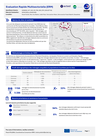
Country: Haiti Sources: Agency for Technical Cooperation and Development, AVSI Foundation – ETS, IMPACT Initiatives, REACH Initiative Please refer to the attached file. Aperçu du choc et contexte A la suite des attaques survenues le samedi 2 mai 2026 dans les communes de Marchand Dessalines (localités : Grand Bérard, Beau Fort et Lacouture) et Petite-Rivière-de-l’Artibonite (localité : Pitralle), d’importants mouvements de populations ont été observés et documentés par l’ETT 92 (OIM), selon laquelle 1 166 ménages, soit environ 4 419 personnes, ont été déplacés dans les communes de Marchand Dessalines (1ère et 2ème sections) et Saint-Marc (5ème et 6ème sections). Par ailleurs, le mécanisme de veille humanitaire du RRM a également identifié des ménages déplacés dans la commune de Gonaïves à la suite de ces événements. Les personnes déplacées internes ont été accueillies soit par des familles hôtes, soit dans des sites de déplacés.

Haiti: Evaluation Rapide Multisectorielle (ERM) : Date de l’évaluation : 30/05/2026 au 08/06/2026 Communes : Haute Feuille, Niel, Acul Baster, Lotbò Fòse | 1ère section Villars, 2ème section Fosse Naboth | Dessalines Read More »

621dd06f D57d 578c B13f 6fd432fb5c05 RTCHRE

DR Congo: WASH Learning Paper: Promoting Hygiene in IDP settings through Soap-Making Initiatives in the Democratic Republic of Congo | Concern Worldwide

Country: Democratic Republic of the Congo Source: Concern Worldwide Please refer to the attached file. This learning paper examines how soap-making when integrated with hygiene-focused behaviour promotion, contributed to improved access to soap and reinforced handwashing practices in a highly constrained Internally Displaced Persons (IDP) setting. Context Handwashing with soap remains one of the most effective measures for reducing the incidence of diarrhoeal and respiratory diseases. According to the WHO, good hand hygiene can reduce deaths from diarrhoeal diseases by 21% and from respiratory infections by 30% among children under five. The Bulengo IDP site in the Democratic Republic of Congo (DRC) has faced wide scale displacement around Goma following intensified conflict between the March 23 Movement (M23) and the Congolese Armed Forces (FARDC). Between March 2022 and December 2024, almost 1.95 million people were displaced, with over 800,000 seeking refuge in IDP sites in Nyiragongo and Goma. This rapid influx placed significant pressure on sanitation facilities and access to basic hygiene items, including soap. The prolonged insecurity in North Kivu continues to drive displacement and constrain access to essential services. In response, Concern Worldwide’s WASH programme (August 2024-February 2025), funded by BHA, in and around Goma was focused on improving access to safe water and sanitation infrastructure, alongside hygiene promotion activities. These include support to latrine management committees, distribution of hygiene items, and community‑based behaviour change interventions aimed at reducing the risk of water‑borne diseases.

DR Congo: WASH Learning Paper: Promoting Hygiene in IDP settings through Soap-Making Initiatives in the Democratic Republic of Congo | Concern Worldwide Read More »

World: EU Pact offers hope for better migration management and fairer asylum systems

Country: World Sources: International Organization for Migration, UN High Commissioner for Refugees GENEVA – UNHCR, the UN Refugee Agency, and IOM, the UN Migration Agency, welcomed the entry into force today of the European Union’s Pact on Migration and Asylum as an opportunity to move beyond crisis-driven responses and implement a more predictable, fair and effective approach to the issues across Europe. EU Member States should seize this moment to strengthen migration management and refugee protection while advancing solidarity and responsibility-sharing in line with European values and international obligations, the agencies’ chiefs said. “The Pact’s entry into full effect today is an important step toward a more predictable and coherent European migration system. What matters now is steady implementation over time that is effective, humane, sustainably resourced and grounded in cooperation,” said Amy Pope, Director General of the International Organization for Migration. “The priority is turning the reforms into practical results for States, communities, and people on the move.” The Pact aims to make EU asylum systems more efficient and consistent, offering a structured framework for Member State cooperation. This can reduce backlogs while maintaining the quality of assessments, provide greater certainty for asylum-seekers, and enable refugees to begin rebuilding their lives and contributing to their communities sooner. “This Pact is an important step in the right direction, advancing shared responsibility and more predictable, sustainable approaches across the European Union,” said Barham Salih, UN High Commissioner for Refugees. “UNHCR stands ready to support all Member States in strengthening asylum systems – ensuring access to protection for those in need, upholding human rights and dignity, and enabling safe, lawful and dignified returns for those not in need of international protection.” IOM and UNHCR welcome the EU’s renewed focus on partnerships with all affected countries. Reducing irregular movements means addressing root causes, ensuring access to protection, tackling smuggling networks, and enabling safe, regular pathways. The organizations will continue to support route-based approaches that ensure policies deliver on protection, dignity and shared responsibility, while contributing to sustainable solutions that benefit both countries and communities along migration routes. UNHCR and IOM welcome several key elements of the Pact, including earlier identification of people with specific needs, strengthened legal assistance, and new independent monitoring mechanisms at external borders. Returns of those with no legal right to stay must be both effective and humane. Alongside enforcement, they should ensure access to informed voluntary return, early case management, and reintegration support, working with countries of origin, transit and first asylum as part of a balanced approach that upholds dignity and fundamental rights. These measures can help ensure that asylum processing and return procedures are faster and fairer, reducing uncertainty for asylum-seekers while strengthening public confidence in the migration and asylum system. UNHCR and IOM stress that implementation will be the decisive test. Procedures must be carried out with adequate safeguards to ensure that no one is returned or transferred to a situation where they may face persecution, conflict or other forms of serious harm. For more information, please contact: In Brussels: Christine Pirovolakis, UNHCR: pirovola@unhcr.org For more information, please visit IOM’s Media Centre.

World: EU Pact offers hope for better migration management and fairer asylum systems Read More »

236c4018 3dd3 47ad 9032 513f85b9faac I6drOo

oPt: Surviving childhood under occupation – The catastrophic harm facing Palestinian children [EN/AR]

Country: occupied Palestinian territory Source: UN Office of the High Commissioner for Human Rights Please refer to the attached files. Israeli violence is subjecting Palestinian children to catastrophic levels of harm: killed, maimed, displaced, and living in perpetual insecurity. On Saturday, 6 June 2026, Israeli security forces shot and killed 7-month-old Sam Fahed Abu Haykal in his parents’ car near a Hebron checkpoint. The bullet appears to have passed through Sam’s head and injured both his parents. Video footage analysed by an Israeli human rights organisation shows a member of the Israeli security forces shooting at the car as it was slowing down, posing no threat, and clearly indicates that he provided no aid to the family afterwards. Sam is one of 241 children killed by Israeli security forces and settlers in the occupied West Bank since 7 October 2023, as verified by the UN Human Rights in the Occupied Palestinian Territory (OHCHR OPT). This is in addition to over 21,000 children who have been killed in Israeli attacks in Gaza in the same period, according to the Palestinian Ministry of Health, with killings continuing after the announcement of a ceasefire in October 2025. Since the ceasefire announcement, the Palestinian Ministry of Health has reported the killing of 981 Palestinians in Israeli attacks in Gaza. OHCHR OPT has so far verified the killing of 574 Palestinians during this period, including 183 children, five of whom were infants under the age of one. On 4 February 2026, Israeli forces opened fire on an encampment for displaced people in Al Tuffah, Gaza City, killing five Palestinians, including two women and two baby girls: 5-month-old Mira Al Khabbaz and Watein Al Khabbaz, born less than a week before. Forty-eight of the 183 verified child fatalities after the ceasefire announcement were victims of incidents in which only children were killed, raising concerns about Israeli forces directly targeting Palestinian children. Fifteen women have also been killed in incidents in which only women, or only women and children, were killed. On 29 October 2025, an Israeli airstrike hit a tent housing displaced people in Al Mawasi, Khan Younis, and killed three Palestinians: two brothers aged eight and 11, and their 15-year-old sister. On 31 January 2026, an Israeli strike hit a residential building in western Gaza City, killing two women aged 60 and 23, and three sisters aged five, seven and nine. On 2 February 2026, Israeli Naval Forces killed one Palestinian, a 2-year-old boy, in his tent on the coast of Al Mawasi, Khan Younis. Beyond those killed, thousands of Palestinian children are contending with life-altering injuries in Gaza — now home to the largest cohort of child amputees in modern history. In the West Bank,the 241 verified child fatalities represent nearly one in five of the 1,103 Palestinian victims killed by Israeli security forces and settlers since 7 October 2023. In March 2026, three months before the shooting that killed 7-month-old Sam in Hebron, a similar attack in Tammun, south of Tubas, killed four family members in their car. At the time, Israeli security forces opened fire on a Palestinian vehicle, killing a father, Ali Bani Odeh, a mother, Wa’ad Bani Odeh, and their 5- and 6-year-old sons, Mohammad and Othman. Two children survived the shooting, aged eight and 11, but later reported that they were assaulted by Israeli security forces when they left the car. Most of the children killed in the West Bank are teenage boys, 213 out of 241. In many cases, subsequent statements by Israeli authorities accuse the children of having engaged in stone-throwing as a justification. In all OHCHR OPT-verified killings of minors involved in confrontations with Israeli security forces, our assessment is that none posed an imminent threat to life —the only legal justification for the use of lethal force in the occupied West Bank under international law. Where less harmful means were available, such lethal force may constitute an arbitrary deprivation of life and, in the context of occupation, may amount to willful killing, a war crime. On 20 December 2025, a member of Israeli security forces hiding behind a wall shot and killed 16-year-old Rayan Abu Mulla in Qabatiya, south of Jenin, on his way home. An official Israeli statement claimed Rayan was throwing stones. However, according to witnesses and CCTV footage, he was walking empty-handed. Israeli security forces also prevented ambulances from assisting Rayan. They then took his body away and refused to hand it over for burial. OHCHR OPT’s analysis demonstrates a pattern of Israeli security forces preventing medical assistance to injured Palestinians and withholding bodies, including those of children. Children are civilians and have special protections under international humanitarian law and international human rights law. The routine assault on their right to life, safety, and liberty in the Occupied Palestinian Territory at this massive scale points to war crimes. “From newborns to teenagers, Palestinian children have not been spared extraordinary levels of Israeli violence. The pattern, at a minimum, shows a dangerous scale of dehumanisation and disregard for Palestinian lives,” said Ajith Sunghay, Head of UN Human Rights in the Occupied Palestinian Territory. “Palestinian children must be able to grow up in safety, with the same rights and protections as children anywhere else in the world. Surviving childhood should never be this difficult.” ENDS For more information and media requests, please contact: Mayy El Sheikh – mayy.elsheikh@un.org Tag and share Twitter @OHCHR_Palestine Facebook UN Human Rights Palestine

oPt: Surviving childhood under occupation – The catastrophic harm facing Palestinian children [EN/AR] Read More »

F907f640 27b7 4d2d 9386 3514feaa7236 IG1sG3

World: Day of the African Child: Ensuring Universal Access to Water, Sanitation and Hygiene for Every Child in Africa

Country: World Sources: ChildFund Alliance, Plan International, Save the Children, SOS Children’s Villages International, Terre des hommes, World Vision Please refer to the attached file. The statement highlights the urgent need to accelerate progress towards universal access to safe water, sanitation and hygiene services for children across Africa, particularly those in underserved and vulnerable communities. It underscores how persistent gaps in WASH access continue to affect children’s health, education, dignity and protection, and calls for strengthened commitment and coordinated action from governments, regional bodies, development partners and other stakeholders to advance equitable and sustainable solutions.

World: Day of the African Child: Ensuring Universal Access to Water, Sanitation and Hygiene for Every Child in Africa Read More »

F0754c0f 16bf 4deb 9a01 61e4b467e67c RzCLwV

Kenya: Policy Brief: Breastfeeding for Resilience and a Healthier Planet Promoting Optimal Infant Feeding Practices Across the Mandera Triangle

Countries: Kenya, Ethiopia, Somalia Source: Concern Worldwide Please refer to the attached file. Breastfeeding is foundational for both child survival and maternal health. It is the first food system and a child’s first vaccine, offering unparalleled nutrition and immune protection. Importantly, breastfeeding is also climate-smart — a renewable, zero-waste, low-carbon act that benefits both people and the planet. In the fragile and climate-affected context of the Mandera Triangle — where the borders of Kenya, Ethiopia, and Somalia meet — breastfeeding is a vital lifeline for infants and mothers. However, these populations face challenges such as weak health infrastructure, food insecurity, and frequent displacement. Hanaano which means ‘to nurture’ in Somali is a three-year cross-border nutritionsensitive initiative, supporting women in navigating these challenges, promoting breastfeeding as a culturally rooted and climate-resilient practice. The Hanaano programme is part of Ireland’s contribution to the Global Action Plan (GAP) on Child Wasting, a collaborative initiative aimed at addressing and reducing child wasting globally. This policy brief highlights the progress in breastfeeding promotion at national level, outlines gaps, and offers practical recommendations to strengthen support in remote and cross-border areas.

Kenya: Policy Brief: Breastfeeding for Resilience and a Healthier Planet Promoting Optimal Infant Feeding Practices Across the Mandera Triangle Read More »