Uncategorized

situational report response to venezuela earthquakes (july 8th, 2026)

Situational Report – Response to Venezuela Earthquakes (July 8th, 2026)

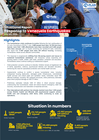
Country: Venezuela (Bolivarian Republic of) Source: Plan International Please refer to the attached file. Highlights • The humanitarian crisis continues to evolve following the twin earthquakes of 24 June. According to OCHA (7 July), 3,685 people have died, 16,740 have been injured, more than 1,000 aftershocks have been recorded and 6,462 people have been rescued, with La Guaira remaining the hardest-hit state. Authorities also report that 17,907 people have been left without housing, increasing humanitarian needs across affected communities. • The response is progressively shifting from life-saving search and rescue to sustained humanitarian assistance, with temporary camps expanding and growing needs in health, shelter, safe water, sanitation, protection and education. Humanitarian actors continue scaling up multisectoral support. • Child protection concerns continue to intensify. Children remain at heightened risk of family separation, violence, psychosocial distress and disrupted education, reinforcing the need for specialised protection and mental health services. • Assessments continue to confirm a severe humanitarian crisis, including widespread housing destruction, damaged public infrastructure, overwhelmed health services and critical water and sanitation needs. Authorities report 856 affected buildings, including 190 collapsed structures, while preliminary estimates place direct physical damage at USD 37 billion. • Preliminary estimates indicate USD 37 billion in direct physical damage, underscoring that humanitarian needs will extend beyond emergency relief into recovery, reconstruction and restoration of essential services. • Plan International with partners has already reached more than 1,635 people across Distrito Capital and Miranda with psychosocial support, primary health care and emergency relief items, while continuing to scale up operations.

Situational Report – Response to Venezuela Earthquakes (July 8th, 2026) Read More »

haiti : evaluation rapide multisectorielle (erm) (20260622 act avs vio pra des gon stm (ett 98)) localité : haute feuille, pisto, villars, bigot, dociné, blokòs, bertrand|1ère, 2ème, 3ème, 5ème sections

Haiti : Evaluation Rapide Multisectorielle (ERM) (20260622_ACT_AVS_VIO_PRA_DES_GON_STM (ETT 98)) – Localité : Haute Feuille, Pisto, Villars, Bigot, Dociné, Blokòs, Bertrand|1ère, 2ème, 3ème, 5ème sections

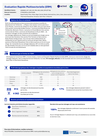
Country: Haiti Sources: Agency for Technical Cooperation and Development, AVSI Foundation – ETS, IMPACT Initiatives Please refer to the attached file. Suite aux affrontements armés survenus dans plusieurs localités du département de l’Artibonite — à Mapou (1ère section communale de La Croix-Périsse, commune de L’Estère) le 18 juin 2026, ainsi qu’à Jean-Denis (1ère section communale de Bas Coursin I, commune de Petite Rivière de l’Artibonite), Bertrand, Charon, Lacourture et Grand Bérard (1ère section communale de Villars, commune de Dessalines) le 20 juin 2026 — de nombreux ménages ont été contraints de se déplacer. Les ménages déplacés de L’Estère se sont principalement dirigés vers la commune des Gonaïves (1ère section Pont Tamarin et 3ème section Petite-Rivière de Bayonnais). Ceux de Jean-Denis (Petite Rivière de l’Artibonite) se sont répartis entre la commune de Saint-Marc (5ème section) et Marchand Dessalines (1ère et 2ème sections) où ils ont trouvé refuge. Sur l’ensemble de ces ménages déplacés, 96 % ont été accueillis par des familles d’accueil, et 4 % se sont installés dans un site spontané créé à la suite de ces événements.

Haiti : Evaluation Rapide Multisectorielle (ERM) (20260622_ACT_AVS_VIO_PRA_DES_GON_STM (ETT 98)) – Localité : Haute Feuille, Pisto, Villars, Bigot, Dociné, Blokòs, Bertrand|1ère, 2ème, 3ème, 5ème sections Read More »

iran: unhcr middle east situation: emergency update #21 as of 7 july 2026

Iran: UNHCR Middle East Situation: Emergency Update #21 as of 7 July 2026

Countries: Iran (Islamic Republic of), Afghanistan, Iraq, Lebanon, Pakistan, Syrian Arab Republic Source: UN High Commissioner for Refugees Please refer to the attached file. Since late February, hostilities in Iran and Lebanon have generated humanitarian and protection consequences across the region, including refugee returns in adverse circumstances to Afghanistan and Syria. While diplomatic efforts have contributed to a reduction in large-scale military activity, uncertainty remains high and the situation continues to unfold against an already fragile regional baseline. Prior to the escalation, there were more than 31 million forcibly displaced people and recent returnees across the region, alongside host communities facing significant economic and social pressures. Inter-agency emergency response efforts are underway in directly affected countries. In Iran, the Flash Refugee Response Plan supports refugees and others in need of international protection alongside affected host communities. In Lebanon, the Flash Appeal complements the Lebanon Response Plan, while in Afghanistan support for returnees is reflected under the Humanitarian Needs and Response Plan. UNHCR and partners continue to focus on the wider consequences of the situation, including returns under adverse circumstances, economic deterioration and pressure on national systems affecting growing protection risks facing refugees and vulnerable populations across the region. Preparedness arrangements remain in place, including border monitoring, reception and protection readiness, but continue to depend on flexible and predictable funding in an increasingly constrained resource environment.

Iran: UNHCR Middle East Situation: Emergency Update #21 as of 7 July 2026 Read More »

honduras floods: dref final report (mdrhn026), 8 july 2026

Honduras – Floods: DREF Final Report (MDRHN026), 8 July 2026

Country: Honduras Source: International Federation of Red Cross and Red Crescent Societies Please refer to the attached file. Date of event 25-06-2025 What happened, where and when? Since 17 June 2025, the department of Ocotepeque was affected by heavy rainfall caused by the interaction of a surface trough with Tropical Wave Erick. This hydrometeorological phenomenon resulted in flooding, landslides, and the collapse of road infrastructure, sanitation systems, and water collection facilities, particularly impacting the municipalities of Sinuapa, Ocotepeque, Dolores Merendón, and Fraternidad. In response to the evolving emergency, on 18 June, the Secretariat of State for Risk and National Contingency Management (COPECO) declared a Red Alert for Ocotepeque and areas along the Ulúa River in the department of Yoro. Subsequently, yellow and green alerts were issued across other departments of the country. Local authorities in six municipalities, including Dolores Merendón, Fraternidad, San Jorge, Concepción, Ocotepeque, and Sinuapa, requested urgent assistance from the central government and humanitarian organizations to address the impacts of the crisis. Reported damages included the loss of more than 150 acres of coffee crops, as well as the destruction of roads and drinking water systems. In municipalities such as Dolores Merendón, El Chimis, San Jerónimo, San Antonio, Vega Vieja, and Las Toreras, landslides and rising river levels caused the destruction of homes, coffee crops, and bridges, leaving communities isolated and without access to basic services. In addition, the La Laborcita dam, a key infrastructure for water supply in the area, was reported to have completely collapsed. During August and September, heavy rainfall continued to affect the region. On 16 September, COPECO issued several weather alert Page 2 / 22 bulletins, declaring a green alert for 72 hours across nine departments, including Copán, Ocotepeque, Lempira, Intibucá, La Paz, Santa Bárbara, Francisco Morazán, Valle, and Choluteca. On 18 September, the alert level was elevated, with a red alert declared for municipalities along the Ulúa River and a yellow alert for nine departments, including Ocotepeque, due to persistent rainfall across the country. The heaviest precipitation was expected in the western, southwestern, southern, and central regions of Honduras. This yellow alert remained in effect until 25 September, when COPECO issued a new green alert for five departments, including Ocotepeque, Copán, Santa Bárbara, Lempira, and Intibucá, which remained active until 29 September.

Honduras – Floods: DREF Final Report (MDRHN026), 8 July 2026 Read More »

dr congo: procédures de dédouanement des intrants humanitaires en rdc À l'attention des organisations humanitaires et de leurs transitaires

DR Congo: Procédures De Dédouanement Des Intrants Humanitaires En RDC À L’attention Des Organisations Humanitaires Et De Leurs Transitaires

Country: Democratic Republic of the Congo Sources: Logistics Cluster, World Food Programme Please refer to the attached file. Il est rappelé que la législation douanière congolaise prévoit plusieurs mécanismes permettant d’éviter le blocage des intrants humanitaires et des marchandises de secours lorsque certains documents sont encore en attente. 1. Principe général L’absence temporaire de certains documents ne signifie pas automatiquement que les marchandises doivent rester bloquées en douane. Des procédures spécifiques existent pour permettre leur enlèvement sous contrôle de l’administration douanière. 2. Procédure d’enlèvement immédiat Base légale : Article 128 du Code des Douanes Cette disposition autorise l’enlèvement des marchandises avant l’accomplissement complet des formalités douanières lorsque l’urgence le justifie. Elle est applicable notamment aux intrants humanitaires, matériels de secours et biens nécessaires aux opérations d’urgence. 3. Déclaration simplifiée, provisoire ou incomplète Référence : Circulaire DGDA du 12 septembre 2015 – Point 4 : « L’enlèvement d’une marchandise peut se faire sur la base d’une déclaration simplifiée, provisoire ou incomplète sous réserve de l’autorisation de la douane. » Cette procédure permet de poursuivre le dédouanement même lorsque certains documents justificatifs ne sont pas encore disponibles. 4. Envois de secours Référence : Circulaire DGDA du 12 septembre 2015 – Point 6.b Les marchandises de secours peuvent être enlevées sur base d’une déclaration provisoire, même en l’absence de certains documents requis, avec dispense de garantie. Cette disposition vise spécifiquement à éviter tout retard dans l’assistance humanitaire. 5. Autorisation de la DGDA Référence : Circulaire DGDA du 12 septembre 2015 – Point 7 La souscription d’une déclaration provisoire pour les marchandises visées au point 6 est subordonnée à l’autorisation du Directeur Général des Douanes et Accises ou de son délégué. En cas de difficulté au niveau opérationnel, les organisations peuvent solliciter l’intervention des autorités compétentes de la DGDA afin de faciliter l’application de ces dispositions. 6. Recommandations aux organisations • Vérifier avec votre transitaire qu’il connaît ces procédures. • Demander explicitement l’utilisation d’une déclaration simplifiée, provisoire ou incomplète lorsque les conditions sont réunies. • Pour les marchandises humanitaires et de secours, rappeler les dispositions prévues dans la circulaire du 12 septembre 2015. • En cas de blocage injustifié, solliciter des explications écrites et, si nécessaire, porter le dossier à l’attention de la hiérarchie de la DGDA.

DR Congo: Procédures De Dédouanement Des Intrants Humanitaires En RDC À L’attention Des Organisations Humanitaires Et De Leurs Transitaires Read More »

pakistan — potential migrants survey, pakistani nationals (september 2024 – january 2026)

Pakistan — Potential Migrants Survey, Pakistani Nationals (September 2024 – January 2026)

Country: Pakistan Source: International Organization for Migration Please refer to the attached file. The International Organization for Migration (IOM) Displacement Tracking Matrix (DTM)’s Potential Migrants Survey (PMS) collects detailed data on the motivations, expectations, and decision-making processes of potential migrants (Afghan and Pakistani nationals) travelling via Pakistan en route to other destinations other than Pakistan or Afghanistan. While the survey covers both Pakistani and Afghan nationals, this report solely presents the findings for Pakistani nationals. Findings from the interviews completed with Afghan potential migrants are presented in a separate report. Data collected through PMS aims to inform policy and programmatic responses to migration, as well as support the development of effective migration management strategies by building a comprehensive profile of potential migrants. Additionally, the assessment identifies the potential challenges and vulnerabilities migrants may face along their journeys, with the aim of enhancing the protection of their rights.

Pakistan — Potential Migrants Survey, Pakistani Nationals (September 2024 – January 2026) Read More »

Growing Up with a Nation: Children Demand a Say in South Sudan’s Future on 15 years of Independence

Country: South Sudan Source: Save the Children South Sudan gained independence on 9 July 2011 in one of the most celebrated moments in modern African history. Fifteen years later, the country now faces one of the world’s largest humanitarian crises. JUBA, 8 July 2026 – As South Sudan marks 15 years of independence, children growing up in the world’s youngest nation are calling on its leaders to listen to children and include them in decision-making, Save the Children said. Every Saturday, children in Juba interview senior leaders live on air in a national radio show, asking questions about education, conflict and the future of their country. Save the Children launched the programme on Eye Radio – the first independent radio broadcaster in South Sudan – to create a platform where children could put their concerns and ideas directly to those in power. South Sudan gained independence on 9 July 2011 in one of the most celebrated moments in modern African history. Fifteen years later, the country now faces one of the world’s largest humanitarian crises. More than one in two people don’t know where their next meal will come from, renewed fighting this year has displaced more than 280,000 people, and the UN warns parts of the country are at risk of a ‘full-scale famine’. Naomi, 16, was just one when South Sudan became independent. Today, she is a child parliamentarian with Save the Children, advocating for children’s rights in her country. She explains that being a child in the world’s youngest recognised nation is like growing up with the country: “We’re learning together. Some days there’s progress like seeing new schools, boreholes. Other days there are challenges like floods or conflict. But there’s always this feeling that we’re building something together. “The leaders of South Sudan need to listen to young people and include us in decisions whether the decisions are hard or simple because every decision being made now is something that will affect our future tomorrow whether negatively or positively. We need to be part of your decisions; show us the budget, show us the results.” Through the radio programme, Naomi and her fellow child parliamentarians have already interviewed officials from the Ministry of Labour and the Director General of the National Police. In the coming weeks, they are scheduled to interview the Speaker of the Transitional National Legislative Assembly (TNLA), the Minister of Education, the Minister of Health, and other key international partners, including the EU Embassy in South Sudan, among others on Eye Radio, one of the only radio stations that broadcasts nationwide. Asked whether Naomi is optimistic about the future of the country as her generation will be the next leaders of the country, she said: “Yes, but it’s a “working” optimism. I’m optimistic because I see young people passionately advocating for a better future. The problems are real, but so is our energy. This country is our future. If we don’t speak now, decisions will be made without us. Radio lets our voices travel farther than Juba. Leaders need to hear what kids face daily and what we have to say.” Briana, 13, born in the year after independence, is also among the children putting questions directly to leaders on the radio. “I think the leaders in South Sudan should promote education for every child, whether a girl or a boy, because we are the country’s future. I want to be a leader, and I promise to be a better leader one day. I will always talk to the people facing the problem, especially children, to better solve their problems. “Thanks to Save the Children and Eye Radio, I can now question my leaders in front of thousands of people… to tell them the dangers and disasters that are happening in the country and inform people about what is happening in South Sudan, so that it can be looked at seriously, especially my brothers and sisters in other States in conflict.” Chris Nyamandi, Country Director for Save the Children in South Sudan, said: “As South Sudan marks 15 years of independence, it is vital that children are recognised as vital leaders with a right to shape the country not only in the future but today. Every decision made now, from education and climate resilience to peace, will affect their lives for decades to come, so their voices must be heard and their rights placed at the centre of decision-making. “This first generation to grow up alongside the world’s youngest nation has lived through multiple conflicts, displacements and climate shocks, yet they continue to speak with hope, determination and a clear vision for their country’s future. Children are asking leaders the questions that matter most to them and showing why they deserve a meaningful seat at the table.” Save the Children calls on all leaders and decision-makers in South Sudan to listen to children and prioritise their rights. Save the Children has worked in South Sudan since 1991, providing children with access to education, child protection, healthcare, nutrition, and water, sanitation and hygiene services, and supporting families with food security and livelihoods assistance. According to the IPC April–July 2026 projection, 7.8 million people, or 55% of the population, in IPC Phase 3 (Crisis) or worse, an increase of around 280,000 people compared to the September 2025 lean season projection. ******************************************************************************************************************* For further enquiries please contact: Samantha Halyk, Sr. Global Media Manager samantha.halyk@savethechildren.org Our media out of hours (BST) contact is media@savethechildren.org.uk / +44(0)7831 650409 Please also check our X account @Save_GlobalNews for news alerts, quotes, statements and location Vlogs. A family from Sinjar, Jazeera Complex (Sibah Sheikh Khudair), consisting of 10 members, including 4 children, fled to the Kurdistan Region to escape the terrorist attack by ISIS on Sinjar on 3/8/2014. This family lost their grandmother (89 years old), uncle (60 years old), and cousin (25 years old), and they have no news about them but believe they may have passed away. The father works in orchards and is also a poet. The

Growing Up with a Nation: Children Demand a Say in South Sudan’s Future on 15 years of Independence Read More »

World: Historic resolution on neglected tropical diseases adopted by the United Nations Human Rights Council

Country: World Source: World Health Organization Resolution 62/27 on “Human rights and neglected tropical diseases” was adopted today by the Human Rights Council (HRC) at its sixty-second session in Geneva. The first ever HRC resolution dedicated to all neglected tropical diseases (NTDs) was adopted by consensus, after being put forward by six African countries where the burden of NTDs is significant; the group was led by Malawi, and included Burkina Faso, Gambia, Kenya, Morocco and the United Republic of Tanzania. “We welcome this resolution, which underscores that neglected tropical diseases cannot be viewed solely as a medical issue.” said Dr Daniel Ngamije Madandi, Director of the Malaria and Neglected Tropical Diseases Department at the World Health Organization (WHO). “We stand ready to collaborate with all relevant governments, the Human Rights Council, and the Office of the United Nations High Commissioner for Human Rights to identify concrete ways forward and support their implementation.” The text of the resolution emphasizes that NTDs “reflect and reinforce patterns of inequality, discrimination and social exclusion”, thus representing “not only a public health challenge, but also a significant human rights concern”. Notably, the resolution identifies the underlying, structural and social determinants of NTDs, including “lack of access to safe water, sanitation, adequate housing, education and information”. Other important determinants cited are climate change, displacement due to natural disasters and conflicts. The resolution also acknowledges the fact that some NTDs excessively affect women and girls as well as remote, underserved and mobile communities, and underlines the importance of disaggregated data collection and analysis in identifying and addressing the disproportionate burden on certain segments of society. “A human rights-based approach can strengthen responses to neglected tropical diseases by ensuring that policies and programmes are guided by equality, non-discrimination, participation and accountability. It helps ensure that public health efforts reach those most affected by poverty, stigma, discrimination and exclusion,” said Peggy Hicks, Director, Thematic and Special Procedures, Office of the United Nations High Commissioner for Human Rights (UN/OHCHR). “This resolution offers an important opportunity to bring public health expertise and human rights analysis closer together. WHO’s technical leadership and the human rights system’s focus on dignity, equality and accountability are complementary, and together they can help support more inclusive, equitable and effective responses to NTDs.” Next steps The resolution calls upon States to strengthen efforts and commitments to address the “unacceptably high” burden of NTDs, notably by scaling up predictable, sustained and adequately resourced technical, financial and capacity-building support. It encourages the safeguarding of health services addressing NTDs from future emergencies; it also calls for a comprehensive rights-based approach to the fight against NTDs which takes into account factors such as discrimination, exclusion, stigmatization and other barriers to the enjoyment of human rights associated with NTDs, including on grounds of disability. As a follow-up action, the resolution requests the UN/OHCHR to prepare a comprehensive report on the human rights dimensions of neglected tropical diseases in consultation with relevant entities, including WHO, to be submitted to the HRC in 2027. This report is expected to propose practical measures that States can adopt to address the human rights dimensions of NTDs; safeguard the human rights of people affected by NTDs; support the realization of the right of everyone to the enjoyment of the highest attainable standard of physical and mental health, in line with Sustainable Development Goal 3; and integrate human rights considerations into national, regional and global responses to NTDs. Neglected tropical diseases at the Human Rights Council The resolution adopted today builds on the Council’s longstanding attention to leprosy-related discrimination, which, since 2008, has been the subject of several resolutions; it also brings broader visibility to the human rights dimensions of NTDs, while recognizing the specific concerns associated with different diseases. Finally, it marks an important step in recognizing that stigma, discrimination and exclusion must be addressed as part of effective, people-centred and rights-based responses to NTDs. The adoption of the resolution was met with great enthusiasm by the global NTD community, notably by key advocacy actors such as Uniting to Combat Neglected Tropical Diseases and the Anesvad Foundation. Neglected tropical diseases Neglected tropical diseases are a diverse group of 21 conditions associated with devastating health, social and economic consequences. They affect more than one billion people globally. Their burden is mainly prevalent among impoverished communities in tropical areas. Public health targets for the control, elimination and eradication of these conditions were set in the WHO road map for neglected tropical diseases 2021–2030.

World: Historic resolution on neglected tropical diseases adopted by the United Nations Human Rights Council Read More »