Uncategorized

World: Crop Monitor Special Report: El Niño 2026-2027: Anticipated Climate and Agricultural Yield Impacts, June 16, 2026

Country: World Source: GEOGLAM Crop Monitor Highlights El Niño conditions are now present and are likely to continue through March 2027. The El Niño event will continue to strengthen over the coming months, likely reaching its peak intensity as a very strong (>2.0°C) event in November-January. Stronger El Niño events lead to more predictable, though usually not more severe, crop yield outcomes. At the global scale, past El Niño events tend to decrease rice yields the most, with yields being about 1.0 to 1.5% below trend, while soybean yields tend to increase the most, with yields being about 1.5 to 2.0% above trend. Regionally, Central Asia, bimodal East Africa, southern South America, and the US are likely to see the most positive crop yield impacts, while Southern Africa, Central America, India, and Australia are likely to see the most negative crop yield impacts. Current Situation El Niño conditions are now present and are likely to continue into 2027. Since April 2026, sea surface temperatures in the Niño 3.4 region of the tropical Pacific have risen rapidly. The latest weekly Relative Niño-3.4 index value was +0.9°C as of June 15th, according to the NOAA CPC. The June NOAA CPC forecast indicates that El Niño will continue to strengthen over the coming months, and there is a 63% chance of a very strong event (Index ≥ 2.0°C) at its peak from November 2026 to January 2027 (Figure 1). El Niño Climatic Impacts El Niño events shift the odds toward wetter conditions in some regions and drier conditions in others, with the affected regions and seasons shown in Figure 2. El Niño events tend to enhance rainfall in Central Asia, southern North America, south-eastern South America, southern Europe, eastern and southern East Africa, and southern and eastern China. Drier-than-average conditions tend to occur in Central America, the Caribbean, northern South America, parts of western and northern East Africa, the Sahel region, Southern Africa, India, northern China, the Maritime Continent, and Australia. The stronger the El Niño event, the more likely the changes in precipitation patterns will resemble historical impacts.

World: Crop Monitor Special Report: El Niño 2026-2027: Anticipated Climate and Agricultural Yield Impacts, June 16, 2026 Read More »

world: geoglam global crop monitor | no. 45 – july 2026

World: GEOGLAM Global Crop Monitor | No. 45 – July 2026

Country: World Source: GEOGLAM Crop Monitor Please refer to the attached file. Global Crop Overview Global crop conditions at the end of June remain generally positive for wheat, maize, rice, and soybeans. For wheat, conditions are generally favorable, though some concerns persist in Europe and the United States. For maize, global conditions are generally favorable; however, dryness is developing in parts of Central America, East Africa, Europe, India, and Thailand. For rice, overall conditions are favorable; however, dryness has developed in India and Thailand. For soybeans, sowing is wrapping up in the Northern Hemisphere under mostly favorable conditions, except in India, where the Southwest Monsoon is delayed. The remaining crops are detailed in the CM4EW publication. Global Climate Influences Overview El Niño conditions are present. This will likely be a high-impact event due to its early onset in June 2026 and strong or very strong conditions from September through November 2026 (84% chance). The odds of it ranking among the strongest events on record are relatively high, with a 63% chance of very strong El Niño conditions from November 2026 through January 2027. The event will remain active at least through March 2027. Global temperatures for June 2026 were the second warmest on record, according to the Copernicus Climate Change Service Climate Bulletin. The likelihood of extreme conditions during the coming year will increase as El Niño warms global temperatures. For further details on the Global Climate Influences and Regional Climate Outlooks section.

World: GEOGLAM Global Crop Monitor | No. 45 – July 2026 Read More »

world: crop monitor for amis | no. 140 – july 2026

World: Crop Monitor for AMIS | No. 140 – July 2026

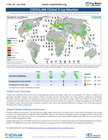
Country: World Source: GEOGLAM Crop Monitor Please refer to the attached file. Overview At the end of June, overall conditions are positive for wheat, maize, rice, and soybeans. For wheat, spring wheat is wrapping up in the Northern Hemisphere as winter wheat harvest is progressing. In the Southern Hemisphere, sowing is continuing, albeit with reduced total sown areas expected. For maize, the harvest is proceeding in the Southern Hemisphere as dry conditions develop in parts of the Northern Hemisphere. Rice conditions are generally favourable; however, areas of concern are being watched in India and Thailand. For soybeans, sowing is wrapping up in the Northern Hemisphere. Global crop condition map synthesizing information for all four AMIS crops as of June 28th. Crop conditions over the main growing areas for wheat, maize, rice, and soybean are based on a combination of national and regional crop analyst inputs and earth observation data. Crops under non-favourable conditions are displayed on the map using their crop symbols. Crop Conditions at a Glance Wheat – In the Northern Hemisphere, winter wheat harvesting is continuing. In the Southern Hemisphere, sowing is wrapping up under favourable conditions. Maize – Harvesting is progressing in the Southern Hemisphere as dryness develops in parts of the Northern Hemisphere. Rice – Conditions are generally favourable; however, a dry start to the Kharif season in India and the wet-season in Thailand are of concern. Soybeans – In the Northern Hemisphere, sowing is progressing under generally favourable conditions. Forecasts at a Glance Climate Influences – El Niño conditions are present. This will likely be a high-impact event due to its early onset in June 2026 and strong or very strong conditions from September through November 2026 (84% chance). Europe – As of early June, drought alerts were present across parts of central and eastern Europe, while drought warnings and watches were present across most countries. The July outlook shows likely above-average temperatures across the continent along with possible below-average precipitation over central Europe. India – The July forecasts indicate likely below-average precipitation across most of the country alongside likely above-average maximum and minimum temperatures. United States – The July precipitation forecast indicates likely above-average precipitation over northern New England, the central Rockies, the Great Basin, and the Southwest, while below-average precipitation is likely over southern Texas, western Washington, coastal Oregon, North Dakota, and the northern Corn Belt. Wheat Conditions In the EU, winter wheat is under generally favourable conditions; however, dry soils in central Europe and heatwaves in western Europe might potentially reduce yield prospects. In Türkiye, winter wheat harvesting is ongoing with above-average yields. In Ukraine, winter wheat remains under favourable conditions away from the war front. In the Russian Federation, winter wheat is under favourable conditions. Spring wheat sowing has been completed with a reduction in total sown area compared to last year. In Kazakhstan, conditions are favourable for spring and winter wheat. In China, winter wheat harvest is wrapping up as spring wheat continues to develop. In the US, winter wheat harvest is progressing with below-average yields due to drought in the central and southern Plains. Spring wheat conditions are favourable. In Canada, conditions are favourable as spring wheat sowing wraps up and winter wheat develops. In Australia, sowing is wrapping up under mostly favourable conditions, and a noticeable decline in total sown area is expected compared to last year. In Argentina, sowing is progressing at a good pace, albeit with some delays in the southern agricultural belt due to excess soil moisture. Maize Conditions In Brazil, the harvest of the spring-planted crop (smaller season) is wrapping up as the harvest of the summer-planted crop (larger season) begins. In Argentina, the harvest of the late-planted crop (smaller season) is progressing under favourable conditions. In the US, conditions are favourable, with good emergence and silking. In Canada, conditions are favourable, with good emergence. In Mexico, harvest is ongoing for the autumn-winter crop (smaller season) while sowing of the spring-summer crop (larger season) continues. In China, spring-maize (larger season) is under favourable conditions as sowing of summer-maize (smaller season) continues. In India, sowing of the Kharif crop (larger season) is beginning under mixed conditions due to the slow progress of the Southwest Monsoon. In Indonesia, the harvest of the wet-season crop is wrapping up as sowing of the dry-season crop continues. In the EU, conditions have improved in southeastern Europe, while hot spells in western Europe could negatively affect yields. In Ukraine, conditions are generally favourable, though soils are dry in the eastern and western regions. In the Russian Federation, conditions are favourable.

World: Crop Monitor for AMIS | No. 140 – July 2026 Read More »

colombia: reporte plan de respuesta a necesidades humanitarias hnrp 2026 en el sistema 5w entre enero y mayo de 2026

Colombia: Reporte Plan de Respuesta a Necesidades Humanitarias HNRP 2026 en el Sistema 5W entre enero y mayo de 2026

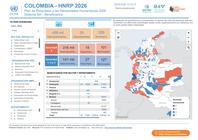
Country: Colombia Sources: El Equipo Humanitario País Colombia, Grupo Interagencial sobre Flujos Migratorios Mixtos, R4V, UN Office for the Coordination of Humanitarian Affairs Please refer to the attached Infographic. Las organizaciones humanitarias siguen enfrentando desafíos del contexto, para alcanzar a la población en necesidades con la respuesta humanitaria complementaria. Es así como: Entre enero y mayo de 2026, más de 363.000 personas se beneficiaron en 209 municipios de 27 departamentos de Colombia por 50 socios humanitarios -principales e implementadores-. Según los reportes, un 36% de los beneficiarios atendidos corresponde a niños, niñas y adolescentes, mientras que un 20% corresponde a pueblos étnicos (11% afrodescendientes y 9% indígenas), principalmente en regiones de la frontera con Venezuela, pacífico, noroccidente y amazonia-Orinoquía. De este total, 239.000 beneficiarios (66% de los atendidos) ubicados en 92 municipios de 14 departamentos priorizados y clasificados en severidad 4, han recibido asistencia humanitaria complementaria en respuesta a las necesidades prolongadas y agudizadas. Los territorios con severidades más altas (4) han concentrado cerca de tres cuartas partes de la respuesta humanitaria en el pacífico, frontera con Venezuela y noroccidente del país. La seguridad alimentaria, protección, agua, saneamiento e higiene han sido el eje central de la respuesta, complementada por acciones especializadas en nutrición, vacunación, reflejando una cobertura integral y focalizada en los contextos con mayores necesidades. Otros 124.000 beneficiarios también fueron atendidos de manera más dispersa en 116 municipios de 28 departamentos clasificados con severidades 2 y 3. Esta respuesta, aunque en menor proporción, ha tenido un enfoque multisectorial orientado a fortalecer la resiliencia de las comunidades mediante acciones en seguridad alimentaria y medios de vida, salud primaria, mental y sexual y reproductiva, además de educación y preparación ante desastres. A estas intervenciones se suman actividades asociadas a alojamientos, principalmente además de prevención y reducción del riesgo de desastres evidenciando una apuesta estratégica por el fortalecimiento de capacidades locales, destacándose municipios en Caquetá, Córdoba, subregión de Urabá y departamentos de la región amazónica (Amazonas, Meta, Guaviare, Vichada, Guainía), entre otros. Gracias a la contribución de donantes y según el sistema FTS, se identificaron contribuciones por valor de casi USD 170,9 millones, cerca de un 36% del requerimiento total de USD 491,5 millones del HNRP 2026. Las acciones implementadas por los socios de los Equipos Locales de Coordinación (ELC) y del Equipo Humanitario País (EHP) han sido llevadas a cabo principalmente por ONG internacionales (42%) y ONG nacionales y locales (38%)—estos datos incluyen tanto financiación directa como proyectos en los cuales estas son socios implementadores de Agencias del Naciones Unidas (10%)-, mientras que otro tipo de organizaciones han implementado de forma directa un 10%, según los reportes. Hasta la fecha del reporte, estos beneficiarios recibieron atención en más de 2.500 actividades intersectoriales, en complementariedad a los esfuerzos de las autoridades e instituciones locales, y alineados al Plan de Respuesta a las Necesidades Humanitarias 2026 (HNRP 2026) y los Planes Territoriales departamentales-Comunitarios.

Colombia: Reporte Plan de Respuesta a Necesidades Humanitarias HNRP 2026 en el Sistema 5W entre enero y mayo de 2026 Read More »

ocha haiti: humanitarian bulletin (march may 2026)

OCHA Haiti: Humanitarian Bulletin (March – May 2026)

Country: Haiti Source: UN Office for the Coordination of Humanitarian Affairs Please refer to the attached file. Food insecurity: Nearly 5.8 million people (52% of the population) are experiencing acute food insecurity, including approximately 1.9 million people in the emergency phase. Mass displacement driven by violence: More than 1.5 million internally displaced people (IDPs), further exacerbating vulnerabilities and increasing pressure on already limited resources. Agricultural crisis in Artibonite: Ongoing violence is severely disrupting agricultural production, forcing farmers to abandon their land. Between 5% and 8% of farming households are directly affected in the hardest-hit areas. Sharp increase in gender-based violence (GBV): A total of 1,927 incidents were reported between January and March 2026, of which more than 70% were rapes, predominantly linked to armed groups. Nearly 70% of GBV survivors are internally displaced persons, with extremely limited access to essential support and response services.

OCHA Haiti: Humanitarian Bulletin (March – May 2026) Read More »

philippines, china, taiwan, japan | tropical cyclone bavi dg echo daily map | 13/07/2026

Philippines, China, Taiwan, Japan | Tropical cyclone BAVI – DG ECHO Daily Map | 13/07/2026

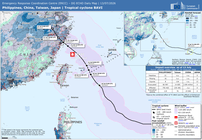
Countries: China, Guam, Japan, Northern Mariana Islands (The United States of America), Philippines, China – Taiwan Province Source: European Commission’s Directorate-General for European Civil Protection and Humanitarian Aid Operations Please refer to the attached Map.

Philippines, China, Taiwan, Japan | Tropical cyclone BAVI – DG ECHO Daily Map | 13/07/2026 Read More »

world: statement on el niño by tom fletcher, under secretary general for humanitarian affairs and emergency relief coordinator, 13 july 2026

World: Statement on El Niño by Tom Fletcher, Under-Secretary-General for Humanitarian Affairs and Emergency Relief Coordinator, 13 July 2026

Country: World Source: UN Office for the Coordination of Humanitarian Affairs Please refer to the attached file. El Niño is back. Extreme heat, droughts and floods are once again set to devastate communities across Latin America, Eastern and Southern Africa, Asia and the Pacific. The last El Niño in 2023-24 left tens of millions of people in need of food, nutrition, water, sanitation, health, agricultural support and protection. The forecasts are clear: this one looks even worse. It comes on top of widespread conflict, rising numbers of people on the move, and as soaring fuel, fertilizer and food prices are squeezing the most vulnerable families – while the humanitarian system reels from deep cuts. We are ready to disburse up to US$100m from the Central Emergency Response Fund (CERF) to get ahead of this El Niño. In support of that response, we are planning, implementing the lessons from the past, innovating, coordinating the humanitarian community and taking action. Our preparations are shaped by more sophisticated forecasts. More than $20 million has already been allocated for anticipatory action in six countries. Through CERF’s Climate Action Account, we are investing in vulnerable communities to better withstand the climate shocks ahead. We need early, flexible financing – more effective and less costly in the long run – to match the scale of the risk. We ask for the world to prioritize conflict resolution and support to communities forced to flee. And we urge braver climate action in place of the short term and selfish decisions that are pushing us relentlessly towards the 1.5°C warming cliff edge. The choice is clear: we can wait for disaster, or we can invest in resilience.

World: Statement on El Niño by Tom Fletcher, Under-Secretary-General for Humanitarian Affairs and Emergency Relief Coordinator, 13 July 2026 Read More »

international and national partners mark the successful completion of the "labor intensive maintenance in public schools" project in jordan

International and national partners mark the successful completion of the “Labor-Intensive Maintenance in Public Schools” project in Jordan

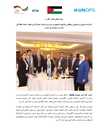
Country: Jordan Source: UNOPS Please refer to the attached files. International and national partners mark the successful completion of the “Labor-Intensive Maintenance in Public Schools” project in Jordan Amman, July 12, 2026 – Today, representatives from the Ministry of Education, the Ministry of Labour, the German Embassy in Jordan, the German Federal Ministry of Economic Cooperation and Development (BMZ), KfW Development Bank and UNOPS marked the successful completion of the “Labor-Intensive Maintenance in Public Schools in Jordan” project. Implemented over two phases during the past seven years through the strategic partnership between the German government, Jordanian government and UNOPS, the project responded to the dual challenges of strained service delivery and economic hardship. The project supported livelihoods through creating short term employment opportunities for both vulnerable Jordanians and Syrian refugees, building the workers’ practical skills to enhance their future employability while supporting public schools across Jordan. Dr. Sahar Shakhtreh, the Secretary-General for Administrative and Financial Affairs at the Ministry of Education, on behalf of the Minister of Education in Jordan Dr. Azmi Mahafzah, noted: “This project aligns with our national priorities, as it contributed to the implementation of Jordan’s response plan to the Syrian crisis by providing employment opportunities and supporting host communities. It also reinforced the strategic plan for the education sector by improving the school environment and maintaining public schools, which is also consistent with the preventive maintenance program implemented by the ministry. The project is also linked to the ‘Partnership for the Future’ initiative of the German Federal Ministry for Economic Cooperation and Development.” The project’s cash for work modality has improved livelihoods through generating over 16,000 temporary employment opportunities in cleaning and maintaining over 660 public schools, contributing to an improved and healthier learning environment that enhanced the educational experience for more than 250,000 students, 42 percent of whom are girls. Mr. Ibrahim Al-Saket, Assistant Secretary-General, Ministry of Labour, said: “The Ministry of Labour has been closely involved with this project since its inception. We are pleased that 37 percent of the participants were women, which aligns with our national policy to empower women in the workforce. The skills acquired by both Jordanian and Syrian refugee workers will play a pivotal role in improving their livelihoods and long-term career prospects.” Reflecting the project’s commitment to inclusion and equal access to work opportunities, more than one-third of participants were women and 6% were persons with disabilities. In addition, by balancing participation between Jordanians and Syrian refugees, the project reinforced the social fabric and stability of host communities across Jordan. Dr. Mattias Schmidt-Rosen, Director, KfW office in Amman, stated: “Germany and KfW Development Bank are proud to support Jordan’s efforts to improve public services while expanding economic opportunities for vulnerable Jordanians and Syrian refugees. This project demonstrates that investing in public infrastructure can also strengthen livelihoods, develop skills, and generate lasting social and economic benefits. We are pleased to have supported this successful initiative and look forward to continuing our partnership with Jordan in advancing sustainable and inclusive development.” Muhammad Usman Akram, Representative and Director of UNOPS Multi-Country Office in Amman, said: “I extend my profound appreciation to the government of Germany and the KfW Development Bank for their sustained trust and confidence in UNOPS. I also thank our national counterparts for their continued support and guidance to ensure our operations remained synchronized with Jordan’s development path.” He continued, “by aligning our efforts with Jordan’s national vision, we have transformed infrastructure maintenance into tangible, high-quality results for local communities. This collaboration demonstrates that practical, cash for work interventions can contribute to stability while addressing national priorities.” END – About UNOPS: UNOPS offers practical solutions to the UN and other partners, across peace and security, humanitarian and development operations. UNOPS mission is to help people build better lives and countries achieve peace and sustainable development. We help the United Nations, governments and other partners to manage projects, and deliver sustainable infrastructure and procurement in an efficient way. Read more: www.unops.org UNOPS Multi-Country Office in Amman implements projects in Jordan, Iraq, Lebanon, Syria, and Yemen and implements work in partnership with bilateral and multilateral donors, national governments and other UN agencies. For Press Inquiries, please contact: Anwar Abu Sakieneh, Communications Specialist (UNOPS) AnwarAB@unops.org I +962 7 9902 6315 or +962 6 5902122

International and national partners mark the successful completion of the “Labor-Intensive Maintenance in Public Schools” project in Jordan Read More »