Uncategorized

ukraine: rehabilitation technical working group (rtwg) meeting minutes, july 03, 2026 [en/uk]

Ukraine: Rehabilitation Technical Working Group (RTWG) – Meeting Minutes, July 03, 2026 [EN/UK]

Country: Ukraine Source: World Health Organization Please refer to the attached files. Chairs: World Health Organization (WHO), Momentum Wheels for Humanity Ukraine (MWH) Participants: Momentum Wheels for Humanity, GIZ, CF ‘ZDOROVI’, MSF OCB, Central Project Management Agency (CPVA), NGO ‘Fight for Right’, National Committee of Red Cross of Ukraine, CF “Save Ukraine”, NGO “SHDC”, International Medical Corps, Direct Relief, IREX, UNDP, World Relief, MEHAD, Handicap, Sunnaas, Care Ukraine, Ukraine-Norwegian project, Soleterre, NGO “GAR”, Ukrainian Society of Ergotherapist, Ukrainian Association of Physical Therapy, WHO and others Agenda: • Introduction of new partners (If any) • Update on the Hospital request for humanitarian purposes (WHO) • Determining the Cost of Rehabilitation Services (Rehab4U) • Results of the held All-Ukrainian Occupational Therapist Conference and recent updates (USET) • Partner updates • AOB

Ukraine: Rehabilitation Technical Working Group (RTWG) – Meeting Minutes, July 03, 2026 [EN/UK] Read More »

Uganda Review Finds Rapid Ebola Response, Identifies Critical Gaps at Borders and in Communities – Africa CDC

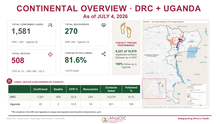
Countries: Uganda, Democratic Republic of the Congo Source: Africa Centres for Disease Control and Prevention Jinja, Uganda, 11 July 2026 – Uganda responded rapidly following the detection of the 2026 Bundibugyo Virus Disease outbreak, meeting the key timelines of the 7-1-7 framework, according to an Early Action Review completed this week. The review found that Uganda’s systems enabled the outbreak to be detected within seven days, notified to the relevant public health authorities within one day and followed by priority response actions within seven days. It also identified critical areas requiring further action, including screening at high-risk border points, coordination with private health facilities, integration of emergency-response data and stronger community engagement. Convened by Uganda’s Ministry of Health from 8 to 9 July in Jinja, the review brought together representatives from all pillars of the national response, alongside Africa CDC, the World Health Organization, the UK Health Security Agency, the United States Government and other partners. Participants examined how quickly the outbreak was detected, reported and acted upon, as well as the operational factors that supported or delayed the response. The review recognised Uganda’s investments in disease surveillance, emergency coordination and rapid response capacity, while identifying gaps that must be addressed as efforts continue to interrupt transmission and reduce the risk of further spread. “The greatest opportunity to interrupt transmission lies in the first seven days, from the onset of illness to detection, notification, investigation and the initiation of the response,” said Dr Atek Kagirita, Bundibugyo Virus Disease Incident Commander and Manager of Uganda’s National Public Health Emergency Operations Centre. “Early detection saves lives, reduces transmission, minimises the cost of the response and protects communities. This outbreak has also reminded us that public health emergencies do not respect national borders. Strengthening cross-border collaboration must remain a strategic priority beyond this outbreak.” The review identified four immediate priorities for strengthening the response. These include installing prefabricated screening units at high-risk border points, beginning with Vuura Point of Entry; integrating private clinics and health facilities into national surveillance and reporting systems; digitising and connecting emergency-response data through the Integrated Outbreak System; and expanding community engagement and risk communication to strengthen trust, early reporting and adherence to public health guidance. Africa CDC’s Special Representative to the Director-General for Eastern Africa, Dr Lul Riek, congratulated the Government of Uganda for conducting the review while the outbreak response remains active. “Uganda acted quickly, and this review provides a clear picture of what worked and where further action is required,” said Dr Riek. “Through the Continental Incident Management Support Team, Africa CDC will continue working with Uganda and neighbouring countries to strengthen cross-border surveillance, border health measures, emergency data systems and community engagement.” Speaking on behalf of the WHO Representative to Uganda, Dr Solome Okware welcomed the strong coordination between the Government of Uganda and its partners and commended the effectiveness of the response. Dr Edmund Newman, Director of the UK Public Health Support Team at UKHSA, said the review provided an important opportunity to identify successful approaches, assess outstanding gaps and agree on practical improvements while the response is ongoing. The review also highlighted the importance of continued coordination between Uganda and the DRC, particularly in border communities and areas with frequent population movement. The Ministry of Health will incorporate the findings and recommendations into Uganda’s National Action Plan for Health Security and use them to strengthen preparedness and response systems for future outbreaks. ### About Africa CDC: The Africa Centres for Disease Control and Prevention (Africa CDC) is the public health agency of the African Union. As an autonomous institution, Africa CDC supports AU Member States to strengthen health systems, improve disease surveillance, and enhance emergency preparedness and response. For more information, visit: http://www.africacdc.org and follow Africa CDC on LinkedIn, X, Facebook, and YouTube.

Uganda Review Finds Rapid Ebola Response, Identifies Critical Gaps at Borders and in Communities – Africa CDC Read More »

oPt: Sawasya Field Visit Highlights Support for Women’s Rehabilitation and Gender-Responsive Justice Services in Palestine

Country: occupied Palestinian territory Source: UN Women Please refer to the attached files. زيارة ميدانية لبرنامج سواسية ومانحيه تسلط الضوء على دعم إعادة تأهيل النساء وتعزيز خدمات العدالة المستجيبة للنوع الاجتماعي في فلسطين أريحا، فلسطين – ١٤تموز/يوليو ٢٠٢٦- أريحا، فلسطين – 14 تموز/يوليو 2026 – نظم برنامج سواسية المشترك زيارة ميدانية لشركاء التنمية الدوليين إلى مركز الإصلاح والتأهيل في أريحا، في إطار التزامه المتواصل بتعزيز العدالة المستجيبة للنوع الاجتماعي، وضمان وصول النساء من الفئات الأكثر تهميشاً إلى خدمات الحماية وإعادة التأهيل والمساعدة القانونية. وسلطت الزيارة الضوء على الجهود المشتركة الرامية إلى دعم النساء النزيلات وتعزيز الاستجابات المؤسسية داخل مراكز الإصلاح والتأهيل. واستعرضت الزيارة مكونات الشراكة القائمة بين برنامج سواسية من خلال هيئة الأمم المتحدة للمرأة والمركز الفلسطيني لعلاج وتأهيل ضحايا التعذيب (TRC) في مجال تعزيز خدمات الدعم النفسي والاجتماعي، وتوسيع فرص إعادة التأهيل، وتطوير الخدمات المستجيبة للنوع الاجتماعي المقدمة للنساء النزيلات في مراكز الإصلاح والتأهيل في مختلف محافظات الضفة الغربية. ومن خلال هذه الشراكة الممتدة، يدعم برنامج سواسية تقديم خدمات متكاملة تعزز كرامة النساء النزيلات ورفاههن وفرص إعادة إدماجهن في المجتمع، إلى جانب تطوير قدرات الأخصائيات/ ين الاجتماعيات /ين والعاملات /ين في مراكز الإصلاح والتأهيل للاستجابة على تقديم خدمات أكثر استجابة لاحتياجات النساء ترتكز إلى مبادئ حقوق الإنسان تشمل جلسات الإرشاد الفردية والجماعية والأسرية، إلى جانب أنشطة ترفيهية وعلاجية وبرامج لتنمية المهارات المهنية تسهم في تعزيز صحتهن النفسية واستعدادهن للاندماج مجدداً في المجتمع. وخلال الزيارة، اطّلع شركاء التنمية الدوليون على الأنشطة التي ينفذها المركز الفلسطيني لعلاج وتأهيل ضحايا التعذيب بدعم من برنامج سواسية، والتي شملت جلسات الدعم النفسي والاجتماعي الفردية والجماعية والأسرية، والأنشطة الترفيهية والعلاجية، ومبادرات دعم الصحة النفسية للعاملات /ين ، إضافة إلى برامج بناء القدرات الرامية إلى تعزيز الممارسات المستجيبة للنوع الاجتماعي داخل مراكز الإصلاح والتأهيل. وخلال الزيارة، شدد ممثلو البرنامج وشركاؤه على أهمية مواصلة الاستثمار في برامج إعادة التأهيل والدعم النفسي والاجتماعي، باعتبارها جزءاً أساسياً من بناء منظومة عدالة أكثر شمولاً واستجابة لاحتياجات النساء. وخلال الزيارة علقت السيدة حنان قمر – أخصائية سيادة القانون والحماية ومدير برنامح سواسية لهيئة الامم المتحدة للمرأة “يؤمن برنامج سواسية بأن الوصول إلى العدالة حقٌ أساسي للجميع، لا سيما الفئات الأكثر تهميشاً، بما في ذلك النساء النزيلات. ومن خلال شراكاته مع المؤسسات الوطنية ومنظمات المجتمع المدني، يعمل البرنامج على توفير خدمات قانونية ونفسية واجتماعية متكاملة تعزز إعادة إدماجهن في المجتمع وتحفظ كرامتهن وحقوقهن. وأضافت “كما يواصل البرنامج جهوده لتعزيز الوصول إلى المساعدة القانونية في الوقت المناسب، وضمان التمثيل القانوني المبكر والمحاكمة العادلة، ودعم بدائل الاحتجاز بما يتماشى مع المعايير الدولية لحقوق الإنسان.” فيما أكد مدير إدارة مراكز الإصلاح والتأهيل، العميد حقوقي د. صالح البرغوثي، أن هذه البرامج تجسد الرسالة التي تضطلع بها مراكز الإصلاح والتأهيل في إعادة تأهيل النزيلات والنزلاء وإعدادهم للعودة إلى المجتمع والاندماج فيه كأفراد فاعلين. وأضاف: “يشكل دعم الشركاء الدوليين ركيزة أساسية في تطوير البرامج التأهيلية والارتقاء بجودة الخدمات المقدمة داخل مراكز الإصلاح والتأهيل. كما تتيح هذه الزيارات للشركاء الاطلاع على واقع العمل والإنجازات المتحققة، بما يعزز الشراكة ويضمن توجيه الدعم نحو الأولويات والاحتياجات الفعلية.” بدوره، قال د. خضر رسرس، مدير مركز علاج وتأهيل ضحايا العنف والتعذيب (TRC): “نثمّن التعاون مع إدارة مراكز الإصلاح والتأهيل وشركائنا، الذي أتاح الوصول إلى النساء النزيلات وتقديم خدمات الدعم النفسي والاجتماعي، باعتبارها خطوةً أساسية نحو استعادة ثقتهن بأنفسهن وتعزيز قدرتهن على بدء حياة جديدة. ومن خلال هذه الشراكة، نعمل على تمكينهن، وإعادة بناء الروابط مع أسرهن، وتهيئة الظروف لإعادة إدماجهن في المجتمع بما يحفظ كرامتهن، ويعزز فرصهن في بناء مستقبل أكثر استقراراً، ويحدّ من الوصمة الاجتماعية والإقصاء بعد استكمال العقوبة القانونية.” كما ألقت الزيارة الضوء على أثر التدخلات التي يدعمها البرنامج. ففي النصف الأول من عام ٢٠٢٦، استفادت ٥٥ نزيلة من خدمات الصحة النفسية والدعم النفسي والاجتماعي، والتي شملت الإسعاف النفسي الأولي، وجلسات الإرشاد الفردي، والعلاج الجماعي، والجلسات الأسرية. كما شاركت ٣٠ نزيلة في أنشطة رياضية وترفيهية نُفذت في أربعة مراكز إصلاح وتأهيل، بما أسهم في تعزيز رفاههن، ودعم صحتهن النفسية، وتقوية الروابط الاجتماعية بينهن. وانطلاقاً من أهمية إعادة التأهيل وتعزيز فرص الاندماج المجتمعي بعد انتهاء فترة الاحتجاز، دعم برنامج سواسية مبادرات للتمكين الاقتصادي استهدفت النساء النزيلات بهدف تعزيز فرص الاستقلال الاقتصادي وإعادة الاندماج في المجتمع. وخلال عام ٢٠٢٦، شاركت ١٩ نزيلة في تدريب متخصص في مجال المحاسبة للمشاريع الصغيرة، عزز معارفهن ومهاراتهن العملية في الثقافة المالية، ومسك الدفاتر، والتسعير، وريادة الأعمال. كما دعم البرنامج بناء قدرات ٨ من الضباط النساء وعدد من الضباط العاملين في مراكز الإصلاح والتأهيل، بما يسهم في تعزيز جودة الخدمات والبرامج التأهيلية المقدمة للنزيلات. وأكدت الزيارة الميدانية أهمية مواصلة التعاون بين مؤسسات قطاع العدالة، ومنظمات المجتمع المدني، وشركاء التنمية الدوليين، بما يعزز توفير خدمات عدالة أكثر شمولاً واستجابة للنوع الاجتماعي في فلسطين. ومن خلال برنامج سواسية المشترك، تواصل هيئة الأمم المتحدة للمرأة دعم الجهود الرامية إلى بناء منظومة عدالة أكثر شمولاً، ومساءلة، وسهولة في الوصول، وقادرة على الاستجابة لاحتياجات النساء والفتيات والفئات الأكثر تهميشاً، بما يسهم في تعزيز الحماية، وصون الحقوق، وتحقيق العدالة للجميع. للمزيد من المعلومات، الرجاء التواصل مع:فداء معايطةمنسقة الاتصال والإعلام، برنامج سواسية المشتركFida.maaytah@undp.org | +972 593020717 Sawasya Field Visit Highlights Support for Women’s Rehabilitation and Gender-Responsive Justice Services in Palestine Jericho, Palestine –14 July 2026 – As part of its continued commitment to advancing gender-responsive justice and ensuring access to protection and rehabilitation services and legal aid for women in vulnerable situations, the Sawasya III Joint Programme organized a donor field visit to the Jericho Correction and Rehabilitation Centre, highlighting ongoing efforts to support women inmates and strengthen institutional responses within correctional settings. The visit showcased the collaborative work of the Sawasya Programme and the Treatment and Rehabilitation Center for Victims of Torture (TRC) to enhance psychosocial support, rehabilitation opportunities, and gender-responsive services for women in conflict with the law across Correction and Rehabilitation Centres in the West Bank. Through this long-standing partnership, Sawasya III supports the provision of integrated services that promote the dignity, well-being, and rehabilitation of women inmates, while strengthening the capacities of social workers and correctional officers to respond effectively to women’s specific needs. The interventions contribute to creating safer and more responsive correctional environments that uphold human rights principles and support pathways for reintegration. Through this partnership, women inmates receive tailored psychosocial support, including individual, group, and family counselling, alongside recreational, therapeutic, and skills-building activities that contribute to their

oPt: Sawasya Field Visit Highlights Support for Women’s Rehabilitation and Gender-Responsive Justice Services in Palestine Read More »

opt: wfp palestine emergency response external situation report #92, 14 july 2026 (reporting period: 1 30 june 2026)

oPt: WFP Palestine Emergency Response External Situation Report #92, 14 July 2026 (Reporting period: 1-30 June 2026)

Country: occupied Palestinian territory Source: World Food Programme Please refer to the attached file. HIGHLIGHTS Community safety and access to food and basic services in Gaza are under increasing strain as the expansion of areas under Israeli control causes further displacement and disruptions in humanitarian assistance. The UN Humanitarian Country Team has warned of the intensifying risks such expansion poses to civilians. Escalating humanitarian pressures in the West Bank have displaced over 3,200 Palestinians in 2026. WFP has provided food vouchers and cash assistance to 286,228 vulnerable people affected by settler violence, military operations, displacement and ongoing socioeconomic shocks. The entry of WFP commodities into Gaza, particularly ration boxes, was significantly reduced during the reporting period due to a non-operational cargo scanner at Ashdod Port from 16 June to 1 July, adding to the challenges created by the closure of Zikim since 24 May.

oPt: WFP Palestine Emergency Response External Situation Report #92, 14 July 2026 (Reporting period: 1-30 June 2026) Read More »

dr congo: west and central africa: latest events at a glance (7 13 july 2026)

DR Congo: West and Central Africa: Latest Events at a glance (7 – 13 July 2026)

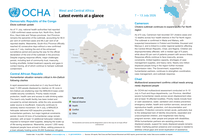
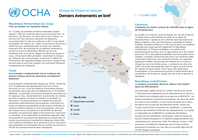
Countries: Democratic Republic of the Congo, Cameroon, Central African Republic, Chad Source: UN Office for the Coordination of Humanitarian Affairs Please refer to the attached Infographic. Democratic Republic of the Congo Ebola outbreak update As of 11 July, national health authorities had reported 1,926 confirmed cases across Ituri, North Kivu, South Kivu, Haut-Uele and Tshopo provinces. Ituri Province remains the epicentre of the outbreak, accounting for 90.9 per cent of confirmed cases and 86.2 per cent of all reported deaths. Meanwhile, South Kivu Province officially reached 42 consecutive days without a new confirmed case on 7 July, marking the end of the enhanced surveillance period and paving the way for the official declaration of the end of the outbreak in the province. Despite ongoing response efforts, major challenges persist, including lack of community trust, insecurity, funding shortfalls, limited treatment capacity and gaps in contact tracing, all of which continue to hamper outbreak containment. Central African Republic Humanitarian situation remains critical in Am-Dafock following clashes A rapid assessment conducted on 2 July found that at least 11,000 people displaced by clashes on 30 June in Am-Dafock are sheltering near the MINUSCA base under volatile security conditions. Priority needs include protection, health care and access to safe drinking water. The town’s only health facility has been looted and occupied by armed elements, while the only accessible water source is insufficient. Insecurity continues to severely restrict movement. On 4 July, a MINUSCA helicopter delivered 425 tarpaulins provided by humanitarian partners, but major logistical constraints persist. Around 24 tons of humanitarian cargo remain stranded, with at least 12 additional helicopter rotations required to transport relief supplies, delaying the scale-up of life-saving assistance. Meanwhile, around 1,000 newly displaced people have arrived in Birao, adding pressure to a town already hosting some 25,000 Sudanese refugees. Cameroon Cholera outbreak continues to expand in the Far North region As of 9 July, Cameroon had recorded 331 cholera cases and 12 deaths across four health districts in the Far North region. The outbreak is confirmed in Mada and Makary, with suspected transmission in Fotokol and Kolofata, Kousseri and Maroua 2, and is linked to a wider regional epidemic affecting the Central African Republic, Chad, and Nigeria. Children are disproportionately affected, with a median age of 9 years, while about 60 per cent of patients present with severe illness. Response efforts continue to face insecurity, access constraints, limited logistics capacity, shortages of case management supplies, and heavy rains. Nearly one million displaced people living in the region further increase transmission risks. The Government, supported by humanitarian partners, continues to strengthen coordination, case management, and outbreak response. Chad Multisectoral assessment confirms critical needs among newly displaced people An OCHA-led multisectoral assessment conducted on 9–10 July in Fouli and Kaya departments, Lac Province, identified severe humanitarian needs across seven displacement sites and at least 16 affected localities. Priority needs include food or cash assistance, water, sanitation and cholera prevention, emergency shelter, health and nutrition services, sexual and reproductive health, protection, civil documentation and education. Protection concerns remain acute, particularly due to the widespread lack of identity documents, separated and unaccompanied children, and heightened risks facing pregnant women, older people and people with disabilities. While humanitarian partners are assisting previously displaced people, support for newly displaced people remains limited. Clarifying partner presence and coverage is needed to address critical gaps and avoid duplication of assistance.

DR Congo: West and Central Africa: Latest Events at a glance (7 – 13 July 2026) Read More »

dr congo: afrique de l’ouest et centrale : derniers événements en bref (7 13 juillet 2026)

DR Congo: Afrique de l’Ouest et centrale : Derniers événements en bref (7 – 13 juillet 2026)

Countries: Democratic Republic of the Congo, Cameroon, Central African Republic, Chad Source: UN Office for the Coordination of Humanitarian Affairs Please refer to the attached Infographic. République Démocratique du Congo Point de situation sur l’épidémie d’Ebola Au 11 juillet, les autorités sanitaires nationales avaient signalé 1 926 cas confirmés dans les provinces de l’Ituri, du Nord-Kivu, du Sud-Kivu, du Haut-Uele et de la Tshopo. La province de l’Ituri demeure l’épicentre de l’épidémie, concentrant 90,9 % des cas confirmés et 86,2 % des décès enregistrés. Par ailleurs, le 7 juillet, la province du Sud-Kivu a atteint 42 jours consécutifs sans nouveau cas confirmé, marquant la fin de la période de surveillance renforcée et ouvrant la voie à la déclaration officielle de la fin de l’épidémie dans la province. Malgré les efforts de riposte en cours, d’importants défis persistent, notamment le manque de confiance des communautés, l’insécurité, le déficit de financement, les capacités limitées de prise en charge et les lacunes dans le suivi des contacts, qui continuent d’entraver l’endiguement de l’épidémie. Tchad Une évaluation multisectorielle met en évidence des besoins critiques parmi les personnes nouvellement déplacées Une évaluation multisectorielle dirigée par OCHA, menée les 9 et 10 juillet dans les départements de Fouli et Kaya (province du Lac), a mis en évidence d’importants besoins humanitaires dans sept sites de déplacement et 16 localités affectées. Les priorités concernent l’assistance alimentaire ou en espèces, l’eau, l’assainissement, la prévention du choléra, les abris d’urgence, la santé, la nutrition, la protection et l’éducation. Les préoccupations en matière de protection demeurent particulièrement préoccupantes, notamment en raison de l’absence généralisée de documents d’identité, du nombre d’enfants séparés ou non accompagnés, ainsi que des risques accrus auxquels sont confrontés les femmes enceintes, les personnes âgées et les personnes vivant avec un handicap. Si les partenaires humanitaires apportent déjà une assistance aux personnes déplacées de longue date, le soutien aux personnes nouvellement déplacées reste limité. Une meilleure clarification de la présence et de la couverture des partenaires est nécessaire afin de combler les lacunes et d’éviter les chevauchements dans l’assistance. Cameroun L’épidémie de choléra continue de s’étendre dans la région de l’Extrême-Nord Au 9 juillet, le Cameroun avait enregistré 331 cas de choléra et 12 décès dans quatre districts de santé de la région de l’Extrême-Nord. L’épidémie est confirmée dans les districts de Mada et Makary, avec une transmission suspectée à Fotokol, Kolofata, Kousseri et Maroua II. Elle s’inscrit dans une épidémie régionale plus large touchant également la République centrafricaine, le Tchad et le Nigéria. Les enfants sont particulièrement touchés, avec un âge médian de 9 ans, tandis qu’environ 60 % des patients présentent une forme grave de la maladie. La riposte continue de faire face à de nombreux défis, notamment l’insécurité, les contraintes d’accès, les capacités logistiques limitées, les pénuries de matériel pour la prise en charge des cas et les fortes pluies. La présence de près d’un million de personnes déplacées dans la région accroît encore les risques de transmission. Avec l’appui des partenaires humanitaires, le Gouvernement poursuit le renforcement de la coordination, de la prise en charge des cas et de la réponse à l’épidémie. République centrafricaine La situation humanitaire demeure critique à Am-Dafock après les affrontements Une évaluation rapide menée le 2 juillet a révélé qu’au moins 11 000 personnes déplacées par les affrontements du 30 juin à Am-Dafock sont réfugiées près de la base de la MINUSCA. Les besoins prioritaires concernent la protection, les soins de santé et l’accès à l’eau potable. Le seul centre de santé de la ville a été pillé et est occupé par des éléments armés, tandis que l’unique source d’eau accessible est insuffisante. L’insécurité continue de restreindre fortement les déplacements. Le 4 juillet, un hélicoptère de la MINUSCA a acheminé 425 bâches fournies par les partenaires humanitaires, mais 24 tonnes de secours restent bloquées et 12 rotations supplémentaires sont nécessaires pour acheminer l’aide. Par ailleurs, environ 1 000 personnes nouvellement déplacées sont arrivées à Birao, accentuant la pression sur une ville qui accueille déjà près de 25 000 réfugiés soudanais.

DR Congo: Afrique de l’Ouest et centrale : Derniers événements en bref (7 – 13 juillet 2026) Read More »

world: food security monitor june 2026

World: Food Security Monitor – June 2026

Country: World Source: AGRA Please refer to the attached file. Global Market Updates In June 2026, global food commodity prices showed mixed trends, with the FAO Food Price Index averaging 130.3 points, down 0.3% from May but 1.7% higher than a year earlier, as declines in cereals, dairy, and sugar prices, driven by strong supplies and improved production prospects, offset gains in vegetable oils and meat. Vegetable oil prices increased due to tighter palm oil supplies and strong biofuel demand, while meat prices reached a record high, supported by higher poultry and bovine meat prices. Similarly, the International Grain Council’s Grains and Oilseeds Index fell 1.4% month-on-month to 224.2 but remained 5.8% above its year-earlier level, reflecting short-term market weakness amid generally stronger annual prices. Rice prices rose the most, both monthly and annually, while barley recorded the largest monthly decline. Wheat and maize prices also eased during the month but stayed above year-ago levels, and soybeans posted the strongest annual increase among oilseeds despite a slight monthly dip. Global fertilizer markets are showing signs of easing after a period of sharp increases, supported by the reopening of the Strait of Hormuz for just short period: lower freight costs and increased urea exports from Iran and China have driven urea prices down despite remaining above year-ago levels. Since the agreement, around 640,000 metric tons of sulphur and 427,000 metric tons of urea have moved through the waterway, a significant increase compared with volumes shipped during the conflict. The resumption of trade has eased concerns over a potential global food price crisis that could have resulted from fertilizer shortages and reduced crop yields. However, analysts caution that recovery remains slow, with fertilizer markets expected to remain tight in the near term despite the gradual improvement in maritime flows. Consequently, significant uncertainty persists due to geopolitical risks evidenced by the collapse of the ceasefire after few days, policy shifts, production costs, and climate-related disruptions. At the end of June, phosphate fertilizer prices remained high, with DAP declining slightly to US$910/MT and MAP edging up to US$954/MT, both posting strong year-on-year gains of over 12%, while potash remained stable at US$494/MT; in contrast, urea fell sharply by 12.5% month-on-month to US$720/MT after peaking in April, though it remained nearly 10% higher than a year earlier. Across Africa, fertilizer affordability remains a major concern, particularly in East and Southern Africa, where countries such as Uganda, Rwanda, Malawi, and Mozambique have recorded steep increases in DAP, NPK, and urea prices, reflecting tight market conditions. In contrast, fertilizer markets in West Africa have been relatively stable, with modest price movements in Nigeria and unchanged prices in Ghana. Overall, the continued price volatility highlights the importance of expanding regional fertilizer production, strengthening intra-African trade, and improving market coordination to enhance resilience and reduce import dependence. A strong El Niño is expected to persist through late 2026 and early 2027, posing significant risks to agriculture, food security, and livelihoods across Africa. Eastern and Southern Africa are likely to experience below-average rainfall, higher temperatures, drought, and water shortages, while parts of the Horn of Africa face an increased risk of flooding and severe storms. Countries most vulnerable include Kenya, Uganda, Ethiopia, Sudan, South Sudan, Somalia, Madagascar, Malawi, Mozambique, Zimbabwe, Nigeria, and Cameroon. The resulting impacts could include reduced crop yields, livestock losses, food price inflation, water stress, pest and disease outbreaks, and increased humanitarian needs, particularly among smallholder farmers and vulnerable communities. As climate shocks intensify, millions of people could face heightened food insecurity, displacement, and livelihood disruptions, underscoring the need for early preparedness and resilience-building measures. Food Commodity Prices Updates Eastern Africa staple food markets generally eased in June 2026 as harvest arrivals improved food availability across the region. Maize prices fell sharply in Ethiopia (-32.9% month-on-month), Tanzania (-13.3%), Uganda (-4.3%), Kenya (-1.0%), and Rwanda (-1.6%), while South Sudan remained under pressure with prices rising by 4.3% month-on-month and 34.9% year-on-year. Rice markets were relatively stable, with declines in Tanzania (-5.4%) and Rwanda (-2.6%) offset by modest increases elsewhere, although Rwanda’s rice prices remained 32.5% above year-earlier levels. Bean prices declined in Kenya (-3.1% to -3.4%) and Rwanda (-3.1%), remained unchanged in Tanzania, but surged by 16.8% in Uganda despite staying 4.2% below last year’s levels. Wheat prices dropped significantly in Ethiopia (-17.3%) following improved Belg harvest supplies, while Kenya remained stable (-0.1%), underscoring broad regional market easing except in South Sudan, where inflationary and supply constraints persisted. Southern Africa’s staple food markets showed mixed trends in June 2026, reflecting uneven supply conditions across the region. Maize prices declined significantly in Malawi (-7.9% month-on-month) and Zambia (-12.5%) due to improved harvests and increased market supplies, while Mozambique recorded a sharp increase (+44.2%), indicating tightening availability and localized market disruptions. Rice prices generally eased, led by Mozambique (-15.7%), with smaller declines in Malawi (-4.8%) and Zambia (-1.8%). Bean prices were mixed, rising in Mozambique (+9.4%) and Malawi (+6.0%) but declining in Zambia (-3.9%), suggesting varying supply dynamics. Overall, annual price trends remained downward, particularly for maize in Zambia (-53.4% year-on-year), supported by above-average regional cereal production, including a record maize harvest in Zambia and strong output in South Africa, although potential El Niño-related risks to the 2026/27 season, warrants close monitoring. West Africa’s staple food markets were generally stable in June 2026, supported by improved food availability and adequate market supplies. Maize prices declined across most countries, with Ghana recording the sharpest annual drop (-57% year-on-year), while Nigeria was the only major market to register a notable monthly increase (+8.3%) due to tightening supplies, high transport costs, and insecurity. Rice prices remained broadly stable, with modest increases in Ghana and Nigeria and declines in Mali, Niger, Burkina Faso, and Togo (-7%). Millet and sorghum prices were generally lower than a year earlier, although localized increases in Niger and Nigeria pointed to emerging supply pressures. Overall, staple food prices remained well below 2025 levels, while favorable growing conditions supported cereal development despite delayed rainfall and persistent insecurity in parts

World: Food Security Monitor – June 2026 Read More »

World: WHO launches climate, health and migration research roadmap for the Western Pacific Region

Country: World Source: World Health Organization The World Health Organization (WHO) launched the Regional research agenda on health, migration and displacement in the WHO Western Pacific Region, with a focus on climate change. The launch brought together experts from WHO, United Nations agencies, academia, civil society organizations and migrant youth networks to discuss how stronger evidence can support more inclusive, resilient and climate-responsive health systems across the region. Addressing an urgent and growing need The Western Pacific Region is home to a large and growing migrant population. Migration and displacement influence the social determinants of health, access to health services and overall well-being, challenged exacerbated by climate change. “Migration, displacement and climate change are increasingly shaping health outcomes across the Western Pacific Region. Yet important evidence gaps continue to limit our ability to design effective and equitable responses,” said Dr Santino Severoni, Head of WHO Health and Migration. Setting research priorities for the next five years The research agenda aims to strengthen evidence-informed policymaking, build regional research capacity and foster greater collaboration across sectors. It was developed through a multistage process involving interdisciplinary and multisectoral stakeholders, involving 108 participants from across the Pacific and Asian subregions to identify the most pressing and actionable research priorities. Research themes identified included inclusive universal health coverage (UHC) and primary health care; the inclusion of migrants and displaced populations in preparedness and response to health emergencies; multisectoral research on the social, economic, environmental and structural determinants of health; and health, migration and displacement in the context of climate change. The agenda also identified two cross-cutting priorities: strengthening evidence on under-researched migrant and displaced populations, and promoting equitable and inclusive research partnerships that support knowledge translation and policy uptake. From evidence generation to implementation Panelists highlighted the need for stronger governance, sustainable financing, migration-sensitive data systems, and closer collaboration among researchers, policymakers and affected communities. Speakers also focused on the need to address migration, displacement and climate change through a broader health equity lens, recognizing the social, economic, environmental and legal factors that shape health outcomes. The panel collectively stressed the need to move beyond documenting challenges, towards identifying, testing and scaling solutions. In addition, they emphasized the importance of implementation research, stronger research-to-policy mechanisms, and meaningful engagement of migrants, displaced populations and young people as partners in shaping research priorities and solutions. A roadmap for action To support implementation, the research agenda includes dedicated roadmaps for the Pacific and Asia subregions, helping countries adapt priorities to their specific contexts while strengthening research capacity, governance and policy uptake. Priority action areas include: strengthening research governance, leadership and stewardship; improving migration-sensitive data systems and knowledge exchange; securing sustainable and flexible funding; translating research into policy and practice; and building research capacity and strengthening intersectoral collaboration, including the integration of indigenous and traditional knowledge. “Climate change, migration, displacement and health can no longer be considered separate issues. Across the Western Pacific Region, their impacts are increasingly visible in communities and health systems. This agenda provides an important foundation for generating the evidence needed to inform equitable and effective responses,” said Dr Sandro Demaio, Director and Head of Office of the WHO Asia-Pacific Centre for Environment and Health. By strengthening research capacity, improving policy uptake and fostering regional collaboration, health systems may become more inclusive, resilient and climate-responsive, supporting UHC, and help ensure that migrant and displaced populations are not left behind.

World: WHO launches climate, health and migration research roadmap for the Western Pacific Region Read More »