Uncategorized

ukraine: winterization needs assessment for the 2026–2027 winter season — sumska and khersonska oblasts

Ukraine: Winterization Needs Assessment for the 2026–2027 Winter Season — Sumska and Khersonska Oblasts

Country: Ukraine Source: Global Emergency Relief Recovery & Reconstruction Please refer to the attached file. GER³’s Winterization Needs Assessment is intended to inform the design and targeting of winterization programming for the 2026–2027 season. It draws on lessons and feedback from the 2025–2026 winter response and identifies the most critical winter-related risks facing communities in 2026–2027. The assessment focuses on hromadas in Sumska and Khersonska oblasts where GER³ maintains a sustained operational presence. Findings from previous post-distribution monitoring exercises were integrated with the needs assessment data to support programme targeting and strategic planning. A mixed-methods approach was used to assess household needs ahead of the 2026–2027 heating season, combining quantitative and qualitative data collection. Fieldwork was conducted by GER³ staff in June and July 2026 in Velykooleksandrivska Hromada, Khersonska Oblast, and Krolevetska Hromada, Sumska Oblast. Primary data were collected through three complementary methods: Structured household surveys gathered quantitative information on heating sources, access to fuel, household preparedness for winter, and priority winter assistance needs. Semi-structured key informant interviews with representatives of starostats provided contextual insights into conditions across the assessed hromadas, the population groups considered most vulnerable, and priority humanitarian needs. Focus group discussions with community members explored the challenges households face in preparing for the heating season and examined the perceived impact of GER³’s previous winterization assistance.

Ukraine: Winterization Needs Assessment for the 2026–2027 Winter Season — Sumska and Khersonska Oblasts Read More »

fiji: dengue in the pacific: multicountry situation (as of 3 august 2026)

Fiji: Dengue in the Pacific: Multicountry Situation (As of 3 August 2026)

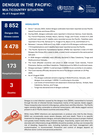
Countries: Fiji, American Samoa, Cook Islands, French Polynesia (France), Guam, Kiribati, Micronesia (Federated States of), Nauru, New Caledonia (France), Niue (New Zealand), Palau, Samoa, Tokelau, Tonga, Tuvalu, Vanuatu, Wallis and Futuna (France) Sources: Pacific Community, World Health Organization Please refer to the attached file. HIGHLIGHTS • Since 1 January 2025, twelve dengue outbreaks have been reported across Pacific Island Countries and Areas (PICs). • During 2025, dengue outbreaks were reported in American Samoa, Cook Islands, Fiji, French Polynesia, Kiribati, Nauru, Samoa, Tonga, and Tuvalu. A total of 21,258 confirmed cases and 21 deaths were recorded across the Pacific. Fatalities were reported in Fiji (n=8), Samoa (n=7), Tonga (n=3), Nauru (n=2), and Kiribati (n=1). • Between 1 January 2026 and 2 July 2026, a total of 4 478 dengue confirmed cases, 173 hospitalisations and 3 deaths have been reported across the Pacific. • The Pacific Syndromic Surveillance System (PSSS) has reported a total of 8 852 Dengue-like Illness (DLI) cases to date, a lower trend compared to the same period last year. • In 2026 dengue outbreaks were officially declared in New Caledonia, Tonga and Shefa province Vanuatu. • The most affected countries and areas in 2026 include: Cook Islands, French Polynesia, Samoa, and New Caledonia. These account for 94% of confirmed cases. • Dengue serotype-1 (DENV-1) and serotype-2 (DENV-2) are currently in circulation. • The Cook Islands officially declared the end of its dengue outbreak on 25 May 2026. • As of 3 August 2026: o The dengue outbreak remains ongoing in Shefa Province, Vanuatu, with dengue virus serotype 1 (DENV-1) continuing to circulate. o Low levels of transmission are observed in American Samoa, Kiribati, New Caledonia, Samoa, and Tonga. o Tonga has declared end of dengue outbreak

Fiji: Dengue in the Pacific: Multicountry Situation (As of 3 August 2026) Read More »

ukraine crisis response situation | june 2026 fact sheet

Ukraine Crisis Response Situation | June 2026 Fact Sheet

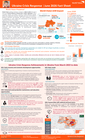
Countries: Ukraine, Georgia, Moldova, Romania Source: World Vision Please refer to the attached file. As of June 2026, World Vision Ukraine Crisis Response has reached 2,413,068 people across Ukraine, Romania, Moldova and Georgia with essential humanitarian support. Children are at the centre of our work: 44% of those reached, 1,061,542 children, have received aid designed to protect their well-being, restore learning, and process trauma. Our response provides holistic support tailored to immediate and long-term needs: Basic Needs: Food assistance, essential household items, and direct cash aid. Child Well-Being: Safe education spaces and dedicated protection services. Mental Health: Psychosocial support (MHPSS) to help families heal from trauma. Livelihoods: Income-generating support to help families regain independence. Where our aid reaches: Ukraine: 1,509,734 people (662,740 children) Moldova: 510,323 people (215,854 children) Romania: 352,027 people (159,871 children) Georgia: 40,984 people (23,077 children) Together with local partners, World Vision remains committed to supporting displaced families and building a safer future for every child affected by this war crisis. Download the full June Factsheet to learn more.

Ukraine Crisis Response Situation | June 2026 Fact Sheet Read More »

oPt: World Breastfeeding Week: Hunger and hardship undermine breastfeeding in Gaza

Country: occupied Palestinian territory Source: Save the Children GAZA, 1 August 2026 – Palestinian mothers in Gaza are struggling to breastfeed their infants more than 10 months since the ‘ceasefire’ agreement was put in place amid Israeli restrictions on humanitarian aid and commercial goods into Gaza, said Save the Children. As World Breastfeeding Week begins, Save the Children and its partners in Gaza are diagnosing high rates of malnutrition in pregnant and breastfeeding women, with rates particularly bad in northern Gaza. Some mothers are resorting to feeding their children water mixed with ground chickpeas or tahini, while others are stopping breastfeeding earlier than they would prefer, due to difficulties and lack of support. At least 13% of women with infants in Gaza suffer from breastfeeding-related difficulties, according to an April 2026 UN Report. Ongoing military activities, food insecurity, displacement, poor living conditions, limited food options, and limited access to healthcare are creating challenges for establishing and supporting breastfeeding. UN data from July 2026 shows that of the nearly 29,000 pregnant and breastfeeding women screened for malnutrition, more than 20,000 – or two of three – require targeted supplementary feeding. Recent figures from the Integrated Food Security Phase Classification (IPC) – the leading hunger monitor – last month said that some 24,600 pregnant and breastfeeding women will require urgent nutrition support until April 2027. Many of these challenges could be addressed through timely, skilled breastfeeding counselling and practical support, but access to trained providers remains severely limited across Gaza. At the same time, chronic funding shortfalls are forcing humanitarian organisations to scale back lifesaving nutrition, maternal health, breastfeeding support and cash assistance at a time when needs continue to grow, said Save the Children. Marwa, 30, a mother of five children, who is currently breastfeeding her baby, said: “There are people who can buy this necessary stuff for infants, but my financial situation is difficult; I can’t afford it. “I used to combine breastfeeding with formula feeding for my children, but now, with the guidance of Save the Children, I am exclusively breastfeeding my three-month-old infant. Save the Children has provided me with nutritional supplements every two weeks to support me in continuing to breastfeed my child.” In emergency situations like Gaza, infants who are not breastfed face significantly higher risks of illness and dehydration, malnutrition, and death. However, many breastfeeding women in Gaza are missing the diverse and nutrient-rich foods essential for their health and wellbeing while feeding their infants. Some report stopping breastfeeding due to concerns about insufficient breastmilk supply, recurrent displacement, and lack of privacy in overcrowded shelters and displacement sites. Mervat, Gaza Health & Nutrition Technical Advisor at Save the Children in the occupied Palestinian territory, Said: “Efforts to ensure equitable and sustainable breastfeeding support are often most severely undermined in fragile settings, where the need is greatest. Breastfeeding is one of the most important life-saving interventions for infants in these contexts, but mothers cannot overcome the barriers created by displacement, and humanitarian crises alone. They need timely, skilled breastfeeding support to protect their own health and to give their infants the best possible chance of survival. “Breastfeeding remains one of the most effective life-saving interventions for infants in Gaza. Breast milk is an infant’s food security. It provides safe nutrition, immune protection, and a reliable source of nourishment when access to food, clean water, health care, and essential supplies is disrupted. Protecting and supporting breastfeeding can mean the difference between life and death for the youngest and most vulnerable children.” Ahmad Alhendawi, Save the Children’s Regional Director for the Middle East, North Africa and Eastern Europe, said: “More than 10 months after the ‘ceasefire’ agreement, no mother should be struggling to feed her child because food, essential services and the support families need to survive remain out of reach. Israeli restrictions on the entry of humanitarian aid and commercial goods, together with constraints on humanitarian organisations delivering assistance, continue to put the lives of pregnant and breastfeeding women and their children at risk. “The Israeli authorities must immediately lift restrictions on the entry and delivery of humanitarian aid and commercial goods, fully open additional crossings into Gaza, including directly to the north, and ensure humanitarian organisations can deliver assistance safely, rapidly and without obstruction. Pregnant and breastfeeding women must have access to nutritious and diverse food, quality healthcare, clean water and sanitation, alongside the specialized nutrition support they need. “At the same time, Member States and donors must urgently increase and sustain funding for humanitarian operations in Gaza to ensure lifesaving nutrition, health and breastfeeding support can reach every mother and child who needs it.” Save the Children has worked in the occupied Palestinian territory since 1953, with a permanent presence since 1973. We work with partners to provide healthcare and nutrition services, quality education, child protection, early childhood development support, cash assistance, and other essential humanitarian aid. ENDS For further enquiries please contact: Ahmad.abuhamad@savethechildren.org We have spokespeople available. Our media out of hours (BST) contact is media@savethechildren.org.uk / +44(0)7831 650409

oPt: World Breastfeeding Week: Hunger and hardship undermine breastfeeding in Gaza Read More »

mozambique: pdm report 2026

Mozambique: PDM Report 2026

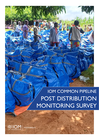
Country: Mozambique Source: International Organization for Migration Please refer to the attached file. A Post Distribution Monitoring (PDM) exercise was conducted following the implementation of Shelter Assistance and Non-Food Item (NFI) distributions across Cabo Delgado and Nampula provinces in Mozambique. The assessment aimed to evaluate the overall effectiveness, relevance, accessibility, and utilization of the assistance provided to vulnerable households affected by displacement, conflict, and humanitarian needs within the targeted operational areas. The PDM exercise covered distributions implemented between 2024 and 2025 under interventions funded by the Bureau for Humanitarian Assistance (BHA). The assessment targeted beneficiary households that had received shelter support and/or NFI assistance, with the objective of gathering direct feedback from affected populations regarding the quality and adequacy of the assistance received. A total of 924 households were reached through the assessment across multiple districts in Cabo Delgado and Nampula provinces. The majority of respondents were located in Cabo Delgado Province, reflecting the concentration of humanitarian interventions and displacement-affected populations within northern Mozambique due to ongoing conflict and recurring displacement dynamics. Districts such as Metuge, Chiure, and Mecufi recorded the highest number of surveyed households, corresponding with areas hosting significant numbers of internally displaced persons (IDPs) and vulnerable host communities. The assessment focused on understanding beneficiary experiences throughout the distribution process, including accessibility of assistance, timeliness of distributions, utilization of distributed items, and levels of satisfaction among recipient households. In addition, the exercise assessed whether the assistance provided aligned with the priority needs of affected populations and contributed to improving living conditions and household well-being. The PDM also served as an important accountability mechanism by enabling beneficiaries to provide feedback on the assistance received, raise concerns related to the distribution process, and identify operational gaps requiring improvement. Information gathered through the exercise will support evidence-based decision-making, strengthen accountability to affected populations (AAP), and contribute to improving the design and implementation of future Shelter and NFI interventions. The findings presented in this report provide valuable insights into the effectiveness of BHA-funded humanitarian assistance and highlight key trends, challenges, and recommendations to enhance future programming in displacement-affected areas of Mozambique.

Mozambique: PDM Report 2026 Read More »

mozambique: shelter cluster monthly operational dashboard january february 2026

Mozambique: Shelter Cluster – Monthly Operational Dashboard January – February 2026

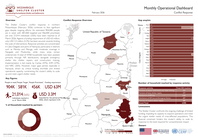
Country: Mozambique Source: Shelter Cluster Please refer to the attached file. The Shelter Cluster’s conflict response in northern Mozambique (February 2026) continues to face significant gaps despite ongoing efforts. An estimated 904,000 people are in need, with 581,000 targeted and 456,000 prioritized, yet only 21,014 individuals (3.6%) have been reached as of March 2026. Against a funding requirement of USD 63 million, only USD 3.3 million (5.2%) has been secured, severely limiting the scale of interventions. Response activities are concentrated in Cabo Delgado and parts of Nampula, particularly in districts such as Memba and Metuge, with moderate coverage in Nangade and Muidumbe, while many areas remain underserved. A total of 4,958 households have been assisted, primarily through NFI distributions, alongside emergency shelter kits, shelter repairs, and construction training. Implementation is led mainly by Caritas (47%), IOM (27%), and NRC (26%). However, major gaps persist, especially in Nampula, driven by critical funding shortfalls and limited operational capacity, constraining the cluster’s ability to scale up and meet urgent shelter needs.

Mozambique: Shelter Cluster – Monthly Operational Dashboard January – February 2026 Read More »

south sudan hfo health bulletin for june 2026

South Sudan HFO Health bulletin for June-2026

Country: South Sudan Source: Health Cluster Please refer to the attached file. Healthcare Foundation Organization (HFO) is a South Sudanese humanitarian health organization providing integrated health, nutrition, WASH and protection services to crisis-affected communities. According to its June 2026 bulletin, HFO supports primary healthcare facilities, mobile clinics and outreach services across several counties in Jonglei, Upper Nile and Warrap states, including Fangak, Akobo, Nyirol, Ayod, Canal/Pigi, Panyikang, Nasir, Baliet and Gogrial East. Its activities include outpatient consultations, maternal and newborn healthcare, antenatal care, skilled deliveries, routine immunization, nutrition screening and treatment of common illnesses. HFO reports implementing programmes with support from partners and funding mechanisms including ACF-USA, ECHO, the South Sudan Humanitarian Fund, CERF, IRC, Gavi and Global Affairs Canada

South Sudan HFO Health bulletin for June-2026 Read More »

sudan wash cluster mid year report 2026.

Sudan WASH Cluster Mid-Year Report 2026.

Country: Sudan Source: UN Children’s Fund Please refer to the attached file. The Sudan WASH Cluster has published its 2026 Mid-Year Report, highlighting both the achievements and challenges of the humanitarian WASH response during the first half of 2026. Despite ongoing conflict, displacement, disease outbreaks, and access constraints, partners continued to deliver life-saving water, sanitation, and hygiene services to millions of vulnerable people across Sudan. The report showcases key response achievements, progress in cholera preparedness and response, the operationalization of the Sudan WASH Core Pipeline, and a series of partner case studies demonstrating innovative approaches to improving water supply, water quality, sanitation, and public health outcomes across the country. At the same time, the report highlights the scale of unmet needs and the urgent need for additional resources. With only US$70 million received against requirements of US$375.9 million, the sector faces a funding gap of more than US$306 million, threatening the continuity of essential WASH services and public health interventions.

Sudan WASH Cluster Mid-Year Report 2026. Read More »

south sudan humanitarian update (as of 31 july 2026)

South Sudan Humanitarian Update (as of 31 July 2026)

Country: South Sudan Source: UN Office for the Coordination of Humanitarian Affairs Please refer to the attached file. HIGHLIGHTS Joint assessment finds worsening food insecurity in Lafon County, Eastern Equatoria State. An estimated 9,100 people displaced by fighting along the South Sudan–Uganda border in Central Equatoria State; an Ebola screening point disrupted. Two aid workers abducted on the Yei–Kaya Road, highlighting growing risks facing humanitarian personnel. Oral Cholera Vaccination campaign launched in hotspot counties of Unity State. Logistics Cluster reports urgent funding is needed to sustain air operations beyond November 2026.

South Sudan Humanitarian Update (as of 31 July 2026) Read More »