
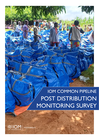

Please refer to the attached file.
A Post Distribution Monitoring (PDM) exercise was conducted following the implementation of Shelter Assistance and Non-Food Item (NFI) distributions across Cabo Delgado and Nampula provinces in Mozambique. The assessment aimed to evaluate the overall effectiveness, relevance, accessibility, and utilization of the assistance provided to vulnerable households affected by displacement, conflict, and humanitarian needs within the targeted operational areas.
The PDM exercise covered distributions implemented between 2024 and 2025 under interventions funded by the Bureau for Humanitarian Assistance (BHA). The assessment targeted beneficiary households that had received shelter support and/or NFI assistance, with the objective of gathering direct feedback from affected populations regarding the quality and adequacy of the assistance received.
A total of 924 households were reached through the assessment across multiple districts in Cabo Delgado and Nampula provinces. The majority of respondents were located in Cabo Delgado Province, reflecting the concentration of humanitarian interventions and displacement-affected populations within northern Mozambique due to ongoing conflict and recurring displacement dynamics. Districts such as Metuge, Chiure, and Mecufi recorded the highest number of surveyed households, corresponding with areas hosting significant numbers of internally displaced persons (IDPs) and vulnerable host communities.
The assessment focused on understanding beneficiary experiences throughout the distribution process, including accessibility of assistance, timeliness of distributions, utilization of distributed items, and levels of satisfaction among recipient households. In addition, the exercise assessed whether the assistance provided aligned with the priority needs of affected populations and contributed to improving living conditions and household well-being.
The PDM also served as an important accountability mechanism by enabling beneficiaries to provide feedback on the assistance received, raise concerns related to the distribution process, and identify operational gaps requiring improvement. Information gathered through the exercise will support evidence-based decision-making, strengthen accountability to affected populations (AAP), and contribute to improving the design and implementation of future Shelter and NFI interventions.
The findings presented in this report provide valuable insights into the effectiveness of BHA-funded humanitarian assistance and highlight key trends, challenges, and recommendations to enhance future programming in displacement-affected areas of Mozambique.