Uncategorized

venezuela (bolivarian republic of): earthquake response situation report #22 (11 to 13 august 2026)

Venezuela (Bolivarian Republic of): Earthquake Response Situation Report #22 (11 to 13 August 2026)

Country: Venezuela (Bolivarian Republic of) Source: International Organization for Migration Please refer to the attached file. Situation Report No. 22 provides an update on IOM’s response to the 24 June earthquakes in the Bolivarian Republic of Venezuela, covering the period from 11 to 13 August 2026. Highlights IOM coordinated the distribution of approximately 1,700 non-food item (NFI) kits in Mare Abajo and surrounding communities, expanding assistance to households affected by the earthquakes. IOM’s Displacement Tracking Matrix (DTM) assessed 110 community settlements, identifying 4,733 households and 12,127 individuals in La Guaira, Capital District, Carabobo and Miranda to inform the response beyond temporary camps. IOM completed the operational closure of Playa Grande, supporting the relocation of families and finalizing the removal of humanitarian infrastructure from the temporary camp. IOM Activities IOM continued the co-management of the temporary camps at José María Vargas Sports Complex, Campo de Golf, Mare Abajo and César Nieves, three of them jointly with the Norwegian Refugee Council (NRC), ensuring service coordination, population registration and needs monitoring. In Mare Abajo, IOM coordinated the distribution of approximately 1,700 non-food item kits, following registration activities, household verification and community mobilization efforts to facilitate access to assistance. IOM strengthened information management mechanisms through updated camp records and the rapid assessment of 110 community settlements, identifying 4,733 households and 12,127 individuals across four affected states. IOM also advanced preparations for a household survey to strengthen needs analysis and assistance planning. In the health sector, IOM and its partner Ven Da Tu Mano continued providing mobile health and mental health services in temporary camps. During the reporting period, teams conducted 445 consultations at José María Vargas Sports Complex and 230 consultations in César Nieves, maintaining follow-up for chronic diseases and reinforcing surveillance of diarrhoeal syndromes, particularly among children. Protection activities included coordination to facilitate access to specialized services, strengthen referral mechanisms and improve coordination among humanitarian actors. In César Nieves, IOM promoted the establishment of a technical protection coordination space to strengthen service coordination and the follow-up of individuals with specific protection needs. IOM also facilitated inter-agency coordination spaces to strengthen distribution planning, update available services and improve referral mechanisms and needs monitoring in temporary camps. In addition, IOM completed the operational closure of Playa Grande, supporting family relocations and the progressive withdrawal of humanitarian infrastructure. IOM Planned Response IOM plans to: Continue coordinating planned non-food item distributions in Mare Abajo and surrounding communities, preventing duplication and ensuring appropriate targeting of assistance. Follow up on infrastructure gaps identified in Mare Abajo, particularly shower drainage and tent anchoring systems. Maintain surveillance and medical follow-up of diarrhoeal syndromes, particularly among children and adolescents, and support continuity of treatment for hypertension, diabetes and other chronic diseases. Strengthen referral pathways for mental health, protection and other specialized services. Implement the household survey in IOM-managed temporary camps and expand needs monitoring and population movement tracking in community settlements and affected areas. Maintain updated information on available services, operating hours and referral mechanisms in temporary camps. Consolidate sector coordination mechanisms and strengthen systems for reporting and tracking security incidents and protection risks.
Venezuela (Bolivarian Republic of): Earthquake Response Situation Report #22 (11 to 13 August 2026) Read More »

colombia: latinoamérica y el caribe resumen de situación semanal al 14 de agosto 2026

Colombia: Latinoamérica y El Caribe Resumen de Situación Semanal al 14 de agosto 2026

Countries: Colombia, Guatemala, Haiti, Mexico, Peru Source: UN Office for the Coordination of Humanitarian Affairs Please refer to the attached Infographic. CIFRAS CLAVE 47,4K casos confirmados de sarampión en la región, más de tres veces la cifra total de 2025 53,8K personas afectadas por un terremoto de magnitud 7,4 en Colombia 266 personas fallecidas tras un terremoto de magnitud 7,4 en Colombia COLOMBIA: TERREMOTO Colombia ha declarado el estado de emergencia nacional tras un terremoto de magnitud 7,4 que sacudió cerca de San José del Palmar, en el departamento de Chocó, a las 7:34 a.m. hora local del 10 de agosto. El terremoto fue el más fuerte registrado en Colombia este siglo y se sintió en los 32 departamentos del país, así como en países vecinos. Al 13 de agosto, las autoridades informan de al menos 53.816 personas afectadas o desplazadas, 266 personas fallecidas, 3.472 heridas y 496 personas desaparecidas en 401 municipios. Los daños generalizados en viviendas, centros de salud, escuelas, carreteras, puentes y otras infraestructuras críticas han interrumpido servicios esenciales y dificultado el acceso a algunas zonas afectadas. Los socios humanitarios están realizando evaluaciones rápidas y ampliando la asistencia, con necesidades prioritarias que incluyen albergue, atención de salud, agua potable, asistencia alimentaria, servicios de protección y apoyo psicosocial, especialmente en Chocó, Valle del Cauca, Risaralda y Caldas. Apoya aquí al Fondo Humanitario de Colombia. Para más información, visita Respuesta de ReliefWeb. REGIONAL: SARAMPIÓN La OPS insta a los países a reforzar las medidas de vacunación, vigilancia y control de brotes, ante el aumento de los brotes de sarampión en la región. A la semana epidemiológica 28, la región ha registrado 47.459 casos confirmados de sarampión y 44 muertes, el mayor número de casos reportados en las América en 22 años y más de tres veces el total reportado durante todo 2025. Guatemala, México, Estados Unidos y Perú representan el 95% de los casos confirmados, con una aceleración significativa en la transmisión en las últimas ocho semanas. Los brotes en curso, las brechas de inmunidad y el aumento de la movilidad de la población siguen elevando el riesgo para la salud pública regional. CARIBE: HURACANES EN EL ATLÁNTICO Los meteorólogos están monitoreando dos ondas tropicales en el Atlántico que podrían convertirse en las próximas tormentas con nombre de la temporada. Invest 92, situada a unas 1.000 millas al este de las Antillas Menores, tiene un 80% de probabilidad de desarrollo en los próximos siete días. Por su parte, Invest 94, cerca de las islas de Cabo Verde, tiene un 30% de probabilidad de desarrollo en 48 horas y un 50% en siete días, con condiciones medioambientales que se prevé que favorezcan un fortalecimiento gradual. Aunque la temporada de huracanes en el Atlántico se ha mantenido más lenta de lo habitual hasta ahora, con solo tres tormentas nombradas registradas a la fecha, estos sistemas podrían traer fuertes lluvias, ráfagas de viento y mar agitado a partes del Caribe en los próximos días. Los socios humanitarios continúan coordinándose con la Agencia Caribeña para el Manejo de Emergencias por Desastres (CDEMA) y supervisando los desarrollos. HAITÍ: VIOLENCIA Y DESPLAZAMIENTO La violencia armada sigue impulsando las necesidades humanitarias en Haití. El 3 de agosto, la violencia en los municipios de Saint-Marc (Artibonite) y Arcahaie (Ouest) desplazó aproximadamente a 872 personas (162 hogares). La mayoría (85%) buscó refugio en dos nuevos centros de desplazamiento en Fonds Baptiste, mientras que el resto se aloja con familias de acogida. En Cité Soleil, Puerto Príncipe, nuevos enfrentamientos el 7 de agosto obligaron a Médicos Sin Fronteras (MSF) a suspender sus operaciones por segunda vez en menos de dos meses en el hospital de maternidad Isaïe Jeanty, una de las pocas instalaciones que ofrecen servicios de salud sexual y reproductiva en la zona. En menos de 24 horas, las instalaciones de MSF en Cité Soleil y Tabarre atendieron a 27 pacientes con heridas de bala. MSF y socios humanitarios siguen haciendo un llamado a todas las partes para que respeten las instalaciones de salud y al personal humanitario y garanticen el acceso seguro para la población.

Colombia: Latinoamérica y El Caribe Resumen de Situación Semanal al 14 de agosto 2026 Read More »

dr congo: analyse interagences des risques communautaires eas et aap dans le territoire de beni, nord kivu juillet 2026

DR Congo: Analyse interagences des risques communautaires EAS et AAP dans le territoire de Beni, Nord-Kivu – Juillet 2026

Country: Democratic Republic of the Congo Sources: PSEA Network DRC, UN Country Team in DR Congo Please refer to the attached file. Analyse interagences des risques communautaires EAS et AAP dans le territoire de Beni, Nord-Kivu – Juillet 2026. Suite à la réponse à la 17ème épidémie de la Maladie à Virus Ebola (MVE), cette analyse de risque est conduite en partenariat avec IMC, UNFPA, OMS, ADRA, SOFEPADI, ACOPE, Heal Africa, BCZ, ACMI, PPSSP, APROFEC.

DR Congo: Analyse interagences des risques communautaires EAS et AAP dans le territoire de Beni, Nord-Kivu – Juillet 2026 Read More »

Five years since the Taliban took control of Afghanistan, humanitarian need is at a record high as the response collapses | The IRC

Country: Afghanistan Source: International Rescue Committee The number of people in need has risen to 21.9 million, nearly half the population, and 3.5 million more than in 2021 Afghanistan is entering its sixth consecutive year of drought, with 4.7 million people at emergency levels of food insecurity — one step away from famine Donors need commit humanitarian funding that is flexible, multi-year and supports critical areas like nutrition and maternal health services reaching women and children in the hardest-hit provinces Kabul, Afghanistan, August 14, 2026 — Five years since the Taliban took control of Afghanistan, nearly half the population is now living in crisis. Yet as needs rise exponentially, the International Rescue Committee (IRC) warns that sweeping global aid cuts have forced it to scale back nutrition treatment and maternal health services in communities where few other options exist. An epicenter of a new world disorder, Afghanistan has faced one of the worst prolonged crises of the 20th and 21st centuries. The triple threat of aid cuts, the climate crisis, and a mass return of 3.2 million Afghans from Iran and Pakistan in 2025, have left public services on the brink of collapse, leaving families with nowhere to go. “At the exact moment Afghanistan’s hunger crisis hit its worst point in recorded history, the world pulled back the funding needed to respond,” said Bostan Fahim, IRC Afghanistan Programme Director. “The IRC has worked in Afghanistan for nearly four decades, and we have never been less equipped to meet the need in front of us.” The IRC began providing maternal health and nutrition services in Afghanistan in 2022, starting from no supported clinics and building a network that now reaches tens of thousands of people a year. Between 2022 and 2025, IRC teams provided first antenatal care to more than 53,000 women and treated over 8,000 children for the most severe form of malnutrition. That progress is now unravelling. The number of health facilities the IRC runs has fallen from a peak of 46 in 2023 to just 16 today — a collapse of nearly two-thirds, with the sharpest drop following funding cuts in 2025. First antenatal visits, often a woman’s only contact with a health worker during pregnancy, have dropped 24% from their peak. IRC frontline staff report a rising demand for these services even amid a near-total collapse in funding. Afghanistan’s 2026 humanitarian appeal is only a quarter funded, against a total need of $1.71 billion. The consequences are measurable in the IRC’s own work: in a single year, the number of people its teams could reach fell by roughly two-thirds as funding dried up. The IRC is calling on donor governments to reverse the cuts driving this crisis deeper, and commit to new, flexible, multi-year funding for the nutrition, maternal health and outreach services that reach malnourished children and pregnant women in the provinces where need is greatest, and where few other options remain. The IRC has worked in Afghanistan since 1988 and operates across 10 provinces, delivering health, nutrition, education, clean water and economic support. Its integrated health and nutrition programme in Herat and Badghis screens and treats malnourished children and supports pregnant and breastfeeding women through static facilities and mobile teams. Since October 2025, IRC teams have reached 450,000 people.

Five years since the Taliban took control of Afghanistan, humanitarian need is at a record high as the response collapses | The IRC Read More »

dr congo: analyse interagences des risques communautaires eas et aap dans la zone de santé de karisimbi juillet 2026

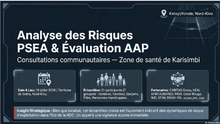
DR Congo: Analyse interagences des risques communautaires EAS et AAP dans la zone de santé de Karisimbi – Juillet 2026

Country: Democratic Republic of the Congo Sources: PSEA Network DRC, UN Country Team in DR Congo Please refer to the attached file. Analyse interagences des risques communautaires EAS et AAP dans la province du Nord-Kivu, territoire de Goma, zone de santé de Karisimbi / Katoyi – Juillet 2026. Suite à la réponse à la 17ème épidémie de la Maladie à Virus Ebola (MVE), cette analyse de risque est conduite en partenariat avec UNFPA, OIM, IMC, la DPS, Heal Africa, Caritas Goma, Africa/Remed, PAMI, Croix-Rouge, EFIM, DIVAH-SN, ALIMA.

DR Congo: Analyse interagences des risques communautaires EAS et AAP dans la zone de santé de Karisimbi – Juillet 2026 Read More »

sudan: eastern africa: el niño preparedness alert august 2026

Sudan: Eastern Africa: El Niño Preparedness Alert – August 2026

Countries: Sudan, Burundi, Djibouti, Eritrea, Ethiopia, Kenya, Rwanda, Somalia, South Sudan, Uganda, United Republic of Tanzania Source: UN Office for the Coordination of Humanitarian Affairs Please refer to the attached Infographic. El Niño is intensifying, with a very strong event expected during October–December (OND) rainy season, potentially amplified by a positive Indian Ocean Dipole. Eastern Africa faces drought and flooding: Current dry conditions are affecting several countries, while severe flooding risks are expected to increase from October. Vulnerabilities are already extremely high: 48.5 million people need humanitarian assistance, more than 40 million face acute food insecurity and 8.3 million children are acutely malnourished. Impacts will extend beyond food security, increasing disease outbreaks, displacement, protection risks and pressure on already stretched health, and water, sanitation and hygiene systems. Urgent anticipatory action and flexible financing are critical to pre-position assistance, protect vulnerable communities and reduce humanitarian impacts and response costs before the OND season.

Sudan: Eastern Africa: El Niño Preparedness Alert – August 2026 Read More »

ukraine situation moldova : household economic capacity assessment (heca) 2026 situation overview

Ukraine Situation – Moldova : Household Economic Capacity Assessment (HECA) 2026 Situation Overview

Countries: Moldova, Ukraine Sources: REACH Initiative, UN High Commissioner for Refugees Please refer to the attached file. CONTEXT & RATIONALE Over four years have elapsed since the escalation of hostilities in Ukraine in February 2022, resulting in prolonged displacement and a sustained humanitarian crisis. As of 27 April 2026, 45,868 Ukrainian refugees in Moldova had applied for the temporary protection extension. This figure reflects only those who applied for the extension of Temporary Protection and does not represent the full refugee population in Moldova. Displacement in Moldova has remained protracted, with the response gradually shifting from emergency assistance to longer-term support focused on refugee self-reliance and integration2. Previous assessments3 have highlighted persistent economic vulnerabilities among Ukrainian refugee households, including limited income, low savings, and reliance on external support, with recent reductions in cash assistance4 potentially further affecting resilience. Against this background, the Household Economic Capacity Assessment provides updated household-level evidence on income, expenditure, coping strategies, and economic capacity among refugee households registered on the Temporary Protection extension platform.5 The findings will inform cash assistance design, social protection targeting, and livelihood and integration programming. It uses a probability sampling approach and is representative of refugees who signed up for the temporary protection extension between 1 and 16 February 2026, rather than the entire refugee population in Moldova.

Ukraine Situation – Moldova : Household Economic Capacity Assessment (HECA) 2026 Situation Overview Read More »

mr. tom fletcher, under secretary general for humanitarian affairs and emergency relief coordinator – briefing to the security council on the humanitarian situation in yemen, 13 august 2026

Mr. Tom Fletcher, Under-Secretary-General for Humanitarian Affairs and Emergency Relief Coordinator – Briefing to the Security Council on the humanitarian situation in Yemen, 13 August 2026

Country: Yemen Source: UN Office for the Coordination of Humanitarian Affairs Please refer to the attached file. As delivered Madam President, I thank the Special Envoy for his sobering briefing and his tireless efforts to advance a political path for Yemen. This is OCHA’s sixth briefing to this Council this year on Yemen, and I wish I could report a positive shift, but the trajectory of the humanitarian crisis, I’m afraid, remains unchanged. Hunger is rising, health services are crumbling, and families have exhausted their last coping mechanisms. And now, the convergence of climate shocks and renewed regional tension threatens to deepen this catastrophe. More than a decade into this conflict, millions of Yemenis face impossible, daily choices: food or medicine, education or work, survival or displacement. And I’m afraid the toll on women and girls is particularly alarming. Nearly 11 million women and girls require humanitarian support, and that includes 5.5 million women of reproductive age and over 750,000 pregnant women. Essential care for them is out of reach: four out of five women lack access to life-saving reproductive health services. With only one in five health facilities providing maternal care, the cost is lethal: three women die every day from preventable, pregnancy-related complications. The health system is at a breaking point. Facilities lack basic supplies and personnel. Disease outbreaks are surging. In Marib alone, authorities have declared a health emergency due to a measles outbreak – the second-highest case count globally this year. Madam President, Food insecurity is worsening. Over half the population is experiencing acute food insecurity. Six million people – the highest number globally – face “Emergency” levels of deprivation, bordering on famine. In June, over 60 per cent of households reported inadequate food consumption, a trend affecting every single governorate. While these statistics are staggering, they must not numb us. This unacceptable severity cannot become the new norm. The drivers are clear: regional tensions inflating prices, economic decline eroding livelihoods, and a critical shortfall in humanitarian funding. And meanwhile, I’m afraid, a new threat is emerging. El Niño conditions forecast a 40 per cent reduction in rainfall across key agricultural areas. This will devastate crops, water availability and rural livelihoods, compounding the impacts of extreme heat and water stress in a country already one of the most vulnerable to climate change. Madam President, Access remains a significant hurdle. As you’ve heard, 73 UN colleagues remain detained by the Houthi de facto authorities, along with workers and former workers from NGOs, civil society and diplomatic missions. Their families live with uncertainty every day. Their release is more than an institutional demand, it is an appeal to our shared humanity: let them return safely to their families and let us create the environment in which support and services can be accessed by those most in need – safely, independently, impartially. Between July 2025 and July this year, over 200 humanitarian access incidents were recorded across the country. Interference, violence against staff, movement restrictions continue to impede, delay, constrain relief operations. Ahead of the General Assembly, I will be laying out critical access asks for crises around the world and the specific areas and people we can reach if we remove these barriers. Madam President, We know aid that saves lives. In 2025, we reached an average of 5.3 million people monthly in Yemen. However, funding shortages – fuelled by uncertainty and a lack of confidence – have now crippled our operations. With the humanitarian appeal barely 20 per cent funded, the calculation is simple: when funding drops, rations are cut, clinics close and protection services disappear. So I thank our largest donors – the European Commission, Saudi Arabia, the UK, Germany, and South Korea – and those supporting the Yemen Humanitarian Fund and the Central Emergency Response Fund (CERF). I have just allocated $10 million in initial CERF funding for food security, but this is just a stopgap, it’s not a solution. So my three asks of you: Firstly, to donors: Provide flexible, predictable funding now. We have the capacity to deliver; we need the resources to bridge the chasm between desperate need and the current support we are getting. Secondly, to all parties: Protect civilians and ensure principled humanitarian action. Specifically, I call again for the immediate, safe release of the 73 UN colleagues, as well as the NGO and civil society workers, currently detained by the Houthi de facto authorities. Their families – and our shared humanity – demand their return. Third and finally, to this Council: Please maintain your focus on Yemen. Your unity and advocacy are essential to prevent further suffering and to secure space for genuine progress. The people of Yemen have shown extraordinary resilience, but resilience can never be an excuse for the world to demand that they simply endure more. They deserve – and we must ensure they get – dignity, opportunity and hope. Thank you.

Mr. Tom Fletcher, Under-Secretary-General for Humanitarian Affairs and Emergency Relief Coordinator – Briefing to the Security Council on the humanitarian situation in Yemen, 13 August 2026 Read More »

terremoto en colombia: panorama rápido de la situación

Terremoto en Colombia: Panorama Rápido de la Situación

Country: Colombia Source: Data Friendly Space Please refer to the attached file. Resumen Ejecutivo En la mañana del 10 de agosto de 2026, un terremoto de magnitud 7,4 sacudió el occidente de Colombia, con epicentro 5 km al sur de San José del Palmar, Chocó, a una profundidad intermedia de aproximadamente 110 km. El sismo se sintió en nueve departamentos: Valle del Cauca, Risaralda, Caldas, Quindío, Chocó, Tolima, Antioquia, Cauca y Cundinamarca, así como en Ecuador y Panamá. El USGS emitió una alerta PAGER naranja, y fuentes colombianas e internacionales lo describen como el terremoto más fuerte que ha afectado al país en al menos una década. Al 13 de agosto, la UNGRD reporta 239 muertos, 3.755 heridos y 496 desaparecidos a nivel nacional, y Asocapitales reporta 241 muertos, de los cuales 172 en ciudades capitales. Las muertes aumentaron cerca de un tercio y los heridos casi la mitad en las 20 horas previas a este corte, por lo que todas las cifras siguen siendo un límite inferior. Medicina Legal ha recibido 202 cuerpos y ha identificado 121, acercándose al balance oficial de 180 el día anterior. El balance municipal de Cali fue revisado a la baja de 95 a 74, la primera revisión a la baja de esta emergencia y consistente con una depuración de registros duplicados más que con un error. Las cifras departamentales y nacionales ya son consistentes entre sí, por lo que el rezago de consolidación reportado anteriormente se ha cerrado. No existe una cifra nacional de desplazamiento, aunque la UNGRD registra 24.324 familias, o 49.214 personas, afectadas, y los reportes describen que un número elevado de personas pernocta a la intemperie. El balance nacional de daños asciende ahora a 45.457 viviendas averiadas, 9.215 destruidas y 140 edificaciones colapsadas, un orden de magnitud por encima del balance anterior y ya no inferior a los conteos subnacionales. Siete hospitales han sido evacuados a nivel nacional, 188 instituciones de salud están registradas como afectadas y al menos ocho jurisdicciones se encuentran en alerta roja hospitalaria. Las necesidades prioritarias se concentran en búsqueda y rescate y retirada de escombros en Cali, Pereira, Manizales y Quibdó, con una ventana de supervivencia de aproximadamente 72 horas que se cierra alrededor del mediodía del 13 de agosto, seis horas después de este corte, y 279 personas aún en búsqueda en ciudades capitales. La atención médica de urgencia tiene como prioridades: insumos de trauma y cirugía, hemoderivados y ampliación de la capacidad hospitalaria. Las ciudades capitales han publicado ya una lista priorizada que abarca equipos y personal de rescate, comunicaciones, colchonetas, cobijas, carpas, plantas eléctricas, agua potable, alimentos, kits de higiene e insumos de protección. Se requieren alojamiento y artículos no alimentarios (ANA) frente a 9.215 viviendas destruidas, sin que exista una cifra consolidada de capacidad, así como apoyo en agua, saneamiento e higiene (WASH) en Buenaventura, que enfrenta una crisis de agua preexistente, y en los municipios de Chocó que son Zonas No Interconectadas (ZNI). Las necesidades de protección incluyen la búsqueda y localización de familiares y medidas de protección para mujeres, niñas y niños y población desplazada o migrante. El Gobierno de Colombia ha emitido una declaratoria de situación de desastre nacional, con la OPS liderando la respuesta del sector salud y con la Cruz Roja Colombiana, la Defensa Civil y unidades militares realizando operaciones de búsqueda y rescate. La FICR ha lanzado un Llamamiento de Emergencia. Los ofrecimientos incluyen US$15,5 millones de los Estados Unidos, €2 millones de la Unión Europea y un equipo ecuatoriano de búsqueda y rescate, aunque a la hora de este corte no se había emitido ningún llamamiento urgente (flash appeal), asignación del CERF, evaluación conjunta de necesidades ni mapeo de quién trabaja dónde.

Terremoto en Colombia: Panorama Rápido de la Situación Read More »