![ukraine cash working group, 29 july 2026 [meeting minutes] [en/uk]](https://blhlfoundation.org/wp-content/uploads/2026/08/c1c2dc98-4168-4391-b729-1a83425a99d5-9iM4mh.png "Ukraine Cash Working Group, 29 July 2026 [Meeting Minutes] [EN/UK]")
Ukraine Cash Working Group, 29 July 2026 [Meeting Minutes] [EN/UK]
Country: Ukraine Source: Ukraine Cash Working Group Please refer to the attached file.
Ukraine Cash Working Group, 29 July 2026 [Meeting Minutes] [EN/UK] Read More »

Country: Ukraine Source: Ukraine Cash Working Group Please refer to the attached file.
Ukraine Cash Working Group, 29 July 2026 [Meeting Minutes] [EN/UK] Read More »
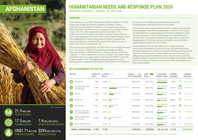
Country: Afghanistan Source: UN Office for the Coordination of Humanitarian Affairs Please refer to the attached Infographic.
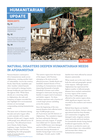
Country: Afghanistan Source: UN Office for the Coordination of Humanitarian Affairs Please refer to the attached file. NATURAL DISASTERS DEEPEN HUMANITARIAN NEEDS IN AFGHANISTAN Natural disasters continued to drive humanitarian needs across Afghanistan, creating another layer of vulnerability. Across the country, floods, flash floods, landslides and other weather-related hazards have continued to damage homes, disrupt livelihoods and claim lives throughout 2026. While these shocks are a recurring reality in Afghanistan, the scale and frequency of impact recorded this year highlight how environmental stresses are increasingly compounding existing humanitarian needs. The latest wave of disasters during late July and early August offers a stark reminder of this reality. Between 20 July and 3 August, nearly 5,000 people were affected across 10 provinces. The affected provinces were Ghazni, Kabul, Kapisa, Laghman, Logar, Nuristan, Paktya, Paktika, Panjsher and Parwan, highlighting the wide geographic reach of recent disasters. The eastern region bore the brunt of the impact, with Nuristan emerging as the most severely affected province. Deadly floods and landslides claimed dozens of lives, including of a humanitarian worker, impacting thousands of people. Hundreds of homes were either damaged or destroyed, leaving many families in urgent need of assistance and shelter support. Yet these incidents represent only a fraction of a much larger picture unfolding across the country. Since the beginning of the year, natural disasters have affected more than 92,000 people across all 34 provinces and 202 districts of Afghanistan. The cumulative impact has been substantial. Between January and early August, 97 people were killed and 331 injured, while nearly 10,000 houses were damaged and more than 2,100 houses were destroyed, leaving thousands of families facing longer-term recovery challenges. Overall, nearly 13,000 families have been affected by natural disasters nationwide. What stands out in this year’s data is both the scale and geographic spread of the impacts. Although eastern Afghanistan has experienced the highest number of affected people, disasters have reached communities in every region of the country. More than 51,000 people were affected in the eastern region alone, while significant impacts were also recorded in the southern and western regions. Behind these figures are families who have lost shelter, farmers whose agricultural land has been flooded, and communities struggling with damaged roads, irrigation systems, water networks and local markets. For households already facing limited livelihood opportunities, the loss of a home or productive assets can push them deeper into vulnerability and increase their reliance on humanitarian assistance. Flooding continues to be the defining hazard of 2026. Nearly 88,000 people affected by natural disasters this year were impacted by floods and flash floods, making them by far the largest driver of disaster related humanitarian needs. Seasonal rainfall, rapid snowmelt, environmental degradation and inadequate infrastructure continue to amplify risks, particularly in rural and mountainous areas where communities often have limited capacity to recover. The consequences are especially severe in provinces where communities have limited coping capacity and where access limitations can complicate assessments and response efforts. In places such as Nuristan, recurring disasters often strike communities that are already isolated and face challenges obtaining services and assistance. The growing impact of natural hazards also highlights the close relationship between climate shocks and humanitarian vulnerability. Decades of conflict, environmental degradation and underinvestment in infrastructure have weakened resilience in many areas. At the same time, changing weather patterns may be contributing to more intense and less predictable hazard events, increasing both exposure and risk. As humanitarian actors respond to immediate needs, there is growing understanding that emergency assistance alone cannot address the challenge. Investments in early warning systems, community preparedness, disaster risk reduction and climate adaptation measures remain essential to reduce future losses and strengthen resilience. For Afghanistan, natural disasters are no longer isolated events. They have become a recurring driver of humanitarian need, affecting communities across the country and reinforcing existing vulnerabilities. As the year progresses, strengthening preparedness alongside response efforts will remain critical to protecting lives, livelihoods and community resilience. “Before the flood, I had a very beautiful home. We lived happily and had everything,” recalled one woman in Nuristan. “When the flood came, it swept away our entire house and all of our belongings.” Her story was one of many shared during a recent OCHA mission to flood-affected communities in Nuristan Province, where families are struggling to rebuild after devastating flash floods destroyed homes, livelihoods and critical infrastructure. Many survivors described how the floods forced entire communities to flee. Although emergency assistance has reached affected areas, the reality remains challenging for many families now living in temporary shelters. “We are living in a tent under very difficult conditions,” a survivor said. “We have nothing to light the tent, and we do not have the money to refill the gas cylinder.” The floods also destroyed crops and agricultural land, threatening livelihoods at a time when many families were already struggling. One resident explained that years of hard work were washed away along with the floodwater. “The floods destroyed all our crops. I had 2.5 jeribs of farmland, and that land was also washed away by the floods.” Women and children have been among those most affected. Families reported injuries sustained during the floods and described the difficulties of caring for loved ones while displaced. “Our children were injured, and women were also injured,” a survivor said. “Our request to the international community is to help and support the affected women and children.” During the mission, OCHA spokesperson Olga Cherevko highlighted the particular challenges facing women in the aftermath of the disaster. “Women have been disproportionately affected here,” she said. “They now have to navigate taking care of their families in temporary shelters, without proper access to sanitation, hygiene or safe drinking water.” Humanitarian partners continue to scale up the response through Education, Food Security, Health, Protection, Shelter and WASH interventions, despite access challenges caused by damaged roads and floodwaters. For many families, the immediate response has provided temporary relief, but the longer-term challenge of rebuilding homes and livelihoods remains. “The assistance provided by
Afghanistan: Humanitarian Update, July 2026 Read More »
Country: Colombia Sources: El Equipo Humanitario País Colombia, UN Office for the Coordination of Humanitarian Affairs Please refer to the attached file. Bogotá, August 14, 2026. The UN System and Humanitarian Country Team (HCT) continue aligning their technical, logistical, and operational resources to support relief efforts in the areas hit hardest by the August 10 earthquake. Both entities are working closely with national and local authorities, including the Foreign Ministry, the National Disaster Risk Management Unit (UNGRD), the Ministry of Health, and departmental and municipal governments, to back up the response as led by the Government of Colombia. “Colombia isn’t facing this alone. This emergency has shown us the resilience of these communities, the solidarity of the Colombian people, the Government’s swift response, and the strength of international cooperation. Everyone is stepping up for humanity,” said María José Torres Macho, UN Resident Coordinator and head of the HCT in Colombia. As part of this effort, a humanitarian mission traveled to San José del Palmar alongside the UN Verification Mission in Colombia to run rapid multi-sector assessments that pinpoint the most urgent needs and guide where aid goes next. Those assessments have already flagged pressing gaps in health care, water, sanitation and hygiene, protection, temporary shelter, and debris removal. The UN System and HCT have also ramped up their operations on the ground, bringing in logistical support to reach hard-to-access areas. Working with national and local authorities, both entities deployed technical teams and additional resources to widen the response’s reach in Chocó’s affected rural communities. Sector-specific assessments, led by the Health, Shelter, Water/Sanitation/Hygiene, Food Security, Protection, and Education in Emergencies clusters, are shaping the response by identifying gaps and setting priorities. Alongside this, humanitarian partners are delivering immediate aid at shelters and evacuation sites, distributing essential supplies, providing health care, water, and sanitation support, running food assistance, offering psychosocial support, and issuing multi-purpose cash transfers. Key actions on the ground Preliminary assessments in San José del Palmar keep indicating urgent needs in health care, water, sanitation and hygiene, temporary shelter, and debris removal. Humanitarian clusters, working with Local Coordination Teams in Quibdó, Cali, and Buenaventura, remain active and are coordinating the response across both local and national levels. UNHCR deployed teams within hours of the earthquake and, drawing on its existing presence in Cali, Buenaventura, and Quibdó, is now distributing Refugee Housing Units, solar lamps, and hygiene kits to strengthen protection and emergency shelter in rural, hard-to-reach areas. UNICEF handed out hygiene kits in Quibdó and arranged for a water tanker truck to deliver clean, safe water to 600 people in one of the hardest-hit neighborhoods. It will also help set up safe spaces and psychosocial support services for children, adolescents, and their families. UNFPA is delivering dignity kits to women and young people, sharing information on preventing gender-based violence, and providing sexual and reproductive health supplies. UNFPA is also leading national coordination efforts on gender-based violence and sexual and reproductive health alongside partner institutions and organizations. IOM sent support to Chocó to register disaster victims, stepped into a co-leadership role of the Shelter Cluster alongside NRC, and is providing technical assistance for managing temporary shelters. It’s also helping hospitals in Quibdó, Istmina, and Riosucio build up their response capacity by supplying equipment, medical supplies, and personal protective gear. In Cali, IOM, UNHCR, WFP, the Ombudsman’s Office, local authorities, and community members carried out site visits to temporary and community shelters to assess needs and response capacity. The Norwegian Refugee Council distributed shelter kits in Quibdó and sent its rapid response team to Buenaventura to provide cash transfers and quickly repair municipal shelters. The MIRE+ consortium — led by NRC together with Action Against Hunger, Médicos del Mundo, and Pastoral Social — launched a humanitarian health response in Pereira and Buenaventura. Organizations from Colombia’s Humanitarian NGO Forum have also mobilized across the affected departments. Some are still conducting needs assessments, while others have already distributed hygiene, shelter, food, menstrual health, and infant care kits, and are providing primary health care, psychosocial support, temporary learning spaces, and specialized care for pregnant and breastfeeding women and children under six — all in coordination with local partners. For more information, see the latest Flash Update. Support mechanisms remain open to channel contributions toward strengthening the humanitarian response. Donations help expand assistance in the areas identified as most urgent and in greatest need. Donation link: Donate to Emergency Relief | Colombia: A powerful earthquake hits communities already facing humanitarian needs | UN Crisis Relief. Press contacts in Colombia UN Information Centre and Resident Coordinator’s Office Juan Diez-Jimenezdiezj@un.org UN Office for the Coordination of Humanitarian Affairs and Humanitarian Country Team Johana Botia-Diazjohana.botia@un.org
UN System and Humanitarian Country Team Complement Colombia’s Earthquake Response Read More »
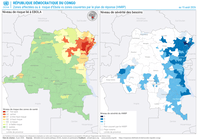
Country: Democratic Republic of the Congo Source: UN Office for the Coordination of Humanitarian Affairs Please refer to the attached Map.
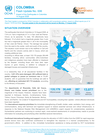
Country: Colombia Sources: El Equipo Humanitario País Colombia, UN Office for the Coordination of Humanitarian Affairs Please refer to the attached file. This Flash Update is produced by OCHA Colombia in collaboration with humanitarian partners, based on official reports (as of 14 August, 18:30 local time). The next update to this document will be issued on Monday, 17 August 2026. Humanitarian impact and multisectoral effects. Five days after the magnitude 7.4 earthquake struck San José del Palmar in Chocó Department, 183 aftershocks have been reported, along with impacts across 15 departments and 437 municipalities. At least 135,179 people have been affected, including Afro-Colombian and Indigenous communities, while significant damage to housing, critical infrastructure and essential services persists. Priority needs and scaling up of the response. The most pressing needs remain in health, temporary shelter, water, sanitation and hygiene (WASH), food security, energy and communications, particularly in Risaralda, Valle del Cauca, Chocó and Caldas departments. Rapid and intersectoral assessments are ongoing to identify gaps, prioritize interventions and complement the Government’s response in the most affected areas. International support mobilization and humanitarian coordination. The international response continues to scale up, with an initial allocation of US$5 million from the Central Emergency Response Fund (CERF), additional donor contributions and the operational deployment of national and international humanitarian partners. Efforts are focused on strengthening immediate response capacity, restoring essential services and supporting early recovery in coordination with the National Unit for Disaster Risk Management (UNGRD) and territorial authorities.
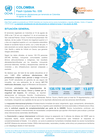
Country: Colombia Sources: El Equipo Humanitario País Colombia, UN Office for the Coordination of Humanitarian Affairs Please refer to the attached file. Este Flash update es producido por OCHA Colombia con insumos de los socios humanitarios y reportes oficiales. Corte a 14 agosto (18:30 horas). La siguiente actualización de este documento se realizará el lunes 17 de agosto de 2026. Impacto humanitario y afectación multisectorial. Cinco días después del terremoto de magnitud 7,4 registrado en San José del Palmar (Chocó), se han reportado 183 réplicas y afectaciones en 15 departamentos y 437 municipios. Al menos 135.179 personas han resultado afectadas, incluyendo comunidades afrocolombianas e indígenas, mientras persisten daños significativos en viviendas, infraestructura crítica y servicios esenciales. Necesidades prioritarias y ampliación de la respuesta. Las mayores necesidades siguen concentradas en salud, alojamiento temporal, agua, saneamiento e higiene, seguridad alimentaria, energía y comunicaciones, especialmente en Risaralda, Valle del Cauca, Chocó y Caldas. Continúan las evaluaciones rápidas e intersectoriales para identificar brechas, priorizar intervenciones y complementar la respuesta estatal en los territorios más afectados. Movilización de apoyo internacional y coordinación humanitaria. La respuesta internacional continúa escalando con la asignación inicial de USD 5 millones del CERF, aportes adicionales de donantes y el despliegue operativo de socios humanitarios nacionales e internacionales. Los esfuerzos se orientan a fortalecer la capacidad de respuesta inmediata, restablecer servicios esenciales y apoyar la recuperación temprana en coordinación con la UNGRD y las autoridades territoriales.
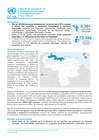
Country: Venezuela (Bolivarian Republic of) Source: UN Office for the Coordination of Humanitarian Affairs Please refer to the attached file. Reporte de situación N.º 33Terremotos en Venezuela14 de agosto de 2026Hora: 2:00 pm Destacados Más de 304.000 personas afectadas por los terremotos (57% mujeres y niñas) han accedido a asistencia humanitaria y servicios esenciales mediante una respuesta multisectorial coordinada entre organizaciones humanitarias, entidades de las Naciones Unidas, comunidades y autoridades nacionales y locales. Hasta el 10 de agosto, las autoridades reportaron 6.301 personas fallecidas y 73.356 personas atendidas en hospitales El Sistema de las Naciones Unidas y sus organizaciones socias continúan ampliando la respuesta multisectorial a la emergencia. Para atender las necesidades de 1,3 millones de personas afectadas durante los próximos seis meses. Situación general Venezuela continúa enfrentando las consecuencias de los dos sismos de gran magnitud (7,2 y 7,5) ocurridos el 24 de junio a las 18:00 hora local en la región centro-norte del país, los cuales provocaron importantes impactos humanitarios y daños en infraestructura. El primer sismo, de magnitud 7,2, tuvo su epicentro en el eje San Felipe–Yumare–Montalbán (Yaracuy/Carabobo). De acuerdo con una actualización reciente del Servicio Geológico de Estados Unidos (USGS), el segundo sismo, de magnitud 7,5, tuvo su epicentro a 17 kilómetros al oeste de Catia La Mar, frente a las costas del estado La Guaira. Hasta el 10 de agosto, las autoridades reportaron 6.301 personas fallecidas a causa de los terremotos. Asimismo, informaron que 73.356 personas han sido atendidas en hospitales y 53.314 viviendas han sido evaluadas, de las cuales 9.567 son de alto riesgo. Según las autoridades nacionales, 23,26% del total de escombros han sido recogidos. Una evaluación preliminar de la Oficina de las Naciones Unidas para la Reducción del Riesgo de Desastres (UNDRR) estima daños directos a viviendas e infraestructura por aproximadamente US$37.000 millones, mientras que estimaciones preliminares del PNUD sitúan los daños físicos directos en US$6.700 millones, equivalentes al 6% del PIB. Más de un mes después de los terremotos, la respuesta humanitaria continúa ampliándose en los estados afectados. Al 13 de agosto, más de 304.000 personas (57% mujeres y niñas) accedieron a servicios esenciales y asistencia humanitaria a través del trabajo conjunto de comunidades, organizaciones humanitarias, entidades de las Naciones Unidas, socios donantes y autoridades.
Terremotos en Venezuela: Reporte de situación #33 (14 de agosto de 2026, Hora: 02:00 pm) Read More »
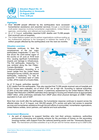
Country: Venezuela (Bolivarian Republic of) Source: UN Office for the Coordination of Humanitarian Affairs Please refer to the attached file. Situation Report No. 33Earthquakes in Venezuela14 August 2026Time: 2:00 pm Highlights Over 304,000 people affected by the earthquakes have accessed humanitarian assistance and essential services through a coordinated multi-sector response involving humanitarian organizations, United Nations agencies, communities, and national and local authorities. As of 10 August, authorities reported 6,301 deaths and 73,356 people that received care at hospitals. The United Nations system and its partner organizations continue scaling up the multisectoral response to the emergency to address the needs of 1.3 million people affected by the earthquakes over the next six months. Situation overview Venezuela continues to face the consequences of the two major earthquakes (magnitudes 7.2 and 7.5) that struck the north-central region of the country on 24 June at 18:00 local time, causing significant humanitarian impacts and damage to infrastructure. The first earthquake, measuring 7.2, was centered along the San Felipe–Yumare–Montalbán axis (Yaracuy/Carabobo). According to a recent update from the United States Geological Survey (USGS), the second earthquake, measuring 7.5, had its epicenter 17 kilometers west of Catia La Mar, off the coast of La Guaira State. As of 10 August, authorities reported 6,301 deaths from the earthquakes. They also reported that 73,356 people received care at hospitals and 53,314 homes were evaluated, out of which 9,567 are at high risk. According to national authorities, 23,26% of the total rubble has been cleared. A preliminary assessment by the United Nations Office for Disaster Risk Reduction (UNDRR) estimates direct damage to housing and infrastructure at approximately US$37 billion, while preliminary estimates from UNDP place direct physical damages at US$6.7 billion, equivalent to 6 per cent of GDP. More than one month after the earthquakes, the humanitarian response continues to expand across the affected states. As of 14 August, over 304,000 people (57% women and girls) had access to essential services and humanitarian assistance through the joint efforts of communities, humanitarian organizations, United Nations entities, donor partners, and national and local authorities.
Earthquakes in Venezuela: Situation Report #33 (14 August 2026, Time: 02:00 pm) Read More »
Country: Venezuela (Bolivarian Republic of) Source: International Organization for Migration Please refer to the attached file. El Reporte de Situación No. 22 presenta una actualización sobre la respuesta de la OIM a los terremotos del 24 de junio en la República Bolivariana de Venezuela, correspondiente al período del 11 al 13 de agosto de 2026. Aspectos destacados OIM coordinó la distribución de aproximadamente 1.700 kits de artículos no alimentarios en Mare Abajo y comunidades adyacentes, ampliando la asistencia a hogares afectados por los terremotos. La Matriz de Seguimiento de Desplazamiento (DTM) de OIM caracterizó 110 asentamientos comunitarios, identificando 4.733 hogares y 12.127 personas en La Guaira, Distrito Capital, Carabobo y Miranda para orientar la respuesta fuera de los campamentos transitorios. OIM culminó el cierre operativo de Playa Grande, acompañando el traslado de las familias y completando el retiro de la infraestructura humanitaria del campamento transitorio. Actividades de OIM OIM mantuvo la cogestión de los campamentos transitorios de Polideportivo José María Vargas, Campo de Golf, Mare Abajo y César Nieves, tres de ellos junto con el Consejo Noruego para Refugiados (NRC), asegurando la coordinación de servicios, el registro de población y el seguimiento de necesidades. En Mare Abajo, OIM coordinó la distribución de aproximadamente 1.700 kits de artículos no alimentarios, tras actividades de registro, verificación de hogares y organización comunitaria para facilitar el acceso de las familias a la asistencia. OIM fortaleció los mecanismos de gestión de información mediante la actualización de registros en los campamentos transitorios y la caracterización rápida de 110 asentamientos comunitarios, que identificó 4.733 hogares y 12.127 personas en cuatro estados afectados. Asimismo, avanzó en la preparación de una encuesta de hogares para fortalecer el análisis de necesidades y la planificación de la asistencia. En materia de salud, OIM y su socio Ven Da Tu Mano mantuvieron los servicios móviles de salud y salud mental en los campamentos transitorios. Durante el período, los equipos realizaron 445 consultas en el Polideportivo José María Vargas y 230 consultas en César Nieves, manteniendo el seguimiento de enfermedades crónicas y reforzando la vigilancia de síndromes diarreicos, particularmente en población infantil. Las actividades de protección incluyeron la articulación para facilitar el acceso a servicios especializados, el fortalecimiento de mecanismos de referencia y la coordinación entre actores humanitarios. En César Nieves, OIM promovió la creación de un espacio técnico de protección para fortalecer la coordinación de servicios y el seguimiento de personas con necesidades específicas. OIM también facilitó espacios de coordinación interagencial para fortalecer la planificación de distribuciones, actualizar los servicios disponibles y mejorar los mecanismos de referencia y seguimiento de necesidades en los campamentos transitorios. Asimismo, culminó el cierre operativo de Playa Grande, acompañando el traslado de las familias y el retiro progresivo de la infraestructura humanitaria. Respuesta prevista de OIM OIM prevé: Continuar coordinando las distribuciones de artículos no alimentarios previstas en Mare Abajo y comunidades adyacentes, evitando duplicaciones y asegurando la adecuada focalización de la asistencia. Dar seguimiento a las brechas de infraestructura identificadas en Mare Abajo, particularmente el drenaje de las duchas y el ajuste de los sistemas de anclaje de las carpas. Mantener la vigilancia y el seguimiento médico de los síndromes diarreicos, especialmente en niños, niñas y adolescentes, así como apoyar la continuidad del tratamiento de la hipertensión, la diabetes y otras enfermedades crónicas. Fortalecer las rutas de derivación para servicios de salud mental, protección y otros servicios especializados. Implementar la encuesta de hogares en los campamentos transitorios gestionados por OIM y ampliar el seguimiento de necesidades y movimientos de población en asentamientos comunitarios y comunidades afectadas. Mantener actualizada la información sobre los servicios disponibles, los horarios de atención y los mecanismos de derivación en los campamentos transitorios. Consolidar los mecanismos de coordinación sectorial y fortalecer los sistemas de reporte y seguimiento de incidentes de seguridad y riesgos de protección.