Uncategorized

87db5a00 730f 44f2 8af2 831de4a22439 USbLzX

Haiti : Violence and displacement in Artibonite – Flash Update No. 2 (as of 15 May 2026)

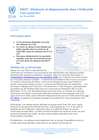
Country: Haiti Source: UN Office for the Coordination of Humanitarian Affairs Please refer to the attached file. HIGHLIGHTS 4 419 people displaced following the May 2 attacks At least six deaths and nine gunshot injuries reported in the commune of Saint-Marc after the May 8 and 9 attacks New population displacements reported, with movements still ongoing following the May 8 and 9 attacks SITUATION OVERVIEW Since May 2, 2026, the Artibonite department has been facing a continuation and intensification of armed attacks, resulting in increasing humanitarian impacts. According to available data from the International Organization for Migration (IOM), violence occurring from May 2 onward in several localities—notably Grand Bérard, Beau Fort, and Lacouture (1st communal section of Villars, commune of Dessalines), as well as Pitralle (1st communal section of Bas Coursin I, commune of Petite Rivière de l’Artibonite) has displaced approximately 4 419 people (1 166 households). Most have been hosted by families in the communes of Dessalines (88%) and Saint-Marc (12%). These developments take place within a context of recurrent violence, as the same areas were previously affected by attacks between March 28 and April 6, 2026, which led to the displacement of more than 13 500 people (see DTM 88.2), highlighting the protracted and cumulative nature of the humanitarian crisis in Artibonite. Meanwhile, an armed attack attributed to the Gran Grif armed group, with the alleged support of the Kokorat San Ras group, was reported on May 8 and 9 in the Artibonite department, particularly in the locality of Robert (4th communal section of Saint-Marc). The preliminary toll indicates at least six deaths, nine people wounded by gunfire, seven motorcycles taken, and three motorcycles burned. In parallel, another attack reportedly targeted a self-defense group in the locality known as Barrage, located in the 3rd communal section of Marchand-Dessalines, resulting in population movements, as well as fatalities and injuries, the numbers of which remain unconfirmed. At this stage, the exact number of people displaced toward the city of Saint-Marc and the commune of Verrettes is not yet available, as population movements from affected localities are ongoing.

Haiti : Violence and displacement in Artibonite – Flash Update No. 2 (as of 15 May 2026) Read More »

Ecdd6bbd 211c 4416 Ba5a D5781bb26074 MIv0Cy

Haiti : Violences et déplacements dans l’Artibonite – Flash Update No. 2 (au 15 mai 2026)

Country: Haiti Source: UN Office for the Coordination of Humanitarian Affairs Please refer to the attached file. FAITS SAILLANTS 4 419 personnes déplacées à la suite des attaques du 2 mai Au moins six décès et neuf blessés par balles signalés dans la commune de Saint-Marc après les attaques des 8 et 9 mai Nouveaux déplacements de population signalés, avec des mouvements encore en cours après les attaques des 8et 9 mai APERÇU DE LA SITUATION Depuis le 2 mai 2026, le département de l’Artibonite est confronté à une poursuite et une intensification des attaques armées, entraînant des impacts humanitaires croissants. Selon les données disponibles de l’Organisation internationale pour les migrations (OIM), les violences survenues à partir du 2 mai dans plusieurs localités — notamment Grand Bérard, Beau Fort et Lacouture (1ʳᵉ section communale de Villars, commune de Dessalines) ainsi que Pitralle (1ʳᵉ section communale de Bas Coursin I, commune de Petite Rivière de l’Artibonite) — ont provoqué le déplacement d’environ 4 419 personnes (1 166 ménages), principalement accueillies par des familles hôtes dans les communes de Dessalines (88 %) et de Saint-Marc (12 %). Ces développements s’inscrivent dans un contexte de violences récurrentes, les mêmes zones ayant déjà été touchées par des attaques entre le 28 mars et le 6 avril 2026, ayant entraîné le déplacement de plus de 13 500 personnes (voir ETT 88.2), soulignant le caractère prolongé et cumulatif de la crise humanitaire dans l’Artibonite. Entre-temps, une attaque armée attribuée au groupe armé Gran Grif, avec l’appui présumé du groupe armé Kokorat San Ras, a été signalée les 8 et 9 mai dans le département de l’Artibonite, notamment dans la localité de Robert, 4e section communale de Saint-Marc. Le bilan provisoire fait état d’au moins six morts, de neuf personnes blessées par balles, de sept motocyclettes emportées et de trois motocyclettes incendiées. Parallèlement, une attaque aurait également visé un groupe d’autodéfense dans la localité dénommée Barrage, située dans la 3e section communale de Marchand-Dessalines, entraînant des mouvements de population, ainsi que des décès et des blessés dont les chiffres ne sont pas confirmés. À ce stade, les chiffres exacts de personnes déplacées vers la ville de Saint-Marc et la commune de Verrettes ne sont pas encore disponibles, les mouvements de population se poursuivant depuis les localités affectées.

Haiti : Violences et déplacements dans l’Artibonite – Flash Update No. 2 (au 15 mai 2026) Read More »

3cd042da Bd81 4442 923b 9c454c087d97 CAsau0

Mr. Tom Fletcher, Under-Secretary-General for Humanitarian Affairs and Emergency Relief Coordinator – Briefing to the Security Council on the humanitarian situation in Syria, 15 May 2026

Country: Syrian Arab Republic Source: UN Office for the Coordination of Humanitarian Affairs Please refer to the attached file. New York, 15 May 2026 Thank you, Mr. President, and thank you to the Deputy Special Envoy [Claudio Cordone] for his briefing. As I briefed you last month, Syria is at a critical yet promising moment. We must consolidate humanitarian gains and invest in recovery. I will cover three points today. Firstly, progress is real, but fragile. Violence has decreased, sanctions have eased, humanitarian access has improved, returns of refugees and internally displaced people are increasing, but funding is still falling faster than needs, and if recovery is delayed, it will end up costing more lives and more money. Humanitarian needs remain significant. About two thirds of the population, over 15 million people, most of them women, girls, and children, require help this year. We prioritize women, girls and children in all our humanitarian action because they are so often on the front line of these crises. But current funding levels mean we will only reach about half of those in need. Large-scale returns to Syria are a very positive sign of change, but they are also increasing pressure on already limited services, housing, livelihoods and infrastructure. And pressure on the humanitarian response continues to rise. More than 390,000 people have crossed the border from Lebanon since early March. That is 90,000 [people] since we briefed you a month ago. More than 80 per cent of those arrivals are Syrian, and more than 86,000 have indicated an intention to stay permanently. Many need some level of support. At the same time, the prolonged closure of the Strait of Hormuz means that the cost of food and fuel is rising, with immediate consequences for communities already on the edge. Diesel is up 17 per cent, electricity by several hundred per cent in some areas, and while subsidized bread prices remain unchanged, the loaves are 12 per cent smaller. And flooding continues, notably in the north, where 13,000 people have been affected since late April, along with damage to roads, bridges, farming land and livestock. So, predictable and flexible humanitarian funding is essential to reach more people and make full use of improved access that we now have to many areas. I thank the donors who are stepping up to support the hyper-prioritized Syrian appeal, led by the US with US$160 million, the EU with $63 million and Japan with $42 million. However, almost halfway through the year, the humanitarian appeal still sits at barely more than 16 – one-six – per cent funded, with only $480 million received against the $2.9 billion needed. Almost 90 per cent of the money received comes from the U.S., the Europeans, Japan, and Canada. We are ready to receive funding from the rest of the world. Just this week, the impact of the funding shortages was stark. The World Food Program has been forced to reduce its emergency food assistance by 50 per cent – from reaching 1.3 million people to reaching 650,000. And also, it has had to halt its nationwide bread subsidy program that has supported millions each day. In the health system, we see the tension between progress and fragility. Over the past month, nearly 800 children under five received essential vaccinations, including polio. But at the same time, serious public health risks persist. Leishmaniasis cases have risen sharply this year in Aleppo. Nearly 150 measles cases were reported in the first four months of this year. Hepatitis A cases have also increased, and these trends reflect limited health services in many areas, and the ongoing risks from unsafe water and sanitation. Here, as elsewhere, when we are supported, we deliver. The UN and NGO partners, in cooperation with the Syrian Government, have reached communities across the country, including improving access to clean water for more than 3 million people, many in camps and displacement centers, and more than 2.2 million health interventions. For the people of Syria, the second tranche allocation announced yesterday by the US means further funding and support, allowing more partners to save more lives, and this will be on top of the current work of the Syria Humanitarian Fund that has allocated $145 million to life-saving interventions this year for communities most in need. Mr. President, A second point: investing in recovery is essential for stabilization. Over 3.4 million people in Syria returned in 2025, and that trend continues. More than 315,000 refugees returned in the first four months this year, and I expect returns to rise over the summer once the school year has ended. Higher returns, greater institutional stability, improved humanitarian access create a real opportunity to move beyond the long-standing emergency humanitarian response, as [Syrian] President [Ahmad] al-Sharaa stressed in Damascus last month, demining and protection remain paramount. And exploded ordinance remains a major threat, a key barrier to safe returns and economic recovery. It continues to kill and maim people across Syria. Since just 22nd of April, explosive ordnance has killed 15 people, including five children, and injured 37, including 14 children. And farming and raising cattle is especially dangerous. This is why the Government of Syria has identified a “No Mines” policy as a key pillar of its forward agenda, and we support this goal. Mr. President. Nearly 80 per cent of respondents to a nationwide survey said they were aware of gender-based violence incidents in their communities, most commonly domestic violence. Psychological abuse and early marriage also remain common, and delays or gaps in services can have fatal consequences. Child protection risks also remain acute. One in five respondents to our recent survey across nearly half of assessed communities reported risks, including violence, neglect, child labor and early enforced marriage. And many people in Syria report needing civil documentation and support to resolve housing, land and property issues – major obstacles to sustainable returns and drivers of social tension and exclusion. Mr. President, My third and final point. The Government of

Mr. Tom Fletcher, Under-Secretary-General for Humanitarian Affairs and Emergency Relief Coordinator – Briefing to the Security Council on the humanitarian situation in Syria, 15 May 2026 Read More »

743006e3 6d67 44f1 8037 8d2e4fc5e0ad JDMnxR

World: Alertes de maladies épidémiques et émergentes en Océanie le 12 mai 2026

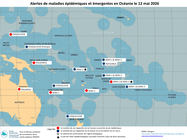
Countries: World, Australia, Cook Islands, French Polynesia (France), Guam, Kiribati, Micronesia (Federated States of), New Caledonia (France), New Zealand, Palau, Tonga, United States of America, Vanuatu Source: Pacific Community Please refer to the attached Map. Éléments nouveaux/faits marquants intervenus depuis la diffusion de la carte précédente sur PacNet, le 05 mai 2026 : Dengue Nouvelle-Calédonie : Au 11 mai 2026, la dengue continuait de circuler. Au total, 1 508 cas ont été signalés depuis janvier 2026, un chiffre en hausse par rapport au précédent point de situation. La transmission s’explique essentiellement par les cas autochtones. Le sérotype DENV‑1 reste prédominant. Les conditions saisonnières, notamment les précipitations et les eaux stagnantes, continuent de favoriser le développement des moustiques. Il est également possible que les déplacements entre communes favorisent la propagation. Les autorités sanitaires continuent d’inciter les habitants à consulter sans tarder en cas de symptômes évocateurs de la dengue et à renforcer les mesures de lutte antivectorielle. L’alerte rouge pour le sérotype DENV‑1 est maintenue. – Source : La dengue | Direction des Affaires Sanitaires et Sociales de Nouvelle-Calédonie, page consultée le 12 mai 2026. Samoa : Au cours de la semaine épidémiologique 18 (du 27 avril au 3 mai 2026), la dengue a continué de circuler, avec 153 nouveaux cas, dont 20 confirmés biologiquement, un chiffre en baisse par rapport à la semaine précédente. Six nouvelles hospitalisations ont été recensées, mais aucune admission en soins intensifs ni aucun décès lié à la maladie n’ont été enregistrés. La co-circulation des sérotypes DENV‑1 (54 %) et DENV‑2 (46 %) se poursuit. La transmission reste généralisée : 64 % des cas ont été signalés à Upolu et 36 % à Savai’i. Les enfants de moins de 15 ans restent les plus touchés (74 % des cas). Depuis le 1er janvier 2025, 18 712 cas diagnostiqués cliniquement et 5 406 cas confirmés biologiquement ont été signalés. Le nombre total de décès liés à la dengue est toujours de neuf. L’alerte bleue pour les sérotypes DENV‑1 et DENV‑2 est maintenue. – Source : Rapport de situation sur l’épidémie de dengue au Samoa no 55, communiqué au point de contact du Groupe de coordination du ROSSP le 8 mai 2026. Tonga : Au 12 mai 2026, la dengue continuait de circuler aux Tonga, où une épidémie a été déclarée en avril. Au total, 60 cas confirmés biologiquement ont été recensés, dont deux nouveaux depuis le 8 mai. Aucun malade n’est actuellement hospitalisé et aucun décès lié à la maladie n’a été enregistré. Les enfants de 11 à 14 ans restent les plus touchés, avec un ratio plus élevé de garçons ; la plupart des cas sont toujours recensés à Tongatapu. Le sérotype en circulation est le sérotype DENV‑2. L’alerte rouge pour le sérotype DENV-2 est maintenue. – Source : Dengue Fever Outbreak Situation Report #19 – page Facebook officielle du ministère de la Santé des Tonga, page consultée le 12 mai 2026. Coqueluche Guam : Au 7 mai 2026 (semaine épidémiologique 18), la maladie continuait de circuler, avec 24 cas identifiés depuis la semaine 15‑2025 (23 cas confirmés biologiquement et un cas probable). Deux nouveaux cas confirmés biologiquement ont été recensés le 1er et le 2 mai 2026. Une personne a été hospitalisée, mais aucun décès lié à la maladie n’a été enregistré. Au total, 15 cas ont été rapportés en 2026. Les personnes malades sont aussi bien des nourrissons que des enfants et des adultes ; plusieurs d’entre elles n’étaient pas vaccinées ou étaient partiellement vaccinées. Les investigations épidémiologiques, la recherche de contacts, la prophylaxie post-exposition et la vaccination se poursuivent, l’accent étant mis sur les nourrissons, les femmes enceintes et les contacts proches. Les efforts visant à améliorer la couverture vaccinale (DTCa) continuent également. L’alerte rouge pour la coqueluche est maintenue. – Source : Rapport de situation no 6, publié sur PacNet le 8 mai 2026, ainsi que DPHSS Update_Guam Pertussis_05.11.26 et Epi Reports | Epidemiology and Laboratory Capacity (ELC) Guam – DPHSS, pages consultées le 5 mai 2026. Nouvelle-Zélande : L’épidémie de coqueluche qui sévit dans le pays se poursuit et la maladie continue de circuler. Au cours de la semaine qui s’est achevée le 1er mai 2026, 31 cas ont été signalés, un chiffre en baisse par rapport à la semaine précédente (39 cas), ce qui porte à 642 le nombre total de cas en 2026. Le nombre hebdomadaire de cas déclarés reste inférieur à ce qui était observé en début d’année, mais indique que la transmission continue. Depuis le début de l’épidémie, en octobre 2024, 4 400 cas confirmés, probables et suspects ont été signalés ; 9,6 % des malades ont dû être hospitalisés et un décès a été enregistré. Les nourrissons de moins d’un an restent les plus vulnérables, ce qui confirme l’importance de la vaccination, de la surveillance et de la protection des groupes à haut risque. L’alerte bleue pour la coqueluche est maintenue. – Source : Pertussis dashboard et Pertussis Report 4 April –1 May 2026, pages consultées le 12 mai 2026. Vanuatu : Au cours des semaines épidémiologiques 17 et 18‑2026, la maladie circulait, mais la transmission continuait de ralentir par rapport au pic observé fin 2025. Un cas diagnostiqué cliniquement a été signalé au cours de la période à Efate, les derniers cas confirmés biologiquement datant de la semaine 14. Au total, 829 cas ont été recensés (785 diagnostiqués cliniquement et 44 confirmés biologiquement). Le nombre total de décès reste de sept (six à Tanna et un à Shefa). Aucun malade ne se trouve actuellement à l’hôpital. La maladie touche toutes les tranches d’âge, l’incidence étant la plus élevée chez les enfants d’un à neuf ans ; les nourrissons de moins d’un an représentent également une part importante des cas. Les individus de plus de dix ans sont en revanche relativement rares parmi les malades. La maladie ne semble pas affecter un sexe plus que l’autre. Parmi les malades dont le statut vaccinal était connu, 48 % n’étaient pas vaccinés et 35 % avaient reçu

World: Alertes de maladies épidémiques et émergentes en Océanie le 12 mai 2026 Read More »

D48a076c Fe86 5bae 8754 69e1bd692265 CL5RXS

Tanzania – Quarterly Report, January – March 2026

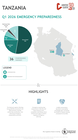
Country: United Republic of Tanzania Sources: Logistics Cluster, World Food Programme Please refer to the attached file. Highlights • The National Logistics Working Group (NLWG) convened its Q1 2026 quarterly meeting, reinforcing coordination, and advancing emergency preparedness priorities. • A WREC presentation identified sustainability knowledge gaps, prompting the NLWG to request training scheduled for Q2 2026. • Emergency warehousing assessments in Momba and Nyasa Districts were completed, identifying critical infrastructure gaps to inform ongoing contingency planning.

Tanzania – Quarterly Report, January – March 2026 Read More »

3630844c 9a99 421e Bf21 Cd4bf78f5e80 QjhZfs

Somalia Weekly Weather Forecast – Valid From 13 to 19 May 2026

Country: Somalia Source: Food and Agriculture Organization of the United Nations Please refer to the attached file. Forecast Highlight: Localized Light Rainfall: Expect light showers over the Shabelle basin, Banadir, Bay, and coastal sections of Lower Juba, Galgaduud, and Mudug. These “warm-and-wet” conditions may provide short-term relief for crops and pasture. Prevailing Dry Conditions: Large parts of the North, Northeast, Gedo, and Middle Juba will remain dry. High daytime temperatures are expected to increase water demand and sustain heat stress for both people and livestock. River Flood Watch Shabelle River (High Risk): This remains the primary area of concern. Levels are elevated from Belet Weyne (above moderate risk) downstream through Bulo Burte, Jowhar, Balcad, and Afgooye. Continued flood sensitivity is expected. Juba River (Monitoring): While currently below moderate flood-risk thresholds at Dollow and Luuq, levels remain above the long-term mean and require close monitoring.

Somalia Weekly Weather Forecast – Valid From 13 to 19 May 2026 Read More »

53184555 E079 448e Aef5 Fbede218d996 ApoIxy

Colombia: Hacia la Dignidad: Rompiendo barreras para la población refugiada y migrante en Puerto Carreño

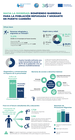
Country: Colombia Source: 3iS Please refer to the attached Infographic. Los refugiados y migrantes venezolanos en Vichada enfrentan una serie de retos diferenciales para acceder a bienes, servicios y derechos que les permitan vivir con dignidad. Corporación 3D es miembro del ELC Vichada y, a partir de su conocimiento de la situación de estas personas desde las comunidades venezolanas en Puerto Carreño, identifica las principales barreras de acceso a derechos básicos de esta población en Puerto Carreño, y realiza recomendaciones de respuesta para cubrir cuatro áreas claves: inclusión, educación, salud y protección. Este documento de análisis territorial fue liderado por la Corporación 3D, con el acompañamiento técnico de 3iS y en el marco del consorcio EVIDEM financiado por ECHO. Este informe busca incidir en espacios interinstitucionales para abogar por la población refugiada y migrante.

Colombia: Hacia la Dignidad: Rompiendo barreras para la población refugiada y migrante en Puerto Carreño Read More »