Uncategorized

3f7b0eff 3cd3 488f 8ef5 50ebd3d98548 Vrq95m

Nigeria: Sustaining WASH Infrastracture through Community Ownership – May 2026

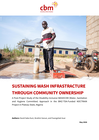
Country: Nigeria Source: Christian Blind Mission Please refer to the attached file. The report presents a post‑project assessment of disability‑inclusive Water, Sanitation and Hygiene Committees (WASHCOMs) established under the BMZ‑TDA–funded NoCTRAiN project in twelve communities across Plateau State, Nigeria, examining how these committees have functioned since project closure in 2023. Overall, the findings show that most WASHCOMs have endured beyond donor support, with about 58.3% remaining fully functional, 25% partially functional, and around 16.7% no longer active. Functional WASHCOMs continue to maintain and repair boreholes, mobilise community contributions, regulate water use, and promote hygiene practices, particularly handwashing and latrine use. Their sustained activity is closely linked to committed and trusted leadership, strong community ownership, visible improvements in health outcomes such as reductions in water‑related diseases and deaths, and, in some cases, continued support from local government structures or NGOs. Partially functional committees tend to mobilise only when problems arise, often due to leadership gaps, member relocation, or reduced motivation after external support ended. Non‑functional WASHCOMs are mainly associated with conflict and displacement, breakdown of leadership, unmet expectations of financial incentives for voluntary work, weak social cohesion, and an inability to finance major repairs. Across communities, borehole maintenance remains the core activity, while limited financial capacity, high repair costs, insecurity, and lack of post‑project technical support pose serious challenges to long‑term sustainability. The report concludes that the inclusive, community‑ownership‑driven WASHCOM model is effective and resilient, but its success depends on strong leadership, community trust, affordable access to repairs, and some level of structured post‑project engagement to consolidate gains and prevent system collapse.

Nigeria: Sustaining WASH Infrastracture through Community Ownership – May 2026 Read More »

6abd936b Bb39 4ad6 A12a 169c28ac7bc1 To7Q1D

World: Middle East Crisis – Update: Prices & Currencies (May 2026)

Country: World Source: World Food Programme Please refer to the attached file. Highlights April 2026 Global food prices increased moderately compared to the start of the Middle East crisis, with Hormuz-related energy and geopolitical developments adding upward pressure. Vegetable oils stand out in particular, driven largely by strong biofuel demand. Crude oil prices have risen sharply, 57 percent for WTI and 52 percent for Brent, since the conflict began. Annually both prices increased by 81 percent. Local gasoline prices increased by at least 15 percent in 17 countries since the start of the Middle East crisis; 11 countries experienced increases between 5 and 15 percent. Local diesel prices increased by at least 15 percent in 13 countries; 19 countries experienced increases between 5 and 15 percent. Fertilizer prices rose after the Strait of Hormuz was blocked, causing urea and sulfur price increases comparable to those seen after the 2022 Ukraine conflict. Although the ceasefire raised expectations of a Strait of Hormuz reopening, shipping flows recovered only marginally as security risks continued, with prices remaining above pre-conflict levels. 15 countries experienced year-on-year food inflation of at least 15 percent; 8 countries experienced year-on-year food inflation between 10 and 15 percent. 36 countries experienced year-on-year food inflation between 5 and 10 percent. 7 currencies are flagged as hotspots or in alert, indicating annual value losses that are unusually high, rapidly accelerating or both.

World: Middle East Crisis – Update: Prices & Currencies (May 2026) Read More »

D16336cb 37da 44f1 9674 B3a07b6ff0f1 DEY0Qh

South Sudan Humanitarian Update 1 – 15 May 2026

Countries: South Sudan, Sudan Source: UN Office for the Coordination of Humanitarian Affairs Please refer to the attached file. HIGHLIGHTS Tens of thousands of people are returning to Akobo, Jonglei State, from displacement sites in Ethiopia, prompting a scaled-up humanitarian response amid a fragile calm. A credible risk of famine persists in four counties across Upper Nile and Jonglei States, including Akobo, under a worst-case scenario of escalating conflict, further displacement, and constrained humanitarian access Humanitarian access is intensifying as a concern, with confiscation of supplies, detention of aid workers and movement restrictions reported across Upper Nile, Jonglei and Central Equatoria states.

South Sudan Humanitarian Update 1 – 15 May 2026 Read More »

A351d376 12c7 4380 822f 4b2f7d99bc1a JH6BC2

Sudan – Protection Risk Severity Classification

Country: Sudan Sources: Child Protection Area of Responsibility, Gender Based Violence Area of Responsibility, Mine Action Area of Responsibility, Protection Cluster Please refer to the attached file. 1- Attacks on Civilians and Other Unlawful Killings, Including Attacks on Civilian Objects Attacks on civilians remain the gravest protection concern nationwide in 2026. Civilians continue to be killed and injured through drone strikes, aerial bombardments, artillery shelling, ground assaults and targeted attacks affecting residential areas, markets, hospitals, schools, IDP sites, roads, water infrastructure and other civilian objects. The sharp increase in drone warfare has significantly altered the protection environment. The impact extends beyond immediate death and injury. Attacks on civilian objects deprive communities of healthcare, education, water, markets and humanitarian services, while increasing displacement, family separation, food insecurity and exposure to further harm during flight. Civilian casualties remain likely underreported due to insecurity, communication blackouts, restricted access and fear of retaliation. The pattern continues to indicate persistent disregard for distinction, proportionality and precaution under international humanitarian law. 2- Gender-Based Violence GBV remains widespread, systematic and severely underreported across Sudan in 2026. Conflict-related sexual violence, rape, gang rape, sexual exploitation, forced marriage, sexual slavery, intimate partner violence and abuse continue to be reported in displacement sites, host communities, transit routes, checkpoints and areas affected by siege or active conflict. Women and girls face heightened risks while fleeing, collecting water or firewood, accessing services, living in overcrowded sites, or relying on unsafe coping mechanisms. Survivors often lack access to life-saving clinical care, psychosocial support, and safe referral pathways, particularly in besieged or hard-to-reach areas. Stigma, fear of retaliation, and the collapse of services significantly suppress reporting, masking the true scale of harm. Female-headed households and adolescent girls are especially exposed to exploitation linked to extreme deprivation. 3- Discrimination and Stigmatization, Denial of Resources, Opportunities, Services and/or Humanitarian Access Discrimination and stigmatization continue to shape exposure to harm and unequal access to protection, assistance and services in 2026. IDPs, returnees and conflict-affected communities face exclusion based on ethnicity, tribal affiliation, geographic origin, perceived affiliation with parties to the conflict, displacement status, gender, disability and socioeconomic vulnerability. These dynamics affect access to humanitarian assistance, healthcare, education, civil documentation, housing, livelihoods and safe movement. Discriminatory treatment at checkpoints, in aid distributions, schools, health facilities and host community settings reinforces fear and social fragmentation. Persons with disabilities, older persons, female-headed households, children, minority groups and people without documentation face heightened exclusion. Denial or obstruction of humanitarian access further compounds these risks, particularly in areas affected by siege-like conditions, bureaucratic impediments and insecurity. 4- Theft, Extortion, Forced Eviction or Destruction of Personal Property Theft, extortion, forced eviction, occupation and destruction of civilian property remain widespread in 2026. Civilians continue to report looting and confiscation of homes, land, livestock, vehicles, cash, food stocks, communication devices, identity documents and livelihood. These violations are particularly acute during attacks, displacement movements, raids, checkpoint encounters and shifts in territorial control. Forced eviction, burning or occupation of homes and destruction of civilian property continue to drive repeated displacement and prevent safe return. The depletion of household assets increases reliance on harmful coping mechanisms, including child labour, survival sex, unsafe movement, family separation and recruitment by armed actors. 5- Unlawful Impediments or Restrictions to Freedom of Movement, Siege and Forced Displacement Restrictions on freedom of movement, siege-like conditions, checkpoints, road blockages, insecurity and bureaucratic impediments continue to place civilians at extreme risk in 2026. Communities in Darfur, Kordofan and other frontline areas remain exposed to encirclement, unsafe escape routes, denial of assistance and coercive displacement. The Protection Cluster note on El Obeid highlights escalating protection risks linked to intensified hostilities, drone attacks, restricted movement, displacement and collapse of essential services. Civilians attempting to flee often travel on foot through unsafe routes without adequate food, water, healthcare, transport or communication. These conditions increase deaths from violence, dehydration, exhaustion and disease, while exposing women, children, older persons and persons with disabilities to GBV, exploitation, trafficking, family separation and abandonment. 6- Forced Recruitment and Association of Children with Armed Forces and Groups, Child Abduction and Family Separation Children continue to face severe risks of forced recruitment, use, abduction, forced association and family separation in 2026. Recruitment and use by armed actors continue in combat and support roles, including checkpoint duties, guarding, intelligence gathering, looting, domestic labour and sexual exploitation. Boys remain particularly exposed to recruitment and use in hostilities, while girls face risks of forced association, sexual slavery, forced marriage and exploitation. Family separation is increasing due to attacks, displacement, siege conditions, detention, killings of caregivers, unsafe routes and repeated movement. UNICEF-related reporting indicates that at least 42,000 unaccompanied and separated children have been registered in Sudan and neighbouring countries. Child protection analysis also highlights that child recruitment, abduction, sexual violence, killing and maiming, denial of humanitarian access, and attacks on schools and hospitals remain central patterns of grave violations against children in Sudan. 7- Presence of Mines and Other Explosive Ordnance Explosive ordnance contamination, including UXO, ERW and confirmed landmines, remains an escalating and life-threatening protection risk across Sudan in 2026. EO contamination affects urban neighbourhoods, rural villages, roads, farmland, public infrastructure and displacement sites, severely restricting freedom of movement, access to livelihoods, humanitarian operations and prospects for safe return. Children remain disproportionately affected due to curiosity, daily exposure and movement through contaminated environments. Recent confirmations of landmines in previously UXO-only areas, including parts of Khartoum, further highlight the increasing scale, complexity and lethality of the threat, and the urgent need for risk education, marking, clearance, victim assistance and integration of mine action within humanitarian response planning.

Sudan – Protection Risk Severity Classification Read More »

A81f3d0a 0513 483f Af16 2f61e8137365 SRBGbL

Monthly Market Price Bulletin – Syria March 2026 — ISSUE 135

Country: Syrian Arab Republic Source: World Food Programme Please refer to the attached file. Highlights: The cost of living in March 2026, as measured by the Minimum Expenditure Basket (MEB), increased by 9 percent to Old SYP 2.65 million, from Old SYP 2.43 million in February 2026. This increase was driven by higher prices for eggplants, chicken meat, and gas cylinder prices mainly due to the recent regional escalation. The Syrian currency depreciated in the parallel market to have and exchange rate from Old SYP 11,806 per USD in February 2026 to Old SYP 11,972 per USD in March 2026. Meanwhile, the official exchange rate remained stable at Old SYP 11,055 per USD. The Syrian government announced major wage reforms effective from May 2026, including a 50 percent increase in public sector salaries, raising the minimum wage from 750,000 Old SYP to 1,257,000 Old SYP, along with additional sector-specific increases for selected institutions. Syria temporarily banned imports of potatoes and frozen chicken products in March 2026 to protect domestic producers and stabilize local markets. The measure may benefit local farmers and livestock producers, but it could also reduce supply and increase prices if domestic production cannot meet demand.

Monthly Market Price Bulletin – Syria March 2026 — ISSUE 135 Read More »

Cb8041f3 7f22 4bb2 911c 716b8cea28df FMnJDj

Lebanon: Flash Update #26 – Escalation of hostilities in Lebanon (as of 14 May 2026)

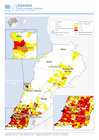
Country: Lebanon Source: UN Office for the Coordination of Humanitarian Affairs Please refer to the attached file. HIGHLIGHTS To date, 2,896 have been killed and 8,824 injured since 2 March. Another attack on healthcare killed two and injured another healthcare worker. Renewed displacement orders announced for at least 18 additional localities, triggering further displacement. Ten new shelters were opened in a three-day period to respond to growing number of displaced. Flash Appeal is only 42 per cent funded, putting critical services at risk of interruption. SITUATION OVERVIEW Despite the ceasefire announced on 17 April, the humanitarian situation in Lebanon remained highly unstable during the reporting period. Hostilities continued across southern Lebanon, accompanied by renewed displacement orders affecting multiple localities, further undermining civilian protection and prospects for safe returns. Since the onset of hostilities on 2 March, at least 2,896 people have been killed and 8,824 injured as of 14 May. The intensity of attacks escalated during the reporting period. The United Nations Emergency Relief Coordinator highlighted the urgency of the situation, stressing that affected populations require a sustained and genuine ceasefire. On 14 May, the Humanitarian Coordinator (HC), Imran Riza, visited Beirut’s southern suburbs (Dahieh) and observed widespread destruction, major infrastructure damage, and large-scale displacement affecting around half of the population, alongside complex return patterns and overcrowded, inadequate shelter conditions. The HC highlighted severe and growing humanitarian needs, including loss of homes and livelihoods, disrupted basic services, and rising psychosocial distress. Based on these findings, the HC called for an urgent scale-up of humanitarian assistance, restoration of essential services, and immediate support for early recovery, while emphasizing stronger coordination with municipalities and a more inclusive, decentralized response to enable safe and dignified returns. Attacks on healthcare and humanitarian personnel persisted. Since 2 March, 161 incidents affecting healthcare have been recorded, resulting in 110 deaths and 252 injuries among healthcare workers. Following the ceasefire announcement, at least 15 additional incidents were reported, causing further casualties. Three hospitals and 42 primary healthcare centres remain closed due to ongoing insecurity, significantly constraining access to essential services. During the reporting period, two paramedics were killed and one injured in airstrikes in Nabatieh governorate, further affecting emergency response capacity. Displacement levels increased following the deterioration in security conditions. During the reporting period, renewed displacement orders were issued for eighteen localities in southern Lebanon and the Bekaa governorate, triggering additional population movements. As of 14 May, approximately 129,721 people are reported to be sheltering in 632 collective shelters. Displacement patterns remain fluid, with continued movements between areas of origin and displacement sites. A number of families who attempted to return to their homes were unable to do so due to widespread damage, prompting secondary displacement back into collective shelters or informal arrangements. This has contributed to rising shelter occupancy and increased pressure on already limited capacity. Access constraints persist across parts of southern Lebanon and Nabatieh governorates, where insecurity and infrastructure damage continue to impede humanitarian operations. Since the escalation began, 131 humanitarian movements carrying essential supplies have been facilitated through the Humanitarian Notification System. Efforts to scale up the response continued during the reporting period, including the arrival of humanitarian supplies. On 11 May, more than 4,500 emergency shelter and household items were airlifted from Maastricht, Netherlands, to Beirut through the European Union Humanitarian Air Bridge. Humanitarian partners continue to face growing operational pressure to sustain assistance in displacement settings while expanding support to newly affected and hard-to-reach areas. Funding constraints remain a major challenge. As of mid-May, the 2026 Lebanon Flash Appeal has received approximately US$129 million out of the US$308 million required (42 per cent funded). The funding gap is limiting the ability of partners to maintain essential services and scale up the response. Critical sectors, including water, sanitation and hygiene (WASH), face the risk of service interruptions in the coming months, particularly in relation to water provision in collective shelters and support to public water systems.

Lebanon: Flash Update #26 – Escalation of hostilities in Lebanon (as of 14 May 2026) Read More »

4b2b4324 07bf 492b 961a 39fa40e0b33b EzUcDN

Haiti: Latinoamérica y El Caribe Resumen de Situación Semanal al 15 de mayo 2026

Countries: Haiti, Chile, Colombia, Cuba, Ecuador, El Salvador, Honduras Source: UN Office for the Coordination of Humanitarian Affairs Please refer to the attached file. CIFRAS CLAVE 5,9M de personas fueron desplazadas internamente en las Américas en 2025 82% de probabilidad de condiciones de El Niño entre mayo y julio de 2026 5,3K personas desplazadas debido a enfrentamientos armados en Ouest, Haití, desde el 10 de mayo REGIONAL: DESPLAZAMIENTO Según el Informe Global del Observatorio de Desplazamiento Interno, publicado el 13 de mayo, en 2025 se registraron en las Américas casi 5,9 millones de desplazamientos internos, la segunda cifra más alta en una década. El conflicto y la violencia impulsaron casi 1,6 millones de desplazamientos, con Haití, Colombia y Ecuador registrando cifras récord. Solo Haití representó casi 977.000 desplazamientos, más del 80% del desplazamiento global vinculado a la violencia criminal, mientras que Colombia registró 394.000 y Ecuador 132.000. Los desastres provocaron 4,3 millones de desplazamientos, incluyendo 1,5 millones de evacuaciones preventivas en Chile tras una alerta de tsunami y 735.000 en Cuba antes del huracán Melissa. A finales de año, alrededor de 10,5 millones de personas seguían desplazadas en toda la región. CENTROAMÉRICA: SEGURIDAD ALIMENTARIA Se prevé que la inseguridad alimentaria empeore en el Corredor Seco de Centroamérica a medida que avance la temporada de escasez, impulsada por lluvias erráticas, el aumento de los costos de los insumos y el agotamiento de las reservas de alimentos de los hogares. En Honduras y El Salvador, la mayoría de los hogares rurales pobres enfrentan actualmente resultados de Estrés (Fase 2 de la CIF), con focos de Crisis (Fase 3 de la CIF) en las zonas más afectadas. De junio a septiembre, se prevé que los resultados de Crisis se expandan a medida que la temporada de escasez alcance su pico y las cosechas de primera se vean afectadas por las escasas lluvias y las altas temperaturas, reduciendo tanto la disponibilidad de alimentos como las oportunidades laborales agrícolas. Los precios elevados del combustible y fertilizante siguen elevando los costos de los alimentos y el transporte, erosionando aún más el poder adquisitivo y limitando el acceso a los alimentos. Los socios humanitarios ya están implementando intervenciones de acción anticipatoria contra la sequía en ambos países, apoyadas por las asignaciones del Fondo Global de Emergencia de las Naciones Unidas (CERF) bajo los marcos de acción anticipatoria apoyados por la OCHA. HAITÍ: VIOLENCIA Y DESPLAZAMIENTO La violencia en el departamento de Ouest, en Haití, ha escalado drásticamente tras los enfrentamientos armados en varios barrios de Cité Soleil que comenzaron el 10 de mayo, provocando desplazamientos significativos y empeorando las condiciones humanitarias. Al menos 5.354 personas (1.281 hogares) han sido desplazadas, con movimientos de población en marcha. La violencia también ha interrumpido rutas clave de acceso, limitando las operaciones humanitarias y la movilidad. MSF ha suspendido todas las actividades médicas en Cité Soleil tras evacuar su hospital en medio de intensos combates, dejando un vacío crítico en la prestación de servicios de salud en una zona donde pocas instalaciones siguen operativas. Civiles, incluyendo niños y niñas, han muerto y resultados heridos, mientras que algunas familias siguen atrapadas en las zonas afectadas, lo que pone de relieve las preocupaciones continuas de protección. Estos acontecimientos se producen tras repetidos desplazamientos en los mismos barrios en los últimos meses, lo que subraya un deterioro continuo del entorno de seguridad y un mayor riesgo de desplazamientos prolongados y cíclicos. REGIONAL: PRONÓSTICO DE EL NIÑO Cada vez es más probable que se den condiciones de El Niño en los próximos meses, con las últimas previsiones de la Oficina Nacional de Administración Oceánica y Atmosférica (NOAA) indicando un 82% de probabilidad de desarrollo entre mayo y julio de 2026 y una alta probabilidad de que persistan hasta principios de 2027, lo que genera preocupación por impactos humanitarios significativos en América Latina y el Caribe. Los efectos previstos incluyen un aumento de la sequía, el calor y la inseguridad alimentaria en partes de Centroamérica y el Caribe, junto con un aumento de las precipitaciones, inundaciones y deslizamientos de tierra a lo largo de la costa pacífica de Ecuador y Perú, así como en partes del Cono Sur. En toda la región, se prevé que estas condiciones agraven las vulnerabilidades existentes, alteren los medios de vida y aumenten los riesgos para la salud, especialmente en comunidades frágiles y expuestas al clima.

Haiti: Latinoamérica y El Caribe Resumen de Situación Semanal al 15 de mayo 2026 Read More »

18fce374 6d35 444a A2d6 37861aa9313d H3JH4s

Haiti: Latin America & The Caribbean Weekly Situation Update as of 15 May 2026

Countries: Haiti, Chile, Colombia, Cuba, Ecuador, El Salvador, Honduras Source: UN Office for the Coordination of Humanitarian Affairs Please refer to the attached file. KEY FIGURES 5.9M people were internally displaced across the Americas in 2025 82% chance of El Niño conditions by May-July 2026 5.3K people displaced due to armed clashes in Ouest, Haiti since 10 May REGIONAL: DISPLACEMENT The Americas recorded nearly 5.9 million internal displacements in 2025, the second-highest figure in a decade, according to the Internal Displacement Monitoring Centre’s Global Report published 13 May. Conflict and violence drove almost 1.6 million movements, with Haiti, Colombia and Ecuador all posting record figures. Haiti alone accounted for nearly 977,000 displacements, over 80 per cent of global displacement linked to criminal violence, while Colombia recorded 394,000 and Ecuador 132,000. Disasters triggered 4.3 million movements, including 1.5 million pre-emptive evacuations in Chile following a tsunami alert and 735,000 in Cuba ahead of Hurricane Melissa. By the end of the year, around 10.5 million people remained displaced across the region. CENTRAL AMERICA: FOOD SECURITY Food insecurity is expected to worsen across Central America’s Dry Corridor as the lean season takes hold, driven by erratic rainfall, rising input costs, and depleted household food stocks. In Honduras and El Salvador, most poor rural households currently face Stressed (IPC Phase 2) outcomes, with pockets of Crisis (IPC Phase 3) in the most affected areas. From June to September, Crisis outcomes are projected to expand as the lean season peaks and primera harvests are impacted by poor rainfall and high temperatures, reducing both food availability and agricultural labour opportunities. Elevated fuel and fertilizer prices continue to drive up food and transportation costs, further eroding purchasing power and constraining access to food. Humanitarian partners are already implementing anticipatory action drought interventions in both countries, supported by UN Global Emergency Fund (CERF) allocations under OCHA-supported anticipatory action frameworks. HAITI: VIOLENCE & DISPLACEMENT Violence in Haiti’s Ouest department has escalated sharply following armed clashes in multiple neighbourhoods of Cité Soleil that began on 10 May, triggering significant displacement and worsening humanitarian conditions. At least 5,354 people (1,281 households) have been displaced, with population movements ongoing. The violence has also disrupted key access routes, constraining humanitarian operations and mobility. MSF has suspended all medical activities in Cité Soleil after evacuating its hospital amid intense fighting, leaving a critical gap in health service provision in an area where few facilities remain operational. Civilians, including children, have been killed and injured, while some families remain trapped in affected areas, highlighting ongoing protection concerns. These events follow repeated displacement in the same neighbourhoods in recent months, underscoring a continued deterioration of the security environment and an increased risk of protracted and cyclical displacement. REGIONAL: EL NIÑO FORECASTING El Niño conditions are increasingly likely to emerge in the coming months, with the latest forecasts from the National Oceanic and Atmospheric Administration (NOAA) indicating an 82 per cent chance of development between May and July 2026 and a high likelihood of persisting through early 2027, raising concerns of significant humanitarian impacts across Latin America and the Caribbean. Anticipated effects include heightened drought, heat and food insecurity in parts of Central America and the Caribbean, alongside increased rainfall, flooding and landslides along the Pacific coast of Ecuador and Peru and across parts of the Southern Cone. Across the region, these conditions are expected to exacerbate existing vulnerabilities, disrupt livelihoods, and increase health risks, particularly in fragile and climate-exposed communities.

Haiti: Latin America & The Caribbean Weekly Situation Update as of 15 May 2026 Read More »