Uncategorized

B1acdf5d F304 42ca B7f2 8f63b2143c9e RBP6dH

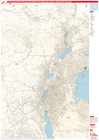
DR Congo: Democratic Republic of Congo – East provinces and neighboring countries – General Reference Map

Country: Democratic Republic of the Congo Source: Médecins Sans Frontières Please refer to the attached Map. This Regional map includes East DRC provinces (Sud-Kivu; Nord-Kivu; Ituri; Haut-Uele), and Uganda (up to Kampala), Rwanda, Burundi, South Sudan border areas.

DR Congo: Democratic Republic of Congo – East provinces and neighboring countries – General Reference Map Read More »

C44a2191 D530 4c4b 9ae1 Bbe871adbbe0 AHpggQ

DR Congo: Ebola Outbreak, Ituri Province Situation Report #2, May 19, 2026

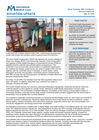
Country: Democratic Republic of the Congo Source: International Medical Corps Please refer to the attached file. FAST FACTS • The World Health Organization has declared the Ebola Bundibugyo outbreak in the DRC and Uganda a Public Health Emergency of International Concern. • As of May 19, the DRC has reported more than 500 suspected cases and at least 130 deaths. • Uganda has confirmed two cases, including one death. OUR RESPONSE • International Medical Corps teams are in Ituri, the epicenter of the outbreak in DRC, and in Goma (along the Rwanda/DRC border), where cases have also been reported. • International Medical Corps also has a Rapid Response Team in Uganda supporting that country’s response. • International Medical Corps teams in South Sudan are coordinating closely with the Ministry of Health to support readiness efforts. The World Health Organization (WHO) has declared the current outbreak of Ebola virus disease (EVD) in the Democratic Republic of the Congo (DRC) and Uganda a Public Health Emergency of International Concern (PHEIC), signaling that this outbreak has potential global consequences. First confirmed in Ituri province after several weeks of undetected transmission, the outbreak has already spread across key areas of eastern DRC and into Uganda, with two confirmed cases in Kampala. In South Sudan, where geographic proximity and population movements across a shared border with DRC increase the risk of transmission, the Ministry of Health (MoH) has launched preparedness efforts. As of May 19, the DRC has reported more than 500 suspected cases and at least 130 deaths. In Uganda, authorities have confirmed two cases in Kampala, including one death. The current hotspot remains Ituri province, particularly Rwampara, Mongbwalu, Nyakunde and Bunia, where the outbreak appears to have started as a family cluster, followed by health-facility transmission and then wider community spread. The combination of delayed detection, incomplete contact tracing, mining-related mobility of community members, insecurity and the large number of informal health providers suggests that the actual scale of transmission may be greater than currently detected. The outbreak is especially concerning because it is caused by the Bundibugyo strain, for which there are currently no approved vaccines or therapeutics. Response efforts therefore have to rely heavily on rapid surveillance, contact tracing, testing, infection prevention and control (IPC) measures, supportive clinical care, risk communication and community engagement, and strong cross-border coordination. The operating environment in eastern DRC is highly fragile, and health facilities in the affected areas are under severe strain. IPC readiness remains critically low, with assessments showing only 34% coverage at Mongbwalu General Referral Hospital and less than 7% in other facilities. There are serious shortages of personal protective equipment (PPE), IPC materials, trained staff, triage capacity, isolation space and sample transport capacity. At least four healthcare worker deaths have been reported in the affected area, underscoring the risk of healthcare-associated transmission as well as the importance of PPE and adherence to protective measures for care providers. This outbreak both compounds and emphasizes severe pre-existing humanitarian needs. In Ituri, more than 1.9 million people were already in need of humanitarian assitance before the outbreak, including more than 923,000 internally displaced people. In North Kivu, chronic conflict, displacement and recurrent outbreaks have already left approximately 2.5 million people in North Kivu in need of humanitarian health assistance.

DR Congo: Ebola Outbreak, Ituri Province Situation Report #2, May 19, 2026 Read More »

98e9f66d 2893 49c1 A7aa 26a87acdb5c2 2ryKlJ

Attacks on Health Care in the occupied Palestinian territory (29 April-12 May 2026)

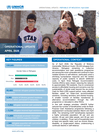
Country: occupied Palestinian territory Source: Insecurity Insight Please refer to the attached file. Since the 08 April 2026 Iran ceasefire, Israeli forces have reportedly increased attacks that directly affected health facilities and access to care across Gaza. In total, Insecurity Insight identified seven incidents of violence against or obstruction of health in the 16 days between 08 and 24 April 2026, compared to four incidents in the previous 16-day period (23 March-07 April). Reported incidents include Israeli drone strikes and artillery shelling near hospitals, restricting safe access to medical care, as well as gunfire directed at a UN-run health centre. Fuel restrictions and ongoing Israeli military operations also pushed critical services closer to collapse: on 11 April, a hospital was forced to shut down one of its main generators due to fuel shortages, leaving vital departments dependent on lower-capacity backup generators operating only for limited hours. Download the data. Updated every Monday and includes information on weapons use, perpetrators and effects. For events descriptions and data enquiries, please get in touch. Data is continuously updated and numbers may change if/ when further information is made available. See here for methodology. Past briefs: 15-28 April; 01-14 April; 18-31 March; 04-17 March; 18 February-03 March; 04-17 February; 21 January-03 February; 07-20 January; 24 December 2025-06 January; 10-23 December; 26 November-09 December; All SHCC Factsheets (EN): 2024; 2023; 2022; 2021. (AR): 2024; 2023; 2022; 2021. Help support the protection of health care by sharing this resource. Please copy and paste this link: https://bit.ly/29Apr-12May2026OPTHealth Documented incidents 29 April-12 May 2026 The publicly reported incidents below are not a complete nor a representative list of all incidents that affected the provision of health care between 29 April-12 May 2026. The incidents below have not been verified through ground investigations. There is a delay in reporting incidents due to our open source verification protocol. Gaza29 April 2026: Near al Tawam roundabout, North Gaza governorate, a paramedic was killed in an Israeli drone strike. Source: Quds News Network and Quds News Network I 30 April 2026: In Deir al-Balah city and governorate, the vicinity of Al-Aqsa Hospital were struck by an Israeli drone, injuring six people. Sources: Quds News Network and Quds News Network I 12 May 2026: In Beit Lahia city, North Gaza governorate, the area near an MSF team was struck by two shells from an Israeli tank, injuring at least 12 people. The impact occurred around 400m from Al Tayeb Clinic. Source: MSF East Africa West Bank and East Jerusalem05 May 2026: In al Khader town, south of Bethlehem governorate, an ambulance was prevented from reaching an injured person by Israeli forces. Source: WAFA 06 May 2026: In Tulkarem city and governorate, an ambulance transporting an injured young man was obstructed by Israeli forces, who seized the keys of one of the vehicles and broke its windows. Source: WAFA 08 May 2026: On the road between Aqraba town and the Za’tara checkpoint, Nablus governorate, an ambulance passage was obstructed by an Israeli settler. Source: Quds News Network 11 May 2026: In Qalandiya Refugee Camp, East Jerusalem, an ambulance was prevented from reaching a person who was killed by Israeli forces, who opened fire to prevent it from reaching him. Sources: Quds News Network and Quds News Network I

Attacks on Health Care in the occupied Palestinian territory (29 April-12 May 2026) Read More »

0661402b 7f35 4560 Bdf7 74f5448053f9 PZ9XWw

Afghanistan: ADI Working Group Meeting (20 May 2026) [Presentation]

Country: Afghanistan Sources: Agency Coordinating Body for Afghan Relief and Development, United Nations Population Fund Please refer to the attached file. MEETING AGENDA Opening and Updates Discussion on Barriers Faced by Persons with Disabilities Based on Community Perception Monitoring Findings Discussion and Finalization of the ADIWG Workplan Announcement of Shortlisted Organizations for the 3rd ADIWG Co-Chair Role Updates on the Afghanistan Community Voices Platform (CVAP) 2025 and 2026 AOB and closing

Afghanistan: ADI Working Group Meeting (20 May 2026) [Presentation] Read More »

Bangladesh: From coverage to prioritisation: how funding cuts are reshaping operational decisions in Cox’s Bazar

Countries: Bangladesh, Myanmar Source: ODI – Humanitarian Practice Network In Cox’s Bazar, Bangladesh, funding cuts are no longer only a planning concern. They are changing everyday operational decisions: how much food assistance can be sustained, which health facilities remain fully functional, which shelter improvements are delayed, how many staff members can be retained, and how much community follow-up is realistic when teams are smaller. The Rohingya response remains one of the largest refugee operations in the world. More than one million Rohingya refugees live in Bangladesh, most of them in Cox’s Bazar, where restrictions on movement and limited access to formal livelihoods leave families heavily dependent on humanitarian assistance. The 2025−26 Joint Response Plan (JRP) required $934.5 million in 2025 to reach 1.48 million people, including Rohingya refugees in Cox’s Bazar and Bhasan Char, and affected Bangladeshi host communities. The same plan brought together 113 partners, about half of them national organisations from Bangladesh. By the end of 2025, however, the response was still less than half funded. The official JRP funding update recorded $434.5 million received, or 46% funded by the end of the year. For implementing organisations, that gap is a staffing problem, a service-quality problem, a risk-management problem and, ultimately, a protection problem. When budgets fall, the effects do not move neatly through one sector. A delayed shelter repair can increase fire or monsoon risk. A health facility operating at reduced capacity pushes patients elsewhere. A smaller outreach team means rumours, complaints and exclusion risks are detected later. Reduced staffing and remuneration packages pass the funding gap onto the people expected to keep services running. From broad coverage to managed scarcity The Cox’s Bazar response is being pushed from a broad coverage model toward a prioritised minimum-service model. The Flash Appeal and Urgent Priorities exercise made this shift explicit: $455.6 million was identified for first-priority activities as part of an essential minimum package, and approximately 49% of the original JRP appeal was required for critical, life-saving interventions. This kind of prioritisation is necessary under funding pressure, but it is not neutral. Once life-saving activities are protected, other functions become easier to cut: prevention, community engagement, case follow-up, staff supervision, training, maintenance and feedback systems. In a protracted camp setting, these functions may look secondary on paper, but they are often what keep services safe, trusted and usable. The key operational question is therefore not simply what gets cut. It is whether the response can make trade-offs visible, explain them to communities, monitor their consequences and adjust before small reductions become major protection risks. Read full article here

Bangladesh: From coverage to prioritisation: how funding cuts are reshaping operational decisions in Cox’s Bazar Read More »

353a5a97 Eb3b 47c9 Ad46 Ed4138b98d69 ACDgJK

World: Standards and Assurance Framework for Ethical AI in Humanitarian Action (SAFE AI) – A Governance Framework for Humanitarians using AI: How to turn SAFE AI principles into practical action | May 2026. Version 1.1

Country: World Source: CDAC Network Please refer to the attached file. The governance gap Humanitarian AI is being deployed faster than the architecture needed to govern it. Systems that determine eligibility, target assistance, and mediate access to information for crisis-affected people are going live, often without adequate safeguards and rarely with meaningful input from the communities they affect. How do we know AI is working well in humanitarian action if we cannot see, compare, or improve the systems being deployed? Every honest stakeholder is asking this. Communities AI is supposed to serve. Donors and investors funding adoption. Programme staff operating the systems. Boards holding ultimate accountability. None currently has a satisfactory answer. That is the governance gap SAFE AI closes. The right to know The right-to-know commitment is the organising principle of the SAFE AI Framework. It applies to the people AI systems serve, and it applies to the people who fund, build, and rely on those systems. For communities, it means knowing when automation is in play, how decisions are being made, and how to contest them. The right of people who never interact with an AI system but are nonetheless materially affected by it is recognised. Decisions taken about people are governance acts even when those people do not encounter the system directly. For donors, partners, and boards, it means systems can be inspected, documented, and compared on a common basis. Donors cannot fund what they cannot inspect. Organisations cannot improve what they cannot compare. The Framework operationalises the right to know in a form that makes both possible. What’s new with AI that existing governance does not cover? Humanitarian organisations already operate strong governance functions: data protection, safeguarding, procurement, accountability. SAFE AI builds on them. It adds what AI specifically introduces, where existing governance has not yet been built to handle it. AI makes decisions about people who never interact with it. Existing accountability assumes the person affected is the person using the system. With AI, often they are not. A refugee whose data passes through several agencies is affected by every system that processes it, whether or not she ever sees one. AI can exclude people silently, at scale, across multiple organisations simultaneously, faster than any existing feedback loop can catch. SAFE AI extends the right to know to people the system affects, not only people who interact with it directly. AI does not stay still after deployment. The model updates. New capabilities are added. The context changes. Risks shift through model drift, retraining, repurposing, and behaviour change. Existing risk frameworks were built for tools that hold still. SAFE AI has Decision Gates and continuous Technical Assurance in the lifecycle, so governance keeps up with the system. The choices that determine whether AI can be governed are made before it is deployed. How a system is built and procured shapes what can later be inspected, explained, or contested. Right-to-audit clauses, model change notification, data ownership terms, and exit rights are AI-specific contractual conditions that have to be in place before deployment. Standard procurement does not yet ask for them. SAFE AI does. What the SAFE AI Framework does What the SAFE AI Framework does SAFE AI is governance infrastructure for humanitarian AI. It guides organisations through a four-stage Implementation Journey from problem definition to deployment and monitoring, applies a three-tier risk classification with proportionate obligations at each tier, and sets formal Decision Gates at each stage where progression is tested against humanitarian principles, protection requirements, and responsible-refusal conditions. It does this through a set of named tools deployed at specific points in the lifecycle: SAFE AI Onboarding and Readiness Checklist: at problem definition, to establish whether the conditions for responsible AI use exist. SAFE AI Impact Assessment: at the first and second Decision Gates, to test whether the use case should proceed. SAFE AI Architecture and Procurement Guides: at design and procurement, to secure right-to-audit, model change notification, data ownership, and exit conditions before deployment. SAFE AI Technical Assurance: at development and ongoing, to verify performance against documented baselines. SAFE AI Transparency Card: the central governance record, documenting decisions, risks, and safeguards across the lifecycle. Community in the loop Community participation is a lifecycle governance requirement, embedded at every stage of the Journey. Affected communities hold knowledge about how AI systems behave in their context that internal testing does not catch. The Framework treats community involvement as a structure of governance. Where you are now, and what SAFE AI prepares you for AI is changing fast. The systems being deployed in humanitarian action today are not the systems that will be deployed in a few years. Foundation models are getting more capable, agentic systems are moving from pilots into operations, and the pressure to adopt is rising on every side. SAFE AI is designed to get humanitarian organisations ready. Not ready for any one technology. Ready to absorb whatever comes next, deploy it where it makes sense, refuse it where it does not, and keep the people we serve at the centre of those decisions. Adopting the Framework is how organisations build that readiness. The four-stage Journey, the three-tier risk classification, and the named tools give organisations a working governance baseline. The Decision Gates give them the discipline to pause when something is not right. The Transparency Card gives them the record that makes each deployment defensible. Together, these are what allows an organisation to say yes to a new technology with confidence, or to say no with evidence. For organisations with established AI governance, including UN agencies and larger INGOs that have already developed internal AI policies, ethics review processes, and compliance frameworks, SAFE AI provides comparability. A shared documentation standard and consistent risk-tiering that connect your existing practice to the wider sector. Use the tools as prompts to stress-test what you already do against what is coming. For organisations with general governance practice but no AI-specific extension, SAFE AI is the AI lens applied through the functions you already operate. Existing data protection,

World: Standards and Assurance Framework for Ethical AI in Humanitarian Action (SAFE AI) – A Governance Framework for Humanitarians using AI: How to turn SAFE AI principles into practical action | May 2026. Version 1.1 Read More »

3724b0c8 663a 47ed B076 Db0aaa383113 UzBYvF

AMDA Emergency Relief #57: Crisis in Ukraine, 19 May 2026

Country: Ukraine Source: Association of Medical Doctors of Asia Please refer to the attached file. In western Ukraine’s Transcarpathia region that borders Hungary, St. Michael’s Center for Medical and Social Rehabilitation of Children has been accepting 15 to 20 disabled children per day to offer several rehabilitation programs. AMDA has been aiding St. Michael’s by shouldering some of its essential running costs such as fuel expenses, doing what it can to support local communities through the center. This assistance has so far allowed two cancer patients, who had difficulty affording medical bills, to receive medicines. Although the region is said to be relatively safe, the extent of the ongoing humanitarian crisis has been visible. Planned outages have continued for quite some time, even though the central heating system is crucial during the winter season. This time, Ukraine experienced one of its coldest winters in recent years, with temperatures dipping to around minus 20 degrees Celsius. Even so, there were days when power was available for only two hours a day, forcing people to rely on generators. However, because generators require a large amount of fuel, the fuel costs became a heavy burden on the center’s finances. As a result, the center had to suspend some of its rehabilitation programs, including aquatic therapy held at its indoor swimming pool. Meanwhile, a candle-making event was organized by the facility staff and mothers to entertain the children persevering through this ordeal. Bringing everyone closer together, the gathering helped children immerse themselves in the activity and share with others what they had gone through. Likewise, an event to celebrate Christmas and a carnival were held for children at the “Children’s House,” also run by St. Michael’s. Accommodating 25 children from all parts of Ukraine, the facility is a foster home for those who had to take shelter for various reasons, often associated with traumatic experiences. While living with their foster parents, the children receive continuous support from the facility to recover from emotional struggles, and such events help them ease their mental suffering. Not knowing how this conflict will end, many have voiced concerns about looming uncertainty, while the passing of close ones is no longer considered unusual news. Amid such trying times, children at St. Michael’s are continuing to do their best every day to triumph over their ailments.

AMDA Emergency Relief #57: Crisis in Ukraine, 19 May 2026 Read More »