Uncategorized

17c2a7a5 4105 59c2 8a34 6dfba91a40a9 QbfCoa

Ukraine: Україна – Звіт про внутрішнє переміщення населення в Україні – Опитування загального населення – Раунд 23 – травень 2026 року [UK]

Country: Ukraine Source: International Organization for Migration Please refer to the attached file. У період з 12 січня по 30 березня 2026 року Міжнародна організація з міграції (МОМ) провела 23-й раунд Загальнонаціонального опитування населення (GPS), яке забезпечує репрезентативну оцінку динаміки мобільності в Україні. Дані для цього звіту були замовлені МОМ і зібрані 61 інтерв’юером компанії Multicultural Insights шляхом скринінгових телефонних інтерв’ю з 40 004 випадково відібраними респондентами, доповнених подальшими інтерв’ю з 1 471 внутрішньо переміщеною особою (ВПО), 1 121 особою, яка повернулася, та 1 688 особами без досвіду переміщення. Усі інтерв’ю проводилися методом комп’ютеризованого телефонного опитування (CATI) із застосуванням підходу випадкового набору номерів (RDD). У цьому звіті представлено основні результати 23-го раунду GPS, які надають детальну інформацію про чисельність населення, напрями та потоки переміщення, наміри щодо мобільності, демографічні профілі, склад домогосподарств і рівень вразливості, а також потреби внутрішньо переміщеного населення. Отримані дані покликані сприяти ухваленню рішень на основі фактичних даних під час стратегічного, технічного та програмного планування заходів реагування і відновлення в Україні.

Ukraine: Україна – Звіт про внутрішнє переміщення населення в Україні – Опитування загального населення – Раунд 23 – травень 2026 року [UK] Read More »

4dcd2267 Eed0 4736 86b4 72205e622e85 Lqs31k

Afghanistan: After Action Review: Eastern Region Earthquake

Country: Afghanistan Source: UN Office for the Coordination of Humanitarian Affairs Please refer to the attached file. A 6+ magnitude earthquake struck eastern Afghanistan on 31 August 2025, followed by multiple aftershocks in the days that followed. The earthquake primarily affected Kunar and Nangarhar provinces, causing fatalities, injuries, widespread damage to homes and public infrastructure, displacement and major disruption in remote mountainous areas. The humanitarian response was implemented in an extremely constrained physical access environment characterized by landslides, damaged roads, difficult terrain, recurring aftershocks, weak telecommunications including a 48-hour nationwide outage, winter onset, and restrictions affecting Afghan women staff access to UN compounds. Despite these conditions, humanitarian actors mounted a large-scale emergency response that delivered life-saving assistance rapidly and at significant scale. Rapid donor funding, including an emergency Central Emergency Relief Fund (CERF) allocation complemented by a reserve allocation by the Afghanistan Humanitarian Fund (AHF), together with early resource mobilization efforts, notably the EU Humanitarian Air Bridge (EUHAB), which operated five humanitarian cargo shipments between 19 and 29 September 2025, were widely viewed by responders as critical enablers of the response. A detailed infographic timeline of the response is included in the annex. Following the conclusion of the response, the Inter-Cluster Coordination Team (ICCT) initiated an After-Action Review (AAR) to assess the humanitarian response to the 31 August 2025 eastern region earthquake across Nangarhar and Kunar provinces. The review examined operational coordination, response delivery, information management, logistics, access and accountability arrangements through document review, operational data analysis, key informant interviews, focus group discussions and field consultations with humanitarian actors, de facto authorities (DfA) and affected communities, including dedicated consultations with Afghan women responders and women from affected communities. Conducted between January and March 2026, including a field mission to Jalalabad and affected districts in February, this report presents the main findings, lessons learned and recommendations emerging from the AAR. By January, more than 300,000 people had received assistance, including over 230,000 people in priority districts including Chawkay, Khas Kunar and Nurgal in Kunar Province and Dara-e-Nur in Nangarhar. Stakeholders consistently described the eastern region earthquake response as an improvement over the 2023 Herat earthquake response, characterizing it as faster, more organized, and better coordinated in delivering immediate assistance. Some lessons from previous emergency responses appeared to have been internalized and translated into stronger operational readiness. However, the review also identified persistent structural gaps. The most significant early constraint was not a lack of humanitarian capacity, but the limited operational readiness of first 72-hour activation and sequencing arrangements needed to turn preparedness plans into immediate field action. While contingency planning had intended to frontload key operational decisions, some elements were re-discussed and partially re-developed during the initial response phase, contributing to avoidable delays. Several stakeholders also noted that early planning figures generated through the Disaster Impact Model (DIM) were constrained by outdated shelter typology data and inaccuracies in modelled earthquake intensity data, limiting confidence in projected damage estimates during the initial phase of the response. A second and equally important finding is that while the humanitarian system proved increasingly capable of scaling relief assistance, the transition toward recovery and resilience support once acute needs began to stabilize was slow with various degrees of uptake from Basic Human Needs (BHN) actors. Across interviews, focus groups, field teams and coordination actors, respondents repeatedly emphasized the need for earlier pivoting toward: emergency shelter repair and reconstruction debris clearance and road repairs restoration of water systems livelihoods recovery winter resilience The draft Final Evaluation of the Herat Post-Earthquake Recovery Response Project Under the Special Trust Fund for Afghanistan reinforces that earthquake response effectiveness should not be assessed solely through the speed and scale of immediate relief delivery, but also on how early, and at what scale, recovery, resilience and longer-term service restoration activities are operationalized within the response. According to the evaluation, in Herat, the integrated multi-agency Joint Programme implemented by participating UN agencies supported shelter recovery, infrastructure rehabilitation, livelihoods assistance and community action planning, contributing to high satisfaction of people served, improved perceptions of safety and stronger recovery outcomes among assisted households compared with control groups. At the same time, the evaluation highlights continuing challenges related to long-term sustainability, including financing gaps, market access constraints and the difficulty of sustaining recovery gains without continued support. These findings reinforce the importance of strengthening the transition between emergency response, early recovery and longer-term resilience support. While the system increasingly understands the requirements for emergency response and recovery-oriented programming, experiences from both the Herat and the eastern region earthquake responses suggest that further work is needed to ensure financing arrangements, implementation modalities and coordination mechanisms can support timelier and more predictable scaled recovery transitions. During AAR field visits, the team observed a range of BHN interventions across affected communities. However, community members, local DfA and humanitarian staff consistently indicated that ongoing support remained insufficient relative to the scale of recovery and reconstruction needs, particularly highlighting the importance of livelihoods support and income-generating opportunities to support longer-term self-reliance. This review concludes that Afghanistan’s disaster response capacity has measurably strengthened since the 2023 Herat earthquake response. Future improvements will depend not only on rapid emergency scale-up, but also on more executable preparedness systems, stronger anticipatory planning assumptions, and faster scaled transition from relief to recovery, the latter constituting a shared responsibility among humanitarian and BHN partners.

Afghanistan: After Action Review: Eastern Region Earthquake Read More »

DR Congo: Appui à la lutte contre Ebola : la MONUSCO mobilise sa logistique aérienne, près de 30 tonnes d’équipements déjà acheminées vers Bunia

Country: Democratic Republic of the Congo Source: UN Organization Stabilization Mission in the Democratic Republic of the Congo Depuis la déclaration officielle de la 17ᵉ épidémie d’Ebola en République démocratique du Congo, le samedi 16 mai 2026, la riposte s’intensifie dans la province de l’Ituri. La MONUSCO a rapidement mobilisé sa flotte aérienne afin d’appuyer les autorités congolaises et les agences des Nations Unies engagées dans la lutte contre cette maladie. Un pont aérien pour acheminer les équipements d’urgence Dès le lundi 17 mai, environ 5 tonnes de matériel médical d’urgence sont arrivées à Bunia en provenance de Nairobi (Kenya), grâce à un affrètement de l’Organisation mondiale de la Santé (OMS). Cette cargaison comprenait notamment : Des équipements de protection individuelle (EPI), Des fournitures de laboratoire, Des médicaments, Ainsi que des tentes pour la prise en charge des patients. Parallèlement, quatre véhicules et deux motos ont été transportés à Bunia depuis Goma (Nord-Kivu) et Entebbe (Ouganda), renforçant les capacités logistiques sur le terrain. Le mercredi 20 mai, 11 tonnes supplémentaires de matériel de riposte sont arrivées par vols de la MONUSCO en provenance de Kinshasa et de Nairobi. En seulement quatre jours, près de 30 tonnes d’équipements ont été acheminées vers Bunia, illustrant l’ampleur de la mobilisation logistique. Un appui multiforme au-delà de la logistique L’intervention de la MONUSCO ne se limite pas au transport de matériel. Sur le terrain, les Casques bleus — militaires, policiers et composantes civiles — intensifient les actions de sensibilisation des populations. À Tchabi, dans le territoire d’Irumu (à environ 120 km de Bunia), des dizaines de personnes ont été sensibilisées le 18 mai aux mesures essentielles de prévention, notamment : l’hygiène personnelle, et les risques liés à la consommation de viande de brousse. Le lendemain, une campagne similaire a été menée à Fataki, auprès des personnes déplacées et des communautés locales. À l’aide de haut-parleurs, les équipes ont insisté sur : le lavage régulier des mains, l’utilisation correcte des équipements de protection, ou encore la reconnaissance des symptômes de la maladie. Ces initiatives visent à renforcer la préparation des communautés, réduire la panique et protéger les populations vulnérables, en ligne avec le mandat de protection des civils de la MONUSCO. Une situation sanitaire préoccupante Selon les données officielles au 18 mai 2026 : 457 cas suspects ont été recensés en Ituri (Bunia, Rwampara, Mungwalu et Nyakunde), 33 décès récents, dont 4 confirmés positifs, et un total de 131 décès cumulés depuis le début de l’épidémie. À ce stade, aucun traitement spécifique ni vaccin n’est disponible contre cette nouvelle souche du virus. Des mesures de prévention essentielles En attendant des avancées médicales, les autorités sanitaires appellent les populations à respecter strictement les mesures de prévention : Se laver régulièrement les mains avec des solutions désinfectantes, Eviter les contacts physiques, S’abstenir de consommer de la viande de brousse, Eviter les rassemblements, Signaler tout cas suspect aux autorités sanitaires, Eviter tout contact avec les fluides corporels de personnes potentiellement infectées. Jean-Tobie Okala

DR Congo: Appui à la lutte contre Ebola : la MONUSCO mobilise sa logistique aérienne, près de 30 tonnes d’équipements déjà acheminées vers Bunia Read More »

05df0b91 14bb 4b05 8bcd 80e6910ba90b DDsiDO

Pakistan – Market Monitor Report – April 2026

Country: Pakistan Source: World Food Programme Please refer to the attached file. HIGHLIGHTS April The Consumer Price Index (CPI)-based annual headline inflation increased to 10.9 percent (YoY), up from 7.3 percent in March. On a month-on-month basis the CPI is up by 2.5 percent, in April compared to March, reflecting higher transport and perishable food costs. Annual food inflation increased by 7.6 percent (YoY) compared to April 2025, indicating that households paid nearly 8 percent more for food items – impacting food expenditure, especially for poor households. Prices of wheat and wheat flour in April were slightly lower compared to March, while rice prices largely remained stable with marginal decreases, reflecting adequate supply conditions. Compared to the previous month, the terms-of trade (ToT) improved by 4 percent, meaning that an unskilled daily wage earner’s wage could purchase marginally more wheat flour (12.3 kgs) in April than in March (11.8 kg), offering some relief.

Pakistan – Market Monitor Report – April 2026 Read More »

DR Congo: Ebola response support: MONUSCO airlifts nearly 30 tons of equipment to Bunia

Country: Democratic Republic of the Congo Source: UN Organization Stabilization Mission in the Democratic Republic of the Congo Following the official declaration of the 17th Ebola outbreak in the Democratic Republic of the Congo on May 16, 2026, response efforts have intensified in Ituri province. MONUSCO has rapidly deployed its air assets to support the Congolese government and United Nations agencies involved in combating the disease. Air bridge delivers critical emergency supplies On May 17, approximately 5 tons of emergency medical supplies arrived in Bunia from Nairobi, Kenya, through a World Health Organization (WHO)-chartered flight. The cargo included: personal protective equipment (PPE), laboratory supplies, medicines, and tents for patient care. In addition, four vehicles and two motorcycles were transported to Bunia from Goma (North Kivu) and Entebbe (Uganda), strengthening logistics on the ground. On May 20, an additional 11 tons of Ebola response materials were delivered via MONUSCO flights from Kinshasa and Nairobi. In just four days, nearly 30 20 tons of supplies have been airlifted to Bunia, highlighting the scale of the logistical response. Comprehensive support beyond logistics MONUSCO’s response extends beyond logistics. Peacekeepers — military, police, and civilian components — are actively conducting community awareness campaigns. In Tchabi, in the Irumu territory (about 120 km from Bunia), dozens of residents were sensitized on May 18 about key preventive measures, including: personal hygiene, risks associated with bushmeat consumption. On May 19, similar outreach efforts were conducted in Fataki, targeting internally displaced persons and local communities. Using loudspeakers, teams emphasized: regular handwashing, proper use of protective equipment, recognition of Ebola symptoms. These initiatives aim to enhance community preparedness, reduce panic, and protect vulnerable populations, in line with MONUSCO’s civilian protection mandate. A concerning health situation According to official data as of May 18, 2026: 457 suspected cases have been recorded in Ituri, 33 recent deaths, including 4 confirmed cases, and a total of 131 deaths since the outbreak began. At present, there is no specific treatment or vaccine available for this new Ebola strain. Key preventive measures Pending medical breakthroughs, health authorities urge communities to strictly adhere to preventive measures: frequent handwashing with disinfectants, avoiding physical contact, refraining from consuming bushmeat, avoiding crowded places, reporting suspected cases immediately, avoiding contact with bodily fluids of potentially infected individuals. Jean-Tobie Okala

DR Congo: Ebola response support: MONUSCO airlifts nearly 30 tons of equipment to Bunia Read More »

32147503 334a 4352 9642 0c042b4d5a11 GAEMwW

South Sudan Humanitarian Response Plan 2025 In Review

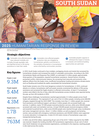
Country: South Sudan Source: UN Office for the Coordination of Humanitarian Affairs Please refer to the attached Infographic. In 2025, South Sudan continued to face multiple, overlapping shocks and trends that worsened the humanitarian situation and increased the needs of vulnerable communities. According to the 2025 Humanitarian Needs and Response Plan (HNRP), an estimated 9.3 million people, approximately three-quarters of the population, required humanitarian assistance. Several factors, including protracted conflict, intercommunal violence, the worsening food insecurity and economic crisis, spillover effects from the Sudan crisis, insufficient humanitarian funding and extreme climate events such as flooding and localised dry spells, exacerbated the humanitarian situation. South Sudan remains one of the most dangerous contexts for humanitarians. In 2025, continued attacks on civilians, humanitarian staff and assets severely constrained the delivery of life-saving assistance and worsened the fragile situation in affected communities. At least 21 humanitarian workers were killed in the line of duty, while 606 humanitarian access incidents were reported during the year, up from 453 incidents in 2024. Despite these challenges, humanitarians reached approximately 4.3 million people across South Sudan with assistance. This represents 81 per cent of the 5.4 million people, including some 680,000 refugees, targeted through the 2025 HNRP. This includes more than 3.1 million people who received food assistance and livelihood support, and about 2 million people who accessed health care services. In addition, nearly 707,000 people received protection services, while some 500,000 people accessed safe water and sanitation services. At least 530,000 people received emergency shelter and essential household items, while some 620,000 people were reached through camp coordination and camp management services. About 1.2 million children, as well as pregnant and lactating women, were provided with emergency nutritional assistance, and 330,000 children were supported to access education in emergencies. A total of 8,169 metric tonnes of humanitarian cargo were transported during the year. In 2025, only US $763 million, representing 45 per cent of the US $1.7 billion required for the HNRP, was received. Despite this funding shortfall, 293 humanitarian organisations, 66 per cent of which were South Sudanese non-governmental organisations, contributed to the response, reaching people in dire need across the country.

South Sudan Humanitarian Response Plan 2025 In Review Read More »

804b8ec5 F91d 4a8c B6ba 1fa91057bbde NKOfZn

Somalia Crisis Cannot Wait, Never Again: End the Funding Exclusion, Save Lives Now

Country: Somalia Sources: ChildFund Alliance, Plan International, Save the Children, SOS Children’s Villages International, Terre des hommes, World Vision Please refer to the attached file. Joint Statement by Joining Forces Alliance, East and Southern Africa Region ChildFund Alliance, Plan International, Save the Children International, SOS Children’s Villages International, Terre des Hommes International Federation, and World Vision International The Joining Forces Alliance expresses deep alarm at the rapidly worsening humanitarian crisis in Somalia. The latest Integrated Food Security Phase Classification (IPC) findings show that nearly 6.5 million people across Somalia are experiencing high levels of acute food insecurity, while more than 1.8 million children are suffering from acute malnutrition. Among them, hundreds of thousands face severe acute malnutrition requiring urgent treatment. These are not simply numbers. They represent children going to bed hungry, families forced from their homes by repeated drought and conflict, and mothers struggling to make impossible trade-offs to keep their children alive. Somalia is once again approaching the brink of catastrophe. Unlike previous crises, this emergency unfolds as humanitarian resources shrink, and Somalia is excluded from key pooled funding mechanisms within the international humanitarian system. Alarming data confirm a sharp reduction in humanitarian resources. Figures show that funding requirements dropped from approximately $1.42 billion in the 2025 Humanitarian Response Plan to $852 million in 2026—nearly a 40 per cent reduction, not due to declining needs, but tough funding decisions. Exclusion from Pooled Funds is Deepening the Crisis At the very moment Somalia requires rapid and flexible financing, the country has been excluded from major pooled funding allocations. This exclusion comes at a time when there is clear evidence of escalating need, despite repeated warnings from humanitarian actors operating across the country. Although the Somalia Humanitarian Fund continue to provide important support, the scale of available funding remains far below growing humanitarian needs. This funding gap is severely constraining humanitarian organisations, from expanding critical life-saving interventions. Programmes providing food, nutrition, water, health, child protection, and gender-based violence support are being reduced or incapacitated. Frontline Somali organisations must do more with less, even as needs continue to rise. This is not only a funding gap. It is a failure of prioritisation and a blow to humanitarian action. Somalia has demonstrated before that famine is preventable when the international community acts early and decisively. In 2022, coordinated support from donors helped avert a far greater tragedy. Today, however, delayed decisions and shrinking resources are placing millions of lives at risk of unnecessary and preventable tragedy. Women and Children are Bearing the Heaviest Burden Children are at the centre of this crisis. Hunger, displacement, and the collapse of basic services are exposing children to disease, exploitation, child labour, family separation and loss of education. Women and girls are facing heightened risks of violence and abuse as they travel longer distances in search of water, food and firewood, or live in overcrowded and unsafe displacement sites. Without urgent investment in protection and essential services, the consequences for children and families will be devastating and long-lasting. Our Call to Donors The Joining Forces Alliance, East and Southern Africa, urgently calls on bilateral and multilateral donors, including OCHA-managed funding mechanisms, to: Reverse Somalia’s exclusion from key pooled funds and immediately allocate additional emergency resources to Somalia. Provide early, flexible and predictable funding that enables humanitarian actors to respond before conditions deteriorate further. Prioritise support to national and local organisations that have access, community trust and the capacity to deliver humanitarian assistance quickly. Increase multi-year investments that link humanitarian response with resilience, drought preparedness and recovery. Reduce administrative barriers that delay the release of life-saving funds. We join the Somali NGO Consortium, which recently submitted an open letter to Donors, to assert that the cost of inaction will be measured in lives lost, communities destabilised, and a generation of Somali children permanently affected by hunger and deprivation. The world pledged “Never Again” after the 2011 famine in Somalia claimed more than a quarter of a million lives, many of them children. That promise is now being tested. Somalia does not need sympathy alone. It needs urgent action, political attention, and immediate financing. The humanitarian warning signs are clear. The solutions are known. What is needed now is the courage and commitment to act before it is too late. The Joining Forces Alliance stands in solidarity with the people of Somalia and urges all partners to respond now.

Somalia Crisis Cannot Wait, Never Again: End the Funding Exclusion, Save Lives Now Read More »

865509cf Eabf 5a20 A33b Cb2c138225a7 Wb5t3F

Iran: UNHCR Middle East Situation: Emergency Update #18 as of 19 May 2026

Countries: Iran (Islamic Republic of), Afghanistan, Armenia, Lebanon, Pakistan, Syrian Arab Republic, Türkiye, Turkmenistan Source: UN High Commissioner for Refugees Please refer to the attached file. Since late February, escalating hostilities in Iran and Lebanon have triggered humanitarian consequences with impact across the region, including refugee returns in adverse circumstances to Afghanistan and Syria. Events are unfolding against an already fragile humanitarian baseline, with over 24 million forcibly displaced people hosted across the wider region prior to the current escalation, alongside host communities under significant economic and social strain. Inter agency emergency response is underway to address urgent needs. In Iran, the Flash Refugee Response Plan targets refugees and others in need of international protection alongside affected host communities. In Lebanon, a Flash Appeal complements the broader response under the Lebanon Response Plan to deliver life saving assistance and protection, including to Syrian refugees. In Afghanistan, the funding requirement for the returns response is outlined under the Humanitarian Needs & Response Plan. UNHCR and partners have been working across countries neighbouring Iran to strengthen preparedness for possible large-scale refugee flows, in support of national authorities. Preparedness measures are in place, including border monitoring, reception and protection readiness, but these arrangements remain highly dependent on flexible and predictable funding in an increasingly constrained resource environment.

Iran: UNHCR Middle East Situation: Emergency Update #18 as of 19 May 2026 Read More »

World: Equality Now calls on African governments to strengthen laws on sexual violence, FGM, and women’s rights

Country: World Source: Equality Now Banjul, The Gambia, May 20, 2026: Millions of women and girls remain without adequate legal protection due to the failure of African governments to enact and effectively enforce national laws and regional agreements, Equality Now warned at the African Commission on Human and Peoples’ Rights’ (ACHPR) 87th Ordinary Session in Banjul, The Gambia. Esther Waweru, Associate Director for Legal Equality at Equality Now, delivered a statement to the ACHPR on May 12, 2026, calling on African Union (AU) Member States to do more to address sexual violence, female genital mutilation (FGM), online safety, sexual and reproductive healthcare access, and discriminatory matrimonial property rights. “Millions of women and girls across Africa live under laws and systems that don’t uphold their human rights. Countries have made binding commitments to advance gender equality, but gaps in legal protections, weak implementation of laws, and poor accountability are leaving many without equal rights, safeguards, or justice. African governments must move beyond rhetoric to deliver the legal reforms, protections, and accountability mechanisms women and girls urgently need,” Waweru explains. Rape laws in Africa continue to fail survivors of sexual violence Equality Now’s report Barriers to Justice: Rape in Africa, Law, Practice and Access to Justice analysed rape laws across 47 countries and found significant shortcomings. Sexual violence laws in some countries still require proof that physical force, threats, or violence was used. Such restrictive definitions place undue burdens on survivors to provide evidence, and disregard the varying contexts in which sexual violence occurs, including through intimidation, coercion, fraud, or unequal power dynamics that make it impossible to give genuine consent. Authorities often fail to properly investigate, prosecute, or convict rape cases, while discriminatory gender stereotypes can influence judicial decisions, leading to reduced charges, lighter sentences, or perpetrators escaping punishment altogether. Rape cases are sometimes resolved through out-of-court settlements via informal community mediation, with victim-blaming and social pressure often compelling survivors to withdraw legal complaints or remain silent. Kenya, whose State Report was reviewed by the ACHPR during its 87th session, retains a marital rape exemption allowing husbands to avoid prosecution for raping their wives. Equality Now called on the Commission to encourage Kenya to remove legal loopholes permitting rape within marriage, and reform sexual offences laws in line with the Niamey Guidelines, which set regional standards for preventing and responding to sexual violence, and the Maputo Protocol, the landmark AU treaty outlining governments’ obligations to end gender-based violence, ensure reproductive rights, and eliminate harmful practices. Restrictions on sexual and reproductive health services persist, especially harming rape survivors. Equality Now commended AU Member States that recognise sexual and reproductive health and rights (SRHR) as a constitutional right. For example, in October 2025, Malawi’s High Court ruled that denying a 14-year-old rape survivor access to a safe termination of pregnancy was a SRHR violation, and forcing a child to carry a pregnancy resulting from rape constitutes “harsh and inhumane” treatment. Equality Now urged all African governments to prosecute sexual violence, whether perpetrated during peacetime or conflict, and to adopt a survivor-centred approach built upon comprehensive reparations frameworks that provide compensation, medical and psychosocial support, and legal assistance to survivors. Discrimination in matrimonial property rights laws in Africa Equality Now’s report, Gender inequality in family laws in Africa, maps how women face significant challenges relating to unpaid work within the family context and discrimination in property distribution during marriage annulment, separation, or divorce. Article 7(d) of the Maputo Protocol requires equitable distribution of matrimonial property, yet in practice, this standard is often unmet. In Nigeria, property division is based entirely on direct financial contributions, leaving many women with little or nothing following divorce. In Kenya, Malawi, and South Africa, both direct and indirect contributions should be accounted for, but courts frequently fail to adequately value women’s unpaid labour. All Member States should pass and implement legislation recognising the full value of women’s unpaid domestic and caregiving work within the family, and implement General Comment No. 6 on the Maputo Protocol mandating an equitable sharing of joint property based upon both financial and non-financial contributions. Criminalising FGM in Liberia and upholding The Gambia’s law banning FGM Equality Now acknowledged ongoing efforts in Liberia to address harmful practices affecting women and girls, and calls on lawmakers to criminalise FGM by fast-tracking passage of the pending Women and Girls Protection Bill. In The Gambia, the Supreme Court is considering a case seeking to overturn the ban on FGM under the Women’s (Amendment) Act 2015, with petitioners arguing on constitutional grounds that the current anti-FGM law violates cultural and religious freedoms. Equality Now called on the State to defend and fully implement the Act as repeal would endanger women and girls, undermine years of progress, and set a dangerous precedent by revoking hard-won legal safeguards. Online gender-based violence in Africa Across Africa, weak, outdated, and fragmented digital governance frameworks leave women and girls vulnerable to harm online, including tech-facilitated gender-based violence. Most countries rely on narrow cybercrime laws that lack gender perspectives, resulting in disproportionate censorship, surveillance, or penalisation of those seeking protection, while allowing online harassment, exploitation, misinformation and disinformation, and algorithmic biases to proliferate. The concentration of digital infrastructure and artificial intelligence systems in the Global North risks reinforcing digital colonialism and embedding racial and gender bias into technologies. African states should establish binding due diligence and transparency requirements for transnational technology companies, align digital governance frameworks with the Maputo Protocol, invest in gender-responsive digital capacity building for women and girls, and strengthen access to remedies for survivors of digital harms. Domestication and implementation of the Maputo Protocol in South Sudan South Sudan ratified the Maputo Protocol in 2023. Three years on, women and girls face conflict-related sexual violence, entrenched harmful practices, and weak legal protections and inadequate enforcement, underpinned by deep-rooted patriarchal norms. The country’s ongoing constitution-making process offers a time-bound opportunity to embed gender equality at the heart of legal and institutional reform. South Sudan needs to fully domesticate and implement the Protocol

World: Equality Now calls on African governments to strengthen laws on sexual violence, FGM, and women’s rights Read More »