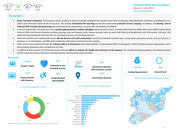
Syria Protection Sector Update (Jan-Jun 2025)
Country: Syrian Arab Republic Source: Protection Cluster Please refer to the attached file.
Syria Protection Sector Update (Jan-Jun 2025) Read More »

Country: Syrian Arab Republic Source: Protection Cluster Please refer to the attached file.
Syria Protection Sector Update (Jan-Jun 2025) Read More »
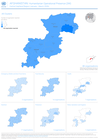
Country: Afghanistan Source: UN Office for the Coordination of Humanitarian Affairs Please refer to the attached Map.
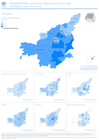
Country: Afghanistan Source: UN Office for the Coordination of Humanitarian Affairs Please refer to the attached Map.
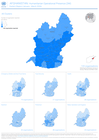
Country: Afghanistan Source: UN Office for the Coordination of Humanitarian Affairs Please refer to the attached Map.
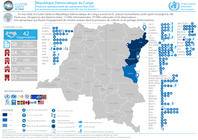
Country: Democratic Republic of the Congo Sources: Health Cluster, World Health Organization Please refer to the attached file. En mai 2026, le Cluster Santé en République Démocratique du Congo a recensé 42 acteurs humanitaires actifs ayant renseigné le 3W. Parmi eux : 04 agences des Nations Unies, 17 ONG internationales, 19 ONG nationales et 02 observateurs. Une dynamique qui illustre l’engagement de certains acteurs dans le processus de collecte et de partage d’informations.
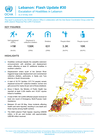
Country: Lebanon Source: UN Office for the Coordination of Humanitarian Affairs Please refer to the attached file. HIGHLIGHTS Hostilities continued despite the ceasefire extension announcement, with airstrikes and displacement orders affecting at least 61 additional localities in southern Lebanon. Displacement orders south of the Zahrani River triggered large-scale displacement and overwhelmed collective shelters, particularly in Saida and Tyre districts in South Governorate. A total of 33,731 families (127,714 people) remain displaced across 631 collective shelters; women and girls account for nearly 52 per cent of those sheltered. Since 2 March, the Ministry of Public Health has reported at least 3,324 deaths and 10,027 injuries linked to hostilities. A total of 684,120 conflict-affected people received at least one round of Emergency Multi-Purpose Cash Assistance. Between 25 and 29 May, three incidents affecting health care were reported, resulting in one death and three injuries among health workers. The 2026 Lebanon Flash Appeal, requiring US$308 million, is 60 per cent funded, with approximately US$186 million received. SITUATION OVERVIEW Airstrikes across Nabatiyeh and South Lebanon governorates continued, causing casualties and displacement. A new wave of displacement also emerged from Beirut’s Southern Suburbs following new threats of escalation and the destruction of civilian infrastructure. According to the Ministry of Public Health (MoPH), 3,324 people have been killed, and 10,027 people have been injured since 2 March 2026. On 29 May, Imran Riza, the Humanitarian Coordinator for Lebanon issued a statementexpressing alarm at escalating hostilities and widespread displacement orders, which are driving panic and repeated displacement, particularly in southern Lebanon. He underscored numerous attacks on health workers, growing displacement, reiterated the need to protect civilians and called for de-escalation and a sustained halt to hostilities. On the same sate, UNESCOraised concern over damage to protected cultural sites, including Chama’ Citadel and areas near Beaufort Castle, as well as risks to the World Heritage Site of Tyre in South Governorate. It reiterated that sites under enhanced protection must not be targeted. Since the ceasefire announcement on 17 April, a total of 36 attacks were documented against health care professionals, causing 27 deaths and 80 injuries according to the WHO surveillance system for attacks on health care (SSA). This brings the total number of attacks on health care since 2 March to 182, resulting in 125 deaths and 311 injuries. On 28 May, a reported strike hit Choueifat city in Mount Lebanon governorate, south of Beirut, contributing to ongoing displacement driven by continued hostilities and repeated displacement orders. Between 26 and 29 May, 12 new displacement orders were issued for 61 localities. Most of displacement orders were issued for areal in Nabatiyeh and the South Governorate. On 27 May, renewed displacement orders were issued for all areas south of the Zahrani River, triggering mass displacement and overwhelming shelters, with those in Saida and Tyre in the South Governorate reaching their full capacity. Newly displaced people are increasingly being directed toward Beirut and northern areas. Women and girls are directly affected by this renewed displacement, facing heightened protection risks, increased care responsibilities, and greater challenges in accessing essential services. As of 28 May 2026, an estimated 127,714 people (33,731 families) were reported as displaced across 631 collective shelters nationwide, reflecting a clear and sustained upward trend in displacement figures. Beirut and Mount Lebanon governorates continue to host the largest number of displaced people, while pressure on shelters across other governorates is also increasing. Funding constraints remain a major challenge to sustaining life‑saving assistance. With days remaining under the allocated time frame, the 2026Lebanon Flash Appeal has received US$185.9 million, which represents just over 60 per cent of the US$308.3 million required.
Lebanon: Flash Update #30 – Escalation of hostilities in Lebanon (as of 28 May 2026) Read More »
Country: World Source: ELRHA What if the most powerful indicator in humanitarian response was also the most neglected? When crises unfold, we count displacement, malnutrition, and funding gaps. But months later, one question often remains unanswered – how many people died? That omission matters – because mortality data changes decisions. As the UK Humanitarian Innovation Hub (UKHIH) and Elrha close Phase 2 of our Mortality Estimation in Humanitarian Crises Systems Innovation Partnership, this blog marks the beginning of a series exploring why mortality estimation matters, and how grantees are innovating so the humanitarian system can do it better. Mortality: the metric that changes the conversation Credible and timely mortality figures change conversations and decisions. As Chris Porter from FCDO put it during a 2025 panel discussion: “We often debate malnutrition rates, but deaths stop people in their tracks.” Mortality metrics capture crisis severity, scale, and urgency in a way few other indicators can. Mortality data used to be central to humanitarian assessments. Over time, however, it slipped to the margins – seen as too sensitive, too political, too technically complex, or too slow to be useful. The result is a paradox: the metric that best reflects human cost in crises is often missing from decision-making altogether. Why mortality evidence is so hard – and essential Estimating mortality in crises is undeniably challenging. Data is incomplete. Access is constrained. Methods vary. Numbers can be contested or suppressed, particularly in politically charged settings. Different approaches can produce vastly different estimates, eroding trust and confidence. But the cost of not measuring mortality is higher. Without credible mortality evidence the true scale of crises is underestimated; resources are allocated reactively rather than strategically; accountability weakens and advocacy relies on anecdote instead of evidence. Mortality estimation is not just a technical exercise. It is a moral and operational necessity. From reactive funding toward systems change UKHIH-Elrha’s current investments are built on a longer history of mortality-driven action. Funding followed mortality research in Somalia that helped trigger an unusual and early UN intervention in a subsequent developing famine in 2016. That response was not driven by malnutrition figures, but by mortality data. It was rare. And it worked. Recently completed research established that mortality in southern Chad was far higher than humanitarian actors had assumed, with large segments of the affected population missed entirely. This evidence forced uncomfortable reassessments, but also opened pathways to identify deaths that would otherwise have remained uncounted. Those efforts demonstrated what’s possible when rigorous methods are applied under pressure. They informed response discussions, shaped advocacy, and challenged assumptions in decision-making. But they also highlight a deeper issue: Mortality estimation has been treated as an emergency add-on rather than a standing capability in crises contexts. UKHIH’s first investment in mortality estimation proved decisive in a politically charged context. Rigorous work helped establish the credibility of mortality estimates from Gaza when official figures were being publicly dismissed. This evidence made it far harder for governments and global institutions to ignore the scale of civilian death, cutting through political pressure and reaffirming the role of independent science. Building on this work, UKHIH launched the Systems Innovation Partnership in 2024 to move beyond isolated projects and towards a durable ecosystem for mortality estimation. One rooted in equitable partnerships, shared infrastructure, and long-term investment, particularly in low- and middle-income countries. What progress looks like in practice UKHIH-Elrha is currently the only dedicated funder focused specifically on mortality estimation in humanitarian crises. Across Phases 1 and 2, we’ve seen tangible signs of change: Stronger methods, including improved modelling approaches and shared tools and resources like the Somalia Mortality Estimation Data Observatory (S-MED) Deeper learning, through case studies examining how mortality evidence has influenced – or failed to influence – responses in crises More equitable leadership, with LMIC-based partners SIMAD Institute for Global Health (Somalia) and Evidence for Change (Kenya) playing central roles in phases 1 and 2, scaling up partnering in phase 2 with Addis Ababa University, Mekelle University (Ethiopia) and Rebuild Hope for Africa (DRC) among others. Broader dialogue, bringing together researchers, humanitarians, policymakers, and funders to tackle the “last mile” problem of uptake and use Co-funding, for longer-term, strategic investment that builds synergies and amplifies impact across the system with European Commission Humanitarian Aid (ECHO). What this blog series will cover This blog marks the start of a weekly series showcasing the Phase 2 consortia pushing this agenda forward. IMPACT Initiatives are exploring locally led mortality estimation in Somalia, Ethiopia, and the DRC, highlighting what it takes to shift ownership and trust. Johns Hopkins University is focusing on methodological innovation in DRC, alongside practical guidance for local decision-makers on when and how mortality estimates can be generated and used. Save the Children International is developing a governance mechanism among Strategic, Technical and National Stakeholders and building an online platform making guidance, tools, and technical support accessible and equitable across the sector. Together, these consortia address not just how to count deaths, but how to ensure mortality evidence shapes response. Counting deaths to save lives Mortality evidence can’t be optional because uncounted deaths represent a failure of accountability, a gap in our understanding, and a missed opportunity to prevent more. When we don’t count deaths, we’re not avoiding difficult conversations – we’re having them anyway, just without evidence The UKHIH-Elrha partnerships show we can do better. What remains is a choice: to embed mortality estimation as a non-negotiable part of crisis response, or to continue operating in the dark about the very metric that matters most.
Countries: Democratic Republic of the Congo, Ethiopia, Somalia Source: ELRHA In the first blog introducing this series, Adrienne Testa, from the UK Humanitarian Innovation Hub and Elrha discussed how fundamental it is to measure excess mortality if response actors want to understand the severity of a humanitarian crisis and guide aid prioritisation. In our second blog we focus on the work of a consortium led by IMPACT Initiatives. This consortium is drawing attention to the roles that national and local actors play in mortality data collection and use by decision-makers and what is needed to design more localised mortality estimation systems in humanitarian contexts. The structural barriers we need to talk about Many of the challenges for local and national actors to collect mortality data and inform responses are well known, but poorly documented. They have fewer opportunities for technical training; face inequitable access to financial resources for activities; and structural barriers limit their representation in coordination forums where decision-making occurs about whether mortality data should be collected, who collects it, and what findings can mean. Meanwhile, international actors frequently have a seat at the table, and therefore control the narrative, deciding what data matters and how it will shape response priorities. Yet, local and national actors – including non-governmental organisations (NGOs), universities, and public health institutes – are often ideally placed to collect mortality estimates and inform response decisions. They have established connections and access to affected communities and contextual understanding of how to appropriately and effectively operate. They understand political sensitivities and how to navigate these so that mortality estimation findings will carry legitimacy with key stakeholders and decision-makers. Crucially, locally-led mortality estimation initiatives challenge long-standing power imbalances associated with colonial, top-down approaches to humanitarian assistance. Recognising this, three partners in our consortium, Evidence for Change, London School of Tropical Hygiene and Tropical Medicine and SIMAD University, were funded by the Humanitarian Innovation Hub in 2024-25 to imagine what an ideal mechanism might look like to systematically trigger mortality data collection for accountable decision-making in crises. Consultation with global humanitarian stakeholders confirmed: If we want better mortality data, we must widen the pool of people able to generate it. This starts with investing in and strengthening the capacities of local actors. Funding local actors’ priorities and strengthening capacities With follow-on funding from UKHIH-Elrha in 2025-26, our consortium expanded. We teamed up with IMPACT Initiatives along with their partners at Addis Ababa and Mekelle Universities in Ethiopia and World Needs and Help, an NGO in the Democratic Republic of Congo (DRC). Together, we’re working to better understand real-world opportunities and obstacles faced by national actors when implementing mortality estimation activities. Our goal is to use this evidence to strengthen advocacy for approaches that support and prioritise local actors in this vital work. Rather than imposing a predefined research plan, each national partner has selected, tailored and implemented a mortality estimation activity to their context. Our consortium operates a ‘help desk’ to foster peer-learning and strengthen capacities across contexts. Activities include: Somalia: New approaches in a fragmented landscape Our previous work in Somalia demonstrated the effectiveness of well-designed data collection exercises to influence humanitarian decision-making – when findings were communicated – in a timely fashion and to the right people. However, we also saw how fragmented the current data landscape is, with mortality data not always collaboratively shared between institutions, and major gaps in mortality data coverage, particularly in areas outside government control. SIMAD University is therefore running a qualitative study with community burial attendants in hard-to-reach areas of Somalia, exploring what would be needed for this to become a feasible and acceptable mechanism of mortality reporting to bridge data gaps. Drawing on a nutrition and mortality surveillance system originally developed in the NGO sector, Evidence for Change is training female health workers to collect mortality data within a large-scale community-based government programme. Ethiopia: Regional partnerships for regional aid prioritisation Previously, universities across Ethiopia ran demographic surveillance sites in their local areas, with mortality and other data flowing to government authorities. Conflict dismantled many of these surveillance programmes. Addis Ababa and Mekelle Universities, which previously ran surveillance sites, are now partnering with regional health authorities in drought-affected Somali region and conflict-hit Tigray to conduct mortality surveys to help guide regional aid prioritisation. Mekelle University is also including a verbal autopsy component to describe the causes of death, something regional authorities found particularly valuable about the pre-war surveillance system because it helped them monitor the health of populations. Democratic Republic of Congo: Navigating insecurity and mistrust Engagements with both formal and informal authorities in eastern Congo can create tension or mistrust, complicating operational permissions and community access. Nevertheless, World Needs and Help is initiating a mortality survey in a conflict‑affected North Kivu region, to document the human toll of ongoing violence and displacement. While the organisation has no prior experience in mortality estimation, our consortium helped them expand their technical skillset. Their experience supporting needs assessments among various partners across the east means they are well positioned to navigate the complex challenges to ensure mortality estimation is possible. Alongside these activities, we are documenting how teams have approached the process, keeping a close eye on context. We are building on social science methodological approaches we developed in phase 1 to help us understand how politics, institutional identities and other evolving challenges shape the ways mortality actors work. Equitable and sustainable systems change None of these challenges have quick fixes. Building an equitable and sustainable approach to mortality estimation will require the concerted efforts of many stakeholders, working together to drive change. Our own consortium is part of that broader momentum. By documenting barriers and testing solutions today, our hope is to inform the strategy that will address these challenges tomorrow, supporting UKHIH’s drive for true systems innovation in humanitarian action.
Country: Democratic Republic of the Congo Source: ELRHA Author Jennifer O’Keeffe, Augustin Gang Karume and Paul Spiegel This blog series accompanies the Mortality Estimation Systems Innovation Partnership (SIP), supported by UKHIH-Elrha, which brings together diverse partners to strengthen how mortality data is collected, interpreted, and used across humanitarian crises. Earlier blogs in this series highlighted why excess mortality measurement is critical for understanding crisis severity, as well as exploring how to maximise local and national actors’ leadership in the mortality estimation ecosystem. In this third blog, we turn to Eastern Democratic Republic of the Congo, where Rebuild Hope for Africa and the Johns Hopkins Center for Humanitarian Health share how their work is making mortality estimation more accurate, accessible, and feasible for national actors best placed to do this work, even in the most challenging settings. “As an indicator, a mortality rate tries to evaluate the size and scale of a crisis in a single metric.” The Public Health Aspects of Complex Emergencies and Refugee Situations, 1997, Michael Toole, Ronald Waldman In 2023, the Humanitarian Congress in Vienna released a statement saying, “The humanitarian imperative is an absolute moral obligation to save lives and alleviate human suffering on the basis of need, without discrimination”. Yet**,** when resources are constrained, allocation is often based on geopolitical interests, media coverage, or how relatable a population may be to high-income donor countries. In short, human lives are valued differentially. The disconnect is not theoretical. In 2022, Rebuild Hope for Africa (RHA) led a nationwide mortality survey in the Central African Republic which estimated up to 5% of the population had died during the previous year. Despite the scale of these findings, the study received little media attention and did not lead to meaningful changes in donor policy. In conflict-affected settings, various, often compounding, factors make primary data collection difficult or impossible. These include forced displacement, insecurity, system failures, poor infrastructure, limited capacity, and restricted access. In practice, mortality is often not measured at all. And as threats to healthcare workers grow, international agencies have become understandably risk averse, collecting data only safer, accessible areas, where death rates are usually lowest. Without reliable data, decision makers and responders depend on fragmented sources and non-robust estimates. The result is a biased and misleading picture of crisis severity, that often portrays crises as less severe than they are. The magnitude of these biases and their effects on decisions by humanitarian actors, governments, and donors who rely on such data, remain largely unexamined. Our partnership between Rebuild Hope for Africa (RHA) and the Johns Hopkins Center for Humanitarian Health (CHH) is working to change this. Eastern Democratic Republic of the Congo – An Unquantified Crisis Few places demonstrate the challenges of mortality estimation more than the Democratic Republic of the Congo (DRC), one of the world’s most enduring humanitarian crises. The crisis worsened drastically in January 2025 when the country suffered a devastating double shock: the abrupt withdrawal of USAID funding and a violent military offensive by the Rwandan-backed rebel group M23. The M23 seized large swathes of territory, killing and displacing an unknown number of people in the process. With the departure of many international agencies and a vacuum in humanitarian response, the population has been left vulnerable to the worst effects of the conflict. A year later, the true human cost remains unknown. We recognise that without reliable data, it becomes even harder to mobilise the support that people living in Eastern DRC urgently need. Placing Data and Decision-Making in Congolese hands Augustin Gang Karume, one of the authors of this blog, was born and raised in Eastern DRC, where he still lives and works today. In 2008, he founded RHA to place data and decision-making back in Congolese hands. He understood then that national actors are the future of sustainable humanitarian response. Rooted in the community and living with the long-term consequences of decision-making, national actors have a strong incentive to prioritise community needs over institutional agendas. Using local networks and knowledge, they are the best equipped to conduct primary data collection in insecure settings. While international actors have scaled back amid funding austerity, national organisations like RHA have remained in place, continuing to work for and within their communities. These actors are also proving to be far more cost-effective and efficient. Without international overhead, they can often deliver results at a fraction of the cost of international organisations. As an example, RHA’s 2022 nationwide mortality survey in the Central African Republic, cost a total of 50,000 USD, whereas a single district SMART survey may cost upwards of 15,000 USD*. National actors are the first responders in nearly all crises and remain present long after international attention and funding fade. Bridging Local Leadership with Technical Expertise With funding from the UK Humanitarian Innovation Hub’s Systems Innovation Partnership, we are bridging RHA’s local leadership with technical expertise from the CHH, combining community trust with advanced epidemiological and statistical training. Together RHA and CHH are collaborating on a study to assess potential biases in mortality estimation through both primary data collection and innovative use of statistical approaches. We’re working to make mortality estimation more accurate, credible, and efficient, with the intent to apply the findings across humanitarian settings. In the primary data collection component, our study is comparing three different methods of mortality estimation: a retrospective household survey, rapid key informant listing, and a full census. Using a common reference population and recall period, the study aims to identify where biases arise, quantify which deaths are missed, and assess relative performance of a light-, medium- and resource-intensive approach to mortality measurement. In the statistical component, we are applying innovative use of established causal and design-based methods to assess biases. We are testing the utility and feasibility of these methods to answer questions like: to what extent are hard to capture deaths, such as neonatal and violent deaths, systematically missed; can fewer survey clusters still provide estimates precise enough for decision making; and can analytical adjustments
Country: Ukraine Sources: Logistics Cluster, World Food Programme Please refer to the attached files.
Ukraine – Coordination Meeting minutes, Mykolaiv, 28 May 2026 [EN/UK] Read More »