Uncategorized

3cef9cb8 D332 4896 B43e 7e9d380c076c TXbuoF

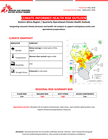
World: Eastern Africa Region | Quarterly Operational Climate-Health Outlook (Published: May 2026, Coverage Period: June – September 2026)

Countries: World, Ethiopia, Kenya, Somalia, South Sudan, Sudan Source: Médecins Sans Frontières Please refer to the attached Infographic. Integrating seasonal climate forecasts and health risk analysis to support anticipatory action and operational preparedness.

World: Eastern Africa Region | Quarterly Operational Climate-Health Outlook (Published: May 2026, Coverage Period: June – September 2026) Read More »

Af83f399 2e61 484d 9739 F882c2c0ef60 Gcoqw0

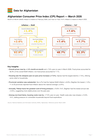
Data for Afghanistan: Afghanistan Consumer Price Index (CPI) Report — March 2026

Country: Afghanistan Source: Data for Afghanistan Please refer to the attached file. Key Insights • Overall prices rose by +1.4% month-on-month and +7.6% year-on-year in March 2026. Food prices accounted for 92.9% of the overall MoM inflation; non-food prices accounted for 7.1%. • Housing saw the steepest year-on-year price increase (+17.6%). Spices had the largest decline (-7.3%), offering some relief to households. • Provincial variation was substantial. Sar-e-Pul had the highest MoM inflation (+6.8%); Baghlan the lowest (-1.2%). 11 of 20 provinces reported food inflation above the national average (+2.6%). • Annually, Paktya faces the greatest cost-of-living pressure (+19.8% YoY). Baghlan had the lowest annual rate (-0.6%), suggesting more stable prices over the past year. • Among non-food items, housing costs rose by +17.6% year-on-year. Health costs also rose sharply (+13.9% YoY), adding pressure on vulnerable households beyond food expenditure.

Data for Afghanistan: Afghanistan Consumer Price Index (CPI) Report — March 2026 Read More »

Severe Flooding in northeastern Syria

Country: Syrian Arab Republic Source: SARD In late May, unprecedented rising water levels in the Euphrates River caused widespread flooding across parts of Deir ez-Zor and Ar-Raqqa governorates in northeastern Syria. According to Syrian authorities, the river rose more than 3.6 meters above normal levels, inundating low-lying communities, damaging agricultural land, disrupting access routes, and placing thousands of families at risk. In Deir ez-Zor, flooding has affected at least 2,439 families (14,634 individuals), damaging homes, agricultural land, and critical infrastructure. In neighboring Ar-Raqqa, around 500 families have already been displaced due to flood risks, with authorities preparing to relocate an additional 500 families from high-risk areas. The flooding has also struck during the peak wheat and barley harvest season, threatening farming livelihoods, while damage to key river crossings has further isolated communities and disrupted local trade. Urgent Request for Emergency Response In response to the flooding, SARD has activated its preparedness and response mechanism to support affected communities. SARD is prepared to provide emergency cash, emergency drinking water, ready-to-eat food assistance and essential relief items to affected families.. In addition, we are ready to support urgent repairs to restore disrupted water and sanitation services. SARD is coordinating closely with the Ministry of Emergency and Disaster Management and relevant local actors to ensure a timely, effective, and coordinated humanitarian response. This flooding is not an isolated event: communities in Syria face recurring climate-related shocks, while years of conflict have weakened infrastructure and limited the capacity to anticipate and respond to growing environmental risks. You can read our latest Flash Report 02 on the situation here. For coordination, partnership, or support, please contact info@sardngo.org or Head of Programs Fares Al-Saleh at Faresaalsaleh@sardngo.org.

Severe Flooding in northeastern Syria Read More »

9fdbc157 F452 4f92 A2d3 8b92a49bbacc Dr8Z2P

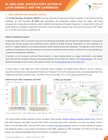
World: El Niño 2026: Anticipatory Action in Latin America and the Caribbean

Country: World Source: Regional Technical Group on Anticipatory Action in Latin America and the Caribbean Please refer to the attached file. The Technical Working Group on Anticipatory Action for Latin America and the Caribbean (GTAA LAC) publishes this briefing note in light of the forecast of an El Niño episode for the second half of 2026, with increasing probabilities of reaching strong to very strong intensity towards the end of the year. The document analyses current ENSO conditions, the differentiated impacts projected by subregion, and the compound effect of the fertilizer crisis stemming from the conflict in the Strait of Hormuz on regional agrifood systems. As of March 2026, the region has active or developing anticipatory action frameworks in 22 countries, with pre-arranged financing of USD 37.8 million. The note documents the ongoing inter-agency activations in the Central American Dry Corridor, funded by CERF with USD 10.5 million to protect up to 145,000 people in Guatemala, Honduras and El Salvador, as well as complementary WFP activations in Nicaragua and Belize, IFRC Early Action Protocols, and ongoing actions in South America. The document presents the activation time windows by subregion and includes recommendations for governments, humanitarian actors and donors aimed at scaling up anticipatory action before the impacts of El Niño materialize on the most vulnerable populations in the region.

World: El Niño 2026: Anticipatory Action in Latin America and the Caribbean Read More »

8562142c Bbc5 44cf B290 4d0b2e31696d RGU00X

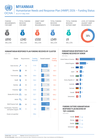
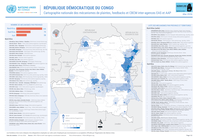
DR Congo: RDC Cartographie nationale des mécanismes de plaintes, feedbacks et CBCM inter-agences EAS et AAP Mai 2026

Country: Democratic Republic of the Congo Sources: PSEA Network DRC, UN Country Team in DR Congo Please refer to the attached file. RDC Cartographie nationale des mécanismes de plaintes, feedbacks et CBCM inter-agences EAS et AAP Mai 2026

DR Congo: RDC Cartographie nationale des mécanismes de plaintes, feedbacks et CBCM inter-agences EAS et AAP Mai 2026 Read More »

38dd8860 5398 4160 A558 A73edbd64f77 4Nu8hX

Protection Landscape in Syria – March 2025

Country: Syrian Arab Republic Source: Protection Cluster Please refer to the attached file. Syria’s political landscape transformed on 8 December 2024 with the fall of the former regime. A new transitional government is now in place, but the country remains fragmented among various armed actors: Hayat Tahrir al-Sham (HTS) and groups formed under the umbrella of the Syrian Nation al Army (SNA) now dominate most of the west and north (including Damascus, Aleppo, Idlib), while the Kurdish-led Syrian Democratic Forces (SDF) retain parts of the northeast. In the South, various armed groups under a separate ‘operational command’ exercise territorial control. Other foreign influences persist – Russia holds bases on the coast and Israel has expanded the areas under its territorial control. Despite recent agreements (with the SDF and OAGs in Sweida) security is volatile; the various groups are not all fully united and sporadic clashes continue (for e.g. SNA vs SDF skirmishes in the northeast) while new conflict dynamics are also emerging (for e.g. Coastal and Central areas).

Protection Landscape in Syria – March 2025 Read More »