Uncategorized

Sustaining a Polio-free World: charting the course from strategy to action – GPEI

Countries: World, Canada, Central African Republic, Ethiopia, Germany, Nigeria, Norway Source: Global Polio Eradication Initiative Over more than three decades, the Global Polio Eradication Initiative (GPEI) has brought the world to the brink of ending polio. But reaching eradication alone is not enough. Keeping the world polio-free will require sustained investment in the systems and capacities that detect, prevent, and respond to poliovirus, long after the last case is found. That is the vision behind Sustaining a Polio-free World: A strategy for long-term success (SPW), which was presented to Member States at the Seventy-ninth World Health Assembly (WHA79) in Geneva in May 2026. A strategy built on broad consultation The strategy is the product of a rigorous development process that began at the end of 2024, involving dedicated technical working groups with representatives from across GPEI and broader immunization and health emergency stakeholders, two rounds of extensive stakeholder review, and formal engagement with WHO Member States across its regions as well as endorsement from the Polio Oversight Board. It is a revision of the polio post-certification strategy, published in 2018, and sets out the technical standards to sustain a polio-free world in perpetuity, beginning after certification of wild poliovirus type 1 eradication and variant poliovirus type 2 elimination. The strategy is organized around three core goals: (1) protect populations, by withdrawing oral polio vaccine from use in routine immunization and ensuring strong routine immunization; (2) detect and respond, through robust surveillance and outbreak response capacity; and (3) contain polioviruses across laboratories, vaccine manufacturers and other facilities to prevent reintroduction in a polio-free world. The SPW strategy reflects broad changes since 2018, including the development of the GPEI Polio Eradication Strategy 2022 – 2026 and its extension, new technologies (such as the novel oral polio vaccine type 2), new and updated global health frameworks, and other changes to the programmatic landscape. The strategy examines options for a future governance structure and accountability mechanisms beyond the current GPEI partnership and recommends an evolving governance model that moves from a centralized structure in the immediate term to a more decentralized structure in the longer-term, adapting to changing risks. A global cost estimate for the 10-year period of the strategy is included. To guide implementation, the strategy also introduces a roadmap for future planning efforts to provide direction on when and how decisions that are beyond the scope of the strategy will be determined. Strong support at the Assembly At WHA79, multiple Member States took the floor during the polio session to endorse the SPW strategy and its key themes, including the importance of integration, health systems strengthening, national ownership, and sustained financing. Germany welcomed the strategy and urged early action, noting “We encourage Member States to use it as a practical framework to strengthen eradication efforts through robust surveillance, outbreak preparedness, resilient immunization systems, and national ownership. We urge Member States to start implementing measures now, as some processes may require significant time to establish.” Other Member States, including Norway and Canada, underscored the strategy’s role in embedding polio essential functions within broader health systems. Meanwhile, several Member States tackling ongoing polio outbreaks, including Nigeria, the Central African Republic and Ethiopia affirmed their support to achieve and sustain a polio-free world. Partners including Gavi, Rotary International, and the United Nations Foundation highlighted the importance of transitioning and sustaining polio-funded assets, integrating essential functions into national systems, and protecting the gains achieved through the polio eradication effort. This endeavor is aligned with broader shifts in global health architecture towards greater country ownership, reduced fragmentation and strengthened impact. From strategy to implementation The presentation of the strategy at WHA79 marks the beginning of the implementation planning period, which will run in parallel with the final stages of eradication, as countries, regions, and global partners work together to prepare for sustaining a polio-free world. This work is being taken forward through the GPEI and broader partners, with WHO providing coordination and management. The planning period aims to ensure that the building blocks are in place for sustaining a polio-free world. This will rely on polio essential functions — surveillance, immunization, outbreak preparedness and response, and containment — being maintained at quality in all countries. The SPW strategy and accompanying resources are available for stakeholders to access on the GPEI website, and will be published on the WHO website in the coming months. The message from WHA79 is clear: as we near a polio-free world, the world must be ready to move from strategy to action — and the time to prepare is now.

Sustaining a Polio-free World: charting the course from strategy to action – GPEI Read More »
Lebanon Joins Global Anti-Landmine Treaty, Reinforcing International Norm in Challenging Times

Country: Lebanon Source: Anti-Personnel Mine Ban Convention Only days before the start of the Intersessional Meetings of the Convention on the Prohibition of the Use, Stockpiling, Production and Transfer of Anti-Personnel Mines and on Their Destruction, the Republic of Lebanon has brought renewed momentum to this landmark treaty, reinforcing the collective commitment to end the use, production, stockpiling, and transfer of anti-personnel mines, ensure their destruction, and assist victims. “In a period when some states have raised questions about their commitments under humanitarian disarmament treaties, Lebanon’s decision sends a clear and timely message: the protection of civilians must remain paramount, and the international rejection of anti-personnel mines must be upheld and reinforced—not weakened,” said H.E. Ambassador Eunice M. Tembo Luambia, Permanent Representative of Zambia to the United Nations in Geneva and President of the Convention. Lebanon deposited its instrument of accession on 1 May 2026, marking a significant milestone in reinforcing the global norm against a weapon rejected for decades by the international community. This courageous and symbolic decision comes at a moment of heightened international insecurity, underscoring Lebanon’s commitment to collective security and humanitarian principles. “This accession demonstrates that even in exceptional times, states can choose exceptional measures to strengthen, rather than abandon, the norms that protect humanity. Their decision is a powerful affirmation that the global stigma against anti-personnel mines endures and continues to grow.” This new affiliation comes a year after the Republic of Marshall Islands and Tonga joined, sending a powerful message in a moment where the so-called most successful humanitarian disarmament treaty faced withdrawals by five European States Parties. “Anti-personnel mines have caused widespread and long-lasting humanitarian harm, disproportionately affecting civilians and hindering post-conflict recovery and development. Lebanon’s accession underscores the continued relevance and resilience of the Convention as a cornerstone of international humanitarian disarmament, “ said Juan Carlos Ruan, Director of the Convention’s Implementation Support Unit. The Convention community looks forward to Lebanon’s active participation in its work moving forward. “I warmly welcome Lebanon and look forward to greeting its representatives at the upcoming Intersessional Meetings in Geneva this June,” added the Convention President. Editorial note: The Convention was adopted in Oslo and signed in Ottawa in 1997, and entered into force twenty-seven years ago, on 1 March 1999. It is the prime humanitarian and disarmament treaty aimed at ending the suffering and casualties caused by anti-personnel mines by prohibiting their use, stockpiling, production, and transfer, ensuring their destruction, and assisting victims. Together, the States Parties have destroyed over 53 million anti-personnel mines. Implementation of the treaty has contributed to peace and development by making billions of square meters of land safe again for human activity and providing support to those that have fallen victim to the weapon.

Lebanon Joins Global Anti-Landmine Treaty, Reinforcing International Norm in Challenging Times Read More »

695186d3 9088 4a58 9f05 23911a46f20d Lhm0xU

WFP Kenya Country Brief, June 2026

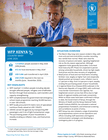
Country: Kenya Source: World Food Programme Please refer to the attached file. WFP reached 1.3 million people including 368,000 drought-affected people, refugees and smallholder farmers through food assistance, cash-transfers and capacity strengthening. WFP complemented the government-led emergency school meals programme reaching 50,000 learners in over 330 schools. WFP locally procured 610 metric tons of specialized nutritious foods valued at USD 139,872. UNHAS served 36 agencies by transporting 890 passengers and 3 mt of light humanitarian cargo. The purchasing power of poor households is steadily eroding as inflation rises, and food prices increase.

WFP Kenya Country Brief, June 2026 Read More »

9a3bf989 Bd34 4683 A4d4 12c548a24e4d FJm8nC

Nutrition Situation Alert: Worsening Nutrition Situation in Afghanistan

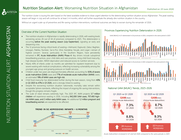
Country: Afghanistan Source: Nutrition Cluster Please refer to the attached file. The nutrition cluster is issuing this alert based on the latest available evidence to draw urgent attention to the deteriorating nutrition situation across Afghanistan. The peak wasting season will begin in July and will continue for at least 3-4 months, which will further exacerbate the already dire nutrition situation in the country. Without an urgent scale-up of preventive and life-saving nutrition interventions, nutritional outcomes are likely to worsen during the remainder of 2026. Overview of the Current Nutrition Situation The nutrition situation in Afghanistan is rapidly deteriorating in 2026, with wasting levels worsening across 26 out of 34 of provinces compared to 2025. This deterioration is occurring before the peak wasting season (July–September), signaling an early and deepening crisis. The 12 provinces facing critical levels of wasting—Helmand, Daykundi, Zabul, Baghlan, Urozgan, Paktika, Nuristan, Sar-e-Pul, Ghor, Kandahar, Faryab, and Logar—remain of highest concern. Several, particularly in the Southern Region, have persistently remained in IPC Acute Malnutrition (AMN) Phase 4. Key drivers include suboptimal breastfeeding practices, poor child diets and care practices, rising child food insecurity, high disease burden, WASH deprivation and reduced access to nutrition services. Nearly 40% of infants under six months are admitted for inpatient treatment due to severe wasting with medical complications, reflecting increasing vulnerability among the youngest age group and growing pressure on health services. Children under two years are disproportionately affected, accounting for 83% of severe acute malnutrition (SAM) cases and 77% of moderate acute malnutrition (MAM) cases; an estimated 19% of MAM cases are high-risk. Child food insecurity has deteriorated further during the lean season, rising from 40% in Q3 2025 to 47% in Q1 2026, and is strongly linked to wasting. Despite the worsening nutrition situation nationwide, mortality rates remain within acceptable Sphere standards, reflecting the impact of ongoing life-saving interventions, though this progress remains fragile. The scale of need remains extremely high. The 2025 IPC AMN projects 3.7 million children will experience wasting in 2026, including 942,000 SAM cases, 707,400 high risk MAM cases, and 2 million early MAM cases. An additional 1.2 million pregnant and breastfeeding women are expected to be affected.

Nutrition Situation Alert: Worsening Nutrition Situation in Afghanistan Read More »

A9045b5f 7e57 44be B7a3 9e511f0b44c7 GzXNDp

Somalia: Radio Ergo Weekly Feedback Report, Issued: 12 June 2026

Country: Somalia Source: Radio Ergo Please refer to the attached file. Brief Analysis The calls to Radio Ergo’s nationwide audience feedback platform in the week 4-10 June 2026 indicated a continuing mixed picture of rainfall in some areas with drought and water shortage in others. Many callers pointed out the uneven pattern of the rain. Whilst more callers spoke of rainfall and their optimism for recovery, this week recorded an increase in others citing the stresses caused by drought, including loss of livestock and failing crops. The following summarises the calls by theme. IDPs – a caller in Baidoa, Bay region, said they were IDPs living in a camp without proper shelter and with no assistance from aid organisations. Another caller in Dollow, Gedo region, said he was among IDPs facing hardship in the camps. He added that they had lost their livestock to drought and were appealing for help. Health – a female caller in Bardera, Gedo region, said there were outbreaks of malaria and flu spreading in the area. Another in Luq wanted medical advice about her sick, malnourished daughter who was unable to eat. Currency – several callers in Bay and Gedo regions complained about the loss of the Somali shilling that is affecting trade and small business. A female caller in Bardera said they wanted the government to restore the notes as they didn’t know how to use mobile money. Aid – a caller in Marawade, Sanag region, said he wanted WFP to verify the identities of the aid workers distributing aid there. Food security – a female caller in Yufle, Sanag, there was unemployment and poverty in the area and they needed help to cope with the hardship. Migration – a caller in Bali-dhiig, Togdher, commented that overseas migration was putting the youth at risk and they needed to sensitised about the dangers. He also wanted to see the human traffickers brought before the law. Environment – a caller in Beletweyne, Hiran, spoke about the conflict between people cutting down trees to make a living from firewood sales, and others being put at risk of losing the necessary vegetation cover. He wondered if there was a solution to this. Agriculture – a caller in Harardere in Mudug said he was among the farmers dependent on rain water for their farms. He cited pests attacking their crops, making the plants dry and darken. He wanted the agriculture expert to tell them how to control the pests. A farmer in Bardera said his were growing well although the tomatoes were not producing fruits and the gourds remained white. Callers in various regions had complaints about pests or disease including aphids, moths, caterpillars and mould, affecting vegetable and fruit crops. They all sought advice from the radio farming experts. Livestock – among callers to the Radio Vet programme, a caller in El-baraf, Middle Shabelle, wanted help with sick camels suffering from swollen, infected udders. A caller in Bardera appreciated the livestock programme and the experts. He also urged people to plant grass in the current rainy season to benefit the livestock as fodder in the dry season. Drought & Water shortage – a caller in Bogle village, north of Burao in Togdher region, said they were facing drought conditions in the area. Two female callers from parts of Sanag region cited drought conditions, water shortage, feeble livestock, and the need for help. Another in Bosaso, Bari region, said they need help to cope with the drought. A caller in Mudug said some parts of the region had rainfall while others were seeing drought and livestock deaths. In Galgadud region, callers in Adado and Abudwak spoke of water shortage. A caller in Galmegag said they faced drought and intense heat, their livestock were feeble, and they had missed out on rainfall for the past two seasons. A caller in Guriel said they had only 50 goats left from their herd of more than 100 due to drought. He added that they needed boreholes drilled in the area. A female caller said they had neither fodder nor water for their livestock. In Middle Shabelle, a farmer in Bananey said they had planted their crops but the rain had been poor. Two female callers in Wanleweyn, Lower Shabelle, said their crops were failing due to lack of rainfall and they faced drought and water shortage. Callers in Bardera, Dollow, and Kismayo cited early cessation of rainfall and rising temperatures with drought conditions. Rain – callers in scattered parts of the north including Awdal, Togdher, and Sool spoke of receiving rainfall that was replenishing resources and aiding recovery. Callers across various parts of Nugal and Galmudug regions also cited rainfall, with one in Borey, Mudug, saying they were doing well and hoped other areas also would get rainfall. Several in Hiran region mentioned rain, having also had floods before, although some of these callers indicated that the rain was little. Similarly, callers in Middle Shabelle indicated that there was rain in some areas but not others. Two female callers in Baidoa spoke of heavy rainfall and the sale of their farm produce to Mogadishu markets making a decent income. Several in various locations in Gedo region said they had rain, and their livestock and crops were doing well. One in El-ade said whilst their livestock were regaining their strength, they were concerned by the inflation of prices.

Somalia: Radio Ergo Weekly Feedback Report, Issued: 12 June 2026 Read More »

E9d76d28 3936 4457 B281 1752ffbede85 S4IYGz

DR Congo: Plaidoyer pour le renforcement de la collecte, de l’analyse et de la diffusion des données désagrégées dans le cadre de la réponse à la Maladie à Virus Ebola en RDC

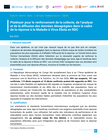
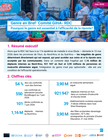
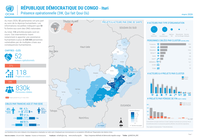
Country: Democratic Republic of the Congo Source: UN Women Please refer to the attached file. 1. Résumé exécutif Dans une épidémie, ce qui n’est pas mesuré risque de ne pas être pris en compte. L’absence de données désagrégées dans la réponse à Ebola risque de rendre invisibles les populations les plus exposées et d’affaiblir l’efficacité de la réponse. Le Comité Genre dans l’Action Humanitaire (GIHA) attire l’attention sur la nécessité urgente de renforcer la collecte, l’analyse et la diffusion des données désagrégées par sexe, âge et handicap dans le cadre de la réponse à Ebola en RDC. Les normes IASC soulignent que ces données sont essentielles pour une réponse efficace, inclusive et fondée sur les besoins. 2. Contexte La République démocratique du Congo fait actuellement face à sa 17ème épidémie de Maladie à Virus Ebola (MVE), initialement déclarée dans la province de l’Ituri avant une extension vers le Nord-Kivu et le Sud-Kivu. Au 24 mai 2026, 904 cas suspects, 101 cas confirmés, 119 décès suspects et 10 décès confirmés avaient été rapportés en RDC. Des cas liés à cette flambée ont également été signalés en Ouganda, soulignant les risques de transmission transfrontalière et les défis liés à la mobilité des populations. Dans un contexte marqué par l’insécurité, les déplacements de populations et des vulnérabilités préexistantes, cette évolution rapide de la maladie met en évidence l’urgence d’une réponse fondée sur des données fiables permettant d’identifier les populations les plus exposées et d’adapter les interventions.

DR Congo: Plaidoyer pour le renforcement de la collecte, de l’analyse et de la diffusion des données désagrégées dans le cadre de la réponse à la Maladie à Virus Ebola en RDC Read More »

Bf8ebb02 C364 470a 82f7 A147dd284ca5 Wq9A5Z

DR Congo: Genre en Bref· Comité GiHA- RDC

Country: Democratic Republic of the Congo Source: UN Women Please refer to the attached file. Alors que la RDC fait face à sa 17e épidémie de maladie à virus Ebola — déclarée le 15 mai 2026 dans les provinces de l’Ituri, du Nord-Kivu et du Sud-Kivu — les inégalités de genre déterminent directement qui est exposé, qui peut accéder aux soins et si la riposte sera acceptée par les communautés. Dans un contexte déjà fragilisé par 1,16 million de déplacés internes au Nord-Kivu, 921 947 en Ituri et 3,90 millions de personnes en insécurité alimentaire aiguë, l’intégration du genre n’est pas optionnelle : elle est une condition de l’efficacité opérationnelle.

DR Congo: Genre en Bref· Comité GiHA- RDC Read More »

1124782f 482a 4019 Be48 71a93bd65095 VteQXd

Papua New Guinea: Severe Tropical Cyclone Maila – Disaster Management Team Situation Report No. 09 (03 June 2026)

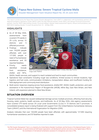
Country: Papua New Guinea Source: UN Country Team in Papua New Guinea Please refer to the attached file. As of 28 May 2026, assessments have covered 279 wards in 29 LLGs, across 10 districts and 5 affected provinces. Findings indicate over 143,000 people affected, with over 127,000 people in need of humanitarian assistance, and 55 reported fatalities. Priority needs identified include food assistance, shelter and NFIs, WASH, health services, and support to reach isolated and hard‑to‑reach communities. Operations face constraints including rough sea conditions, limited access to remote locations, high logistics and fuel costs, communication limitations, transportation delays, and insufficient funding for field deployment and community-level distribution. Multi‑sector response ongoing across food assistance, shelter/NFI, WASH, health, protection, and cash assistance in the Autonomous Region of Bougainville (AROB), Milne Bay, East New Britain, and New Ireland, with expansion planned to West New Britain.

Papua New Guinea: Severe Tropical Cyclone Maila – Disaster Management Team Situation Report No. 09 (03 June 2026) Read More »