Uncategorized

673f3da4 273d 4940 9e2c 2ae646abeee7 INeUgX

Venezuela (Bolivarian Republic of): Earthquake Response Situation Report #1, 26 June 2026

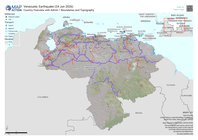
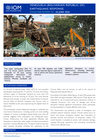
Country: Venezuela (Bolivarian Republic of) Source: International Organization for Migration Please refer to the attached file. This first Situation Report provides an overview of the impact of the 24 June earthquakes in the Bolivarian Republic of Venezuela and outlines IOM’s planned response in support of affected populations and national efforts. Highlights Two major earthquakes of Mw 7.2 and Mw 7.5 struck central-northern Venezuela on 24 June, causing widespread damage across La Guaira, Caracas, Miranda, Carabobo and Yaracuy. La Guaira has been identified as the most severely affected area, with significant destruction reported. Critical infrastructure has been disrupted, including electricity, water supply, telecommunications, transport systems, the Caracas Metro and Maiquetía International Airport. The Government has declared a state of emergency and activated national response mechanisms. Key figures At least 920 people reported dead. Approximately 3,360 people injured. More than 214 aftershocks recorded as of the morning of 25 June. Casualty figures are expected to rise as search-and-rescue operations continue. IOM response priorities IOM is mobilizing internal capacities to support the earthquake response, with planned interventions focused on emergency shelter and core relief items, health and mental health and psychosocial support, WASH, CCCM/site management, protection, and data and needs assessments. Priority activities include the provision of emergency shelter materials and essential household items, deployment of mobile health teams, support to health facilities, rapid assessments, site monitoring, protection risk analysis, referral pathways and DTM-based data products to inform coordination and targeting.

Venezuela (Bolivarian Republic of): Earthquake Response Situation Report #1, 26 June 2026 Read More »

8415e96d 3a8c 41c2 9134 F9b6a36889db MQmfQh

Terremotos en Venezuela: Reporte de situación N.º 3 (26 de junio de 2026, Hora: 3:00 pm)

Country: Venezuela (Bolivarian Republic of) Source: UN Office for the Coordination of Humanitarian Affairs Please refer to the attached file. Reporte de situación N.º 3Terremotos en Venezuela26 de junio de 2026Hora: 3:00 pm Destacados Dos sismos consecutivos de magnitud 7,2 y 7,5 se registraron el 24 de junio (18:00 hora local); las autoridades reportan más de 302 réplicas. Balance oficial provisional: 920 personas fallecidas y 3.360 heridas; la cifra continúa en aumento. Se reportan más de 3.000 personas damnificadas, según las autoridades. Al menos 1.423 infraestructuras se vieron afectadas; La Guaira se mantiene como el estado más afectado. Aeropuerto Internacional de Maiquetía cerrado sin vuelos comerciales; Metro de Caracas y ferrocarriles suspendidos. Equipos internacionales ya se encuentran en el país, incluyendo el Equipo de Evaluación y Coordinación en Casos de Desastre de las Naciones Unidas (UNDAC) y equipos de Búsqueda y Rescate Urbano (USAR) bajo la coordinación de INSARAG. Situación general Venezuela enfrenta una emergencia nacional tras dos sismos consecutivos de gran magnitud (7,2 y 7,5) ocurridos el 24 de junio (18:00, hora local) en la región centro-norte, con epicentro sobre el eje San Felipe – Yumare – Montalbán (Yaracuy/Carabobo). Las autoridades reportan 302 réplicas, como el movimiento de magnitud 5,1 reportado en Tucacas (estado Falcón) la noche del 25 de junio o la réplica de magnitud 4,4 al noreste de Guatire (estado Miranda) la madrugada del 26 de junio, lo que mantiene condiciones de riesgo elevado. El balance oficial provisional asciende a 920 personas fallecidas y 3.360 heridas. Además, autoridades reportaron que tenían contabilizadas 3.007 personas damnificadas. Así mismo, al menos 1.423 infraestructuras se vieron afectadas. Las cifras siguen en revisión a medida que avanzan las operaciones. La respuesta gubernamental durante estas primeras horas se ha centrado en búsqueda y rescate, atención médica de emergencia y evaluación de daños. El impacto es severo y generalizado, con mayor concentración en Distrito Capital, La Guaira, Miranda, Carabobo y Yaracuy. La Guaira, declarada zona de desastre, concentra el mayor número de infraestructuras afectadas y operaciones de rescate.

Terremotos en Venezuela: Reporte de situación N.º 3 (26 de junio de 2026, Hora: 3:00 pm) Read More »

6a577d5b B11c 4e45 804e 8ee8ef0e49f5 Wysbq1

Earthquakes in Venezuela: Situation Report No. 3 (26 June 2026, Time: 3:00 pm)

Country: Venezuela (Bolivarian Republic of) Source: UN Office for the Coordination of Humanitarian Affairs Please refer to the attached file. Situation Report No. 3Earthquakes in Venezuela26 June 2026Time: 3:00 pm Highlights Two consecutive earthquakes of magnitude 7.2 and 7.5 on 24 June (18:00 local time); authorities report more than 302 aftershocks. Provisional official toll: 920 people dead and 3,360 injured; the figure continues to rise. More than 3,000 people resulted displaced, according to authorities. At least 1,423 infrastructures were affected; La Guaira remains the most affected state. Maiquetía International Airport closed without commercial flights; Caracas Metro and railways suspended; power outages in multiple states. International teams are already present in the country, including the United Nations Disaster Assessment and Coordination (UNDAC) team and Urban Search and Rescue (USAR) teams under INSARAG coordination. Situation overview Venezuela is facing a national emergency following the two consecutive high-magnitude earthquakes (7.2 and 7.5) of 24 June (18:00 local time) in the north-central region, with the epicentre off the coast some 28–30 km north-west of Montalbán (Carabobo). Authorities report more than 302 aftershocks, including a magnitude 5.1 event reported in Tucacas (Falcón state) on the night of 25 June, and a magnitude 4.4 aftershock northeast of Guatire (Miranda state) in the early hours of 26 June, sustaining high-risk conditions. The provisional official toll stands at 920 people dead and 3,360 injured. Authorities reported that at least 3,007 people had been displaced. Additionally, 1,423 infrastructures were affected. Figures remain under review as operations advance. The Government response in the initial hours has focused on search and rescue, emergency medical care and damage assessments. The impact is severe and widespread, with the highest concentration in the Capital District, La Guaira, Miranda, Carabobo and Yaracuy. La Guaira, which has been declared a disaster area, accounts for the highest number of affected infrastructures and ongoing rescue operations.

Earthquakes in Venezuela: Situation Report No. 3 (26 June 2026, Time: 3:00 pm) Read More »

C01b0b0e 4239 4ee8 Af77 B7d525334e13 NOGLtR

Venezuela: Latinoamérica y El Caribe Resumen de Situación Semanal al 26 de junio 2026

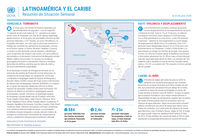
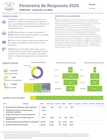
Countries: Venezuela (Bolivarian Republic of), Haiti, Martinique (France), Saint Kitts and Nevis, Saint Lucia Source: UN Office for the Coordination of Humanitarian Affairs Please refer to the attached Infographic. CIFRAS CLAVE 884 personas fallecidas tras dos fuertes terremotos que azotaron Venezuela el 24 de junio 2,4K personas heridas tras terremotos en Venezuela 25K personas retornadas forzosamente a Haití en mayo, el total mensual más alto a la fecha VENEZUELA: TERREMOTO El 24 de junio, dos fuertes terremotos separados por aproximadamente 40 segundos — uno de magnitud 7,2 seguido de otro más fuerte de 7,5— sacudieron la región centro-norte de Venezuela, con más de 20 réplicas registradas desde entonces. Al 26 de junio, las autoridades informan de 884 personas fallecidas y 2.477 heridas, así como 250 edificios y 8 hospitales afectados, con cifras que se prevé que aumenten a medida que continúen las operaciones de búsqueda y rescate en el Distrito Capital, La Guaira, Miranda, Carabobo y Yaracuy. La Guaira ha sido declarada zona de desastre e identificada como el epicentro del impacto más severo, con varios edificios derrumbados y el Aeropuerto Internacional de Maiquetía cerrado debido a daños estructurales. En Caracas, los temblores prolongados provocaron evacuaciones masivas y múltiples derrumbes de edificios, mientras que las redes de metro y ferrocarril permanecen suspendidas. Se ha declarado el estado de emergencia nacional, con la activación del sistema de Protección Civil de Venezuela y la instalación del Estado Mayor de coordinación. OCHA está coordinando el despliegue rápido de Equipos de Búsqueda y Rescate Urbano (USAR) a través del Grupo Asesor Internacional de Operaciones de Búsqueda y Rescate (INSARAG) y la creación de un equipo de respuesta rápida para reforzar la oficina nacional de Venezuela. Estados Unidos está movilizando 150 millones de dólares en asistencia y desplegando equipos de búsqueda y rescate. Asimismo, se despliegan equipos de búsqueda y rescate desde más de 20 países, entre ellos Suiza, España, Países Bajos, Italia, Francia, Alemania, Reino Unido, República Checa, Serbia, Canadá, México, Guatemala, El Salvador, República Dominicana, Colombia, Ecuador, Chile, Brasil, Jordania y Qatar, mientras otros países continúan sumándose a los esfuerzos internacionales de apoyo. Las prioridades inmediatas incluyen búsqueda y rescate, atención médica de emergencia, evaluaciones estructurales de infraestructuras críticas y alojamiento temporal para la población afectada. Apoya aquí al Fondo Humanitario de Venezuela Más información en: ReliefWeb Response HAITÍ: VIOLENCIA Y DESPLAZAMIENTO Los enfrentamientos armados continúan generando nuevos desplazamientos en los departamentos de Ouest y Artibonite de Haití. Entre el 13 y el 19 de junio, la violencia renovada en Cité Soleil, Ouest, desplazó a 5.025 personas, con un 89% asentándose en ocho sitios —cuatro de recientes creaciones— mientras la zona experimenta su cuarta oleada de desplazamiento desde marzo. En Artibonite, otras 2.677 personas fueron desplazadas entre el 18 y el 20 de junio tras enfrentamientos en Dessalines, L’Estère y Petite Rivière, y la gran mayoría se refugió con familias de acogida. Para agravar la crisis, los retornos forzados desde la República Dominicana y otros países alcanzaron los 25.789 en mayo, el total mensual más alto registrado hasta ahora en 2026 y un aumento del 22% respecto a abril, elevando el total de retornos forzados desde enero a 115.152, un aumento del 10% respecto al mismo periodo del año pasado. CARIBE: EL NIÑO El Boletín de Sequía del Caribe de junio de 2026 ha señalado una creciente preocupación por el posible desarrollo de un fuerte fenómeno de El Niño a finales de este año, que podría traer precipitaciones por debajo de la media y aumentar el riesgo de sequías prolongadas en partes del Caribe durante la estación seca de 2026/27. Aunque se espera que la estación húmeda en curso mejore temporalmente la disponibilidad de agua, las perspectivas sugieren que los países del Caribe oriental podrían entrar en la estación seca con reservas de agua reducidas. Según las proyecciones actuales, debería considerarse una alerta de sequía para Santa Lucía a finales de noviembre, con condiciones de vigilancia de sequía para Martinica y San Cristóbal y Nieves. Según la FAO, el riesgo de sequía puede traducirse rápidamente en hambre: El Niño de 2015-16 trajo pérdidas de cosecha de hasta el 70% en Haití, duplicando la inseguridad alimentaria en cuestión de meses.

Venezuela: Latinoamérica y El Caribe Resumen de Situación Semanal al 26 de junio 2026 Read More »

98c87f3f 541b 44d3 B8db 99a0cd0c8a0f Ji1lLP

Venezuela: Latin America & The Caribbean Weekly Situation Update as of 26 June 2026

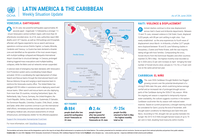
Countries: Venezuela (Bolivarian Republic of), Haiti, Martinique (France), Saint Kitts and Nevis, Saint Lucia Source: UN Office for the Coordination of Humanitarian Affairs Please refer to the attached Infographic. KEY FIGURES 884 people dead after two powerful earthquakes struck Venezuela on 24 June 2.4K people injured after two powerful earthquakes struck Venezuela on 24 June 25K people forcibly returned to Haiti in May – the highest monthly total so far VENEZUELA: EARTHQUAKE On 24 June, two powerful earthquakes approximately 40 seconds apart – magnitude 7.2 followed by a stronger 7.5 – struck Venezuela’s central-northern region, with more than 20 aftershocks recorded since. As of 26 June, authorities report 884 deaths and 2.477 injuries, as well as 250 buildings and 8 hospitals affected, with figures expected to rise as search and rescue operations continue across Distrito Capital, La Guaira, Miranda, Carabobo and Yaracuy. La Guaira has been declared a disaster zone and identified as the epicentre of the most severe impact, with multiple buildings collapsed and Maiquetía International Airport closed due to structural damage. In Caracas, prolonged shaking triggered mass evacuations and multiple building collapses, while the Metro and rail networks remain suspended. A national state of emergency has been declared, with Venezuela’s Civil Protection system and a coordinating Estado Mayor activated. OCHA is coordinating the rapid deployment of Urban Search and Rescue teams through the International Search and Rescue Advisory Group and surging a rapid response team to reinforce the Venezuela country office. The United States has pledged US$150 million in assistance and is deploying search and rescue teams. Other search and rescue teams are also deploying from more than 20 countries, including Switzerland, Spain, the Netherlands, Italy, France, Germany, the United Kingdom, the Czech Republic, Serbia, Canada, Mexico, Guatemala, El Salvador, the Dominican Republic, Colombia, Ecuador, Chile, Brazil, Jordan, and Qatar, while other countries continue to join the international relief efforts. Immediate priorities include search and rescue, emergency medical care, structural assessments of critical infrastructure, and temporary shelter for the affected population. Support the Venezuelan Humanitarian Fund here For more information, visit: ReliefWeb Response HAITI: VIOLENCE & DISPLACEMENT Armed clashes continue to drive new displacement across Haiti’s Ouest and Artibonite departments. Between 13 and 19 June, renewed violence in Cité Soleil, Ouest, displaced 5,025 people, with 89 per cent settling in eight sites – four newly established – as the area experiences its fourth wave of displacement since March. In Artibonite, a further 2,677 people were displaced between 18 and 20 June following clashes in Dessalines, L’Estère and Petite Rivière, with the vast majority taking refuge with host families. Compounding the crisis, forced returns from the Dominican Republic and other countries reached 25,789 in May – the highest monthly total recorded so far in 2026 and a 22 per cent increase on April – bringing the total number of forced returns since January to 115,152, a 10 per cent rise on the same period last year. CARIBBEAN: EL NIÑO The June 2026 Caribbean Drought Bulletin has flagged growing concern over the potential development of a strong El Niño later this year, which could bring below-average rainfall and an increased risk of prolonged drought across parts of the Caribbean during the 2026/27 dry season. While the ongoing wet season is expected to temporarily improve water availability, the outlook suggests countries in the eastern Caribbean could enter the dry season with reduced water reserves. Based on current projections, a drought warning should be considered for Saint Lucia by the end of November, with drought watch conditions for Martinique and Saint Kitts and Nevis. According to FAO, drought risk can quickly translate into hunger: the 2015-16 El Niño brought harvest losses of up to 70 per cent in Haiti, doubling food insecurity within months.

Venezuela: Latin America & The Caribbean Weekly Situation Update as of 26 June 2026 Read More »

Terremotos en Venezuela: la IFRC lanza un llamamiento de emergencia para ayudar a 300.000 personas y envía las primeras 17 toneladas de ayuda humanitaria

Country: Venezuela (Bolivarian Republic of) Source: International Federation of Red Cross and Red Crescent Societies Caracas / Ciudad de Panamá / Ginebra, 26 de junio de 2026 — Menos de cuarenta y ocho horas después de que dos fuertes terremotos sacudieran Venezuela, la Federación Internacional de Sociedades de la Cruz Roja y de la Media Luna Roja (IFRC) ha lanzado un llamamiento de emergencia por un valor de 50 millones de francos suizos. Los fondos recaudados servirán para apoyar a la Cruz Roja Venezolana en la asistencia a 300.000 personas gravemente afectadas. La atención se centrará inicialmente en La Guaira y la Gran Caracas, donde la destrucción es más grave. “Estos terremotos han sido devastadores para la población de Venezuela”, afirmó Jagan Chapagain, secretario general de la IFRC. “Las vidas de decenas de miles de personas han cambiado para siempre. Los equipos de la IFRC y de la Cruz Roja Venezolana respondieron de inmediato; ya ha quedado clara la importancia de contar con equipos locales permanentemente sobre el terreno. Pero un desastre de esta magnitud no puede recaer únicamente sobre los hombros de la población local. Hacemos un llamado a la comunidad internacional para que respalde nuestro llamamiento de emergencia, prestando apoyo en los próximos días y durante el largo camino que queda por delante”. Esta mañana, las primeras 17 toneladas de suministros humanitarios salen del centro humanitario regional de la IFRC en Panamá, a través del Aeropuerto Internacional de Tocumen, con destino a Venezuela. El cargamento incluye utensilios de cocina, kits de higiene, mosquiteras y otros artículos esenciales. La Cruz Roja Venezolana ha estado trabajando sin descanso —llevando a cabo operaciones de búsqueda y rescate, prestando primeros auxilios físicos y psicológicos, restableciendo los contactos familiares y evaluando los daños—, a pesar de que sus propias personas voluntarias se encuentran entre los afectadas. Su sede nacional ha sufrido daños graves y algunas personas voluntarios han perdido sus hogares. La red nacional de hospitales, clínicas y servicios de ambulancia de la Cruz Roja Venezolana está ayudando a dar apoyo a un sistema sanitario desbordado. La Federación Internacional de Sociedades de la Cruz Roja y de la Media Luna Roja (IFRC) destinó dos millones de francos suizos de su Fondo de Emergencia para la Respuesta a Desastres (IFRC-DREF) pocas horas después del desastre. Este llamamiento de emergencia de la IFRC busca recursos adicionales para que la Cruz Roja Venezolana pueda proporcionar alojamiento de emergencia y atención sanitaria, incluida la instalación de hospitales de campaña en las zonas más afectadas. También permitirá ofrecer apoyo psicosocial y de salud mental, servicios de agua potable y saneamiento, la distribución de artículos de socorro esenciales y ayuda en efectivo, así como el restablecimiento de los vínculos familiares y los servicios de protección. Dada la interrupción de las comunicaciones y la separación de muchas familias, y dado que hay grandes comunidades venezolanas que viven en toda la región, las Sociedades Nacionales de la Cruz Roja de diez países (Ecuador, Colombia, Bolivia, Guatemala, México, Costa Rica, Honduras, Uruguay, Paraguay y Argentina) han activado los servicios de restablecimiento de vínculos familiares para ayudar a las personas a obtener noticias de sus familiares. En Panamá Susana Arroyo +507 69993199 En Ginebra Tommaso Della Longa +41 79 708 4367 | Paolo Cravero +41 79 894 83 96

Terremotos en Venezuela: la IFRC lanza un llamamiento de emergencia para ayudar a 300.000 personas y envía las primeras 17 toneladas de ayuda humanitaria Read More »

oPt: Gaza Strip’s agriculture and livestock sectors show early signs of recovery amid widespread destruction

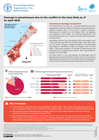
Country: occupied Palestinian territory Source: Food and Agriculture Organization of the United Nations FAO calls for the urgent removal of restrictions on agricultural inputs and support to sustain early recovery gains Rome – A joint assessment by the Food and Agriculture Organization of the United Nations (FAO) and the United Nations Satellite Centre (UNOSAT), using high-resolution satellite data, shows limited rehabilitation of greenhouse infrastructure in parts of the Gaza Strip. However, most of the greenhouse infrastructure – more than 81 percent – remains damaged and out of production, severely limiting farmers’ capacity to grow food for a population in desperate need. The assessment found that approximately 24 hectares of damaged greenhouses were rehabilitated between October 2025 and April 2026, with most repairs concentrated in Khan Yunis Governorate. In addition, 22 hectares of new greenhouse structures were identified in April 2026, primarily in Khan Yunis and Deir al-Balah Governorates. These developments coincide with encouraging signs of recovery in the livestock sector, according to FAO’s new analysis. Between November 2025 and May 2026, Gaza’s small ruminant population increased for the first time since the escalation of conflict in October 2023. Sheep numbers rose by 33 percent and goat numbers by 8 percent, improving prospects for milk and dairy production among vulnerable households and contributing to the gradual restoration of local food availability. The livestock recovery has been driven in part by increased emergency support following the ceasefire. Damage remains severe While the assessment identified some rehabilitation activity and new greenhouse construction, the overall level of damage remains extensive: 1 094 hectares of greenhouse area – more than 81 percent of the total greenhouse area in the Strip (1 094 ha of 1 325 ha) – remain damaged, up slightly from 80 percent in October 2025. The most severe damage is concentrated in the northern governorates and in Rafah, while rehabilitation efforts have largely been limited to areas where farmers have regained access to their land and mobilize available resources. The broader agricultural landscape remains heavily affected. Approximately 87 percent of Gaza’s cropland remains damaged, while agricultural infrastructure, irrigation systems, storage facilities and farm assets have suffered extensive losses. According to the Gaza Strip Rapid Damage and Needs Assessment released in April 2026, the agrifood system has incurred $1.44 billion in damage and $1.46 billion in losses. “Farmers in Gaza are eager to put every available plot back into production – they just need access to inputs and to their land,” said FAO Deputy Director-General Beth Bechdol. “The assessment shows that some farmers have begun repairing greenhouses and restoring production where conditions allow. But these remain isolated efforts against a backdrop of widespread destruction. With the planting season underway, the window is narrow. Emergency agricultural assistance and commercial imports of seeds, fertilizers, and equipment must be allowed into Gaza fully and without delay.” Recovery continues to face significant constraints Despite farmers’ efforts to restore production, recovery remains severely constrained. In addition to widespread damage to cropland and agricultural infrastructure, the revival of local food production is hampered by restrictions on land and sea access, including the westward expansion of the so-called “Yellow Line” separating the ceasefire zone from the military-controlled area. Recovery is further impeded by significant restrictions on the delivery of emergency agricultural assistance and on the import of essential agricultural inputs. As a result, farmers face acute shortages of seeds, fertilizers, irrigation equipment and other production materials, while livestock keepers continue to struggle to access feed, veterinary supplies and animal health services. The limited quantities of inputs available in Gaza remain scarce and are often sold at prices beyond the reach of many agricultural households. FAO’s continued support FAO is supporting agricultural recovery through a combination of conditional cash assistance, livestock support and technical guidance. FAO’s conditional cash support for the 2026 planting season is currently reaching 1 500 small farmers in the Gaza Strip, enabling each to cultivate at least 1 dunum (0.1 ha) of land. Through this support, FAO projects that the farmers will produce enough fresh vegetables to meet the recommended annual vegetable intake for more than 100 000 people, based on the per-person intake recommended by FAO and the World Health Organization. FAO is scaling up the programme to reach an additional 280 farming households. In parallel, FAO is now distributing nearly 600 tonnes of animal feed per month – five times the pre-ceasefire average. Since the conflict began, FAO has delivered more than 6 000 tonnes of animal concentrate feed and barley to over 5 000 livestock-keeping households, along with veterinary kits, conditional cash assistance and technical support. These interventions have helped livestock keepers preserve and begin rebuilding their herds, while increasing dairy and meat production. Sustained investment in agricultural recovery – combined with unimpeded access for farmers and agricultural inputs – is essential to rebuilding Gaza’s agrifood system and to reducing long-term dependence on humanitarian assistance. Contact Irina UtkinaFAO(+39) 06 570 52542irina.utkina@fao.org FAO News and Media(+39) 06 570 53625FAO-Newsroom@fao.org

oPt: Gaza Strip’s agriculture and livestock sectors show early signs of recovery amid widespread destruction Read More »