Uncategorized

dr congo: west and central africa: latest events at a glance (25–31 august 2026)

DR Congo: West and Central Africa: Latest Events at a glance (25–31 August 2026)

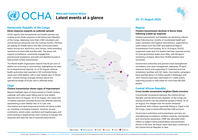
Countries: Democratic Republic of the Congo, Central African Republic, Chad, Nigeria Source: UN Office for the Coordination of Humanitarian Affairs Please refer to the attached Infographic. Democratic Republic of the CongoEbola response expands as outbreak spreads OCHA reports that humanitarian and health partners are scaling up the Ebola response in the Democratic Republic of the Congo, deploying more than 2,500 volunteers and civil protection personnel over the coming months. Partners are adding 35 mobile teams and 286 community-based teams across Ituri, North Kivu, and Tshopo, while extending operations to Haut-Uélé and Bas-Uélé. The teams will support surveillance, community engagement, psychosocial assistance, and safe and dignified burials to help prevent further transmission. The World Health Organization reports that 60 per cent of deaths are occurring in communities, highlighting the need for increased burial capacity. As of 30 August, national health authorities had reported 6,100 confirmed Ebola cases and 2,950 deaths, with a case fatality ratio of 48 per cent. Contact tracing coverage remains above the operational target of 85 per cent in affected areas. ChadCholera transmission shows signs of improvement Reports highlight signs of improvement in Chad’s cholera outbreak, with daily cases falling and no new deaths reported since 23 August. As of 25 August, 332 cases and 14 deaths had been recorded across five affected districts, representing a case fatality ratio of 4.2 per cent. Vaccination and rapid-response activities are being scaled up, including in emerging hotspots. However, access constraints, severe water, sanitation and hygiene gaps, and overcrowding in displacement sites continue to hamper the response and raise the risk of renewed transmission. NigeriaCholera transmission declines in Borno State following scaled-up response Cholera transmission and fatalities are declining in Borno State following four months of coordinated health and water, sanitation and hygiene interventions, supported by US$4 million from the CERF and additional Nigeria Humanitarian Fund funding. As of 24 August, 59,035 suspected cases and 314 deaths had been reported across 22 local government areas since May, with Monguno remaining a hotspot. More than 55,000 patients have recovered. Government authorities and partners have strengthened surveillance and case management, deploying 78 rapid-response teams and supporting 91 treatment and oral rehydration facilities with 961 beds. Vaccination campaigns have reached about 2.8 million people in Maiduguri and Jere. Partners have also chlorinated 411 water points, improving access to safe water for more than 862,000 people. Central African RepublicCross-border movements heighten Ebola concerns Cross-border movements between the Central African Republic and the Democratic Republic of the Congo are raising concerns over the potential spread of Ebola. As of 24 August, five villages near the border remained abandoned, with civilians reportedly fleeing to Zapaï in the DR Congo, close to Ebola-affected Bas-Uélé province. Government authorities and humanitarian partners are strengthening surveillance, isolation capacity, checkpoints and community awareness. CERF has allocated US$3 million to support Ebola preparedness and prevention efforts in the area. No Ebola cases have been confirmed in the Central African Republic to date.

DR Congo: West and Central Africa: Latest Events at a glance (25–31 August 2026) Read More »
MCC responds to deadly flooding in Nepal

Country: Nepal Source: Mennonite Central Committee By MCC staff Aug. 31, 2026 Mennonite Central Committee (MCC) is responding to deadly flash flooding in Nepal. The Aug. 26 flood devastated communities in Rasuwa, Nuwakot and Dhading districts, washing away entire settlements and villages and leaving a trail of heavy destruction. “It was heartbreaking to witness the scale of devastation caused by the floods,” says Durga Sunchiuri, MCC Nepal program director. “I have never seen such extensive destruction before. Many affected families are struggling without electricity and basic necessities in temporary holding areas, facing significant uncertainty about their housing and livelihoods.” MCC is working with two existing local partners, Sahayogi Hatharuko Samuha (Group of Helping Hands, SAHAS) and the National Mental Health Self-Help Organization (KOSHISH) to provide emergency relief. In the first weeks following the flooding, partners will deliver assistance to people living in temporary evacuation centers, including churches. MCC support will include food, water purification tablets, hygiene and dignity kits, bedding, clothes and psychosocial support in the affected districts. MCC will also support recovery efforts following the initial emergency phase. Both SAHAS and KOSHISH have partnered with MCC to respond to past disasters in the region, including the 2015 Nepal earthquakes. MCC’s ongoing program in Nepal already supports food security, livelihoods and nutrition, mental health and education. In the first days following the flood, MCC also supported immediate search and rescue operations by providing five 5.5-kilowatt generators after power had been knocked out in the Rasuwa district. Rescue workers relied on these generators for relief operations, including locating missing or injured people. “We hope that this timely and much-needed assistance will go a long way in supporting the affected communities,” says Christina Nisha, MCC representative for Nepal. “We are coordinating our efforts with other non-governmental organizations in the region and are grateful for the resilience and strength of our partners. These trusted organizations hold incredible knowledge and capacity. We welcome your prayers and support on their behalf, as well as for all the people of Nepal.” To donate to MCC’s emergency response, go to mcc.org/Nepal-flooding Mennonite Central Committee: Relief, development and peace in the name of Christ –END–

MCC responds to deadly flooding in Nepal Read More »

New IRC assessment finds critical resource gap in Venezuela as earthquake emergency medical teams wind down

Country: Venezuela (Bolivarian Republic of) Source: International Rescue Committee As international medical teams complete their scheduled deployments, damaged hospitals and shelters lack the capacity to absorb the level of need International emergency medical team presence has fallen 58% since mid-July and is projected to reach zero by late September Nearly 30% of health facilities assessed are structurally damaged and nearly 20% are non-operational, cutting off primary care for as many as 124,500 people Nearly 80% of people surveyed identified emotional distress as their leading protection concern, and 97% say they need psychosocial support that isn’t currently available In shelters, protection gaps are widespread: only 2 of 11 areas assessed report any child protection services, and 64% of households have lost identity documents Caracas, Venezuela, September 1, 2026 — A new needs assessment by the International Rescue Committee (IRC) finds that international emergency medical teams supporting Venezuela’s earthquake response are completing their deployments on schedule, but with many medical facilities either damaged or non-operational, the country’s health, protection and water and sanitation systems are not yet ready to absorb the resulting gap. Active international medical teams fell from 12 in mid-July to five as of August 10, and are projected to end entirely by late September. The assessment also found deep and largely unaddressed protection needs among displaced families. Nearly 80% of people surveyed named emotional distress as their top concern, and almost all said they need psychosocial support that is not available to them. Of the facilities surveyed, only one reported providing mental health services and even those are only partially operational. Reports of lost documentation, difficulty accessing public services and gaps in safe reporting channels for gender-based violence and child protection are widespread, with dedicated protection services reported in only a small fraction of the areas assessed. “We are in the middle of a precarious transition,” said Nicole Kast, IRC Country Director for Venezuela, Colombia, and Ecuador. “The teams that came to help are leaving on schedule, but the country’s hospitals aren’t ready to pick up where they left off. If we don’t invest now in the local health system, the families who survived the earthquakes will be the ones who pay for that gap.” As international teams leave, the toll is shifting to a national hospital network still recovering from the earthquakes. Hospital José María Vargas has just eight operational beds for 96 hospitalized patients. Pariata Peripheral Hospital’s bed capacity has dropped from 108 to 35, and Macuto’s maternity hospital has been fully evacuated. Several health facilities are facing shortages of water, electricity, and essential supplies that limit their ability to prevent and treat communicable diseases, including reported cases of chickenpox and diarrhea. A recent assessment of one national emergency medical team found it meets only about a quarter of World Health Organization readiness standards, with the largest shortfalls in water, sanitation and logistical self-sufficiency. Displaced families are also facing unsafe conditions in shelters. At one site housing 283 people, including 60 children, only 14 working toilets are available which is near the maximum ratio recommended in emergencies, leaving no margin for malfunction or an increase in population. Several shelters reported broken locks, poor lighting, no pest control and limited or no privacy divisions, hindering safe and dignified use of the facilities. The IRC is calling on the global community to invest now in primary health care, protection services and safe water and sanitation in the hardest-hit communities before international medical support disappears entirely. IRC Venezuela continues to refine its response to the earthquakes with the anticipated reduction in capacity in mind. As international medical teams withdraw, the demand for specialized care, hospitalization and complex referrals will inevitably increase. Alongside mobile clinics that meet patients where they are, the IRC is prioritizing the restoration of primary care capacity and the continuity of referral pathways to help strengthen local networks as they rebuild.

New IRC assessment finds critical resource gap in Venezuela as earthquake emergency medical teams wind down Read More »

oPt: Funding shortfall forces the World Food Programme to cut food assistance by half in the West Bank

Country: occupied Palestinian territory Source: World Food Programme Today an estimated 900,000 people are food insecure in the West Bank – with increased settler violence and displacement disrupting livelihoods, deepening hunger and pushing families further into crisis. WFP’s assistance to-date has been reaching 400,000 of the most vulnerable people, but this will be scaled back to 200,000 starting this month. WFP’s latest quarterly food security analysis found that 76 percent of households in the West Bank have experienced a significant decline in income. Food and fuel prices remain among the highest in the Middle East, forcing many families to sell assets and reduce the number and quality of their meals to survive. The analysis also found that 12 percent of people had poor food consumption, and one third of families could not afford a nutritious diet because of the rapidly deteriorating economy. People living in rural areas and in the southern West Bank governorates were identified as the most affected. “Families who were once thriving and earning a living from their land are now unable to afford enough food,” said Shaun Hughes, WFP Country Director for Palestine. “At a time when WFP should be scaling up assistance to reach more people, we are being forced to make difficult decisions, prioritizing the most vulnerable while cutting assistance to others despite widespread needs. We urge the international community to act immediately and step up support for Palestinians.” WFP, along with its partners, has been supporting families in the West Bank through cash and vouchers, food items, livelihood programs and nutritional services. A lack of funding has now forced WFP to pull back on this vital support. Funding shortfalls are also affecting WFP’s operations in Gaza, where the agency supports 1.5 million people, including one million who receive monthly food assistance. In July, WFP reduced by 40 percent the cash value of its assistance for 375,000 people. Further cuts will be unavoidable unless additional funding is secured. Over the next six months from September 2026, WFP urgently requires an additional USD 386 million to serve an estimated two million food insecure people across Gaza and the West Bank. # # # Note to editors Broadcast quality footage can be downloaded here. High resolution photos can be downloaded here. The United Nations World Food Programme is the world’s largest humanitarian organization saving lives in emergencies and using food assistance to build a pathway to peace, stability and prosperity for people recovering from conflict, disasters and the impact of weather extremes. Follow us on X, formerly Twitter, via @wfp Palestine Food assistance Funding Cash transfersFor more information please contact (email address: firstname.lastname@wfp.org): Claire Nevill, WFP/Jerusalem, Mob. +972 (0)547 985 043Abeer Etefa, WFP/Cairo, Mob. +20 106 6663 4352Julian Miglierini, WFP/ Rome, Mob. +39 348 2316793Martin Rentsch, WFP/Berlin, Mob +49 160 99 26 17 30Nicola Kelly, WFP/London, Mob +44 (0)796 8008 474Rene McGuffin, WFP/ Washington Mob. +1 771 245 4268

oPt: Funding shortfall forces the World Food Programme to cut food assistance by half in the West Bank Read More »

left behind: the rights of victims in the aftermath of decades of armed conflict in afghanistan (september 2026)

Left behind: The rights of victims in the aftermath of decades of armed conflict in Afghanistan (September 2026)

Country: Afghanistan Source: UN Assistance Mission in Afghanistan Please refer to the attached file. UNAMA releases new report on victims of decades-long armed conflict in Afghanistan Victims of Afghanistan’s decades-long armed conflict continue to suffer profound physical, psychological, social and economic consequences, often without access to justice, adequate assistance or acknowledgement of their harm, according to a new report released today by the United Nations Assistance Mission in Afghanistan (UNAMA). The report focuses primarily on the period of conflict from 2001 until the Taliban takeover on 15 August 2021and is based on interviews with 195 victims of armed conflict and their relatives. Almost all people interviewed (95 per cent) reported emotional or psychological harm, including depression, anxiety, flashbacks and other trauma-related symptoms, while over half (58 per cent) experienced physical harm as a result of armed conflict. Many continue to suffer from chronic pain and/or have acquired disabilities because of their injuries. “The interviews we conducted highlight the depth and breadth of collective trauma that continues within Afghan society. It is evident that what happened in the past continues to affect many victims and their families today.” said Georgette Gagnon, Deputy Special Representative of the Secretary General for Afghanistan and Officer-in-Charge of UNAMA. “Key to addressing the needs of victims is an acknowledgement of the harm done and a genuine commitment to putting victims’ voices and rights at the center”. Victims described being unable to afford medical treatment, repair damaged homes, or support their families in the aftermath of armed conflict. Women widowed by the conflict often face economic insecurity due to restrictions imposed by Afghanistan’s de facto authorities which limit their access to employment. Highlighting the significant barriers to obtaining justice and assistance, more than half of those interviewed (55 per cent) had never attempted to seek justice, compensation or any other form of redress, often because they believed their concerns would not be taken seriously or feared retaliation. Among those who did seek assistance or accountability, 64 per cent reported that their efforts were unsuccessful. People interviewed cited bureaucratic obstacles, lack of response, perceived discrimination, and limited transparency when engaging with authorities or institutions. When asked about their needs, victims identified financial compensation (81 per cent), access to justice (48 per cent) and measures to prevent the recurrence of violations (47 per cent). The report calls for a comprehensive, victim-centered approach to addressing the legacy of decades of armed conflict in Afghanistan. The report urges all parties with responsibilities arising from the conflict to support accountability efforts and contribute to measures that address the rights and needs of victims. It recommends actions the de facto authorities should take to ensure that the rights of victims and those impacted by armed conflict are realized, including establishing comprehensive programs for redress and other victim assistance. The report also calls on member states to provide humanitarian assistance to Afghanistan that is informed by the needs and priorities of victims of the armed conflict. Dari | Pashto

Left behind: The rights of victims in the aftermath of decades of armed conflict in Afghanistan (September 2026) Read More »

myanmar health cluster bulletin august 2026

Myanmar Health Cluster Bulletin August 2026

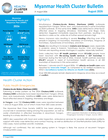
Country: Myanmar Sources: Health Cluster, World Health Organization Please refer to the attached file. Highlights – Simultaneous Cholera/Acute Watery Diarrhoea (AWD) outbreaks reported from Yangon, Sittwe, Mon, and Ayeyarwady in same townships as 2024 outbreak. At the same time, AWD cases detected in other floodaffected areas in Sagaing (Shwebo), Mandalay and Bago. Early detection triggered immediate response from partners, resulting in a decline in cases so far, while risk of further spread remains high – Heavy monsoon rains resulting in severe flooding affecting over 470k people in Sagaing (16 townships), Mandalay (4 townships), Magway (4 townships), Ayeyarwady (3 townships), and Mon. – Floods also resulting in increase in malaria and dengue cases, especially in endemic areas in Karenni, Tanintharyi, Kachin, Chin and Sagaing. Partners are reporting severe shortages in supplies, especially bednets – Data collected from 49 health partners shows 813,434 people have been reached with life-saving health services in 227 townships in Myanmar during the first half of 2026. Overall, health partners reached 896,871 people in need of humanitarian health services in all 330 townships of Myanmar in this same period – Between 1 January and 31 August 2026, 101 attacks on health care were reported by Insecurity Insight, as compared to 53 verified incidents by WHO’s Surveillance System for Attacks on Health Care (SSA). – Over 200,000 people remain displaced in Magway since May as a result of conflict.

Myanmar Health Cluster Bulletin August 2026 Read More »

unicef colombia humanitarian situation report no.1 (mid year), 30 june 2026

UNICEF Colombia Humanitarian Situation Report No.1 (Mid-Year), 30 June 2026

Country: Colombia Source: UN Children’s Fund Please refer to the attached file. Highlights From January to April, Colombia’s humanitarian crisis worsened, affecting 630,000+ people. UNMAS recorded 121 armed drone incidents through May (up 146%). Ethnic communities comprised 49% of victims, mainly across Chocó, Cauca, Norte de Santander, Nariño and Antioquia. Additionally, 51 child recruitment cases were identified, primarily in Norte de Santander and Cauca. During the same period, disasters affected 538,000 people, primarily through floods (92%). Heavy rains and a cold front have impacted 216,000+ people across 24 Córdoba municipalities since early 2026. Forecasts show the 2026–2027 El Niño could affect 4.3 million people across 508 municipalities, including 2 million at high risk and 2.3 million at extreme risk of water shortages. As of June 30, the 2026 HAC reached 41,913 people (16% of 254,800 targeted), including 33,127 children (18% of 180,240 targeted). By June 30, the country office secured $14.1M of the $27.1M required for the 2026 HAC (52% funded).

UNICEF Colombia Humanitarian Situation Report No.1 (Mid-Year), 30 June 2026 Read More »

the iran route: afghan mobility, livelihoods and return pressures | dtm afghanistan insights series report 1 (august 2026)

The Iran Route: Afghan Mobility, Livelihoods and Return Pressures | DTM Afghanistan Insights Series – Report 1 (August 2026)

Countries: Afghanistan, Iran (Islamic Republic of) Source: International Organization for Migration Please refer to the attached file. The report examines how recent developments in the Islamic Republic of Iran have influenced Afghan mobility along the Afghanistan–Islamic Republic of Iran corridor. Drawing on DTM Flow Monitoring data, Afghanistan Border Consortium reports, Afghanistan Climate Vulnerability Assessment (ACVA) findings, the Returnee Resilience Overview, qualitative interviews, and complementary sources, the report explores changes in mobility patterns, return movements, livelihood conditions, and reintegration challenges. Rather than focusing solely on border movements, the report examines the broader implications for Afghanistan, including household livelihoods, remittance dependency, absorptive capacity, and the sustainability of return and reintegration. Key findings include: Recorded cross-border movements declined by 8 per cent during the crisis period. While overall mobility decreased, return movements from the Islamic Republic of Iran remained substantial and fluctuated throughout the period, indicating that reduced movement did not necessarily correspond to reduced return pressures. Work remained the main reason linking surveyed Afghans to the Islamic Republic of Iran. Employment-related mobility continued to underpin movements along the corridor in both directions, highlighting the continued importance of labour mobility for household livelihoods.. Livelihood indicators weakened during the crisis period. Surveyed respondents reported lower incomes, reduced remittance-sending and limited savings compared to the pre-crisis period. Reduced earnings and remittance-sending may have implications beyond returnees themselves. Findings suggest that changes affecting Afghan workers in the Islamic Republic of Iran can also affect households in Afghanistan that rely on cross-border income and remittances. Reintegration outcomes are likely to depend on both household-level vulnerabilities and conditions in the area of return. Existing livelihood constraints and the concentration of returnees and other mobile populations in key provinces may influence the capacity of communities to absorb additional return movements. The findings reinforce that the Iran route remains central to Afghan mobility and household livelihood strategies. They also highlight how changes affecting Afghan workers and communities in the Islamic Republic of Iran can have wider implications for livelihoods, resilience, and reintegration inside Afghanistan. Looking ahead, the next phase is likely to be shaped by the interaction between return pressure, constrained regular mobility and continued household dependence on cross-border livelihoods, despite increased constraints and insecurity.

The Iran Route: Afghan Mobility, Livelihoods and Return Pressures | DTM Afghanistan Insights Series – Report 1 (August 2026) Read More »