Uncategorized

afghanistan: adiwg monthly meeting minutes august 2026

Afghanistan: ADIWG Monthly Meeting Minutes – August 2026

Country: Afghanistan Sources: Agency Coordinating Body for Afghan Relief and Development, United Nations Population Fund Please refer to the attached file. Agenda Item Welcome, Introductions & Meeting Agenda OPD Mapping Initiative – Status, Rollout and Next Steps Afghanistan Hotline Mapping Survey – Key Findings, Gaps and Recommendations UNICEF Feedback & Complaints Mechanism – Lessons Learned and Good Practices Community Perception Monitoring Updates – Community Feedback Collection Community Accountability Exchange – Key Feedback and Lessons Learned Partner Updates & Upcoming Opportunities AOB and Closing Remarks

Afghanistan: ADIWG Monthly Meeting Minutes – August 2026 Read More »

pakistan rain monitor issue number 10 (01 07 september 2026)

Pakistan Rain Monitor – Issue Number 10 (01- 07 September 2026)

Country: Pakistan Source: World Food Programme Please refer to the attached file. Using remote sensing techniques, the seven-day forecast of total rainfall for the country is analyzed against the long-term average rainfall to highlight the areas which are expected to receive above normal, normal and below normal rainfall. The satellite data for a period of thirty years from 1993-2023 is extracted from CHIRPS (Climate Hazards Group InfraRed Precipitation with Station data) and analyzed to estimate deviation from normal rainfall. For the forecast of total precipitation for next seven days, the data is sourced from global model of ECMWF (European Centre for Medium-Range Weather Forecasts). Satellite-based rainfall forecast analysis for 1-7 September indicates above normal rainfall across central and northern Pakistan, while below normal rainfall is expected in Sindh, southern Punjab and Balochistan. Additional rainfall over already affected northern and central areas may exacerbate the risk of flooding, GLOF and landslides, particularly in vulnerable locations across Khyber Pakhtunkhwa, Gilgit-Baltistan, Azad Jammu & Kashmir, and northeastern Punjab

Pakistan Rain Monitor – Issue Number 10 (01- 07 September 2026) Read More »

life in fullness together (lift): evidence and lessons from world vision’s pilot in the syria response

Life in Fullness Together (LIFT): Evidence and Lessons from World Vision’s Pilot in the Syria Response

Country: Syrian Arab Republic Source: World Vision Please refer to the attached file. Life in Fullness Together (LIFT) is an integrated, evidence-based model developed by World Vision and partners to address the complex needs of children and adolescents living in protracted humanitarian crises. Piloted in Gaziantep, Kilis, and Şanlıurfa, Türkiye, LIFT supports holistic wellbeing through five interconnected domains: responsive caregiving, protection and safety, learning opportunities, mental health and psychosocial support, and agency and resilience. An independent evaluation using OECD-DAC criteria found strong, multi-sector outcomes among more than 1,000 Syrian refugee and host community participants. Over 90% of adolescents reported improved psychosocial wellbeing, emotional regulation, and self-confidence; 80–90% of caregivers reported stronger parenting practices and reduced stress; 85% of adolescents improved their ability to identify and respond to safety risks; and 76% reported greater confidence in decision-making. The programme also strengthened social cohesion, youth leadership, and community ownership while demonstrating a scalable, low-cost approach that bridges humanitarian response with long-term resilience. These findings position LIFT as a promising model for sustainable impact in protracted crisis settings.

Life in Fullness Together (LIFT): Evidence and Lessons from World Vision’s Pilot in the Syria Response Read More »

Nepal flash flood, children face trauma, displacement and uncertainty and growing protection risks

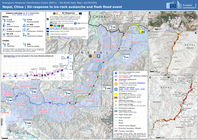
Country: Nepal Source: World Vision For children who survived the flash floods in Rasuwa and Nuwakot, the water may have receded, but the emergency has not. “I had to leave my cycle and ball behind, and the river swept them away. The flood took everything I owned. I was afraid when I saw houses collapse. I saw the water enter our house and tear away the back of it. I did not know where we would stay, and now we are here, at a school converted into a temporary shelter,” says 8-year-old Sujal. Many children are living in evacuation centres and temporary shelters, unsure whether relatives are alive or when they can return home. Some have been displaced or separated from their families. Humanitarian teams warn that gaps in identification, family tracing and safe reunification could expose children to trafficking, exploitation, abuse or disappearance. As of 1 September, more than 1,000 people were confirmed dead, and nearly 4,000 remained missing, according to Nepal’s National Disaster Risk Reduction and Management Authority. The figures continue to change as search and rescue operations progress. Washed-out roads and bridges have isolated communities and delayed life-saving support. The UN Office for the Coordination of Humanitarian Affairs estimates that more than 20,000 households have been affected and over 50,000 people need emergency water, sanitation and hygiene assistance. In partnership with government authorities, World Vision Nepal is mobilising emergency teams, supplies and protection services to reach those stranded and vulnerable across the two worst-affected districts, Nuwakot and Rasuwa, with immediate assistance planned for 10,000 people, including children (2,000 households). With thousands displaced across temporary centres and evacuation sites, rigorous identity verification, family tracing and child protection case management are essential. In the chaos of displacement, informal handovers, even when well-intentioned, can place unaccompanied and separated children at serious risk. “In the overwhelming chaos following a disaster of this scale, family tracing must be rigorous and systematic. Relatives and caregivers are arriving at holding centres eager to reunite with children, but without immediate verification systems in place, we risk vulnerable children slipping through administrative cracks. Every child’s handover must follow formal case-management protocols to ensure their safety and well-being,” said Anju Bhattarai, Urban Protection Coordinator at World Vision Nepal. Local child protection mechanisms in some of the hardest-hit communities were already stretched before the disaster and are now operating beyond capacity. Strengthening these systems with additional resources and coordination is an urgent shared priority. “No child should survive a disaster only to disappear in its aftermath. Without proper verification and protection, a child who has survived the floods could be separated again, trafficked, exploited, or simply disappear from the system. Every reunification must put a child’s safety first, which is why local child protection systems urgently need to be restored and strengthened,” Bhattarai added. As children and families grapple with the devastation left behind by the floods, the impact on children’s wellbeing will endure long after the waters recede. Sudden displacement, the loss of homes, schools and communities, and separation from caregivers can leave children facing profound fear, uncertainty and distress. With schools closed, children have also lost a vital source of stability, learning and support. Education must be recognised as an urgent humanitarian priority. Safe temporary learning spaces, essential learning materials and support to help children return to school can restore a sense of normality, strengthen social connections and provide a protective environment where children can access psychosocial care and specialised support when needed. Roslyn Gabriel, National Director of World Vision Nepal, said, “Children have survived a terrifying disaster, but survival is not the end of their story. They need to know who they can trust, where they will sleep and whether they will see their families again. Our focus is on reaching the families most in need while ensuring that displaced and separated children are protected throughout the relief and recovery process.” World Vision’s response is designed to meet immediate physical needs while restoring safety and stability. Child Friendly Spaces will provide safe places for children to process what they have experienced, interact with other children and begin to recover. The response will also reinforce child protection systems so separated children can be traced and safely reunited with their families. Immediate relief focuses on delivering emergency food, shelter kits, safe drinking water, hygiene and dignity kits for women and girls, and child protection services. As the response progresses, efforts will expand to establish temporary learning centres, restore livelihoods, repair community water systems. and health facility restoration. To date, nearly 900 people in evacuation centres in Bidur, Nuwakot, have received life-saving assistance, including food support and water purifiers. World Vision has also distributed shelter kits consisting of tarpaulins, blankets, foam mattresses, ropes, mosquito nets and solar lights, along with kitchen sets, reaching 125 households. An additional 250 food packages, enough to support approximately 1,000 people, together with hygiene and dignity kits, are being transported to Rasuwa for immediate distribution.

Nepal flash flood, children face trauma, displacement and uncertainty and growing protection risks Read More »

caracterización del desplazamiento forzado interno en ecuador: impactos y experiencias del desplazamiento en la vida cotidiana. los casos de ibarra, quito y cuenca como ciudades de destino.

Caracterización del desplazamiento forzado interno en Ecuador: impactos y experiencias del desplazamiento en la vida cotidiana. Los casos de Ibarra, Quito y Cuenca como ciudades de destino.

Country: Ecuador Source: 3iS Please refer to the attached file. Ecuador enfrenta una crisis creciente de desplazamiento interno forzado asociada a la violencia y la inseguridad. 3iS estima alrededor de 101.000 desplazamientos en 2024 y 116.264 en 2025, mientras que ACNUR estima que 316 mil personas se desplazaron entre 2022 y 2024 y la OIM ha estimado aproximadamente 408.000 personas desplazadas internamente durante los últimos cinco años, cerca de la mitad por violencia. Sin embargo, el fenómeno continúa insuficientemente visibilizado y con importantes brechas de protección y respuesta. En este contexto, FLACSO Ecuador y 3iS, con el apoyo de ECHO, contaron con tres investigadoras que desarrollaron un estudio para comprender las experiencias, impactos y necesidades de las personas afectadas por el desplazamiento interno forzado. La investigación se basa en 110 entrevistas semiestructuradas realizadas en Ibarra, Quito y Cuenca, e incorpora las perspectivas de personas desplazadas, informantes clave y representantes institucionales. El análisis aborda seis dimensiones: seguridad, familia, vivienda, trabajo, educación y salud. Los hallazgos muestran que desplazarse no implica necesariamente encontrar seguridad ni mejorar las condiciones de vida. Persisten amenazas en los lugares de destino, pueden producirse nuevos desplazamientos y las familias asumen gran parte de las estrategias de protección, con una carga desproporcionada sobre las mujeres. También se identifican dificultades para acceder a vivienda y empleo, interrupciones educativas prolongadas y afectaciones significativas en salud mental, frente a capacidades de respuesta insuficientes. El estudio aporta evidencia para visibilizar estas experiencias y orientar respuestas de protección y asistencia adaptadas a las necesidades de las personas desplazadas y a los contextos territoriales de Ibarra, Quito y Cuenca.

Caracterización del desplazamiento forzado interno en Ecuador: impactos y experiencias del desplazamiento en la vida cotidiana. Los casos de Ibarra, Quito y Cuenca como ciudades de destino. Read More »

mr. tom fletcher, under secretary general for humanitarian affairs and emergency relief coordinator – virtual briefing to member states on the ebola outbreak in the democratic republic of the congo, 1 september 2026

Mr. Tom Fletcher, Under-Secretary-General for Humanitarian Affairs and Emergency Relief Coordinator – Virtual Briefing to Member States on the Ebola outbreak in the Democratic Republic of the Congo, 1 September 2026

Country: Democratic Republic of the Congo Source: UN Office for the Coordination of Humanitarian Affairs Please refer to the attached file. As delivered Excellencies, Distinguished Representatives, Thank you, Dr. Tedros [Adhanom Ghebreyesus, Director-General of the World Health Organization (WHO)], and thank you for hosting us today and for your leadership alongside the fantastic WHO team. It is also great to welcome Ambassador [Paul Empole Losoko] Efambe [Permanent Representative] of the Democratic Republic of the Congo (DRC) [to the United Nations Office at Geneva] and so many colleagues from across the IASC [Inter-Agency Standing Committee]. Thank you all for joining us. I also want, before underlining a couple of points on Ebola, to highlight that we will be issuing at the end of the week a Flash Appeal on Nepal, and, as you know, colleagues across the humanitarian family are responding right now to that crisis. You’ve heard, colleagues, the [Secretary-General] sounding the alarm on the Ebola outbreak. You’ve heard Dr. Tedros and I on it repeatedly in recent weeks. We need to turn that alarm into action. As Tedros has said, this is the fastest-growing epidemic on record, hitting a country already in a profound humanitarian crisis. Nearly 11 million people already needing support. And with conflict uprooting families, acute food insecurity, and malnutrition at vast levels. The response is growing, has been scaled up, but the virus is, as you’ve heard, moving faster. And unless we scale up urgently, more lives will be lost and the threat will grow. The outbreak is now spread across six provinces, including areas where insecurity is limiting our access and where health systems are already weak. This makes it harder to detect cases, trace contacts, treat patients, and to build trust. Women and girls, as we’ll hear more of shortly, especially pregnant women, are disproportionately affected. Children are losing parents and caregivers, making them even more vulnerable to exploitation and trafficking. So, it is not simply a health emergency. It is also a humanitarian emergency layered onto many existing humanitarian emergencies. Excellencies, I commend the Government of the DRC for its leadership, with strong support from WHO, Africa CDC, and through the partnership with the IASC members, and others represented here today. We activated on June 9, we have strengthened the response. Damien Mama, the Humanitarian Coordinator, and Julien Harneis, the Senior Ebola Coordinator, will give you a sense of what it looks like on the front lines. Operational hubs in Bunia and Beni are up and running. Humanitarian financing has been mobilized. And with empowered leadership of Damien, our Humanitarian Coordinator, we have committed, of course, in the context of the Humanitarian Reset, to ensure that we have that single coordinated response behind the [Humanitarian Coordinator’s] leadership. But we cannot respond incrementally to an epidemic, which is now growing exponentially. So, we need a sustained, large-scale operation that gets ahead of the virus. Expanded treatment capacity. More safe and dignified burial teams. Better access for humanitarian workers and supplies. We cannot fight Ebola in isolation. People need functioning health services, clean water, sanitation, food, protection, and livelihoods. Above all, they need trust. Excellencies, The people delivering this response are taking extraordinary risks. More than 40 health workers have died from Ebola while working to save others. Treatment centres and ambulances have been attacked. These front-line responders must be protected. Preparedness efforts have increased in neighboring countries, particularly South Sudan and the Central African Republic, both already confronting severe humanitarian emergencies. Last week, WHO declared Uganda free of this outbreak after 42 days with no reported Ebola cases. Excellencies, The revised 2026 DRC Humanitarian Needs and Response Plan calls for $2.1 billion, including $300 million for Ebola-related activities across the humanitarian family. More than $1 billion has been secured, but half of the funding gap remains. The virus is not waiting for us to find it. Through the Central Emergency Response Fund, with thanks to our generous donors to that fund, I have allocated over $57 million for response and preparedness in the DRC and neighboring countries. And of course, country-based and regional pooled funding is also stepping up. To close, Excellencies, Last week, the Secretary-General called out the indifference surrounding this crisis. He is right to do so. An outbreak spreading at this speed should command the world’s attention. The DRC is doing its part – the international community must do ours. So, my appeals are straightforward. First, use your influence collectively and individually to keep this crisis where it should be on the international agenda. Do not wait for Ebola to cross borders before you act. Secondly, we need access. Humanitarian personnel and supplies must move safely and swiftly into and within the DRC. We need borders kept open. We need obstacles to the response removed. And thirdly, the funding. We need increased, flexible support for the Ebola response and the wider humanitarian operation. Time is not on our side. We have the experience, the tools, extraordinary people risking their lives to stop this epidemic. What we need now is political will, access, and resources. We have beaten Ebola before. And we can do it again. Thank you, excellencies.

Mr. Tom Fletcher, Under-Secretary-General for Humanitarian Affairs and Emergency Relief Coordinator – Virtual Briefing to Member States on the Ebola outbreak in the Democratic Republic of the Congo, 1 September 2026 Read More »

dr congo: afrique de l’ouest et centrale : derniers événements en bref (du 25 au 31 août 2026)

DR Congo: Afrique de l’Ouest et centrale : Derniers événements en bref (du 25 au 31 août 2026)

Countries: Democratic Republic of the Congo, Central African Republic, Chad, Nigeria Source: UN Office for the Coordination of Humanitarian Affairs Please refer to the attached Infographic. République démocratique du CongoLa réponse à Ebola s’étend à mesure que l’épidémie se propage OCHA signale que les partenaires humanitaires et sanitaires renforcent la riposte contre Ébola en République démocratique du Congo, en déployant plus de 2 500 volontaires et personnels de la protection civile au cours des prochains mois. Les partenaires ajoutent 35 équipes mobiles et 286 équipes communautaires à travers l’Ituri, le Nord-Kivu et la Tshopo, tout en étendant leurs opérations au Haut-Uélé et au Bas-Uélé. Ces équipes soutiendront la surveillance, l’engagement communautaire, l’assistance psychosociale, ainsi que des enterrements sûrs et dignes afin d’aider à prévenir toute transmission supplémentaire. L’OMS indique que 60 pour cent des décès surviennent dans les communautés, ce qui souligne la nécessité d’accroître les capacités d’inhumation. Au 30 août, les autorités sanitaires nationales avaient signalé 6 100 cas confirmés d’Ébola et 2 950 décès, avec un taux de létalité de 48 pour cent. La couverture de la recherche des contacts reste supérieure à l’objectif opérationnel de 85 pour cent dans les zones touchées. Tchad La situation épidémique du choléra semble s’améliorer Les rapports font état de signes d’amélioration de l’épidémie de choléra au Tchad, avec une baisse des cas quotidiens et aucun nouveau décès signalé depuis le 23 août. Au 25 août, 332 cas et 14 décès avaient été enregistrés dans cinq districts touchés, soit un taux de létalité de 4,2 pour cent. Les activités de vaccination et d’intervention rapide sont intensifiées, notamment dans les nouveaux foyers épidémiques. Toutefois, les contraintes d’accès, les graves lacunes en matière d’eau, d’assainissement et d’hygiène, ainsi que la surpopulation dans les sites de déplacés continuent d’entraver la riposte et d’accroître le risque de reprise de la transmission. NigériaLa transmission du choléra recule dans l’État de Borno grâce à une intervention renforcée La transmission du choléra et les décès diminuent dans l’État de Borno à la suite de quatre mois d’interventions coordonnées en matière de santé, d’eau, d’assainissement et d’hygiène, soutenues par 4 millions de dollars américains du CERF et par un financement additionnel du Fonds humanitaire pour le Nigéria. Au 24 août, 59 035 cas suspects et 314 décès avaient été signalés dans 22 zones de gouvernement local depuis le mois de mai, Monguno restant un foyer épidémique. Plus de 55 000 patients se sont rétablis. Les autorités gouvernementales et les partenaires ont renforcé la surveillance et la prise en charge des cas, en déployant 78 équipes d’intervention rapide et en soutenant 91 centres de traitement et de réhydratation orale dotés de 961 lits. Les campagnes de vaccination ont touché environ 2,8 millions de personnes à Maiduguri et à Jere. Les partenaires ont également chloré 411 points d’eau, améliorant ainsi l’accès à l’eau potable pour plus de 862 000 personnes. République centrafricaineLes déplacements transfrontaliers renforcent les craintes liées au virus Ebola Les mouvements transfrontaliers entre la République centrafricaine et la République démocratique du Congo suscitent des inquiétudes quant à une propagation potentielle d’Ébola. Au 24 août, cinq villages proches de la frontière restaient abandonnés, des civils ayant apparemment fui vers Zapaï en RDC, près de la province du Bas-Uélé touchée par la maladie. Les autorités gouvernementales et les partenaires humanitaires renforcent la surveillance, les capacités d’isolement, les points de contrôle et la sensibilisation des communautés. Le CERF a alloué 3 millions de dollars américains pour soutenir les efforts de préparation et de prévention contre Ébola dans la région. Aucun cas d’Ébola n’a été confirmé en République centrafricaine à ce jour.

DR Congo: Afrique de l’Ouest et centrale : Derniers événements en bref (du 25 au 31 août 2026) Read More »