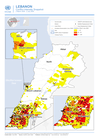
Lebanon: Conflict Intensity Snapshot (2 March – 2 July 2026)
Country: Lebanon Source: UN Office for the Coordination of Humanitarian Affairs Please refer to the attached Map.
Lebanon: Conflict Intensity Snapshot (2 March – 2 July 2026) Read More »

Country: Lebanon Source: UN Office for the Coordination of Humanitarian Affairs Please refer to the attached Map.
Lebanon: Conflict Intensity Snapshot (2 March – 2 July 2026) Read More »
Country: occupied Palestinian territory Source: Action for Humanity Please refer to the attached file. Today we mark 1,000 days of crisis in Gaza. Humanitarian NGO Action For Humanity has analysed publicly available records relating to aid accessing Gaza since October 7th, finding that there have been more days with no aid entering Gaza, than days when the UN minimum target for aid trucks (150 per day) was met. The full report is attached here. Further findings from the report: On just 12% of days, the “UN minimum target” was met On the average day, 76 trucks – just over 50% of the UN minimum aid truck target was met There were at least 142 days in which no aid at all was allowed into the enclave According to Action For Humanity CEO Othman Moqbel: “For the past 1000 days, the humanitarian system in Gaza has been forced to operate amid the destruction of the very infrastructure it depends on. Hospitals have been bombed and rendered inoperable, schools have become displacement shelters instead of places of learning, and roads that once connected communities have become de-facto frontlines. In a crisis that has killed over 70,000 people, the basic conditions for civilian life have been steadily dismantled, and it’s clear that even the minimum amount of aid needed in these communities is not able to get in to Gaza. We demand an immediate end to the restrictions placed on humanitarian access in Gaza, and are calling for an increase in support from donors and supporters.” From Action For Humanity programmes team members in Gaza: “The word ‘home’ has vanished from the vocabulary of most families in the Gaza Strip“ “when we talk about a thousand days of war, we are talking about a crisis of thirst and contamination and all of this is merciless.” “Instead of our children holding pens, books, and notebooks, they are now holding water and jerrycans and running after aid trucks” “The war hasn’t just destroyed buildings; the war is destroying the future of an entire generation.”
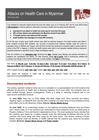
Country: Myanmar Source: Insecurity Insight Please refer to the attached file. Data collected by Insecurity Insight shows that since the military coup on 01 February 2021 and 04 June 2026 at least 1,943 incidents of violence against or obstruction of access to health care took place across Myanmar: equivalent to one attack on health care every day for more than five years 65% of these attacks were attributed to the Myanmar Armed Forces (MAF) 175 health workers were killed and 932 arrested health facilities were damaged on at least 509 occasions So far this year, at least seven health workers were killed by explosive weapons. Five health workers were killed in three incidents involving MAF airstrikes: two occurred at prisoner-of-war detention facilities under the control of opposition forces in Rakhine and Yangon, while the third involved the bombing of a hospital located in areas under the control of the PDF in Sagaing. A further two health workers were killed in two separate roadside landmine explosions reportedly attributed to opposition forces in Bago and Magway regions. View the incidents on our interactive map. Download the data. Updated every Monday and includes information on weapons use, perpetrators and effects. For data enquiries, please get in touch. Data is continuously updated and numbers may change if/ when further information is made available. See here for methodology.
Attacks on Health Care in Myanmar: 10 – 23 June 2026 Read More »
Countries: Central African Republic, Democratic Republic of the Congo Sources: UN Office for the Coordination of Humanitarian Affairs, UN Resident Coordinator in the Central African Republic Please refer to the attached file. La présence de cas de maladie à virus Ebola (MVE) en République démocratique du Congo (RDC) représente un risque sanitaire important pour les pays voisins, dont la République centrafricaine (RCA), en raison de la proximité géographique, des mouvements transfrontaliers de population, des échanges communautaires et commerciaux, ainsi que des vulnérabilités existantes des systèmes de surveillance, de prévention et de réponse. Dans ce contexte, la RCA doit renforcer sa préparation multisectorielle afin d’anticiper une éventuelle propagation de la MVE et de garantir une réponse rapide, coordonnée, sûre, inclusive et redevable envers les populations. Les urgences sanitaires, notamment celles qui nécessitent le déploiement rapide d’équipes de riposte, de personnel de santé, de volontaires, de prestataires, de partenaires d’exécution et d’acteurs communautaires, peuvent accroître les risques d’exploitation et d’abus sexuels (EAS), de harcèlement sexuel (HS), d’abus de pouvoir, de mauvaise conduite, de discrimination et de représailles. Ces risques sont particulièrement élevés lorsque l’accès aux soins, à l’information, à l’assistance, aux services de protection ou aux mécanismes de plainte dépend de relations de pouvoir inégales entre les acteurs de la réponse et les populations affectées. Dans le cadre de la préparation et de la réponse à la MVE, l’intégration de la protection contre l’exploitation et les abus sexuels (PEAS) constitue donc une exigence transversale essentielle. Elle vise à prévenir les risques d’EAS/HS, à renforcer la confiance des communautés dans les interventions sanitaires et humanitaires, à garantir l’accès à des mécanismes de plainte sûrs, confidentiels et accessibles, et à assurer une assistance rapide, éthique et centrée sur les survivant·e·s. Elle contribue également à améliorer la qualité, la crédibilité et la redevabilité de la réponse. Le présent plan préliminaire propose des actions prioritaires et complémentaires à mettre en oeuvre par le point focal PEAS, la coordination inter-agences PEAS, les autorités nationales, les agences des Nations Unies, les ONG, les partenaires techniques et les acteurs communautaires impliqués dans les préparatifs de réponse à la MVE en RCA. Il couvre notamment la coordination et le plaidoyer, l’analyse des risques EAS/HS, la sensibilisation du personnel et des prestataires, les mécanismes de plainte et de référencement, l’engagement communautaire, les ressources humaines, la supervision, le suivi, la mobilisation des ressources et la documentation des apprentissages.
Country: occupied Palestinian territory Source: Islamic Relief Palestinians in Gaza still face daily attacks, extreme suffering and denial of their basic rights as the crisis passes 1,000 days, Islamic Relief says. Over the past 1,000 days Israeli actions have targeted the fabric of Gaza’s entire society – killing families, blocking aid, destroying infrastructure and economic production, and herding civilians into crowded ghettoes. For 1,000 days we have seen unprecedented disregard for international law and a colossal global failure to protect civilians, all of which continues despite the ceasefire announcement. An ongoing humanitarian catastrophe More than 65% of Gaza is now off limits to Palestinians as Israel has entrenched and expanded its military control – cutting people off from homes, essential services and most agricultural land beyond the so-called “yellow line” and “orange line”. Even before the current escalation, Gaza was one of the most densely populated places on earth and now almost its entire population is confined to less than one third of its territory. Displaced families are crammed into rodent-infested shelters and tents eroded by severe heat and rain, with open sewage running beside them. Skin diseases are rampant among children due to the overcrowding and poor sanitation. More food is now getting into Gaza but it is usually low in nutritional value – most people get to eat fruit less than once a week, and some families still go entire days without eating anything at all. Thousands of children need treatment for malnutrition every month. Vital supplies blocked Israel’s 19-year blockade of Gaza remains in place despite the ceasefire announcement, restricting the movement of people and goods in and out of the territory. Wheelchairs and artificial limbs for injured people have been blocked. Fuel for hospitals, bakeries and water systems is restricted. Good quality tents and shelter materials are impeded, along with vital health and education supplies and chemical sprays that could stop the rodent infestation in shelters. Since the ceasefire announcement an average of just 128 trucks a day have reached their destination in Gaza – less than a quarter of the minimum 600 trucks a day stipulated in the ceasefire agreement, which itself is far less than what is actually needed. International and local humanitarian organisations face increasing impediments to assisting vulnerable people. Daily attacks continue While the ceasefire announcement slowed the killing, it has not stopped it. At least 1,059 Palestinians have been killed since the ceasefire came into effect – an average of four people killed and 13 more wounded every single day. Gaza now has the highest concentration of child amputees in the world. Gaza’s entire society has been targeted – doctors, teachers, entrepreneurs, journalists, academics, poets, engineers, farmers. Around a quarter of a million people, 10% of Gaza’s entire pre-war population, have been killed or wounded. Less than 1% of rubble has been cleared The scale of destruction over the past 1,000 days is unprecedented. More than three quarters of homes are damaged or destroyed. 93% of schools need reconstruction or major repairs, along with 89% of water and sanitation infrastructure and 87% of roads. Only 4% of Gaza’s agricultural land is now usable, with the rest either destroyed or inaccessible. Rebuilding infrastructure and the economy is desperately needed, yet less than 1% of the millions of tonnes of rubble has been cleared so far. Health facilities critically short of supplies Only 5% of health services in Gaza – and not a single hospital – are fully functioning. Medics are dealing with critical shortages of almost everything – from fuel and electricity to keep services running, to drugs and supplies such as insulin, blood banks and disinfectant agents. Patients with cancer and kidney disease live in agony because treatment is unavailable. Thousands of severely ill patients are still waiting for permission to leave Gaza for medical treatment in the West Bank or abroad – yet so far in 2026 less than 10% of patients on the evacuation list have been able to leave. 1,000 days too many: The world must act now World leaders have categorically failed to protect Palestinians for the past 1,000 days, and political attention has waned since the ceasefire announcement. After 1,000 days international governments must step up pressure to hold parties accountable and ensure a real ceasefire so people can live in safety and dignity. Civilians must be protected from violence, and humanitarian supplies must not be impeded or politicised. Recovery and reconstruction in Gaza must be led and owned by Palestinians and driven by local needs, not externally imposed. Ultimately, there can be no sustainable peace without an end to the illegal occupation of Palestine. Notes to editors Islamic Relief has worked in Gaza for more than 30 years, providing humanitarian aid and supporting people’s livelihoods. Throughout the current crisis Islamic Relief has provided emergency food, water, healthcare, psychosocial support and other assistance, reaching around 600,000 people. Despite the current challenges Islamic Relief continues to support maternal healthcare, temporary learning spaces, vegetable distributions and food vouchers, and assistance for orphaned children.
oPt: After 1,000 days, Palestinians in Gaza face ongoing horror Read More »
Country: Zimbabwe Source: World Health Organization Harare—“The community will benefit from the improved knowledge I will share. Thanks to a recent training, our work will be more effective than before,” says Audrey Musorowembudzi, a primary health care nurse at Hurungwe Rural Hospital in Mashonaland West Province. “I will pass on this information to my colleagues in a cascade effect, ensuring that everyone is informed and no woman is left behind.” Musorowembudzi recently participated in training on integrated care for women’s cancers, one of many initiatives being implemented across Zimbabwe to strengthen the health workforce and improve access to quality health services. Like many countries, Zimbabwe faces significant health workforce challenges. In 2022, the country had approximately 23 doctors, nurses and midwives per 10 000 population, less than half of the WHO-recommended threshold required to achieve universal health coverage (UHC). Workforce shortages, migration, limited training capacity and inequitable distribution of health workers have continued to place pressure on health services, particularly in rural and underserved communities. To address these challenges, the Government of Zimbabwe, with support from the UHC Partnership and the World Health Organization (WHO), undertook a comprehensive Health Labour Market Analysis in 2022. The findings informed the development of the Health Workforce Strategy and the Health Workforce Investment Compact, a coordinated platform that brings together government institutions, development partners, training institutions and international organizations to strengthen health workforce planning, financing and management. “The journey towards the Health Workforce Strategy and Investment Compact began in 2021. This is a pivotal step in translating our commitments into action and strengthening our health system,” says Dr Douglas Mombeshora, Minister of Health and Child Care. The Health Workforce Investment Compact outlines a US$1.63 billion investment framework for 2024–2026, with the Government of Zimbabwe committing to finance approximately 75% of the required resources. Since its launch in October 2024, the compact has provided a platform to coordinate investments and accelerate implementation of key workforce reforms. Operationalization of the compact is already delivering tangible results. The government approved an additional 14 060 health worker posts to address critical gaps across the public health system. In 2025, more than 5000 positions were filled, including posts previously supported by development partners, while a further 8775 positions are planned for recruitment in 2026. Priority has been given to unemployed medical graduates and critical cadres such as nurses, midwives, pharmacists and laboratory technicians. Additional investments are supporting workforce retention and professional development. Funding has been secured for a rural retention scheme to support health workers serving in remote areas, while resources have also been mobilized to strengthen village health worker support, leadership development and e-learning initiatives. Progress and remaining challenges were reviewed during the Health Workforce Investment Compact Dialogue held on 28 May 2026. The dialogue brought together government representatives, development partners and other stakeholders to assess implementation progress, review financing commitments and identify priorities for accelerating investments in the health workforce. Participants reaffirmed the importance of sustained collaboration to ensure that workforce reforms translate into improved health services and health outcomes. “WHO has supported the government throughout the development of the Health Workforce Strategy, from conducting a comprehensive health labour market analysis to facilitating high-level policy dialogue and investment planning,” says Dr Desta Tiruneh, WHO Representative to Zimbabwe. “These efforts are helping build a resilient, motivated and well-supported workforce capable of advancing universal health coverage.” These investments are already contributing to an increase in health workforce density towards the WHO-recommended benchmark of 45 per 10 000 population. For health workers like Musorowembudzi, they are also strengthening the skills, support and opportunities needed to deliver better care to communities across Zimbabwe. For Additional Information or to Request Interviews, Please contact: Julie Germano External Relations Officer WHO Zimbabwe julie.germano@who.int Saida Swaleh Communications and Media Relations Officer WHO Regional Office for Africa Email: saida.swaleh@who.int
Zimbabwe strengthens health workforce to advance universal health coverage Read More »
Country: Uganda Source: World Health Organization **Kampala—**It is Sunday, but Dr Chris Opesen’s day started at 05:30. Chris, an anthropologist at WHO’s country office in Uganda, is part of the rapid response team working on the ground to curb the Ebola outbreak in Uganda. He is up early because he has been called by local government authorities in Kampala to support the reintegration of Lilian* into her home and community today. Three days earlier, Lilian presented with signs and symptoms consistent with Ebola and was transferred to Mulago hospital’s Ebola isolation unit in Kampala for diagnosis and care. Although the transfer was planned, it was a disruptive experience and unsettled her, her family and their neighbours. Everyone is anxiously awaiting Lilian’s final and conclusive negative test result so that she can come home today. Chris has been on the phone with Lilian and her family multiple times over the past 36 hours, providing advice, support and reassurance. “The anthropologist is the midfielder of the outbreak response,” says Chris, using an analogy from his favourite sport. “I connect the response teams to the community and deliver feedback from community to response teams citing concerns, fears and grievances.” Chris and his colleague, Henry Bwire, a division surveillance focal person from Kampala Capital City Authority, have convened a meeting of Lilian’s family and friends to address their concerns and facilitate Lilian’s reintegration. The meeting starts with a lively discussion where emotions run high. Everyone is speaking over each other, and the discussion is escalating. Seeking a more constructive approach, Chris suggests a formal dialogue. The group agrees and elects a chairperson, a neighbour, and a secretary, Lilian’s sister, Angela*. The dialogue starts and everyone takes a turn to speak and listen to each other’s version of events. This calms the atmosphere. The meeting is long—around three and a half hours—and the group moves with the shade as the sun gets hotter and higher in the midday sky. “We appreciate you because without you there would still be fear,” Angela says to Chris and Henry. The meeting convenes and Chris, Henry and a neighbour walk to the nearby supermarket. Lilian has asked them to speak to the shopkeeper who she says was “pointing fingers” at her mother when she shopped yesterday. “Ebola is a disease that everyone fears,” says Henry. “If people hear that their neighbour may have Ebola, there will be stigma there. Stigma can come through miscommunication and fear, both of which were present in this case. It was our role to bring Lilian back and clear up that miscommunication and reduce that fear in the community.” After the discussion, the shopkeeper expresses his gratitude to the team for taking the time to visit and explain. He reassures them that Lilian will not be treated differently. Now the only thing left to do is wait for the confirmatory test before Lilian is discharged from the isolation unit. Chris and Henry could go home to their families because the test results could take several hours. Instead, they decide to wait at the local market, a midpoint between the hospital and Lilian’s neighbourhood, so they can be close by when the all-clear is given. They while away the hours, chatting and having regular phone calls with the laboratory and family. At some point Chris buys a watermelon from a local vendor, a refreshing respite from the afternoon heat for the team. At around 18:30 Chris gets a call and breaks into a smile. The result has been received: negative for Ebola. Lilian was treated for a bacterial infection and is feeling better. She is coming home. Chris and Henry return to the house, where the family and neighbours have gathered in the front yard. Chris presents a cake and bottles of water that he has bought earlier. After around an hour of waiting, headlights beam through the gate. Lilian is home, escorted by a member of Uganda’s national Emergency Medical Team who has cared for her for the last 36 hours. She looks tired and gaunt, but relieved to be back home. For the next hour, the group once again recount the details of Lilians’s story, her time in the isolation unit and what returning to work will look like for her. Lilian makes a speech, reading from a prepared note from her phone: she is still too emotional to speak spontaneously. “As a family, we appreciate you coming to the ground and community to talk to us, because stigma can be too much” she says. “Thank you for listening to and addressing our concerns. I hope this can be a learning experience.” Finally, it is time to celebrate. Lilian then cuts the cake and shares slices with everyone. “For me reintegration is supposed to be a celebration, especially when the evacuation did not go as planned,” says Chris. “I wanted to do something special for Lilian, and for her to serve people the slices and for them to eat what she has given them, to demonstrate her acceptance back into the community.” After some cake, it is time for Chris to go. It is 21:00, more than 15 hours since he set off from home. Despite the long hours, despite the time spent away from his family, it has been a good day. He and Henry are upbeat and talkative during the car ride home. “My role in the response gives me satisfaction” says Chris. “If I do my job well, I can make a difference and support WHO’s leadership on the frontline of a safe and dignified response.” *Names changed For Additional Information or to Request Interviews, Please contact: Benjamin Sensasi Health Promotion Advisor Tel. : +256 414 335505 Cell: +256 772 507906 Email: sensasib@who.int Saida Swaleh Communications and Media Relations Officer WHO Regional Office for Africa Email: saida.swaleh@who.int
In the frontlines of a safe and dignified Ebola outbreak response in Uganda Read More »
Country: Democratic Republic of the Congo Source: World Health Organization Brazzaville—Dorothée Bendza, a health control officer, has been deployed at Brazzaville Beach since the declaration of the Ebola disease outbreak in the Democratic Republic of the Congo (DRC). From 8:00 to 16:00, she and her colleague screen passengers. Both are equipped with an infrared thermometer and hand sanitizer. They are on the frontline as travellers arrive from Kinshasa, along one of the busiest routes between the two capitals. “When passengers arrive, we ask them to wash their hands or provide them with hand sanitizer. Then we take their temperature,” she explains. In response to the outbreak of Ebola disease in Ituri province, in northeastern Democratic Republic of the Congo, the Republic of the Congo immediately strengthened its prevention measures to avoid any introduction of the virus into the country. Controls have been intensified at the country’s main points of entry, notably Brazzaville Beach and Maya-Maya International Airport. Health teams now systematically screen travellers, including temperature checks, hand disinfection and observation for signs and symptoms. Surveillance measures are also being reinforced at other strategic entry points, particularly along the river corridor linking several border communities. This heightened vigilance reflects the intensity of exchanges between Brazzaville and Kinshasa, separated by the Congo River. Every day, hundreds of passengers, traders and goods cross between the two banks. In this context, the World Health Organization (WHO) considers the risk of Ebola importation into the Republic of the Congo high, due to strong cross-border mobility and the immediate proximity of the two capitals. Travelers say they understand these measures. “I felt reassured when I saw the system in place. We were screened when leaving Kinshasa and again here in Brazzaville. This shows that the health of the population is taken seriously,” says Esther, a traveller arriving at Brazzaville port. Strict protocols are in place for managing suspected cases. Any traveller with a high temperature or suggestive symptoms is immediately isolated on site before being transferred to a health facility for further examination. “We isolate the passenger and call an ambulance for safe transfer to the hospital,” explains Dorothée Bendza. Strengthening human capacity is a central pillar of the national response. Training sessions have been organized on infection prevention and control, epidemiological surveillance and management of suspected cases. To date, 55 health workers have been trained on these topics. In addition, around 30 officers deployed at strategic entry points have received specific briefings on early detection and alert management. These trainings aim to improve team responsiveness to any suspected case. “This training helped us better understand the procedures and strengthen our response capacity. Today, we are better prepared to carry out our mission,” emphasizes Patricia Emeka, a health officer at Brazzaville Beach. On the logistics side, isolation capacity has been reinforced in major health facilities, including Brazzaville University Hospital and the military hospital. Temporary isolation spaces for suspected cases are being set up at Brazzaville Beach and Maya-Maya Airport. An ambulance dedicated to the safe transport of suspected cases has also been made available to ensure a rapid response in case of alert. Beyond health infrastructure, prevention relies on community involvement. Awareness campaigns are being conducted in areas along the Congo River, notably in Bétou, Liranga, Boukoulou, and Mossaka. These activities mobilize local health authorities, community and religious leaders and the media to promote hygiene practices and collective vigilance. In this context, risk communication plays a central role in early detection and response. “The most important thing today is risk communication and community engagement,” emphasizes Dr Jean Claude Emeka, Director of Hygiene and Health Promotion. All these efforts are supported by WHO and partners. Their assistance includes strengthening epidemiological surveillance, training health workers, risk communication and providing more than 25 tonnes of medicines and medical supplies to the value of around US$ 280 000. Support also covers the development of the national Ebola contingency plan, deployment of experts in the field and assessment of operational capacities in at-risk areas. “No country can face the threat of epidemics alone. Thanks to collaboration between the government, communities and partners, the Republic of the Congo is strengthening its capacity to prevent, detect and respond quickly to health risks,” said Dr Vincent Dossou Sodjinou, WHO Representative in the Republic of the Congo. Beyond health measures, prevention messages are gradually being adopted by travellers. “We were told about the signs of the disease and the actions to take. I remembered these messages and will apply them at home,” says Eric Peka, a traveller from Kinshasa. Finally, cross-border cooperation between the Republic of the Congo and the Democratic Republic of the Congo is being reinforced to ensure better coordination of surveillance measures and rapid information exchange in case of alert. In a context of high mobility between the two countries, this collaboration is essential to prevent any spread of the virus and protect populations on both sides of the Congo River.For Additional Information or to Request Interviews, Please contact: Marie Danielle Ngo Ngue Siemeni Assistante en communication Bureau régional pour l’Afrique Email: ngom@who.int Tél : +242 06 561 4401 Mohamed Diawara Chargé de communication OMS Congo Email : mdiawara@who.int Tél. : +242 05 640 51 52
DR Congo: The Republic of the Congo strengthens Ebola preparedness at points of entry Read More »
Country: Ethiopia Source: World Health Organization Emerging infectious diseases, antimicrobial resistance, climate-related health threats, demographic shifts, noncommunicable diseases, shrinking fiscal space and rapidly evolving technologies are reshaping health systems around the world. In this increasingly complex environment, intuition, tradition and experience alone are no longer enough. The countries making the greatest progress are those that transform knowledge into action and evidence into results. That is why evidence-informed decision-making is a cornerstone of the World Health Organization’s Fourteenth General Programme of Work (GPW14), which recognizes that stronger health outcomes depend not only on effective interventions but also on health systems that continuously generate, interpret, share and apply evidence. Simply put, health systems must become learning systems—drawing on routine data, scientific research, implementation experience and community perspectives to improve policies and health outcomes. Working with national and international partners, Ethiopia is strengthening the use of evidence to guide health policies, investments and programmes. This commitment took center stage during the inaugural Evidence-Informed Decision-Making (EIDM) Summit 2026, convened by the Ministry of Health’s Policy, Strategy and Research Lead Executive Office (PSR-LEO) in collaboration with WHO and partners from 23–25 June 2026 at the Adwa Memorial Museum in Addis Ababa. The summit brought together senior government leaders, policymakers, researchers, academics and development partners to advance a shared goal: making evidence a routine part of policymaking, planning and programme implementation. The event was officially opened by H.E. Dr. Mekdes Daba, Minister of Health, in the presence of State Ministers H.E. Dr. Dereje Duguma and H.E. Ms. Frehiwot Abebe, regional health bureau leaders, representatives from WHO, the Alliance for Health Policy and Systems Research (AHPSR), the Ethiopian Academy of Sciences, the Ethiopian Public Health Institute, the Armauer Hansen Research Institute, universities and development partners. Delivering the opening remarks, Dr. Mekdes called for evidence and continuous learning to become routine features of leadership, linking evidence-informed decision-making to the revised National Health Policy, digital transformation, health security and stronger accountability. “A strong health system is not built by good intentions alone. It is built by decisions,” the Minister emphasized. In his keynote address, Professor Francis Kasolo, WHO Representative to Ethiopia, the African Union and UNECA, underscored the importance of science, leadership and collaboration in achieving better health outcomes. “Nations achieve extraordinary outcomes when vision, knowledge, leadership and collective action come together behind a common purpose,” he said. Calling for a culture in which evidence systematically informs policies, programmes and investments, Professor Kasolo stressed that “the importance of evidence cannot be overstated.” He highlighted Ethiopia’s progress in strengthening research governance, institutionalizing evidence-to-policy processes, establishing national research priorities, improving health information systems, advancing digital transformation and expanding implementation research. Throughout the three-day summit, participants explored key priorities for strengthening evidence-informed decision-making, including health security and emergency preparedness, artificial intelligence, knowledge management, financing for research, climate resilience, multisectoral collaboration and evidence-to-policy systems. A clear message emerged from the discussions: generating evidence is no longer enough. The next challenge is ensuring that evidence consistently informs decisions at every level of the health system. The summit also highlighted Ethiopia’s growing institutional capacity to support evidence-informed policymaking. The Ministry of Health has finalized an updated National Health Research Priority Agenda, identifying 610 priority research questions across 12 thematic areas, while advancing a National Health Research Management Guideline and an integrated digital research and policy management system to strengthen research governance, evidence synthesis, knowledge translation and monitoring of research uptake. WHO reaffirmed its commitment to continue supporting the Ministry of Health, the Ethiopian Academy of Sciences, universities, research institutions and development partners in strengthening Ethiopia’s evidence ecosystem and building a learning health system where science consistently informs better decisions. As the summit concluded, participants shared a common vision: making evidence not the exception, but the standard for every decision that shapes the future of health. For Additional Information or to Request Interviews, Please contact: Yetenayet Kebede Communications Officer World Health Organization -Ethiopia Phone: +251911080478 (Direct line, WhatsApp & Telegram) Email– yfita@who.int
Ethiopia: Evidence at the Heart of Better Health Decisions Read More »
Country: Gambia Source: World Health Organization The Government of The Gambia, through the Ministry of Health and the Directorate of Health Research, has made significant strides towards strengthening national health research systems with the successful validation of a National Health Research Governance Framework. This milestone is the result of a structured, inclusive process supported by the World Health Organization (WHO), bringing together key stakeholders across government institutions, research bodies, academia, development partners and opinion leaders in the field. Health research plays a critical role in guiding policy decisions, improving service delivery, and addressing public health priorities. However, the rapid growth of research activities in The Gambia has exposed gaps in coordination, ethical oversight, and regulatory systems. These challenges highlighted the urgent need for a harmonized national framework to ensure quality, accountability, and protection of research participants. With technical and financial support from WHO, the Ministry of Health initiated a four-phase process to address these gaps. The first phase focused on the formation of National Health Research Technical Working Group and its Terms of Reference (TOR) and development of standardized Terms of Reference (TORs) and Standard Operating Procedures (SOPs) for a National Health Research Governance Structure and Ethics Committee. This was followed by a national review meeting that refined and strengthened the draft framework through technical discussions and stakeholder input. The process culminated in a two-day validation meeting held in June 2026, where stakeholders reached consensus and officially endorsed the governance framework. The validated system introduces a centralized structure to coordinate health research, standardize ethical review processes, strengthen monitoring, and enhance institutional accountability. WHO’s support has been instrumental throughout this process, providing technical expertise, facilitating stakeholder engagement, and ensuring alignment with international ethical standards. The partnership reflects WHO’s continued commitment to supporting countries in strengthening evidence-based decision-making and building resilient health systems. The new governance framework is expected to create a coordinated, ethical, and efficient research system that generates high-quality evidence to improve health outcomes and support national development in The Gambia. It also lays the foundation for the operationalization of a National Ethics Committee and supports the anticipated national ethical research legislation. As The Gambia moves toward implementation, the Ministry of Health, with continued support from WHO and partners, will focus on institutional and coordination strengthening, capacity building, stakeholder engagement, and establishment of monitoring systems to ensure the framework delivers its intended impact. The WHO–The Gambia partnership to strengthen national health research governance is a key step toward Universal Health Coverage (UHC). It reinforces coordinated leadership, ethical oversight, and the use of quality evidence to ensure policies and interventions are guided by reliable data and aligned with national priorities. This will improve health equity by identifying and addressing disparities in access, quality, and health outcomes among vulnerable and underserved groups, enabling more targeted responses. It will also accelerate UHC progress through better resource allocation, stronger service delivery, and improved access to essential, affordable, high-quality health services. Ultimately, the partnership supports a more equitable, responsive, and resilient health system that leaves no one behind. For Additional Information or to Request Interviews, Please contact: Halle Abdullahi Mohamed External Relations & Communications Officer WHO Gambia New Kotu Layout, Kotu, The Gambia Phone: +220 4462283 Mobile: +220 7200265 Email: halmohamed@who.int
WHO and The Gambia Partner to Strengthen National Health Research Governance Read More »