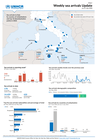
Italy weekly sea arrivals update – 6 July 2026
Countries: Italy, World Source: UN High Commissioner for Refugees Please refer to the attached Infographic.
Italy weekly sea arrivals update – 6 July 2026 Read More »

Countries: Italy, World Source: UN High Commissioner for Refugees Please refer to the attached Infographic.
Italy weekly sea arrivals update – 6 July 2026 Read More »
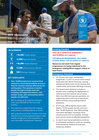
Country: Venezuela (Bolivarian Republic of) Source: World Food Programme Please refer to the attached file. Funding Needed FOR THE 1st MONTH OF EMERGENCY: USD 50 Million are required. FOR REGULAR PROGRAMMES, INCLUDING SCHOOL MEALS: USD 20 million are required. Resources and stock from regular programmes are being redirected to the emergency, making donor support critical on both fronts. Emergency Situation • On 24 June, two major earthquakes (magnitude 7.2 and 7.5) struck north-central Venezuela near Morón (Yaracuy), causing widespread destruction across Caracas and coastal areas, particularly affecting La Guaira. The Government declared La Guaira a disaster zone, enabling the deployment of national and international rescue teams. More than 800 international specialists are supporting search-and-rescue operations, debris removal, and providing medical assistance. • As of 5 July, official figures report 2,954 deaths, 16,592 people injured, and more than 16,309 displaced. Over 856 buildings have been damaged, including critical infrastructures such as hospitals, limiting basic service access to affected populations. • As search-and-rescue operations continue, humanitarian assistance scales up, including food assistance, medical services and temporary shelters.
WFP Venezuela Earthquakes Response Situation Report 5 July 2026 Read More »
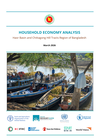
Country: Bangladesh Source: Food Security Cluster Please refer to the attached file. Context and Purpose Bangladesh’s Haor Basin and Chittagong Hill Tracts (CHT) are repeatedly affected by flash floods and landslides, along with heavy rain fall and monsoon flood events that disrupt lives, livelihoods, production systems, infrastructure and markets, and erode the coping capacity of vulnerable households. This Household Economy Analysis (HEA) provides hazard‑specific, wealth group-disaggregated evidence to inform cause of food insecurity, survival and protection threshold, disaster impact and vulnerability, community priorities, anticipatory action, forecast‑based financing, cash programming and targeted recovery measures. The study covers 10 districts (6 Haor, 4 CHT), with a 2025 reference/baseline year, and draws on 85 KIIs, 286 FGDs, and 60 market assessments across 60 upazilas, complemented by livelihood zoning and seasonal calendars validated with government stakeholders and communities. Livelihood Zoning, Wealth Groups, and Methods The analysis adopts HEA’s six‑step framework livelihood zoning, wealth breakdown, livelihood strategies, problem specification, coping capacity, projected outcomes and uses KII, FGD and Market assessments tools to triangulate household food and income sources, expenditures, and market functioning in a normal year. Livelihood zones were delineated and government‑endorsed after desk review and field validation. Wealth groups Extreme Poor, Poor, Middle, Well‑Off are differentiated by land, livestock, assets, and main occupations to capture economic stratification and vulnerability. Regional Profiles in the Baseline Haor: With an exceptional geographical characteristic, agriculture‑dominant economy (avg 58.1% of primary livelihoods), with day labour at 24.7% and thin formal employment. Netrokona shows the highest agricultural dependence (75.8%). Seasonal boro rice production, fishing/aquaculture, and wage labour drive annual food and cash flows. Migration for off‑farm work peaks in March–April and September–October. CHT: Agriculture is also dominant (avg 49.4%), followed by day labour (28.0%). Jhum/terrace farming plus small livestock and wild item collection are significant, with market access constraints from terrain and landslide risks. Chattogram (CT) is an outlier with more formal jobs and remittances due to its port economy linkages. Baseline Income and Expenditure Patterns (Good Year) Cash income: Cash income shows the gradient Extreme Poor < Poor < Middle in both regions. Illustratively, in the CHT baseline: Extreme Poor (EP) BDT 147,422, Poor BDT 168,533, Middle ~BDT 295,175 (annualized equivalents); Haor shows a similar ordering (EP BDT 120,608, Poor BDT 150,259, Middle BDT 300,321). Income composition shifts from labour‑dependence (EP/Poor) toward own production, livestock, and remittances (Middle). Food share of expenditure: Food share of expenditure declines with wealth: EP 54–59%, Poor 38–48%, Middle 30–37%, reflecting constrained diets and lower ability to invest in livelihoods among poorer groups. Calorie sources: Calorie sources differ by wealth: EP rely mostly on purchased food (CHT 74%, Haor 64%), while Middle obtain most calories from own production (CHT 78.6%, Haor 80.2%). This explains sharper shock sensitivity among EP households when prices rise or access declines. Seasonal & Hazard Calendars (Baseline Risk Windows) Both regions exhibit tight hazard–production overlaps: Haor: Pre‑monsoon/monsoon flash floods coincide with the boro harvest, repeatedly causing crop loss, transport disruption, and lean‑season wage scarcity; migration spikes when local labour dries up. CHT: Landslides and heavy rainfall induced flash flood episodes during monsoon sever connectivity issue, disrupt agriculture, raise transport costs, and isolate remote paras from major markets and services. Outcome Analysis (Shocks and Outcome Analysis Results) Recent shock years provide a reality check on resilience: Haor: Severe floods (2022) produced up to 60% boro loss, 95% aush labour loss, and 45% casual labour loss leading to 22% income declines for Extreme Poor (EP) households, deepening seasonal food gaps. In the modeled post‑shock year, Haor EP fall below the Survival Threshold (ST), indicating inability to meet minimum food and essential non-food needs; Poor hover barely above ST, and Middle sustain deficits against the Livelihood Protection Threshold (LPT) due to higher input and recovery needs. CHT: Flash floods/landslides (notably 2023) affected 1.3 million people, displaced ~213,000, caused 66,000 ha farmland losses, and 50–65% reductions across jhum/aman labour and livestock incomes in affected. EP/Poor face energy gaps (e.g., EP 5.3% in CHT) and rely heavily on negative coping. Coping and Recovery Common coping mechanisms include reducing food/nonfood essentials (food, education, health), borrowing, asset sales (middle/better off), increased wild item collection, and greater reliance on government allowances. Recovery times range from weeks to months depending on the shock magnitude, market access, and credit. Implication (Outcome): Without timely liquidity (cash) and critical services (agriculture and livelihood inputs, transport, market access, technical support such as capacity building), shocks push Extreme Poor /Poor below Survival Threshold and far below Livelihood and Protection Threshold, increasing the likelihood of prolonged debt cycles and a gradual weakening of household livelihoods. Market Analysis (Functionality, Prices, Access) Structure and Seasonality CHT markets (Bandarban, Rangamati, Khagrachhari, Chattogram) are moderately large, serving 800–2,000 daily customers with a trader mix of 40–50% small, 30–40% medium, 10–20% large actors indicative of competitive yet thin markets outside hubs. Markets face severe access constraints for the remote communities, particularly during monsoon periods. Haor markets are highly seasonal (200–600 shops), with dry‑season spikes in customers and flood‑season contraction. Supply is dependent on regional wholesale hubs (Sylhet, Moulvibazar, Dhaka), vulnerable to road or riverine disruptions. Price Behavior and Drivers Across districts, price dynamics are shaped by seasonal availability, transport cost variations, supply‑chain disruptions, and fluctuating source‑market prices. Weather‑related constraints (flooding, waterlogging) restrict supply, while trader syndicates, limited storage, and upstream dependence can intensify volatility. Post‑shock, wholesalers, transport costs, stock scarcity, and local trader networks dominate price‑setting, often producing sharp but temporary spikes. Cash and voucher assistance is generally feasible; however, localized inflation risks may occur under supply. Household Market Access and Use The poorest rely most heavily on nearby markets for daily food and small inputs hence access (roads, waterways) and affordability (wages vs. prices) are the key determinants of dietary quality and stability. Following shocks, households reduce visit frequency, down‑shift to cheaper substitutes, buy smaller quantities, or switch to local kiosks behavior that underlines how market continuity is central to protecting consumption among Extreme Poor / Poor groups.
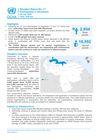
Country: Venezuela (Bolivarian Republic of) Source: UN Office for the Coordination of Humanitarian Affairs Please refer to the attached file. Situation Report No. 11Earthquakes in Venezuela04 July 2026Time: 8:00 pm Highlights Following the 24 June earthquakes of magnitude 7.2 and 7.5 (18:00 local time), authorities report more than 940 aftershocks. At least seven (7) states have been impacted. La Guaira remains the most affected state. Official toll: 2,954 people dead and 16, 592 injured. A total of 6,462 people have been rescued. Urban Search and Rescue (USAR) teams remain deployed in the affected areas, in coordination with OCHA, more than one week after the earthquakes. The United Nations system and its partner organizations, in coordination with the Government, are responding with multisectoral actions and will continue to scale up assistance to affected people. Situation overview Venezuela is facing a national emergency following two consecutive high-magnitude earthquakes (7.2 and 7.5) that struck on 24 June (18:00 local time) in the north-central region, with the epicentre located along the San Felipe–Yumare–Montalbán axis (Yaracuy/Carabobo). Authorities report 942 aftershocks. More than a week after the earthquakes, authorities report a toll of 2,954 people dead, 16,592 injured, and 6,462 rescued since the onset of the emergency. Authorities also reported that approximately 16,309 people lost their homes. The Government response remains focused on search and rescue operations, the preparation and expansion of transitional camps and the assistance to affected populations. La Guaira remains the most affected state. The United Nations and its partner organizations, in coordination with the authorities, are implementing multisectoral response activities and will continue to scale up assistance to affected people.
Earthquakes in Venezuela: Situation Report #11 (04 July 2026, Time: 08:00 pm) Read More »
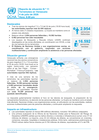
Country: Venezuela (Bolivarian Republic of) Source: UN Office for the Coordination of Humanitarian Affairs Please refer to the attached file. Reporte de situación N.º 11Terremotos en Venezuela4 de julio de 2026Hora: 8:00 pm Destacados Tras los sismos de magnitud 7,2 y 7,5 del 24 de junio (18:00 hora local), las autoridades reportan más de 940 réplicas. Al menos siete (7) estados impactados. La Guaira se mantiene como el estado más afectado. Balance oficial: 2.954 personas fallecidas y 16.592 heridas. 6.462 personas han sido rescatadas. Los equipos de Búsqueda y Rescate Urbano (USAR) continúan desplegados en las zonas afectadas, en coordinación con OCHA, a más de una semana de los terremotos. El Sistema de Naciones Unidas y sus organizaciones socias, en coordinación con el gobierno, responden con accionesmultisectoriales y continuarán ampliando la asistencia a las personas afectadas. Situación general Venezuela enfrenta una emergencia nacional tras dos sismos consecutivos de gran magnitud (7,2 y 7,5) ocurridos el 24 de junio (18:00, hora local) en la región centro-norte, con epicentro sobre el eje San Felipe – Yumare – Montalbán (Yaracuy/Carabobo). Las autoridades reportan 942 réplicas. A más de una semana de los terremotos, las autoridades reportan un balance de 2.954 personas fallecidas, 16.592 personas heridas y 6.462 personas rescatadas desde el inicio de la emergencia. Asimismo, las autoridades reportan que unas 16.309 personas han quedado damnificadas. La respuesta gubernamental mantiene el foco en las labores de búsqueda, la preparación de los campamentos transitorios y la atención de las personas afectadas. La Guaira se mantiene como el estado más afectado. Naciones Unidas y sus organizaciones socias, en articulación con las autoridades, realizan acciones multisectoriales para las personas afectadas y continuarán ampliando la respuesta.
Terremotos en Venezuela: Reporte de situación #11 (04 de julio de 2026, Hora: 08:00 pm) Read More »
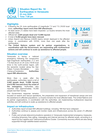
Country: Venezuela (Bolivarian Republic of) Source: UN Office for the Coordination of Humanitarian Affairs Please refer to the attached file. Situation Report No. 10Earthquakes in Venezuela03 July 2026Time: 7:00 pm Highlights Following the 24 June earthquakes of magnitude 7.2 and 7.5 (18:00 local time), authorities report more than 800 aftershocks. At least seven (7) states have been impacted. La Guaira remains the most affected state. Official toll: 2,645 people dead and 12,666 injured. A total of 6,462 people have been rescued. Urban Search and Rescue (USAR) teams remain deployed in the affected areas, in coordination with OCHA, more than one week after the earthquakes. The United Nations system and its partner organizations, in coordination with the Government, are responding with multisectoral actions and will continue to scale up assistance to affected people. Situation overview Venezuela is facing a national emergency following two consecutive high-magnitude earthquakes (7.2 and 7.5) that struck on 24 June (18:00 local time) in the north-central region, with the epicentre located along the San Felipe–Yumare–Montalbán axis (Yaracuy/Carabobo). Authorities report 890 aftershocks. More than a week after the earthquakes, authorities report a toll of 2,645 people dead, 12,666 injured, and 6,462 rescued since the onset of the emergency. Authorities also reported that approximately 15,050 people lost their homes. The Government response remains focused on search and rescue operations, the preparation and expansion of transitional camps and and the assistance to affected populations. La Guaira remains the most affected state. The United Nations and its partner organizations, in coordination with the authorities, are implementing multisectoral response activities and will continue to scale up assistance to affected people.
Earthquakes in Venezuela: Situation Report #10 (03 July 2026, Time: 07:00 pm) Read More »
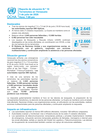
Country: Venezuela (Bolivarian Republic of) Source: UN Office for the Coordination of Humanitarian Affairs Please refer to the attached file. Reporte de situación N.º 10Terremotos en Venezuela3 de julio de 2026Hora: 7:00 pm Destacados Tras los sismos de magnitud 7,2 y 7,5 del 24 de junio (18:00 hora local), las autoridades reportan 890 réplicas. Al menos siete (7) estados impactados. La Guaira se mantiene como el estado más afectado. Balance oficial: 2.645 personas fallecidas y 12.666 heridas. 6.462 personas han sido rescatadas. Los equipos de Búsqueda y Rescate Urbano (USAR) continúan desplegados en las zonas afectadas, en coordinación con OCHA, a más de una semana de los terremotos. El Sistema de Naciones Unidas y sus organizaciones socias, en coordinación con el gobierno, responden con acciones multisectoriales y continuarán ampliando la asistencia a las personas afectadas. Situación general Venezuela enfrenta una emergencia nacional tras dos sismos consecutivos de gran magnitud (7,2 y 7,5) ocurridos el 24 de junio (18:00, hora local) en la región centro-norte, con epicentro sobre el eje San Felipe – Yumare – Montalbán (Yaracuy/Carabobo). Las autoridades reportan 890 réplicas. A más de una semana de los terremotos, las autoridades reportan un balance de 2.645 personas fallecidas, 12.666 personas heridas y 6.462 personas rescatadas desde el inicio de la emergencia. Asimismo, las autoridades reportan que unas 15.050 personas perdieron sus viviendas. La respuesta gubernamental mantiene el foco en las labores de búsqueda, la preparación de los campamentos transitorios y la atención de las personas afectadas. La Guaira se mantiene como el estado más afectado. Naciones Unidas y sus organizaciones socias, en articulación con las autoridades, realizan acciones multisectoriales para las personas afectadas y continuarán ampliando la respuesta.
Terremotos en Venezuela: Reporte de situación #10 (03 de julio de 2026, Hora: 07:00 pm) Read More »
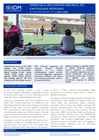
Country: Venezuela (Bolivarian Republic of) Source: International Organization for Migration Please refer to the attached file. The fifth Situation Report provides an update on the impact of the 24 June earthquakes in the Bolivarian Republic of Venezuela and summarizes IOM’s ongoing and planned response in support of affected populations and national efforts. Highlights As of 2 July 2026, official figures reported at least 2,595 fatalities and 12,400 injuries following the 24 June earthquakes. Figures pending further update include 12,841 severely affected people, 26,403 affected people, 855 affected buildings, 189 total collapses and 6,461 people rescued. IOM continues supporting temporary sites, multidisciplinary health and MHPSS services, protection, community engagement, registration, information management and needs assessments in La Guaira and Falcón. Urgent additional support is required to scale up life-saving assistance, improve conditions in temporary sites, strengthen referral, protection and accountability mechanisms, and generate timely data to inform a safe, dignified and targeted response. IOM activities IOM has continued supporting shelter, site coordination and essential services in temporary sites in La Guaira, including the Polideportivo José María Vargas and the Estadio César Nieves, where 1,200 and 1,500 people have been registered, respectively. At the Polideportivo José María Vargas, IOM supported the installation of 150 bunk beds, received tarpaulins and other supplies, strengthened site organization and held two community assemblies with leaders to define roles and responsibilities for site maintenance. In health and MHPSS, IOM-supported teams assisted 297 people at the Polideportivo José María Vargas, 185 people at the Estadio César Nieves and 97 people in Cayumar, Falcón, through general medicine, paediatrics, internal medicine, gynaecology, psychological first aid and psychosocial support services. IOM also mobilized a water treatment plant, continued providing protection orientation and referrals, provided 13 legal counselling sessions, identified the presence of unaccompanied children and adolescents in Falcón, trained enumerators on the IMS registration tool and, together with OCHA, completed three Rapid Needs Assessment surveys in Silva municipality. IOM planned response IOM will continue prioritizing safe temporary accommodation, site coordination and management, WASH, health and MHPSS, protection, data and needs assessments. In temporary sites, IOM will continue supporting site planning, registration, warehouse management, tent installation, lighting, charging points, connectivity, community engagement, information provision, AAP, GBV risk mitigation and PSEA measures. In WASH, health, protection and information management, IOM will seek to expand access to safe water, basic sanitation, hygiene promotion, mobile health services, referrals, care for chronic conditions, sexual and reproductive health, psychological first aid and MHPSS. This document also highlights needs for additional support to sustain and scale up humanitarian assistance, improve conditions in temporary sites and affected communities, strengthen safe and accountable services, reduce protection and public health risks, and generate timely data to inform a more targeted response for affected populations.
Country: Venezuela (Bolivarian Republic of) Source: International Organization for Migration Please refer to the attached file. El quinto Informe de Situación presenta una actualización, sobre el impacto de los terremotos del 24 de junio en la República Bolivariana de Venezuela y resume la respuesta en curso y planificada de la OIM en apoyo a las poblaciones afectadas y a los esfuerzos nacionales. Aspectos destacados Al 2 de julio de 2026, las cifras oficiales reportaron al menos 2.595 personas fallecidas y 12.400 personas heridas tras los terremotos del 24 de junio. Las cifras pendientes de nueva actualización incluyen 12.841 personas damnificadas, 26.403 personas afectadas, 855 edificaciones afectadas, 189 colapsos totales y 6.461 personas rescatadas. La OIM continúa apoyando campamentos transitorios, servicios multidisciplinarios de salud y SMAPS, protección, participación comunitaria, registro, gestión de información y evaluaciones de necesidades en La Guaira y Falcón. Se requiere apoyo adicional urgente para ampliar la asistencia vital, mejorar las condiciones en campamentos transitorios, fortalecer mecanismos de derivación, protección y rendición de cuentas, y generar datos oportunos para orientar una respuesta segura, digna y focalizada. Actividades de la OIM La OIM ha continuado apoyando alojamiento, coordinación de sitios y servicios esenciales en campamentos transitorios en La Guaira, incluidos el Polideportivo José María Vargas y el Estadio César Nieves, donde se han registrado 1.200 y 1.500 personas, respectivamente. En el Polideportivo José María Vargas, la OIM apoyó la instalación de 150 literas, recibió tarpaulins y otros insumos, fortaleció la organización del espacio y realizó dos asambleas comunitarias con líderes para definir roles y responsabilidades en el mantenimiento del campamento. En salud y SMAPS, equipos apoyados por la OIM atendieron a 297 personas en el Polideportivo José María Vargas, 185 personas en el Estadio César Nieves y 97 personas en Cayumar, Falcón, mediante servicios de medicina general, pediatría, medicina interna, ginecología, primeros auxilios psicológicos y apoyo psicosocial. La OIM también movilizó una planta potabilizadora de agua, continuó brindando orientación y referenciación en protección, proporcionó 13 asesorías legales, identificó la presencia de niñas, niños y adolescentes no acompañados en Falcón, capacitó enumeradores en la herramienta IMS y completó, junto con OCHA, tres encuestas de Evaluación Rápida de Necesidades en el municipio Silva. Respuesta planificada de la OIM La OIM continuará priorizando alojamiento temporal seguro, coordinación y gestión de campamentos transitorios, WASH, salud y SMAPS, protección, datos y evaluaciones de necesidades. En los campamentos transitorios, continuará apoyando la planificación de sitios, registro, gestión de almacenes, instalación de carpas, iluminación, puntos de carga, conectividad, participación comunitaria, provisión de información, AAP, mitigación de riesgos de VBG y medidas de PEAS. En WASH, salud, protección y gestión de información, la OIM buscará ampliar el acceso a agua segura, saneamiento básico, promoción de higiene, servicios móviles de salud, referencias, atención de enfermedades crónicas, salud sexual y reproductiva, primeros auxilios psicológicos y SMAPS. Este documento también visibiliza necesidades de apoyo adicional para sostener y ampliar la asistencia humanitaria, mejorar las condiciones en campamentos transitorios y comunidades afectadas, fortalecer servicios seguros y con rendición de cuentas, reducir riesgos de protección y salud pública, y generar datos oportunos para orientar una respuesta más focalizada a las poblaciones afectadas.
![venezuela: terremotos de junio de 2026 – snapshot de situación (Última actualización: 2 de julio de 2026) [es/en]](https://blhlfoundation.org/wp-content/uploads/2026/07/8011acd4-75d3-440c-ad77-dc507aad1ddf-NYUuab.png "Venezuela: Terremotos de junio de 2026 – Snapshot de situación (Última actualización: 2 de Julio de 2026) [ES/EN]")
Country: Venezuela (Bolivarian Republic of) Source: UN Office for the Coordination of Humanitarian Affairs Please refer to the attached Infographic. Resumen de la situación Doble sismo (M7,2 y M7,5) el 24 de junio, 18:00 h, en el eje San Felipe–Yumare–Montalbán (Yaracuy–Carabobo). Réplicas en descenso: 86 el 28 de junio y 30 el 29 de junio, con menor magnitud promedio. GDACS emitió Alerta Roja: 2,4 millones de personas expuestas a sacudidas severas. La Guaira fue declarado Zona de Desastre, con afectaciones concentradas en Caraballeda y Catia La Mar. Afectación severa también en Distrito Capital, Miranda, Carabobo, Yaracuy, Aragua y Falcón. — Situation overview Double earthquake (M7.2 and M7.5) on June 24, 18:00, along the San Felipe–Yumare–Montalbán axis (Yaracuy–Carabobo). Aftershocks declining:86 on June 28 and 30 on June 29, with lower average magnitude. GDACS issued a Red Alert:2.4 million people exposed to severe shaking. La Guaira was declared a Disaster Zone, with impacts concentrated in Caraballeda and Catia La Mar. Severe impact also in Distrito Capital, Miranda, Carabobo, Yaracuy, Aragua and Falcón.