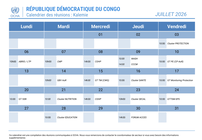
DR Congo: République démocratique du Congo – Tanganyika : calendrier des réunions Kalemie (juillet 2026)
Country: Democratic Republic of the Congo Source: UN Office for the Coordination of Humanitarian Affairs Please refer to the attached file.

Country: Democratic Republic of the Congo Source: UN Office for the Coordination of Humanitarian Affairs Please refer to the attached file.
Country: Ukraine Source: International Organization for Migration Please refer to the attached file. This analytical brief examines social cohesion in Ukraine, drawing on data from Round 23 of IOM’s General Population Survey, collected between January and March 2026. The brief analyses several dimensions of social cohesion, including trust between individuals and institutions, sense of belonging, civic participation, and relations between different population groups, including internally displaced persons, returnees, veterans, and non-displaced populations. The analysis considers how these dimensions interact in a context marked by ongoing displacement, economic strain, and pressure on local governance and service delivery. The brief examines where social cohesion remains strong, where it is weakening, and the implications for transition and recovery programming. The findings are intended to inform evidence-based programming to support more targeted and integrated approaches to strengthening social cohesion in Ukraine.
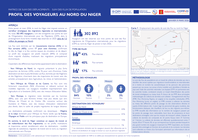
Country: Niger Source: International Organization for Migration Please refer to the attached Infographic. Entre janvier et mars 2026, le nord du Niger s’est imposé comme un carrefour stratégique des migrations régionales et internationales. Au total, 302 892 voyageurs y ont été enregistrés aux points de suivi de l’Organisation Internationale pour les Migrations (OIM), dans le prolongement d’une forte mobilité déjà observée en 2025 (plus de 1,2 million de passages au Nord). Les flux sont dominés par les mouvements internes (43%) et les flux sortants (40%), contre 17 pour cent d’entrées, confirmant le rôle du Niger à la fois comme espace de circulation et de départ. Le profil des voyageurs est plutôt masculin (84%) et composé d’une majorité d’adultes, traduisant des migrations principalement économiques.
Niger — Profil des voyageurs au nord du Niger (janvier – mars 2026) Read More »
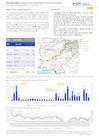
Countries: Pakistan, Afghanistan Source: International Organization for Migration Please refer to the attached Infographic. The International Organization for Migration (IOM) Pakistan’s FM provides key insights into cross-border migration trends, returning Afghan nationals to Afghanistan, their profiles, mobility patterns, routes, vulnerabilities, demographics and other social characteristics. Between 1 and 15 June 2026, DTM border monitors (BMs) interviewed 1,764 heads of households through a Flow Monitoring Registry (FMR) form, while a total of 58,469 Afghan returnees were identified through the five border crossing points (BCPs). Highlights Cumulatively, from 15 September 2023 to 15 June 2026, 2,507,000 individuals have returned. During the reporting period, the number of returns increased by 5 per cent and deportations by 49 per cent compared to the previous reporting period (16-31 May 2026). The increase in returns and deportations reflects the resumption of cross-border movements and arrest operations following the Eid period. Since 1 April 2025, 1,652,967 Afghan nationals returned, ofwhich 211,674 (13%) were deported. Fear of arrest (96%) remained the most important reasonamong respondents to return to Afghanistan.
Pakistan — Flow Monitoring of Afghan Returnees — Bi-Weekly Report (1 – 15 June 2026) Read More »
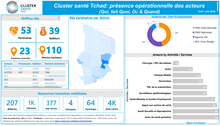
Countries: Chad, Sudan Sources: Health Cluster, World Health Organization Please refer to the attached Infographic.
Cluster Santé Tchad: présence opérationnelle des acteurs Avril-Juin 2026 Read More »
Country: Lebanon Source: Norwegian Refugee Council Israeli strikes continue to kill civilians in Lebanon, while more than 700,000 people remain unable to return home or rebuild their lives, despite a ceasefire with Hezbollah, the Norwegian Refugee Council (NRC) warned today. Press release Lebanon Published 02. Jul 2026 Ceasefire extensions have reduced the scale of attacks, but they have not made civilians safe. Since the latest Lebanon-Israel framework agreement, signed in Washington on 26 June, hostilities have continued through Israeli shelling, drone strikes, house demolitions and military operations. Four months on, return is still not a simple step. Israeli-declared military zones inside Lebanon, unexploded ordnance and access restrictions are keeping many families from returning home safely. Others cannot return because their homes have been destroyed or basic services are unavailable. “Our home was badly damaged, and we cannot afford to repair it,” said Afaf, who recently returned to her village of Sohmour in West Bekaa. “We barely have electricity, and our water tanks were destroyed, so we now have to bring water home in plastic containers. Honestly, we don’t feel like there’s a ceasefire. We still hear drones flying overhead all the time, as if nothing has changed.” “The cost of recovery is being shaped by the way this war is being fought,” said Maureen Philippon, NRC Country Director in Lebanon. “When homes, roads, water systems, health facilities, schools and civilian infrastructure are destroyed, it means longer displacement, lost livelihoods, disrupted education, and families pushed deeper into debt. For civilians, the consequences will last long after attacks cease.” Initial building damage assessments indicate that the cost of direct building damage south of the Litani River alone has reached 1.38 billion US dollars. This comes less than two years after the 2024 escalation, which had already left Lebanon facing billions of US dollars in damage and recovery needs. “Families are exhausted after fleeing violence for the second time in less than two years,” said Philippon. “Many have depleted their savings to cope with displacement, whether to pay rent, buy clothes after leaving with almost nothing, or cover basic needs. This is happening in a country still recovering from one of the worst economic and financial crises. Every new attack makes recovery harder and more costly. Families need sustained funding to repair homes, restore basic services and rebuild their lives. We need to see stronger international mobilisation than we saw after the 2024 escalation.” NRC calls on states with influence over the parties to the conflict to use all diplomatic channels to secure a genuine and lasting end to hostilities, support accountability for violations of international humanitarian law, and ensure conditions that allow families to return safely and rebuild. Without sustained support for displaced families and communities trying to recover, many people will remain trapped between unsafe return, destroyed homes and prolonged displacement. Notes to editors Hostilities between Israel and Hezbollah escalated in Lebanon on 2 March 2026, marking the second major escalation in less than two years, following the 2024 escalation. As of 25 June, 704,445 people remained internally displaced nationwide, while more than 523,000 people had begun returning, often cautiously. (OCHA) A ceasefire between Israel and Hezbollah was first announced on 16 April after 46 days of escalation and was later followed by several extensions. A Lebanon-Israel framework agreement was signed in Washington on 26 June. (Reuters) The Ministry of Public Health reported more than 4,278 people killed and 12,196 injured since 2 March, including 135 health workers killed and 406 injured as of 30 June.(MOPH) Building-level damage assessments by Lebanon’s National Council for Scientific Research (CNRS) and UNDP indicate that direct building damage south of the Litani River alone was valued at USD 1.38 billion as of 29 April. This does not capture the full scale of damage to essential infrastructure or other affected areas across Lebanon. (UNDP) According to the World Bank’s Lebanon Rapid Damage and Needs Assessment, the 2024 escalation left Lebanon with an estimated US$6.8 billion in physical damage and US$11 billion in reconstruction and recovery needs. (WorldBank) The 2026 Lebanon Flash Appeal, extended to August, requires USD 639.9 million and is only 37.1 per cent funded. (FTS) For more information or to arrange an interview, please contact NRC global media hotline: media@nrc.no, +47 905 62 329
Country: Central African Republic Sources: UN Office for the Coordination of Humanitarian Affairs, World Food Programme Please refer to the attached files. Le Panier Minimum de Dépenses (MEB) est un outil opérationnel utilisé pour estimer, dans un contexte donné et à un moment précis, le coût moyen des besoins essentiels d’un ménage vulnérable. Il permet d’apprécier le niveau minimum de dépenses nécessaire pour couvrir des besoins de base pouvant être satisfaits par le marché, dans des conditions de qualité jugées acceptables. En République centrafricaine, la montée en puissance des programmes de transferts monétaires a rendu nécessaire une révision du MEB. Cette révision vise à renforcer l’harmonisation des approches entre acteurs humanitaires, à améliorer la cohérence des montants de transfert et à mieux prendre en compte les écarts de prix entre les zones du pays. La présente note présente successivement : la définition et les objectifs du MEB, le contexte de la révision, l’approche méthodologique retenue, la composition du panier, les principaux résultats, le zonage alimentaire, puis les principales limites et recommandations pour le suivi du MEB.
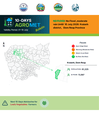
Country: Cambodia Source: Food and Agriculture Organization of the United Nations Please refer to the attached file.
Country: Venezuela (Bolivarian Republic of) Source: ChildFund International Please refer to the attached file. Situation at a Glance On 24 June 2026, two successive earthquakes of 7.2 and 7.5 magnitude struck north-central Venezuela — the strongest seismic event in Venezuela in over 100 years. Five days into the response, the scale of destruction continues to grow, and only now are we beginning to understand the true magnitude of the devastation. At least 1,430 people have been killed, more than 3,238 injured, and over 68,900 reported missing. According to the President of the National Assembly, Jorge Rodriguez, 774 buildings collapsed (189 were completely destroyed) and 2,501 buildings were damaged, including hospitals, shopping centers, bridges and roads. In La Guaira alone, more than 1,400 buildings were destroyed and more than 11,200 people are missing. A magnitude 4.7 aftershock on 26 June caused additional building damage in Caracas and collapsed the bridge connecting Caraballeda to the rest of La Guaira, further disrupting relief efforts. A damaged runway at Simon Bolivar International Airport delayed the arrival of rescue teams; however, as of June 28, 30 international search and rescue teams with more than 1,600 personnel and over 100 dogs are on the ground. More than 400 aftershocks have been recorded in total.) The UNDP estimated direct physical damage of between USD 4.7 and 8.7 billion — approximately 6% of Venezuela’s GDP — not including infrastructure loss, longterm economic disruption or reconstruction costs. This emergency is compounding an already fragile humanitarian situation: prior to the earthquakes, nearly 8 million people in Venezuela were already in need of humanitarian assistance.
Venezuela Earthquake: Acute and Compounding Risks to Children – Flash Update #1 Read More »
Country: Yemen Source: Solidarités International Please refer to the attached file. Highlights of this edition include: • Keeping essential services running in high-risk districts: Together with partners, SI continued integrated WASH, Health and Nutrition interventions along the West Coast, providing safe water, improving sanitation, rehabilitating health facilities, and promoting hygiene to reduce the risk of disease outbreaks. • Emergency flood response: Following the devastating flash floods in Ta’izz Governorate in March 2026, SI rapidly distributed hygiene and cholera kits to affected IDP and host communities in Ta’izz and Al Mokha, helping prevent waterborne diseases and restore dignity to thousands of vulnerable people. • Supporting income recovery in Ta’izz: Through the EU-funded AMAL project, SI provided vocational training, financial literacy sessions, and start-up support to displaced women and men, enabling them to develop sustainable livelihoods and strengthen their economic resilience. • Restoring productive assets in Marib: Through the CDCS-funded RAISE project, SI supported displaced households with access to agricultural land, climate-smart farming practices, mobile veterinary services, and income-generating activities while strengthening local animal health systems. • Investing in long-term resilience: Across its interventions, SI continued combining emergency response with sustainable recovery by improving access to essential services, strengthening local capacities, and supporting displaced communities to rebuild their livelihoods with dignity.
Solidarités International Yemen, Newsletter 08 (May 2026) Read More »