Uncategorized

world: protection capacities under pressure: evidence from consultations with protection partners across 22 operations (summary)

World: Protection Capacities Under Pressure: Evidence from Consultations with Protection Partners across 22 Operations (Summary)

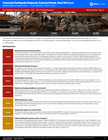
Country: World Source: Protection Cluster Please refer to the attached file. The timing of this analysis is critical. Protection capacity reductions are taking place within a broader structural shift in humanitarian financing, marked by smaller funding envelopes, sharper prioritization and greater pressure to focus on what is most immediate, visible and countable. This is consistent with the broader Humanitarian Reset agenda, but it creates a specific risk for protection: the functions most needed to keep a leaner response effective and targeted in addressing violence and supporting the most vulnerable people are not being funded. Protection depends on continuity, trust, proximity, analysis and follow-up. Monitoring, community engagement, programming & services, referrals, case management, protection analysis and advocacy are the functions that help identify who is most at risk, where harm is increasing, and how limited resources can be prioritized to reduce it. The report shows that these functions are being reduced as protection faces sustained funding pressure

World: Protection Capacities Under Pressure: Evidence from Consultations with Protection Partners across 22 Operations (Summary) Read More »

Japan and WFP strengthen health and education in Somalia | World Food Programme

Country: Somalia Source: World Food Programme MOGADISHU, Somalia – The United Nations World Food Programme (WFP) has welcomed a contribution of USD 1.2 million from the Government of Japan to provide daily nutritious school meals to more than 14,000 children in Somalia’s Southwest and Jubaland states through February 2027. The contribution will enable WFP to provide home-grown school meals through value vouchers, allowing schools to procure a variety of foods such as cereals, fresh produce and animal protein from local retailers and farmer cooperatives — boosting livelihoods and local markets while improving children’s nutrition. “School meals keep children in school, even during crises. In 2025, retention rates in WFP-supported schools reached 98 percent, and amid the current hunger emergency, these meals are often the only reliable source of food for thousands,” said Hameed Nuru, WFP’s Representative and Country Director in Somalia. “With Japan’s support, children in Somalia continue to receive the nutrition they need to learn and thrive, and we are deeply grateful for this commitment.” One in three Somalis, or an estimated six million people, faces crisis-level hunger or worse (IPC3+). Nearly two million face emergency hunger (IPC4), as drought, insecurity, falling humanitarian funding, and the ripple effects of the conflict in the Middle East deepen the crisis. Funding shortfalls have cut WFP’s school meals coverage from a high of nearly 200,000 students in 2023, to just over 120,000 today, as more than 4.5 million children remain out of school. The Government of Japan has been a steadfast partner of WFP in Somalia, contributing USD 37 million since 2021 to support emergency relief, nutrition, school meals and livelihoods initiatives across the country. Somalia School meals FundingSara Cuevas Gallardo, WFP/ Somalia, Mob. +252 771 641 746/+591 77177172 Fatima Hirsi, WFP/ Somalia, Mob. +252 61 177 9672

Japan and WFP strengthen health and education in Somalia | World Food Programme Read More »

venezuela earthquake response situation update and response actors: expected needs, next 96 hours — as of 05 july 2026 | 1700et/2100z

Venezuela Earthquake Response Situation Update and Response Actors: Expected Needs, Next 96 Hours — As of 05 July 2026 | 1700ET/2100Z

Country: Venezuela (Bolivarian Republic of) Source: Pacific Disaster Center Please refer to the attached file. The response is transitioning from live rescue to recovery. Live rescues are now rare exceptions. Missing-persons estimates range from tens of thousands (unverified crowd-sourced registries cite 43,000 to 46,000), against no confirmed official figure. The UN is planning against a scenario of up to 10,000 deaths.

Venezuela Earthquake Response Situation Update and Response Actors: Expected Needs, Next 96 Hours — As of 05 July 2026 | 1700ET/2100Z Read More »

world: attacks on health care bi monthly news brief, 10 23 june 2026

World: Attacks on Health Care Bi-Monthly News Brief, 10-23 June 2026

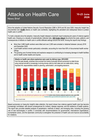
Countries: World, Colombia, Democratic Republic of the Congo, Ethiopia, Haiti, Lebanon, Myanmar, Nigeria, occupied Palestinian territory, Pakistan, Sudan, Syrian Arab Republic, Ukraine, Yemen Source: Insecurity Insight Please refer to the attached file. Since the adoption of United Nations Security Council Resolution 2286 in 2016 and 09 June 2026, Insecurity Insight has documented over 19,000 attacks on health care worldwide, highlighting the persistent and widespread failure to protect health care in conflict. To mark a decade since the adoption, Insecurity Insight released a landmark report analysing ten years of violence against health care. Drawing on a decade of systematically collected data, Still Under Attack documents the scale, patterns, and consequences of attacks on health care in conflict-affected settings around the world. Among the report’s key findings: More than 3,860 health workers were killed and over 2,500 were arrested or detained between January 2016 and December 2025. Local health workers remain particularly vulnerable, accounting for more than 65% of documented health worker killings. The growing use of armed drones and explosive weapons is contributing to increasing damage to health facilities and to health worker deaths and injuries. Based exclusively on Insecurity Insight’s data collection, the report shows how violence against health care has become increasingly normalised, with severe consequences for civilians, disease response, and the resilience of health systems. The report also provides detailed analysis of perpetrators, methods of attack, and emerging risks, including the growing role of new technologies in conflict. It concludes with recommendations for governments, international organisations, humanitarian actors, and the diplomatic community to strengthen the protection of health care and improve accountability for violations. Past editions: 27 May-09 June; 13-26 May; 29 April-12 May; 15-28 April; 01-14 April; 18-31 March; 04-17 March; 18 February-03 March; 04-17 February; 21 January-03 February; All SHCC Reports:2025;2024; 2023; 2022; 2021; All Help support the protection of health care by sharing this resource. Please copy and paste this link: https://bit.ly/10-23Jun2026Health SHCC Attacks on Health Care This section aligns with the definition of attacks on health care used by the Safeguarding Health in Conflict Coalition (SHCC). AfricaDemocratic Republic of the Congo13 June 2026: In Watsa territory, Haut-Uele province, the head nurse at Mungbere General Referral Hospital was shot and killed by a soldier who was reportedly attempting to speak to a patient receiving treatment, and the nurse was shot while intervening to inquire about the situation and protect the patient. Source: Radio Okapi As reported on 14 June 2026: In Mongbwalu town, Djugu territory, Ituri province, health workers burying a suspected Ebola casualty were violently obstructed from accessing a coffin by residents. Police officers warned residents not to touch the coffin but were later forced to use warning shots and tear gas to allow health workers to retrieve the body. Source: Personal Communication 15 June 2026: In Wanamahika Mutiri area, Butembo city, North Kivu province, Adventist (Wanamahika) Hospital was stormed by unidentified armed men carrying bladed weapons and knives, who abducted a woman and her six-year-old daughter from the facility. The child had tested positive for Ebola. The mother and daughter were later found at an Ebola treatment centre roughly 18km from Butembo. Sources: Actualite, AOL, BBC and Reuters 16 June 2026: In Ituri province, five Ebola response workers were briefly kidnapped by armed groups. Sources: Namibia Daily News and United Nations 16 June 2026: In Kakumba village, Walungu territory, South Kivu province, two Red Cross workers wearing Red Cross emblems were killed by armed men while on a mission to supervise drinking water supply work. The armed men allegedly knew the nature of their mission in the area. Sources: ICRC and Radio Okapi Insecurity Insight’s latest social media monitoring brief analyses public narratives surrounding the 17th Ebola epidemic in the Democratic Republic of the Congo between 15 June to 22 June 2026. Key findings: Politics, not the outbreak, drove the conversation. Comment volume rose 33% on the previous period, but almost entirely on the back of a single statement by an opposition figure linking the DRC’s World Cup performance to governance failures (1,160 comments, 26.5% of the total). Harmful content stayed minimal in posts and scattered in comments. A government attempt to deflect criticism onto an NGO backfired. After a health organisation warned of “dangerous gaps” in the response, the government rejected the criticism as “alarmist” and urged NGOs to show restraint. The backlash was overwhelmingly hostile to the government rather than the NGO, and dominated by the “Ebola business” corruption frame. A cluster of attacks on Ebola facilities and health workers was amplified and reframed online. The incidents are real and corroborated, but their online life was driven by a small network of accounts – and the single highest-reach post had over 400,000 views. Read the brief in English and French. Visit our website for precious briefs**.** Data from Insecurity Insight shows that since 21 May and 21 June 2026, at least 19 incidents of violence against or obstruction of health care impacting Ebola response measures were reported. Two Ebola treatment facilities were attacked and deliberately set on fire and another vandalised, damaging windows and a water supply system, compromising access to drinking water. Health workers were repeatedly assaulted, threatened and violently obstructed from performing their duties. Ethiopia13 June 2026: In Sir Iyasus kebele, Enemay woreda, East Gojjam zone, south-western Amhara region, a health facility was looted by ENDF members during a raid in the area. Source: Amhara Association of America Nigeria21 June 2026: In Kawel village, Mushere district, Bokkos local government area, Plateau state, a primary health centre was attacked by gunmen with guns and machetes at around 2330hrs, killing 22 people, including an unspecified number of health workers and patients. Source: Daily Trust Sudan Data from Insecurity Insight shows that since fighting started between the SAF and RSF in April 2023 and 09 June 2026 at least 761 incidents of violence against or obstruction of access to health care took place across Sudan: Over two-thirds of these 761 attacks were attributed to the RSF 211 health workers were killed,

World: Attacks on Health Care Bi-Monthly News Brief, 10-23 June 2026 Read More »

Bangladesh: First baby born by C-section at new Save the Children hospital in world’s largest refugee camp

Countries: Bangladesh, Myanmar Source: Save the Children “We opened this hospital to bring specialised care closer to those who need it the most and to ensure mothers feel safe and supported. Hopefully this will be the first of many successful deliveries that reinforce our commitment to strengthen healthcare for mothers and babies in Cox’s Bazar.” COX’S BAZAR, Bangladesh 6 July 2026 – The first baby born by caesarean section (C-section) was safely delivered at a new Save the Children hospital in Cox’s Bazar, Bangladesh, at a time when global aid cuts are putting essential services at risk in the world’s largest refugee settlement. The new Maternal and Child Hospital opened earlier this year and is the first facility to specialise in maternal and neonatal health in the Rohingya camps, where an overall reduction in donor funding has led to the closure of some health centres and learning facilities. Health workers at the hospital realised the need for the C-section and safely delivered the baby last month after the baby’s mother, Shirin*, who has three other children, experienced prolonged labour with reduced amniotic fluid causing an irregular heartbeat for her baby and rising blood pressure. Golam Mostofa, Cox’s Bazar Area Director, Save the Children International, said: “Every birth is a moment for celebration but this birth in particular deserves a moment because our teams were able to support the mother throughout a delivery that came with complications. “We opened this hospital to bring specialised care closer to those who need it the most and to ensure mothers feel safe and supported. Hopefully this will be the first of many successful deliveries that reinforce our commitment to strengthen healthcare for mothers and babies in Cox’s Bazar.” The hospital, which has 59 beds, offers services including emergency newborn care and stabilization, antenatal care, nutrition support and services for gender-based violence survivors. It is designed to care for both Rohingya refugee and women from host communities in Cox’s Bazar, where access to specialized healthcare is limited and maternal and newborn mortality rates remain high.[1] Cox’s Bazar in Bangladesh is home to the world’s largest refugee camp and hosts over one million Rohingya refugees who fled persecution in Myanmar, with more than half being children. Some Rohingya women experience high-risk pregnancies in the camps because of poor nutrition, limited pre-natal healthcare access, and underlying health conditions as well as other factors including the distance to and the cost involved in getting to a health facility. Shirin*, the mother, said: “The doctors and nurses took such great care of me that I felt safe throughout the procedure. The doctors also spoke to my family so they would understand why the surgery was necessary. The hospital is so clean, and they maintain hygiene well.” Save the Children has been working in Cox’s Bazar since 2012 and significantly increased its activities following the 2017 exodus of refugees to Bangladesh, with programs in education, health and nutrition, food, water, shelter, and child protection services. *Name changed to protect anonymity. References: [1] https://data.unicef.org/topic/maternal-health/maternal-mortality/ A former volunteer teacher in Baidoa retrains through a Save the Children diploma course for women and transforms her classroom into a place where girls speak up, stay in school, and see what an educated woman can be. Computers in the digital learning center created thanks to the support of Save the Children in the school of Stary Bilous village, Chernihiv region, Ukraine, January 24, 2023. Oleksandr Khomenko / Save the Children Harm to children caused by generative AI technologies is not limited to tools with video or photographic outputs, said Save the Children. Text-based chatbots also carry significant risks, including holding the potential to provide offenders information on how to commit child sexual abuse and steering children towards sexual conversations. Bissan*, 14, has seen meaningful change in herself since joining Save the Children’s activities. When she first arrived, she struggled with confidence and often kept to herself, worried about saying the wrong thing or being judged by others. Over time, through psychosocial support sessions, awareness activities, and creative outlets like drawing, she began to open up. She learned how to express herself, connect with others, and feel more comfortable in social settings, gradually becoming more confident and engaged. She has learned about respect, kindness, and how to handle difficult situations safely, including the importance of turning to trusted adults for support. At home, her relationships with her siblings improved — she now approaches disagreements calmly, helping resolve conflicts rather than contributing to them. Despite the challenges of living through war, Bissan* finds comfort in having a space where she can speak freely and feel supported. Looking ahead, she holds on to her ambitions of becoming a journalist or a model and continues to enjoy drawing as a way to express her thoughts and feelings. Above all, Bissan* hopes for an end to the war—so that families can return home and life can begin to feel normal again. Save the Children staff are supporting children in Gaza with psychosocial support services and child friendly spaces where children can play, learn and connect with other children. The child rights organisation is also providing health, nutrition and water and sanitation and hygiene (WASH) services to communities in Gaza, which includes critical provisions of clean water and hygiene promotion activities. Save the Children After 1,000 days of war, children in Gaza said they had lost homes, schools and a sense of safety but not their hopes for the future with even the ongoing violence failing to stop them from dreaming of peace and careers to help them rebuild their communities.

Bangladesh: First baby born by C-section at new Save the Children hospital in world’s largest refugee camp Read More »

colombia: violencia contra la atencion sanitaria en conflicto | 2025

Colombia: Violencia Contra la Atencion Sanitaria en Conflicto | 2025

Country: Colombia Source: Insecurity Insight Please refer to the attached file. Utilizando datos recopilados por Insecurity Insight, la Coalición para la Protección de la Salud en Situaciones de Conflicto (SHCC) identificó 28 incidentes de violencia o obstrucción de servicios de salud en Colombia en 2025, frente a los 19 de 2024 y los 18 de 2023.1 Entre los incidentes denunciados en 2025, se produjeron diez ataques contra centros de salud, siete trabajadores de salud fueron asesinados y 15 secuestrados. Es probable que el número real de incidentes y la gravedad del problema sean mayores, ya que es posible que en algunos lugares no se hayan denunciado los ataques contra el sistema de salud y que los cierres de servicios relacionados con el conflicto no se hayan reflejado en los datos, mientras que los recortes en la financiación de la Agencia de los Estados Unidos para el Desarrollo Internacional (USAID) redujeron aún más la presencia de proveedores de salud y el funcionamiento de los centros de salud.

Colombia: Violencia Contra la Atencion Sanitaria en Conflicto | 2025 Read More »

World: 2,5 milliards USD mobilisés pour des solutions au déplacement interne, selon un rapport des Nations Unies

Country: World Source: International Organization for Migration Genève, 6 juillet 2026 – Un nouveau rapport du Fonds pour les solutions au déplacement interne (FSDI) montre que les engagements pris sous la direction des gouvernements font avancer les solutions au déplacement interne et se traduisent par des résultats concrets. Le Fonds, créé par le Hub mondial des Nations Unies pour les solutions, a soutenu 10 programmes conjoints grâce à des financements catalytiques pouvant atteindre 3 millions USD chacun en 2025. Ces efforts ont contribué à débloquer environ 2,5 milliards USD en allocations budgétaires nationales pour la protection des personnes déplacées à l’intérieur de leur propre pays (PDI) et la recherche de solutions à leur situation, et ont mobilisé plus de 850 millions USD de financements au développement. En tant qu’organismes chefs de file du Fonds, l’Organisation internationale pour les migrations (OIM), le Programme des Nations Unies pour le développement (PNUD) et le HCR, l’Agence des Nations Unies pour les réfugiés, se félicitent de l’augmentation des investissements en faveur de solutions durables au déplacement interne. Le rapport montre que des investissements ciblés contribuent à renforcer les systèmes publics et à élargir l’accès au logement, aux terres, aux moyens de subsistance et aux services de base, tant pour les personnes déplacées que pour les communautés d’accueil. « Les données sont claires : lorsque nous investissons dans des systèmes qui aident les personnes à reconstruire leur vie, le déplacement devient plus gérable et les communautés se renforcent », a déclaré Ugochi Daniels, Directrice générale adjointe de l’OIM chargée des opérations. « Le défi consiste désormais à élargir cette approche en alignant les financements, les politiques et les partenariats afin que les progrès accomplis débouchent sur des changements durables. » « Le déplacement interne n’est pas seulement un défi humanitaire ; c’est aussi une priorité en matière de développement et de gouvernance des migrations. Le FSDI aide les gouvernements à intégrer des solutions dans les plans nationaux et à débloquer des sources de financement bien plus importantes. Avec les institutions financières internationales et le secteur privé, nous avons désormais la possibilité de développer des solutions portées à l’échelon national qui apportent stabilité et perspectives durables », a déclaré Shoko Noda, Directeur du Bureau de crise du PNUD. « Plus de 10 millions de personnes déplacées à l’intérieur de leur propre pays sont retournées chez elles en 2025 — le niveau le plus élevé depuis des années — ce qui montre que des solutions sont possibles lorsque les gouvernements, les communautés et les partenaires unissent leurs efforts. Pourtant, nombre de ces retours restent fragiles, ce qui souligne l’importance du FSDI et la nécessité d’investissements soutenus dans les systèmes nationaux et l’autonomie des personnes pour garantir des solutions durables et dignes, permettant de mettre fin au cycle du déplacement », a déclaré Raouf Mazou, Haut-Commissaire assistant du HCR chargé des opérations. Les programmes soutenus par le Fonds ont permis d’allouer près de 98 000 hectares de terres à des fins de logement, de moyens de subsistance et d’intégration locale. Ils ont également permis à plus de 200 000 personnes déplacées d’obtenir des documents d’état civil, améliorant ainsi leur accès aux services, à l’emploi et aux aides publiques. Le Fonds témoigne par ailleurs d’un fort effet de levier, mobilisant en moyenne 168 USD auprès des acteurs du développement pour chaque dollar investi. Malgré ces progrès, le rapport note que les résultats restent inégaux. De nombreux pays continuent de faire face à des déplacements nouveaux ou persistants, à l’insécurité et à des ressources limitées. Si les cadres politiques et les mécanismes de coordination s’améliorent, un financement stable et prévisible fait encore défaut. Dans ses perspectives, le rapport appelle à un meilleur alignement entre les financements au développement et les stratégies nationales, à un engagement plus approfondi avec les institutions financières internationales et le secteur privé, ainsi qu’à des approches plus inclusives garantissant une participation effective des personnes déplacées aux décisions qui les concernent. Notes à l’intention des rédacteurs : Le Fonds pour les solutions au déplacement interne (FSDI) est un mécanisme de financement conjoint des Nations Unies qui soutient les efforts conduits par les gouvernements en investissant dans des systèmes, des politiques et des partenariats permettant de débloquer des financements au développement à plus grande échelle. Il est conçu pour combler le fossé entre la réponse humanitaire et les approches de développement à long terme. Le FSDI est l’instrument de financement du Hub mondial des Nations Unies pour les solutions au déplacement interne, une plateforme souple à l’échelle du système qui relie les priorités nationales aux politiques mondiales, à l’expertise technique, aux données et aux partenariats de financement. Le Hub définit une orientation commune pour soutenir les solutions au déplacement portées par les gouvernements, grâce à une appropriation nationale renforcée et à un appui plus intégré de l’ONU auprès des acteurs humanitaires, du développement, de la paix et du financement. Il a été créé dans le cadre du Programme d’action du Secrétaire général des Nations Unies sur le déplacement interne (2022) et des orientations ultérieures du CPI/GNUD sur les solutions au déplacement interne (2025). Pour plus d’informations, veuillez contacter : Pour l’OIM : le Centre des médias de l’OIM Pour le PNUD : Patrick Nicholson, patrick.nicholson@undp.org Pour le HCR : À Genève, Carlotta Wolf, wolf@unhcr.org

World: 2,5 milliards USD mobilisés pour des solutions au déplacement interne, selon un rapport des Nations Unies Read More »

syrian arab republic: operational snapshot | liquidity and exchange rate constraints affecting humanitarian assistance

Syrian Arab Republic: Operational Snapshot | Liquidity and Exchange Rate Constraints Affecting Humanitarian Assistance

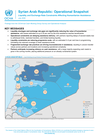
Country: Syrian Arab Republic Source: UN Office for the Coordination of Humanitarian Affairs Please refer to the attached file. BACKGROUND Humanitarian operations in Syria are taking place in an increasingly constrained financial environment, shaped by recent regulatory changes, limited banking sector capacity, and ongoing exchange rate volatility. The issue started with the change of the former government and continued during 2025 where many organizations bank accounts’ were blocked for a period and started to resume gradually. Some organizations have not unblocked their assets yet while majority did. in August 2025, an exempted use of foreign currency for humanitarian assistance was introduced by the central bank of Syria (CBS) for next six month ending on 25 of February 2026. This has facilitated the cash flow for many organizations operating in Syria, throw transfers from HQ and neighboring country to Syria by FSPs. When the exemption ended, another one was introduced by MoFA that extended for another six months starting from 19 of April 2026. Few weeks after that, CBS issued a new circular setting all transactions post 15 of May in SYP and leaving a space for external contracts to be paid in foreign currency which caused disturbance to some humanitarian activities due to exchange rate volatility. Post this circular, CWG made a survey to measure the impact on humanitarian operations in the country which is further detailed below. KEY MESSAGES • Liquidity shortages and exchange rate gaps are significantly reducing the value of humanitarian assistance, with losses estimated at up to 25 per cent by the time assistance reaches beneficiaries. • Operational constraints are delaying assistance delivery, with partners reporting delays of several weeks due to withdrawal limits, restricted transfers, and limited banking liquidity. • Liquidity constraints are reducing programme scale, with an estimated 3–5 per cent loss in programming, translating into reduced coverage or lower assistance levels. • Fragmented exchange rate practices are driving inconsistencies in assistance, resulting in uneven transfer values across partners and locations and increasing operational complexity. • Partners anticipate increasing reliance on cash assistance, with a large majority expecting cash needs to grow in the coming months, placing additional pressure on an already constrained system.

Syrian Arab Republic: Operational Snapshot | Liquidity and Exchange Rate Constraints Affecting Humanitarian Assistance Read More »

viet nam: flash update: no. 1 – tropical cyclone maysak – 5 july 2026

Viet Nam: Flash Update: No. 1 – Tropical Cyclone MAYSAK – 5 July 2026

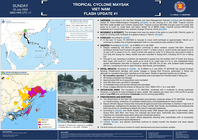
Country: Viet Nam Source: ASEAN Coordinating Centre for Humanitarian Assistance Please refer to the attached file. OVERVIEW: According to the Viet Nam Disaster and Dyke Management Authority (VDDMA) and the National Centre for Hydro-Meteorological Forecasting (NCHMF), on the evening of 4 July 2026, Tropical Cyclone MAYSAK made landfall over northern Quang Ninh. Tropical Cyclone MAYSAK brought Level 8-9 winds with gusts up to Level 12, rough seas, and heavy rainfall. As of 0600H today, Tropical Cyclone MAYSAK has weakened as it moved inland over southern Guangxi Province, China (NCHMF). MOVEMENT & INTENSITY: The strongest wind near the centre of the storm is Level 8 (62-74km/h), gusts of Level 10, moving north-northeast at a speed of about 5-10km/h. (NCHMF) **FORECAST:**According to NCHMF: In the next 12 hours, TC MAYSAK is forecast to move north-northeast at approximately 10km/h as it continues to weaken into a tropical depression then to a low pressure area outside of Viet Nam. HAZARDS: According to NCHMF , as of 0800H on 5 July 2026: Despite weakening, the storm’s circulation continues to affect northern coastal Viet Nam. Observed conditions include Level 9 winds with gusts to Level 11 in Bach Long Vi, Level 8 winds with gusts to Level 10 and 2.25 m waves in Co To, Level 9 winds with gusts to Level 12 in Mong Cai, and Level 8 winds in Cua Ong and Quang Ha. Heavy rainfall was also recorded in Quang Ninh, including 247.6 mm in Mong Cai. Through 5 July, hazardous conditions are expected to persist over the northern Gulf of Tonkin and Quang Ninh coast, with Level 6–7 winds, gusts up to Level 9–10, rough seas of 2–3 m, and widespread heavy rainfall. Northeastern Viet Nam is forecast to receive 100–200 mm of rain, with isolated totals exceeding 300 mm, increasing the risk of urban flooding, flash floods, and landslides. INITIAL IMPACTS: According to VDDMA , as of 0600H on 5 July 2026, TC MAYSAK has caused localised flooding, infrastructure damage, and power outages in Quang Ninh Province, particularly in Mong Cai, although no casualties have been reported as of this report. Details of reported impacts are as follows: No casualties reported; 21 people (8 households) were evacuated from flooded areas in Mong Cai I 30 houses sustained roof damage Approximately 600 ha of aquaculture were inundated Over 850 trees were uprooted or damaged 10 streetlight poles and several vehicles were damaged. Power outages affected the entirety of Mong Cai I from 1900H UTC+7 on 4 July 2026 ANTICIPATED RISKS: The circulation of TC MAYSAK, combined with a moderate to strong southwest monsoon, is forecast to bring moderate to heavy rainfall, with isolated very heavy rain (>140 mm/24 h) across parts of Lao PDR and northeastern Cambodia over the coming days (MRC). PREPAREDNESS AND RESPONSE: The Government of Viet Nam has implemented precautionary measures ahead of TC MAYSAK, focusing on maritime safety, protection of vulnerable infrastructure, and preparedness for heavy rainfall. Deputy Minister Nguyen Hoang Hiep instructed all agencies and local authorities to maintain a high level of preparedness, highlighting the elevated risk of heavy rainfall, flash floods, and landslides and stressing that there should be no complacency despite the storm’s expected weakening. According to VDDMA, over 56.2K vessels carrying nearly 250K people were guided to safe shelter, while Quang Ninh, Ninh Binh, and Hung Yen imposed sea travel bans. Authorities also implemented safety measures for vulnerable aquaculture areas and critical dike sections. Ministries and branches have issued official dispatches directing their subordinate units to proactively respond to storms and tropical depressions. VDDMA, NCHMF, and relevant authorities continue to closely monitor the situation and issue regular advisories. The AHA Centre will continue to monitor for further developments, in coordination with VDDMA Viet Nam and other potentially affected ASEAN Member States, and issue necessary updates.. DATA SOURCES ASEAN Disaster Monitoring & Response System (DMRS), ASEAN Disaster Information Network (ADINet); ASEAN Specialised Meteorological Centre (ASMC); Viet Nam: VDDMA, NHCMF, VNDMS Verified news media agencies

Viet Nam: Flash Update: No. 1 – Tropical Cyclone MAYSAK – 5 July 2026 Read More »