Uncategorized

sudan site management funding collapse: critical coverage gaps nationwide 3 september 2026

Sudan – Site Management Funding Collapse: Critical Coverage Gaps Nationwide – 3 September 2026

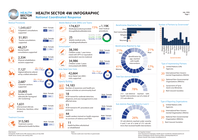
Country: Sudan Source: CCCM Cluster Please refer to the attached file. Site Management is funded at just 8.7% under the 2026 HNRP, one of the most critically underfunded sectors in the entire response. 21 localities, home to 795,318 people, have no active SM partner at all, and a further 48 localities, accounting for 2,185,278 people, sit at the most critical level on the cluster’s own gap index. The Alert sets out the current funding and coverage gaps, what full funding would deliver, and the protection risks of continued underfunding, including weakened complaint and referral mechanisms, thin safety infrastructure, and a shrinking evidence base that other sectors rely on for their own advocacy. Our ask is dedicated, flexible funding to deliver the cluster’s 2026 Site Management response in full, most of which remains unfunded, and to close the 21-locality partner gap before coordination, protection monitoring, and accountability to displaced communities deteriorate further.

Sudan – Site Management Funding Collapse: Critical Coverage Gaps Nationwide – 3 September 2026 Read More »

world vision international nepal rasuwa – nuwakot flash flood emergency response situation update 1 | 03 september, 2026

World Vision International Nepal Rasuwa – Nuwakot Flash Flood Emergency Response – Situation update 1 | 03 September, 2026

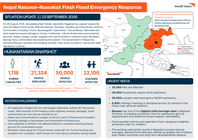
Country: Nepal Source: World Vision Please refer to the attached file. On 26 August 2026, devastating flash floods reportedly triggered by a glacier avalanche near the Nepal-China border affected Rasuwa, Nuwakot, Dhading and downstream districts. Communities including Timure, Rasuwagadhi, Syabrubesi, Trishuli Bazaar, Betrawati and Sole sustained severe damage to homes, livelihoods, critical infrastructure and essential services. Roads, bridges, power supplies and communications networks were disrupted, leaving many communities inaccessible and isolated. The Government of Nepal has declared Rasuwa, Nuwakot and Dhading disaster crisis zones as search, rescue and relief operations continue.

World Vision International Nepal Rasuwa – Nuwakot Flash Flood Emergency Response – Situation update 1 | 03 September, 2026 Read More »

qatar charity delivers emergency relief assistance to flood affected families in nepal

Qatar Charity Delivers Emergency Relief Assistance to Flood-Affected Families in Nepal

Country: Nepal Source: Qatar Charity Please refer to the attached files. Doha – September 2, 2026 With the support of generous donors, Qatar Charity (QC) has delivered urgent humanitarian assistance to families affected by the recent flash floods along the Trishuli River corridor in Nepal. The aid included 30 metric tons of essential food supplies, along with hygiene and emergency shelter assistance, benefiting thousands of people in the affected areas. This intervention is part of the urgent relief response announced by Qatar Charity last week following the massive floods that swept through Nepal. Immediately after the disaster, the organization activated its crisis cell under the Humanitarian Operations Department at its headquarters in Doha. Meanwhile, its Crisis and Information Center continues to monitor developments and coordinate humanitarian efforts to support those affected, while maintaining continuous communication with its field office in Nepal to back its swift humanitarian response. Food Assistance The distributed food aid consisted of food packages containing essential food items, ready-to-eat products, biscuits, dried fruits, beaten rice, and oral rehydration salt sachets. The assistance benefited 1,240 families, representing approximately 5,419 beneficiaries. Qatar Charity also provided hygiene assistance to 130 families, benefiting around 568 people. The support included hygiene items, bathing soap, sanitary pads, laundry soap, nail cutters, towels, buckets, and mugs, slippers, water purification tablets. Emergency Shelter Assistance As part of its emergency shelter response, Qatar Charity provided shelter and non-food item (NFI) assistance to 130 additional families, benefiting approximately 568 people. The assistance included tarpaulin sheets for temporary shelter, ropes, blankets, sleeping mattresses, and solar-powered lamps. All relief supplies were handed over to representatives of the District Office Administration (DOA) in Nuwakot District for distribution to beneficiaries, in accordance with the Government of Nepal’s “One Door Policy,” ensuring effective coordination and the timely delivery of aid to affected families. Field Assessments During coordination meetings with local authorities and field visits to the affected areas, Qatar Charity’s team in Nepal observed extensive damage to infrastructure, including roads, buildings, and several collapsed bridges. These damages have limited access to some affected communities and posed challenges to relief delivery efforts. Field assessments found that the most urgent needs included emergency food assistance, temporary shelter materials such as tarpaulin sheets, hygiene and dignity kits, safe drinking water, household water treatment supplies, and essential household items for displaced and vulnerable families. ** End**

Qatar Charity Delivers Emergency Relief Assistance to Flood-Affected Families in Nepal Read More »

bangladesh: situation report: july 2026 who cox’s bazar: rohingya emergency response

Bangladesh: Situation Report: July 2026 WHO Cox’s Bazar: Rohingya Emergency Response

Country: Bangladesh Source: World Health Organization Please refer to the attached file. Overview In July 2026, WHO and Health Sector partners maintained continuity of essential health services while responding to monsoon-related emergencies across Rohingya camps and host communities. Key priorities included measles and dengue response, a preventive bivalent Oral Polio Vaccine (bOPV) campaign, routine immunization, and emergency preparedness. Critical funding gaps continue to threaten public health surveillance, outbreak response, and essential health service delivery. Coordination and Leadership WHO, as Health Sector lead, continued to coordinate the health response for Rohingya refugees and host communities, supporting strategic planning, partner alignment, and evidence-based decision-making. Key actions: Analysis of the 2026 Joint Response Plan (JRP) funding status identified persistent funding gaps across critical health interventions. From August 2026, funding shortfalls are expected to significantly affect infectious disease surveillance, outbreak detection and response activities (P1), reducing capacity for early warning, health-risk monitoring, data analysis, and evidence-based decision-making, particularly amid the ongoing measles outbreak. From September 2026, funding shortfalls are expected to significantly constrain WHO’s ability to coordinate partners and lead the Health Sector response. From October 2026, the situation may disrupt services in 13 PHCs, one Field Hospital, and four Health Posts, potentially affecting access to essential health services for an estimated 400,000 people. Referral services, rehabilitation and physiotherapy services for persons with disabilities, and community health services are also expected to be significantly affected. The WHO-led Health Sector convened one Cox’s Bazar-level coordination meeting, 33 camp-level coordination meetings, and one Strategic Advisory Group (SAG) meeting, supporting partner coordination on priority public health issues, funding impacts, disease surveillance, immunization, community health, emergency preparedness and response, and mental health. Health Sector information products, including 4W, HeRAMS, EWARS, epidemiological updates, and training calendars, remain accessible at: https://rohingyaresponse.org/sectors/coxs-bazar/health/

Bangladesh: Situation Report: July 2026 WHO Cox’s Bazar: Rohingya Emergency Response Read More »

colombia: flash update 011 actualización afectaciones por terremoto en colombia 02 de septiembre de 2026

Colombia: Flash Update 011 – Actualización afectaciones por terremoto en Colombia – 02 de septiembre de 2026

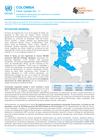
Country: Colombia Sources: El Equipo Humanitario País Colombia, UN Office for the Coordination of Humanitarian Affairs Please refer to the attached file. El terremoto deja una emergencia humanitaria de gran magnitud. Más de 466.600 personas han resultado afectadas, incluyendo 331 fallecidas, miles de personas heridas y desaparecidas, y más de 36.000 viviendas destruidas. La emergencia continúa impactando comunidades enteras, con graves afectaciones en infraestructura básica, educación y acceso a servicios esenciales. Persisten necesidades urgentes y riesgos de doble afectación. Además de los daños causados por el terremoto, numerosas comunidades enfrentan situaciones de doble afectación derivadas de emergencias y riesgos asociados al conflicto armado. La respuesta estatal prioriza salud, agua, alojamiento temporal y asistencia humanitaria, pero las necesidades humanitarias siguen siendo significativas. La acción humanitaria y el apoyo internacional siguen siendo esenciales. Al menos 29 organizaciones humanitarias han apoyado a cerca de 123.000 personas en 49 municipios, complementando la respuesta de las autoridades. La cooperación internacional ha movilizado más de USD 40 millones, mientras la Adenda al Plan de Respuesta Humanitaria 2026 continúa buscando recursos para atender las necesidades de las poblaciones afectadas hasta finales de año. La coordinación entre autoridades, organizaciones humanitarias, sector privado y cooperación internacional sigue siendo clave para salvar vidas, restablecer servicios esenciales y apoyar la recuperación de las comunidades afectadas. Este Flash update es producido por OCHA Colombia con insumos de los socios humanitarios y reportes oficiales. Corte a 02 septiembre (17:00 horas).

Colombia: Flash Update 011 – Actualización afectaciones por terremoto en Colombia – 02 de septiembre de 2026 Read More »

cameroon cholera outbreak: situation report #4 (september 2, 2026)

Cameroon Cholera Outbreak: Situation Report #4 (September 2, 2026)

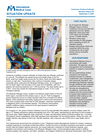
Country: Cameroon Source: International Medical Corps Please refer to the attached file. FAST FACTS As of August 30, Minawao Refugee Camp’s Cholera Treatment Unit had recorded 304 admissions and four deaths. Nationally, there have been 2,075 cases and 53 deaths across 13 health districts. Minawao Camp hosts approximately 81,000 refugees and is operating at 324% of intended capacity. Multiple transmission chains are suspected within the camp, increasing the risk of rapid spread among vulnerable populations. OUR RESPONSE International Medical Corps is coordinating with health authorities, UN agencies, camp management and humanitarian partners to support a harmonized response. We are implementing cholera prevention and response activities focused on outbreak containment, case management and community education, and strengthening treatment capacity through additional staff, essential medicines and cholera supplies. We also are strengthening surveillance, community alert systems and risk communication to support early detection and treatment while scaling up risk communication, hygiene promotion, infection prevention, disinfection, and emergency activities involving water, sanitation and hygiene. Through coordinated active case-finding and community surveillance, emergency teams have so far reached 17,171 households, referred 53 suspected cholera cases and disinfected 2,256 households, 15 places of worship, two health posts and 11 other gathering locations. Responders also have conducted 371 sensitization sessions that reached 67,561 people. On August 30, health workers launched a five-day oral cholera vaccination campaign targeting all Minawao Refugee Camp residents. International Medical Corps also continues to support medical care, case management and IPC measures at the Cholera Treatment Unit. Workers are setting up temporary treatment tents to handle the rapid increase in cases, which has placed severe pressure on existing bed capacity. Though staff members are working to procure 45 additional cholera beds to expand treatment capacity to 65 beds, the facility remains critically overwhelmed. With 148 patients currently under observation against a baseline 28-bed capacity, epidemiological projections indicate that responders urgently need approximately 100 additional treatment beds.

Cameroon Cholera Outbreak: Situation Report #4 (September 2, 2026) Read More »

haiti : violences et déplacements dans la commune de kenscoff rapport de situation no.1 (au 2 septembre 2026)

Haiti : Violences et déplacements dans la commune de Kenscoff – Rapport de Situation No.1 (au 2 septembre 2026)

Country: Haiti Source: UN Office for the Coordination of Humanitarian Affairs Please refer to the attached file. Au moins 47 personnes ont été tuées et 22 blessées lors de l’attaque lancée par des groupes armés dans la nuit du 23 au 24 août 2026 à Kenscoff (département de l’Ouest). • Plus d’une vingtaine de personnes ont été exécutées dans l’église où elles s’étaient réfugiées. • Quelque 4 238 personnes ont fui leur foyer à la suite de ces violences qui se sont également accompagnées d’incendies de nombreuses habitations et d’enlèvements. • Sur les 50 personnes enlevées, six enfants et sept femmes ont été libérés après plusieurs jours de captivité. • Des interventions sont en cours ou planifiées dans les secteurs des abris et biens non alimentaires, de la protection, de la santé, de l’eau, de l’hygiène et de l’assainissement (EHA), de la sécurité alimentaire, ainsi que de la coordination et gestion des sites.

Haiti : Violences et déplacements dans la commune de Kenscoff – Rapport de Situation No.1 (au 2 septembre 2026) Read More »

lebanon: flash update #52 escalation of hostilities in lebanon (as of 31 august 2026)

Lebanon: Flash Update #52 – Escalation of hostilities in Lebanon (as of 31 August 2026)

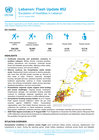
Country: Lebanon Source: UN Office for the Coordination of Humanitarian Affairs Please refer to the attached file. HIGHLIGHTS Continued insecurity and protection concerns in southern Lebanon: Military activity, including airstrikes, shelling, demolitions, and incursions, continued across South and Nabatieh governorates, affecting civilian safety, humanitarian access, and recovery efforts. Returns continue, but humanitarian needs remain acute: Displacement levels continued to decline gradually, with more than 823,000 people recorded as returned to their areas of origin. However, insecurity, damaged housing, disrupted services, explosive hazards, and limited livelihood opportunities continue to hinder sustainable return and prolong humanitarian needs among returnees, displaced populations, and host communities. Humanitarian response scales support amid funding and access challenges: Ongoing access constraints, infrastructure damage, and persistent funding shortfalls continue to challenge response operations and the restoration of essential services in conflict-affected areas. Humanitarian funding remains limited: As of 31 August, Flash Appeal received US$332.4 million (52 per cent) received against US$639.9 million. Humanitarian organizations warn that limited financial resources could undermine the continuity of critical assistance, including food support, healthcare, protection services, shelter assistance, coordination activities and recovery interventions. 2026 Flash Appeal concludes on 31 August 2026: From September to December the 2026 Lebanon Response Plan (LRP) Addendum will provide the framework for addressing additional humanitarian and stabilization needs arising from the escalation through the end of 2026. SITUATION OVERVIEW Humanitarian conditions in Lebanon remain fragile amid continued military activity, insecurity, displacement, and impediments to return. During the reporting period, Israeli military operations continued across South and Nabatieh governorates, including airstrikes, artillery fire, demolitions, incursions, and land-clearing activities affecting communities in Nabatieh, Marjaayoun, Bint Jbeil and Tyre districts. Airstrikes were reported in Mansouri and Tayr Harfa (Tyre District), while shelling affected Ainata and Beit Lif (Bint Jbeil District). Additional military activity and demolitions were reported in Mansouri, Majdal Zoun, Haddatha, Bani Hayyan, Houla, Baraachit, Khiam and surrounding areas, further affecting civilian safety, humanitarian access and recovery efforts. Civilians and emergency responders continue to face significant protection risks. On 26 August, Israeli forces reportedly opened fire on a Lebanese Civil Defence team from Qlayaa (Marjaayoun District, Nabatieh Governorate) while it was responding to a fire near Deir Mimas after receiving authorization to access the area. Although no injuries were reported, the team was forced to withdraw. The incident followed a similar episode the previous evening, when shells reportedly landed near the same crew during follow-up firefighting activities. These incidents underscore the operational risks faced by first responders in conflict-affected areas. Reports during the period also pointed to extensive destruction of civilian infrastructure across southern Lebanon, including residential buildings, businesses, schools, hospitals, roads, electricity networks and water systems. On 24 August, a temporary school complex established by the municipality in Mais al-Jabal (Marjaayoun District, Nabatieh Governorate) was reportedly destroyed during demolition and bulldozing operations. Security situation remained particularly unstable in parts of Nabatieh Governorate. Repeated strikes were reported around the Ali al-Taher heights, while military activity also affected Nabatieh, Kfar Rumman, Nabatieh al-Fawqa, Arab Salim, Rashaf, Haris, Haddatha, Khiam and Mays al-Jabal. On 24 August, the Ministry of Public Health announced the recovery of the bodies of two men in the Doha-Kfar Rumman area who had previously been reported missing. On 27 August, an airstrike in Arab Salim reportedly killed one woman and injured six others, including a child and two older persons. Explosive ordnance contamination continues to pose a serious threat to civilians. During the reporting period, a war-remnant explosion in Tayr Debba (Tyre District, South Governorate) reportedly injured one person. On 31 August, a child was reportedly killed and another injured after a suspected cluster-munition remnant detonated in Haboush (Nabatieh District). Such incidents highlight the ongoing danger posed by unexploded ordnance and explosive remnants of war in residential areas, agricultural land and public spaces. The presence of explosive hazards continues to limit mobility, impede access to livelihoods, and delay reconstruction and recovery activities. As of 26 August, 334,353 people remained displaced across Lebanon, while 823,337 people had returned to their areas of origin. Although displacement continues to decline gradually, insecurity, damaged housing, degraded infrastructure, limited services, explosive contamination and livelihood constraints remain major obstacles to sustainable return. Humanitarian needs remain substantial among displaced populations, returnees and host communities, while humanitarian operations continue to face access constraints linked to insecurity, damaged infrastructure, telecommunications disruptions and explosive hazards. Funding shortfalls continue to affect response capacity, with the 2026 Flash Appeal receiving US$332.4 million (52 per cent) of the US$639.9 million requested as of 31 August.

Lebanon: Flash Update #52 – Escalation of hostilities in Lebanon (as of 31 August 2026) Read More »