Yemen: Health Cluster Bulletin – January & Febreuary 2026
Country: Yemen Sources: Health Cluster, World Health Organization Please refer to the attached file.
Yemen: Health Cluster Bulletin – January & Febreuary 2026 Read More »

Country: Yemen Sources: Health Cluster, World Health Organization Please refer to the attached file.
Yemen: Health Cluster Bulletin – January & Febreuary 2026 Read More »
Country: Niger Source: World Health Organization Please refer to the attached file. Le Niger fait face à une conjonction de chocs humanitaires et sanitaires majeurs liée à la variabilité climatique, à l’insécurité persistante et aux déplacements massifs de populations. En avril 2026, la situation humanitaire demeure préoccupante dans plusieurs régions du pays, notamment Tillabéri, Diffa, Tahoua et Dosso, où les crises sécuritaires et les vulnérabilités structurelles continuent d’alimenter les besoins multisectoriels. Ces régions sont fortement affectées par : • Des chocs climatiques récurrents (inondations, sécheresses) et une dégradation des moyens d’existence ; • Un contexte sécuritaire instable entraînant des déplacements forcés, la fermeture ou le fonctionnement réduit de certaines structures sanitaires, ainsi que des contraintes d’accès humanitaire ; • Une intensification des mouvements transfrontaliers et internes, exacerbant les pressions sur les ressources et les services sociaux. Entre mars et avril 2026, 12 évaluations multisectorielles (MSA) ont été conduites dans les régions de Tillabéri, Diffa et Tahoua, concernant environ 21 209 personnes déplacées, confirmant une dynamique de déplacements persistants et multi-sites. • À Tilabéri, plusieurs vagues de déplacements ont été enregistrées, avec des arrivées continues de ménages dans les localités de Gotheye, Bankilaré, Torodi et Abala ; • À Diffa, 13 165 nouvelles personnes déplacées ont été enregistrées sur plusieurs sites, incluant des réfugiés transfrontaliers et des PDI, reflétant la poursuite des mouvements liés à l’insécurité dans le bassin du Lac Tchad ; • À Tahoua, 4 467 nouvelles personnes déplacées ont été recensées dans les départements d’Illéla, Tillia et Bagaroua. Par ailleurs, de nouveaux afflux de réfugiés ont été documentés à Diffa, avec 1 686 ménages (10 217 personnes) identifiés au 29 avril 2026, soit une augmentation de 119 % en deux semaines, principalement en provenance du Nigeria à la suite d’attaques armées. Ces mouvements massifs se traduisent par : • Une pression accrue sur les services sociaux de base (santé, eau, protection, abris, éducation) ; • Des besoins humanitaires persistants et des gaps importants dans plusieurs secteurs, notamment en WASH, protection, abris et sécurité alimentaire ; • Une augmentation des risques de protection, incluant les violences basées sur le genre (VBG), la séparation des enfants, la détresse psychosociale et les difficultés d’accès à la documentation civile. Sur le plan sanitaire, le pays reste confronté à des flambées épidémiques récurrentes (rougeole, méningite, diphtérie, paludisme), dans un contexte de faible couverture sanitaire et de pression accrue sur le système de santé, aggravée par l’insécurité et les déplacements. Dans l’ensemble, ces dynamiques combinées entraînent une diminution de l’accès aux services essentiels, une perturbation de la continuité des soins et une vulnérabilité accrue des populations, en particulier les femmes, les enfants, les personnes déplacées internes (PDI), les réfugiés, les migrants et les communautés hôtes. Malgré les efforts des acteurs humanitaires, des gaps significatifs persistent, nécessitant un renforcement de la coordination multisectorielle et une mobilisation accrue des ressources pour répondre aux besoins croissants.
Niger: Bulletin mensuel du Cluster – Santé N° 3 Read More »
Country: Yemen Sources: CCCM Cluster, Shelter, Land and Site Coordination Cluster, UN High Commissioner for Refugees Please refer to the attached file. Community Resource Centers (CRCs) in Area-Based Site Management (ABSM) – Lessons from the Yemen pilot
![ukraine cash working group, 1 july 2026 [meeting minutes] [en/uk]](https://blhlfoundation.org/wp-content/uploads/2026/07/57d5c72e-26c9-4042-b3f3-43a9b140dc7e-2rCNus.png "Ukraine Cash Working Group, 1 July 2026 [Meeting Minutes] [EN/UK]")
Country: Ukraine Source: Ukraine Cash Working Group Please refer to the attached file.
Ukraine Cash Working Group, 1 July 2026 [Meeting Minutes] [EN/UK] Read More »
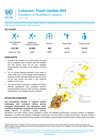
Country: Lebanon Source: UN Office for the Coordination of Humanitarian Affairs Please refer to the attached file. HIGHLIGHTS At least 4,324 deaths and 12,224 injuries recorded due to hostilities since 2 March, with 344 fatalities and 223 injuries since the 20 June ceasefire announcement, according to the Ministry of Public Health. 741,111 people reported returned to their areas of origin, while over 412,700 people remain displaced, including 30,500 Internally Displaced Persons (over 53 per cent women and girls) in 292 collective shelters as of 13 July. The rate of returns continues to decline as conflict-affected populations face persistent barriers, including limited access to basic services, damaged infrastructure, and unstable security conditions.
Lebanon: Flash Update #43 – Escalation of hostilities in Lebanon (as of 17 July 2026) Read More »
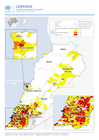
Country: Lebanon Source: UN Office for the Coordination of Humanitarian Affairs Please refer to the attached file.
Lebanon: Conflict Intensity Snapshot (2 March – 16 July 2026) Read More »
Country: Iran (Islamic Republic of) Source: UN Office for the Coordination of Humanitarian Affairs Please refer to the attached file. This Humanitarian Update is produced by OCHA Regional Office for the Middle East and North Africa (ROMENA) on behalf of and in collaboration with UN agencies and humanitarian organisations. It covers the period from 1 to 30 June 2026. HIGHLIGHTS The ceasefire remained in effect throughout June, although localized incidents between 8 and 11 June reportedly injured 20 people and damaged civilian infrastructure, according to authorities. Humanitarian needs continue to be driven by the impacts of the February–April escalations, particularly damage to health, water, housing and education infrastructure, alongside broader recovery needs. Recovery efforts continue across affected sectors. More than 1,100 schools have been restored, while national and humanitarian partners support debris clearance, restoration of essential services, protection assistance, and recovery planning for cultural heritage and environmental assets. KEY FIGURES 3.4K+ Civilians killed (figure is for the period 28 February-9June, as reported by WHO Middle East Conflict Situation Report #9, 11 June 2026) 33K+ Civilians injured (figure is for the period 28 February-9June, as reported by WHO Middle East Conflict Situation Report #9, 11 June 2026) 149K+ Civilian units damaged (figure is for the period since 28 February as reported by the Iranian Red Crescent Society on 7 June 2026) SITUATION OVERVIEW The ceasefire remained in effect throughout June, though localized incidents between 8 and 11 June injured 20 people and damaged civilian infrastructure. Humanitarian needs continue to stem largely from the February–April escalation, while ongoing recovery assessments, inflation, and rising living costs further strained vulnerable households. Agricultural facilities had sustained an estimated US$205 million in direct damages, however domestic food production and supply chains remained largely resilient. Emergency operations continue in affected areas, focusing on access improvements and response readiness, while additional rescue and life-support equipment is needed to strengthen capacities. HUMANITARIAN IMPACT AND NEEDS Health According to the Ministry of Health and Medical Education (MoHME), as of 7 June, 52 health workers had been killed and 718 injured during the 2025 and 2026 escalations. Damage to health and power infrastructure continued to disrupt services, with outages threatening hospital operations and vaccine and medicine cold chains, particularly for children under five and patients requiring emergency or referral care. Key needs include backup power for health facilities and cold-chain warehouses, rescue and life-support equipment, and restored access to priority health facilities. Funding and health commodity procurement constraints continue to limit the response. Water, Sanitation and Hygiene Damage to water and power infrastructure continues to limit access to safe drinking water, increasing public health risks, particularly in areas dependent on chlorinated systems and brackish groundwater. Priority needs include water disinfection, restoration of pumping and transmission capacity, temporary water storage and trucking, provision of safe drinking water, and debris clearance to enable repairs. Food Security Food remains available in markets; however, rising prices continue to undermine affordability. Between June 2025 and June 2026, food prices increased by 133.9 per cent, while the cost of the minimum food basket rose by more than 35 per cent since February 2026. Lower-income households have experienced the highest inflationary pressures, increasing the need for targeted food and cash assistance. Protection Internal movements remained largely temporary, localized, and economically driven, with no large-scale displacement observed. However, a deterioration in conditions could trigger broader population movements. Afghan nationals in Iran continued to face socio-economic hardship, high documentation costs, and uncertainty over mandatory health insurance, while rising living costs, debt, and housing pressures eroded coping capacities. Along the Iran–Pakistan border, extreme heat, difficult travel conditions, financial constraints, and insecurity heightened protection risks for irregular migrants, with increasing family arrivals indicating growing vulnerability. Education As of 30 June, the Ministry of Education reported that 1,195 schools had been fully restored, while damage to education and sports facilities was estimated at US$25.1 million, with a further US$2.4 million in losses to equipment, including school supplies, sports resources, and camp facilities. Public education continued to be delivered partly online during the reporting period. Shelter and Non-Food Items As of 7 June, the Iranian Red Crescent Society (IRCS) reported that 149,528 civilian units had sustained damage during the escalation, including 123,647 residential units and 24,450 commercial units. The Tehran Municipality assessed that 51,000 residential units had sustained various degrees of damage, expecting most of the reconstruction to be completed by the end of June. Early Recovery Debris clearance and recovery activities continue in affected areas. Environmental assessments have identified direct impacts on 16 protected areas, affecting wildlife habitats and ecosystems. Partners continue to advocate for environmental recovery efforts, which remain underfunded compared to other recovery priorities. Cultural Heritage Since February 2026, more than 100 cultural heritage sites and institutions have reportedly been affected. The United Nations Educational, Scientific, and Cultural Organisation (UNESCO) confirmed damage to two World Heritage sites and impacts on 628 museums, cultural institutions, and heritage assets, threatening cultural preservation, identity, and heritage-based livelihoods. Recovery remains constrained by limited funding, specialized expertise, and restoration materials. RESPONSE Health The United Nations Children’s Agency (UNICEF), in partnership with MoHME and a private-sector partner, is supporting routine immunization through the procurement of 200,000 rotavirus vaccine doses and two million doses of Diphtheria, Tetanus, and Pertussis (DTP) vaccine. UNICEF received 294 Rapid Response backpacks expected to reach 310,000 people, and is procuring and delivering five prefabricated health units, five primary healthcare tents, and equipment for 25 walk-in cold rooms. WHO is procuring diagnostics, medicines, vector-control supplies, generators, trauma and emergency kits, and non-communicable disease kits for affected provinces. Mental health and psychosocial support (MHPSS) for health workers continues in 23 cities; as of 23 June, over 5,900 people attended in-person sessions, 3,000 joined webinars, and 594 health workers received individual support, including 94 referrals for specialized care. The United Nations Development Programme (UNDP) delivered three of 142 planned emergency backup generators (15–100 Kva) for health facilities and cold-chain warehouses. The International Organisation for Migration (IOM) provided MHPSS to 31 beneficiaries and will support procurement
Islamic Republic of Iran: Humanitarian Update No. 06 | As of 30 June 2026 Read More »
Country: Venezuela (Bolivarian Republic of) Source: UN Office for the Coordination of Humanitarian Affairs Please refer to the attached file. Situation Report No. 24Earthquakes in Venezuela18 July 2026Time: 9:00 pm Highlights Authorities report 1,350 aftershocks since the 7.2 and 7.5 magnitude earthquakes that struck on 24 June. Official toll: 5,119 people dead and 16,740 injured. The United Nations system and its partner organizations continue scaling up the multisectoral response to the emergency. To address the needs of 1.3 million people affected by the earthquakes over the next six months, an additional appeal of US$299 million was launched Situation overview Venezuela is facing a national emergency following two consecutive high-magnitude earthquakes (7.2 and 7.5) that struck on 24 June (18:00 local time) in the north-central region, with the epicentre located along the San Felipe–Yumare–Montalbán axis (Yaracuy/Carabobo). Authorities report 1,350 aftershocks. Twenty-four days since the earthquakes, authorities report a toll of 5,119 people dead and 16,740 injured since the onset of the emergency. Authorities also indicated that 17,907 people lost their homes. The Government response remains focused on the management of transitional camps and assistance to affected populations. The United Nations and its partner organizations, in coordination with the authorities, continue implementing multisectoral response activities and scaling up assistance. On 10 July, United Nations Under-Secretary-General for Humanitarian Affairs and Emergency Relief Coordinator Tom Fletcher announced a US$299 million addendum to the Humanitarian Response Plan to address the multisectoral needs of 1.3 million people affected by the earthquakes over the next six months. The addendum complements the 2026 Humanitarian Response Plan, increasing the target population from 5.5 million to 6.2 million people and raising total funding requirements from US$632 million to US$931 million.
Situation Report No. 25 Earthquakes in Venezuela 18 July 2026 Time: 9:00 pm Read More »
Country: Venezuela (Bolivarian Republic of) Source: UN Office for the Coordination of Humanitarian Affairs Please refer to the attached file. Situation Report No. 24Earthquakes in Venezuela17 July 2026Time: 8:00 pm Highlights Following the 24 June earthquakes of magnitude 7.2 and 7.5 (18:00 local time), authorities report 1,331 aftershocks. Official toll: 5,069 people dead and 16,740 injured. An additional appeal for US$299 million was launched to scale up the earthquake response and address the multisectoral needs of 1.3 million people over the next six months. The United Nations system and its partner organizations, in coordination with the Government, are responding with multisectoral actions and will continue to scale up assistance to affected people. Situation overview Venezuela is facing a national emergency following two consecutive high-magnitude earthquakes (7.2 and 7.5) that struck on 24 June (18:00 local time) in the north-central region, with the epicentre located along the San Felipe–Yumare–Montalbán axis (Yaracuy/Carabobo). Authorities report 1,331 aftershocks. Twenty-three days since the earthquakes, authorities report a toll of 5,069 people dead and 16,740 injured since the onset of the emergency. Authorities also indicated that 17,907 people lost their homes. The Government response remains focused on the management of transitional camps and assistance to affected populations. The United Nations and its partner organizations, in coordination with the authorities, continue implementing multisectoral response activities and scaling up assistance. United Nations Under-Secretary-General for Humanitarian Affairs and Emergency Relief Coordinator Tom Fletcher announced a US$299 million addendum to the Humanitarian Response Plan aimed at addressing the multisectoral needs of 1.3 million people over the next six months. This is in addition to the 5.5 million people already targeted under the 2026 Humanitarian Response Plan, which requires US$632 million in funding.
Earthquakes in Venezuela: Situation Report #24 (17 July 2026, Time: 08:00 pm) Read More »
Country: Venezuela (Bolivarian Republic of) Source: UN Office for the Coordination of Humanitarian Affairs Please refer to the attached file. Reporte de situación N.º 24Terremotos en Venezuela17 de julio de 2026Hora: 8:00 pm Destacados Tras los sismos de magnitud 7,2 y 7,5 del 24 de junio (18:00 hora local), las autoridades reportan 1.331 réplicas. Balance oficial: 5.069 personas fallecidas y 16.740 heridas. Se lanzó un llamamiento adicional por US$299 millones para ampliar la respuesta a los terremotos y atender las necesidades de 1,3 millones de personas durante los próximos seis meses. El Sistema de Naciones Unidas y sus organizaciones socias, en coordinación con el gobierno, responden con acciones multisectoriales y continuarán ampliando la asistencia a las personas afectadas. Situación general Venezuela enfrenta una emergencia nacional tras dos sismos consecutivos de gran magnitud (7,2 y 7,5) ocurridos el 24 de junio (18:00, hora local) en la región centro-norte, con epicentro sobre el eje San Felipe – Yumare – Montalbán (Yaracuy/Carabobo). Las autoridades reportan 1.331 réplicas. A 23 días de los terremotos, las autoridades reportan un balance de 5.069 personas fallecidas y 16.740 personas heridas desde el inicio de la emergencia. Asimismo, indicaron que 17.907 personas perdieron sus viviendas. La respuesta gubernamental mantiene el foco en la gestión de los campamentos transitorios y la atención de las personas afectadas. Naciones Unidas y sus organizaciones socias, en articulación con las autoridades, realizan acciones multisectoriales para las personas afectadas y continuarán ampliando la respuesta. El Subsecretario General de las Naciones Unidas para Asuntos Humanitarios y Coordinador del Socorro de Emergencia, Tom Fletcher, anunció una adenda al Plan de Respuesta Humanitaria por 299 millones de dólares, destinada a atender las necesidades multisectoriales de 1,3 millones de personas durante los próximos seis meses. Este llamado se suma a la meta de 5,5 millones de personas que ya contemplaba atenderse con el Plan este 2026, para lo que se requieren 632 millones de dólares.
Terremotos en Venezuela: Reporte de situación #24 (17 de julio de 2026, Hora: 08:00 pm) Read More »