Uncategorized

venezuela (bolivarian republic of): earthquake response situation report #13 (15 to 16 july 2026)

Venezuela (Bolivarian Republic of): Earthquake Response Situation Report #13 (15 to 16 July 2026)

Country: Venezuela (Bolivarian Republic of) Source: International Organization for Migration Please refer to the attached file. The thirteenth Situation Report provides an update on IOM’s response to the 24 June earthquakes in the Bolivarian Republic of Venezuela, covering the period from 15 to 16 July. Highlights Between 15 and 16 July, IOM expanded its multisectoral response in transitory camps and affected communities in La Guaira, with interventions in shelter and site coordination, health, protection, water, sanitation and hygiene, and information management. To date, IOM has reached 7,290 unique individuals through 11,277 instances of assistance and services, mainly in health, shelter and site coordination, WASH and protection. At the José María Vargas Sports Centre, IOM maintained essential services for 347 families and supported the relocation of 40 households to other sites in Caracas. At Mare Abajo II, the installation of 200 new bunk beds increased total availability to 350. IOM Activities IOM continues to support transitory camps and affected communities in La Guaira through shelter, site coordination, WASH, health and mental health, protection, registration, mobility monitoring and inter-agency coordination. At Mare Abajo II, IOM installed 200 bunk beds with mattresses, prepared a module to partition family spaces and continued works on showers, drainage and site preparation. At Tanaguarena Golf Course, it coordinated service delivery and the distribution of supplies. At César Nieves Stadium, IOM supported water provision, the cleaning and maintenance of toilets, the installation of showers, waste management and the distribution of sanitation supplies. It also distributed 30,000 litres of water in Mare Abajo II and nearby communities. At the José María Vargas Sports Centre, 16 mobile health and mental health sessions have been conducted, providing a cumulative total of 1,377 consultations. In Playa Grande, 108 medical consultations were carried out, while dental, internal medicine and psychological support services were strengthened. Registration reached 536 families and 1,605 people at César Nieves Stadium; 153 families and 463 people in Playa Grande; and 20 families and 65 people at Tanaguarena Golf Course. Progress was also made in designing a household survey and monitoring post-earthquake displacement. IOM Planned Response IOM will continue strengthening the management and improvement of transitory camps, including the installation of toilets, showers, water systems, lighting and internal partitions, as well as health and mental health care, protection screening and referrals, and measures to prevent sexual exploitation and abuse. It will also continue updating registration records, conducting multisectoral assessments and monitoring mobility, while consolidating information on services, actors and gaps to improve the coordination of interventions.

Venezuela (Bolivarian Republic of): Earthquake Response Situation Report #13 (15 to 16 July 2026) Read More »

venezuela (república bolivariana de): respuesta a terremotos reporte de situación #13 (15 y 16 de julio 2026)

Venezuela (República Bolivariana de): Respuesta a Terremotos – Reporte de Situación #13 (15 y 16 de julio 2026)

Country: Venezuela (Bolivarian Republic of) Source: International Organization for Migration Please refer to the attached file. El decimotercer Reporte de Situación presenta una actualización sobre la respuesta de la OIM a los terremotos del 24 de junio en la República Bolivariana de Venezuela, con información correspondiente al período del 15 al 16 de julio. Aspectos destacados Entre el 15 y el 16 de julio, la OIM amplió su respuesta multisectorial en campamentos transitorios y comunidades afectadas de La Guaira, con intervenciones en alojamiento y coordinación de sitios, salud, protección, agua, saneamiento e higiene, y gestión de información. A la fecha, la OIM ha alcanzado a 7.290 personas únicas mediante 11.277 asistencias y servicios, principalmente en salud, alojamiento y coordinación de sitios, WASH y protección. En el Polideportivo José María Vargas, la OIM mantuvo servicios esenciales para 347 familias y apoyó la reubicación de 40 núcleos familiares hacia otros espacios en Caracas. En Mare Abajo II, la instalación de 200 nuevas literas elevó la disponibilidad total a 350. Actividades de la OIM La OIM continúa apoyando campamentos transitorios y comunidades afectadas en La Guaira mediante alojamiento, coordinación de sitios, WASH, salud y salud mental, protección, registro, monitoreo de la movilidad y coordinación interagencial. En Mare Abajo II, la OIM instaló 200 literas con colchones, preparó un módulo para dividir los espacios familiares y continuó las obras de duchas, drenaje y adecuación del terreno. En el Campo de Golf de Tanaguarena, coordinó la prestación de servicios y la distribución de insumos. En el Estadio César Nieves, la OIM apoyó el suministro de agua, la limpieza y mantenimiento de baños, la instalación de duchas, la gestión de residuos y la entrega de insumos de saneamiento. También distribuyó 30.000 litros de agua en Mare Abajo II y comunidades cercanas. En el Polideportivo José María Vargas se han realizado 16 jornadas móviles de salud y salud mental, con 1.377 atenciones acumuladas. En Playa Grande se efectuaron 108 consultas médicas y se reforzaron los servicios de odontología, medicina interna y apoyo psicológico. Los registros alcanzaron 536 familias y 1.605 personas en el Estadio César Nieves; 153 familias y 463 personas en Playa Grande; y 20 familias y 65 personas en el Campo de Golf de Tanaguarena. También avanzó el diseño de una encuesta de hogares y el seguimiento del desplazamiento posterior a los terremotos. Respuesta planificada de la OIM La OIM continuará fortaleciendo la gestión y adecuación de campamentos transitorios, la instalación de baños, duchas, sistemas de agua, iluminación y divisiones internas, así como la atención en salud y salud mental, el triaje y las derivaciones de protección, y las medidas de prevención de la explotación y el abuso sexual. También continuará actualizando los registros, implementando evaluaciones multisectoriales y monitoreando la movilidad, además de consolidar información sobre servicios, actores y brechas para mejorar la coordinación de las intervenciones.

Venezuela (República Bolivariana de): Respuesta a Terremotos – Reporte de Situación #13 (15 y 16 de julio 2026) Read More »

venezuela: latinoamérica y el caribe resumen de situación semanal al 17 de julio 2026

Venezuela: Latinoamérica y El Caribe Resumen de Situación Semanal al 17 de julio 2026

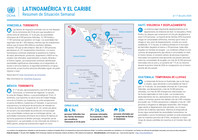
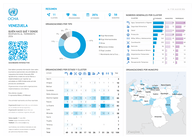
Countries: Venezuela (Bolivarian Republic of), Guatemala, Haiti, Mexico Source: UN Office for the Coordination of Humanitarian Affairs Please refer to the attached Infographic. CIFRAS CLAVE 4,9K personas fallecidas tras dos fuertes terremotos que sacudieron Venezuela el 24 de junio 26,5K personas retornadas forzosamente a Haití en junio de 2026 33K personas afectadas por la temporada de lluvias en Guatemala VENEZUELA: TERREMOTO Las labores de respuesta continúan casi un mes después de los terremotos del 24 de junio que sacudieron el centro-norte de Venezuela. Al 16 de julio, las autoridades informaron de 4.930 personas fallecidas, 16.740 heridas y 17.907 personas que quedaron sin hogar. Las autoridades han registrado más de 1.300 réplicas, mientras que las evaluaciones indican que al menos 856 edificios resultaron dañados, incluidos 190 que se derrumbaron. Más de 21.000 personas permanecen en 107 campamentos transitorios. Los socios humanitarios continúan ampliando la asistencia en materia de salud, alimentación, protección, alojamiento y WASH en los estados más afectados, especialmente La Guaira, Miranda y el Distrito Capital. Las evaluaciones continúan identificando necesidades significativas relacionadas con el alojamiento, el acceso a servicios básicos, la seguridad alimentaria y el apoyo psicosocial, ya que muchas personas afectadas siguen sin poder regresar a casa. Apoya aquí al Fondo Humanitario Venezolano Para más información, visita: ReliefWeb Response MÉXICO: TERREMOTO El 17 de julio, aproximadamente a las 8:49 de la mañana (hora local), un terremoto de magnitud 7,4 sacudió la costa de Chiapas, México, a una profundidad de 10 km. El terremoto, cuyo epicentro se ubicó cerca de Ciudad Hidalgo, cerca de la frontera con Guatemala, se sintió ampliamente en partes de México, Guatemala y El Salvador, lo que provocó evacuaciones y la activación de protocolos de emergencia. El Centro de Alerta de Tsunamis de EE. UU. emitió una alerta de tsunami y las autoridades de protección civil aconsejan a las comunidades costeras que se mantengan alertas. Las autoridades mexicanas informaron de al menos 39 réplicas en las horas posteriores al temblor principal, incluyendo una de magnitud 6,5. Las autoridades no han informado de víctimas ni daños graves, aunque las evaluaciones siguen en curso. HAITÍ: VIOLENCIA Y DESPLAZAMIENTO La violencia sigue impulsando desplazamientos en el departamento de Artibonite de Haití. En Dessaline y Petite Rivière, los ataques que comenzaron el 6 de julio desplazaron a unas 3.225 personas. La mayoría de las familias (93%) buscaron refugio en comunidades anfitrionas, mientras que el resto se refugia en seis sitios de desplazamiento, incluido uno recién establecido. El 12 de julio, la violencia armada en el municipio de Saint-Marc desplazó al menos a 705 personas, todas ellas alojadas con familias de acogida. Los incidentes reflejan el ciclo continuo de desplazamiento que afecta a comunidades en Haití. Al mismo tiempo, el creciente número de personas migrantes retornadas forzosamente está ejerciendo una presión adicional sobre las comunidades de acogida, con más de 26.500 personas retornadas solo en junio y un aumento del 11% en los retornos durante la primera mitad de 2026 en comparación con el mismo período del año pasado. GUATEMALA: TEMPORADA DE LLUVIAS La temporada de lluvias en Guatemala, que va de mayo a octubre, sigue afectando a comunidades de todo el país. Al 14 de julio, las autoridades informan de 13 personas fallecidas, una desaparecida y más de 33.000 personas afectadas, con más de 900 emergencias relacionadas con las lluvias registradas en todo el país. Las inundaciones, desbordamientos de ríos, deslizamientos de tierra, árboles caídos y tormentas severas han dañado más de 6.400 viviendas, provocado casi 14.000 evacuaciones y obligado a más de 1.000 personas a refugiarse en albergues temporales. Alta Verapaz sigue siendo el departamento más afectado, con el mayor número de incidentes reportados. Mientras la temporada de lluvias sigue aumentando las necesidades humanitarias, las autoridades y socios humanitarios también se están preparando para los impactos previstos de El Niño, incluyendo un mayor riesgo de sequía y pérdidas de cosechas en el Corredor Seco del país.

Venezuela: Latinoamérica y El Caribe Resumen de Situación Semanal al 17 de julio 2026 Read More »

venezuela: latin america & the caribbean weekly situation update as of 17 july 2026

Venezuela: Latin America & The Caribbean Weekly Situation Update as of 17 July 2026

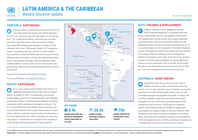
Countries: Venezuela (Bolivarian Republic of), Guatemala, Haiti, Mexico Source: UN Office for the Coordination of Humanitarian Affairs Please refer to the attached Infographic. KEY FIGURES 4.9K people dead after two powerful earthquakes struck Venezuela on 24 June 26.5K people forcibly returned to Haiti in June 2026 33K people affected by Guatemala’s rainy season VENEZUELA: EARTHQUAKE Response efforts continue nearly one month after the 24 June earthquakes that struck north-central Venezuela. As of 16 July, authorities reported 4,930 deaths, 16,740 injuries and 17,907 people left homeless. Authorities have recorded more than 1,300 aftershocks, while assessments indicate that at least 856 buildings were damaged, including 190 that collapsed. More than 21,000 people remain in 107 transitional camps. Humanitarian partners continue to scale up health, food, protection, shelter and WASH assistance across the most affected states, particularly La Guaira, Miranda and the Capital District. Assessments continue to identify significant needs related to shelter, access to basic services, food security and psychosocial support as many affected people remain unable to return home. Support the Venezuelan Humanitarian Fund here For more information, visit: ReliefWeb Response MEXICO: EARTHQUAKE On 17 July at approximately 8:49am (local time), a 7.4 magnitude earthquake struck off the coast of Chiapas, Mexico, at a depth of 10km. The earthquake, centred near Ciudad Hidalgo close to the Guatemala border, was widely felt across parts of Mexico, Guatemala and El Salvador, prompting evacuations and the activation of emergency protocols. The U.S. Tsunami Warning Center issued a tsunami advisory and civil protection officials advise coastal communities to remain catious. Mexican authorities reported at least 39 aftershocks in the hours following the main tremor, including one measuring magnitude 6.5. Authorities have not reported any casualties or major damage, although assessments remain ongoing. HAITI: VIOLENCE & DISPLACEMENT Violence continues to drive displacement across Haiti’s Artibonite department. In Dessaline and Petite Rivière, attacks beginning on 6 July displaced an estimated 3,225 people. Most families (93 per cent) sought refuge with host communities, while the remaining are sheltering in six displacement sites, including one newly established site. On 12 July, armed violence in the municipality of Saint-Marc displaced at least 705 people, all of whom found shelter with host families. The incidents reflect the continued cycle of displacement affecting communities across Haiti. At the same time, growing numbers of forcibly returned migrants are placing additional pressure on host communities, with more than 26,500 people returned in June alone and returns during the first half of 2026 up 11 per cent compared with the same period last year. GUATEMALA: RAINY SEASON Guatemala’s rainy season, which runs from May to October, continues to affect communities across the country. As of 14 July, authorities report 13 deaths, one missing person and more than 33,000 people affected, with over 900 rain-related emergencies registered nationwide. Flooding, river overflows, landslides, fallen trees and severe storms have damaged more than 6,400 homes, prompted nearly 14,000 evacuations and forced over 1,000 people into temporary shelters. Alta Verapaz remains the hardest-hit department, accounting for the highest number of reported incidents. While the ongoing rainy season continues to heighten humanitarian needs, authorities and humanitarian partners are also preparing for the anticipated impacts of El Niño, including an increased risk of drought and crop losses in the country’s Dry Corridor.

Venezuela: Latin America & The Caribbean Weekly Situation Update as of 17 July 2026 Read More »

dr congo: iasc gender reference group ebola response gender advocacy brief (en, fr)

DR Congo: IASC Gender Reference Group – Ebola Response Gender Advocacy Brief (En, Fr)

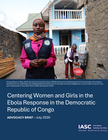
Country: Democratic Republic of the Congo Source: Inter-Agency Standing Committee Please refer to the attached files. This advocacy brief was developed by the IASC Gender Reference Group (GRG) to promote a gender-integrated Ebola response. It synthesizes evidence on the disproportionate impact of the outbreak on women and girls, highlighting the gender-specific risks, including heightened gender-based violence, disruptions to essential life-saving services (including sexual and reproductive health), livelihood losses and barriers to education. It also emphasizes the critical role of local women’s organizations in outbreak prevention, community engagement and service delivery. The brief translates these findings into practical recommendations for responders, donors and coordination mechanisms. These are intended to strengthen the Ebola response by identifying and addressing the specific needs of women and girls, as well as promoting and resourcing their crucial leadership. The brief was informed by a virtual ad hoc GRG consultation held on 25 June 2026 involving local women’s organizations, the DRC Gender in Humanitarian Action Working Group and the national GBV Working Group.

DR Congo: IASC Gender Reference Group – Ebola Response Gender Advocacy Brief (En, Fr) Read More »

World: “Humanitarian challenges today are global, and so must be the solutions”

Country: World Source: International Committee of the Red Cross As technologies reshape conflict and humanitarian action across borders, today’s humanitarian challenges are inherently global, demanding dialogue that brings together diverse perspectives and expertise. The article highlights key insights from the Symposium on the Responsible Use of Technology in Humanitarian Action, held in Beijing in December 2025, presenting shared dilemmas, emerging challenges, and avenues for continued engagement. “Humanitarian challenges today are global, and so must be the solutions” said Gong Ke, Executive Director of the Chinese Institute of New Generation AI Development Strategies. Part of his opening remarks during a sunny, brisk winter morning in Beijing, Gong Ke spoke to the importance of responsible AI safeguards in humanitarian action, from prioritizing urgent needs to ensuring inclusive datasets. The event was situated a few kilometers away from Tsinghua, one of the leading engineering and technology university in China, and Zhongguancun Science Park, the country’s leading tech and innovation hub. Co-organised by the ICRC’s Global Cyber Hub in Luxembourg, the ICRC’s Regional Delegation for East Asia in Beijing and the Center for International Security and Strategy (CISS) at Tsinghua University, the Beijing Symposium drew together more than 80 humanitarian practitioners, policy experts, industry representatives and researchers from almost 20 countries in Asia, Europe, Africa and North America, helping to connect operational concerns with wider discussions on AI governance and safety, cyber risks, and the digital transformation. The Beijing Symposium formed an important part of a broader ICRC Symposium series launched in 2018 to create an open, trusted space for cross-sector and interdisciplinary dialogue on technology, cybersecurity, data protection, and humanitarian action. Earlier events in the series were held in London, Luxembourg, Nairobi, Geneva, and Vienna. The Beijing edition deepened engagement with Chinese and Global South perspectives on the responsible use of technology in warfare and in humanitarian action. Why now, and why in Beijing? Technologies have long shaped how wars are fought, and today, they increasingly shape how humanitarian organisations assess needs, communicate, plan, and deliver. In an era of protracted armed conflicts coupled with the outbreak of new conflicts, humanitarian needs rise while funding is dramatically reduced. This is causing the humanitarian sector to scale up technological solutions to meet greater needs with fewer resources. Yet, the adoption of technology must go hand in hand with principles, guardrails, and policies to guide its use. This could minimise risks of unintended harm and erosion of trust in the humanitarian sector’s ability to operate in a principled way. “Throughout the long arc of human civilization, technology has always been a driving force for social progress. Yet precisely because technology carries so much promise, we must ensure it is used responsibly.” YANG Bin, Vice Chancellor of the Tsinghua University Council Chinese technology and products, from drones and satellite navigation systems to telecommunications networks and open-weight AI models, have achieved significant global reach. The ICRC has been leveraging some Chinese technology and manufacturing prowess to help people in hard-to-reach areas and supply them with adaptive solutions. In the meantime, China has also deepened its role in global governance of data and AI. For the ICRC, engagement with China matters because it offers an opportunity to learn and exchange on consequences and guardrails, and maintain the balanced and neutral approach crucial for the ICRC to operate in a polarized technological enviornment. Through dialogue at the Symposium and other events, the goal is to better understand technological trends and build mutual understanding of the shared values and principles that underpin the design and use of these technologies. With these contexts in mind, the following sections highlight the key messages from the discussions in Beijing. “The kind of [digital] dilemmas we grapple with in situations of war are like a magnifying glass that bring out certain issues in a very stark way.” Balthasar Staehelin, former Personal Envoy of the ICRC President to China and former Head of the ICRC Regional Delegation for East Asia Responsible and inclusive AI: from principles to practice AI is already being explored in humanitarian settings across a growing range of functions: optimising logistics and humanitarian supply chains to forecast demand; analysing satellite imagery and detecting conflict-related damage to serve as an early-warning system; and strengthening data analysis to inform operational planning. At the same time, AI outputs reflect the data it is trained on, the incentives of those who build it, and the contexts in which it is deployed. At the Beijing Symposium, participants highlighted that AI risks are highly context-dependent, back-office tools carry manageable exposure, whereas systems influencing triage, early warning, or aid distribution demand far greater scrutiny. On AI governance, participants converged on a human-centred baseline: AI should not replace human decision-making, and responsibility cannot be delegated to machines. The priority now is translating these principles into practice through concrete safeguards, clear chains of responsibility, robust testing and evaluation, and enforceable accountability across the full AI lifecycle. Participants stressed that the remaining question is how these frameworks can become truly inclusive across different contexts. As the AI divide widens, there is a real risk that low-resource countries and humanitarian actors will be shaped by governance models developed without their full participation, even though these are often the settings where the stakes are highest. Therefore, ensuring that various perspectives are represented in ongoing dialogues will be essential. “Digital technologies have become a lifeline for humanitarian response, which is precisely why humanitarian principles must be integrated into technology design from the very start.” Els Debuf, Head of ICRC Global Cyber Hub in Luxembourg Back to the Basics: digital infrastructure and trust in humanitarian action In a broader context where advanced technologies and innovation are often seen as offering promising solutions, humanitarian actors often find themselves returning to first principles. In crisis settings, the most important form of “tech for good” remains robust digital infrastructure: connectivity, power, and offline-capable systems. Once those basics are in place, the challenge then is how to use digital tools and systems without creating dependency on external platforms or

World: “Humanitarian challenges today are global, and so must be the solutions” Read More »

world: alertes de maladies épidémiques et émergentes en océanie le 14 juillet 2026

World: Alertes de maladies épidémiques et émergentes en Océanie le 14 juillet 2026

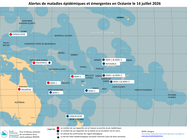
Countries: World, Australia, French Polynesia (France), Guam, New Caledonia (France), New Zealand, Palau, Samoa, Solomon Islands, Vanuatu Source: Pacific Community Please refer to the attached Map. Éléments nouveaux/faits marquants intervenus depuis la diffusion de la carte précédente sur PacNet, le 07 juillet 2026 : Dengue • Nouvelle-Calédonie : Entre le 1er janvier et le 5 juillet 2026, un nombre total de 2 181 cas de dengue ont été signalés, dont 1 982 cas autochtones confirmés. Après avoir atteint un pic durant la semaine 17, l’épidémie est désormais en phase de recul, un phénomène régulièrement observé à l’arrivée de la saison fraîche, qui s’accompagne généralement d’un ralentissement ou d’une interruption de la transmission. Le sérotype 1 (DENV-1) reste le seul en circulation. L’âge médian des personnes infectées est de 29 ans et le ratio hommes-femmes est de 0,9, les taux d’incidence les plus élevés étant observés dans les tranches d’âge de 10 à 14 ans (338 cas) et de 15 à 19 ans, principalement en milieu scolaire. Au total, 78 patients ont été hospitalisés (moyenne d’âge : 46 ans), dont un au cours des 15 derniers jours, et trois décès ont été enregistrés : l’un chez une personne co-infectée par la leptospirose et la dengue, et deux chez des personnes présentant des comorbidités. À l’échelle territoriale, le taux d’incidence s’élève à 804 cas pour 100 000 habitants. Dans 32 % des cas déclarés, les personnes infectées résident dans des communes du Grand Nouméa où près de 80 % des moustiques sont porteurs de la bactérie Wolbachia et où est mis en œuvre le World Mosquito Program. L’incidence hebdomadaire dans cette zone demeure toutefois inférieure à 40 cas pour 100 000 habitants, alors qu’un pic avoisinant les 200 cas pour 100 000 habitants a été enregistré fin avril en dehors du Grand Nouméa. Il est conseillé aux habitants de consulter rapidement un médecin en cas de fièvre, de maux de tête ou de douleurs musculaires et articulaires, et d’éviter de prendre de l’aspirine et de l’ibuprofène si une infection par le virus de la dengue est suspectée. L’alerte bleue pour la dengue est maintenue. – Sources : ALERTE DASS – Épidémie de dengue (5 juillet 2026) et La dengue | Direction des Affaires sanitaires et sociales de Nouvelle-Calédonie, page consultée le 14 juillet 2026. • Vanuatu : Au cours de la semaine épidémiologique 27, l’épidémie de dengue s’est poursuivie dans le sud-ouest de l’île d’Efate (province de Shefa), le nombre total de cas confirmés en laboratoire s’élevant à 38, dont neuf nouveaux cas détectés durant la semaine 27. Le nombre de cas recensés chaque semaine demeure supérieur au seuil d’alerte fixé à quatre cas hebdomadaires. Deux hospitalisations supplémentaires ont également été signalées durant cette semaine, ce qui porte le nombre total d’hospitalisations à six (15,8 %). Une personne reste hospitalisée, tandis que les autres personnes infectées se sont rétablies et ont pu quitter l’hôpital. À ce jour, aucun décès lié à la dengue n’a été enregistré. Les cas se concentrent dans le quartier de Pango (34 %), suivi par Eratap (21 %), et d’autres cas ont été signalés dans les quartiers d’Erakor, d’Eton, de Port-Vila et de Mele, ce qui tend à montrer que la répartition géographique de l’épidémie s’élargit. Les hommes représentent 55 % des cas, lesquels sont majoritairement recensés chez des individus âgés de moins de 26 ans (64 %). Cinq échantillons envoyés en laboratoire à des fins de sérotypage et de tests de confirmation ont tous confirmé la présence du sérotype 1 du virus de la dengue. Les activités de riposte se poursuivent au sein des communautés touchées, notamment des investigations épidémiologiques, des mesures de lutte antivectorielle et l’élimination des gîtes larvaires. L’alerte rouge pour la dengue (DENV-1) est maintenue. – Source : Rapport de situation no 7 sur l’épidémie de dengue dans le sud-ouest de l’île d’Efate (province de Shefa, Vanuatu), Unité de surveillance nationale de Vanuatu, publié sur PacNet le 10 juillet 2026. Coqueluche • Nouvelle-Zélande : L’épidémie de coqueluche qui s’est déclarée dans le pays en novembre 2024 se poursuit. Au cours de la semaine de surveillance qui s’est achevée le 3 juillet 2026, 42 cas ont été signalés, un chiffre en baisse par rapport aux 55 cas enregistrés la semaine précédente (jusqu’au 26 juin), ce qui porte le nombre total de cas à 1 013 au 3 juillet 2026. Ces données sont fournies à titre provisoire et sont susceptibles de faire l’objet d’une révision rétrospective. L’alerte bleue pour la coqueluche est maintenue. – Source : Pertussis dashboard, PHF Science, page consultée le 14 juillet 2026. • Vanuatu : Au cours des semaines épidémiologiques 23 à 28, aucun nouveau cas de coqueluche n’a été signalé à Vanuatu. La déclaration la plus récente de cas diagnostiqué cliniquement date de la semaine épidémiologique 23, et celle du dernier cas confirmé biologiquement remonte à la semaine épidémiologique 14. Le nombre total de cas se maintient à 833, dont 789 cas diagnostiqués cliniquement et 44 confirmés biologiquement, ainsi que 75 hospitalisations et sept décès liés à la maladie (six à Tanna et un à Shefa). Les cas restent concentrés à Efate (environ 55 %) et à Tanna (environ 37 %). Les personnes les plus touchées sont des enfants âgés de 1 à 9 ans, ainsi que des nourrissons de moins de 1 an, qui représentent une part importante des cas. Parmi les malades dont le statut vaccinal est connu, 48 % n’ont pas été vaccinés, 36 % ont reçu une dose de vaccin à valence coqueluche, 6 % ont reçu deux doses et 10 %, trois doses. Le nombre de cas recensés chaque semaine demeure inférieur au seuil épidémique depuis la semaine épidémiologique 15, et 42 jours (six semaines) se sont écoulés depuis le dernier cas diagnostiqué cliniquement, ce qui correspond à deux périodes d’incubation complètes sans preuve de transmission active. Les critères requis étant réunis, le ministère de la Santé de Vanuatu a officiellement déclaré la fin de l’épidémie de coqueluche. L’alerte bleue pour la coqueluche à Vanuatu

World: Alertes de maladies épidémiques et émergentes en Océanie le 14 juillet 2026 Read More »

ethiopia humanitarian fund | ehf 2025 dashboard (from january to december 2025)

Ethiopia Humanitarian Fund | EHF – 2025 Dashboard (From January to December 2025)

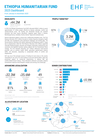
Country: Ethiopia Source: UN Office for the Coordination of Humanitarian Affairs Please refer to the attached file. HIGHLIGHTS In 2025, the Ethiopia Humanitarian Fund (EHF) allocated US$44.2 million to assist approximately 3.2 million people affected by disease outbreaks, conflict and climate-induced crises. The funding was distributed through one standard allocation and three reserve allocations, targeting urgent needs in Amhara, Benishangul-Gumuz, Gambela, Oromia, Somali, Tigray and contested areas. Reserve allocations played a critical role in addressing emerging crises. The First Reserve Allocation ($5.2 million) focused on cholera response, emergency health and GBV case management amid operational challenges and funding gaps. The Second Reserve Allocation ($6 million) addressed life-threatening needs in Tigray due to displacement, while the Third Reserve Allocation ($16 million) supported internally displaced people, returnees and refugees nationwide, emphasizing cash assistance and dignified transition options aligned with the Humanitarian Reset strategy. The First Standard Allocation ($17 million) addressed multi-sectoral priorities such as nutrition, health, WASH, agriculture, ender-based violence (GBV), and education, responding to compounded effects of conflict and displacement. EHF was one of the principal sources of funding for local actors in the country channelling 81 per cent of its total funding to local and national NGOs, while also prioritizing support for women‑led organizations to address GBV and conflict‑related sexual violence. These allocations reflected a principled, adaptive humanitarian response amid Ethiopia’s complex and evolving crisis landscape.

Ethiopia Humanitarian Fund | EHF – 2025 Dashboard (From January to December 2025) Read More »