Uncategorized

un emergency fund allocates us$1 million to support cholera response in the central african republic.

UN emergency fund allocates US$1 million to support cholera response in the Central African Republic.

Country: Central African Republic Source: UN Office for the Coordination of Humanitarian Affairs Please refer to the attached file. Bangui, 22 July 2026 – The United Nations Emergency Relief Coordinator, Tom Fletcher, has allocated US$1 million from the Central Emergency Response Fund (CERF) to support urgent efforts to contain the cholera outbreak in the Central African Republic (CAR). The funding will enable humanitarian partners to rapidly scale up life-saving interventions in health, water, sanitation and hygiene, and community engagement. The cholera epidemic was declared by the Government on 26 June following a rise in infections and deaths. 650 suspected cases and 44 deaths have been reported. Cases have spread from Bimbo and Mbaïki to Bangui, increasing the risk of transmission in densely populated urban areas. The rainy season, low population immunity, limited access to safe water and sanitation, and population movements along the Oubangui River are further exacerbating the outbreak. This is the country’s first cholera epidemic since 2016.

UN emergency fund allocates US$1 million to support cholera response in the Central African Republic. Read More »

car: le fonds d’urgence des nations unies alloue 1 million de dollars américains pour soutenir la riposte au choléra en république centrafricaine.

CAR: Le fonds d’urgence des Nations Unies alloue 1 million de dollars américains pour soutenir la riposte au choléra en République centrafricaine.

Country: Central African Republic Source: UN Office for the Coordination of Humanitarian Affairs Please refer to the attached file. Bangui, le 22 juillet 2026 – Le Coordonnateur des secours d’urgence des Nations Unies, Tom Fletcher, a alloué 1 million de dollars américains du Fonds central pour les interventions d’urgence (CERF) afin de soutenir les efforts urgents visant à contenir l’épidémie de choléra en République centrafricaine (RCA). Ce financement permettra aux partenaires humanitaires d’intensifier rapidement les interventions vitales dans les secteurs de la santé, de l’eau, de l’hygiène et de l’assainissement, ainsi que de l’engagement communautaire. L’épidémie de choléra a été déclarée par le Gouvernement le 26 juin, à la suite d’une augmentation du nombre d’infections et de décès. À ce jour, 650 cas suspects et 44 décès ont été signalés. Les cas se sont propagés de Bimbo et Mbaïki à Bangui, augmentant le risque de transmission dans les zones urbaines densément peuplées. La saison des pluies, la faible immunité de la population, l’accès limité à l’eau potable et aux services d’assainissement, ainsi que les mouvements de population le long du fleuve Oubangui, aggravent davantage la situation. Il s’agit de la première épidémie de choléra dans le pays depuis 2016.

CAR: Le fonds d’urgence des Nations Unies alloue 1 million de dollars américains pour soutenir la riposte au choléra en République centrafricaine. Read More »

bangladesh: impact of iran war on food security: july 2026 update

Bangladesh: Impact of Iran War on Food Security: July 2026 Update

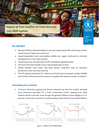
Countries: Bangladesh, Iran (Islamic Republic of) Source: World Food Programme Please refer to the attached file. Key highlights • General inflation declined slightly in June yet stayed above 9%, continuing a threemonth trend of high price pressures. • Import-dependent food commodities (edible oils, sugar) continued to maintain elevated price in the retail markets. • Liquid fuel prices and electricity tariff remained at elevated levels. • LPG price declined sharply in July, had jumped twice in April. • Global fertilizer price hikes may pose serious long-term risks on domestic production, price and food security. • The IPC analysis projected 18.1 million acute food insecure people owing to Middle East conflict induced economic pressure coupled with adverse climatic conditions.

Bangladesh: Impact of Iran War on Food Security: July 2026 Update Read More »

mali: rapport trimestriel sur la migration mixte : afrique de l’ouest, 2ème trimestre 2026

Mali: Rapport trimestriel sur la migration mixte : Afrique de l’Ouest, 2ème Trimestre 2026

Countries: Mali, Benin, Burkina Faso, Canary Islands (Spain), Côte d’Ivoire, Gabon, Gambia, Ghana, Guinea, Italy, Libya, Mauritania, Morocco, Niger, Nigeria, Senegal, Spain, Togo Source: Mixed Migration Centre Please refer to the attached file. Principales mises à jour • Sur la Route Atlantique, le nombre de décès et de disparitions enregistrés a baissé de 16%, alors que les arrivées aux îles Canaries ont chuté de 67%. Ainsi, la baisse des arrivées ne reflète pas nécessairement une diminution des tentatives de traversée et pourrait être liée à des risques accrus dans un contexte de contrôles migratoires plus stricts. • Les mouvements migratoires se déplacent de plus en plus vers la Route de la Mediterranee Occidentale (+26%), tandis que les arrivées sur la Route Atlantique ont continué de baisser au deuxième trimestre 2026 (-67%), contribuant à une diminution globale des arrivées en Espagne (-33%). • La Sierra Leone, la République démocratique du Congo (RDC) et la République centrafricaine (RCA) sont devenues les derniers pays africains à accepter d’accueillir des ressortissant·e·s de pays tiers expulsé·e·s des États-Unis. • Le Sénégal, la Mauritanie et le Ghana auraient été évoqués comme partenaires potentiels pour la mise en place de centres de retour vers des pays tiers, à la suite de l’adoption par le Parlement européen, le 17 juin, du nouveau règlement de l’UE sur les retours. • Le Ghana et le Nigéria ont facilité le retour de leurs ressortissant·e·s depuis l’Afrique du Sud à la suite de manifestations anti-immigration et d’agressions signalées. • La Gambie a présenté un projet de loi visant à ériger en infraction pénale le trafic de migrant·e·s, dans un contexte de recrudescence des départs irréguliers depuis ses côtes vers les îles Canaries, impliquant principalement des ressortissant·e·s gambien·ne·s, mais aussi sénégalais·es. • Les attaques coordonnées au Mali ont entraîné des déplacements limités, notamment des mouvements de réfugié·e·s vers le Niger. L’évolution de la situation à Kidal, carrefour migratoire situé près de la frontière algérienne, pourrait à la fois déclencher de nouveaux mouvements et perturber les itinéraires existants vers l’Algérie.

Mali: Rapport trimestriel sur la migration mixte : Afrique de l’Ouest, 2ème Trimestre 2026 Read More »

mali: quarterly mixed migration update: west africa, quarter 2, 2026

Mali: Quarterly Mixed Migration Update: West Africa, Quarter 2, 2026

Countries: Mali, Benin, Burkina Faso, Canary Islands (Spain), Côte d’Ivoire, Gabon, Gambia, Ghana, Guinea, Italy, Libya, Mauritania, Morocco, Niger, Nigeria, Senegal, Spain, Togo Source: Mixed Migration Centre Please refer to the attached file. The core countries of focus for this region are Senegal, Mauritania, Niger, Mali, Burkina Faso, Nigeria, Chad, the Central African Republic and the coastal countries. Depending on the quarterly trends and migration-related updates, more attention may be given to any of the countries over the rest. Key migration trends and policy updates On the Atlantic Route, recorded deaths and disappearances fell by 16%, compared with a 67% decline in arrivals to the Canary Islands, suggesting that lower arrivals do not necessarily reflect fewer crossing attempts and may be associated with heightened risks in the context of stricter migration controls. Movements are increasingly shifting towards the Western Mediterranean Route (+26% 2026 vs 2025), while arrivals along the Atlantic Route continued to decline in the second quarter of 2026 (-67% compared to 2025), contributing to an overall decrease in arrivals in Spain (-33% 2026 vs 2025). Sierra Leone, the Democratic Republic of the Congo (DRC) and the Central African Republic (CAR) became the latest African countries to agree to receive third-country nationals expelled from the United States. Senegal, Mauritania, and Ghana were reportedly discussed as potential partners for third-country return hubs following the European Parliament’s approval of the new EU Return Regulation on 17 June. Ghana and Nigeria facilitated the return of their nationals from South Africa following anti-immigration demonstrations and reported attacks. The Gambia introduced a bill to criminalise migrant smuggling amid rising irregular departures from its shores towards the Canary Islands, primarily involving Gambian nationals but also Senegalese. Coordinated attacks in Mali triggered limited displacement, including refugee movements into Niger. Developments in Kidal, a key transit hub near the Algerian border, may both trigger further movements and disrupt existing routes towards Algeria.

Mali: Quarterly Mixed Migration Update: West Africa, Quarter 2, 2026 Read More »

quarterly mixed migration update: eastern and southern africa | egypt and yemen, quarter 2 2026

Quarterly Mixed Migration Update: Eastern and Southern Africa | Egypt and Yemen, Quarter 2 – 2026

Countries: Egypt, Burundi, Comoros, Democratic Republic of the Congo, Djibouti, Kenya, Madagascar, Malawi, Saudi Arabia, Somalia, Sudan, Uganda, Yemen Source: Mixed Migration Centre Please refer to the attached file. The core areas of focus include the Eastern route, from East and the Horn of Africa towards the Arabian Peninsula; the Southern route from East Africa and the Great Lakes towards South Africa; the Central Mediterranean Route (also called the Northern Route) from East and the Horn of Africa towards North Africa; as well as intra-regional mixed migration dynamics. Depending on the quarterly trends and migration-related updates, more attention may be given to any of the countries over the rest. Key migration trends and policy updates War in Sudan continues to drive displacement: compared to the previous quarter, cross-border movements have increased by 6% in the Central African Republic (CAR) (44,522), 3% in South Sudan (1,342,222), 2% in Chad (934,202), 1% in Libya (562,266), and 1% in Uganda (91,149). At the same time, increasing return movements to Sudan continued: in May, a total of 4,441,570 returnees were recorded since monitoring began, representing a 21% increase from March (3,027,446). The majority (83%) returned from internal displacement, while 17% returned from abroad, primarily from Egypt, South Sudan, and Libya. Continued arrivals of migrants and refugees in Yemen: In April and May, 26,421 new arrivals were recorded in Yemen. A majority (67%) had departed from Djibouti. Eastern Libya restricts entry for four East African countries: Authorities in Tobruk banned the entry of Sudanese, Eritrean, Ethiopian, and Somali citizens into the country, citing efforts to manage migration. It was not mentioned how the ban would be implemented. Ethiopian migrants face execution in Saudi Arabia: In Q2, following the execution of three Ethiopians in April, at group of at least 65, and potentially more than 200 in total, are at risk of execution in Saudi Arabia for drug-related offences while carrying khat, likely forced by their smugglers as mode of payment. Ethiopia announces Makatet Roadmap: In June, the Government of Ethiopia launched a comprehensive roadmap towards local integration of refugees and asylum seekers, eventually turning current refugee camps into settlements connected with national service delivery systems. Egypt issues bylaws for new state-led asylum system: In May, Egypt issued the implementing bylaws for its 2024 asylum law, initiating the transfer of asylum registration and refugee status determination from UNHCR to a newly established government committee. Rise in xenophobic violence in South Africa triggers large-scale returns: Growing anti-migrant protests and violence in South Africa prompted the voluntary return and evacuation of thousands in Q2, including Mozambicans, Malawians, Zimbabweans, and Kenyans. EU advances plans for return hubs in Africa: Several EU member states moved forward discussions on establishing return hubs for rejected asylum seekers in third countries, with Kenya, Uganda, Rwanda, Egypt, and Ethiopia among the countries reportedly considered. US continues third-country deportations to African states: In April, both Uganda and DR Congo received deportees from the United States under separate agreements allowing the transfer of third-country nationals unable or unwilling to return to their countries of origin.

Quarterly Mixed Migration Update: Eastern and Southern Africa | Egypt and Yemen, Quarter 2 – 2026 Read More »

afghanistan: quarterly mixed migration update: asia and the pacific, quarter 2, 2026

Afghanistan: Quarterly Mixed Migration Update: Asia and the Pacific, Quarter 2, 2026

Countries: Afghanistan, Australia, Bangladesh, India, Indonesia, Iran (Islamic Republic of), Malaysia, Myanmar, Pakistan, Papua New Guinea, Sri Lanka, Thailand Source: Mixed Migration Centre Please refer to the attached file. The core countries of focus for this region are Iran, Palestine, Syria, Türkiye (Southwest Asia), Afghanistan, Bangladesh, India, Pakistan (South Asia), Cambodia, Indonesia, Malaysia, Myanmar, Thailand (Southeast Asia), Australia, and New Zealand (Oceania). Depending on the quarterly trends and migration-related updates, more attention may be given to any of the countries over the rest. Key migration trends and policy updates EU greenlights negotiations with Taliban on returns: As part of its ambition to undertake deportations of Afghans, the EU has invited the Taliban to Brussels with the aim of developing closer cooperation around returns, sparking criticism from numerous human rights groups. In particular, Germany deported dozens of Afghan nationals during the quarter. According to the BBC, Afghans have been subjected to extreme violence by Turkish border guards: Survivors from a group of around 50 Afghans testified that they had been beaten and stripped naked at the Iran-Türkiye border in January, with 20 reportedly dying as a result and many others losing limbs to frostbite. More hardship for Rohingya refugees in the face of funding cuts: At $710.5 million, the 2026 annual appeal for humanitarian assistance for Rohingya refugees and host communities in Bangladesh is 26% lower than the requested total the previous year, in response to the increasing restricted funding landscape. Malaysia’s refugee registration scheme prompts human rights concerns: Following Malaysia’s announcement in January that a new refugee registration programme would be rolled out in the country, migrant and refugee rights groups have sounded alarms at the lack of clarity in the new provisions around what protections refugees will enjoy in practice. Trafficking victims stranded in Cambodia in wake of scam crackdown: Following a crackdown against cybercrime networks, thousands of trafficking victims working in these scam centres have been left without assistance in Phnom Penh and at risk of re-trafficking. Asian migrants struggle in the Gulf: Research by Human Rights Watch has highlighted the continued risks that migrants – including many from South and Southeast Asia – face in the Gulf as a result of extreme and potentially lethal temperatures, as well as the increasing repression of authorities in the context of regional conflict.

Afghanistan: Quarterly Mixed Migration Update: Asia and the Pacific, Quarter 2, 2026 Read More »

wfp armenia country brief, july 2026 (reporting period: june 2026)

WFP Armenia Country Brief, July 2026 (Reporting period: June 2026)

Country: Armenia Source: World Food Programme Please refer to the attached file. IN NUMBERS USD 2.9 M required in the next six months (July – December 2026) HIGHLIGHTS As part of WFP’s ongoing capacity strengthening and capacity transfer activities under the School Meals Programme, WFP Armenia joined regional missions to the Kyrgyz Republic and Kazakhstan. These visits provided a strategic platform for knowledge sharing and peer learning, reinforcing WFP’s role in capacity strengthening and highlighting the importance of regional collaboration. By engaging directly with government counterparts, partners, International Financial Institutions (IFIs), the exchanges advanced collective efforts to strengthen regional partnerships and promote cross-country capacity exchange platforms. The 2026 Food Security and Vulnerability Assessment results showed that food insecurity decreased from 20 percent to 18 percent and the proportion of marginally food secure households declined from 54 to 49 percent, compared to 2024.

WFP Armenia Country Brief, July 2026 (Reporting period: June 2026) Read More »

dr congo: afrique de l’ouest et centrale : derniers événements en bref (du 14 au 20 juillet 2026)

DR Congo: Afrique de l’Ouest et centrale : Derniers événements en bref (du 14 au 20 juillet 2026)

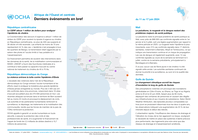
Countries: Democratic Republic of the Congo, Benin, Central African Republic, Côte d’Ivoire, Ghana, Niger, Togo Source: UN Office for the Coordination of Humanitarian Affairs Please refer to the attached Infographic. République centrafricaineLe CERF alloue 1 million de dollars pour endiguer l’épidémie de choléra Le Coordonnateur des secours d’urgence a alloué 1 million de dollars du CERF pour soutenir la riposte d’urgence au choléra en République centrafricaine, où plus de 400 cas suspects et 36 décès ont été recensés. Les enfants de moins de 10 ans représentent 44 % des cas. L’épidémie s’est propagée à tous les quartiers de Bangui, la transmission étant aggravée par la saison des pluies et l’accès limité à l’eau potable et à l’assainissement. Ce financement permettra de soutenir des interventions dans les domaines de la santé, de la mobilisation communautaire et WASH. UNICEF a fourni des fournitures médicales et a contribué à faire passer la capacité d’accueil du centre national de traitement du choléra de 40 à 70 lits. République démocratique du CongoLa violence entrave la lutte contre l’épidémie d’Ebola L’escalade des violences dans l’est de la République démocratique du Congo entrave l’accès humanitaire et les efforts visant à endiguer la troisième plus grande épidémie d’Ebola jamais enregistrée au monde. Plus de 2 300 cas ont été confirmés dans cinq provinces, notamment dans 16 sites d’accueil accueillant plus de 270 000 personnes en Ituri. Les récentes attaques survenues dans le territoire de Beni auraient fait au moins 22 morts et provoqué le déplacement de civils. Les autorités et les partenaires humanitaires renforcent la surveillance, le dépistage, les traitements et la mobilisation des communautés, tandis que les forces de maintien de la paix de l’ONU renforcent la protection. OCHA appelle à garantir un accès humanitaire en toute sécurité, à assurer la protection des civils et des professionnels de santé, et à augmenter le financement de l’appel de fonds de 2,3 milliards de dollars destiné à 10,7 millions de personnes. MaliLe paludisme, la rougeole et la dengue restent des problèmes majeurs de santé publique Le paludisme reste le principal problème de santé publique au Mali, avec près de 888 000 cas confirmés signalés entre le 1er janvier et le 5 juillet, soit une légère augmentation par rapport à la même période en 2025. La rougeole reste l’épidémie la plus importante, avec 215 cas confirmés signalés dans 17 districts sanitaires, notamment à Bamako, Mopti et Tombouctou, ce qui indique une transmission continue et un risque de propagation. Les cas de dengue ont également augmenté, avec 12 cas confirmés signalés au cours de la semaine se terminant le 5 juillet, contre six la semaine précédente, principalement à Bandiagara et à Bamako. À ce jour, aucun cas de fièvre jaune ni de choléra n’a été signalé cette année. Les autorités sanitaires continuent de donner la priorité à la surveillance, au suivi et à la qualité des données. Golfe de GuinéeLe changement climatique accroît les risques d’inondation le long du golfe de Guinée Des précipitations violentes ont provoqué des inondations généralisées en Côte d’Ivoire, au Ghana, au Togo et au Nigeria entre le 20 et le 22 juin 2026, faisant plus de 90 morts, déplaçant des centaines de personnes et causant des dégâts aux infrastructures et aux moyens de subsistance. Selon World Weather Attribution, des épisodes pluvieux comparables sur trois jours se produisent désormais tous les deux à quatre ans, les observations indiquant une augmentation de 23 % de leur intensité depuis le début des relevés. L’urbanisation rapide, l’insuffisance des réseaux de drainage et l’élévation du niveau de la mer aggravent ce risque, soulignant la nécessité de mettre en place des systèmes d’alerte précoce plus performants, des logements plus sûrs ainsi que des réseaux de drainage et d’assainissement améliorés.

DR Congo: Afrique de l’Ouest et centrale : Derniers événements en bref (du 14 au 20 juillet 2026) Read More »