Uncategorized

World: MAG partners with Government of Norway to expand global humanitarian mine action

Countries: World, Ethiopia, Lao People’s Democratic Republic (the), Lebanon, Myanmar, Norway, Senegal, Sri Lanka, Syrian Arab Republic Source: Mines Advisory Group MAG has signed a new funding agreement with the Government of Norway’s Agency for development cooperation (Norad) under its ‘Humanitarian mine action & protection against explosive weapons: global’ programme. This grant will fund the clearance of land contaminated by landmines, cluster munitions and other explosive ordnance, while also providing vital risk-education across some of the world’s most affected countries. The agreement will support MAG’s mine action work through to 2029 across two complementary grants. The first, funded by the Department for Humanitarian Assistance and Comprehensive Response, will provide 190 million NOK (approximately 20 million USD) for a multi-country programme spanning Ethiopia, Laos, Lebanon, Myanmar, Senegal, Sri Lanka, and Syria. The second, funded by the Department for the Nansen Support Programme for Ukraine, will provide 140 million NOK (approximately 15 million USD) to support MAG’s mine action operations in Ukraine. Speaking on these new grants, Darren Cormack, MAG CEO, said: “This support from the Government of Norway comes at a critical moment and will enable MAG and our partners to deliver sustained, locally led action in some of the world’s most affected countries. From Lebanon to Ukraine, we are witnessing the devastating impacts of landmines and explosive ordnance on civilians. But beyond the immediate consequences, we are also seeing first-hand the danger they pose for years to come. We are deeply grateful for Norway’s continued commitment to humanitarian mine action, and for standing with us as we work to make land safe once more for communities.” Gunn Jorid Roset, Norad Director, added: “Clearing mines and explosive remnants of war is essential to ensure that people can move safely, produce food and rebuild their lives. Through MAG, a highly capable partner, Norway supports life-saving mine clearance and risk education in some of the most heavily affected communities.” Across the multi-country programme, MAG will work with national partners and authorities to release land contaminated by landmines, cluster munitions and other explosive ordnance, deliver explosive ordnance risk education, support victim assistance efforts, and strengthen links between mine action, humanitarian response, development and peacebuilding. The programme will also reinforce the capacity of national mine action authorities and organisations, to support long-term, locally led responses. In Ukraine, MAG will implement this new grant in collaboration with the Ukrainian Deminers Association, among other national partners and authorities, responding to one of the most severe cases of landmine and explosive ordnance contamination in modern conflicts. Work will focus on land release in heavily contaminated oblasts, alongside risk education, capacity development, and integrated support that connects mine action with broader recovery and stabilisation efforts. The programme will prioritise localisation and strengthen national ownership, while supporting Ukraine’s National Mine Action Strategy. The agreement aligns closely with Norway’s Humanitarian Strategy 2024–2029, particularly its commitments to protection and humanitarian disarmament. MAG will continue working with partners to ensure contaminated land is safely released and returned to productive use, supporting communities to rebuild their lives.

World: MAG partners with Government of Norway to expand global humanitarian mine action Read More »

world: peace talks in focus 2025: report on trends and scenarios

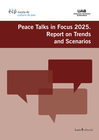
World: Peace Talks in Focus 2025: Report on Trends and Scenarios

Country: World Source: Escola de Cultura de Pau Please refer to the attached files. Peace Talks in Focus 2025. Report on Trends and Scenarios is a yearbook that analyses the peace processes and negotiations that took place in the world during 2025. The examination of the development and dynamics of negotiations worldwide allows to provide a comprehensive overview of peace processes, identify trends and comparatively analyse the various scenarios. One of the main objectives of this report is to provide information and analysis to those who participate in peaceful conflict resolution at different levels, including parties to disputes, mediators, civil society activists and others. The yearbook also aims to grant visibility to different formulas of dialogue and negotiation aimed at reversing dynamics of violence and channelling conflicts through political means in many contexts. Thus, it seeks to highlight, enhance and promote political, diplomatic and social efforts aimed at transforming conflicts and their root causes through peaceful methods.

World: Peace Talks in Focus 2025: Report on Trends and Scenarios Read More »

flash updates #55 nouvel afflux de réfugiés soudanais au tchad

Flash Updates #55 Nouvel afflux de réfugiés soudanais au Tchad

Countries: Chad, Sudan Source: UN High Commissioner for Refugees Please refer to the attached file. Contexte La situation sécuritaire au Tchad demeure globalement stable, mais reste marquée par des risques persistants le long de la frontière avec le Soudan, notamment dans la province du Wadi Fira. Le 21 juillet 2026, des incidents impliquant des drones ont été signalés à proximité de la localité frontalière de Tiné. À Indour, à environ 22 km de la frontière, un point d’eau a été touché, entrainant des pertes humaines non confirmées ainsi que d’importantes pertes de bétail. Plus tard dans la journée, un autre incident a été signalé à Bamina – 35 km de Tiné- où un véhicule administratif a été endommagé. Ces événements surviennent dans un contexte d’intensification des affrontements au Darfour, à proximité de la frontière tchadienne, alimentant les préoccupations quant aux risques de débordement du conflit. Aucun impact n’a toutefois été signalé sur les opérations ou le personnel humanitaire.

Flash Updates #55 Nouvel afflux de réfugiés soudanais au Tchad Read More »

flash update #55 new sudanese refugee influx into chad

Flash Update #55 New Sudanese Refugee Influx into Chad

Countries: Chad, Sudan Source: UN High Commissioner for Refugees Please refer to the attached file. Context The security situation in Chad remains generally stable but continues to be marked by persistent risks along the Sudanese border, particularly in Wadi Fira Province. On 21 July 2026, drone-related incidents were reported near the border town of Tiné, Chad. In Indour, approximately 22 km from the border, a water point was hit, resulting in unconfirmed casualties and significant livestock losses. Later the same day, another incident was reported in Bamina, located 35 km from Tiné, where an administrative vehicle was damaged. These events occurred amid intensified fighting in Darfur near the Chadian border, heightening concerns over possible spillover effects of the conflict. However, no impact on humanitarian personnel or operations was reported.

Flash Update #55 New Sudanese Refugee Influx into Chad Read More »

flash update #54 new sudanese refugee influx into chad

Flash Update #54 New Sudanese Refugee Influx into Chad

Countries: Chad, Sudan Source: UN High Commissioner for Refugees Please refer to the attached file. UPDATE ON SITUATION IN SUDAN Context The security situation in Eastern Chad remains generally stable but fragile. Following clashes in the Kulbus region of Sudan, new arrivals were reported in Koulbous and Birak (Chad), where an assessment mission identified approximately 3,000 people in need of assistance. To respond to the situation, UNHCR and its partners plan to launch an asylumseeker pre-registration operation from 27 July 2026 to strengthen identification, facilitate relocation to Marasabré, and improve humanitarian assistance planning. Despite challenges related to the rainy season, logistical and operational preparations are underway for the start of the exercise. In refugee-hosting areas, several security incidents were also reported this week, including assaults against refugee women near the Metché site, an armed robbery in the same area, and a road accident involving a humanitarian partner in Aboutengué. These incidents highlight the continued need for protection and security efforts in operational areas.

Flash Update #54 New Sudanese Refugee Influx into Chad Read More »

World: Failing to tackle inequality puts countries in pandemic danger, new research shows

Countries: World, Ethiopia, United Kingdom of Great Britain and Northern Ireland, United States of America, Viet Nam Source: UNAIDS Analysis in the New England Journal of Medicine – co-authored by experts including Nobel laureate Joseph Stiglitz, leading epidemiologist Professor Sir Michael Marmot, and Chairperson of the One Economy Foundation and former First Lady of Namibia Monica Geingos – finds economic inequality, not conventional preparedness, has been the clearest predictor of how countries fared against pandemics, upending traditional assumptions about what actions governments need to take for health security. The new research from the Global Council on Inequality, AIDS and Pandemics finds that while technical capacity remains necessary, it is not sufficient. To respond to and prepare for pandemics effectively, governments need to include efforts to address inequality. Call for “Inequality-Informed Pandemic Preparedness and Response” Conventional understandings of what countries need to do to be ready to face pandemics are incomplete and need to be re-thought, the research shows. Many of the countries that score highest on standard measures of pandemic preparedness—based on technical abilities like laboratory, supply chain, or emergency response capabilities—have seen some of the highest rates of infection and death during both the COVID-19 and AIDS pandemics. Countries like the United States or United Kingdom have topped official preparedness lists, but the research findings show no association between these traditional understandings of preparedness and success in the real world. Policies that only ensure technical capability are not enough. Inequality, on the other hand, is the clearest predictor of how a country fares when a pandemic strikes, with more unequal countries less successfully responding than their more equitable peers. The research shows that the prevailing conception of pandemic preparedness as synonymous with technical capacities leads governments give too little attention to addressing the sources of inequality that shape the use of those capacities. The analysis demonstrates how proven, practical approaches can enable countries to overcome the inequalities which undermine public health. This includes addressing the social determinants of health within countries—the unequal conditions in which people are born, grow, live, work and age—as well as between-country inequalities in the global financial system. Countries could be mounting inequality-informed pandemic preparedness and response today – but they are not. Four ways governments can break the cycle The research sets out proven, practical and affordable policies to address the inequalities driving pandemic risk, so that countries can respond more effectively to HIV, tuberculosis, Ebola and other pandemics. The actions governments need to take include: Protecting people during outbreaks: surge social protection such as paid sick leave, cash transfers and unemployment support, so no one has to choose between following health advice and feeding their family – alongside long-term investment in housing, education and secure work to build resilience before the next crisis. Governing across society, not health alone: multi-sectoral planning that brings in finance, labour and education ministries, and embeds community-led organisations in the response, drawing on hard-won lessons from the AIDS pandemic. Fixing the global financial rules: a debt-standstill mechanism for countries facing emergencies, the automatic release of emergency international financing when a pandemic is declared, and expanded pandemic lending so that every country has the means to respond. Sharing life-saving science: open licensing of publicly funded research, a global prize fund that rewards innovators while allowing medicines and vaccines to be produced anywhere, and expanded regional manufacturing of the treatments and vaccines needed to stop today’s and tomorrow’s pandemics. Expert call The analysis and call to action is outlined in the latest edition of the New England Journal of Medicine by Nobel Laureate Joseph Stiglitz, leading epidemiologist Sir Michael Marmot, Chairperson of the One Economy Foundation and former First Lady of Namibia Monica Geingos, UNAIDS Executive Director Winnie Byanyima, and incoming Chair of the Department of Global Health and Director of the Center for Global Health Policy & Politics at Georgetown University Matthew Kavanagh. The New England Journal of Medicine article, “The Inequality–Pandemic Cycle — Rethinking Preparedness”, setting out the argument and the way forward, is available here, and the accompanying full background data analysis can be read here. They are part of an ongoing programme of research by the Global Council on Inequality, AIDS and Pandemics, an international, interdisciplinary expert group convened by UNAIDS. “For decades the world judged how ready a country is for a pandemic by counting its laboratories, stockpiles and response plans,” said Joseph Stiglitz, Nobel Laureate in Economics and Co-Chair of the Global Council. “This research shows that this is not enough. High economic inequality can leave even wealthy, well-equipped nations dangerously exposed. The encouraging news is that inequality is not inevitable – it is the result of policy choices, and we know how to change them. Reducing inequality is now one of the smartest investments any government can make.” “Inequality is the ground in which pandemics take root – and this research proves it,” said Winnie Byanyima, Executive Director of UNAIDS, which convenes the Global Council. “It also shows leaders exactly where to act. By tackling the inequalities within our societies, we can end AIDS as a public health threat and make the world safer from the next pandemic. When we address inequality, everyone thrives.” The research is being published just ahead of a special panel discussion taking place at AIDS 2026 in Rio de Janeiro – the biennial gathering of the leaders of the international HIV response. The panel, at 10:30am Rio time on 30th July, will include Joseph Stiglitz, Winnie Byanyima and Matthew Kavanagh alongside Nísia Trindade, Former Minister of Health of Brazil, Javier Padilla Bernáldez, Secretary of State for Health of Spain, and Richard Lusimbo, Director General of The Uganda Key Populations Consortium. Pandemic emergency The AIDS pandemic, the largest disease of the last century, has killed at least 44 million people globally since the early 1980s. Approximately 40.8 million people are living with HIV globally, while over 9 million are not on treatment because of inequalities obstructing access, putting them at risk of dying of AIDS-related illnesses. COVID-19 and

World: Failing to tackle inequality puts countries in pandemic danger, new research shows Read More »

ocha haiti : nationwide humaniterian response 1 30 june 2026

OCHA HAITI : Nationwide Humaniterian Response 1- 30 June 2026

Country: Haiti Source: UN Office for the Coordination of Humanitarian Affairs Please refer to the attached file. According to IOM’s Round 13 DTM report published in May, the number of internally displaced persons (IDPs) reached 1.47 million, including more than 300,000 people in the Port-au-Prince metropolitan area alone, representing a 1 per cent increase compared to Round 12. Following the clashes in Cité Soleil in May, which displaced more than 18,000 people, a new wave of violence between 13 and 19 June forced over 5,000 additional people from Cité Soleil to flee their homes. This persistent insecurity also had a direct impact on access to essential services. In June, Doctors Without Borders (MSF) was compelled to suspend activities at the Isaïe Jeanty maternity hospital in Cité Soleil following intense armed clashes, during which more than 100 people sought refuge at the facility amid crossfire, leaving thousands without access to healthcare services.

OCHA HAITI : Nationwide Humaniterian Response 1- 30 June 2026 Read More »

ocha haiti : réponses humanitaires à l'échelle nationale du 1er au 30 juin 2026

OCHA HAITI : Réponses humanitaires à l’échelle nationale du 1er au 30 juin 2026

Country: Haiti Source: UN Office for the Coordination of Humanitarian Affairs Please refer to the attached file. Selon le round 13 de la DTM de l’OIM publié en mai, le nombre de personnes déplacées internes a atteint 1,47 million de personnes, soit 1% de plus que le round 12, dont plus de 300 000 dans la seule aire métropolitaine de Port-au-Prince. Après les affrontements de mai à Cité Soleil ayant provoqué le déplacement de plus de 18 000 personnes, une nouvelle vague de violence entre le 13 et le 19 juin a contraint plus de 5 000 personnes supplémentaires de cette commune à fuir leur domicile. Cette insécurité persistante a également eu des répercussions directes sur l’accès aux services essentiels. En juin, Médecins Sans Frontières (MSF) a été contraint de suspendre les activités de la maternité Isaïe Jeanty à Cité Soleil à la suite d’intenses affrontements armés, alors que plus de 100 personnes y avaient trouvé refuge sous les tirs croisés, privant ainsi des milliers de personnes d’un accès aux soins de santé.

OCHA HAITI : Réponses humanitaires à l’échelle nationale du 1er au 30 juin 2026 Read More »