Uncategorized

ukraine: winterization readiness assessment of frontline communities within the east coordination hub for the 2026–2027 winter season [en/uk]

Ukraine: Winterization readiness assessment of frontline communities within the east coordination hub for the 2026–2027 winter season [EN/UK]

Country: Ukraine Source: Relief Coordination Centre Please refer to the attached files. Territories experiencing intense hostilities during the winter period face heightened humanitarian risks. Low temperatures, damage to housing and critical infrastructure, disruptions to electricity, heating, and water supply, restricted access to certain settlements, and the reduced capacity of households to meet their basic needs independently create a pressing need for timely and appropriate responses from the government, local self-government authorities, and national and international humanitarian organizations. Since the onset of the Russian Federation’s full-scale invasion in 2022, Ukraine has required continuous large-scale humanitarian assistance. According to estimates by the International Monetary Fund (IMF), Ukraine’s population was approximately 32.9 million in 2025 and was projected to increase to 33.4 million in 2026. However, these figures should be regarded as estimates, as both the size and the territorial distribution of the population remain highly dynamic due to evacuation, internal displacement, crossborder migration, population returns, and changes in the security situation. IMF data and projections are published in the World Economic Outlook database (1). Effective winter response planning requires an understanding not only of the overall scale of humanitarian needs but also of their territorial distribution. This requires identifying the needs of end beneficiaries, assessing available resources and household self-reliance mechanisms, and evaluating the response capacity of local authorities at both the oblast and individual hromada levels. To this end, the Relief Coordination Centre (RCC) conducted a field and analytical assessment, the findings of which are presented in this report. An integral component of the analysis is the nature of the hostilities and their impact on systems that sustain the civilian population. Changes in Russia’s aerial campaign during the 2025–2026 winter period have direct implications for setting humanitarian response priorities. According to an assessment published by the Institute for the Study of War (ISW) on 10 December 2025 (2), Russian forces intensified combined missile and drone strikes against Ukraine’s energy infrastructure ahead of the heating season and were likely conducting such attacks at intervals of every seven to ten days in an effort to degrade or disable Ukraine’s energy system.

Ukraine: Winterization readiness assessment of frontline communities within the east coordination hub for the 2026–2027 winter season [EN/UK] Read More »

disaster management reference handbook (august 2026) palau

Disaster Management Reference Handbook (August 2026) – Palau

Country: Palau Source: Center for Excellence in Disaster Management and Humanitarian Assistance Please refer to the attached file. EXECUTIVE SUMMARY Palau is exposed to hazards that have the potential to create a disaster that affects the entire population. Like many of its fellow Pacific Island Countries and Territories (PICTs), Palau’s small population and economy mean the country has limited resources for expanding coping capacity. Thus, it has built strong bilateral and multilateral partnerships. This Disaster Management Reference Handbook offers Palau’s disaster management (DM) partners a resource for understanding both the potential for disasters in the country and the network of people and institutions ready to respond. Understanding the Risk Tropical cyclones and droughts are the most common hazard events that lead to declarations of states of emergency and appeals for international assistance. The entire country is exposed to both hazards, and vulnerabilities are high in both remote areas and areas of dense population. In the recent past, major cyclones and El Niño-correlated droughts have affected nearly the whole population either by damaging thousands of homes or undermining water and food security. Historic cyclones have caused damage and loss well above 5% of Gross Domestic Product (GDP). Palau’s people are clustered mostly in shoreline communities. The high concentration of people in Koror tends to centralize both resources and risk since more people and more valuable assets can all be impacted by a single event. Less populous islands or remote areas of Babeldaob may experience overall fewer human casualties or property damage, but responding to events in these areas is more difficult logistically due to the country’s limited transportation network. Delayed responses can escalate losses as a percentage of the community’s people and assets. Any future increase in the frequency or severity of storms and droughts will also strain community resources. National and International Resources The National Disaster Risk Management Framework is the underlying conceptual document guiding all aspects of DM in Palau. It outlines institutional roles and responsibilities, describes chains of reporting and authority, and details standard operating procedures (SOP) for the National Emergency Operations Center. The lead agency is the National Emergency Management Office (NEMO). It provides advice to and administrative support for Palau’s political leaders, who sit on the Disaster Executive Council, and for the National Emergency Committee, which directs DM at the operational level. Moreover, NEMO provides critical national-level support for state and local responders. When a disaster happens, the NEMO Coordinator works across all levels of government and society. As with many PICTs, Palau’s local, national, and regional relationships are crucial components to address gaps in technical expertise, equipment, funding, or materials. Palau’s government works with United Nations (UN) entities, Pacific regional organizations, and other countries to deliver projects that identify hazards, reduce vulnerability, and enhance coping capacity among communities. This work relies on national organizations like the Palau Red Cross Society (PRCS) and on civil society. Palau’s bilateral partners are key DM stakeholders. Appeals for assistance in the wake of disasters have seen funding and supplies delivered by Australia, Japan, Taiwan, and the United States (U.S.). The Compact of Free Association (COFA) between Palau and the U.S. offers Palau resources, especially from technical and scientific agencies. The U.S. military presence is common but not permanent, and U.S. forces regularly participate in DMoriented training and exercises alongside Palauan responders and other DM practitioners from Australia, Japan, Taiwan, and international organizations.

Disaster Management Reference Handbook (August 2026) – Palau Read More »

syria humanitarian fund: first standard allocation 2026

Syria Humanitarian Fund: First Standard Allocation 2026

Country: Syrian Arab Republic Source: UN Office for the Coordination of Humanitarian Affairs Please refer to the attached file. Area-Based Humanitarian Action for Safe, Dignified Return and Safe Access in Priority, Underserved and Contamination-Affected Areas The Humanitarian Coordinator for Syria has endorsed the Syria Humanitarian Fund (SHF) 2026 First Standard Allocation (SA1), releasing US$70 million. The SHF is managed by the UN Office for the Coordination of Humanitarian Affairs (OCHA) on behalf of the Humanitarian Coordinator. In 2026, Syria remains at an important moment. Conflict intensity has declined and return dynamics have accelerated. At the same time, regional dynamics remain volatile, and the risk of spillover persists. In this context, the Syria Humanitarian Fund is a key instrument to support the Humanitarian Coordinator’s efforts to consolidate recent progress and positive developments, while recognizing that humanitarian needs remain high in many areas, including locations of return, contamination and severe service gaps. Within an integrated 2026 funding package of over US$235 million, launched with the Fast-track Reserve Allocation 1, followed by the CERF Underfunded Emergencies (UFE) window, this Standard Allocation 1 will help operationalize the Humanitarian Reset and the Humanitarian Needs and Response Plan (HNRP), and support flagship priorities around “No Camps,” “No Mines” and “safe and dignified Return,” at a time when the HNRP remains underfunded. SA1 provides timely, flexible and area-based support in priority return, underserved and contamination-affected locations, combining mine action as an enabling component with restoration of essential services and livelihoods, and making localization, innovation and inclusive, people-centred approaches core features of the delivery model, including stronger roles for national NGOs (NNGOs), women-led organizations (WLOs) and other local actors, alongside the flexibility to respond to emerging shocks. Allocation focus Within this context, SA1 will target IDPs in and out of camps, IDP returnees, refugee returnees and vulnerable residents in priority return areas, contamination-affected locations and underserved communities facing acute service gaps and heightened shock risk. It will do so through area-based, multisector interventions that support safe and dignified return and local integration, enable the “No Camps” and “No Mines” flagship priorities, and respond to needs identified through sector consultations and updated displacement and return analysis. The allocation recognizes that not all displaced people will be able to return in the short term and will therefore support dignified conditions in camps and areas of displacement, alongside assistance in areas of origin and return, ensuring that humanitarian funding remains impartial and needs-based even as it aligns with longer-term solutions and government planning frameworks. Building on consultations with the Inter-Sector Coordination Group (ISCG), the Area Inter-Sector Coordination Groups (A-ISCG) and the SHF Advisory Board, and other stakeholders, and in line with the “One Strategy, Three Allocations” approach presented since early 2026, SA1 concentrates the Fund’s third step of the 2026 integrated financing package around three complementary programmatic envelopes: sustainable return and community integration; safe access and explosive-hazard clearance; and dedicated capacity to respond within 48 hours to sudden-onset shocks and displacement spikes wherever they occur in the country. Protection mainstreaming, gender equality, disability inclusion, accountability to affected people (AAP) and climate and environmental considerations remain central throughout prioritization, design and delivery.

Syria Humanitarian Fund: First Standard Allocation 2026 Read More »

escalating attacks in ukraine take civilian lives and destroy livelihoods [en/uk]

Escalating Attacks in Ukraine Take Civilian Lives and Destroy Livelihoods [EN/UK]

Country: Ukraine Sources: UN Office for the Coordination of Humanitarian Affairs, UN Resident and Humanitarian Coordinator for Ukraine Please refer to the attached files. HUMANITARIAN COORDINATOR FOR UKRAINE, MATTHIAS SCHMALE, CONDEMNS A NEW WAVE OF RUSSIAN ATTACKS AND CALLS FOR THE PROTECTION OF CIVILIANS Following the deadliest month for civilians in Ukraine since April 2022, August started with two overnight large-scale attacks by the Armed Forces of the Russian Federation. Civilians have been killed, and lives have been disrupted in the densely populated areas of the Kyiv Region and Kyiv City. Overnight, over a dozen civilians were killed, and more than 50 were injured. Tireless search-and-rescue teams continue their work, and humanitarians are providing support. The pattern of intensified attacks also affected civilians in other parts of the country where homes, schools, public transportation vehicles, water systems and humanitarian warehouses were damaged. Aerial attacks and drone strikes hit the cities of Kramatorsk, Kherson and Zaporizhzhia, killing and injuring dozens of residents, including children. With no cessation of the attacks, more families have been left devastated, displaced or struggling to rebuild their lives. International humanitarian law requires military actors to take all precautions necessary to protect civilians and civilian infrastructure. Civilians across Ukraine should be able to live, work and raise children without fear of new strikes. For further information, please contact: Viktoriia Andriievska, OCHA: +380 50 419 6323, viktoriia.andriievska@un.org

Escalating Attacks in Ukraine Take Civilian Lives and Destroy Livelihoods [EN/UK] Read More »

amda emergency relief #3: kumamoto earthquake, japan 5 august 2026

AMDA Emergency Relief #3: Kumamoto Earthquake, Japan – 5 August 2026

Country: Japan Source: Association of Medical Doctors of Asia Please refer to the attached file. AMDA has been continuing its medical relief efforts at an evacuation center established at Yatsushiro Municipal Daiyon Junior High School in Yatsushiro City, one of the most-affected areas in the quake-hit Kumamoto region. Although more than a week has passed since the quake struck, the area has continued to experience frequent aftershocks, with powerful upward jolts accompanied by deep underground rumbling occurring daily. The following is the summary of its aid activities from 2-4 August: ■2 August On 2 August, the AMDA team held a joint meeting with representatives from Oita Prefecture, which had newly assumed responsibility for managing the evacuation center during the daytime, and Yatsushiro City, which took charge of operations at night. Discussions focused on improving the shelter environment, including sanitation facilities, as well as introducing light exercise programs to help evacuees maintain their health. The team also exchanged information with visiting healthcare professionals specializing in dental hygiene and rehabilitation. As part of its medical support activities, the team continued its rounds inside the evacuation center, speaking with evacuees individually and checking whether anyone was experiencing health problems. Conditions at the evacuation center were gradually improving. Installation of two circulating shower units had begun, providing much-needed bathing facilities. In addition, a temporary childcare space, operated for one day by volunteers from Kagoshima Prefecture, was set up next to AMDA’s medical station on the second floor, where the cheerful voices of children brought a welcome sense of liveliness to the shelter. Meanwhile, a new doctor joined the team after a doctor from the first dispatch completed his work. ■3 August On 3 August, AMDA’s medical workers conducted their morning medical rounds, checking the health of approximately 30 evacuees and examining four of them. They also followed up

AMDA Emergency Relief #3: Kumamoto Earthquake, Japan – 5 August 2026 Read More »

india floods 2026 situation report

India Floods 2026 Situation Report

Country: India Source: Humanitarian Aid International Please refer to the attached file. ASSAM (19 JULY – PRESENT) A total of 87 deaths have been confirmed, and more than 705,000 people have been affected, with Sivasagar being the worst-hit district. Thousands of people remain displaced, many still living in roadside shelters or unable to return home after losing their houses, livestock, and belongings. A total of 56,606 hectares of agricultural land has been affected, with large areas covered by sand and silt, making cultivation difficult for the coming seasons. Many homes remain filled with debris that families are unable to clear on their own, while limited access to safe drinking water is increasing the risk of disease. Many people remain missing, with concerns some may still be buried under debris and silt. This has increased the need for drone assessments to support search efforts. Response is now shifting from immediate relief to early recovery, focusing on shelter repair, essential household items, debris clearance, livelihood support, WASH, health and psychosocial care. The scale of the crisis continues to stretch existing response capacity.

India Floods 2026 Situation Report Read More »

lebanon: flash update #48 escalation of hostilities in lebanon (as of 3 august 2026)

Lebanon: Flash Update #48 – Escalation of hostilities in Lebanon (as of 3 August 2026)

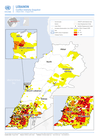
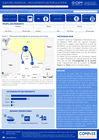
Country: Lebanon Source: UN Office for the Coordination of Humanitarian Affairs Please refer to the attached file. HIGHLIGHTS At least 4,333 deaths and 12,250 injuries recorded due to hostilities since 2 March, with 353 people killed and 249 injured since the 19 June ceasefire announcement, according to the Ministry of Public Health. 821,077 people reported returning to their areas of origin, while 360,132 people remain displaced, as of 30 July. As of 3 August, 26,300 Internally Displaced Persons (>53% women and girls) remainin 247 collective shelters. UXO incidents reported on 2 and 3 August, highlighting significant risks to civilians and humanitarian personnel operating in conflict-affected areas. Water access severely affected for 700,000 people due to conflict-related damage to water and electricity infrastructure in South and Nabatieh governorates from 2024-2026. SITUATION OVERVIEW Lebanon continues to face a severe humanitarian and protection crisis. Confronted with ongoing hostilities, protracted displacement, and attempts to return to homes and villages that have been heavily damaged or destroyed, affected communities across the country face heightened protection risks and sustained humanitarian needs. Reports of daily airstrikes, demolitions, shelling, and other security incidents persisted during the reporting period (31 July-3 August) across Bint Jbeil, Marjaayoun, Nabatieh, and Hasbaya districts in Nabatieh Governorate, as well as Tyre district inSouth Governorate. During the reporting period, two incidents involving unexploded ordnance (UXO) were reported: the first on 2 August in Kafra, Bint Jbeil District (Nabatieh Governorate), where Lebanese Armed Forces (LAF) were escorting civilians in the area, and the second on 3 August in Tebna, Saida District (South Governorate). As population returns increase to heavily conflict-affected areas, the risk of exposure to UXO is increased. The destruction of homes, agricultural land, and civilian infrastructure continued in southern Lebanon during the reporting period, undermining the safety, sustainability, and dignity of returns, while increasing humanitarian needs related to access to essential services such as water, healthcare and education, as well as shelter, protection and livelihoods. The Ministry of Public Health reported 4,333 people killed (including 392 women and 253 children) and 12,250 injured (1,452 women and 1,037 children) as of 2 August. Since the latest ceasefire announcement on 19 June, 353 people have been killed and 249 injured. Since 2 March, 135 health care professionals have been killed while on duty and 410 injured. Displacement levels remain high nationwide, although the number of internally displaced persons (IDPs) continues to decrease at a slower pace. As of 30 July, 360,132 people remain displaced across Lebanon, according to the Displacement Tracking Matrix (DTM), representing a 4 per cent decrease from 22 July. While the number of IDPs declined in most districts, increases in IDP figures were recorded in several districts from the week before the latest DTM, including in Nabatieh by 3,200, Bint Jbeil by 1,560 (Nabatieh Governorate), Tyre by 1,100 (South Governorate), Baalbek by 1,130, and Hermel by 123 (Baalbek El Hermel Governorate). The increase in IDP caseloads, primarily in South and Nabatieh governorates, highlights the continued movement of displaced people closer to their areas of origin without fully returning. This consistent trend since the ceasefire announcement underscores the persistent access, security, infrastructure, and service-related challenges in and around the IDF-declared military area, where many communities remain unable to return safely and sustainably. People living in collective shelters face challenging conditions and diminishing coping capacities. Approximately 26,300 people remain accommodated in 247 collective shelters across Lebanon (DRM) as of 3 August. Sustained basic services are required in these shelters, which face challenges due to shortages of fuel to sustain electricity supply and water pumping, heightening risks related to health, hygiene, and safety. Cash assistance remains a priority stated by those in collective shelters to enable them to meet essential food, healthcare, and hygiene needs. As shelter consolidation efforts continue, some IDPs have reported receiving insufficient information about alternative accommodation options or inadequate notice of shelter closures. This contributes to protection risks, including secondary or involuntary displacement, loss of access to assistance and services, and increased psychosocial distress. Return movements continue, though security, access, and service-related challenges remain barriers for many. 821,077 people had begun the return to their areas of origin as of 30 July, representing a 9 per cent increase in the comparable figure from the previous week (22 July). Despite continued return movements, the number of people present within the IDF-declared military zone remain unchanged according to DRM, as widespread destruction of housing and infrastructure, movement restrictions, ongoing military activities, and strained or non-functional health, water, and electricity hindered returns. Cash, access to health care, restoration of essential services, shelter interventions, and emergency livelihood support remain critical humanitarian priorities for returning communities. Conflict-related damage to water and electricity infrastructure severely limits water access for more than 700,000 people. A preliminary assessment conducted by the South Lebanon Water Establishment (SLWE) identified widespread damage and destruction to water infrastructure across the South and Nabatieh governorates as of July 2026. Between 2024 and 2026, approximately 175 water reservoirs, 16 pumping stations, 124 boreholes, nine springs, and 85 generators sustained conflict-related damage. The assessment also identified contamination of water sources from explosive remnants, heavy metals, and other hazardous substances as major public health and environmental concerns. As a result of the extensive damage and destruction of water and electricity infrastructure, more than 700,000 people face reduced access to safe drinking water, contamination risks to food and water supplies, heightened health and hygiene concerns, and agricultural losses. Direct and indirect losses were estimated to exceed $550 million. Emergency interventions to restore minimum water services and prevent further deterioration of humanitarian conditions remain critical. Protection needs remain acute in Lebanon, with ongoing risks affecting communities in prolonged displacement, those returning to conflict-affected areas, and host communities. Protection risks remain high, particularly for conflict-affected women, children, older persons, and persons with disabilities. Among those who remain displaced, especially in collective shelters and vulnerable informal settlements, overcrowding, damaged housing, lack of privacy, gender-based violence risks, restricted access to essential services, documentation challenges, and financial constraints are increasing vulnerability and

Lebanon: Flash Update #48 – Escalation of hostilities in Lebanon (as of 3 August 2026) Read More »

dr congo: rd congo : situation humanitaire dans la province du sud kivu – rapport de situation #7, 24 juillet 2026

DR Congo: RD Congo : Situation humanitaire dans la province du Sud-Kivu – rapport de situation #7, 24 juillet 2026

Country: Democratic Republic of the Congo Source: UN Office for the Coordination of Humanitarian Affairs Please refer to the attached file. Faits majeurs Des affrontements armés se sont intensifiés dans les hauts plateaux de Fizi et Mwenga provoquant des nouveaux déplacements de population, l’accroissement des besoins et davantage des contraintes d’accès humanitaire. Près de 60 000 personnes bénéficient d’un appui à la production agricole d’urgence dans la zone de santé de Minova, en territoire de Kalehe. CHIFFRES CLÉS 1,01 million de personnes déplacées internes au 30 juin 2026 1,16 million de personnes retournées au 30 juin 2026 600 000 personnes ont bénéficié d’un appui à la production agricole d’urgence dans le territoire de Kalehe APERÇU DE LA SITUATION Territoire de Fizi En juin 2026, les affrontements se sont intensifiés sur les Hauts Plateaux du territoire de Fizi, notamment dans la zone de santé (ZS) de Minembwe. Selon des sources locales, les combats ont fait des victimes civiles, détruit des infrastructures essentielles et provoqué de nouveaux déplacements. Le 10 juin, La ZS de Nundu a également accueilli plus de 8 500 personnes ayant fui les violences dans les villages de Mikenge et Bilamboli dans le territoire de Mwenga. La détérioration de la sécurité a fortement restreint l’accès humanitaire, privant durablement les populations déplacées, retournées et hôtes de services essentiels. Les prix des denrées alimentaires déjà intenables ont continué à flamber, aggravant la vulnérabilité de la population.Territoire de Kalehe Les combats incessants sur les Hauts Plateaux de Ziralo ont provoqué le déplacement de plus de 43 800 personnes vers les ZS de Kalehe et de Minova au cours du mois de juin 2026, selon des alertes humanitaires. Ces nouveaux arrivants ont considérablement aggravé des besoins humanitaires déjà critiques sur place.Territoire Mwenga En juin, des combats se sont intensifiés dans les Hauts Plateaux d’Itombwe, notamment à Mikenge et dans les localités de Ntondo, Lurhala, Kashadu et Kasihe. Le 21 et le 22 juin, des violences armées ont causé des pertes civiles, détruit des infrastructures et des habitations, et entraîné le déplacement de plus de 3 100 personnes vers plusieurs villages de la ZS de Mwana dont Kakwende et Mulambi, selon des sources locales. La dégradation sécuritaire a également fortement limité l’accès humanitaire dans plusieurs zones à forts besoins humanitaires.

DR Congo: RD Congo : Situation humanitaire dans la province du Sud-Kivu – rapport de situation #7, 24 juillet 2026 Read More »