Uncategorized

dr congo: ebola outbreak, drc and region, situation report #11, august 6, 2026

DR Congo: Ebola Outbreak, DRC and Region, Situation Report #11, August 6, 2026

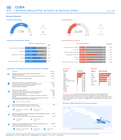
Country: Democratic Republic of the Congo Source: International Medical Corps Please refer to the attached file. FAST FACTS On May 15, the DRC declared an outbreak of Ebola virus disease (EVD), later confirmed to be caused by the Bundibugyo strain. As of August 5, 3,973 confirmed EVD cases and 1,801 confirmed EVD deaths had been reported in the DRC, with 20 confirmed cases and two confirmed deaths in Uganda. In the DRC, the outbreak remains centered in Ituri province, but cases have also been confirmed in Haut-Uele, North Kivu, South Kivu and Tshopo provinces. In Uganda, reported cases remain linked to transmission originating in the DRC. No EVD cases have been confirmed in South Sudan, but risk of an outbreak remains high due to transient populations and porous borders with the DRC. OUR RESPONSE Across the region, our teams are providing case management, infection prevention and control, screening and triage, risk communication and community engagement, training and preparedness planning. We are supporting 159 facilities in the screening, identification and treatment of EVD. Our supported sites have conducted 305,504 EVD screenings and provided treatment to 988 patients, including 296 confirmed cases. We have so far trained 2,680 people in the DRC on EVD case management, response and transmission prevention. With the support of the US Department of State, DG ECHO and other donors, International Medical Corps teams are actively responding to the outbreak across the region and collaborating closely with ministries of health, key actors and response partners. International Medical Corps has used a hub-and-spoke model since the outbreak was declared to provide case-management support at designated treatment and transit facilities, strengthen IPC in referring health facilities, conduct screening and triage, support RCCE in surrounding communities and train health workers on EVD response protocols. We currently are operating four Ebola Treatment Centers and four Ebola Transit Centers in the DRC, with a combined total of more than 200 beds. In Uganda, we are working with a local partner to provide screening, preparedness, risk communications and training services. In South Sudan, where the risk of cross-border transmission remains high, International Medical Corps continues to operate two infectious diseases units (IDUs) in Juba and Nimule to ensure that suspected cases are safely isolated, managed and supported while awaiting laboratory confirmation. We are providing extensive training, and are building a third IDU as well as four holding stations integrated within selected health facilities that will provide dedicated spaces for triage, temporary isolation and infection-prevention measures.

DR Congo: Ebola Outbreak, DRC and Region, Situation Report #11, August 6, 2026 Read More »

growing up in karamoja, uganda: understanding child marriage and child labour

Growing up in Karamoja, Uganda: Understanding child marriage and child labour

Country: Uganda Source: The Freedom Fund Please refer to the attached file. Outsiders often see Karamoja only through the lens of its challenges: drought and hunger, limited access to schools and healthcare, entrenched gender inequality in a pastoralist society and decades of conflict. Karamoja is much more than its struggles. It is a region of striking cultural richness, home to multiple ethnic groups and many communities where extended family and clan networks still keep caring for children even amidst hardship. Nevertheless, any effort to address child marriage or child labour in the region must start with an understanding of what allows Karimojong families and children to survive, and even show remarkable resilience, against the odds. A new study by the AfriChild Centre and the Freedom Fund, Growing up in Karamoja, Uganda: Understanding Child Marriage and Child Labour examines the drivers, dynamics and impacts of these practices in Moroto and Napak districts, and assesses the systems meant to protect children from harm. Karamoja has Uganda’s highest absolute poverty rate (74.2%) and its most severe, recurring food crises. The latest Integrated Food Security Phase Classification analysis finds 473,000 people facing crisis levels of food insecurity and 122,100 children in need of treatment for acute malnutrition this year, one of the first links in the chain that leads to a child being married off or sent to work. Drawing on 92 children’s life stories, 12 participatory workshops with children, 12 focus group discussions with caregivers, 35 key informant interviews and a survey of 266 households, the study includes direct accounts of how children themselves experience and, increasingly, resist child marriage and child labour. Key findings Poverty and hunger are the primary drivers of child marriage and child labour. Caregivers and children alike described these practices as survival strategies when there was no safety net to fall back on. Poverty, recurrent drought, crop failure and livestock loss were described as the trigger points at which families ran out of options. As one child explained, ‘if it doesn’t rain, there will be nothing else like food to be eaten in the homes.’ In this context, marrying off a daughter for bride price or sending a child to work was frequently framed by parents and caregivers as a necessary economic strategy, despite its harm. Children themselves described the negative impact it had on their safety, health and education. Child marriage remains widely normalised, particularly for girls. It is shaped by entrenched gender norms that reinforce bride price, where cattle and other assets are transferred from the groom to the bride’s family. Marrying off a daughter was often described by caregivers as necessary for impoverished families, though some were also said to seek personal status or wealth out of it. Children consistently described child marriage as profoundly harmful, exposing girls to intimate partner violence, early pregnancy, psychological distress and lost education. A 15-year-old boy from Moroto said, ‘One [young girl] refused her husband. But her people forced her and she accepted. She went up to there and she escaped, until her people beat her and she accepted again.’ Several also said they or someone they knew had resisted arranged marriages, pushing for the right to choose their own partner or prioritise school. This is a sign of subtle but real normative shifts, even where that resistance did not succeed. Six in ten children were engaged in child labour, including arduous work in mines, quarries, markets, domestic work and agricultural or pastoralist work. Under pressure to meet household needs, children also described migrating to urban centres for work, at times under deceptive conditions encountering excessive working hours, hazardous conditions, withheld wages, physical abuse and lost access to education. Almost two-thirds of child survey participants reported frequent headaches, stomach-aches or sickness, and over half said they felt too tired to pay attention at work. Yet over half (57.9%) also said they felt proud of their work, and many showed real resilience, providing for their families, starting microenterprises or using their earnings to fund their own return to school. Those seeking help remain limited, in part because both child marriage and child labour are normalised. Child protection systems were described as hindered by under-resourcing, limited service coverage, weak institutional capacity and reliance on customary justice mechanisms that often prioritise reconciliation between families over a child’s best interests. As one 14-year-old boy from Moroto said: ‘It’s because we don’t have anyone to support us. I wanted to be supported by [caregiver] taking me back to school because I am still young and I am tired of hustling.’ As a result, children’s trust in the system was inconsistent at best. Still, there were early signs that some community members, including children themselves, are starting to challenge these practices. Recommendations Address the structural drivers of child marriage and child labour in Karamoja. Promote at-risk children’s access to education through targeted school funding, feeding programs and re-entry programs for out of school children, while addressing cultural barriers to girls’ education. Strengthen at-risk households’ livelihoods and food security, especially female-headed households, through income-generating initiatives, social protection, climate-resilient agriculture and livestock rearing. Partner with local businesses to expand vocational training, apprenticeships, start-up support and savings groups for young people. Work closely with children and community influencers to address harmful norms that sustain child marriage and child labour. Reshape community norms by documenting and scaling positive cultural practices (such as songs or storytelling),integrating child protection messages into cultural gatherings, and engaging religious and cultural leaders as change agents. Establish caregiver support groups within existing community platforms and facilitate structured community dialogue, alongside training and mentorship for child and youth-led (including survivor-led) advocacy to promote positive parenting practices. Use school and community settings to educate children on their rights, trauma-healing and safeguarding. Strengthen the child protection system’s ability to prevent and respond to child exploitation in Karamoja. Increase resourcing through expanded national, district and sub-county budget allocations, outreach to donors and private sector engagement and greater training and operational support for community-level and statutory responders. Strengthen coordination

Growing up in Karamoja, Uganda: Understanding child marriage and child labour Read More »

afghanistan education cluster: monthly education cluster meeting minutes march 2026 (02 march 2026)

Afghanistan Education Cluster: Monthly Education Cluster Meeting Minutes – March 2026 (02 March 2026)

Country: Afghanistan Sources: Education Cluster, Save the Children, UN Children’s Fund Please refer to the attached file. Meeting Agenda: Welcome and Introduction – Cluster Team National Cluster updates Ed STWG Updates IM update Q & A and AOB

Afghanistan Education Cluster: Monthly Education Cluster Meeting Minutes – March 2026 (02 March 2026) Read More »

afghanistan education cluster: monthly education cluster meeting minutes april 2026 (06 april 2026)

Afghanistan Education Cluster: Monthly Education Cluster Meeting Minutes – April 2026 (06 April 2026)

Country: Afghanistan Sources: Education Cluster, Save the Children, UN Children’s Fund Please refer to the attached file. Agenda Welcome and Introduction – Cluster Team National Cluster updates ECW CORE Planning Updates Ed STWG Updates Subnational Updates – Floods, Conflict displacement and Returnees IM update Q & A and AOB

Afghanistan Education Cluster: Monthly Education Cluster Meeting Minutes – April 2026 (06 April 2026) Read More »

afghanistan: adi working group monthly meeting minutes july 2026

Afghanistan: ADI Working Group Monthly Meeting Minutes – July 2026

Country: Afghanistan Sources: Agency Coordinating Body for Afghan Relief and Development, United Nations Population Fund Please refer to the attached file. Agenda Item Welcome, Introductions, and Review of the Meeting Agenda Herat Joint Mission and AHF Proposal Review Hotlines Survey and Community Accountability Exchanges Community Perception Monitoring and Eastern Afghanistan Flood Response Updates Partner Updates, Good Practices, and Upcoming Activities AOB and Closing Remarks

Afghanistan: ADI Working Group Monthly Meeting Minutes – July 2026 Read More »

ukraine situation: moldova: inter agency refugee education working group (rewg) terms of reference (2026)

Ukraine situation: Moldova: Inter-Agency Refugee Education Working Group (REWG) Terms of Reference (2026)

Countries: Moldova, Ukraine Source: UN High Commissioner for Refugees Please refer to the attached file. Background The war in Ukraine has had a devastating humanitarian impact on children and families from Ukraine. UNHCR estimates that as of December 2025, roughly 6.8 million people from Ukraine have been displaced to other countries and another 3.5 million are internally displaced. Moldova shares a large border with Ukraine and has traditionally had strong socio-economic ties with the country. Moldova is considered an upper middle-income country with a population of roughly 2.65 million people (2020).1 Despite strong economic growth, Moldova remains amongst the poorest countries in Europe. The GDP per capita remains around USD 4,500 annually. However, even with domestic economic challenges, the Republic of Moldova has been incredibly supportive and generous to the situation of refugees from neighboring Ukraine. Since late February 2022, Moldova has faced a large influx of refugees entering Moldova due to the conflict in Ukraine. According to the UNHCR Data Portal, between March 2022 and December 2025, a total of over 1.2 million people from Ukraine crossed the borders from Ukraine to the Republic of Moldova. 2 Many of them continued their journey to other European countries, but about 135,000 refugees remain in Moldova, of whom 42% are children. A small number of non-Ukrainian asylum seeking, and refugee children also reside in Moldova. In order to ensure a systematic, coherent, and sustainable approach to the integration of refugee children MER with the support of UNICEF and UNHCR, developed and approved the Roadmap for the Integration of Refugee Children into Schools in the Republic of Moldova on 1 April 2025. The Roadmap sets out the strategic directions for ensuring the educational inclusion of refugee children within the general education system of the Republic of Moldova. It is complemented by an expanded action plan for 2025 to 2026, which estimates the cost required to fully integrate all refugee children from Ukraine into the Moldovan education system. Despite these efforts, many families continue to choose online education under the Ukrainian curriculum for their children, resulting in low enrolment rates in Moldovan schools. The amendment of the Temporary Protection Directive adopted in March 2025 introduced, for the first time, the obligation for parents to record the educational status of their children with Regional Educational Departments, as set out in Article 17.1. Furthermore, the new Temporary Protection amendment planned for 2026 will integrate this obligation into the registration procedure for the renewal or issuance of Temporary Protection status. Based on these changes, it is expected that during 2026 the Ministry of Education and Research will be able to obtain more accurate data on the number of children studying online. Nevertheless, no system currently exists to monitor the quality of online education.

Ukraine situation: Moldova: Inter-Agency Refugee Education Working Group (REWG) Terms of Reference (2026) Read More »

middle east conflict: lebanon response situation report #9 | august 5, 2026

Middle East Conflict: Lebanon Response Situation Report #9 | August 5, 2026

Country: Lebanon Source: International Medical Corps Please refer to the attached file. FAST FACTS The number of registered displaced people In Lebanon has fallen to 360,132, with 27,200 residing in collective shelters. OUR FOOTPRINT International Medical Corps maintains a wide operational presence across the Middle East, delivering lifesaving assistance in active conflict zones and high-risk environments. OUR RESPONSE Across the region, International Medical Corps sustains integrated health, nutrition, mental health, protection, and water, sanitation and hygiene programming through mobile teams, field hospitals and fixed facilities, with established systems in place to expand rapidly as needs intensify. In Lebanon, 41 mobile medical teams have operated across 187 shelters and community sites, delivering 26,893 consultations, treating 14,446 acute cases and managing 2,870 chronic conditions. Teams have also conducted health awareness sessions for 3,647 people, referred 1,550 patients to specialized care and vaccinated 480 children. Nutrition teams have screened 1,327 children and pregnant or breastfeeding women for malnutrition, while mental health teams have reached 1,864 people with psychosocial and psychological support services. In addition, teams have distributed 2,639 hygiene kits to displaced and vulnerable households and individuals. Across the Middle East region, humanitarian needs remain severe and increasingly complex. In Gaza, the ongoing crisis, repeated displacement and the widespread destruction of critical infrastructure continue to leave millions in urgent need of support across multiple sectors. In Syria, fragile institutions and political uncertainty have weakened the delivery of essential services while increasing protection concerns for vulnerable communities. Yemen faces persistently high levels of acute food insecurity, compounded by reduced access to basic care. International Medical Corps continues to adapt our operations across the region, drawing on decades of experience, trusted local partnerships and well-established emergency response systems. This enables us to deliver timely, effective and lifesaving assistance to communities affected by crisis, while remaining responsive to evolving humanitarian needs.

Middle East Conflict: Lebanon Response Situation Report #9 | August 5, 2026 Read More »

World: El Programa Mundial de Alimentos refuerza sus planes de preparación y respuesta ante la amenaza de que El Niño sumerja a decenas de millones de personas en una situación de hambre aguda

Countries: World, Chad, El Salvador, Guatemala, Mauritania, Somalia, South Sudan, Uganda Source: World Food Programme Los últimos análisis indican que las crisis provocadas por el cambio climático podrían agravar significativamente la inseguridad alimentaria en 45 países ROMA – Un análisis del Programa Mundial de Alimentos de las Naciones Unidas (WFP por sus siglas en inglés) revela que el fenómeno meteorológico de El Niño, que se está intensificando, agravará significativamente la inseguridad alimentaria en algunos de los países más vulnerables del mundo hasta 2027. La agencia está intensificando sus esfuerzos de preparación y respuesta, ya que los efectos de El Niño ya están afectando a los más vulnerables, que se encuentran en primera línea frente al hambre. «El Niño supone una amenaza enorme para la seguridad alimentaria de millones de personas que ya se encuentran en situación de vulnerabilidad», afirmó Carl Skau, director ejecutivo en funciones de WFP. «Cuanto antes ayudemos a las familias a prepararse para estas crisis climáticas, mayor será nuestra capacidad para salvar vidas y proteger los medios de subsistencia. Las inundaciones y sequías graves pueden hacer que las comunidades pasen rápidamente de una situación de adaptación a una de crisis. WFP ya está intensificando sus esfuerzos de respuesta temprana en ocho países, y estamos preparados para hacer aún más». Se prevé que El Niño alcance su punto álgido entre septiembre y diciembre de 2026, pero en muchos lugares los efectos se dejarán sentir a lo largo de 2027, debido a las repercusiones en los futuros ciclos de cosecha. La sequía, las inundaciones y las temperaturas extremas ya están poniendo en riesgo a las comunidades. WFP y sus socios están tomando medidas preventivas desde ahora, preparándose para las inundaciones, las sequías y las tormentas antes de que se produzcan, con el fin de reducir las necesidades humanitarias. En estrecha colaboración con la FAO, la OCHA y otros socios, WFP cuenta con planes de acción anticipatoria activos en más de 50 países, está apoyando a los gobiernos en sus preparativos y ayudando a las comunidades a reducir los riesgos. Desde mayo, WFP ha puesto en marcha planes de acción anticipatoria en Sudán del Sur, Chad, Mauritania, Uganda, Guatemala y El Salvador, proporcionando más de 14 millones de dólares en respuestas vitales para ayudar a medio millón de personas. Esto incluye ampliar sus mecanismos de financiación preacordados, como los seguros contra riesgos de desastres, los créditos y los pagos digitales, para disponer de más fondos a un menor coste. Estas iniciativas ayudan a las comunidades y a los gobiernos a prepararse y a hacer frente a crisis repentinas, al tiempo que reducen las necesidades humanitarias futuras. De hecho, la experiencia de anteriores episodios de El Niño ha demostrado que cada dólar estadounidense invertido en programas preventivos puede suponer un ahorro de entre 3 y 7 dólares estadounidenses en pérdidas evitadas y costes de respuesta. ESCALA PREVISTA DEL IMPACTO DE EL NIÑO El fenómeno de El Niño de 2015-2016 afectó a la seguridad alimentaria de entre 60 y 100 millones de personas. Los primeros análisis de WFP prevén que este fenómeno de El Niño de 2026-2027 podría empujar al menos a 49 millones de personas más a una situación de inseguridad alimentaria aguda para finales de 2027. El análisis se centró en 45 países que ya se consideran en situación de inseguridad alimentaria y en los que El Niño influirá de manera significativa en los patrones de precipitaciones, las temperaturas y la aparición de inundaciones y sequías. En el conjunto de estos países, el número total de personas en situación de inseguridad alimentaria aguda (familias que no pueden satisfacer sus necesidades alimentarias diarias) aumentaría de aproximadamente 225 millones a 274 millones: un incrementode aproximadamente el 22 por ciento. Se prevé que los mayores impactos se produzcan en algunas zonas de América Central y África meridional, aunque también se anticipan efectos significativos en África oriental y en el sur y sudeste de Asia. WFP prevé que los países que ya se enfrentan a la pobreza, los conflictos, la inestabilidad económica y fenómenos meteorológicos extremos recurrentes serán probablemente los más afectados por El Niño, y que su impacto no se distribuirá de manera uniforme. Algunos países ya están registrando precipitaciones por debajo de la media, inundaciones y temperaturas inusualmente altas, mientras que se prevé que otros se enfrenten a un empeoramiento de las condiciones durante las próximas temporadas de siembra y cosecha. Entre las principales conclusiones del informe figuran las siguientes: América Latina y el Caribe podrían registrar uno de los aumentos más pronunciados de la inseguridad alimentaria, con más de 16 millones de personas afectadas. En concreto, se prevé que América Central registre el mayor incremento proporcional (83,1 %) de todas las zonas analizadas. África Oriental y Meridional se enfrentan a riesgos considerables, sobre todo en aquellas zonas donde las próximas estaciones lluviosas son fundamentales para la producción alimentaria. Más de 18 millones de personas podrían ver cómo se deteriora su seguridad alimentaria, lo que supone un aumento del 26 %. Los países del sur de África están especialmente expuestos, ya que muchos hogares dependen de la agricultura de subsistencia de secano. Asia y el Pacífico podrían sufrir repercusiones significativas en varios países ya vulnerables, con unos 8,2 millones de personas más que se enfrentarían a una inseguridad alimentaria aguda. África Occidental y Central también están en riesgo, y se prevé que la inseguridad alimentaria aumente un 12 %, lo que afectará a casi 6 millones de personas más. WFP y la Organización de las Naciones Unidas para la Alimentación y la Agricultura (FAO) ya han hecho un llamamiento para que se incremente el apoyo con el fin de ayudar a las comunidades en riesgo a prepararse para El Niño, con el objetivo de proteger vidas, medios de subsistencia y seguridad alimentaria antes de que las emergencias se agraven. Nota para los editores: Metodología y antecedentes: Este ejercicio inicial de modelización abarca 45 países que son los más vulnerables a los efectos negativos de El Niño y en los que se

World: El Programa Mundial de Alimentos refuerza sus planes de preparación y respuesta ante la amenaza de que El Niño sumerja a decenas de millones de personas en una situación de hambre aguda Read More »