Uncategorized

vanuatu dengue outbreak situation report #9 (south west efate, shefa province)

Vanuatu Dengue Outbreak Situation Report #9 (South-West Efate, Shefa Province)

Country: Vanuatu Source: Pacific Community Please refer to the attached file. Key highlights: Nine new laboratory-confirmed dengue cases were reported in EW32, bringing the cumulative total to 76 confirmed cases. Weekly case counts have remained above the outbreak threshold since EW24, indicating ongoing community transmission. A total of 12 dengue-related hospitalisations (16%) have been reported; all patients have recovered and been discharged. No severe dengue cases or dengue-related deaths have been reported to date. DENV-1 remains the confirmed circulating serotype. Cases continue to be reported across multiple Area Councils on Efate, with the highest proportions in Erakor, Pango, Eratap, and Port Vila. Response activities, including enhanced surveillance, case investigations, vector control, risk communication, and community engagement, are ongoing

Vanuatu Dengue Outbreak Situation Report #9 (South-West Efate, Shefa Province) Read More »

sudan: qatar charity launches cochlear implant program for children in khartoum

Sudan: Qatar Charity Launches Cochlear Implant Program for Children in Khartoum

Country: Sudan Source: Qatar Charity Please refer to the attached file. Qatar Charity has launched a cochlear implant program for children at Doha Hospital in Khartoum, marking the resumption of this specialized service in Sudan for the first time since the outbreak of the war. The launch ceremony was attended by Sudan’s Federal Minister of Health, the Governor of Khartoum State, and the Ambassador of the State of Qatar to Sudan, alongside health and humanitarian officials. Restoring Specialized Care Sudan’s Federal Minister of Health, Dr. Haitham Mohamed Ibrahim, said the restoration of cochlear implant services represents an important milestone in rebuilding specialized healthcare in Khartoum. “Restoring cochlear implant services in Sudan is not an ordinary event, but a major achievement and a milestone in the return of specialized services in Khartoum,” he said. Dr. Ibrahim expressed appreciation to donors in Qatar for their continued support, noting that cochlear implant services in Sudan were first introduced with Qatari assistance. He said the resumption of the service reflects renewed support for Sudan’s health sector at a critical time. Khartoum Governor Ahmed Osman Hamza thanked the State of Qatar, its government and people, and supporting organizations for their assistance to Khartoum State and Sudan more broadly. He said the program will provide an important service for families in need of specialized hearing care. Qatar-Supported Medical Programs Qatar’s Ambassador to Sudan, H.E. Mohammed Ibrahim Al Sada, said the program reflects Qatar’s continued commitment to supporting the Sudanese people. He noted that Qatar-backed medical campaigns and camps have been launched in several Sudanese states, including initiatives in ophthalmology and urology, with further programs planned in coordination with the Federal Ministry of Health. Dr. Abdul Majeed Al Humaidi, Qatar Charity’s international programs and development expert, said the initiative aims to help children access sound, communication, education, and social integration. “We are certain that investing in children’s health is an investment in the future of an entire nation,”. Ten Surgeries Planned Amid High Demand Dr. Ibrahim Ali Omar, Acting Director of Doha Specialized Hospital, said 300 children had applied for electronic cochlear implant surgery, while 10 operations are planned under the program. He said the figures underscore the need for additional support to expand access for children for whom hearing aids are no longer sufficient, particularly as many families cannot afford the high cost of the procedure. The cochlear implant program builds on Qatar Charity’s recent specialized health initiatives in Sudan. These include four eye-care and surgery camps that examined 6,000 people with visual impairments and performed 600 operations in cooperation with Makkah Hospital in Port Sudan, Sennar, Wad Madani, and River Nile State. Qatar Charity also held a medical camp for children with congenital heart conditions at Madani Heart Center, where 60 procedures were performed through cardiac catheterization and open-heart surgery. In addition, it has supplied hospitals with medical equipment and materials, including kidney dialysis machines, laboratory equipment, intensive care devices, and neonatal incubators, with support from donors in Qatar. Through these interventions, Qatar Charity continues to support access to essential and specialized healthcare services for vulnerable communities in Sudan, in coordination with local authorities and health partners.

Sudan: Qatar Charity Launches Cochlear Implant Program for Children in Khartoum Read More »

wfp armenia country brief, august 2026 (reporting period: july 2026)

WFP Armenia Country Brief, August 2026 (Reporting period: July 2026)

Country: Armenia Source: World Food Programme Please refer to the attached file. IN NUMBERS USD 3 M required in the next six months (August 2026 – January 2027) KEY HIGHLIGHTS 87 schools, across five provinces are establishing agricultural facilities and installing solar stations, bringing fresh produce to school meals and generating energy savings that benefit 19,600 children. A new geomembrane reservoir in Sotk settlement and 6.2 km of pipelines, constructed with WFP support, now secure water for 154 hectares of farmland, directly benefiting around 800 residents with reliable irrigation. At the Seaside (Sevan) Startup Summit, WFP highlighted the link between water management and food security in rural areas and showcased operational work on climate change, water, and food systems. Preparations are underway for COP17 on Biodiversity, with WFP Armenia organizing side events in the Blue Zone and youth‑led sessions and workshops in the Green Zone, spotlighting the interlinkages between biodiversity, education, and food systems.

WFP Armenia Country Brief, August 2026 (Reporting period: July 2026) Read More »

venezuela (bolivarian republic of): earthquake response situation report #20 (4 to 6 august 2026)

Venezuela (Bolivarian Republic of): Earthquake Response Situation Report #20 (4 to 6 August 2026)

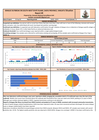
Country: Venezuela (Bolivarian Republic of) Source: International Organization for Migration Please refer to the attached file. Situation Report No. 20 provides an update on IOM’s response to the 24 June earthquakes in the Bolivarian Republic of Venezuela, covering the period from 4 to 6 August 2026. Highlights Between 4 and 6 August, IOM continued its multisectoral response in temporary accommodation sites and affected communities through interventions in shelter and camp coordination and management, health, protection, Water, Sanitation and Hygiene (WASH), information management, and Prevention of Sexual Exploitation and Abuse (PSEA). During the reporting period, the Shelter, Land and Site Coordination (SLSC) Cluster was formally activated, co-led by IOM and the International Federation of Red Cross and Red Crescent Societies (IFRC), strengthening response coordination in the affected areas. Since 3 August, IOM has expanded its response to 13 communities in Morón (Carabobo State), providing assistance to 373 households (1,232 people) affected by the earthquakes through the distribution of essential relief items and other humanitarian assistance activities. IOM-supported teams have delivered 7,641 medical consultations to 6,753 earthquake-affected people through health, mental health and psychological support services in temporary accommodation sites and affected communities. IOM Activities IOM and the Norwegian Refugee Council (NRC) continued the co-management of five temporary accommodation sites in La Guaira: Campo de Golf, Mare Abajo II, Jose Maria Vargas Sports Complex, Playa Grande and Cesar Nieves, supporting service coordination, population registration and site management activities. During the reporting period, household registration and verification activities continued across temporary accommodation sites. In Mare Abajo II, the household registration process was reinforced to support distributions scheduled for the following week. At Jose Maria Vargas Sports Complex, essential services were maintained for 760 people from 209 households, while updated registration data at Campo de Golf identified 359 people, including 10 persons with disabilities, four pregnant women and three lactating women. IOM also expanded its response to 13 communities in Morón (Carabobo), where 373 households (1,232 people) received essential relief items. In WASH, IOM continued expanding access to safe water and sanitation through monitoring of water treatment systems, water quality surveillance, expansion of sanitation infrastructure and strengthened waste management activities. Improvements continued in Mare Abajo II to enhance access to safe water and sanitation, while water and sanitation systems remained operational in Campo de Golf. IOM and its implementing partner Ven Da Tu Mano continued providing health, mental health and psychological support services through mobile teams. During the reporting period, 99 consultations were conducted in Cesar Nieves, while mobile services at Jose Maria Vargas Sports Complex reached a cumulative total of 2,678 consultations. In addition, IOM delivered training sessions to 29 humanitarian workers, including staff from HIAS and IOM mental health, psychological support and CCCM teams. Training topics included Psychological First Aid (PFA), community outreach approaches and institutional methodologies for delivering mental health and psychological support services. To date, IOM-supported interventions have provided 7,641 medical consultations to 6,753 earthquake-affected people. IOM continued registration and information management activities through the Unified Information Management System (IMS) in temporary accommodation sites. During the reporting period, Displacement Tracking Matrix (DTM) teams continued data collection in earthquake-affected communities in La Guaira and Morón (Carabobo). In addition, shelter needs assessments were conducted in Guatire (Miranda). To date, IOM has characterized 51 earthquake-affected accommodation sites. In protection, IOM continued providing legal assistance, case management, child protection activities, trafficking in persons prevention, prevention of violence against women and girls, and community information mechanisms. During the reporting period, information sessions were conducted for women, adolescents and community leaders, while case management and referrals continued for individuals requiring legal assistance, mental health support and other specialized services. At Jose Maria Vargas Sports Complex, information sessions reached 71 women. As co-lead of the Shelter, Land and Site Coordination (SLSC) Cluster together with IFRC, IOM continued supporting operational coordination, distribution planning, sectoral needs monitoring and coordination among humanitarian actors in temporary accommodation sites. In Mare Abajo II, coordination efforts focused on preparing distributions planned for the following week, including household registration follow-up and logistical planning. In PSEA, IOM conducted awareness-raising activities and distributed information materials to 24 community leaders in Campo de Golf and Cesar Nieves. In addition, refresher sessions were delivered to 25 humanitarian workers to reinforce understanding of standards of conduct, free-of-charge assistance and reporting mechanisms. IOM Planned Response IOM will continue strengthening infrastructure, service delivery, WASH interventions, shelter assistance and Camp Coordination and Camp Management (CCCM) activities in temporary accommodation sites. IOM will also continue providing health, mental health, psychological support and protection services while strengthening referral mechanisms, case management and access to documentation for people with specific protection needs. In addition, IOM will maintain mobility monitoring, registration activities, information management, shelter needs assessments and coordination with authorities and implementing organizations to support evidence-based response planning.

Venezuela (Bolivarian Republic of): Earthquake Response Situation Report #20 (4 to 6 August 2026) Read More »

venezuela (república bolivariana de): respuesta a terremotos reporte de situación #20 (4 al 6 de agosto 2026)

Venezuela (República Bolivariana de): Respuesta a Terremotos – Reporte de Situación #20 (4 al 6 de agosto 2026)

Country: Venezuela (Bolivarian Republic of) Source: International Organization for Migration Please refer to the attached file. El Reporte de Situación No. 20 presenta una actualización sobre la respuesta de la OIM a los terremotos del 24 de junio en la República Bolivariana de Venezuela, cubriendo el período comprendido entre el 4 y el 6 de agosto de 2026. Aspectos destacados Entre el 4 y el 6 de agosto, la OIM continuó su respuesta multisectorial en campamentos transitorios y comunidades afectadas mediante intervenciones en alojamiento y coordinación y gestión de campamentos, salud, protección, Agua, Saneamiento e Higiene (WASH), gestión de información y Prevención de la Explotación y el Abuso Sexual (PEAS). Durante el período, se formalizó la activación del Clúster de Alojamiento, Tierra y Coordinación de Sitios (SLSC, por sus siglas en inglés), coliderado por la OIM y la Federación Internacional de Sociedades de la Cruz Roja y de la Media Luna Roja (FICR), fortaleciendo la coordinación de la respuesta en las zonas afectadas. Desde el 3 de agosto, la OIM amplió su respuesta a 13 comunidades en Morón (estado Carabobo), brindando asistencia a 373 hogares (1.232 personas) afectados por los terremotos mediante la distribución de artículos esenciales y otras acciones de apoyo humanitario. A la fecha, la OIM ha distribuido 5.006 sets de cocina, 8.707 lonas plásticas, 8.026 bidones plegables, 7.018 lámparas solares, 4.217 kits de refugio para emergencias, 999 kits de higiene y 2.802 mosquiteros a familias afectadas por los terremotos. Los equipos apoyados por la OIM han realizado 7.641 consultas médicas a 6.753 personas afectadas mediante servicios de salud, salud mental y apoyo psicológico en campamentos transitorios y comunidades afectadas. Actividades de la OIM La OIM y el Consejo Noruego para Refugiados (NRC, por sus siglas en inglés) continuaron la cogestión de cinco campamentos transitorios en La Guaira: Campo de Golf, Mare Abajo II, Polideportivo José María Vargas, Playa Grande y César Nieves, apoyando la coordinación de servicios, el registro de población y la gestión operativa de los sitios. Durante el período continuaron las actividades de registro y verificación de hogares en los campamentos transitorios. En Mare Abajo II se reforzó el proceso de registro de grupos familiares para apoyar las distribuciones programadas para la siguiente semana. En el Polideportivo José María Vargas se mantuvieron servicios esenciales para 760 personas pertenecientes a 209 grupos familiares, mientras que en Campo de Golf el registro actualizado identificó 359 personas, incluidas 10 personas con discapacidad, cuatro mujeres embarazadas y tres personas lactantes. Asimismo, la OIM amplió su respuesta a 13 comunidades en Morón (Carabobo), donde se asistió a 373 hogares (1.232 personas) mediante distribuciones de artículos esenciales. A la fecha, la OIM ha entregado 5.006 sets de cocina, 8.707 lonas plásticas, 8.026 bidones plegables, 7.018 lámparas solares, 4.217 kits de refugio para emergencias, 999 kits de higiene y 2.802 mosquiteros a familias afectadas por los terremotos. En WASH, la OIM continuó ampliando el acceso a agua segura y saneamiento mediante el seguimiento a la operación de sistemas de potabilización, monitoreo de calidad del agua, ampliación de infraestructura sanitaria y fortalecimiento de actividades de gestión de residuos. En Mare Abajo II continuaron las mejoras para ampliar el acceso a agua segura y saneamiento, mientras que en Campo de Golf permanecieron operativos los sistemas de agua y saneamiento. A la fecha, la OIM ha distribuido 8.026 bidones plegables de 10 litros y 999 kits de higiene. La OIM y su socio implementador Ven Da Tu Mano continuaron prestando servicios de salud, salud mental y apoyo psicológico mediante equipos móviles. Durante el período se realizaron 99 consultas en César Nieves y las jornadas móviles en el Polideportivo José María Vargas alcanzaron un acumulado de 2.678 consultas. Asimismo, la OIM impartió capacitaciones dirigidas a 29 trabajadores humanitarios, incluyendo personal de HIAS y de los equipos de salud mental, apoyo psicológico y CCCM de la OIM, abordando Primeros Auxilios Psicológicos (PAP), abordaje comunitario y metodologías institucionales para la prestación de servicios de salud mental y apoyo psicológico. A la fecha, las intervenciones apoyadas por la OIM han permitido realizar 7.641 consultas médicas a 6.753 personas afectadas. La OIM continuó las actividades de registro y gestión de información mediante el Sistema Unificado de Gestión de Información (IMS) en los campamentos transitorios. Durante el período, equipos de la Matriz de Seguimiento de Desplazamiento (DTM, por sus siglas en inglés) continuaron el levantamiento de información en comunidades afectadas por los terremotos en La Guaira y Morón (Carabobo). Asimismo, se realizaron evaluaciones de necesidades de alojamiento en Guatire (Miranda). A la fecha, la OIM ha caracterizado 51 alojamientos afectados por los terremotos. En protección, la OIM continuó brindando asistencia legal, gestión de casos, actividades de protección infantil, prevención de la trata de personas, prevención de la violencia contra mujeres y niñas y mecanismos de información comunitaria. Durante el período se realizaron sesiones informativas dirigidas a mujeres, adolescentes y lideresas comunitarias, mientras continuó la atención y derivación de casos que requirieron asistencia legal, salud mental y otros servicios especializados. En el Polideportivo José María Vargas, las sesiones informativas alcanzaron a 71 mujeres. Como colíder del Grupo de Trabajo de Infraestructura y Alojamientos Temporales junto con ACNUR, la OIM continuó apoyando la coordinación operativa, la planificación de distribuciones, el seguimiento de necesidades sectoriales y la articulación entre actores humanitarios en los campamentos transitorios. En Mare Abajo II se coordinó la preparación de distribuciones previstas para la siguiente semana, incluyendo el seguimiento al registro de hogares y la organización logística de la asistencia. En PEAS, la OIM realizó actividades de sensibilización y distribución de materiales informativos con 24 lideresas comunitarias en Campo de Golf y César Nieves. Asimismo, desarrolló sesiones de refrescamiento con 25 trabajadores humanitarios para reforzar la comprensión de los estándares de conducta, la gratuidad de la asistencia y los mecanismos de denuncia. Respuesta Prevista de la OIM La OIM continuará fortaleciendo la infraestructura, la prestación de servicios, las intervenciones WASH, el apoyo en alojamiento y las actividades de Coordinación y Gestión de Campamentos (CCCM) en los campamentos transitorios. La

Venezuela (República Bolivariana de): Respuesta a Terremotos – Reporte de Situación #20 (4 al 6 de agosto 2026) Read More »

earthquakes in venezuela: situation report #32 (07 august 2026, time: 02:00 pm)

Earthquakes in Venezuela: Situation Report #32 (07 August 2026, Time: 02:00 pm)

Country: Venezuela (Bolivarian Republic of) Source: UN Office for the Coordination of Humanitarian Affairs Please refer to the attached file. Situation Report No. 32Earthquakes in Venezuela07 August 2026Time: 2:00 pm Highlights Nearly 212,000 people affected by the earthquakes have accessed humanitarian assistance and essential services through a coordinated multi-sector response involving humanitarian organizations, United Nations agencies, communities, and national and local authorities. As of 03 August, authorities reported 6,125 deaths and 60,992 people that received care at hospitals, and 16,740 injuries as a result of the earthquakes. The United Nations system and its partner organizations continue scaling up the multisectoral response to the emergency to address the needs of 1.3 million people affected by the earthquakes over the next six months. Situation overview Venezuela continues to face the consequences of the two major earthquakes (magnitudes 7.2 and 7.5) that struck the north-central region of the country on 24 June at 18:00 local time, causing significant humanitarian impacts and damage to infrastructure. The first earthquake, measuring 7.2, was centered along the San Felipe–Yumare–Montalbán axis (Yaracuy/Carabobo). According to a recent update from the United States Geological Survey (USGS), the second earthquake, measuring 7.5, had its epicenter 17 kilometers west of Catia La Mar, off the coast of La Guaira State. As of 03 August, authorities reported 6,125 deaths and 16,740 injuries resulting from the earthquakes. They also reported that 60,992 people received care at hospitals and 43,679 homes were evaluated, out of which 6,433 are at high risk. According to national authorities, 16,51% of the total rubble has been cleared. A preliminary assessment by the United Nations Office for Disaster Risk Reduction (UNDRR) estimates direct damage to housing and infrastructure at approximately US$37 billion, while preliminary estimates from UNDP place direct physical damages at US$6.7 billion, equivalent to 6 per cent of GDP. The government response continues to focus on assisting affected populations and managing temporary displacement sites. According to the latest report given by authorities on 26 July, 107 temporary camps remain operational, with a capacity for 28,223 people and a current occupancy of 24,477 people. Of those accommodated, 12,752 people are in La Guaira, 9,092 in the Distrito Capital, 1,958 in Miranda, and 675 in Aragua. More than one month after the earthquakes, the humanitarian response continues to expand across the affected states. As of 06 August, nearly 212,000 people had access to essential services and humanitarian assistance through the joint efforts of communities, humanitarian organizations, United Nations entities, donor partners, and national and local authorities. Note The report will be published on a weekly basis. We thank partner organizations, United Nations entities and donors for their valuable contributions, and encourage them to continue reporting their earthquake response activities through the 345W platform. For more information on reporting and the use of the tool, please refer to the presentation: 345W Preparedness and Response

Earthquakes in Venezuela: Situation Report #32 (07 August 2026, Time: 02:00 pm) Read More »

terremotos en venezuela: reporte de situación #32 (07 de agosto de 2026, hora: 02:00 pm)

Terremotos en Venezuela: Reporte de situación #32 (07 de agosto de 2026, Hora: 02:00 pm)

Country: Venezuela (Bolivarian Republic of) Source: UN Office for the Coordination of Humanitarian Affairs Please refer to the attached file. Reporte de situación N.º 32Terremotos en Venezuela07 de agosto de 2026Hora: 2:00 pm Destacados Cerca de 212.000 personas afectadas por los terremotos (54% mujeres y niñas) han accedido a asistencia humanitaria y servicios esenciales mediante una respuesta multisectorial coordinada entre organizaciones humanitarias, entidades de las Naciones Unidas, comunidades y autoridades nacionales y locales. Hasta el 03 de agosto, las autoridades reportaron 6.125 personas fallecidas, 60.992 personas atendidas en hospitales y 16.740 heridas a causa de los terremotos. El Sistema de las Naciones Unidas y sus organizaciones socias continúan ampliando la respuesta multisectorial a la emergencia. Para atender las necesidades de 1,3 millones de personas afectadas durante lospróximos seis meses. Situación general Venezuela continúa enfrentando las consecuencias de los dos sismos de gran magnitud (7,2 y 7,5) ocurridos el 24 de junio a las 18:00 hora local en la región centro-norte del país, los cuales provocaron importantes impactos humanitarios y daños en infraestructura. El primer sismo, de magnitud 7,2, tuvo su epicentro en el eje San Felipe–Yumare–Montalbán (Yaracuy/Carabobo). De acuerdo con una actualización reciente del Servicio Geológico de Estados Unidos (USGS), el segundo sismo, de magnitud 7,5, tuvo su epicentro a 17 kilómetros al oeste de Catia La Mar, frente a las costas del estado La Guaira. Hasta el 03 de agosto, las autoridades reportaron 6.125 personas fallecidas y 16.740 heridas a causa de los terremotos. Asimismo, informaron que 60.992 personas han sido atendidas en hospitales y 43.679 viviendas han sido evaluadas, de las cuales 6.433 son de alto riesgo. Según las autoridades nacionales, 16,51% del total de escombros han sido recogidos. Una evaluación preliminar de la Oficina de las Naciones Unidas para la Reducción del Riesgo de Desastres (UNDRR) estima daños directos a viviendas e infraestructura por aproximadamente US$37.000 millones, mientras que estimaciones preliminares del PNUD sitúan los daños físicos directos en US$6.700 millones, equivalentes al 6% del PIB. La respuesta gubernamental continúa centrada en la atención de la población afectada y la gestión de los campamentos transitorios. Según el último informe presentado por las autoridades el 26 de julio, permanecen habilitados 107 campamentos transitorios, con capacidad para 28.223 personas y una ocupación de 24.477 personas. Del total de la población alojada, 12.752 personas se encuentran en La Guaira, 9.092 en el Distrito Capital, 1.958 en Miranda y 675 en Aragua. Más de un mes después de los terremotos, la respuesta humanitaria continúa ampliándose en los estados afectados. Al 6 de agosto, cerca de 212.000 personas (54% mujeres y niñas) accedieron a servicios esenciales y asistencia humanitaria a través del trabajo conjunto de comunidades, organizaciones humanitarias, entidades de las Naciones Unidas, socios donantes y autoridades. Nota El informe se publicará de manera semanal. Agradecemos a las organizaciones socias, entidades de las Naciones Unidas y donantes por sus valiosos aportes, y les invitamos a continuar reportando sus actividades de respuesta a la emergencia ocasionada por los terremotos a través de la plataforma 345W. Para más detalles sobre cómo reportar y la herramienta, puede consultar la presentación: 345W Preparación y respuesta.

Terremotos en Venezuela: Reporte de situación #32 (07 de agosto de 2026, Hora: 02:00 pm) Read More »