oPt: Gaza DWG Health & Safety SOP – Interim Guidance
Country: occupied Palestinian territory Source: UN Environment Programme Please refer to the attached file.
oPt: Gaza DWG Health & Safety SOP – Interim Guidance Read More »

Country: occupied Palestinian territory Source: UN Environment Programme Please refer to the attached file.
oPt: Gaza DWG Health & Safety SOP – Interim Guidance Read More »
Country: Mozambique Source: UN Office for the Coordination of Humanitarian Affairs Please refer to the attached files. Statement by the Humanitarian Coordinator for Mozambique, Dr. Catherine Sozi World Humanitarian Day 2026 — Protect humanitarian action, #ActForHumanity Maputo, 19 August 2026 — On World Humanitarian Day, the United Nations pays tribute to the humanitarian workers who, every day, stand alongside people affected by crises. Across Mozambique, humanitarian workers are on the ground, supporting people affected by conflict, natural disasters, disease outbreaks and other emergencies. They deliver food, healthcare, clean water, shelter, protection, and other life-saving assistance, often in difficult and dangerous places. Humanitarian workers do not work alone. Local organizations, community leaders, volunteers, and affected communities themselves are essential to humanitarian response. Together, they help ensure that assistance reaches the people who need it most. Yet, too often, humanitarian workers face violence, threats, and attacks. When humanitarian action is blocked or attacked, it is the people waiting for help who suffer most; children may go without food, medicine or a safe place to learn.; pregnant women may be unable to reach lifesaving healthcare. Families and communities may be left without clean water, shelter or protection — and without the support they need to survive and rebuild their lives and livelihoods. Humanity is a shared responsibility. We all have a role to play in creating a world where helping people in crises is protected, respected, and supported. On this World Humanitarian Day, the message is simple: humanitarians are not targets. Humanitarian principles and international humanitarian law are not just words on paper. They exist to protect people caught up in crises and to ensure that humanitarian assistance can reach those who need it — regardless of who they are or where they come from. This World Humanitarian Day, from Rovuma to Maputo, heed the call to stand behind those who stand with others. Protect the people who help.Protect the people who need help.Protect humanity. Everyone has a role to play: governments, communities, humanitarian organizations, young people — all of us. Because humanitarian action is more than responding to crises. It is about choosing humanity — every time, everywhere.
Statement by the Humanitarian Coordinator for Mozambique for World Humanitarian Day 2026 Read More »
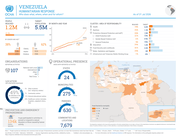
Country: Venezuela (Bolivarian Republic of) Source: UN Office for the Coordination of Humanitarian Affairs Please refer to the attached Infographic. The data presented in this document reflect activities reported by partner organizations under the Humanitarian Response Plan (HRP) as of 31 July 2026. This report does not include the humanitarian response to the earthquakes that occurred on 24 June 2026, nor the results associated with the HRP addendum announced to address needs arising from this emergency. For further information on the humanitarian community’s response to the earthquakes, please refer to: Terremotos junio 2026 | ReliefWeb Response
Country: South Sudan Source: UN Office for the Coordination of Humanitarian Affairs Please refer to the attached file. Juba, 19 August 2026 – This World Humanitarian Day, we honour the courage and commitment of humanitarian workers in South Sudan who continue to deliver life-saving assistance despite growing threats to their safety and security. Since January, 36 humanitarian staff and contractors have been killed in the line of duty, already surpassing the 31 killed throughout 2025. These are not just statistics. Behind each loss was a parent, a son or daughter, a colleague, a friend, and a member of a community. Every killing must be investigated, and those responsible held accountable. The continued loss of humanitarian personnel, overwhelmingly South Sudanese nationals, is unacceptable. The broader security environment is equally alarming. More than 450 incidents of violence against humanitarian workers and assets were reported between January and July, more than double the number recorded during the same period in 2025. Renewed conflict has also forced humanitarian organizations to relocate from some operational areas, further restricting access to people in need. This comes as around 10 million people require humanitarian assistance in South Sudan in 2026, including more than 7.5 million people facing high levels of acute food insecurity. Conflict, hunger, disease and climate shocks continue to drive needs. With the HNRP only 35 per cent funded, the response is under fiscal strain, with food assistance pipelines facing imminent disruption starting in October if resources are not secured. Despite these challenges, humanitarian organizations have stayed and delivered. Between January and June, partners reached 2.6 million of the 4.3 million people targeted. But millions remain in need, while insecurity, access restrictions and bureaucratic impediments are making it increasingly difficult to reach them. Humanitarian workers and the people they serve must never be targeted. They must be able to operate safely and reach affected communities without obstruction, harassment or politicization, in accordance with international humanitarian law. Safe, sustained and principled access must be ensured, particularly in conflict-affected areas, and must never be used as a bargaining tool. On this World Humanitarian Day, we call on the Government of South Sudan and all parties to the Revitalised Peace Agreement to uphold their obligations under international humanitarian law: protect humanitarian personnel, civilians and humanitarian assets; investigate attacks and hold perpetrators accountable; and ensure safe, sustained and unhindered humanitarian access to all people in need. The courage of humanitarian workers must be matched by a collective commitment to protect them. Their safety is essential to ensuring that life-saving assistance reaches the millions of people across South Sudan who depend on it.
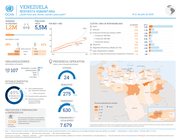
Country: Venezuela (Bolivarian Republic of) Source: UN Office for the Coordination of Humanitarian Affairs Please refer to the attached Infographic. Los datos presentados en este documento reflejan las actividades reportadas por las organizaciones socias en el marco del Plan de Respuesta Humanitaria (PRH) hasta el 31 de julio de 2026. Este informe no contempla las acciones de respuesta humanitaria implementadas tras los terremotos ocurridos el 24 de junio de 2026, ni los resultados asociados a la adenda del PRH anunciada para atender las necesidades derivadas de esta emergencia. Para obtener información adicional sobre la respuesta de la comunidad humanitaria ante estos eventos, consulte el siguiente enlace: Terremotos junio 2026 | ReliefWeb Response
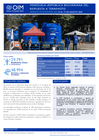
Country: Venezuela (Bolivarian Republic of) Source: International Organization for Migration Please refer to the attached file. El Reporte de Situación No. 23 presenta una actualización de la respuesta de la Organización Internacional para las Migraciones (OIM) a los terremotos del 24 de junio de 2026 en la República Bolivariana de Venezuela, correspondiente al período del 14 al 17 de agosto de 2026. Aspectos destacados Las fuertes lluvias registradas durante el período afectaron infraestructura y servicios en los campamentos transitorios César Nieves, Mare Abajo, Campo de Golf y Polideportivo José María Vargas, generando nuevas necesidades relacionadas con drenaje, rehabilitación de espacios y mitigación de inundaciones. La OIM fortaleció la coordinación y gestión de campamentos en los cuatro campamentos transitorios bajo su gestión, incluyendo la actualización de registros de beneficiarios, evaluaciones de necesidades y planificación de encuestas de hogares para fortalecer la respuesta basada en evidencia. La respuesta humanitaria continuó adaptándose a cambios en la prestación de servicios y gestión de campamentos, incluyendo ajustes en alimentación, protección, salud y apoyo comunitario para mantener la continuidad operacional. Actividades de la OIM La OIM continuó las actividades de coordinación y gestión de campamentos en Mare Abajo, Campo de Golf, Polideportivo José María Vargas y César Nieves, incluyendo actualización de registros de beneficiarios, evaluación de afectaciones tras las lluvias y coordinación de medidas de recuperación y mitigación junto con autoridades, socios humanitarios y estructuras comunitarias. En alojamiento temporal y artículos esenciales, la OIM ha entregado acumulativamente 5.887 sets de cocina, 8.907 lonas plásticas, 4.500 bidones plegables, 3.612 insumos de higiene personal, 5.000 baldes, 2.802 mosquiteros y 4.217 kits de refugio para emergencias, alcanzando a más de 15.500 personas afectadas por los terremotos. En WASH, la OIM mantuvo la producción de agua segura mediante la planta de tratamiento instalada en Campo de Golf y continuó coordinando con actores sectoriales acciones relacionadas con abastecimiento de agua, monitoreo de calidad de agua, saneamiento, drenaje e higiene. Tras las lluvias, se realizaron evaluaciones y acciones de seguimiento para abordar problemas de inundación y acumulación de agua en varios campamentos transitorios. En salud, la OIM y su socio implementador Ven Da Tu Mano continuaron prestando servicios de atención primaria de salud y salud mental mediante equipos móviles en campamentos transitorios, incluyendo consultas médicas, seguimiento de enfermedades crónicas y derivaciones para atención especializada. La OIM también continuó apoyando actividades de protección mediante orientación, gestión de casos, derivaciones a servicios especializados y coordinación con actores de protección para el seguimiento de casos prioritarios en los campamentos transitorios. Respuesta prevista de la OIM Continuar el seguimiento de las afectaciones ocasionadas por las lluvias y apoyar medidas de rehabilitación, adecuación de espacios y mitigación de riesgos en los campamentos transitorios. Mantener la actualización de registros de beneficiarios, las evaluaciones de hogares y las actividades de gestión de información para fortalecer la planificación basada en evidencia. Continuar coordinando actividades de abastecimiento de agua, saneamiento, promoción de higiene y mejoras de infraestructura junto con los actores WASH. Mantener los servicios móviles de salud y salud mental, fortaleciendo las rutas de referencia para atención especializada y seguimiento de enfermedades crónicas. Fortalecer la gestión de casos de protección, los mecanismos de derivación y los espacios técnicos de coordinación en los campamentos transitorios. Continuar integrando medidas de Prevención de la Explotación y el Abuso Sexual (PEAS) en las actividades de asistencia y coordinación humanitaria, promoviendo mecanismos seguros de denuncia y reporte.
![yemen agrometeorological update: food security and early warning information system (01 31 july 2026) [en/ar]](https://blhlfoundation.org/wp-content/uploads/2026/08/bb38a43c-02a3-41a3-81b9-1a811a8ee422-6YRE3K.png "Yemen Agrometeorological Update: Food Security and Early Warning Information System (01 - 31 July 2026) [EN/AR]")
Country: Yemen Source: Food and Agriculture Organization of the United Nations Please refer to the attached files. HIGHLIGHTS: Precipitation: Rainfall across Yemen remained generally low and erratic in July 2026, reaching its lowest level in five years. However, localized storms over the Southern Uplands triggered flash floods. Rainfall anomalies: Much of Yemen experienced below-average rainfall compared with the 30-year climatological average. Localized rainfall surpluses were recorded in Hajjah and Ibb, while meteorological drought conditions affected several parts of the country. Temperature: Coastal, eastern plateau, and desert areas remained hot, with temperatures ranging from 35°C to 40°C. These conditions increased evapotranspiration and rapidly depleted already limited soil moisture. Highland areas remained comparatively cooler, with temperatures between 15°C and 20°C. Vegetation conditions: Approximately 64% of cultivated areas remained under fair-to-good vegetation conditions, while nearly 10% experienced severe stress, particularly in the Central Highlands and Southern Uplands. Vegetation conditions remained stable across 84% of cultivated areas; 9% showed improvement, while 7% experienced deterioration, particularly in the Central Highlands. Crop conditions: Mild water stress, reflected by ASI values of 25–40%, affected mainly Al Bayda, Raymah, and Sana’a. This stress was likely driven by rainfall deficits and elevated temperatures during July 2026. Impacts on agricultural livelihoods and food security: Rainfall deficits and high temperatures increased stress on crops, livestock, and water resources. Significant areas cultivated with sorghum and millet were under watch conditions, while pasture and water availability continued to decline. At the same time, localized heavy rainfall triggered flash floods, affecting communities and agricultural livelihoods.
Country: Ukraine Source: Ukraine Cash Working Group Please refer to the attached file. The Winter Group Cash Transfers (GCT) Operational Guideline provides operational guidance for humanitarian partners implementing community-led winterization assistance in Ukraine during the 2026–2027 winter response. Developed by the Ukraine Cash Working Group, the guideline introduces two complementary GCT pathways: a rapid, building-level energy resilience package for multi-apartment buildings managed by homeowner associations (OSBBs) or other building management structures, and a classic winterization GCT package enabling formal and informal community groups to identify and implement collective solutions to priority winter-related needs. The document sets out eligibility and targeting criteria, recommended transfer values, eligible uses of funds, implementation processes, monitoring requirements, and coordination and deduplication arrangements, including complementarity with the Government of Ukraine’s SvitloDim programme. Together, the two approaches aim to address gaps that cannot be met through household-level assistance alone, strengthening access to essential services and community energy resilience during prolonged electricity, heating and water disruptions.
Ukraine: Winter Group Cash Transfers Operational Guideline Read More »
Country: Yemen Sources: CARE, Norwegian Refugee Council, Oxfam, Save the Children, Yemen Family Care Association Please refer to the attached file. EXECUTIVE SUMMARY Building Resilience through Integrated Community-based and Humanitarian Systems Transformation and Leadership (BRIGHTLY) is a 4-year FCDO-funded consortium programme in Yemen, that combines lifesaving humanitarian assistance with livelihoods assistance and efforts to strengthen social protection systems to support households to transition towards greater economic self-reliance. This consortium commissioned this study to review evidence on livelihoods and transition programming in Yemen between 2020 to 2025 to help synthesize lessons and strategies relevant to BRIGHTLY’s programming approach, and identify evidence gaps where BRIGHTLY could contribute to critical learning during its final year. Within BRIGHTLY, transition is defined as the movement of households from short-term humanitarian assistance toward either more sustainable livelihoods or longer-term social protection; however, this review focuses on transition toward more sustainable livelihoods. This report complements previous BRIGHTLY research on referral pathways and services mapping which found that such pathways were limited and not yet feasible as a reliable route into longer-term support. Overall, the evidence on transition is strongest on short-term stabilisation, particularly improvements in household food security and reduced reliance on harmful coping through cash assistance, and on the added value of coherent multi-component support that links immediate assistance with livelihoods support. Emerging evidence also suggests that transfer frequency matters, with more frequent cash payments improving food security outcomes even where the overall transfer value remains unchanged. Evidence is strongest where progress is assessed through practical household-level outcomes, particularly food consumption, income, and coping behaviour, and much weaker where assessments rely on indirect proxies, perception-based measures, or claims about longer-term sustainability. The evidence remains insufficient to determine with confidence when a transition can be considered successful, or what threshold would indicate that households have moved beyond short-term stabilisation. Rather, it is better understood as a gradual and context-dependent process through which some households may reduce reliance on repeated emergency support through livelihood strengthening, while others may continue to require periodic humanitarian or social assistance. The evidence also remains weak on the durability of livelihood gains once humanitarian assistance ends, the most effective duration and sequencing of support for different household profiles, and the conditions under which households can sustain improved food security and income through livelihoods support. Innovative livelihoods approaches remain limited, as external assistance tends to rely on familiar, well-established models. Comprehensive market and climate analyses are also uncommon, and persistent structural constraints, including frequent shocks, weak markets, high input costs, debt, climate pressures, and fragile service systems, consistently undermine potential gains. The study therefore finds a stronger evidence base on short-term stabilisation than on transition toward more sustainable livelihoods and highlights the need for differentiated learning to inform future programme design, adaptation, and policy engagement.
Yemen: Evidence Review: Pathways to Resilient Livelihoods, 2020-2025 Read More »
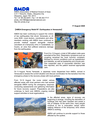
Country: Venezuela (Bolivarian Republic of) Source: Association of Medical Doctors of Asia Please refer to the attached file. AMDA has been continuing to support the victims of two earthquakes that struck Venezuela on 24 June 2026. Local doctors, coordinators and other members working with AMDA have continued to provide medical support alongside medical volunteers at a temporary clinic in Caraballeda, La Guaira, an area that suffered extensive damage from the earthquakes. From 6 to 12 August, a total of 390 patient visits were recorded at the clinic. Respiratory symptoms such as coughing remained the most common complaint, followed by chronic conditions such as hypertension and diabetes, as well as headaches and muscle pain. One suspected case of myocardial infarction was also reported, and the patient received appropriate care. On 9 August, Nurse Yamazaki, a Japanese nurse dispatched from AMDA, arrived in Venezuela to assess the current situation and discuss coordination for the transition from the emergency phase to the recovery phase with local partners. From 10-12 August, the nurse visited various affected areas with local partners who had worked alongside AMDA during the emergency response, conducting assessments and gathering information for future recovery support. Preparations are also underway to hand over AMDA’s ongoing medical support activities to local organizations. In the affected areas, signs of recovery are beginning to emerge, including the demolition of buildings that had been lopsided and posed a risk of collapse. At the same time, many people continue to live in evacuation camps within walking distance of the temporary clinic where AMDA is working. AMDA will continue to provide support to those affected by the quakes
AMDA Emergency Relief #6: Earthquakes in Venezuela – 17 August 2026 Read More »