Uncategorized

opt: wfp palestine emergency response external situation report #95, 24 august 2026 (reporting period: 1 16 august 2026)

oPt: WFP Palestine Emergency Response External Situation Report #95, 24 August 2026 (Reporting period: 1-16 August 2026)

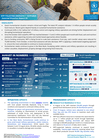
Country: occupied Palestinian territory Source: World Food Programme Please refer to the attached file. HIGHLIGHTS Gaza’s humanitarian situation remains critical and fragile. The latest IPC analysis indicates 1.4 million people remain acutely food insecure. Recent gains depend heavily on sustained humanitarian assistance. Continued shifts in the “yellow line” of military control and ongoing military operations are driving further displacement and disrupting humanitarian operations. Since the October 2025 ceasefire, WFP has reached between 1.5 and 2 million people each month with food, cash and nutrition assistance, while supporting recovery and market-based approaches where feasible. Due to funding constraints, WFP is being forced to scale back assistance: From July, cash transfer values were reduced for 75,000 families. From October, in kind food assistance will also decrease. WFP is applying a needs-based targeting approach to ensure the most vulnerable to continue to receive assistance. Humanitarian needs continue to grow in the West Bank. Escalating settler violence and military operations are resulting in civilian casualties, displacement, property damage and growing food insecurity.

oPt: WFP Palestine Emergency Response External Situation Report #95, 24 August 2026 (Reporting period: 1-16 August 2026) Read More »

opt: qatar charity supports 7,995 displaced families in gaza with essential kitchen supplies

oPt: Qatar Charity Supports 7,995 Displaced Families in Gaza with Essential Kitchen Supplies

Country: occupied Palestinian territory Source: Qatar Charity Please refer to the attached file. As displacement continues to disrupt lives across the Gaza Strip and humanitarian needs grow, Qatar Charity has completed a project providing essential kitchen supplies to 7,995 displaced families in different areas of Gaza, helping families meet a basic yet often overlooked need: the ability to prepare food and manage daily life with dignity. Funded through the generous contributions of donors in Qatar, the project is part of Qatar Charity’s ongoing humanitarian response to support families affected by the crisis and alleviate some of the hardships caused by repeated displacement and the loss of household belongings. Implemented from June 8 to early August, the project targeted families who had been forced to flee their homes multiple times, leaving many without essential household items. The distributed packages included cooking pots and pans, plates, cups, bowls, tableware and serving utensils, as well as cleaning supplies practical items that enable families to prepare meals, maintain basic household routines and cope with the difficult conditions of displacement. For families who have lost much of what once made their homes feel like home, such support can make a meaningful difference in restoring a sense of normalcy and dignity. Beneficiaries expressed their appreciation for the assistance, highlighting the importance of kitchen supplies for families who have lost much of their belongings. One beneficiary said: “After we were displaced, we lost most of our household belongings, and every day became a struggle when it came to preparing food for our children. This package has made things much easier for us and restored part of the sense of stability we had lost. Another beneficiary said: “The package came at the right time. It provided essential items that we had been without for a long time and helped us manage our daily lives better in our place of displacement. We are grateful to everyone who has extended this support to us and to other affected families in Gaza.” Reaching Families Across Gaza The project was designed to respond to the growing and geographically widespread needs of displaced families. Half of the distributed quantities were allocated to families in Gaza City and the northern Gaza Strip, while the remaining half was allocated to families in the central and southern areas, helping ensure that assistance reached displaced families across different parts of the Strip. Through this initiative, Qatar Charity continues to provide practical humanitarian assistance that addresses immediate needs while helping displaced families preserve dignity and cope with the daily realities of prolonged displacement.

oPt: Qatar Charity Supports 7,995 Displaced Families in Gaza with Essential Kitchen Supplies Read More »

qatar: continued support from qrcs for affected people in yemen [en/ar]

Qatar: Continued support from QRCS for affected people in Yemen [EN/AR]

Country: Qatar Source: Qatar Red Crescent Society Please refer to the attached files. August 22nd, 2026 ― Doha, Qatar: Qatar Red Crescent Society (QRCS) has launched a new project in Yemen to provide multifaceted life-saving health, nutrition, and cash assistance for the war-affected populations of Al-Zaydiyah and Al-Dahi districts, Al-Hudaydah Governorate. With a total funding of $1 million from the United Nations Office for the Coordination of Humanitarian Affairs’ (OCHA) Yemen Humanitarian Fund (YHF), the project serves more than 55,000 displaced and local beneficiaries, with a special focus on under-five children and pregnant/lactating women. It involves diverse activities that fall under three key categories, as follows: Health: Four health facilities will be operated (two hospitals and two health centers), with medications, medical supplies, equipment, and staff remunerations secured to ensure continued services (including primary health care, reproductive health, C-sections, emergency care, medical referrals, and mental health services). Nutrition: Targeted programs will be implemented to treat acute malnutrition among children and women, dedicated infant and child feeding centers will be created, regular community screening campaigns will be launched, and food/hygiene awareness sessions will be held, to help prevent and reduce malnutrition. Cash assistance: Direct, multi-purpose payments will be given to the most vulnerable families to help them meet their basic needs and alleviate their economic burdens, including the costs of food and access to health services. For 11 years now, the war-torn country has been facing considerable economic and humanitarian challenges, which translated into poor living conditions. According to OCHA’s Yemen Humanitarian Needs and Response Plan 2026, around 22.3 million Yemenis require humanitarian assistance and protection services, displaced people, women, and children. This underscores the importance of further humanitarian interventions to enhance access to basic services for the most vulnerable groups. ##End of Text## About Qatar Red Crescent Society (QRCS) Established in 1978, Qatar Red Crescent Society (QRCS) is Qatar’s first humanitarian and volunteering organization that aims to assist and empower vulnerable individuals and communities without partiality or discrimination. QRCS is a member of the International Red Cross and Red Crescent Movement, which consists of the International Federation of Red Cross and Red Crescent Societies (IFRC), the International Committee of the Red Cross (ICRC), and 191 National Societies. It is also a member of several GCC, Arab, and Islamic organizations, such as the Islamic Committee of International Crescent (ICIC) and the Arab Red Crescent and Red Cross Organization (ARCO). In this legally recognized capacity, QRCS has access to disaster and conflict zones, thus serving as an auxiliary to the State of Qatar in its humanitarian and social efforts — a role that distinguishes it from other local charities and NGOs. Both locally and internationally, QRCS has relief and development operations in numerous countries throughout the Middle East, Asia, Africa, Europe, and Central and South America. Its humanitarian mandates include disaster preparedness, response, recovery, and risk reduction. To mitigate the impact of disasters and improve the livelihoods of affected populations, QRCS provides medical services, food, water, shelter, and other needs of local communities. It is also active at the humanitarian diplomacy and advocacy front. With the help of a vast network of trained, committed staff and volunteers, QRCS aspires to improve the lives of vulnerable people by mobilizing the power of humanity, inspired by the seven Fundamental Principles of humanitarian action: humanity, impartiality, neutrality, independence, voluntary service, unity, and universality.

Qatar: Continued support from QRCS for affected people in Yemen [EN/AR] Read More »

gambia project highlights: building resilience against high pathogenicity avian influenza in the gambia

Gambia Project Highlights: Building resilience against high pathogenicity avian influenza in the Gambia

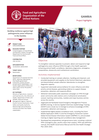
Countries: Gambia, United Kingdom of Great Britain and Northern Ireland Source: Food and Agriculture Organization of the United Nations Please refer to the attached file. Objective To strengthen national capacities to prevent, detect and respond to high pathogenicity avian influenza (HPAI) through a One Health approach, enhancing animal health surveillance, laboratory diagnostics, emergency preparedness, biosecurity and multisectoral coordination. Activities implemented • Conducted training on sample collection, handling and shipment, and provided equipment and supplies to the Central Veterinary Laboratory and decentralized sample collection laboratories to strengthen diagnostic capacity. • Supported nationwide serosurveillance for avian influenza and other priority animal diseases, generating evidence to support disease prevention, detection and response efforts. • Delivered nationwide public awareness campaigns on HPAI through seven community radio stations and a multisectoral sensitization caravan reaching communities, markets and major business centres across the country. • Organized and facilitated Good Emergency Management Practice (GEMP) training, In-Service Applied Veterinary Epidemiology Training (ISAVET) and a study tour to Senegal to enhance knowledge of HPAI prevention, detection and response. • Implemented digital disease surveillance tools, including the Event Mobile Application (EMA-i+) and the Emergency Prevention System Global Animal Disease Information System (EMPRES-i+), and provided training on digital reporting and surveillance data management. • Developed key preparedness and governance tools, including a national HPAI contingency plan, poultry value chain analysis, HPAI case definition manual, One Health Governance Manual and the One Health Strategic Plan 2026–2031.

Gambia Project Highlights: Building resilience against high pathogenicity avian influenza in the Gambia Read More »

wfp ukraine country brief, august 2026

WFP Ukraine Country Brief, August 2026

Country: Ukraine Source: World Food Programme Please refer to the attached file. IN NUMBERS 290,364 people assisted in July1 (59% female) 1,613 mt food distributed USD 7.7 M cash transferred USD 218 M six months net funding requirements (Aug 2026 – Jan 2027) KEY HIGHLIGHTS In July, WFP Acting ED accompanied the EU Deputy Secretary General for Political Affairs Olof Skoog on a field mission to Ukraine to witness frontline operations. In Dnipro, WFP-contracted warehouse was hit by multiple drone strikes and evacuated. Since 23 July, Ukrainian maritime logistics has been completely blocked, following intensification of attacks on the ports and commercial vessels. Key logistics and supply chain infrastructure continue to be heavily targeted countrywide affecting national supply chains and humanitarian operations.

WFP Ukraine Country Brief, August 2026 Read More »

wfp syria country brief, august 2026

WFP Syria Country Brief, August 2026

Country: Syrian Arab Republic Source: World Food Programme Please refer to the attached file. IN NUMBERS 682,302 people assisted in July 3,987 mt food dispatched in July USD 4.9 M cash transferred in July USD 186 M required (August 2026 – January 2027) 3.65 M returnees have arrived in Syria since December 2024 (UNHCR) KEY HIGHLIGHTS WFP Syria is at a critical turning point: funding shortfalls have forced the agency to reduce both food assistance and operational coverage by 50 percent, from 1.3 million to 650,000 people and from 14 to seven governorates despite 7.1 million people facing acute food insecurity in the country. Bread prices have risen by over 18 percent following the withdrawal of subsidy support, while reduced emergency food assistance is already increasing pressure on households and local markets, worsening community tensions and undermining social cohesion during Syria’s fragile transition. WFP urgently requires USD 200 million by the end of 2026 to restore vital food assistance to 1.3 million vulnerable people affected by food insecurity, displacement, and economic hardship. These funds would also be critical to sustain nutrition programmes, protect livelihoods and continue supporting national social protection interventions.

WFP Syria Country Brief, August 2026 Read More »

cameroon humanitarian update august 2026

Cameroon Humanitarian Update – August 2026

Country: Cameroon Source: UN Office for the Coordination of Humanitarian Affairs Please refer to the attached file. National Humanitarian Forum seeks strategic alignment as Cameroon’s humanitarian transition advances The National Humanitarian Forum took place in Yaounde on 26 May 2026, bringing together more than 140 participants from government, national and international NGOs, the United Nations, donors, technical and financial partners, and the media. The forum aimed to foster strategic alignment among humanitarian, development and government actors on the humanitarian situation, the ongoing humanitarian transition, the localization of aid, and financing and accountability issues. Opening the forum, the UN Resident Coordinator and Humanitarian Coordinator (RC/HC), Issa Sanogo said collaboration between national and local authorities, humanitarian partners and donors delivered life-saving assistance to one million people in 2025. He noted a persistent gap: only half of the 2.1 million people targeted were reached, leaving 1.1 million people without support. He linked the forum to the Humanitarian Reset, the global reform under which Cameroon is one of eight countries selected by the Inter-Agency Standing Committee (IASC) to shift toward a more localized, nationally led coordination model. The Director of Civil Protection (DPC) at the Ministry of Territorial Administration (MINAT), Angele Ndzie Ntsama, welcomed continued partner support and committed the Government to strengthening coordination, consultation and response mechanism. She called for collective reflection on the role of national and local actors, accountability to affected populations, and stronger links between humanitarian action, development and peacebuilding. Panel discussions confirmed that Area-Based Coordination (ABC) is now operational in the Far North, North-West and South-West regions at a regional level and in some divisions. Under the Civil Protection Law of 23 December 2024, MINAT/DPC holds legal responsibility for coordinating the humanitarian response. Hundreds of national NGOs are still active in the Far North, North-West and South-West coordination platforms, and the Lake Chad Basin Nexus Facility Fund, which reserves 30 per cent of its financing for local actors, has already supported two consortia in Cameroon and Chad. Recommendations from the forum called for international financing and government contributions to be presented jointly for a transparent view of resources, for responsibilities to transfer together with corresponding human, logistical and budgetary means, and for a dedicated donor meeting to align financing mechanisms behind the transition. Closing the forum, the RC/HC reiterated that the transition is not a disengagement but an accompanied, responsible transfer of responsibility, and reaffirmed the commitment of the United Nations and humanitarian partners to mobilize funding so that no vulnerable community is left without support. The Directorate of Civil Protection reaffirmed the Government’s commitment to strengthened national coordination and accountability.

Cameroon Humanitarian Update – August 2026 Read More »

sudan: goz al salam camp gbv safety audit – white nile state (june 2026)

Sudan: Goz Al Salam Camp GBV Safety Audit – White Nile State (June 2026)

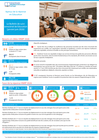
Country: Sudan Source: Gender Based Violence Area of Responsibility Please refer to the attached files. This publication presents the findings of the GBV Safety Audit conducted in Goz Al Salam Camp, Kosti Locality, White Nile State, in June 2026. The assessment examines protection and gender-based violence risks affecting displaced populations, particularly women and girls, and identifies factors influencing safety, dignity and access to essential services. It highlights interconnected concerns related to GBV and protection, shelter, WASH, health, education, site safety, access to humanitarian assistance and community participation. The Safety Audit applied the UNFPA Safety Audit methodology, using community consultations, focus group discussions, participatory safety mapping and direct observations to identify protection risks, service gaps and priority areas for humanitarian action. The findings emphasize the need for coordinated, multi-sectoral action to reduce exposure to protection risks, improve safe and equitable access to services, strengthen confidential GBV referral and reporting mechanisms, and improve the overall protective environment within the camp. The uploaded package includes the full Safety Audit Report, analytical/cluster summary, and fact sheet, providing both detailed findings and concise information to support humanitarian coordination, programme planning and follow-up. Location: Goz Al Salam Camp, Kosti Locality, White Nile State, Sudan Assessment period: 2–4 June 2026 *The findings are primarily qualitative and reflect community-reported perceptions and concerns. Percentages presented in the products indicate endorsement within focus group discussions and should not be interpreted as population prevalence estimates. Reported allegations and perceived risks should not be interpreted as verified GBV incident statistics.

Sudan: Goz Al Salam Camp GBV Safety Audit – White Nile State (June 2026) Read More »