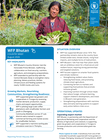
WFP Bhutan Country Brief, August 2026
Country: Bhutan Source: World Food Programme Please refer to the attached file.
WFP Bhutan Country Brief, August 2026 Read More »

Country: Bhutan Source: World Food Programme Please refer to the attached file.
WFP Bhutan Country Brief, August 2026 Read More »
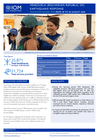
Country: Venezuela (Bolivarian Republic of) Source: International Organization for Migration Please refer to the attached file. Situation Report No. 24 provides an update on IOM’s response to the 24 June earthquakes in the Bolivarian Republic of Venezuela, covering the period from 18 to 20 August 2026. Highlights During the reporting period, IOM distributed 348 collapsible jerrycans, 340 plastic tarpaulins, 271 tool kits, 338 hygiene items and 66 kitchen sets. To date, the Organization has delivered 9,260 plastic tarpaulins, 6,116 collapsible jerrycans, 5,887 kitchen sets, 4,788 shelter tool kits and 3,612 personal hygiene items. IOM provided 201 health consultations in César Nieves and 139 consultations in José María Vargas Sports Complex, ensuring continued care for chronic diseases, respiratory infections and other priority health conditions. In Campo de Golf, IOM coordinated the distribution of 115 cleaning kits covering all shelters and supported the installation of solar lamps to improve safety and living conditions. IOM Activities IOM continued managing and coordinating the temporary accommodation sites of José María Vargas Sports Complex, César Nieves, Mare Abajo II and Campo de Golf, which hosted 1,629 accommodated people during the reporting period. In Mare Abajo II, IOM coordinated assessments and repairs to infrastructure affected by heavy rainfall, completing roofing works in 90 per cent of the cubicles in the shelter designated for older persons and restoring internal lighting. In Campo de Golf, IOM coordinated the distribution of 115 cleaning kits, 24 clotheslines and items for families with specific needs, while also coordinating the installation of solar lamps and supporting rainfall mitigation measures, including drainage improvements, shelter relocation and planning for a second WASH service area. In César Nieves, IOM maintained the services hub and supported the initial phase of WFP’s gradual reduction of food rations. In the WASH sector, IOM conducted assessments in Mare Abajo II to guide drainage and mitigation actions following heavy rainfall. In César Nieves, IOM and CISP monitored WASH activities, including the distribution of 15,000 litres of water, collection of 16 m³ of waste, cleaning and disinfection of sanitation facilities and tank chlorination. IOM and NRC also supported advocacy efforts with authorities to address ongoing water supply challenges. In Campo de Golf, WASH actors completed shower drainage works, while IOM produced 22,000 litres of safe water and allocated space for the construction of laundry facilities by Project Hope. At José María Vargas Sports Complex, IOM supported the removal of 14 portable toilets to adjust sanitation infrastructure to the current population. In health, IOM provided 201 consultations in César Nieves and 139 consultations in José María Vargas Sports Complex, focusing primarily on hypertension, respiratory infections, non-communicable diseases and gastrointestinal illnesses. IOM also coordinated with authorities to clarify misinformation that had been limiting access to health services in César Nieves. Under information management and needs assessments, IOM presented its registration and information management system to humanitarian partners in César Nieves to strengthen coordination and reduce duplication of assistance. The Displacement Tracking Matrix (DTM) team completed a household survey across the four IOM co-managed sites, reaching 168 families and collecting information on accommodation conditions, needs, mobility, intentions and prospects for return or relocation. Protection activities included IOM’s participation in defining measures to address access control gaps, child protection risks and coexistence issues in César Nieves. In Campo de Golf, the protection technical working group led by IOM consolidated agreements on coordination, safe referral pathways and activities for children and adolescents. Following the 18 August earthquake in La Guaira, IOM and NRC conducted community monitoring in Mare Abajo II to identify potential protection needs. IOM also monitored risks related to relocation processes and reports of possible fraud attempts targeting accommodated populations. IOM continued participating in the Post-Disaster Needs Assessment (PDNA), providing inputs for the housing and social inclusion sectors as the process advanced to the preliminary analysis stage and presentation of initial findings. IOM also received high-level visits, including the United Nations Humanitarian Coordinator and the IOM Chief of Mission. IOM Planned Response IOM plans to: Continue infrastructure repairs in Mare Abajo II and rainfall mitigation measures in Campo de Golf, including drainage improvements, shelter redistribution and expansion of WASH services. Maintain monitoring of water supply and water quality in César Nieves and continue drainage and sanitation infrastructure improvements. Continue delivering mobile health and mental health services and strengthen coordination among health actors operating across the four IOM co-managed sites. Implement a second phase of the characterization of 110 community settlements through key informants to prioritize settlements based on vulnerability, needs and response gaps, and to guide future household-level assessments. Follow up on agreements reached through protection technical working groups, strengthen access control measures in César Nieves and maintain monitoring of protection risks and community-based prevention and reporting mechanisms. Continue participating in the PDNA process and sectoral coordination mechanisms.
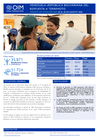
Country: Venezuela (Bolivarian Republic of) Source: International Organization for Migration Please refer to the attached file. El Reporte de Situación No. 24 presenta una actualización sobre la respuesta de la OIM a los terremotos del 24 de junio en la República Bolivariana de Venezuela, correspondiente al período del 18 al 20 de agosto de 2026. Aspectos destacados OIM distribuyó 348 bidones plegables, 340 lonas plásticas, 271 kits de herramientas, 338 insumos de higiene y 66 sets de cocina para familias afectadas por los terremotos. A la fecha, la organización ha entregado 9.260 lonas plásticas, 6.116 bidones plegables, 5.887 sets de cocina, 4.788 kits de herramientas para alojamiento y 3.612 insumos de higiene personal. OIM brindó 201 consultas de salud en César Nieves y 139 consultas en el Polideportivo José María Vargas, manteniendo la atención de enfermedades crónicas, infecciones respiratorias y otras condiciones prioritarias. En Campo de Golf, OIM coordinó la distribución de 115 kits de limpieza para la totalidad de las carpas, además de la instalación de lámparas solares y el avance de medidas de mitigación frente a lluvias. Actividades de OIM OIM continuó la gestión y coordinación de los campamentos transitorios de Polideportivo José María Vargas, César Nieves, Mare Abajo II y Campo de Golf, donde permanecen alojadas 1.629 personas. En Mare Abajo II, la organización coordinó evaluaciones y reparaciones de infraestructura afectada por las lluvias, completando la instalación de techos en el 90 por ciento de los cubículos de la carpa para personas mayores y restableciendo la iluminación interna. En Campo de Golf, OIM coordinó la distribución de 115 kits de limpieza, 24 tendederos y otros artículos para familias con necesidades específicas, además de la instalación de lámparas solares y el seguimiento de medidas de mitigación frente a lluvias. En César Nieves, OIM mantuvo operativa la herradura de servicios y acompañó el inicio de la reducción progresiva de raciones alimentarias del PMA. En materia de agua, saneamiento e higiene (WASH), OIM realizó evaluaciones en Mare Abajo II para orientar acciones de drenaje y mitigación. En César Nieves, junto con CISP, monitoreó actividades que incluyeron la distribución de 15.000 litros de agua, la recolección de 16 m³ de desechos, la limpieza y desinfección de baños y la cloración de tanques. OIM y NRC también acompañaron acciones de incidencia ante autoridades para abordar limitaciones en el suministro de agua. En Campo de Golf, los actores WASH completaron el drenaje de duchas, mientras que OIM produjo 22.000 litros de agua segura y asignó el espacio para la construcción de bateas de lavado por parte de Project Hope. En salud, OIM brindó 201 consultas en César Nieves y 139 consultas en el Polideportivo José María Vargas, atendiendo principalmente hipertensión arterial, infecciones respiratorias, enfermedades crónicas no transmisibles y afecciones gastrointestinales. Asimismo, coordinó con las autoridades la aclaración de información errónea que estaba limitando el acceso a los servicios de salud en César Nieves. En gestión de información, OIM presentó su sistema de registro e información a organizaciones humanitarias para fortalecer la coordinación y evitar duplicidades en la asistencia. Además, el equipo de la Matriz de Seguimiento de Desplazamiento (DTM) completó una encuesta de hogares en los cuatro campamentos cogestionados por OIM, alcanzando 168 familias y recopilando información sobre condiciones de alojamiento, necesidades, movilidad e intenciones de retorno o reubicación. Las actividades de protección incluyeron la participación de OIM en la definición de medidas para abordar deficiencias de control de acceso, riesgos para niños, niñas y adolescentes y conflictos de convivencia en César Nieves. En Campo de Golf, la mesa técnica de protección liderada por OIM consolidó acuerdos sobre coordinación, rutas de derivación segura y actividades para niños, niñas y adolescentes. Tras el sismo de magnitud 4,6 registrado el 18 de agosto en La Guaira, OIM y NRC realizaron monitoreo comunitario en Mare Abajo II para identificar necesidades de protección. OIM también dio seguimiento a riesgos asociados a procesos de reubicación y reportes de posibles intentos de fraude dirigidos a la población alojada. OIM continuó participando en la Evaluación de Necesidades Post-Desastre (PDNA), aportando insumos para los sectores de vivienda e inclusión social, mientras que el proceso avanzó a la fase de análisis preliminar y socialización de resultados iniciales. Asimismo, recibió visitas de alto nivel, incluyendo al Coordinador Humanitario de las Naciones Unidas y a la Jefa de Misión de OIM. Respuesta prevista de OIM Continuar las reparaciones de infraestructura en Mare Abajo II y las medidas de mitigación frente a lluvias en Campo de Golf, incluyendo drenajes, redistribución de carpas y ampliación de servicios WASH. Mantener el seguimiento al abastecimiento y calidad del agua en César Nieves y continuar las mejoras de drenaje e infraestructura sanitaria. Mantener la prestación de servicios móviles de salud y salud mental y fortalecer la coordinación entre los actores de salud presentes en los cuatro campamentos cogestionados por OIM. Implementar una segunda fase de la caracterización de 110 asentamientos comunitarios mediante informantes clave para priorizar asentamientos según vulnerabilidad, necesidades y brechas de respuesta, y orientar evaluaciones posteriores de hogares. Dar seguimiento a los acuerdos de las mesas técnicas de protección, reforzar el control de acceso en César Nieves y mantener el monitoreo de riesgos de protección y mecanismos comunitarios de prevención y reporte. Continuar participando en el proceso de Evaluación de Necesidades Post-Desastre (PDNA) y en los mecanismos de coordinación sectorial e interagencial.
Country: Chad Source: UN Office for the Coordination of Humanitarian Affairs Please refer to the attached file. (N’Djamena, 20 août 2026) – Le Coordonnateur des secours d’urgence des Nations Unies a alloué 4 millions USD du Fonds central d’intervention pour les urgences humanitaires (CERF) pour7 millions USD pour répondre aux nouveaux déplacements et à l’épidémie de choléra dans la province du Lac répondre aux urgences dans la province du Lac. Cette allocation vient compléter 3 millions USD du Fonds humanitaire régional pour l’Afrique de l’Ouest et du Centre (FHRAOC), déboursés par le Coordonnateur humanitaire. Ces 7 millions permettront aux partenaires humanitaires de répondre aux nouveaux déplacements de population enregistrés en juin ainsi qu’à l’épidémie de choléra, apparue début août. En effet, les violences provoquées par les groupes armés non-étatiques (GANE) ont contraint plus de 75 210 personnes à fuir leurs localités d’origine vers 16 sites répartis dans les sous-préfectures de Baga-Sola, Daboua, Kaiga-Kindjiria, Liwa et Ngouboua. Ces populations sont arrivées démunies, dans des zones où les services de base étaient déjà saturés par la présence de déplacés antérieurs, de retournés et de communautés hôtes elles-mêmes vulnérables. A cette crise de déplacement s’est ajoutée l’épidémie de choléra, confirmée à Kangalom le 6 août. Selon le rapport de situation n°35 du ministère de la Santé publique, la province du Lac a enregistré, au 16 août, 219 cas et 8 décès, répartis sur les districts sanitaires de Bol, de Kangalom, de Bagassola et de Liwa. La promiscuité sur les sites, l’accès limité à l’eau potable et à l’assainissement et la mobilité des populations autour du lac créent des conditions propices à une propagation rapide de l’épidémie. Une réponse répartie entre trois enveloppes complémentaires Sur les 4 millions USD du CERF, 3 millions sont consacrés à la réponse aux nouveaux déplacements, notamment dans les secteurs de la santé, de la nutrition et de la protection. Mis en œuvre par l’OMS, l’UNICEF et l’UNFPA, ces fonds permettront d’assurer les soins essentiels de santé d’urgence, la prise en charge de la malnutrition aiguë, le soutien aux survivantes de violences basées sur le genre et la protection des enfants séparés ou non accompagnés. Le million de dollars restant a été débloqué en urgence pour la riposte à l’épidémie de choléra, à parts égales entre l’OMS et l’UNICEF. Cette enveloppe couvre les secteurs de la santé et de l’eau, hygiène et assainissement. Elle permettra de renforcer la prise en charge des cas dans les unités et centres de traitement du choléra, la surveillance épidémiologique à base communautaire, la désinfection des habitations et des centres de traitement, la chloration des points d’eau et la communication sur les risques, dont les outils faisaient jusqu’ici défaut dans la province. Les 3 millions de dollars du FHRAOC complètent ce dispositif sur les secteurs des abris et articles ménagers essentiels, de l’eau, hygiène et assainissement et de l’assistance alimentaire. Cette répartition a été construite pour éviter tout chevauchement entre les deux fonds, chacun couvrant des secteurs/actions distincts au bénéfice des mêmes populations. « Ces financements arrivent au moment où deux urgences se superposent dans le Lac : le déplacement de populations et l’épidémie de choléra. Les fonds ne couvrent pas l’ensemble des besoins, mais ils permettent d’agir vite et de confier une part significative de cette réponse aux organisations tchadiennes qui sont déjà sur les sites », a déclaré Dr François Batalingaya, Coordonnateur humanitaire pour le Tchad. Une réponse conduite au plus près du terrain L’allocation du FHRAOC accorde une place déterminante aux organisations nationales. Une part importante de l’enveloppe est attribuée directement à des ONG nationales, retenues pour leur ancrage territorial dans le Lac, leur capacité opérationnelle et leur accès aux zones insulaires difficilement atteignables par les acteurs internationaux. Ce choix prolonge l’orientation prise par le Fonds au Tchad. Le plan intersectoriel de réponse aux nouveaux déplacements dans le Lac requiert 15,12 millions USD (juillet-décembre 2026), tandis que la riposte au choléra est estimée à 2,34 millions USD (juillet-septembre 2026). Les 7 millions USD mobilisés couvrent une part importante des besoins, mais des financements complémentaires restent nécessaires. Un plaidoyer est en cours auprès des bailleurs, alors que le Plan de réponse humanitaire 2026 du Tchad n’est financé qu’à 35 % des 986,1 millions USD requis.
Country: Colombia Sources: El Equipo Humanitario País Colombia, UN Office for the Coordination of Humanitarian Affairs Please refer to the attached file. The Humanitarian Country Team (HCT) in Colombia announces the publication of an addendum to the Humanitarian Needs and Response Plan (HNRP) following the 7.4-magnitude earthquake that recently affected 15 departments and approximately 470 municipalities, primarily in the departments of Chocó, Valle del Cauca, Risaralda, and Caldas. The impact has increased the vulnerability of millions of people across Colombia, adding to an already severe humanitarian situation affecting 6.9 million people. In addition, 1.2 million people have newly emerged humanitarian needs as a direct result of this emergency. The HNRP addendum aims to mobilize resources to save lives and support those with the most acute needs. The humanitarian community is appealing for US$148.1 million, including US$82.2 million prioritized to address the most urgent needs of 127,100 highly prioritized people through the end of the year. These resources will help complement the response led by national and local authorities through coordinated, needs-based humanitarian action informed by assessments conducted on the ground. The international community remains committed to closing funding gaps and sustaining the response. While more than US$35 million has already been mobilized and the United Nations Central Emergency Response Fund (CERF) has allocated US$5 million for life-saving interventions, the Humanitarian Needs and Response Plan for Colombia now requires a total of US$619 million and is currently funded at only 47.2 per cent. The HCT urgently calls on donors and partners to strengthen the response, alleviate suffering, and support the recovery of affected communities.
![ukraine: a brazen attack on a shopping mall in kryvyi rih killed several residents and left many injured [en/ru/uk]](https://blhlfoundation.org/wp-content/uploads/2026/08/24a831f6-b8a5-4449-b12d-dcba8ec264db-i95A66.png "Ukraine: A Brazen Attack on a Shopping Mall in Kryvyi Rih Killed Several Residents and Left Many Injured [EN/RU/UK]")
Country: Ukraine Sources: UN Office for the Coordination of Humanitarian Affairs, UN Resident and Humanitarian Coordinator for Ukraine Please refer to the attached files. HUMANITARIAN COORDINATOR FOR UKRAINE, MATTHIAS SCHMALE, CONDEMNS THE DEADLY IMPACT ON CIVILIANS OF AN ATTACK BY THE ARMED FORCES OF THE RUSSIAN FEDERATION ON A BUSY SHOPPING MALL ON FRIDAY As Kyiv mourns civilians killed yesterday, today there was an attack by the Armed Forces of the Russian Federation in the centre of Kryvyi Rih in the Dnipro region. The images of residents killed and injured in a busy shopping mall on a Friday afternoon are utterly appalling. According to preliminary reports, at least 14 people were killed, and over 100 were injured, including several children. As first responders were addressing the aftermath of the initial strikes, there was a second hit half an hour later. I express my condolences to the families mourning their loved ones and hope for a full recovery of the injured. Over recent weeks, hits in several densely populated cities of Ukraine have destroyed or damaged homes, a hospital, a school, markets, public buses and, today, a shopping mall, upending the lives of ordinary residents. International humanitarian law prohibits indiscriminate attacks on civilians and civilian objects. Civilians must be protected at all times. For further information, please contact: Viktoriia Andriievska, OCHA: +380 50 419 6323, viktoriia.andriievska@un.org
Country: occupied Palestinian territory Source: Médecins Sans Frontières As Israeli settlers and armed forces increase attacks across the West Bank of Palestine unabated, Palestinians are struggling to access basic healthcare due to restrictions, insecurity, and systematic violence. Despite Israeli authorities limiting our capacity to respond to major health concerns, Médecins Sans Frontières (MSF) has expanded mobile clinic activities in Hebron, including to support people with their mental health needs that are driven by intentional violence. Violence driving physical and mental health needs Repeated attacks, displacement, movement restrictions, and deteriorating living conditions are impacting people’s physical and mental health in Hebron. Ismail Ibrahim, a patient from outside Yatta, a city in Hebron governorate, says he has been attacked three times in recent months. “Settlers sprayed pepper spray on my face while I was working in an olive grove the family had been raising for years,” he says. “They grazed animals among the olive trees, damaging the land, destroying and breaking the trees. When the police arrived, they told us we weren’t allowed to speak to the settlers.” “Every day the situation becomes worse,” says Ibrahim. “Many people in our community have been attacked. Once they came at night and stole 200 sheep. They cut the gate to the sheep enclosure. We managed to recover only a few.” At least 77 Palestinians have been killed by Israeli forces and settlers this year in the West Bank, according to United Nations Office for the Coordination of Humanitarian Affairs (OCHA).1 This figure is already higher than the whole of 2025. Since March, between 17% and 38% of our psychological consultations were driven by events of intentional violence compared to a range of 13% or less at the beginning of the year. Between January and July, MSF teams provided over 1,930 individual consultations for mental health and conducted 436 group therapy sessions through mobile activities and a fixed consultation room. In the same time period, our teams in Hebron also received nearly 170 alerts for incidents such as home demolitions, injuries, or attacks on the water and sanitation system. We ran 27 rapid responses, which can include mental health support, or the donation of essential items like mattresses or tarpaulin. Growing barriers to medical care In addition to escalating violence, movement restrictions and a collapsing healthcare system are also causing barriers to care. “We have noticed a growing demand for our medical services because people are facing difficult economic conditions and cannot afford private healthcare,” says Dr Mohammad Haroub, assistant medical coordinator for MSF in Hebron. A shortage of healthcare workers compounds the issue. Following its offensive in Gaza, Israel has withheld billions of dollars of tax revenue from the Palestinian Authority. This has severely impacted the payment of health workers, resulting in medical staff working reduced hours, and in some cases clinics are completely closed. “The limited availability of health services, and shortages of healthcare workers and medicines within the Ministry of Health have created an additional burden,” says Dr Haroub. “Some patients tell us they have been without medication for several days.” On top of this, reaching healthcare has also become increasingly difficult for many Palestinians. This is due to insecurity, checkpoints, and road closures. “Life has become a heavy burden because of settler attacks,” says Aisha*, a woman from a village near Yatta who reached an MSF clinic in Khallet Al-Mai. “I’m afraid all the time. My relatives hardly sleep. They’re afraid settlers might come.” Although only kilometres away, Aisha’s journey to the clinic was made longer by insecurity and detours. Her mother-in-law suffers from diabetes and high blood pressure but, she says, “not all the medicines are available” where the family lives. Operational constraints amid uncertainty Despite the constraints, between January and July, MSF carried out 7,595 medical outpatient consultations in Hebron, including 1,910 for sexual and reproductive health. In June and July, having expanded from five to eight mobile clinics, MSF teams provided 1,450 and 1,397 outpatient consultations respectively. These were the highest monthly figures in 2026, a 26 per cent increase compared with the previous two months. The most common issues people required healthcare for were gynaecological conditions, non-communicable diseases, upper respiratory infections, and conjunctivitis. This comes after we were forced to reduce more than half our mobile activities in the first quarter of the year amid deregistration by the Israeli authorities. This limited access to areas such as the militarised H2 neighbourhood in Hebron City and villages in Masafer Yatta hills, which are prone to violence and attacks. To reach patients from communities that could no longer be visited by MSF, we launched new clinics close to the edge of Area C, an area exclusively controlled by the Israeli forces, ensuring people there could still access our services. Despite adapting activities, MSF teams continue to face significant operational constraints. “Every day, we don’t know whether we will even reach the clinic. The context is constantly changing,” says Elisa Tamimi, MSF humanitarian affairs officer in Hebron. “Sometimes entire areas are placed under closure for a day, two days, or even a week. This has a huge impact on people’s lives. Many have lost their jobs and cannot find new work.” “Israeli authorities must halt all measures that force Palestinians from their homes, ensure unhindered access to healthcare and humanitarian assistance, protect civilians, and comply with international law,” says Joan Tubau, MSF head of mission for Palestine. Aisha says they are not asking for much: “I hope life can return to how it was before the war. I hope people can live with dignity. I want people to go out without fear, to have healthcare, education, and basic necessities.” *Name changed to protect identity. OCHA: https://www.ochaopt.org/content/humanitarian-situation-report-23-july-2026
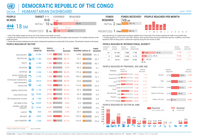
Country: Democratic Republic of the Congo Source: UN Office for the Coordination of Humanitarian Affairs Please refer to the attached Infographic.
Democratic Republic of the Congo: Humanitarian Dashboard (June 2026) Read More »
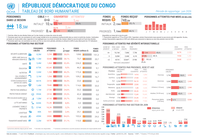
Country: Democratic Republic of the Congo Source: UN Office for the Coordination of Humanitarian Affairs Please refer to the attached Infographic.
Country: Democratic Republic of the Congo Source: Save the Children KINSHASA, 21 August 2026 – At least 180 children have lost both parents or primary caregivers in the Democratic Republic of Congo’s (DRC) Ebola outbreak, equivalent to nearly two children every day, since the deadly virus was declared 100 days ago, Save the Children said. Thousands more children have lost one parent or caregiver, exposing them to heightened risks of abuse, exploitation, trafficking and severe psychological distress as families and already fragile social services struggle to cope [1]. In what has become DRC’s deadliest ever outbreak, children are bearing some of most devastating and lasting consequences, including the loss of parents and caregivers and increased risks of abuse, exploitation and psychological distress. Latest figures from the Provincial Division of Social Affairs in Ituri, the epicentre of the outbreak, show that 180 children – 90 boys and 90 girls – have lost both parents to the virus that was declared on 15 May. Most are now being cared for by relatives or in state-run childcare facilities while longer-term family-based arrangements are found. A further 114 children, including 61 boys and 53 girls, are currently separated from their parents, and are being supported by humanitarian organisations and family members, while their parents receive treatment for Ebola. Children who are orphaned, separated or left unaccompanied by Ebola face heightened risks of human trafficking, sexual exploitation, physical violence, forced recruitment by armed groups and severe emotional distress. In communities affected by the virus, children can also face stigma and isolation, while strained protection systems leave many without the care and support they urgently need. According to latest data from the Ministry of Health, over 4,945 cases of Ebola and 2,325 deaths have been reported to date. At least 800 children are confirmed to have contracted the disease with more than 357 children dying, accounting for nearly 32% of total confirmed deaths (1124) as of August 5 –the last available age-disaggregated data from the Ministry of Health. The true number is likely to be higher, Save the Children said. The outbreak has expanded rapidly over the past 100 days. According to the Africa Centres for Disease Control and Prevention (Africa CDC), it has recorded around nine times more confirmed cases and six times more deaths than were reported during the same period of the 2014-2016 West Africa Ebola epidemic, the deadliest Ebola outbreak on record. With the outbreak still spreading – now in six provinces up from just two – Africa CDC estimates that only about 10% of potentially exposed contacts have been identified, while about four in five new infections being found outside known chains of transmission, highlighting the scale of undetected spread. Three out of every four deaths are occurring in the community rather than in health facilities, suggesting people are not accessing treatment in time. An investigation reported by Science also suggests Ebola may have been spreading around Mongbwalu in Ituri province as early as January – at least four months before the outbreak was officially declared. Save the Children is working with government and partners in Ituri province to establish safe spaces – called Observation Care Centres – for children whose parents or caregivers are currently being treated for Ebola and don’t have alternative family care arrangements. These spaces will host children on a full‑time basis while their parents receive care in the Ebola Treatment Centre located in the same compound. Throughout a 21‑day surveillance period, the children will sleep, eat, live, and be supported psychologically in a safe environment. Emmanuel Kalinde, Child Protection Manager in Ituri, said: “Behind every statistic is a child whose world has been turned upside down. Many of these children are mourning parents, grandparents, siblings and caregivers who were the centre of their lives. Grief can leave a child incredibly vulnerable, especially in communities already facing conflict and displacement. Our job is to help ensure that no child is left behind. With the right support they can begin to heal and regain a sense of hope.” Greg Ramm, Save the Children’s Country Director in the DRC, said: “Ebola is stealing more than lives. It is taking away the people children run to when they are scared. Every child who loses a parent, caregiver or loved one faces a future filled with uncertainty, and many are at risk of being left without the protection and support they need. “The children at the centre of this crisis need more than emergency medical care. They need safe care arrangements, protection, emotional support and the chance to continue learning and simply be children again. The longer this outbreak continues, the greater the risk that vulnerable children fall through the cracks and face exploitation, abuse, neglect or permanent disruption to their futures. “Child protection cannot be treated as a secondary concern in an Ebola response. Every effort to stop transmission must be matched by efforts to protect the children left behind. Governments, donors and the international community must urgently invest in scaling up support for frontline health services, alternative care, mental health support, community-based child protection programmes, and the essential services families rely on.” This outbreak is unfolding in communities already affected by armed conflict, mass displacement and chronic humanitarian needs. For many children, Ebola is the latest shock in a series of crises that have already disrupted their safety, education and wellbeing, placing additional strain on already fragile health, protection and social support system. Save the Children is supporting infection prevention, community engagement, case detection and referral, and the continuity of essential services for children and families. The aid agency is also providing psychosocial support and child protection services, including support for children who have lost caregivers, while working to ensure children can continue learning and access healthcare, nutrition and protection services safely throughout the crisis. In the DRC since 1994, Save the Children partners with 13 local organisations, as well as international agencies and government authorities, to deliver life-saving support in health, nutrition, education, child protection, food security,