

Please refer to the attached file.
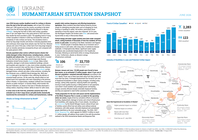
June 2026 became another deadliest month for civilians in Ukraine since the start of the full-scale invasion, with at least 293 civilians killed and 1,990 injured across the country, according to the latest report from the UN Human Rights Monitoring Mission to Ukraine (HRMMU). During the first half of 2026, total civilian casualties were 37 per cent higher than in the same period of 2025 and more than double the level recorded in 2024. The appalling trend of rising civilian casualties in Ukraine in 2026 has increasedthe scale and complexity of risks civilians are facing. This escalatory trend is driven by long-range missiles and drones in densely populated areas and continuous short-range drone attacks near the front line. Between January and June of this year, civilian harm from long-range weapons such as missiles and drones increased by 60 per cent compared with the same period in 2025.
Densely populated urban centres suffered massive attacks that widely damaged civilian infrastructure, including homes, schools, hospitals and cultural sites. The capital city of Kyiv, which is located far from the front line, was under several large-scale missile attacks of the Russian Federation Armed Forces over the month, which caused many civilian casualties, damage to multi-storey residential buildings, schools and hospitals. In June, most civilian casualties across the country occurred in Kyiv and the cities of Zaporizhzhia, Kherson and Dnipro, as verified by the HRMMU. On 15 June, attacks on Kyiv damaged homes, schools and other civilian premises, including the Kyiv Pechersk Lavra, a UNESCO World Heritage Site. WHO also reported damage to six hospitals in Kyiv, affecting the delivery of essential health services. On the same day, attacks killed six and injured seven first responders who were responding to the previous strike in Kharkiv. In Zaporizhzhia, residents suffered from increased attacks on public transport. In Sumska Oblast, which borders the Russian Federation, an attack on the town of Shostka destroyed a railway station, impacting civilians’ ability to leave for safer areas.
In areas close to the front line, protection concerns due to the extended use of short-range drones and glide bombs dramatically transformed the environment for civilians and humanitarians, making people’s daily routines dangerous and affecting humanitarian operations. Many residents described feeling hunted by drones simply for attempting everyday tasks such as shopping for food, farming or travelling to safety. Aid workers, particularly those operating in front-line regions, were also impacted. On 24 June, two Norwegian People’s Aid workers were killed, and several were injured while on duty in Khersonska Oblast.
Critical energy and water supply systems have been under sustained attack, cutting hundreds of thousands of front-line residents off from access to safe water. According to the Water, Sanitation and Hygiene Cluster, 120,000 people in Donetska Oblast are at imminent risk of losing access to safe water, with rising risks of waterborne disease outbreaks. In Dnipropetrovska Oblast, significant water supply disruptions also accelerated displacement in the Vasylkivska Hromada, following an aerial bomb strike on energy infrastructure in June. Furthermore, attacks on Ukraine’s energy infrastructure continued.
Between January and June, 132,000 people were forced to leave their homes, as an estimated 3.9 million people—about 12 per cent of Ukraine’s population—remained internally displaced, according to the IOM. Nearly 70 per cent of them have been away from their homes for more than two years. Prolonged displacement has forced 87 per cent of displaced households to adopt coping strategies, including using savings, cutting utility expenses, reducing health-care spending, moving to lower-quality housing or falling behind on rent payments. Last winter’s harsh weather and prolonged power and heating outages severely affected already vulnerable displaced families, and they are expected to need further assistance this winter.
Timely preparation for the next cold season and the implementation of the Winter Response Plan is crucial, as needs for the upcoming winter are severe, largely driven by cumulative effects of economic hardship, displacement, damage to homes and critical infrastructure from hostilities, with ongoing risks of more attacks. According to an assessment by the Danish Refugee Council, almost 60 per cent of families cannot afford fuel and utility costs without external assistance, with older people, internally displaced and unemployed people identified as the most vulnerable groups. The 2026–2027 Winter Response Plan, which appeals for US$357.4 million to reach 2.1 million people, will address those needs in line with the priorities outlined in the 2026 Humanitarian Needs and Response Plan.