Uncategorized

50de7763 723c 4e89 924d F5c3d541be14 Rzb7sQ

Afghanistan: Health Cluster Dashboard for Humanitarian Response Services (May 2026)

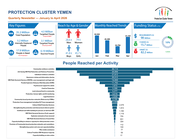
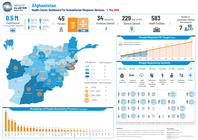
Country: Afghanistan Source: Health Cluster Please refer to the attached file. The dashboard provides an overview of humanitarian health services across Afghanistan, showing coverage, population reached, and overall progress toward annual health targets. It highlights coordinated efforts by partners to deliver essential health services to communities in need.

Afghanistan: Health Cluster Dashboard for Humanitarian Response Services (May 2026) Read More »

Ac2703f8 Ac07 4173 B532 8a032dc7ba9b TcBapM

Yemen Agrometeorological Update: Food Security and Early Warning Information System (01 – 31 May 2026) [EN/AR]

Country: Yemen Source: Food and Agriculture Organization of the United Nations Please refer to the attached files. HIGHLIGHTS: Precipitation: Rainfall across Yemen declined gradually in May 2026, though intermittent convective showers continued in the highlands—especially in Ibb—while monthly totals remained below the five-year average. Rainfall anomalies: Relative to the 30-year average, May 2026 was generally mixed in conditions across much of Yemen, with wetter trends across the Northern and Central Highlands, whereas localized deficits prevailed in southern and eastern areas. Temperature: May 2026 was hotter, signaling the seasonal transition to warmer conditions. Temperatures reached 38–44°C in eastern and coastal areas, increasing heat-related risks. Vegetation: Vegetation conditions remained broadly favorable, with 68% of cultivated areas in fair-to-good condition; however, localized stress persisted in some governorates. Crop season: Despite a reduction in cultivated area, crop performance was largely unaffected, as cereal growth continued across the highlands. Livelihoods and food security: Conditions remained generally supportive of wheat harvesting, sorghum planting, and pasture regeneration, but localized flood impacts, rangeland water stress in Al Dhale’e and Abyan, and persistently high food insecurity—affecting nearly 5 million people in GoY areas—continued to constrain rural livelihoods.

Yemen Agrometeorological Update: Food Security and Early Warning Information System (01 – 31 May 2026) [EN/AR] Read More »

9e860e09 C633 4f9f 9fca 95034d3b4ef5 Px0wUl

Lebanon: Flash Update #36 – Escalation of hostilities in Lebanon (as of 18 June 2026)

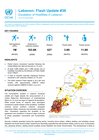
Country: Lebanon Source: UN Office for the Coordination of Humanitarian Affairs Please refer to the attached file. HIGHLIGHTS Partial returns movement reported following the United States-Iran deal announced on 15 June. At least 3,884 deaths and 11,856 injuries due to hostilities recorded by the Ministry of Public Health since 2 March. A total of 103,800 Internally Displaced Persons remained in 627 collective shelters on 18 June. The 2026 Lebanon Flash Appeal is 34.2 per cent funded, with approximately US$219 million received against US$639.9 million requested.

Lebanon: Flash Update #36 – Escalation of hostilities in Lebanon (as of 18 June 2026) Read More »

71b559be A695 478b 9031 3d1b56317315 65cDel

Escalating Risks and Shrinking Services: GBV Situation in Somalia, Q1 2026

Country: Somalia Sources: Gender Based Violence Area of Responsibility, United Nations Population Fund Please refer to the attached file. Executive Summary Women and girls in Somalia continued to face heightened risks of Gender-Based Violence (GBV) during the first quarter of 2026, driven by the combined effects of conflict, climate-induced displacement, food insecurity, and deteriorating protection environments. The most affected areas included Banadir, Lower Shabelle, Gedo, Bay, Hiraan, Middle Shabelle, and Mudug, particularly in high-density IDP settlements and conflict-affected districts where insecurity, overcrowding, and limited access to services have increased vulnerabilities. Emerging evidence from protection monitoring and community feedback mechanisms indicates that women and girls are disproportionately affected by physical safety threats. Sixty-one percent of reported protection concerns from women and girls related to direct physical safety risks, including harassment while collecting water and firewood, exposure to violence along insecure routes, and risks within households. Intimate Partner Violence (IPV) remains the most prevalent form of GBV nationally, accounting for approximately 58 percent of reported incidents, while sexual violence represents about 14 percent of cases. In some locations, such as Luuq district in Gedo, IPV levels were reported as high as 67 percent, reflecting increasing stressors linked to displacement and economic hardship. The protection environment for women and girls has further deteriorated due to severe funding cuts affecting specialized GBV services. Of the 120 registered GBV facilities across Somalia, 66 facilities (55 percent) are currently closed or non-operational, including Women and Girls’ Safe Spaces (WGSS) and One-Stop Centers (OSCs). The reduction in service availability has significantly constrained survivors’ access to life-saving case management, psychosocial support, health services, and safe reporting mechanisms, particularly in remote and underserved locations. Adolescent girls, female-headed households, minority clan women, persons with disabilities, and newly displaced women and girls remain the most vulnerable groups. IDP settlements continue to account for the majority of GBV incidents, with overcrowding, poor shelter conditions, lack of privacy, and inadequate lighting contributing to heightened protection risks. Night-time risks are particularly acute, with 71 percent of women reporting safety concerns linked to unlit pathways, non-lockable latrines, and unsafe routes to essential resources. Despite increased use of cash assistance through GBV case management, available support remains insufficient to meet growing needs. Low reporting of sexual harassment and PSEA-related incidents continues due to stigma, fear of retaliation, and limited awareness of safe reporting channels. Immediate action is required to restore and sustain GBV services, reopen safe spaces, strengthen community-based protection mechanisms, expand cash assistance, improve lighting and safety infrastructure in displacement sites, and enhance dissemination of PSEA information across humanitarian sectors. Without urgent investment, the protection risks facing women and girls are likely to intensify amid worsening humanitarian conditions and continued service disruptions. Without urgent action and sustained investment, the gains made in protecting women and girls are at risk of being reversed. Immediate support is needed to restore and expand specialized GBV services, strengthen survivor-centered assistance and cash support, improve safety infrastructure in displacement settings, and ensure that women and girls can safely access life-saving protection and response services. Protecting women and girls is not only a humanitarian imperative but also a prerequisite for resilience, recovery, and sustainable development in Somalia.

Escalating Risks and Shrinking Services: GBV Situation in Somalia, Q1 2026 Read More »

9e2c2d71 Bbbc 4973 A68a C5338d1364a8 Tw2729

AFGHANISTAN Nutrition Cluster Bulletin, Jan-Mar 2026

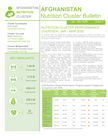
Country: Afghanistan Source: Nutrition Cluster Please refer to the attached file. NUTRITION CLUSTER PERFORMANCE OVERVIEW: JAN – MAR 2026 As of March 2026, the Afghanistan Nutrition Cluster comprised 65 partners (including 4 UN agencies, 18 international NGOs, 41 national NGOs and PND/MoPH). Key achievements during the first quarter of 2026 included: Overall, the Nutrition Cluster reached 16% of its annual target during the first quarter of 2026. A total of 856,362 beneficiaries received critical nutrition services between January and March, including 143,835 girls, 149,705 boys and 562,822 pregnant and breastfeeding women. By the end of March 2026, the Outpatient Therapeutic Program (OTP) had been implemented in 336 districts through 2,905 fixed and 112 temporary health facilities. The Targeted Supplementary Feeding Program (TSFP) was implemented in 309 districts through 1,437 fixed and 53 temporary health facilities. There were 134 Inpatient SAM treatment centers by the end of March 2026. A total of 105,121 children under five with severe acute malnutrition (60,617 girls and 44,504 boys) were admitted to OTP sites, reaching 15% of the annual target. Additionally, 9,237 children under five (5,138 girls and 4,099 boys) with severe acute malnutrition and complications received treatment in inpatient SAM centers, reaching 13% of the annual target. A total of 148,178 children under five with moderate acute malnutrition (83,535 girls and 64,643 boys) were admitted to the TSFP, representing 8% of the annual target. Additionally, 58,324 malnourished PBW were reached through the TSFP, accounting for 8% of the annual target. Meanwhile, 120,822 children under five years of age (61,831 girls and 58,991 boys) and 51,252 pregnant and breastfeeding women were enrolled in the Blanket Supplementary Feeding Program (BSFP), reaching 8% and 7% of their annual targets, respectively. In addition, MIYCN counseling to improve breast feeding and complementary feeding practices for children aged 0-23 months was provided to 481,841 pregnant and lactating women and care givers, representing 21% of the annual target. For a clearer comparison of 2026 first quarter coverage versus 2025, please refer to the table below.

AFGHANISTAN Nutrition Cluster Bulletin, Jan-Mar 2026 Read More »

400ea184 84c2 4f69 96c0 A15acf2eceff RJ39ZW

Colombia: Predicción impactos por variabilidad climática. Fenómeno de El Niño – 2026 – 2027 (19/06/2026)

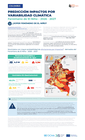
Country: Colombia Sources: 3iS, El Equipo Humanitario País Colombia, UN Office for the Coordination of Humanitarian Affairs Please refer to the attached Infographic. Se prevé impacto en personas y territorios. Más de 4,3 millones de personas en Colombia podrían enfrentar afectaciones severas por el fenómeno de El Niño 2026–2027, especialmente por desabastecimiento de agua, con impactos concentrados en 508 municipios (45% del país). El riesgo es mayor en departamentos como La Guajira, Córdoba y Antioquia, evidenciando una afectación territorial amplia y desigual. Podría configurar una crisis multisectorial que afecta condiciones de vida. El fenómeno actuará como un multiplicador de riesgos humanitarios, impactando simultáneamente a sectores como agua y saneamiento con alta probabilidad de racionamiento y escasez. En seguridad alimentaria se estima entre 1,7 y 3 millones de personas adicionales podrían caer en inseguridad alimentaria. En los sectores de salud y vivienda habría un aumento de enfermedades, presión sobre servicios y deterioro de condiciones de vida. Impactos diferenciados en poblaciones vulnerables. Las mayores afectaciones recaerían en comunidades rurales, población en pobreza, niños, mujeres e indígenas, donde la dependencia de recursos naturales y la limitada infraestructura amplifican los efectos de la sequía, el calor extremo y los incendios forestales. Medidas de Acción anticipatoria son claves para reducir impactos. El escenario exige acciones tempranas y coordinadas, como: i) Garantizar acceso a agua mediante almacenamiento, distribución y ahorro. ii) Proteger medios de vida con insumos agropecuarios resilientes. iii) Fortalecer sistemas de salud y vigilancia epidemiológica. iv) Activar planes comunitarios y educativos frente a sequías e incendios.

Colombia: Predicción impactos por variabilidad climática. Fenómeno de El Niño – 2026 – 2027 (19/06/2026) Read More »